
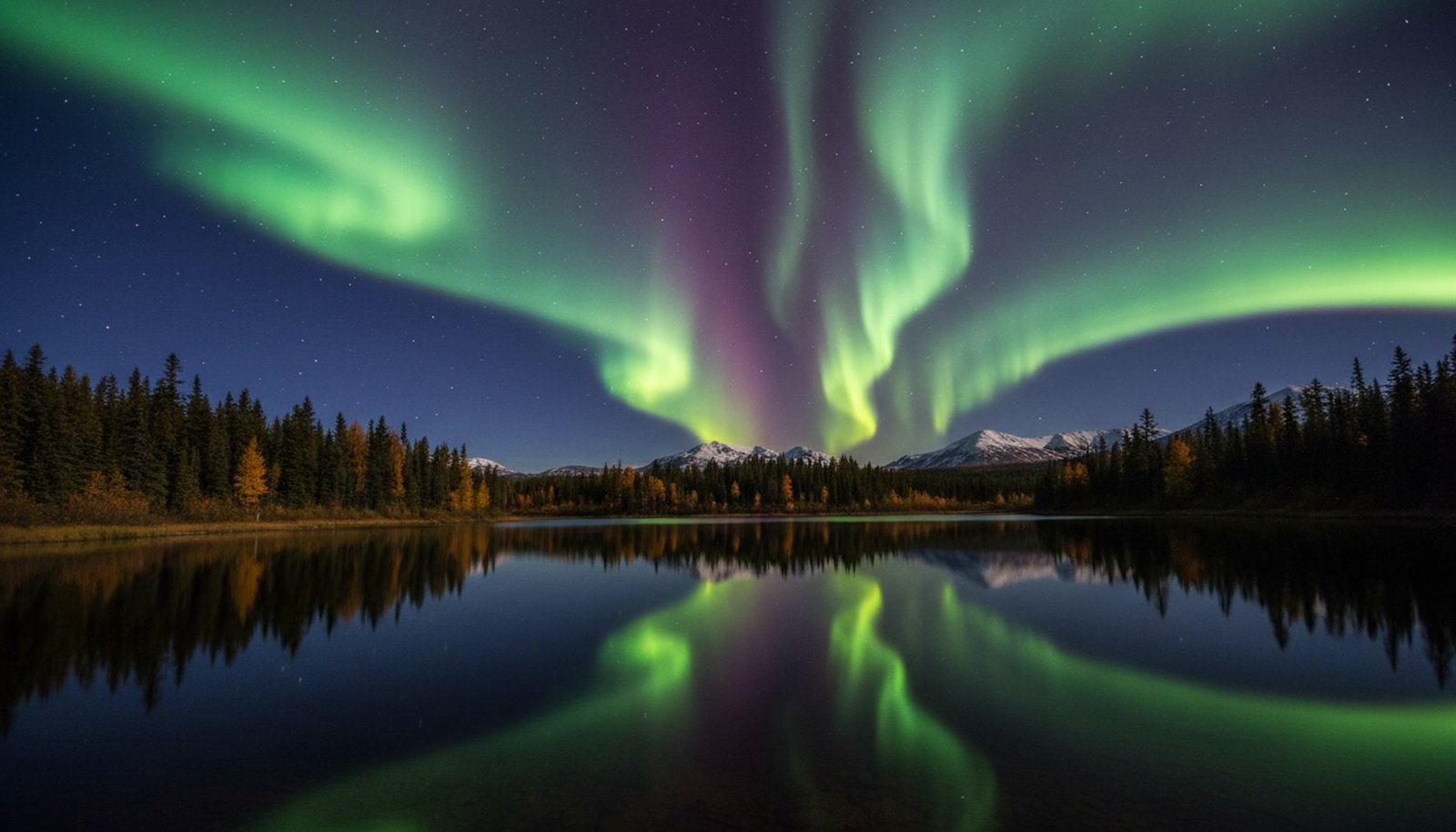
What is northern lights season?
What Is the Northern Lights Season?
Many travelers dream of seeing the Northern Lights, but a common question is, ‘When is the season?’ Unlike the four traditional seasons, the aurora season isn’t dictated by Earth’s weather but by its position in space and, most importantly, by darkness. The Northern Lights are technically happening year-round, but the perpetual daylight of the Arctic summer, known as the ‘Midnight Sun’, renders them completely invisible.
The true Northern Lights season is the period when the nights are long and dark enough for the celestial display to become visible. This window offers incredible opportunities, but certain times within it can increase your chances of witnessing a truly spectacular show.
Defining the Aurora Viewing Season
The concept of an aurora ‘season’ is based on one primary factor: the ability to see them from Earth. This depends on a combination of darkness, geographical location, and clear skies.
The Core Requirement: Darkness
The fundamental requirement for seeing the Northern Lights is a dark sky. In the Arctic Circle, the sun doesn’t set for several weeks or months around the summer solstice (June). This phenomenon, the Midnight Sun, creates 24-hour daylight, making it impossible to see the relatively faint light of the aurora. The season begins in late August as astronomical twilight returns, bringing dark nights back to the polar regions. It continues through winter and ends around mid-April when the Midnight Sun begins to return. Therefore, the aurora season is simply the period of sufficient darkness, typically spanning about eight months.
Geographic Location: The Auroral Zone
Even during the darkest winter months, your location is critical. The Northern Lights occur most frequently and intensely within a band known as the Auroral Zone or ‘Auroral Oval’. This region is typically situated between 65 and 72 degrees North latitude. Prime viewing locations fall within this zone, including northern Norway (Tromsø), Swedish Lapland (Abisko), Finland, Iceland, northern Canada (Yellowknife), and Alaska (Fairbanks). Being inside this zone during the dark season maximizes your probability of a sighting, as the aurora is often directly overhead. Outside this zone, you would need a much stronger geomagnetic storm to see the lights on the horizon.
The Solar Cycle’s Influence
While not defining the season, the Sun’s own activity cycle plays a huge role in the *intensity* of the lights. The Sun goes through an approximately 11-year solar cycle, moving from a period of low activity (solar minimum) to high activity (solar maximum). During a solar maximum, the sun produces more sunspots, solar flares, and Coronal Mass Ejections (CMEs), which are the primary drivers of strong auroras. We are currently approaching a solar maximum, predicted for 2024-2025, meaning the auroras during this period are expected to be more frequent and powerful than they have been in over a decade.
The Best Times Within the Season
While the entire eight-month window offers a chance to see the lights, certain periods are statistically better due to scientific and meteorological reasons.
The Equinox Effect: September & March
Statistically, the weeks surrounding the autumnal equinox (September) and the spring equinox (March) often experience a higher frequency of geomagnetic storms. This phenomenon is known as the ‘Russell-McPherron effect’. During the equinoxes, the orientation of Earth’s magnetic field is best positioned to interact with the solar wind, allowing more solar particles to breach our magnetic defenses and create auroras. These months offer a fantastic balance of long, dark nights and a higher probability of intense, active displays, making them a favorite for seasoned aurora chasers.
The Deep Winter: December to February
The period from December to February offers the longest and darkest nights of the year, providing the maximum possible viewing window each day. This is the classic ‘winter wonderland’ experience, with deep snow cover that beautifully reflects the aurora’s glow. The primary challenge during these months can be the weather. Extreme cold can be a factor, and in some coastal regions like Norway, this period can have a higher chance of cloud cover. However, in continental interiors like Swedish Lapland or Alaska, skies are often clearer, making it a prime time for viewing.
Shoulder Months: August/September & March/April
The ‘shoulder’ months at the beginning and end of the season have unique advantages. In late August and September, the weather is milder, and landscapes are not yet covered in deep snow, allowing for different activities like hiking. You can even see the aurora reflected in open lakes before they freeze. Similarly, late March and April offer longer daylight hours for daytime excursions, with still plenty of darkness for aurora hunting at night. These months provide a great compromise between comfortable travel conditions and excellent chances of seeing the Northern Lights.
Quick Facts
- The Northern Lights viewing season is from late August to mid-April.
- The ‘season’ is defined by darkness, as the 24-hour daylight of the Arctic summer makes the aurora invisible.
- The best viewing locations are within the ‘Auroral Zone’, between 65-72 degrees North latitude.
- The weeks around the September and March equinoxes often see an increase in aurora activity.
- The 11-year solar cycle dictates the overall strength and frequency of auroras, with a peak expected around 2024-2025.
- December to February offers the longest, darkest nights but can have colder and cloudier weather.
- The ideal time of night for viewing is typically between 10 PM and 2 AM local time.
Frequently Asked Questions (FAQ)
Q: Can I see the Northern Lights in the summer? A: No, it is generally impossible to see the Northern Lights in the Arctic during the summer months (late May to early August). The ‘Midnight Sun’ means the sky never gets dark enough for the aurora to be visible.
Q: Does a full moon ruin the chances of seeing the aurora? A: A full moon can make the sky brighter, washing out faint auroras. However, a strong and vibrant aurora display will still be clearly visible. For the best viewing and photography, planning a trip around the new moon is ideal.
Q: What time of night is best for aurora viewing? A: The most active aurora displays often occur between 10 PM and 2 AM local time. This is because the part of Earth you are on is best positioned under the Auroral Oval during these hours.
Q: Is the aurora season the same for the Southern Lights? A: Yes, the principle is the same. The Southern Lights (Aurora Australis) season corresponds to the Antarctic winter, roughly from March to September, when the southern polar regions experience darkness.
Other Books
- University of Alaska Fairbanks – Aurora Forecast
- Space.com – When, Where and How to See the Northern Lights
- NOAA – Space Weather Enthusiasts Dashboard


Cosmic Winds: Peeling Back an Alien Planet's Layers
Summary
Scientists have developed a new technique to map the winds on the ultra-hot Jupiter WASP-76b at different altitudes. By studying how iron absorbs light, they’ve created the first-ever vertical weather profile of this extreme world, revealing how its atmosphere works from the inside out.
Quick Facts
- WASP-76b is a scorching hot exoplanet famous for its 'iron rain'.
- Scientists used iron absorption lines like an X-ray to see different atmospheric depths.
- Stronger iron lines probe higher altitudes, while weaker lines see deeper.
- The planet's powerful, day-to-night winds persist at all altitudes.
- The research suggests magnetic fields play a key role in controlling the planet's weather.
The Discovery: Beyond Iron Rain
We already knew WASP-76b was wild. It’s a world so hot that iron vaporizes on its day side and then rains down as molten metal on its night side. But researchers wanted to look deeper. How do the planet’s ferocious winds, which carry this iron vapor, behave at different altitudes? A team led by Aurora Kesseli and Hayley Beltz pioneered a new method using data from the ESPRESSO spectrograph. They sorted the light-absorbing signatures of iron (Fe I) based on their strength, or opacity. Very opaque lines can only be seen from the very top of the atmosphere, while less opaque lines allow us to peer deeper down. By analyzing these different sets of lines, they could measure the wind speed at different layers for the first time, effectively creating a vertical slice of an alien planet’s weather.
We’re moving from a 2D picture to a 3D understanding of these incredible atmospheres.
— Aurora Y. Kesseli, Lead Author
The Science Explained Simply
Imagine you’re trying to see the ground from a plane on a foggy day. A very thick, dense fog bank (a strong opacity line) would only let you see the very top layer. But if the fog were a much thinner mist (weak opacity), you might be able to see all the way down to the ground. Astronomers used this exact principle with iron atoms in WASP-76b’s atmosphere. Iron absorbs light at many specific wavelengths. Some of these absorption lines are naturally ‘stronger’ than others. The strong lines get blocked high up in the atmosphere, giving us information about the winds there. The weaker lines aren’t fully absorbed until the starlight has traveled much deeper, revealing the wind patterns in the lower layers. By separating and analyzing these, scientists could compare the ‘high-altitude winds’ to the ‘low-altitude winds’ and build a vertical profile.
The Aurora Connection
A key question on a world like WASP-76b is what controls its atmosphere. The researchers tested three different climate models, but the most interesting part was the role of magnetic fields. On Earth, our magnetic field channels the solar wind to create beautiful auroras. On a hot Jupiter, a magnetic field can act like a giant brake, creating friction—or ‘magnetic drag’—on the hot, ionized gases whipping around the planet. The study found that a model including a realistic magnetic field (the ‘3G’ model) did a better job of explaining the observed wind patterns than a simple model with no magnetism or one with a crude, uniform drag. This is strong evidence that, just like on Earth, magnetic fields are a dominant force in shaping a planet’s climate and space weather, even one 640 light-years away.
The data seems to favor a model with magnetic effects, suggesting these invisible forces are shaping the entire planet.
— Hayley Beltz, Lead Author
A Peek Inside the Research
The goal was to see which computer simulation of WASP-76b best matched reality. After using the binary mask technique to isolate the weak and strong iron lines from the ESPRESSO data, the team measured key properties like the wind speed (velocity shift) and the wind’s turbulence (line width) for each atmospheric layer. They then compared these real-world measurements to the predictions from three Global Circulation Models (GCMs): one with no drag, one with uniform drag, and one with a sophisticated magnetic drag. The uniform drag model failed, predicting trends opposite to what was seen. The battle was between the no-drag (hydrodynamic) and magnetic models. While neither was perfect, the magnetic model better matched subtle trends in the data, especially how the signal changed from the start to the end of the transit. This work provides a powerful new way to test and refine our theories about how exoplanet atmospheres work.
Key Takeaways
- A new method allows astronomers to study exoplanet atmospheres in vertical layers, not just as a single slab.
- On WASP-76b, there's a trend of stronger, more focused winds deeper in the atmosphere.
- Computer models that include magnetic fields ('magnetic drag') better explain the observations than models without.
- This is a major step toward creating 3D weather maps of alien worlds.
- Even the best models today can't fully account for the incredible wind speeds on WASP-76b, hinting at missing physics.
Sources & Further Reading
Frequently Asked Questions
Q: So, are the winds different at different heights on WASP-76b?
A: Yes, that’s what the data suggests. The research found tentative trends that winds are more blueshifted (moving towards us faster) and the flow is less turbulent deeper in the atmosphere. Higher up, the wind patterns appear wider and more complex.
Q: What is ‘magnetic drag’?
A: It’s a force that occurs when a magnetic field interacts with a moving, electrically conductive fluid, like the hot ionized gas in WASP-76b’s atmosphere. It acts like a form of friction, slowing down and redirecting the atmospheric winds.
Q: Why can’t the models perfectly match the wind speeds?
A: Exoplanet atmospheres are incredibly complex. There’s likely ‘missing physics’ in the models, such as the effects of hydrogen atoms splitting apart at high temperatures, or perhaps the magnetic field is even stronger or more complex than assumed. This study helps pinpoint where those models need to improve.
Q: Can this technique be used on other planets?
A: Yes, absolutely! This method can be applied to any exoplanet with a clear atmosphere and strong absorption lines observed with a high-resolution spectrograph. As telescopes like the Extremely Large Telescope (ELT) come online, we’ll be able to do this for more planets with even higher precision.