
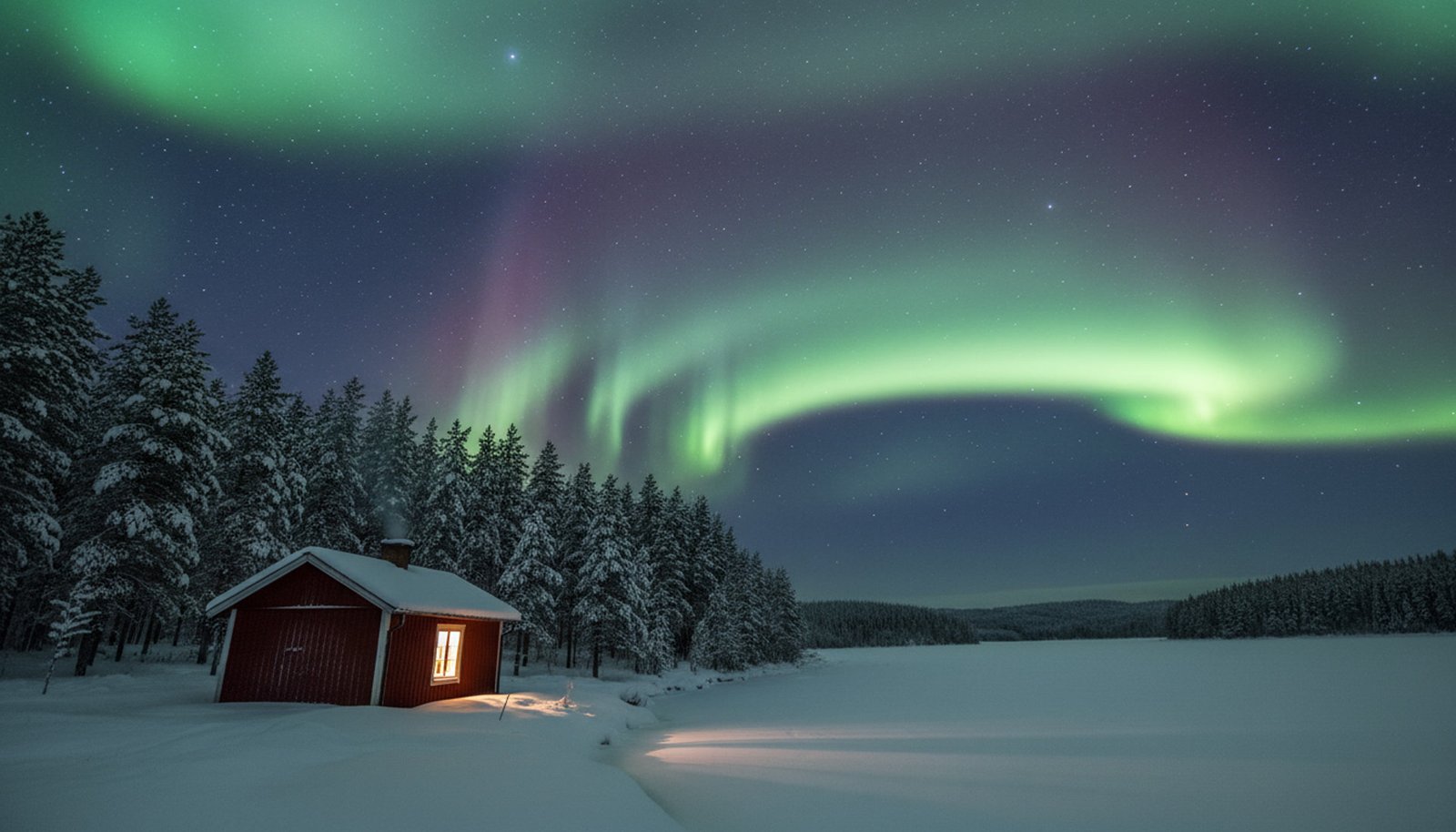
What are northern lights in Sweden?
What Are the Northern Lights in Sweden? A Complete Guide
The Northern Lights, a celestial ballet of shimmering color across the night sky, hold a special place in Swedish folklore and culture. Known by the indigenous Sámi people as ‘guovssahas’—’the light you can hear’—this natural wonder is not unique to Sweden, but the country’s vast, dark landscapes in the north provide one of the most spectacular stages on Earth to witness it.
This guide explains the science behind the aurora, why Sweden is a premier viewing destination, and provides practical tips on where and when to go for the best chance of experiencing this unforgettable light show.
The Science and Scenery of Sweden's Aurora
While the scientific cause of the Northern Lights is the same everywhere, Sweden’s unique geography and climate create the perfect conditions for an extraordinary viewing experience. It’s a combination of being in the right place at the right time.
The Universal Cause: A Cosmic Collision
The aurora begins 93 million miles away at the Sun, which constantly sends out a stream of charged particles called the solar wind. When this wind reaches Earth, our planet’s magnetic field, the magnetosphere, funnels these particles towards the polar regions. As they enter our upper atmosphere, they collide with gas atoms, primarily oxygen and nitrogen. These collisions ‘excite’ the atoms, causing them to release energy in the form of light. Billions of these collisions create the dancing curtains of green, pink, and purple light we see as the Aurora Borealis.
Why Sweden is a Prime Viewing Location
Sweden’s prime status for aurora viewing is due to its position under the auroral oval. This is a permanent, ring-shaped zone of high auroral activity centered on the Earth’s magnetic poles. The northernmost part of Sweden, known as Swedish Lapland, lies directly within this oval. This means that even with minimal solar activity, the aurora is often visible. Locations like Kiruna, Jukkasjärvi, and Abisko are world-renowned because they offer consistent sightings throughout the aurora season, making them a magnet for aurora chasers.
The Importance of Darkness and Clear Skies
Beyond its geographical advantage, Swedish Lapland offers two other crucial ingredients: darkness and minimal light pollution. During the winter months, the region experiences long periods of darkness, including the Polar Night when the sun doesn’t rise above the horizon. This deep darkness provides a perfect black canvas for the aurora’s colors to pop. Furthermore, the sparse population and vast national parks mean there is very little artificial light to interfere with the view, allowing for crisp, clear sightings of even faint auroral displays.
Your Guide to Seeing the Aurora in Sweden
Knowing what the lights are is the first step. The next is planning your adventure to see them. Here’s a breakdown of the best places and times to go.
Best Locations in Swedish Lapland
The undisputed king of aurora viewing in Sweden is Abisko National Park. It’s famous for its ‘blue hole’, a patch of sky over Lake Torneträsk that often remains clear due to a unique microclimate, giving it more clear nights than almost anywhere else in the auroral zone. The Aurora Sky Station here is a world-class observatory. Other top locations include Kiruna, Sweden’s northernmost city and a hub for space research, and the village of Jukkasjärvi, home to the famous ICEHOTEL, which offers a magical setting for a night of aurora hunting.
The Ideal Season: Autumn to Spring
The Northern Lights season in Sweden runs from late September to early April. During these months, the nights are long and dark enough for the aurora to be visible. The peak months are often considered to be from December to February due to the longest nights. However, September and October can also be excellent, as the weather is often milder and the autumn colors provide a beautiful daytime backdrop. The summer months, with the Midnight Sun, are not suitable for aurora viewing as the sky never gets dark enough.
Key Conditions for a Sighting
To see the Northern Lights, you need three things to align: geomagnetic activity, clear skies, and darkness. You can monitor solar activity using aurora forecast apps or websites that show the Kp-index, a scale of geomagnetic activity from 0 to 9. A Kp-index of 3 or higher is generally good for sightings in northern Sweden. Always check the local weather forecast for cloud cover, and make sure you get away from any town or city lights for the darkest possible sky.
Quick Facts
- The Northern Lights in Sweden are the Aurora Borealis, a natural phenomenon.
- The best viewing area is Swedish Lapland, located inside the Arctic Circle and under the auroral oval.
- Abisko National Park is a world-famous spot due to its ‘blue hole’ microclimate, which results in frequent clear skies.
- The prime viewing season is from late September to early April when the nights are long and dark.
- Success requires a combination of solar activity (a high Kp-index), clear, cloudless skies, and minimal light pollution.
- The indigenous Sámi people of Sweden have a rich history with the lights, calling them ‘guovssahas’.
- You cannot see the aurora during the Swedish summer due to the Midnight Sun.
Frequently Asked Questions (FAQ)
Q: Can I see the Northern Lights from Stockholm or Gothenburg? A: It is extremely rare to see the Northern Lights from southern cities like Stockholm or Gothenburg. It would require a very powerful geomagnetic storm (Kp-index of 7 or higher). For reliable sightings, you must travel north to Swedish Lapland.
Q: What is the ‘blue hole of Abisko’? A: The ‘blue hole’ is a patch of sky over Lake Torneträsk in Abisko that often remains clear even when surrounding areas are cloudy. This is caused by local mountain weather patterns, making Abisko one of the most reliable aurora-watching destinations in the world.
Q: Are the Northern Lights in Sweden always green? A: Green is the most common color, caused by collisions with oxygen at lower altitudes. During intense solar storms, you might also see shades of pink, purple, or even red, which are caused by collisions with nitrogen or high-altitude oxygen.
Other Books
- Visit Sweden – Official Guide to the Northern Lights
- Swedish Institute of Space Physics (IRF) in Kiruna
- SpaceWeatherLive – Real-time Auroral Activity


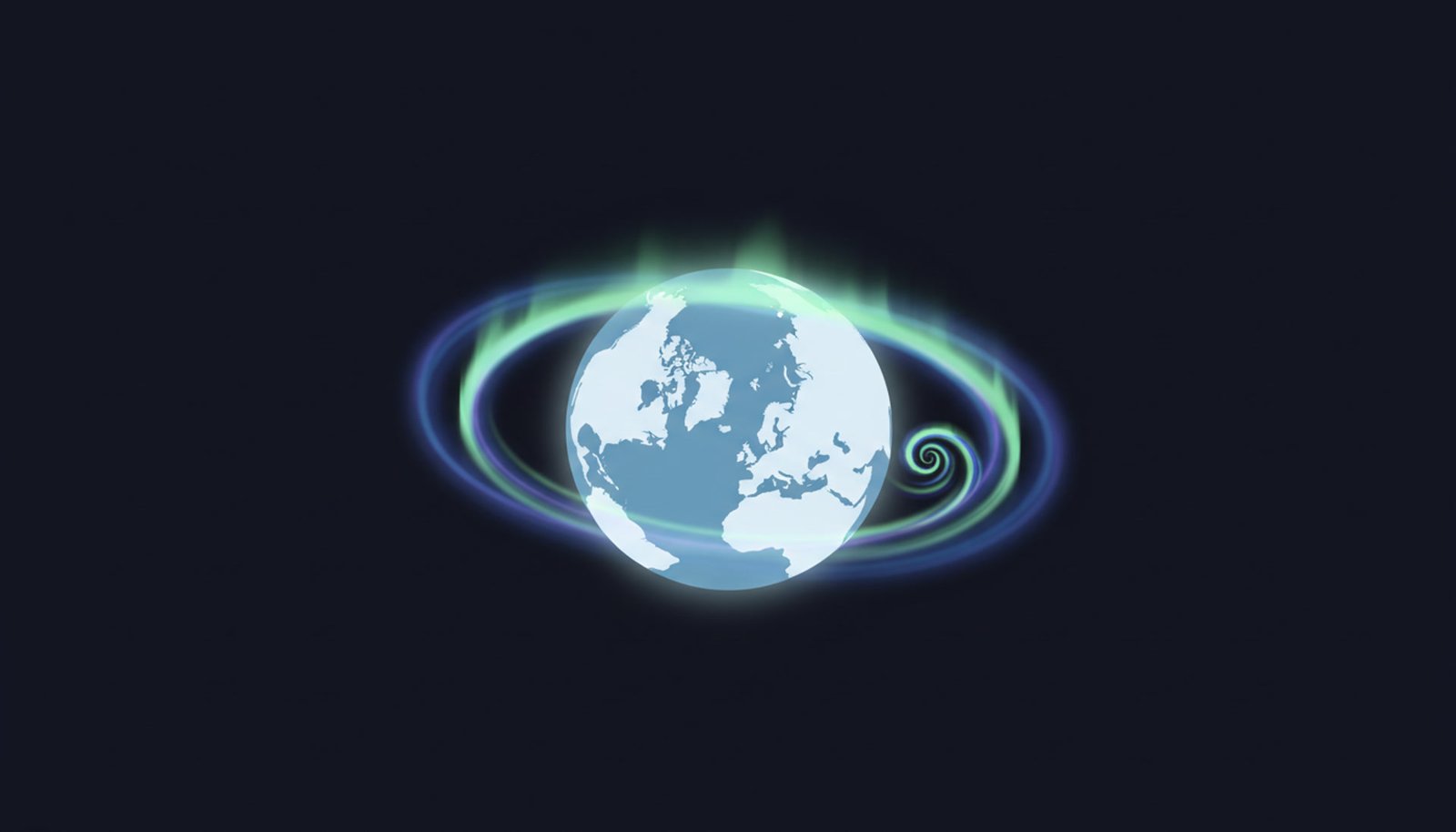
Two Auroras, One Sky: A Cosmic Spiral and a Polar Arc
Summary
By the end of this article, you will understand how a giant, straight aurora can appear at the same time as a small, swirling one, and what this rare event tells us about the invisible power grid in Earth’s magnetosphere.
Quick Facts
- A global-scale aurora (the Transpolar Arc) and a local one (the Spiral) appeared simultaneously.
- This happened during the late recovery phase of a geomagnetic substorm.
- The power source for the spiral was about three orders of magnitude (1,000 times) weaker than the arc's.
- The source of both auroras in the magnetotail was a long, stretched-out region, even though the spiral looked like a small spot in the sky.
- Scientists needed two different supercomputer simulations to replicate the event.
The Discovery: An Unexpected Cosmic Duo
The Story begins on January 10, 1997. As Earth was recovering from a magnetic substorm, satellite images from the Polar UVI instrument captured something unusual. A massive, faint ribbon of light, a Transpolar Arc (TPA), stretched across the entire north pole. At the same time, a ground camera in Svalbard, Norway, spotted a small, bright, whirlpool-like aurora, known as an auroral spiral. This was a puzzle; these two types of aurora are usually driven by very different conditions. Using modern global MHD (magnetohydrodynamic) simulations, scientists re-created the event. Their models confirmed the Surprise: both could exist at once, but the spiral was a ghost, powered by an electrical current about 1,000 times weaker than the arc.
A global-scale transpolar arc and local-scale auroral spiral can appear simultaneously.
— Nowada et al., Key Points
The Science Explained Simply
The key concept is Field-Aligned Currents (FACs). Think of them as invisible electrical wires connecting Earth’s distant magnetotail to our upper atmosphere, carrying particles that create auroras. To Build a Fence around this idea: it’s NOT that the spiral is just a smaller version of the arc. The TPA is like a huge, stable power line, drawing steady energy from a vast region of the magnetotail. The auroral spiral, however, is like a tiny, flickering, twisted wire formed by a much weaker and more localized process. The research suggests the spiral’s source region had lower plasma density and a stronger magnetic field, which physics predicts would create a weaker current, explaining the huge power difference.
The magnetotail field-aligned current (FAC) intensity of the auroral spiral was about 3 orders of magnitude weaker than that of the TPA.
— Nowada et al., Key Points
The Aurora Connection
These two coexisting auroras act as visual reporters for the complex state of Earth’s magnetic environment. They show us that the magnetosphere isn’t just ‘on’ or ‘off’. Even during a ‘recovery’ phase, it’s a dynamic place. The TPA tells us about large-scale, slow changes in the entire magnetotail, likely related to the orientation of the solar wind’s magnetic field. The spiral, on the other hand, hints at smaller, faster processes, possibly linked to plasma waves rippling through the magnetic field lines. Observing them together provides a more complete weather report of our planet’s shield against the solar wind, revealing both the calm, large-scale fronts and the small, local eddies.
A Peek Inside the Research
This discovery relied on combining three types of Knowledge and Tools. First, historical satellite data from Polar UVI provided the global picture. Second, two powerful but different global MHD simulation codes, BATS-R-US and REPPU, were used to model the physics of the magnetosphere and ionosphere. These simulations were the only way to estimate the strength of the invisible currents. Finally, ground-based magnetometer data from the IMAGE network provided ‘ground truth’, confirming the direction of the current associated with the spiral. This synergy—linking space observations, theoretical models, and ground measurements—is how scientists unravel the complex processes that drive space weather.
A new solar wind-magnetosphere-ionosphere coupling system with minimal substorm effects is required to explain weak spiral FAC formation.
— Nowada et al., Key Points
Key Takeaways
- Earth's magnetosphere can support large, stable energy flows and small, weak instabilities at the same time.
- An auroral spiral can be formed by surprisingly weak field-aligned currents (FACs).
- The shape of an aurora in the sky (e.g., a spot) can map to a very different shape in space (e.g., a long tail).
- Computer simulations are essential tools for understanding the complex physics behind what satellites observe.
- ULF (Ultra-Low-Frequency) waves in the magnetosphere might play a role in creating auroral spirals.
Sources & Further Reading
Frequently Asked Questions
Q: Why was the spiral’s current so much weaker?
A: The simulations showed the spiral’s source in the magnetotail was in a region with lower plasma density and a stronger magnetic field. Physics equations show that these conditions naturally produce a much weaker electrical current compared to the TPA’s source region.
Q: Could you see both auroras from the ground at the same time?
A: It would be extremely difficult. The auroral spiral is a small, local feature you might see if you were right underneath it. The Transpolar Arc is enormous and faint, stretching across the entire polar cap, making it very hard to see its full structure from one location.
Q: What is a geomagnetic substorm?
A: A substorm is a brief but intense disturbance in Earth’s magnetosphere that releases a huge amount of energy. This energy release causes the auroras to brighten dramatically and expand, creating the brilliant displays many people are familiar with. This event was observed after the main part of the substorm was over.