
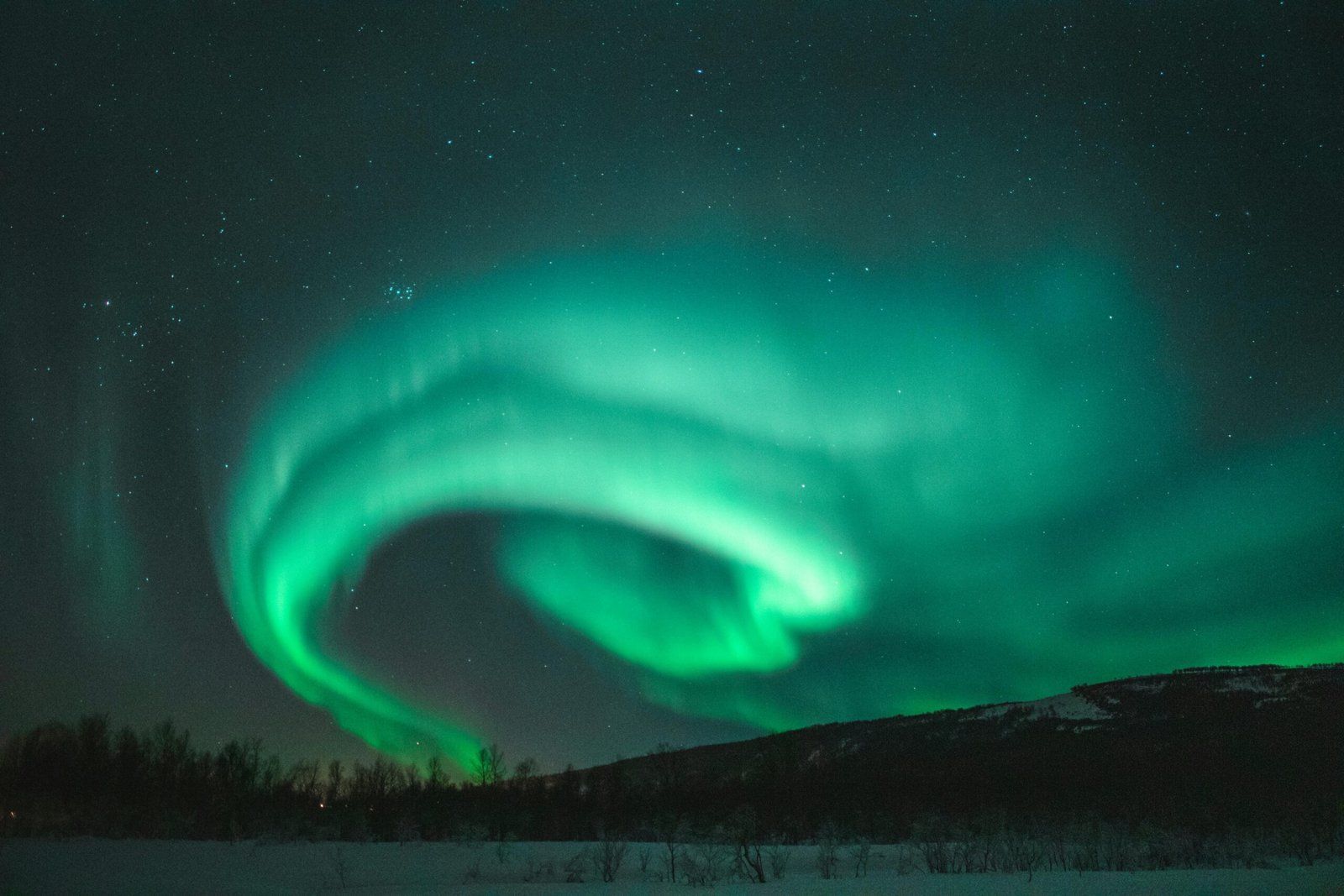
What is northern lights stone?
What Is Northern Lights Stone? A Guide to Auroral Gems
If you’ve searched for ‘Northern Lights Stone’, you’ve likely seen a variety of beautiful, iridescent gems. However, this isn’t a specific geological classification. It’s a marketing term used to describe any gemstone whose appearance captures the ethereal, shifting colors of the Aurora Borealis. The effect is caused by unique optical properties within the stone, not by pigments or dyes.
While several gems can fall under this umbrella, the name is most famously and accurately associated with one particular mineral family known for its breathtaking play-of-color. This guide will explore the primary stones known as Northern Lights Stone and other contenders for the title.
The Primary 'Northern Lights Stone': Labradorite & Spectrolite
The true origin of the ‘Northern Lights Stone’ name lies with the feldspar mineral Labradorite. Its unique optical phenomenon is so tied to the aurora that it has become the definitive gem for this description.
Labradorite: The Original Aurora Gem
Labradorite is the gemstone most commonly sold as Northern Lights Stone. It is a feldspar mineral that, at first glance, can appear to be a dull, dark grey-green stone. However, when it catches the light at the right angle, it flashes with an incredible iridescent glow of blue, green, gold, and peacock colors. This stunning optical effect is called labradorescence. According to Inuit legend, the Northern Lights were once trapped inside the rocks along the coast of Labrador, and a warrior freed most of them with his spear, but some of the light remained captured within the stone. This folklore perfectly captures the visual magic of Labradorite, making it the quintessential auroral gem.
Spectrolite: Labradorite’s Premium Cousin
Spectrolite is not a different mineral, but rather a specific, exceptionally high-quality variety of Labradorite found only in Finland. What sets it apart is the intensity and range of its colors. While standard Labradorite primarily shows blues and greens, Spectrolite can display the entire spectrum of color, including vibrant oranges, reds, and purples, often all at once. This full-spectrum display makes it an even more accurate representation of the Northern Lights. Discovered during World War II, its rarity and superior labradorescence make Spectrolite more valuable and sought-after by collectors and jewelry designers.
The Science Behind the Glow: Labradorescence
The magical glow of Labradorite and Spectrolite is not a surface color but a fascinating trick of the light. The effect, known as labradorescence, is a form of iridescence caused by light interacting with the stone’s internal structure. The mineral is composed of extremely thin, stacked layers of different compositions. When light enters the stone, it bounces off these various layers. This interference splits the light into its component colors, and only certain wavelengths (colors) are reflected back to your eye. As you change the angle of the stone or the light source, the colors you see will change, creating the dynamic, shimmering effect that so perfectly mimics the dancing aurora.
Other Gems with an Auroral Glow
While Labradorite is the classic ‘Northern Lights Stone’, other gems, often enhanced by humans, are sometimes marketed under the same name due to their iridescent qualities.
Aura Quartz: A Man-Made Wonder
Aura Quartz is a group of crystals, most commonly clear quartz, that have been treated to produce a vibrant, metallic rainbow sheen. The process, called vapor deposition, involves placing the quartz in a vacuum chamber and bonding microscopic particles of precious metals like gold, titanium, or platinum to its surface. The result, known as ‘Angel Aura’ or ‘Aqua Aura’ quartz, has a high-energy, rainbow-like appearance. While beautiful, it’s important to know that this is a man-made enhancement. The color is a surface coating and not an intrinsic optical property of the quartz itself, unlike the natural glow of Labradorite.
Mystic Topaz: The Coated Gemstone
Similar to Aura Quartz, Mystic Topaz is a natural gemstone—in this case, white topaz—that has been given a special coating to create a rainbow effect. A very thin layer of titanium is applied to the stone’s pavilion (the bottom, pointed part), which causes light to reflect in a kaleidoscope of colors. The effect is dazzling and often marketed as ‘Northern Lights Topaz’. Like Aura Quartz, this is a surface treatment that can be scratched or damaged over time. Its color play is typically more of a surface-level rainbow shimmer compared to the deeper, more directional flash seen in high-quality Labradorite.
Quick Facts
- ‘Northern Lights Stone’ is a trade name, not a scientific mineral name.
- Labradorite is the gemstone most commonly and accurately associated with this term.
- Spectrolite is a rare, high-quality variety of Labradorite from Finland with a full spectrum of color.
- The glow in Labradorite is a natural optical effect called ‘labradorescence’.
- Other stones like Aura Quartz and Mystic Topaz are surface-coated to create a similar iridescent effect.
- The effect in Labradorite is caused by light interference within the stone’s layered structure.
- Always ask a seller to clarify which specific mineral they are selling when they use a trade name.
Frequently Asked Questions (FAQ)
Q: Is Northern Lights Stone the same as Aurora Borealis Stone? A: Yes, ‘Northern Lights Stone’ and ‘Aurora Borealis Stone’ are interchangeable marketing terms. They both refer to gemstones, primarily Labradorite and Spectrolite, that exhibit a colorful iridescence resembling the aurora.
Q: How can you tell if Labradorite is real? A: Real Labradorite has a directional play-of-color, known as ‘flash’ or ‘schiller’. The color appears and disappears as you tilt the stone. Fake or low-quality imitations often have a uniform, painted-on look that is visible from all angles.
Q: Is Spectrolite more valuable than Labradorite? A: Generally, yes. True Spectrolite from Finland is much rarer and displays a more intense and broader range of colors than typical Labradorite. These factors make it more valuable to collectors and in the jewelry market.
Q: Can the coating on Aura Quartz or Mystic Topaz wear off? A: Yes, because the iridescence on Aura Quartz and Mystic Topaz comes from a microscopic surface coating, it can be scratched or worn away over time with rough handling or exposure to abrasive chemicals.
Other Books
- GIA Gem Encyclopedia on Labradorite
- Geology.com: What is Labradorescence?
- Mindat.org – Spectrolite Information


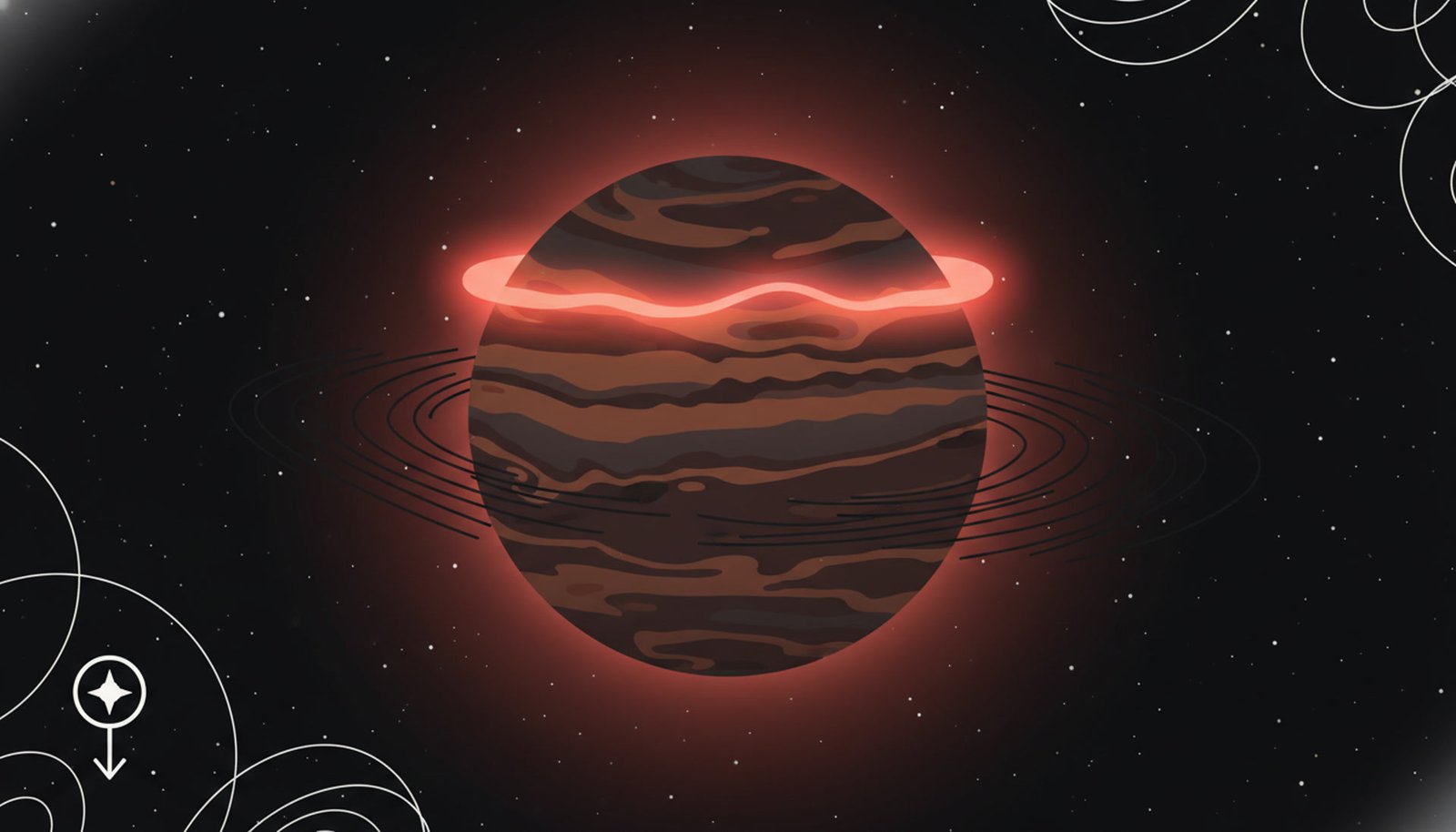
JWST's Weather Report: Auroras Heat a Brown Dwarf
Summary
By the end of this article, you will understand how astronomers create weather maps for worlds light-years away and learn that the ‘weather’ on some objects is driven by powerful auroras, not clouds.
Quick Facts
- Surprise: SIMP-0136 spins so fast its 'day' is only 2.4 hours long.
- The primary driver of its brightness changes isn't shifting clouds, but temperature changes deep in its atmosphere.
- It has a permanent 'thermal inversion'—a hot layer high up—that is 250°K warmer than expected.
- This heating is likely caused by an aurora powered by a magnetic field hundreds of times stronger than Jupiter's.
- Despite being a 'failed star', it generates its own powerful auroral displays without a nearby sun.
The Discovery: An Unexpected Atmospheric Fever
A team of astronomers used the JWST to stare at SIMP-0136, a nearby brown dwarf, for one full rotation. They expected a familiar Story: that the object’s flickering brightness was caused by patchy clouds rotating in and out of view. But their computer models, designed to work backward from the light spectra, revealed a Surprise. To explain the data, the clouds had to be mostly static. The real action was a dramatic temperature change high in the stratosphere. At all times, there was a ‘thermal inversion’—a layer about 250 Kelvin hotter than it should be. The primary variability wasn’t from clouds below, but from this mysterious heat from above.
This work paints a portrait of an L-T transition object, where the primary variability mechanisms are magnetic and thermodynamic in nature, rather than due to inhomogeneous cloud coverage.
— E. Nasedkin et al., Lead Authors
The Science Explained Simply
Normally, as you go higher in a planet’s troposphere, it gets colder. A thermal inversion flips this script: a layer of the atmosphere is hotter than the layer below it. This is NOT like the ground warming up on a sunny day. An inversion requires energy to be deposited directly into the upper atmosphere, like a heater installed in the ceiling. On Earth, our ozone layer does this with UV light. On SIMP-0136, with no star nearby, the energy source must be different. The Salient Idea is that this inversion acts as a giant fingerprint pointing to an external energy source—in this case, energetic particles guided by a magnetic field.
The temperature gradient inverts, and begins increasing with increasing altitude… This is clearly in contrast with the self-consistent forward models, which are usually monotonically decreasing.
— From the Research Paper
The Aurora Connection
The heat source is almost certainly a powerful aurora. Previous radio observations already hinted that SIMP-0136 has one. The research suggests a magnetic field of around 3000 Gauss—hundreds of times stronger than Jupiter’s—is accelerating particles and slamming them into the atmosphere. This is the same process that creates Earth’s Northern Lights, but on an epic scale. These particles dump their energy high in the stratosphere, creating the observed permanent ‘heat wave’. SIMP-0136 is a self-contained aurora generator, teaching us how magnetic fields can fundamentally shape planetary atmospheres, even in the lonely darkness between stars.
A Peek Inside the Research
This discovery relied on a technique called time-resolved atmospheric retrieval. The team didn’t just take one snapshot; they collected thousands of light spectra over 3.5 hours as the brown dwarf rotated. Each spectrum was fed into a complex computer model called `petitRADTRANS`. This program tested millions of possible atmospheric conditions—different temperatures, chemicals, and cloud structures—to find the combination that perfectly matched the JWST data for that specific moment. By comparing the ‘best-fit’ models from 24 different rotational phases, they built a dynamic weather map and proved the temperature, not the clouds, was the main thing changing.
Key Takeaways
- Atmospheric variability isn't always caused by clouds; magnetic forces can be the primary driver.
- A 'thermal inversion' is a key fingerprint of energy being deposited into an atmosphere from above, such as by an aurora.
- Using time-series spectroscopy, JWST can create dynamic 'weather maps' of distant brown dwarfs.
- Brown dwarfs can host powerful, self-generated auroras, providing a natural laboratory for studying magnetic fields.
Sources & Further Reading
Frequently Asked Questions
Q: If the clouds aren’t changing, why does SIMP-0136 have them?
A: The models show that patchy silicate clouds are necessary to explain the overall spectrum of SIMP-0136. However, these patches don’t seem to rotate in a way that causes the main brightness variations. They are a static feature of the landscape, while the temperature changes are the active ‘weather’.
Q: Can we see this aurora with our eyes?
A: Probably not. The auroral emission signatures typically sought, like H3+, haven’t been detected yet. The ‘aurora’ here is detected indirectly through the intense heating it causes in the atmosphere, which JWST can measure in the infrared.
Q: How can it have an aurora without a sun and solar wind?
A: The mechanism isn’t fully understood, but it’s believed that rapidly rotating brown dwarfs like SIMP-0136 can generate their own charged particles and powerful magnetic fields. This creates a self-contained system that powers its own aurora, independent of a nearby star.