
Decoding the Birth of Giant Planets
Summary
By the end of this article, you will understand how scientists read the chemical fingerprints of distant planets to uncover exactly how and where they were born.
Quick Facts
- Surprise: The HR 8799 system has four massive planets, each 5 to 10 times heavier than Jupiter.
- Surprise: These planets are so young they are still glowing with the heat of their own creation at over 900 degrees Celsius.
- Salient Idea: By measuring sulfur, scientists can tell how much solid rock and ice a gas giant 'ate' while forming.
- Surprise: The outermost planet, HR 8799 b, has a massive amount of nitrogen, proving it formed in the deep freeze of the outer solar system.
The Discovery: The Chemical Recipe of Planets
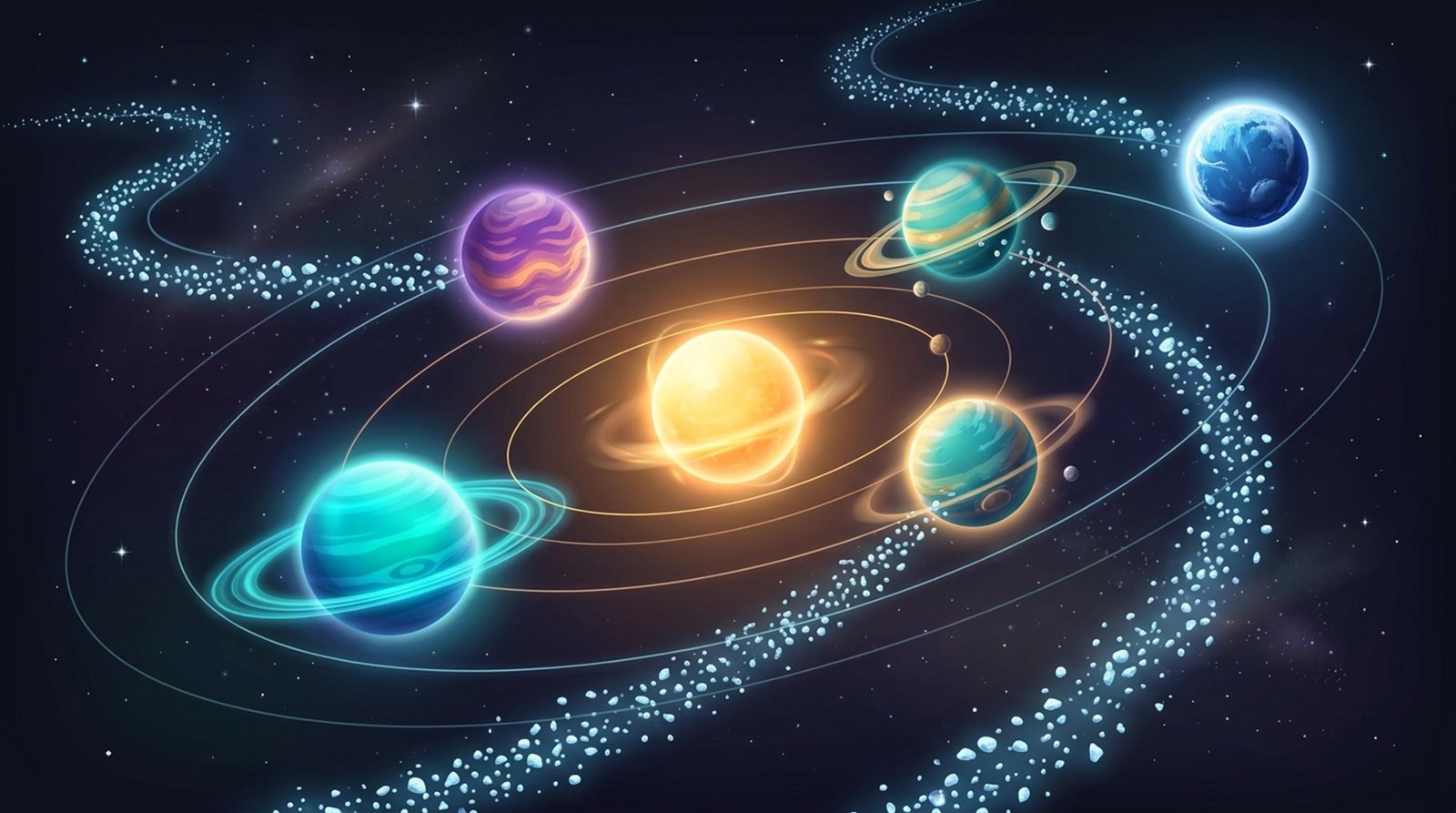
Using the James Webb Space Telescope, astronomers looked at the HR 8799 system, a family of four giant planets. They weren’t just taking pictures; they were hunting for chemical fingerprints. By analyzing the light shining through the planets’ atmospheres, they found a Surprise: elevated levels of sulfur and carbon. This proved these gas giants didn’t just swallow gas; they consumed massive amounts of solid rocks and ice, known as pebbles, early in their lives. The outermost planet, planet ‘b’, also showed huge amounts of nitrogen from ammonia. This is the Salient Idea: the exact mix of chemicals in a planet’s sky acts like a recipe book, telling us the story of its birth.
The elemental abundance patterns we observe are consistent with a picture where planet b formed between the CO snowline and the more-distant N2 snowline.
— Dr. Jerry W. Xuan et al.
The Science Explained Simply
To understand how planets get their ingredients, we have to talk about snowlines. This is NOT a line of snow on a mountain. In a baby star system, a snowline is the exact distance from the star where a specific gas gets cold enough to freeze into solid ice. For example, the water snowline is close to the star, but the nitrogen snowline is very far away. When a planet forms, it sweeps up whatever is around it. The inner three HR 8799 planets formed inside the nitrogen snowline, meaning they missed out on freezing nitrogen. But the outermost planet formed so far away that it scooped up incredibly cold, nitrogen-rich gas and ice. By reading these chemical ‘barcodes’, we know exactly where they grew up.
The Aurora Connection
The HR 8799 planets are massive, hot gas giants with violent weather and likely intense magnetic fields. Just like Earth’s magnetic field catches the solar wind to create auroras, these giant planets’ magnetic fields interact with the intense stellar winds of their massive host star. Without these powerful magnetic shields, the heavy, enriched atmospheres that JWST just measured would be stripped away into space over millions of years. Understanding the complex chemistry of these gas giants helps us understand the extreme space weather and magnetic environments that govern whether a planet can hold onto its vital gases.
Extreme worlds teach us about planetary survival.
— NorthernLightsIceland.com Team
A Peek Inside the Research
How do you measure sulfur on a planet trillions of miles away? It requires incredible Knowledge and Tools. Researchers used a technique called spectroscopy with the JWST’s NIRSpec instrument. By spreading the infrared light from the planets into a rainbow, they looked for missing slices of light. Different molecules, like water, carbon monoxide, or hydrogen sulfide, block very specific colors of light. By carefully separating the blinding glare of the host star from the faint glow of the planets, they detected the distinct signatures of these molecules. It is a masterpiece of removing the noise to find the hidden signals of nature.
With four giant planets orbiting between 15-70 au, HR 8799 provides an unparalleled testbed for studying giant planet formation.
— JWST Research Team
Key Takeaways
- Planetary atmospheres are time capsules that record the ingredients available when they formed.
- 'Snowlines' in space dictate whether elements like carbon and nitrogen are solid ice or invisible gas.
- Pebble drift—tiny rocks migrating inward—plays a massive role in delivering heavy elements to growing planets.
- The JWST allows us to see these chemical signatures, like water, methane, and ammonia, with unprecedented clarity.
Sources & Further Reading
Frequently Asked Questions
Q: Why do scientists care about sulfur in a gas giant?
A: Sulfur is mostly found in solid rocks and dust in space, not gas. If a gas giant has a lot of sulfur, it proves the planet ‘ate’ a huge amount of solid material while forming, not just gas.
Q: What is ‘pebble drift’?
A: Pebble drift happens in young solar systems when tiny rocks and ice chunks slowly spiral inward toward the central star, often being swept up by growing planets along the way.


The Planet With 26,000 MPH Metal Winds
Summary
By the end of this article, you will understand how scientists measure wind on a planet 670 light-years away and why its atmosphere is a boiling storm of glowing metal.
Quick Facts
- Surprise: KELT-9b is hotter than most stars, with dayside temperatures reaching 4,000 degrees Celsius.
- Salient Idea: The planet is tidally locked, meaning one half is in permanent daylight and the other in permanent darkness.
- Surprise: Winds scream across the planet at roughly 11.7 kilometers per second (about 26,000 mph).
- Surprise: The atmosphere is so extreme that it contains vaporized heavy metals like iron, titanium, and calcium.
The Discovery: Catching a Supersonic Wind
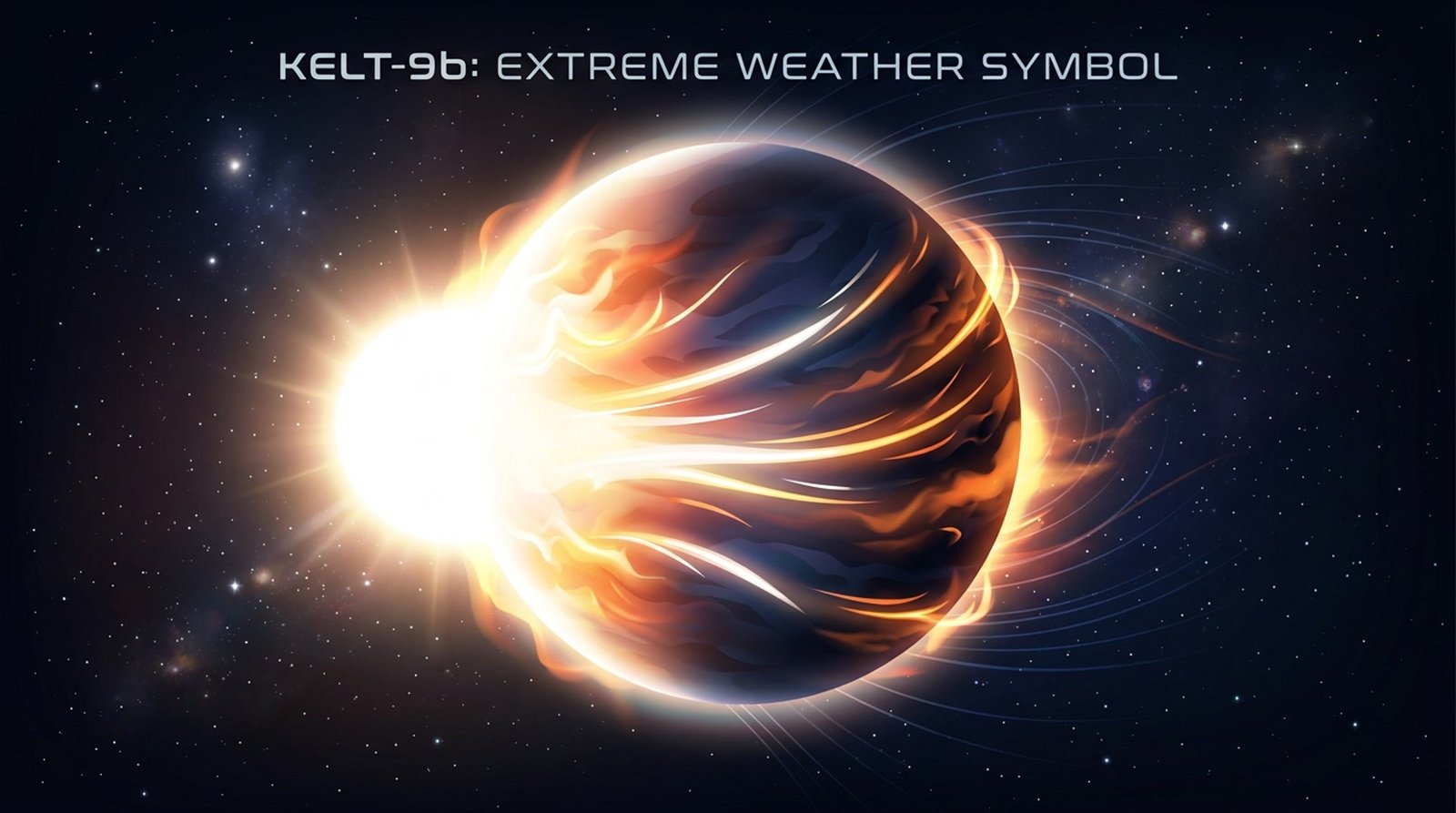
In a recent study, astronomers pointed the Keck Planet Finder telescope at KELT-9b, the hottest exoplanet ever discovered. They weren’t just looking for its chemical makeup; they were hunting for motion. Using high-resolution spectroscopy, they tracked the light of vaporized metals. They found a Surprise: the light was shifting in a way that proved the glowing gas was moving incredibly fast. They had discovered a supersonic wind blowing at roughly 26,000 mph (11.7 km/s)! Because the planet is tidally locked, the blazing dayside acts like an engine, pushing heat toward the permanent nightside. This creates a relentless, global hurricane of vaporized iron and titanium.
Original Paper: ‘Extreme winds on the emerging dayside of an ultra-hot Jupiter’
This unambiguously suggests the presence of atmospheric winds… representing the most extreme atmospheric winds in hot Jupiters to date.
— Dr. Yapeng Zhang and team
The Science Explained Simply
This is NOT like wind on Earth, which is mostly driven by the sun heating our air and surface unevenly. On KELT-9b, the dayside temperature reaches a blistering 4,000 Kelvin (over 6,700 F). That is hotter than many stars! At this heat, molecules like water are completely ripped apart, and solid metals like iron turn into a glowing, electrically charged gas. The Salient Idea here is the extreme temperature difference between the day and night sides. Nature hates imbalance, so the atmosphere rushes to the dark side to cool off, creating a permanent, supersonic jet stream. It is a one-way conveyor belt of boiling metal.
The Aurora Connection
While KELT-9b does not have Northern Lights like Earth, it shares a deep connection with our planet: magnetic fields. On Earth, our magnetic field protects us from solar storms, causing auroras. On KELT-9b, the atmosphere is so hot that it becomes highly ionized, meaning it is full of electrically charged particles. When charged particles move through a planet’s magnetic field, they experience drag—a magnetic braking effect. Researchers expected a strong magnetic shield to severely slow these winds down. Instead, the 26,000 mph speeds suggest the atmospheric drag might be weaker or more complex than predicted. Studying this helps us understand the invisible magnetic forces that govern both extreme exoplanets and our own safe haven.
More realistic models are required in the extreme parameter regime of KELT-9 b to explore the full implications of the observations on atmospheric drag and magnetic fields.
— Astrophysics Research Team
A Peek Inside the Research
How do you measure wind speed on a planet trillions of miles away? It relies on a clever trick called the Doppler effect. Think of how a siren changes pitch as an ambulance speeds past you. Light does the exact same thing. As the vaporized metals in KELT-9b’s atmosphere blew toward the telescopes on Earth, the light waves squished together, shifting toward the blue end of the spectrum (a blueshift). The researchers used the Keck Planet Finder, an incredibly precise instrument, to measure this exact color shift. By separating the planet’s rotation from the wind, they pinpointed the exact speed of this supersonic metal storm.
High-resolution spectroscopy provides a unique opportunity to directly probe atmospheric dynamics by resolving Doppler shifts.
— Study Authors
Key Takeaways
- High-resolution spectroscopy allows astronomers to track the speed of glowing gas light-years away using the Doppler effect.
- Extreme heat rips molecules apart, creating a highly ionized (electrically charged) atmosphere.
- Magnetic fields interact with these charged winds, acting like a brake system for the planet's weather.
- Ultra-hot Jupiters act as natural laboratories to test how physics works under the universe's most extreme conditions.
Sources & Further Reading
Frequently Asked Questions
Q: What would it feel like to stand on KELT-9b?
A: You could not stand on it! It is a gas giant with no solid surface. Even if you could, the extreme heat would instantly vaporize you, and the 26,000 mph winds of charged metal plasma would blow your atoms into the permanent nightside.
The Exoplanet That Gets Flash-Heated Like a Comet
Summary
By the end of this article, you will understand how astronomers read the ‘weather’ on a gas giant that gets flash-heated from 400K to 1400K in a matter of hours, and what this extreme world teaches us about planetary atmospheres.
Quick Facts
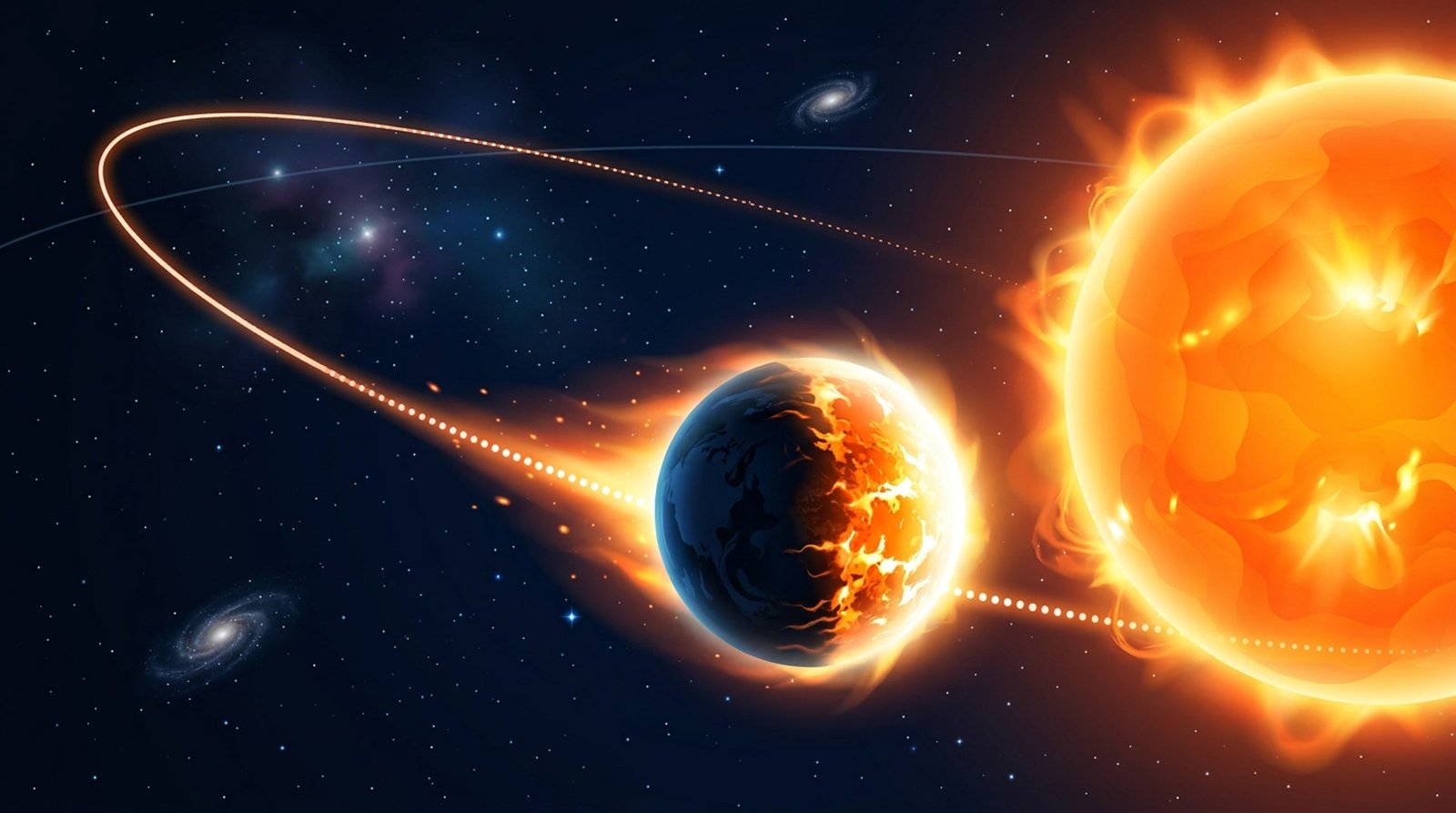
- Surprise: HD 80606 b has an orbit more like a comet than a normal planet, stretching far away and then swooping incredibly close to its star.
- Salient Idea: During its closest approach, the planet's temperature skyrockets from 400 Kelvin to 1400 Kelvin in just tens of hours.
- Surprise: Despite this intense 'flash heating', the planet's upper atmosphere actually stays cooler than the layers below it.
- Salient Idea: Atmospheric winds on this planet might be howling at thousands of miles per hour, driven by the sudden blast of stellar energy.
The Discovery: The Flash-Heated Gas Giant
Astronomers recently pointed the giant Keck II telescope in Hawaii at HD 80606 b right as it swooped within 0.03 AU of its host star. Because of its massive, stretched-out orbit, the planet experiences extreme ‘flash heating.’ The Surprise was that while older computer models predicted a super-hot upper atmosphere (a phenomenon called a thermal inversion), the new telescope data showed the exact opposite. Using high-resolution spectroscopy, the team caught a tentative glimpse of methane and carbon monoxide absorbing light. They proved that even during this violent heating event, the planet’s atmospheric chemistry is entirely different than expected.
The rapid heating of the atmosphere may lead to extreme chemical changes…
— Luke Finnerty, Lead Researcher
The Science Explained Simply
This is NOT just taking a zoomed-in picture of a planet. Exoplanets are way too far away for that. Instead, scientists look at the spectrum of light. The Salient Idea is that different chemicals in an atmosphere block specific colors of light. By looking at the starlight bouncing off the planet, researchers can find the ‘fingerprints’ of specific molecules. It is like analyzing the chemical makeup of a cloud from trillions of miles away simply by seeing which colors of light it eats up. In this case, the ‘missing’ light told them that methane and carbon monoxide were floating in the sky.
The Aurora Connection
When a planet gets this close to its star, it is absolutely bombarded by intense stellar radiation and solar winds. Here on Earth, our magnetic field interacts with solar winds to create beautiful auroras, while acting as an invisible shield that stops our atmosphere from being stripped into space. HD 80606 b gets blasted by radiation thousands of times stronger than Earth does during its close pass. Studying how its atmosphere survives this comet-like plunge helps us understand the limits of planetary protection and how magnetic fields might operate to save the skies of extreme, ultra-hot worlds.
Studying an atmosphere under an extreme external forcing function provides a unique opportunity.
— The Research Team
A Peek Inside the Research
Finding these chemicals requires serious Knowledge and Tools. The researchers used the NIRSPEC instrument on the giant Keck Telescope. They had to mathematically separate the planet’s incredibly faint signal from the blazing light of the host star and the interference of Earth’s own atmosphere. They used a technique called ‘cross-correlation’—matching the observed light to hundreds of thousands of computer-generated models—to find a tiny signal hidden in a mountain of noise. It is a painstaking, mathematical process that pushes the absolute limits of ground-based astronomy.
Future observations with higher spectral resolution are needed for a confident atmospheric detection.
— Finnerty et al.
Key Takeaways
- High-resolution spectroscopy acts like a cosmic barcode scanner, letting us detect gases like methane and carbon monoxide light-years away.
- Extreme eccentric orbits provide a natural laboratory to see how atmospheres react to sudden, massive bursts of radiation.
- The lack of a 'thermal inversion' on this planet changes how scientists model extreme weather on ultra-hot Jupiters.
- Planetary magnetic fields are crucial for protecting atmospheres from being entirely stripped away during these violent heating events.
Sources & Further Reading
Frequently Asked Questions
Q: What exactly is a ‘thermal inversion’?
A: Normally, an atmosphere gets colder as you go higher up. A thermal inversion is when a layer of the upper atmosphere actually gets hotter than the layers below it (like Earth’s stratosphere). Scientists thought this extreme planet would have one, but the data suggests it doesn’t!
Q: Why is the planet’s orbit shaped like a stretched-out oval?
A: HD 80606 b has an ‘eccentric’ orbit, meaning it swings far out into space and then dives incredibly close to its star. This bizarre path was likely caused by a gravitational tug-of-war with another star or planet billions of years ago.
Solving Mars' Glowing Aurora Mystery Using AI
Summary
By the end of this article, you will understand how solar winds create invisible glowing auroras on the daylight side of Mars, and how scientists used ‘explainable AI’ to uncover the planet’s atmospheric secrets.
Quick Facts
- Surprise: Mars has auroras that happen during the day, not just at night!
- Salient Idea: Earth's global magnetic field shields us, but Mars' weak field lets solar wind crash right into the atmosphere
- Surprise: The auroras emit ultraviolet light, meaning human eyes couldn't see them without special satellite instruments
- Surprise: Scientists used 'explainable AI' to force the computer to explain exactly how it solved the space weather puzzle
The Discovery: AI Meets Space Weather
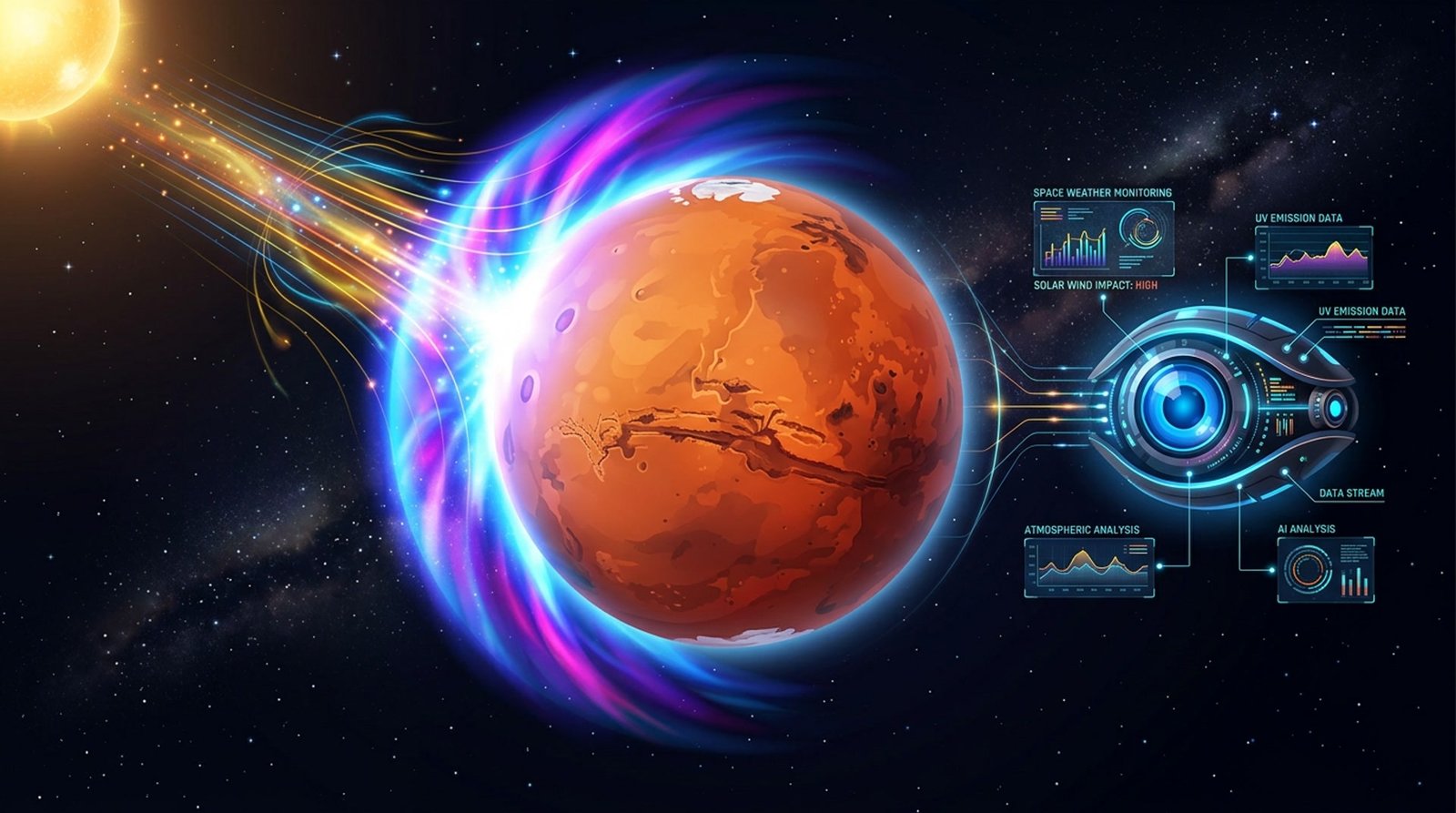
For years, scientists knew Mars had proton auroras—glowing patches of ultraviolet light on the daytime side of the planet. But figuring out exactly what triggers them across the chaotic Martian atmosphere was a massive puzzle. Using data from the MAVEN spacecraft gathered between 2014 and 2022, researchers decided to let a machine solve it. They built an Artificial Neural Network (ANN), feeding it thousands of measurements of solar wind, magnetic fields, and atmospheric density. The Surprise was how accurately the AI learned to predict these auroras. But AI is normally a ‘black box’—it gives an answer, but won’t tell you *how* it got there. To fix this, the team used a mathematical tool called SHAP to ‘interview’ the AI, forcing it to reveal that the Martian seasons and the angle of the sun were the biggest triggers for the glowing skies.
Original Paper: ‘An Explainable Deep-learning Model of Proton Auroras on Mars’
We develop a first purely data-driven model of proton auroras using MAVEN in-situ observations.
— Dr. Dattaraj B. Dhuri
The Science Explained Simply
This is NOT like the Northern Lights on Earth. On Earth, our strong global magnetic field catches solar wind electrons and funnels them to the poles, creating a nighttime light show. Mars lost its global magnetic field billions of years ago. The Salient Idea here is ‘charge exchange.’ When solar wind protons approach Mars, they steal an electron from a hydrogen atom floating in space. This turns them into energetic neutral atoms (ENAs). Because they are neutral, they completely ignore Mars’ weak magnetic defenses! They slam straight into the lower atmosphere on the *daylight* side, colliding with gas and emitting bursts of ultraviolet light. This creates a daytime aurora that is invisible to the naked eye but blazes brightly to UV cameras.
Solar wind protons penetrating as energetic neutral atoms into Mars’ thermosphere are primarily responsible for these auroras.
— Research Team
The Aurora Connection
Studying Martian proton auroras gives us a terrifying look at what happens when a planet loses its magnetic shield. On Earth, our heavy global magnetic field acts as an armor against space weather. Mars only has patchy, weak ‘crustal’ magnetic fields. When the solar wind hits, it strips away pieces of the Martian atmosphere over time—a historical loss that turned Mars from a wet, Earth-like world into a frozen desert. By understanding these daytime auroras, scientists can map exactly how the solar wind interacts with the remnants of Mars’ atmosphere today. It highlights just how vital Earth’s invisible magnetic shield is for protecting our skies and our lives.
Studying them can provide new insights into the complex interactions between the solar wind and weak crustal field of the planet.
— Study Authors
A Peek Inside the Research
How do you ask an AI for its reasoning? The team used SHAP (SHapley Additive exPlanations), a concept from cooperative game theory. Imagine a sports team winning a game; SHAP calculates exactly how much credit each player deserves. Here, the ‘players’ were data points like solar wind speed, temperature, and planetary alignment. The SHAP analysis revealed that the AI relied most heavily on the Solar Zenith Angle (where the sun is in the sky) and the Martian season (dusty summers cause more auroras). It proved the AI wasn’t just guessing—it was learning the actual physics of the Martian atmosphere from pure data.
Through SHAP analysis, we are able to identify possible biases and caveats in the data and modeling.
— Research Team
Key Takeaways
- Proton auroras are caused by solar wind transforming into 'neutral' atoms to sneak past magnetic defenses
- The Martian seasons, specifically its dusty southern summer, drastically change how these auroras behave
- Artificial Neural Networks (AI) can accurately predict space weather when fed massive amounts of satellite data
- SHAP analysis is a mathematical tool that opens up the AI 'black box' so humans can understand its logic
Sources & Further Reading
Frequently Asked Questions
Q: Can I see a proton aurora if I travel to Mars?
A: No, human eyes wouldn’t be able to see it. Proton auroras emit light in the extreme ultraviolet spectrum (specifically Lyman-alpha emissions), so you would need special UV goggles or cameras to see the sky glow.
Q: Why do these auroras happen during the day?
A: Because they are caused by a direct hit from the solar wind! The sun blasts these particles straight at the ‘day’ side of the planet, where they bypass Mars’ weak magnetic fields and crash directly into the atmosphere.
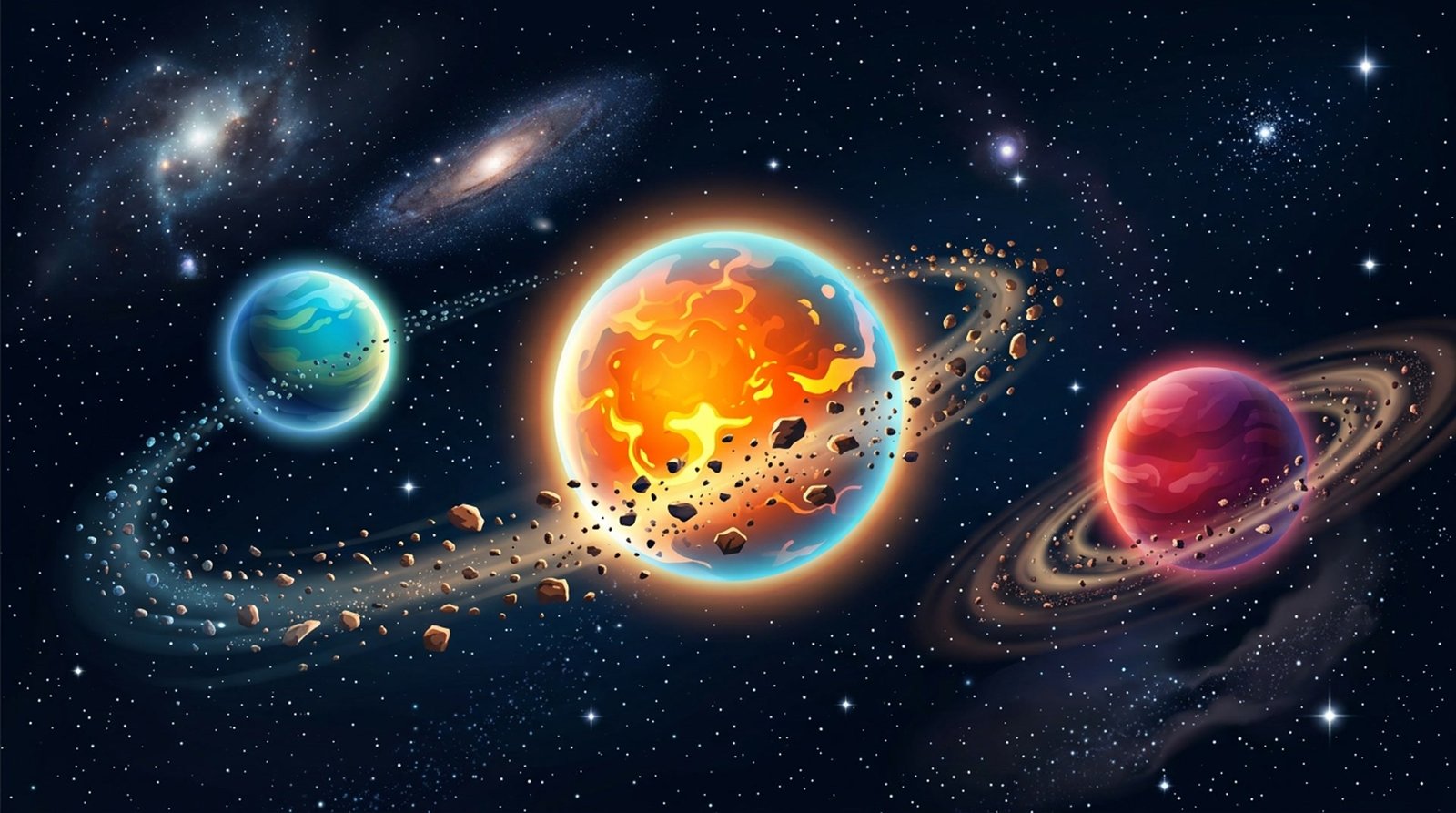
Giant Exoplanets Share Jupiter's Heavy Metal Secret
Summary
By the end of this article, you will understand how scientists read the chemical fingerprints of distant planets to reveal their violent, rocky origins.
Quick Facts
- Surprise: These planets are 15 to 70 times further from their star than Earth is from the Sun!
- Salient Idea: They contain chemical markers like water, methane, and even toxic hydrogen sulfide.
- Surprise: Despite being gas giants, they are packed with 'metals' (elements heavier than hydrogen and helium) just like Jupiter.
- Salient Idea: Scientists used the James Webb Space Telescope to block out a blinding star and photograph the faint planets directly.
The Discovery: The Heavy Metal Giants
Astronomers have long wondered if the gas giants in our solar system are unique. Using the James Webb Space Telescope (JWST), a team peered at HR 8799, a star system with four massive planets. They faced a huge challenge: the star is thousands of times brighter than the planets. By using special tools to subtract the blinding starlight, they found a Surprise: the atmospheres of three of these planets are loaded with heavy elements like carbon, oxygen, and sulfur. This wasn’t just a random mix. The chemical enrichment was uniform across all three worlds, perfectly mirroring the makeup of our very own Jupiter and Saturn. It tells a violent Story of massive planets sweeping up vast amounts of rocky and icy debris as they grew in the dark reaches of space.
Original Paper: ‘Jupiter-like uniform metal enrichment in a system of multiple giant exoplanets’
This composition closely resembles that of Jupiter and Saturn and demonstrates that this enrichment also occurs in systems of multiple gas giant planets orbiting stars beyond the Solar System.
— Jean-Baptiste Ruffio & Team
The Science Explained Simply
When astronomers say ‘metals’, they do NOT mean shiny steel or iron. In astronomy, a ‘metal’ is simply any element heavier than hydrogen or helium. The Salient Idea here is that we can measure these metals using spectroscopy. This is NOT simply taking a picture of a planet. Instead, it is capturing the light from the planet and breaking it into a rainbow. Different chemicals block specific colors of light. By looking at the missing colors, scientists can prove that molecules like water, methane, and hydrogen sulfide exist there. It’s like finding a chemical fingerprint. Because they found high levels of sulfur—which mostly exists as solid rock or ice in space—they know these gas giants must have eaten a lot of solid rocks during their formation.
The Aurora Connection
Just like Earth, giant planets have complex atmospheres shaped by intense cosmic forces. On Earth, our magnetic field interacts with the solar wind to create beautiful auroras while protecting our air. The planets of HR 8799 are exposed to intense ultraviolet radiation from their host star. To hold onto thick atmospheres rich with water and methane over millions of years, these giants likely have incredibly powerful magnetic fields of their own. Understanding the exact chemical mix of these distant atmospheres helps scientists model how planetary magnetic fields form and operate, reminding us of the delicate balance that keeps our own atmosphere—and our spectacular Northern Lights—intact.
The atmospheric compositions of exoplanets encode their accretion history and thereby provide constraints on planet formation models.
— Research Team
A Peek Inside the Research
Spotting these planets is incredibly difficult. Imagine trying to see a firefly hovering next to a searchlight from miles away. The researchers used the JWST’s Near-Infrared Spectrograph (NIRSpec). The hard work involved writing custom software to model and carefully erase the overwhelming glare of the star pixel by pixel. Once the starlight was subtracted, the faint, glowing embers of the planets’ light were left behind. By analyzing this isolated light, they achieved ‘5 to 28-sigma’ detections—meaning they are mathematically certain these molecules are there. It is a brilliant triumph of data processing and optical engineering.
It is a powerful way to disentangle a faint planet signal from the stellar halo especially with a space-based telescope like JWST.
— Jean-Baptiste Ruffio & Team
Key Takeaways
- Gas giants don't just form from gas; they swallow massive amounts of rocky and icy solids.
- Carbon, oxygen, and sulfur levels act like a forensic record of a planet's birth.
- Jupiter's unique chemical recipe isn't special to our solar system.
- Directly imaging planets allows us to read their atmospheres and uncover their formation history.
Sources & Further Reading
Frequently Asked Questions
Q: What does ‘metal enrichment’ mean for a gas giant?
A: In astronomy, a ‘metal’ means any element heavier than hydrogen and helium. Enrichment means the planet has a much higher concentration of elements like carbon, oxygen, and sulfur than the star it orbits, proving it absorbed solid rocky and icy debris.
Q: Why is it important that these planets are chemically like Jupiter?
A: It shows that the way Jupiter formed—by aggressively sweeping up solid materials in the early solar system—is a common process in the universe, even for planets orbiting much further from their stars than Jupiter does.
Catching the Weird, Pulsing Auroras of Uranus
Summary
By the end of this article, you will understand why Uranus has the strangest auroras in the solar system, and how scientists caught them flashing in deep space.
Quick Facts
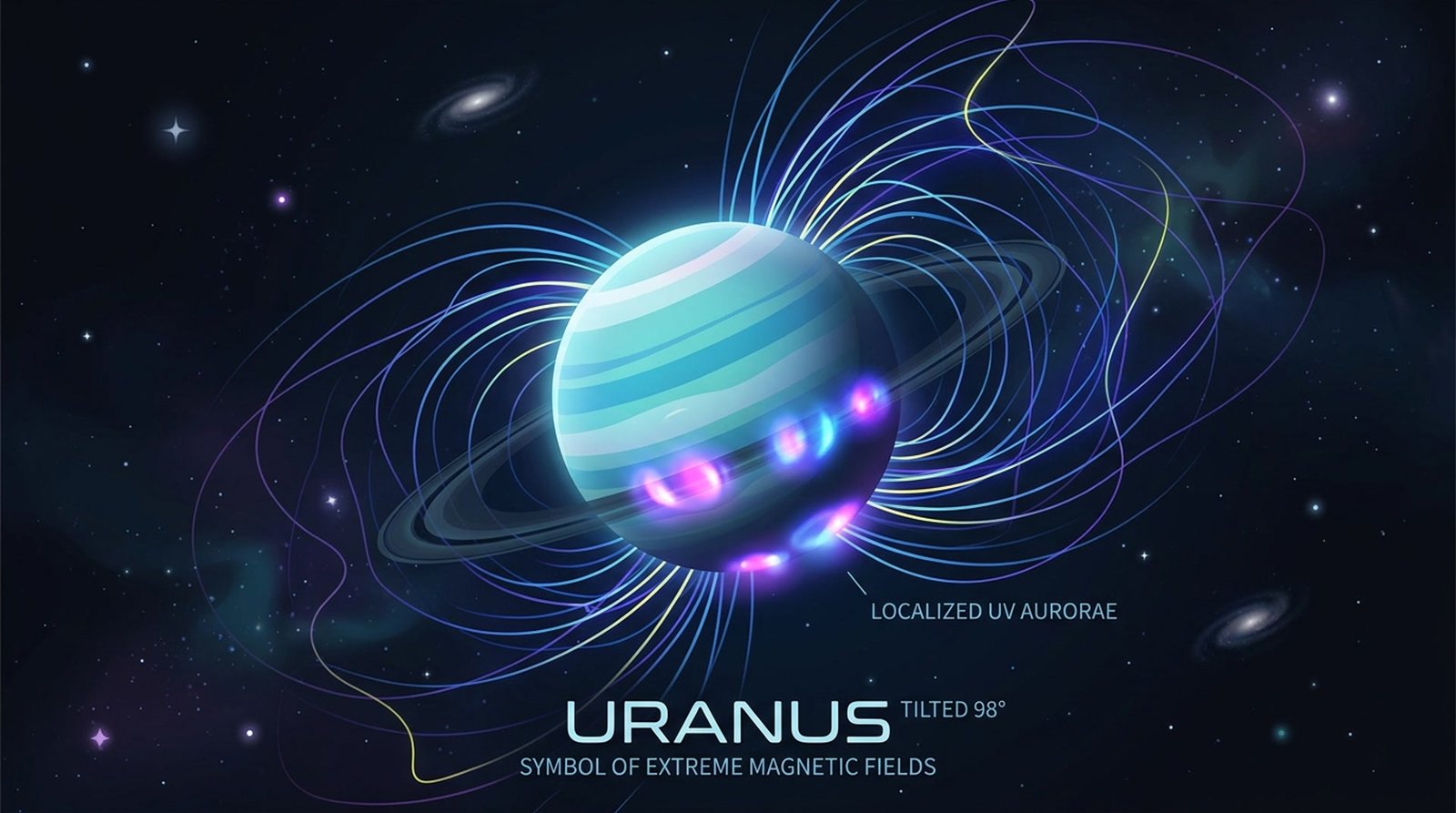
- Surprise: Uranus is knocked on its side, and its magnetic field is tilted 59 degrees away from its spin axis.
- Salient Idea: The planet's auroras are not continuous rings; they are brief spots that pulse for just a few seconds.
- Surprise: In 2014, the Hubble Space Telescope caught the brightest Uranus aurora ever seen, radiating 8.8 gigawatts of power.
- Surprise: Because one year on Uranus takes 84 Earth years, its auroral seasons take decades to change.
The Discovery: Flashes in the Dark
In 2012 and 2014, scientists pointed the Hubble Space Telescope at Uranus, waiting for solar wind shocks to hit the ice giant. They were hunting for something incredibly rare: Uranian auroras. Because Uranus is so far away, observing its space weather is a massive challenge. But when the data came back, the team found a Surprise: six new detections of ultraviolet auroras, including the most intense ones ever recorded. This wasn’t a steady glow. The images revealed localized, glowing spots rotating with the planet. The active regions lit up for a few tens of minutes, but the core emissions were made of brief, intense pulses lasting less than two seconds. They had successfully mapped the hidden magnetic footprint of a deeply alien world.
The detected emissions occur close to the expected arrival of interplanetary shocks.
— L. Lamy et al.
The Science Explained Simply
This is NOT like the auroras on Earth. On Earth, magnetic fields guide solar particles to the north and south poles, creating a continuous, glowing ring of light. Uranus is fundamentally different. The planet’s magnetic field is a mess. It is tilted 59 degrees away from the axis the planet spins on, and the magnetic center does not even line up with the center of the planet. The Salient Idea here is ‘pulsed cusp emissions.’ Because of this weird geometry, the solar wind hits the magnetic field at bizarre angles, causing localized, explosive reconnections. Instead of a steady halo, particles get dumped into the atmosphere in sudden, intense bursts, creating glowing spots that flash like a cosmic strobe light.
The Aurora Connection
Even two billion miles away, the sun dictates the weather. Just like on Earth, auroras on Uranus are driven by the solar wind—a stream of charged particles blasted out by our star. By tracking when massive bursts of solar wind were predicted to reach Uranus, scientists knew exactly when to look. When these high-pressure fronts slam into Uranus’ lopsided magnetic shield, the shield compresses. This sudden squeeze forces trapped plasma down into the planet’s hydrogen-rich atmosphere. It proves that no matter where you are in the solar system, if you have an atmosphere and a magnetic field, the sun’s invisible storms will find a way to light up your skies.
Possible Uranian cusp aurorae discussed above might thus be similarly triggered by solar wind compressions.
— The Research Team
A Peek Inside the Research
How do you see a flash of light that lasts one second, two billion miles away? It requires incredible Knowledge and Tools. The team used Hubble’s Space Telescope Imaging Spectrograph (STIS) in ‘time-tag mode.’ This instrument does not just take a long-exposure photograph; it records the exact arrival time of every single photon of ultraviolet light at a 125-microsecond resolution. By filtering out background noise and graphing the photon hits over time, they found clear spikes—auroral bursts well above the background level. They were literally counting individual packets of light to prove these alien auroras were flashing.
The time-tag mode enables us to process the data at the desired time resolution and to build time series of the counts.
— L. Lamy et al.
Key Takeaways
- Uranus' highly asymmetric magnetic field creates completely unique auroral behavior.
- Intense solar wind shocks trigger these rare, pulsing auroras.
- Scientists used Hubble's time-tag mode to measure individual ultraviolet photons.
- Tracking auroras is currently our best way to map Uranus' hidden magnetic poles.
Sources & Further Reading
Frequently Asked Questions
Q: Why didn’t Voyager 2 see these flashing spots when it flew by in 1986?
A: Uranus has extreme seasons that last decades. When Voyager 2 flew by, it was Solstice, and the magnetic geometry was totally different. By 2014, it was past Equinox, changing how the solar wind interacted with the planet.
Q: Are Uranus’ auroras visible to the naked eye?
A: No. Aside from being incredibly far away, these auroras radiate mostly in the far-ultraviolet spectrum, which is invisible to human eyes but perfectly visible to the Hubble Space Telescope.
Auroras on Planets Orbiting Dead Stars
Summary
By the end of this article, you will understand how dead, spinning stars can ignite massive auroras on alien planets, and how scientists plan to ‘hear’ them using giant radio telescopes on Earth.
Quick Facts
- Surprise: The very first planets discovered outside our solar system were orbiting a dead star, not a living one.
- Surprise: Pulsar planets do not even need their own magnetic fields to have auroras.
- Salient Idea: These alien auroras emit radio waves that are millions of times more powerful than Earth's.
- Surprise: Earth's own atmosphere (the ionosphere) actually blocks some of these alien radio signals from reaching our telescopes.
The Discovery: Listening for Alien Auroras
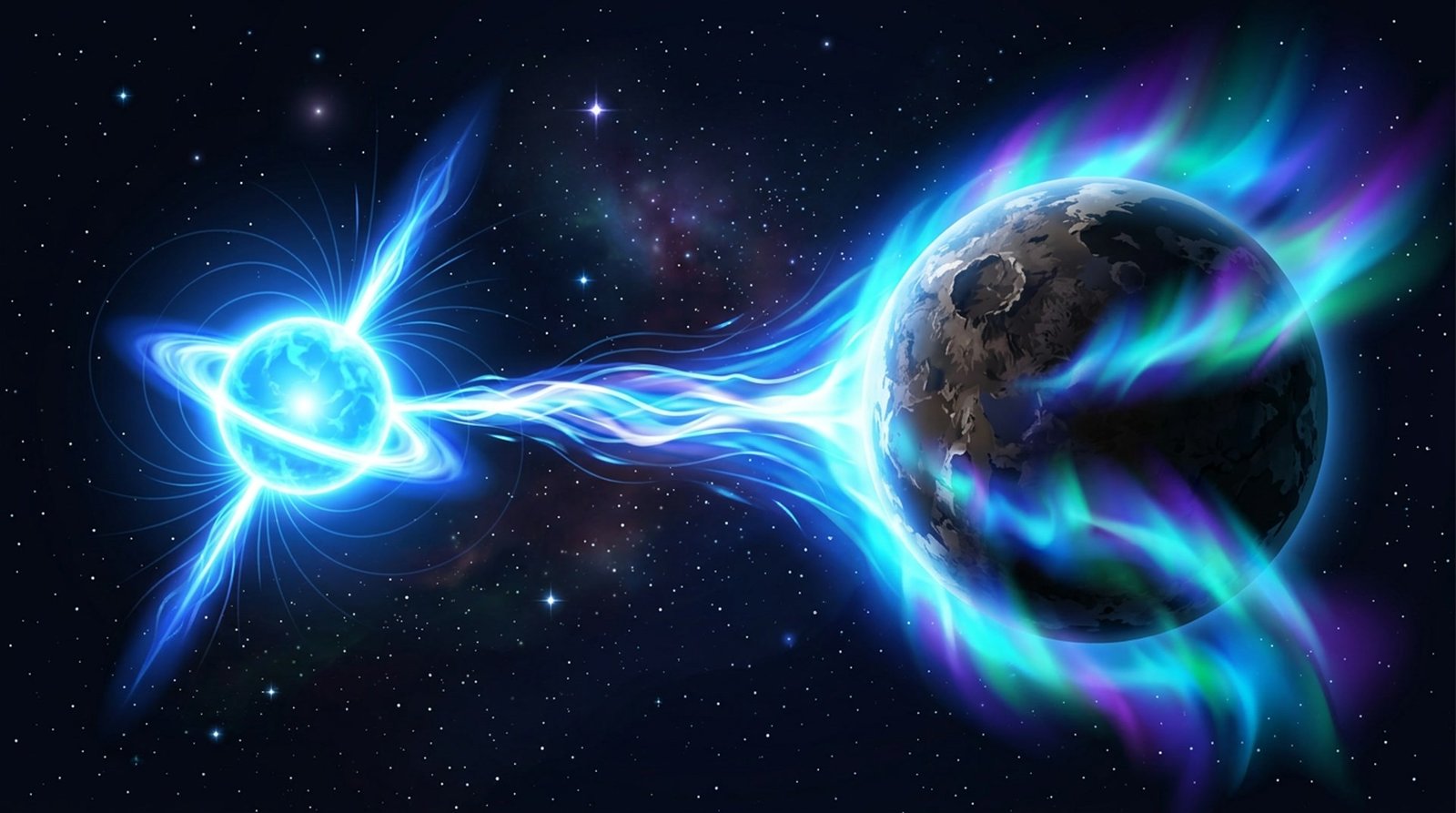
In 1992, astronomers found the first exoplanets orbiting a pulsar—a rapidly spinning, dead star. But how do we study worlds we cannot see? A team of researchers realized they could listen for them. Using supercomputers, they simulated what happens when a pulsar’s intense, magnetized wind slams into a rocky planet. They discovered a Surprise: the collision creates a massive, glowing aurora. But this isn’t visible light; it broadcasts as powerful radio waves. By calculating the strength of this radio signal, they found that current telescopes like LOFAR and the future Square Kilometre Array (SKA) might actually be able to detect these alien auroras from Earth, marking the first time we could ever ‘hear’ an exoplanet.
Original Paper: ‘Auroras on planets around pulsars’
We predict the existence of aurora on planets around millisecond pulsars… which would be the first radio detection of an extrasolar planet.
— Ruchi Mishra
The Science Explained Simply
This is NOT like the aurora on Earth. Earth has its own internal magnetic field that catches solar wind. The planets in this study are ‘dead’ rocks with zero magnetic fields. So how do they get auroras? The Salient Idea is that the pulsar’s wind is so overwhelmingly magnetic and fast that it wraps around the planet. The wind piles up and literally forces an ‘induced’ magnetic field onto the planet. Energetic electrons from the pulsar travel down these forced magnetic lines and crash into the planet, emitting low-frequency radio waves. It is a one-way blast of pure magnetic energy lighting up a barren rock.
Even without intrinsic planetary magnetic field, there can arise intense radio emission.
— Research Team
The Aurora Connection
On Earth, our Northern Lights are caused by the Sun’s mild stellar wind interacting with our protective magnetic shield. It is a gentle cosmic dance. Around a pulsar, space weather is a violent hurricane. The magnetic field of a millisecond pulsar is millions of times stronger than our Sun’s. By studying these extreme, alien auroras, scientists can better understand how stellar winds and magnetic fields behave everywhere in the universe. If we can understand how a planet survives the blast of a pulsar, we gain a deeper appreciation for Earth’s own invisible magnetic shield that keeps our atmosphere safe from the Sun.
Studying an aurora observed in the vicinity of non-magnetic planets could offer some insights for pulsar planets.
— Research Team
A Peek Inside the Research
How do scientists study something 2,000 light-years away? They use MHD (Magnetohydrodynamic) simulations. The researchers used a code called PLUTO to build a 3D digital model of a pulsar and a planet. They tested two scenarios: one where the planet’s surface was conductive, and one where it was ferromagnetic (like iron). They pushed the digital pulsar wind to near the speed of light and calculated the exact radio frequency the resulting aurora would emit. They faced a unique hurdle: Earth’s ionosphere blocks radio frequencies below 10 MHz. To hear these planets, scientists have to look for pulsars with winds just strong enough to push the aurora’s broadcast above that 10 MHz limit!
We perform the first magnetohydrodynamic simulations of magnetospheric pulsar-planet interaction.
— Ruchi Mishra
Key Takeaways
- A pulsar's intense stellar wind can induce a temporary magnetic field on a rocky planet.
- Radio telescopes could soon make the first-ever radio detection of an exoplanet by listening for its aurora.
- These alien auroras act as probes, helping us understand the mysterious, invisible winds of pulsars.
- Magnetohydrodynamic (MHD) computer simulations allow us to model extreme space weather we cannot test on Earth.
Sources & Further Reading
Frequently Asked Questions
Q: What exactly is a pulsar?
A: A pulsar is the crushed core of a dead star. It spins incredibly fast—sometimes hundreds of times a second—and shoots out powerful beams of radiation and highly magnetic winds.
Q: Why do we use radio telescopes to find these planets?
A: Planets are incredibly dim and hard to see with visible light. But the auroras created by pulsar winds blast out powerful radio waves, which our giant radio dish antennas on Earth can easily detect.
How the World Survived the 2024 Solar Maximum
Summary
By the end of this article, you will understand how massive solar storms affect Earth’s technology, and the surprising, low-cost ways operators actually protect our power grids, satellites, and flights.
Quick Facts
- Surprise: The May 2024 Gannon storm brought auroras as low as 35 degrees latitude!
- Surprise: Instead of shutting down during huge solar storms, most satellite companies keep running to avoid losing money.
- Salient Idea: Space weather creates invisible 'Geomagnetically Induced Currents' that can fry massive power transformers.
- Surprise: Operators favor cheap software modeling over buying expensive protective hardware.
The Discovery: The Great Gannon Storm
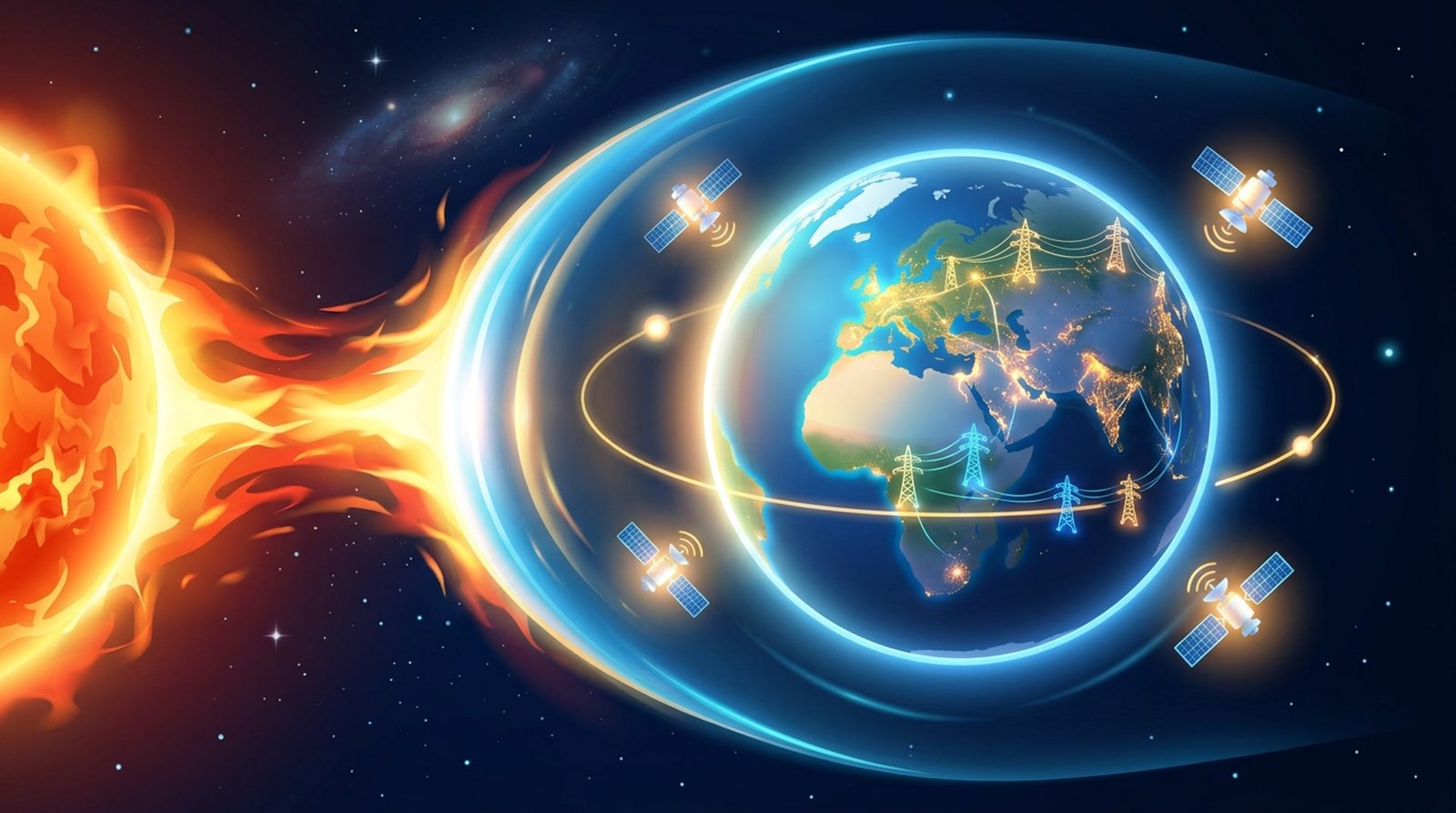
In May 2024, the Earth was hit by the Gannon Storm, an extreme G5 geomagnetic event. It was the largest space weather event in 20 years, lighting up skies with auroras far closer to the equator than normal. But while the sky was beautiful, critical infrastructure operators were sweating. A new study surveyed 55 operators across the power, satellite, and aviation industries to see how they handled the threat. The Surprise? While scientists often recommend expensive hardware upgrades or shutting systems down completely to avoid damage, most companies did the opposite. They kept operations running to protect their revenue, relying on careful monitoring and pre-planned strategies to dodge disaster.
Organizations prioritize mission continuity for revenue, often bypassing risk-averse advice.
— C. M. LaNeve et al.
The Science Explained Simply
When we talk about protecting infrastructure from space weather, this is NOT like putting a surge protector on your TV. A solar storm causes the Earth’s magnetic field to fluctuate, which creates Geomagnetically Induced Currents (GICs). These low-frequency currents sneak into massive power grid transformers and can literally melt them. The Salient Idea here is that operators protect these grids mostly with information, not just metal shields. They increase situational awareness, review computer models, and occasionally reroute power. Instead of buying million-dollar ‘GIC blockers,’ they train their teams to watch the network like hawks and balance the grid’s load before the solar particles even hit.
The Aurora Connection
The same solar energy that creates the breathtaking auroras we love is exactly what puts our technology at risk. When a Coronal Mass Ejection (CME) slams into Earth’s magnetic field, it dumps energy into the upper atmosphere. This heats the ionosphere, making it expand outward. For satellites in Low Earth Orbit, this expanding atmosphere acts like a sudden, thick fog, dragging them down and changing their orbits! So, while you might be staring up at a beautiful green aurora, satellite operators are scrambling to model new trajectories to keep their billion-dollar machines from falling out of the sky or getting fried by radiation.
When CMEs interact with Earth’s geospace environment they can deposit large quantities of energy… and the total density of the ionosphere increases.
— Research Team
A Peek Inside the Research
How do we know what these companies actually do? It isn’t just guesswork. Researchers painstakingly tracked down and contacted over 300 operators from the power, satellite, and aviation sectors. They used anonymous surveys and interviews to get the real, unvarnished truth about the 2024 solar maximum. They compared the ‘ideal’ solutions from academic literature against the real-world decisions made by stressed operators during a G5 storm. This perishable data is vital. It proved that while large companies have the cash to run predictive models, smaller ones are forced to just ‘weather the storm,’ highlighting a massive preparedness gap in our modern infrastructure.
This is one of the first exhaustive studies of space weather mitigation activities, and moves beyond the traditional focus on purely impacts.
— The Authors
Key Takeaways
- There is a huge gap between what scientists recommend and what companies actually do during solar storms.
- Situational awareness and communication are the primary defenses against space weather.
- Smaller companies often just 'weather the storm' because protective upgrades are too expensive.
- Satellites face threats like atmospheric drag, radiation, and single event upsets during solar maximums.
Sources & Further Reading
Frequently Asked Questions
Q: Why don’t satellite operators just turn everything off during a storm?
A: Turning off a satellite means dropping service for millions of paying customers. Most operators decide the financial loss of turning off is worse than the risk of damage, so they rely on the satellite’s physical shielding instead.
Q: Do solar storms affect airplanes?
A: Yes! High-altitude flights are exposed to more solar radiation, and space weather can scramble GPS and radio communications. Pilots train for this and will sometimes lower their altitude or reroute flights to stay safe.
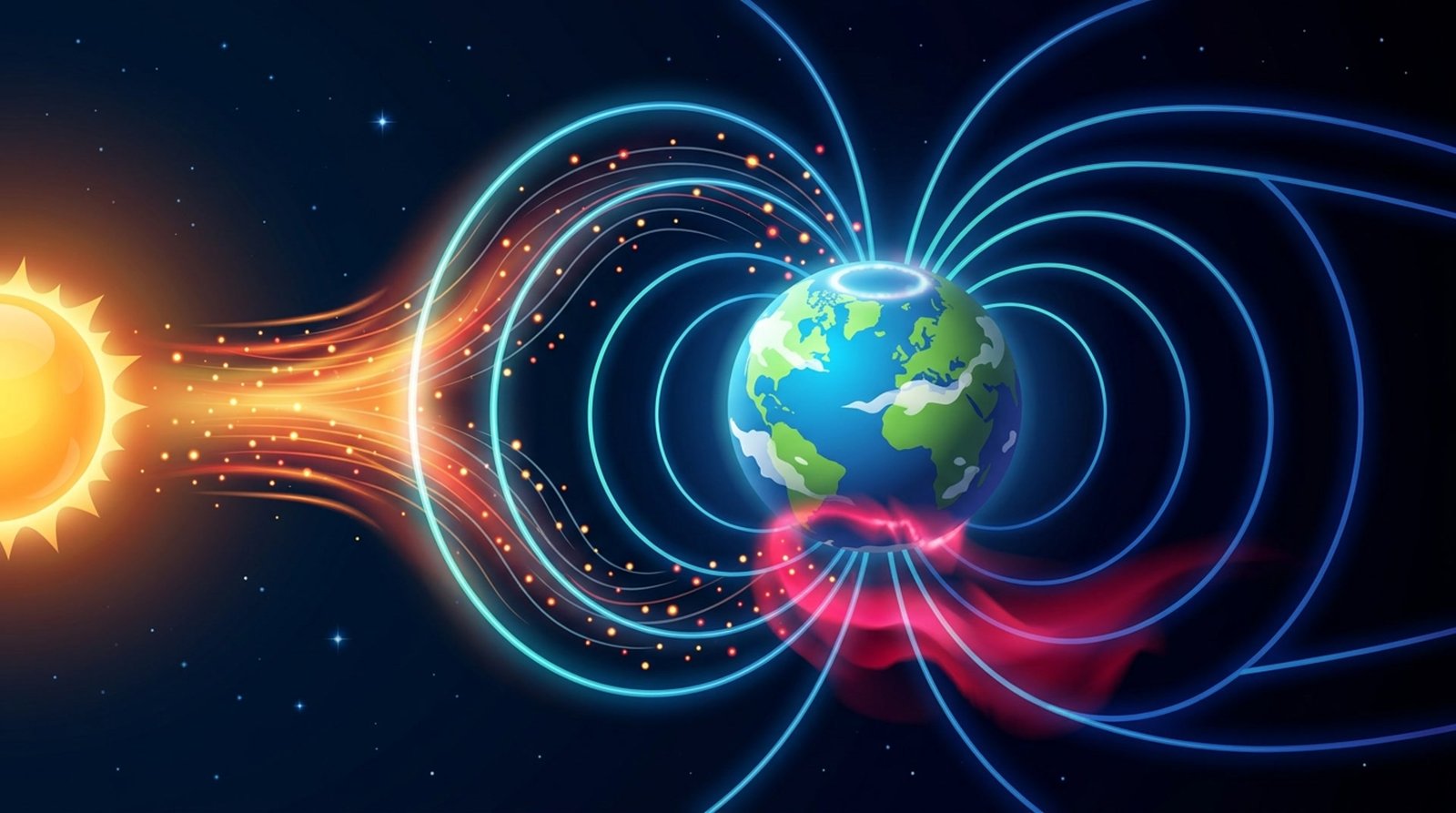
How Space Waves Paint the Sky Red
Summary
By the end of this article, you will understand how invisible space waves scatter low-energy electrons into Earth’s atmosphere to create rare, glowing red auroras.
Quick Facts
- Surprise: Red auroras happen much higher up (above 200 km) than typical green ones.
- Surprise: They are caused by 'low-energy' electrons (less than 1,000 volts), not massive energy spikes.
- Salient Idea: Instead of shooting straight down, these electrons are 'scattered' out of their magnetic traps by plasma waves.
- Surprise: The red glow takes so long to fade (about 110 seconds) that winds can blow the aurora across the sky.
The Discovery: Catching the Red Ghost
Scientists have long studied auroras, but streamer-like red-line auroras remained a mystery. In 2015, researchers used the THEMIS spacecraft and ground cameras in Canada to track them. They found a Surprise: a massive injection of plasma from deep space was shooting toward Earth. As this plasma hit Earth’s magnetic field and hit the cosmic brakes, it created intense ripples called Time Domain Structures (TDSs) and ECH waves. By perfectly syncing the satellite’s position in space with the red glowing patches on Earth, the team proved these exact waves were the culprit. The waves were literally shaking electrons out of the sky.
We establish a direct linkage between these red-line auroras and electron precipitation induced by TDSs and ECH waves.
— Yangyang Shen, Lead Author
The Science Explained Simply
This is NOT like the sharp, swirling green auroras you usually see. Typical green auroras are caused by high-energy electrons crashing down in straight lines, almost like lightning bolts. The Salient Idea here is scattering. The electrons causing these red auroras are ‘low-energy’ and are normally trapped safely in Earth’s magnetic field. But when TDS and ECH waves ripple through the area, they interact with the electrons—a process called pitch-angle scattering—knocking them off their safe path. They fall into the upper atmosphere like a gentle, diffuse cosmic rain, hitting oxygen atoms high up and making them glow red.
The Aurora Connection
The connection here to our daily lives is profound. These wave-driven electron showers play a massive role in space weather. When low-energy electrons heat up the highest parts of our atmosphere (the F-region ionosphere), the atmosphere actually expands outward. This changes chemical reactions and plasma density. Why does that matter? Because it creates drag on satellites, scrambles GPS navigation, and disrupts radio communications. By understanding the waves that paint the sky red, we aren’t just looking at pretty lights; we are tracking the invisible magnetic battle that protects Earth.
Understanding these processes helps us better predict space weather impacts on communication, navigation, and satellite operations.
— NorthernLightsIceland.com Team
A Peek Inside the Research
How do you prove a specific invisible wave in space caused a specific red light on Earth? The team used cross-correlation. They took data from the THEMIS satellite, which was measuring wave energy thousands of miles in space, and lined it up millisecond by millisecond with a specialized red-light camera (REGO) in Fort Smith, Canada. They didn’t just guess; they ran a supercomputer model called TREx-ATM to simulate what would happen if those exact satellite-measured waves hit the atmosphere. The model matched the real-life red lights almost perfectly, proving the connection.
Key Takeaways
- Plasma waves called TDSs and ECH waves act like cosmic brooms, sweeping trapped electrons into the atmosphere.
- Streamer-like red auroras represent a diffuse, wave-driven process, distinct from the sharp, direct-hit green auroras.
- Low-energy electron precipitation heats the upper atmosphere, which can physically expand it and alter satellite orbits.
- Connecting satellite data in space to camera footage on Earth is the key to proving how space weather works.
Sources & Further Reading
Frequently Asked Questions
Q: Why are these auroras red instead of green?
A: Red auroras occur much higher in the atmosphere (above 200 km). At this height, the scattered low-energy electrons hit oxygen atoms, which release red light. Because the air is thinner, the atoms don’t collide with other molecules as quickly, allowing the red glow to persist.
Q: What is pitch-angle scattering?
A: Imagine a marble rolling perfectly inside a groove. If you shake the groove, the marble falls out. Pitch-angle scattering is when space waves ‘shake’ the magnetic field, causing trapped electrons to fall out of orbit and plunge into Earth’s atmosphere.
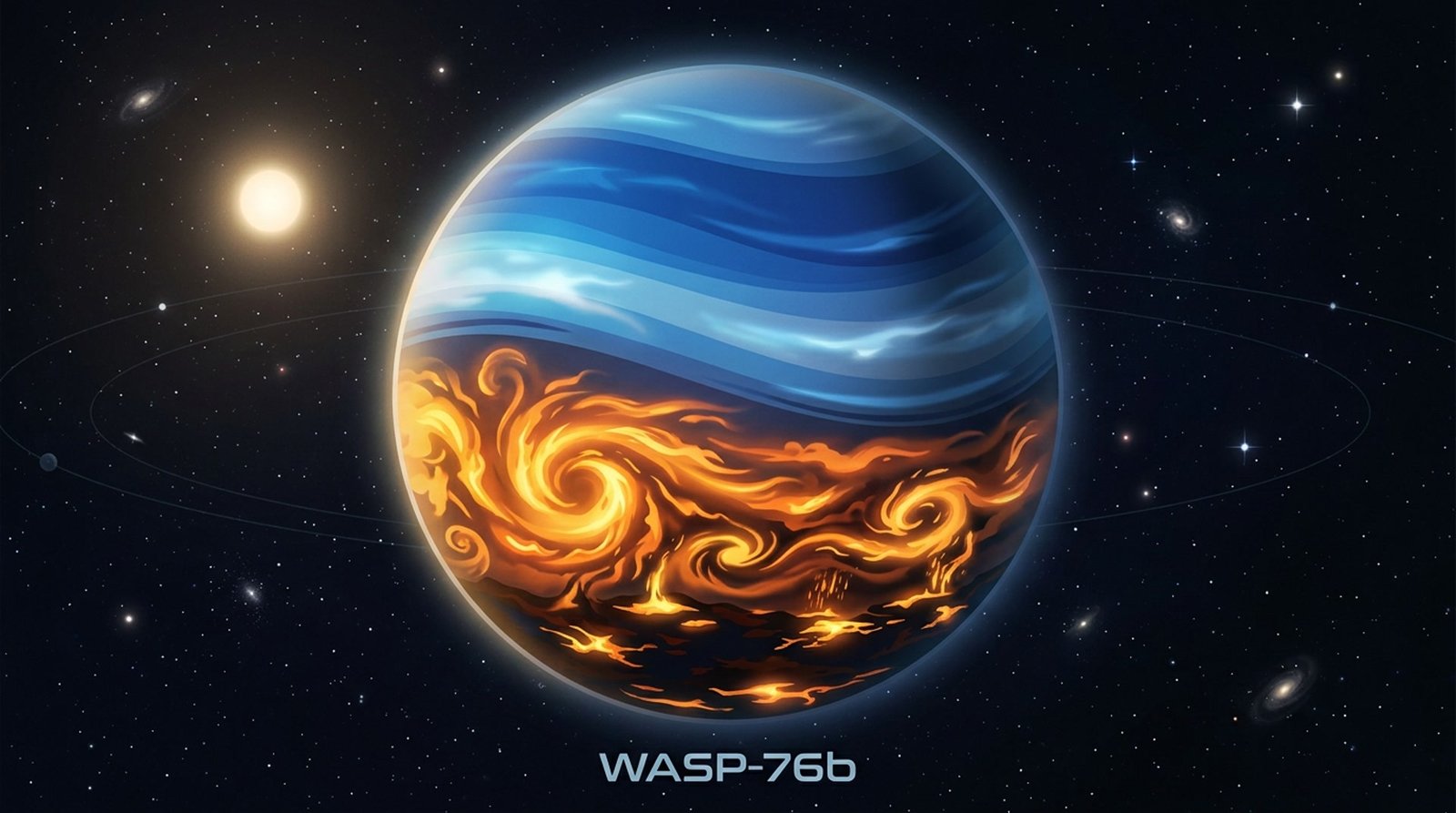
The Layer Cake Winds of an Iron-Raining Planet
Summary
By the end of this article, you will understand how astronomers map the winds on a planet 640 light-years away and discover its bizarre, multi-layered alien weather.
Quick Facts
- Surprise: Astronomers can measure wind speeds on a planet 640 light-years away just by looking at starlight.
- Salient Idea: WASP-76b has 'layer cake' weather—winds are raging fast deep down but much slower higher up.
- Surprise: Vaporized iron was detected blowing from the day side to the night side at over 11 kilometers per second.
- Surprise: The planet's shadow acts like a barcode, letting scientists see exactly what the alien air is made of.
The Discovery: Mapping an Alien Storm
In a massive leap for space weather forecasting, astronomers aimed the newly built Keck Planet Finder (KPF) at the famous ultra-hot Jupiter, WASP-76b. They knew this planet was a nightmare world where iron vaporizes on the day side and rains down on the night side. But they were looking for a Surprise. By analyzing the light filtering through the planet’s atmosphere during a transit, they discovered something completely unexpected: the weather changes drastically depending on how high up you go. Deep down in the atmosphere, heavy neutral iron is caught in a raging hurricane, blowing from the day side to the night side at over 11 kilometers per second. However, when the team looked at lighter elements like sodium and calcium, which float much higher up, the winds vanished. They had discovered a multi-layered atmosphere! This proved that WASP-76b isn’t just one giant, uniform storm. Instead, it has a complex, three-dimensional climate system with chaotic lower depths and surprisingly calm upper skies.
The KPF SURFS-UP Survey I: Transmission Spectroscopy of WASP-76 b
Neutral metals such as Fe I trace deeper regions with stronger asymmetries, while Na I and Ca II probe regions higher in the atmosphere where the ingress-egress asymmetries are weaker.
— The KPF SURFS-UP Survey Team
The Science Explained Simply
To understand this, we need to know how astronomers ‘see’ these winds. This is NOT a direct photograph of alien clouds moving. Instead, astronomers use a technique called transmission spectroscopy. When WASP-76b passes in front of its host star, the star’s light filters through the planet’s atmosphere. Different gases absorb different colors of light, creating a unique barcode or shadow. The Salient Idea here is the Doppler effect. When the iron winds blow toward our telescopes on Earth, the light they absorb gets squished, shifting slightly toward the blue end of the spectrum. The faster the wind, the bigger the blue-shift. But when scientists measured the barcodes for sodium and calcium, they didn’t see this blue-shift. The barcode stayed perfectly still. This means the gas at those higher altitudes isn’t moving toward us at breakneck speeds. The extreme day-to-night heat differences that drive the deep iron winds simply don’t have the same grip on the upper edges of the planet’s sky.
The Aurora Connection
Why do these upper layers matter? On Earth, the highest reaches of our atmosphere—where gases thin out and interact with space—are where the magic of auroras happens. High-altitude layers are constantly bombarded by stellar wind and protected by a planet’s magnetic field. On WASP-76b, the sodium and calcium sit in a similar high-altitude transition zone, where the atmosphere meets the terrifying radiation of its sun. By learning that the winds here are calm compared to the deeper iron storms, scientists can start to piece together how this alien world’s magnetic field might be operating. Understanding the physics of this high-altitude buffer zone on extreme exoplanets helps us appreciate the delicate magnetic shield protecting our own upper atmosphere, allowing us to safely witness the Northern Lights without having our air stripped away into the void.
Studying high-altitude dynamics on extreme worlds teaches us about the fragile boundaries where planetary atmospheres meet deep space.
— NorthernLightsIceland.com Team
A Peek Inside the Research
Extracting this data is an incredible feat of Knowledge and Tools. The signal of an alien atmosphere is incredibly faint and buried under massive amounts of noise. The research team had to write a custom software pipeline just to clean the data from the Keck Planet Finder. First, they had to remove the instrumental artifacts and normalize the light. But the biggest challenge was dealing with Earth’s own atmosphere! Our planet has water and oxygen that block starlight, creating ‘telluric’ interference. The team used complex line-by-line radiative transfer models to mathematically subtract Earth’s atmospheric signature, effectively peeling away our own sky so they could clearly see WASP-76b. Only after this rigorous mathematical cleaning could they isolate the tiny, shifting spectral lines of alien iron, calcium, and sodium. It is a masterpiece of separating the true planetary signal from cosmic noise.
Key Takeaways
- Different chemicals float at different heights, revealing a 3D picture of alien weather.
- Iron vapor gets pushed by extreme day-to-night winds, creating blue-shifted light signals.
- High-altitude gases like Sodium and Calcium show no wind shift, proving the upper skies are calmer.
- New tools like the Keck Planet Finder (KPF) give us unprecedented, crystal-clear views of exoplanet atmospheres.
Sources & Further Reading
Frequently Asked Questions
Q: How do we know the wind is blowing if we can’t see the planet clearly?
A: We use the Doppler effect! Just like a police siren changes pitch as it drives past you, light waves get squished (blue-shifted) when the wind blows the gas toward our telescopes. By measuring that shift, we calculate the wind speed.
Q: Why does iron rain down but sodium stays up high?
A: It comes down to atomic properties and pressure. Elements like sodium and calcium absorb light incredibly well even at very low pressures, meaning their ‘shadow’ shows up much higher in the atmosphere than heavier, neutral iron.
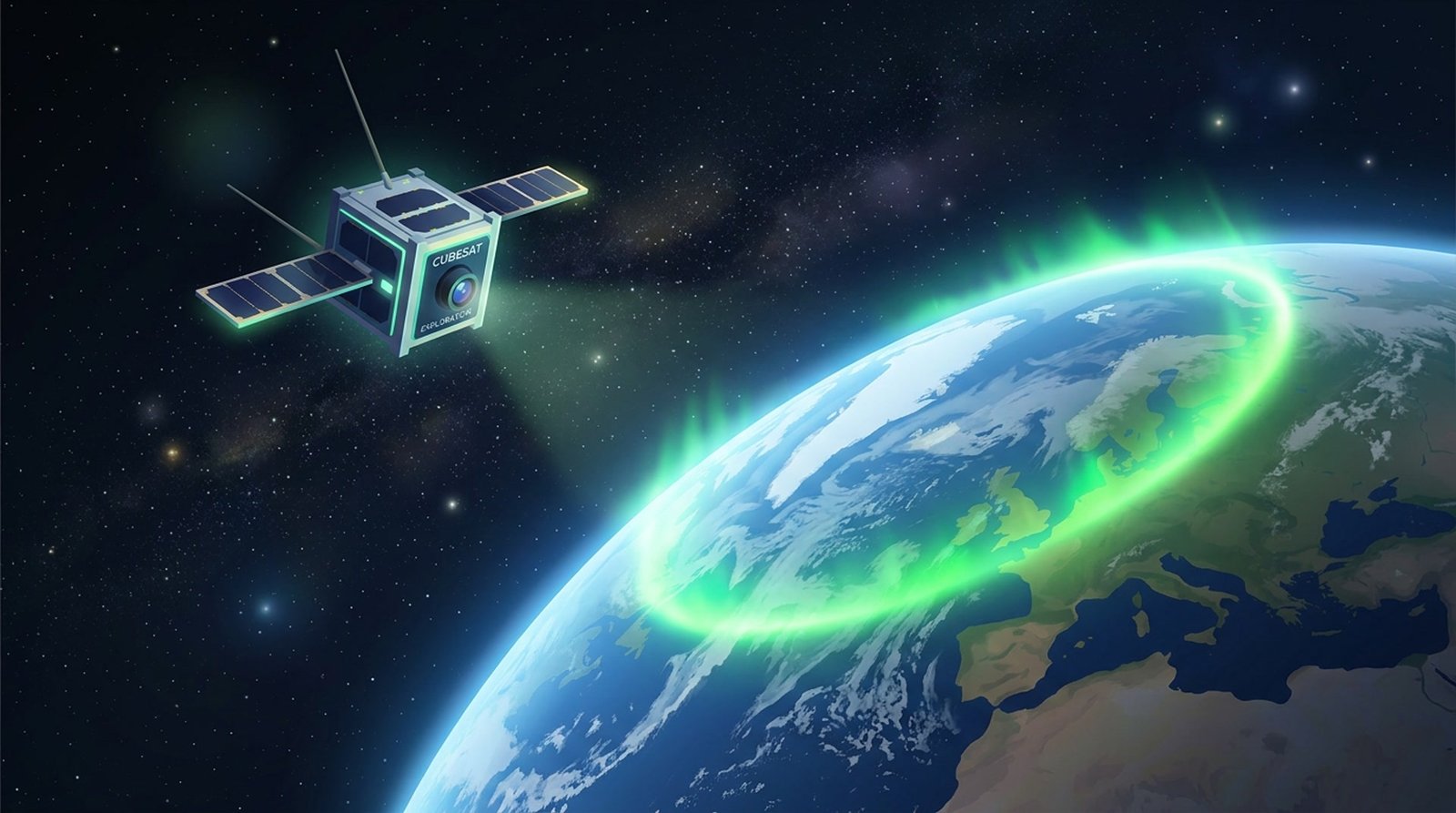
A Tiny CubeSat's First Aurora Photo from Space
Summary
By the end of this article, you will understand how a satellite the size of a milk carton captured the first nanosatellite image of the Northern Lights, and why viewing auroras from space sideways changes everything.
Quick Facts
- Surprise: The Suomi 100 satellite is a 1-Unit CubeSat, measuring just 10x10x10 cm (the size of a Rubik's cube)
- Salient Idea: The best way to photograph faint space weather is to look sideways at the Earth's horizon (the limb) against the blackness of space
- Surprise: The satellite spins constantly, meaning its camera rotated 7.2 degrees during the 2.4-second aurora exposure
- Surprise: Ground cameras entirely missed this aurora because of clouds and geography, proving the value of space-based imaging
The Discovery: A 10-Centimeter Photographer
In late 2018, a tiny box called Suomi 100 launched into orbit. It was a 1-Unit CubeSat, a low-cost satellite no bigger than a grapefruit, built mostly with commercial off-the-shelf parts. In January 2019, its simple 3-megapixel camera snapped a picture. Because the satellite’s data rate is incredibly low, researchers initially only saw a tiny, pixelated thumbnail. But upon closer inspection, they found a Surprise: the first-ever image of the Northern Lights taken by a nanosatellite. The image was slightly blurred because the satellite was tumbling, rotating constantly through the dark. To figure out what they were actually looking at, the team had to act like forensic detectives. They combined the satellite image with data from ground-based magnetometers across Scandinavia. Ground cameras saw nothing, proving exactly why this space-based view was so revolutionary. They had captured a ghost storm.
The analyzed image is, to the authors’ best knowledge, the first auroral image ever taken by a cubesat.
— Esa Kallio et al.
The Science Explained Simply
This is NOT like setting up a camera on a tripod in your snowy backyard. When you take a picture of an aurora from the ground, you are looking straight up through miles of thick, distorting atmosphere, and your view is easily blocked by clouds. The Salient Idea here is ‘limb-viewing geometry.’ Instead of pointing straight down at the ground (nadir), the Suomi 100 camera looked sideways, toward the edge (limb) of the Earth. Against the pitch-black background of empty space, even the faintest auroral emissions stand out brilliantly. To make sense of the photo, researchers built a 3D virtual model to trace where the red and green photons originated. They discovered the aurora was likely hovering high over the North Sea or Greenland, entirely out of sight from normal ground stations.
The Aurora Connection
Auroras are the ultimate visual evidence of Earth’s magnetic field battling the solar wind. When high-energy particles from space smash into oxygen and nitrogen in our upper atmosphere, they emit vibrant colors. But observing this from the ground only gives us a flat, bottom-up perspective. To truly understand these massive geomagnetic storms, scientists need tomographic (3D) imaging. Tiny nanosatellites like Suomi 100 are the missing puzzle piece. By flying right above the ionosphere, these CubeSats look at the vertical structure of auroral curtains from the side. This unique perspective helps us map the exact altitudes where different gases are energized, revealing the true power and shape of the invisible magnetic forces protecting our planet.
Synthetic images based on the intensity model showed that the location where the auroras were observed were ideal for auroral photography from space.
— Research Team
A Peek Inside the Research
How do you locate a glowing light in a photo taken from a spinning box traveling at 7 kilometers per second? It comes down to Knowledge and Tools—specifically, brilliant computational modeling. The team didn’t just guess; they built a Virtual Pin-Hole Camera simulation. They generated millions of fake ‘photon emission points’ in a 3D computer model, simulating green auroras at 110 km high and red auroras at 230 km high. By matching the stars in the background of the real photo (like the star Altair) and comparing the pixel intensities of their 3D model to the real image, they could mathematically triangulate the aurora’s true position. It is a triumph of using brilliant software engineering to enhance simple hardware.
The data analysis and modelling demonstrate how even a small 1-Unit CubeSat… can open new possibilities for auroral research.
— Esa Kallio et al.
Key Takeaways
- Space-based cameras bypass the biggest enemies of aurora hunters: clouds and thick atmospheric distortion
- A 3D computer simulation can be used to reverse-engineer the 3D location of an aurora from a single 2D photograph
- Nanosatellites prove that you don't need billion-dollar budgets to do real, valuable space weather science
- Combining ground-based magnetic sensors with space cameras gives a complete, multi-layered picture of an auroral storm
Sources & Further Reading
Frequently Asked Questions
Q: Why use a tiny satellite instead of a big, expensive space telescope?
A: Tiny CubeSats are incredibly cheap to build and launch using off-the-shelf parts. In the future, launching swarms of them could give us simultaneous 3D views of auroras from dozens of angles at once, something a single billion-dollar satellite cannot affordably do.
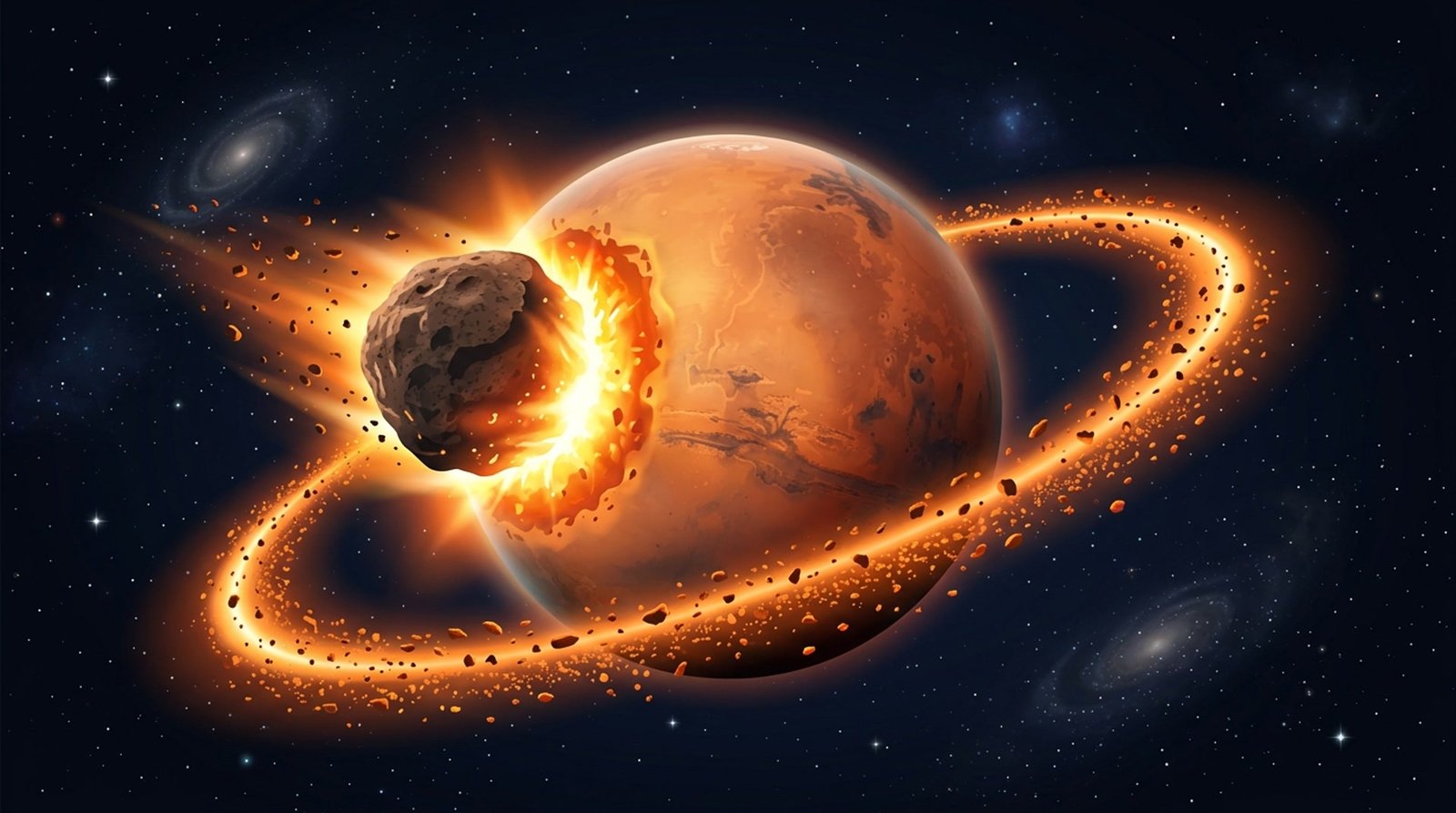
The Giant Impact That Birthed the Moons of Mars
Summary
By the end of this article, you will understand how a colossal asteroid collision smashed into Mars, creating a massive ring of debris that eventually clumped together to form its two moons, Phobos and Deimos.
Quick Facts
- Surprise: Phobos and Deimos were long thought to be captured asteroids, but their circular orbits prove otherwise.
- Surprise: Phobos is up to 35% empty space inside, like a giant, low-density cosmic sponge.
- Salient Idea: The Borealis-scale impact created a debris disk weighing 500 million trillion kilograms.
- Surprise: The crater left behind covers almost the entire northern hemisphere of Mars.
The Discovery: The Great Martian Crash
For decades, the prevailing theory was that Mars’ two moons, Phobos and Deimos, were simply roaming asteroids caught by martian gravity. But recent observations revealed a Surprise: their circular, equator-aligned orbits and highly porous compositions just didn’t match the ‘captured rock’ theory. Enter the giant impact hypothesis. Researchers realized that a massive collision—specifically one that created the 7,700-kilometer Borealis basin on Mars—could have blasted enough material into space to form a moon-birthing debris ring. By tracking the mass and angular momentum of the ejected rock, scientists proved that a Borealis-scale impact would create a disk massive enough to eventually clump together and birth both Phobos and Deimos.
Original Paper: ‘Formation of Phobos and Deimos via a Giant Impact’
A Borealis-scale impact is capable of producing a disk… sufficient to form at least one of the martian moons.
— Robert I. Citron
The Science Explained Simply
This is NOT a gentle gravitational capture of a passing rock. This is a violent, planetary-scale explosion. When an asteroid carrying 3% of Mars’ total mass slams into the planet, it vaporizes rock and shoots it into a ‘circum-Mars’ orbit. The Salient Idea here is the debris disk. Instead of flying off into deep space, 1% to 4% of the asteroid’s mass gets trapped in orbit, forming a dense ring around the planet’s equator. Over thousands of years, inside a zone called the strong tidal regime, these tiny fragments of molten rock and dust cool down and crash into one another. They slowly stitch themselves together into highly porous, sponge-like moons.
Moons that formed from the same impact that produced the martian spin would be expected to orbit near the equatorial plane.
— Rosenblatt and Charnoz
The Aurora Connection
While we study this impact to understand moons, these colossal collisions also shape a planet’s ability to host auroras and protect life. Early in its history, Mars had a global magnetic field, much like Earth’s, which shielded its atmosphere from the harsh solar wind. However, giant impacts like the Borealis crash can fundamentally alter the heat dynamics inside a planet’s core, potentially shutting down the internal dynamo that generates magnetic fields. Without that magnetic shield, Mars lost its atmosphere to space weather. Studying these violent impacts helps us understand not just how moons are made, but how delicate our own planetary magnetic shield truly is.
Giant impacts do more than make moons; they alter the magnetic destiny of entire worlds.
— NorthernLightsIceland.com Team
A Peek Inside the Research
How do we study a collision that happened billions of years ago? It comes down to incredible supercomputer modeling. The research team used a method called Smoothed Particle Hydrodynamics (SPH). They programmed up to 1,000,000 digital ‘particles’ to represent Mars and the incoming asteroid, assigning them real-world physics using the Tillotson equation of state. They then smashed them together at 6 kilometers per second. By analyzing the trajectory, energy, and gravity of every single particle post-impact, they calculated exactly how much rock would stay in orbit versus fall back to the surface. It is a brilliant triumph of simulated physics.
The collisionless particle representation can accurately simulate giant impacts onto Mars to determine the inserted mass.
— Research Team SPH Data
Key Takeaways
- Giant impacts were a common process in the late stages of planetary formation.
- A single impact created enough debris (1 to 4% of the asteroid's mass) to form both martian moons.
- Computer simulations using fluid dynamics can perfectly recreate planetary crashes from billions of years ago.
- Moons formed from a debris disk will orbit around a planet's equator, unlike randomly captured asteroids.
Sources & Further Reading
Frequently Asked Questions
Q: If Mars had a ring of debris, why doesn’t it have one now?
A: The debris ring was temporary. Over millions of years, the material either clumped together to form Phobos and Deimos, fell back onto the martian surface, or was blown away by solar radiation.
Q: Why is Phobos so porous and empty inside?
A: Because it wasn’t formed as a solid rock. It formed from thousands of smaller chunks of impact debris gently clumping together in orbit, leaving large voids and empty spaces between the rocks.
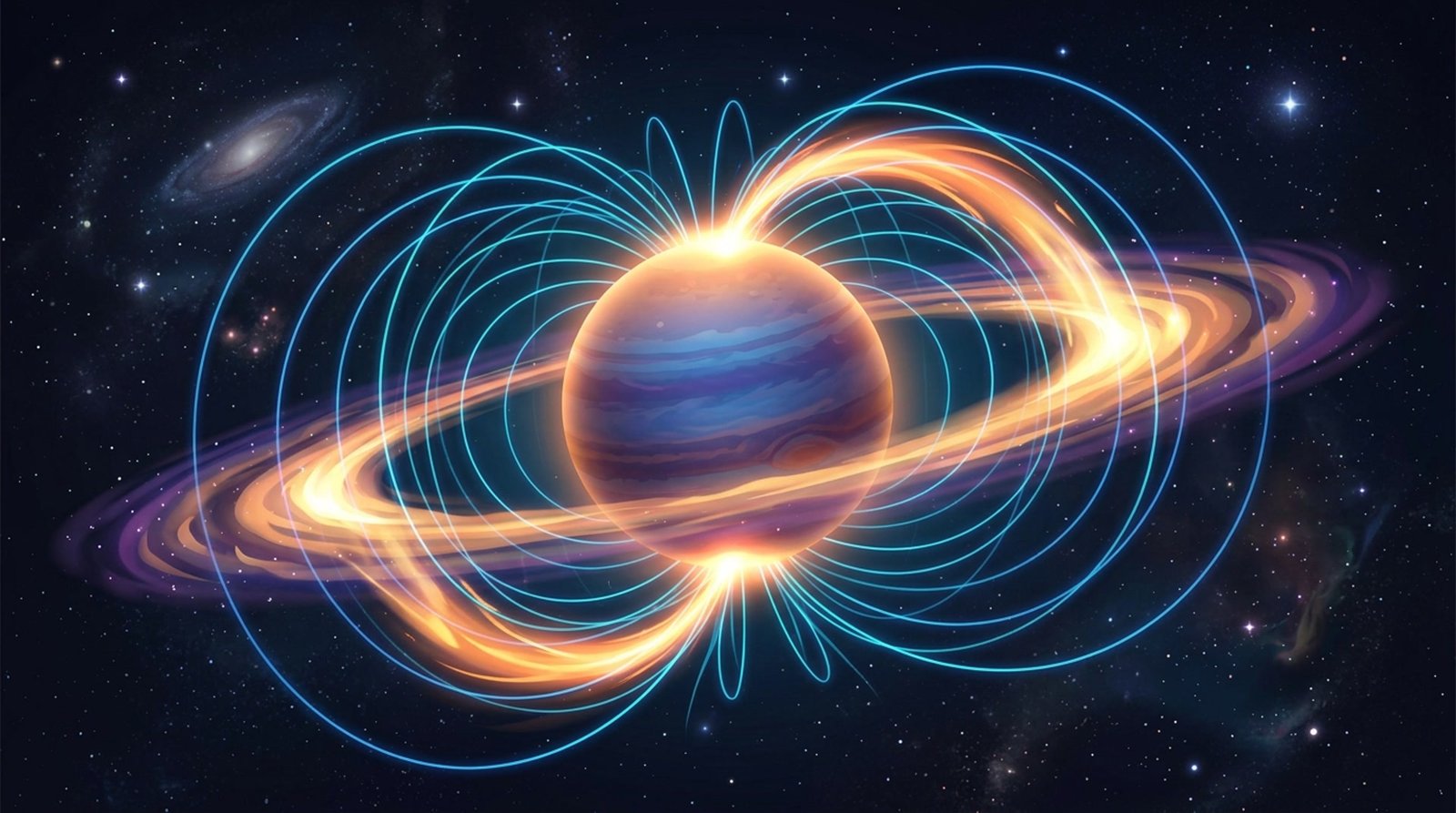
The Magnetic Funnels Feeding a Giant Exoplanet
Summary
By the end of this article, you will understand how a distant giant planet uses its magnetic field to ‘eat’ gas, and how scientists watch it happen in real-time.
Quick Facts
- Surprise: Delorme 1 (AB)b is up to 45 million years old, an age when most planets have long finished growing!
- Salient Idea: The planet is 13 times heavier than Jupiter, blurring the line between giant planet and brown dwarf.
- Surprise: Gas crashes into the planet so fast it creates a massive burst of ultraviolet light.
- Salient Idea: Scientists can track the 'weather' of this accretion changing over just a few hours.
The Discovery: Catching a Planet Eating
For a long time, scientists thought planets finished growing quickly. But when astronomers pointed the Very Large Telescope at Delorme 1 (AB)b, they found a Surprise: it is still actively eating gas at 30 to 45 million years old! They used a technique called spectroscopy to split the light from the planet and look at specific glowing signatures of hydrogen. They discovered a sudden burst of ultraviolet light and changing hydrogen line profiles over a few days. The Salient Idea here is that the light isn’t just glowing randomly—it changes shape and brightness based on how the gas is falling. This wasn’t just a static picture; they were watching the live action of a planet pulling in its surrounding material.
Original Paper: ‘ENTROPY II. Time series of Balmer line profiles of Delorme 1(AB)b’
This is typical of ongoing accretion on the target, confirming the accreting nature of Delorme 1 (AB)b despite its estimated old age.
— ENTROPY Survey Team
The Science Explained Simply
This is NOT just gas falling straight down like a rock dropped from a building. In space, falling gas gets caught by a planet’s magnetic field. This process is called magnetospheric accretion. The magnetic field lines act like giant, invisible slides. Gas from a surrounding disk is pulled onto these lines and gets funneled at extreme speeds toward the planet’s poles. When this gas hits the planet’s surface, it creates a massive shockwave that emits the ultraviolet light we see. By looking at the light, the scientists split the signal into two parts: the ‘wings’ (fast-moving gas on the slide) and the ‘core’ (the bright splash where it hits). This allows us to map a process we cannot physically see.
The properties of the broad component of the lines strongly support magnetospheric accretion.
— Dorian Demars
The Aurora Connection
While we love the Northern Lights on Earth, what is happening on Delorme 1 (AB)b is an aurora scaled up to extreme, violent levels. On Earth, our magnetic field catches a tiny bit of solar wind, funneling it to our poles to create beautiful, glowing lights. On this giant planet, the magnetic field is catching massive amounts of heavy, raw gas and slamming it into the planet. The physics are remarkably similar: magnetic field lines directing charged particles to the poles. Understanding how Delorme 1 (AB)b’s magnetic field controls this massive gas flow helps us understand the fundamental magnetic rules that protect our own atmosphere from being blown away.
Magnetic fields don’t just protect planets; sometimes they help build them.
— NorthernLightsIceland.com Team
A Peek Inside the Research
How do you see a magnetic field from 150 light-years away? The team used a powerful instrument called UVES to break the light into thousands of tiny slices, looking specifically at the ‘Balmer series’—the exact colors of light emitted by excited hydrogen. They built a custom algorithm to separate the light into two shapes: a ‘wings’ component and a ‘core’ component. They then matched these shapes against computer models of magnetic funnels and shockwaves. This is the Salient Idea of modern astronomy: we don’t look through telescopes with our eyes; we use code and math to decode the hidden physics inside a single beam of light.
We developed a novel method to decompose the lines into multiple components, making no assumption as to what shape they should have.
— ENTROPY Research Team
Key Takeaways
- Planets can continue to grow for tens of millions of years if they hold onto a disk of material.
- Magnetic fields act like funnels, directing falling gas straight into a planet's poles.
- By breaking light into its colors (spectroscopy), scientists map the speed and location of invisible falling gas.
- The UV light from this planet proves it is still actively feeding and creating massive shockwaves.
Sources & Further Reading
Frequently Asked Questions
Q: Why is it weird that this planet is still growing?
A: Most planets clear out their surrounding gas and dust within 3 to 10 million years. Delorme 1 (AB)b is up to 45 million years old, meaning it somehow kept a ‘Peter Pan’ disk of material that refused to grow up and disappear!
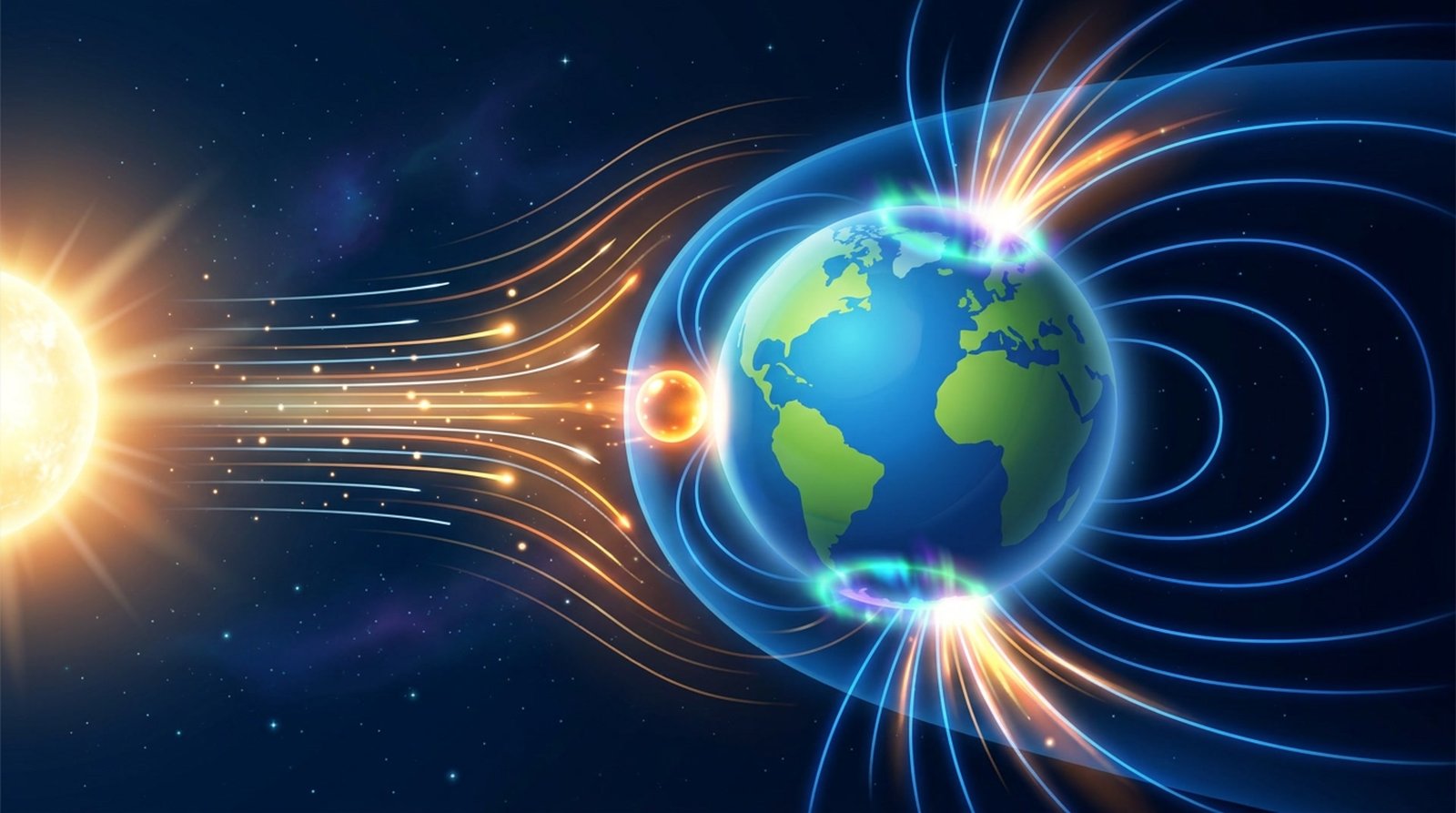
The Invisible Space Bubbles That Trigger Daytime Auroras
Summary
By the end of this article, you will understand how tiny, short-lived bubbles in the solar wind can physically squeeze Earth’s magnetic shield and create fast-moving daytime auroras.
Quick Facts
- Surprise: Auroras don't just happen at night; this event triggered auroras on the day side of Earth
- Salient Idea: Small 'bubbles' in the solar wind can act like mini solar storms, plucking our magnetic field like a guitar string
- Surprise: The auroras created by this event raced across the sky at over 100 kilometers per second
- It takes about 10 minutes for the signal from the space bubble to travel down to the atmosphere and light up the sky
The Discovery: Catching a Space Bubble
In 2008, a network of five THEMIS satellites detected a ‘foreshock transient’—a strange, localized cavity in the solar wind. A few minutes later, an All-Sky Imager (ASI) camera at the South Pole saw a Surprise: diffuse auroras began to brighten on the daytime side of Earth and race duskward across the sky. Shortly after, sharper discrete auroras lit up as well. By matching the satellite data with the camera footage, scientists realized this tiny space bubble had physically squeezed Earth’s magnetic shield. This proved that even small solar wind hiccups can create highly localized, fast-moving space weather.
The duskward propagation of aurora reflects the duskward propagation of the foreshock transient as it swept through the magnetosheath.
— Dr. Boyi Wang
The Science Explained Simply
This is NOT a massive solar storm like a Coronal Mass Ejection (CME) that engulfs the whole planet. A foreshock transient is a small, short-lived ‘bubble’ formed when solar wind particles bounce off Earth’s bow shock and disrupt the incoming stream. Think of it like a rock in a river creating a temporary whirlpool. The Salient Idea here is the physical pinch: When this bubble hits the magnetopause (the edge of Earth’s magnetic field), it dents it. This compression sends vibrations down the magnetic field lines. These vibrations dump electrons into the atmosphere, lighting up the sky in a localized patch rather than a global storm.
The Aurora Connection
We usually think of auroras as a nighttime phenomenon, but this magnetic squeeze triggered daytime auroras. It caused ‘diffuse auroras’ (a faint, widespread glow from highly energetic particles) followed by ‘discrete auroras’ (the sharp, distinct ribbons we normally picture). Because magnetic field lines guide these particles with absolute precision, tracking the aurora’s movement on the ground is like watching a live shadow-puppet show. The glowing atmosphere acts as a giant projector screen, revealing the exact size, speed, and location of the invisible magnetic forces crashing into our shield tens of thousands of miles away in deep space.
Discrete aurora can be used to highlight upward field-aligned currents associated with dayside magnetopause disturbances.
— The Research Team
A Peek Inside the Research
How did they connect a space bubble to a glow in the sky? The team used coordinated multi-point observations. They took data from five THEMIS satellites positioned out in space to track the incoming solar wind bubble. Then, they matched the exact timings with a camera located at the South Pole. By doing complex math to map the pixels of the 2D camera image backwards along Earth’s curved magnetic field lines, they could measure the exact shape of the space bubble just by looking at the aurora it caused! It is a triumph of combining space-based sensors with ground-based optics.
Key Takeaways
- Foreshock transients are temporary anomalies formed right in front of Earth's bow shock
- When these transients hit our magnetic shield, they compress it and launch ultra-low frequency (ULF) waves
- These ULF waves travel down magnetic field lines, causing high-energy electrons to crash into the atmosphere
- Mapping 2D aurora images from the ground back into space allows us to measure invisible space weather
Sources & Further Reading
Frequently Asked Questions
Q: Can I see these daytime auroras with my naked eye?
A: Usually, no. The sun’s glare in the daytime sky is way too bright. Scientists use special cameras in places like the South Pole (where it can be completely dark during the day in winter) and filter for specific wavelengths of light to see them.
Q: How fast do these auroras move?
A: In this event, the mapped patterns of the aurora raced across the ionosphere at speeds averaging around 117 kilometers per second!
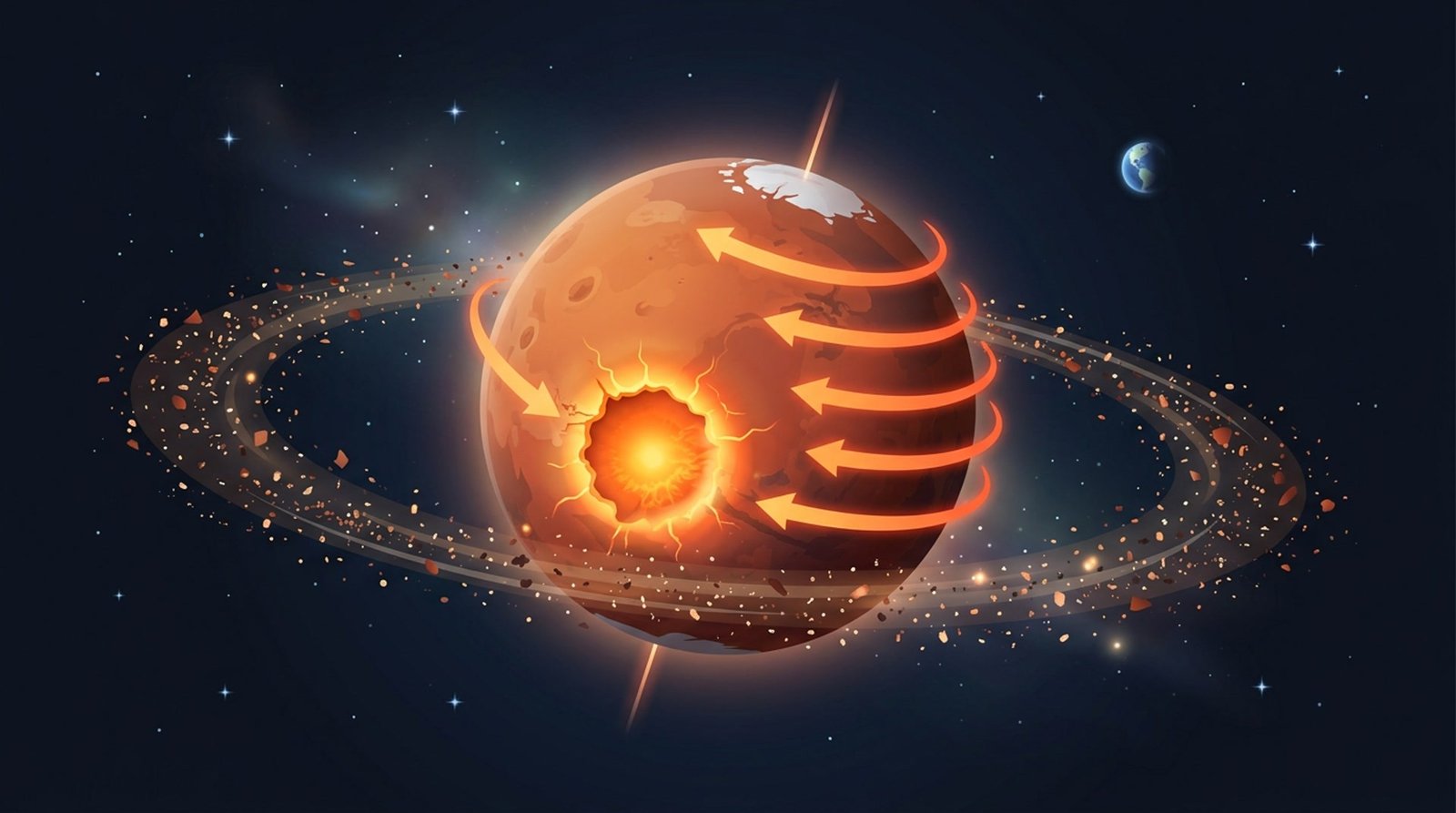
The Giant Impact That Flipped Mars
Summary
By the end of this article, you will understand how a massive collision not only tilted the entire planet of Mars but also created a crashing ring of debris that formed its two tiny moons.
Quick Facts
- Surprise: The massive impact that created Mars' moons also blasted a hole so big it forced the entire planet to physically tilt.
- Salient Idea: This tilting process is called 'True Polar Wander'—the crust doesn't slide, the whole planet just tips over.
- Surprise: The debris ring initially orbited at a wild, tilted angle before crashing into itself to form a flat, hula-hoop-like ring.
- Surprise: Phobos and Deimos are essentially the recycled leftovers of this chaotic cosmic collision.
The Discovery: A Tilted Mystery on Mars
Astronomers have long debated where Mars’ tiny moons, Phobos and Deimos, came from. A leading theory is a giant impact that also created the Borealis basin—a massive crater currently sitting near Mars’ north pole. But there was a glaring problem. Physics dictates such an impact should have happened near the equator to spin up the planet and create an equatorial debris disk. So why is the crater at the north pole? Researchers realized that blasting away that much rock created a massive ‘dent’ or mass deficit. To balance its rotation, Mars actually tilted itself. The crater didn’t slide across the surface; the entire planet tipped over, moving the crater from the equator to the north pole. This phenomenon is known as True Polar Wander.
Original Paper: ‘ON THE IMPACT ORIGIN OF PHOBOS AND DEIMOS II’
The mass deficit created by the Borealis impact basin induces a global reorientation of the planet.
— Research Team
The Science Explained Simply
This is NOT like plate tectonics on Earth, where continents drift slowly over a liquid mantle. True Polar Wander is the entire solid body of a planet tipping over in space to realign its center of mass. Imagine a spinning top: if you stick a piece of clay to one side, the top will wobble and shift its spin axis. Mars did exactly this to compensate for the missing mass of the Borealis crater. Meanwhile, the debris blasted into space formed a chaotic, tilted ring. Through gravitational wobbles and thousands of tiny, energy-absorbing crashes (inelastic collisions), the debris calmed down and flattened into a neat, circular disk around the equator. It was from this calm, flat disk that the moons finally clumped together.
The Aurora Connection
Just as Earth’s magnetic field and auroras are driven by the spinning dynamo in our planet’s core, the rotation and internal mass distribution of a planet dictate its destiny. Mars once had a dynamic magnetic field, but as it cooled and experienced massive traumas—like the Borealis giant impact—its internal dynamics changed. True Polar Wander shows how deeply the surface is tied to the planetary rotation. Understanding how a planet responds to massive impacts helps us understand its core, its magnetic history, and ultimately, its ability to hold onto an atmosphere. The extreme forces that tilted Mars are a testament to the violent cosmic weather that shapes planetary environments.
Extreme worlds teach us about planetary survival.
— NorthernLightsIceland.com Team
A Peek Inside the Research
How do scientists look millions of years into the past? They use Knowledge and Tools, not magic. The team didn’t just guess; they used the ‘equilibrium theory’ of planetary rotation to calculate the exact physics of Mars’ mass deficit. They wrote complex N-body simulations, which track the gravity and collisions of thousands of virtual space rocks. By fast-forwarding these simulations, they watched how a messy, tilted cloud of rocks would naturally bump into each other, lose energy, and settle into a flat, predictable ring. It is a brilliant example of using the unbreakable laws of physics to rewind the clock on our solar system.
Our results strengthen the giant impact origin of Phobos and Deimos.
— Ryuki Hyodo et al.
Key Takeaways
- True Polar Wander happens when a planet reorients itself to balance a mass deficit or excess in its crust.
- A giant impact near the equator created the Borealis basin and spun up a massive debris disk.
- Inelastic collisions and gravitational precession forced the wild orbital debris into a flat, circular disk.
- Phobos and Deimos formed from this flattened equatorial disk, hiding their chaotic, tilted origins.
Sources & Further Reading
Frequently Asked Questions
Q: If the Borealis basin is a crater, why doesn’t it look like a typical round hole?
A: It covers almost the entire northern hemisphere of Mars! Over billions of years, lava flows, erosion, and smaller impacts have smoothed it out, but gravity maps still show the massive missing chunk of crust.
Q: Why didn’t the debris disk just fall back down to Mars?
A: Because of angular momentum. The rocks were moving sideways so fast that they kept missing the planet as they fell, entering a stable orbit until they clumped together into moons.
The Sky's Eraser: When Auroras Delete Themselves
Summary
By the end of this article, you will understand a bizarre space weather phenomenon where the Northern Lights suddenly brighten, completely wipe themselves out, and then slowly fade back into the night sky.
Quick Facts
- Surprise: The 'eraser' event actually begins with a rapid brightening of the aurora before it completely goes dark.
- Salient Idea: The entire erasing and recovering process takes an average of just 20 seconds.
- Surprise: This wasn't found in a massive magnetic storm, but during a very quiet night of magnetic activity.
- Surprise: It took old footage from 2002, reviewed years later, to officially identify 32 of these rare events.
The Discovery: Spotting the Sky's Eraser
In science, huge discoveries often hide in old data. While reviewing video captured in 2002 from Churchill, Canada, researchers noticed something bizarre. They weren’t looking at the famous, dancing curtains of light, but at the faint background glow called diffuse aurora. Suddenly, a stripe of light rapidly brightened, but what happened next was a Surprise. Instead of fading back to normal, the light dipped below its original brightness. It looked as if someone took a giant blackboard eraser to the night sky, wiping out the aurora completely. Over the next 20 seconds, the glow slowly refilled. By meticulously analyzing the footage, they identified 32 distinct events. They had discovered the ‘Diffuse Auroral Eraser.’ It is a story of how paying attention to the background can reveal completely new cosmic weather patterns.
Original Paper: ‘The Diffuse Auroral Eraser’ (Troyer et al., 2021)
It looks as if someone has taken an eraser to it.
— Dr. Riley Troyer & Team
The Science Explained Simply
To understand this, we must Build a Fence around what this is NOT. This is not a cloud passing by, and it is not a ‘pulsating aurora’ that blinks like a neon sign. Auroras are caused by electrons raining down from space and hitting our atmosphere. Think of a bucket with a hole in it, constantly being refilled. During an eraser event, a special type of energy wave in space—called a ‘chorus wave’—suddenly shakes the bucket, causing a massive splash (the brightening phase). But because so much water splashed out at once, the bucket temporarily empties, stopping the flow (the eraser phase). It takes about 20 seconds for the bucket to refill and the glow to return. The Salient Idea here is that the sky isn’t getting darker; it is physically running out of glowing particles for a brief moment.
The Aurora Connection
The secret behind the Auroral Eraser lies thousands of miles above us in Earth’s magnetic bubble, the magnetosphere. The diffuse glow of the aurora is normally fueled by ‘ECH waves’ gently scattering electrons into the atmosphere. But our magnetic field is also home to powerful, whistling electromagnetic waves called Chorus Waves. Scientists believe these chorus waves might sweep through the area, scattering a massive burst of electrons all at once. This interaction shows just how dynamic our planet’s magnetic shield really is. Even on a perfectly quiet night with low solar activity, invisible waves are clashing and interacting in space, turning off sections of the sky like giant cosmic light switches.
What process in the equatorial magnetosphere can turn off diffuse auroral emissions in localized regions?
— The Research Team
A Peek Inside the Research
How do you measure a disappearing act that lasts 20 seconds? The researchers used a clever tool called a keogram. Instead of watching hours of video, they took a single, vertical slice of pixels from each frame of the video and stacked them side-by-side chronologically. This turns a video into a single timeline image. By scanning this keogram, bright vertical stripes followed immediately by dark, empty gaps stuck out clearly. They then used a computer program to graph the pixel brightness over time—the superposed epoch analysis. This mathematical layering of 22 perfect events revealed the precise 20-second average recovery time. It proves that combining high-speed cameras with clever data visualization can reveal secrets invisible to the naked eye.
We found that the best way to identify an auroral eraser event was in a keogram.
— The Research Team
Key Takeaways
- An Auroral Eraser has four distinct phases: initial, brightening, eraser (dimming), and recovery.
- It is physically different from pulsating or 'black' auroras, which behave like blinking patches.
- Scientists use tools called 'keograms'—visual timelines of the sky—to spot these split-second events.
- The dark spot is likely caused by 'chorus waves' in space temporarily depleting the electrons that make the sky glow.
Sources & Further Reading
Frequently Asked Questions
Q: Can I see an auroral eraser with my naked eye?
A: It is very difficult! The diffuse aurora is already quite faint, and these events happen rapidly over just a few seconds. Researchers needed highly sensitive, 30-frames-per-second cameras to clearly document them.
Q: Do these events happen during massive solar storms?
A: Surprisingly, no. The 32 events analyzed in this study all occurred during a period of very quiet magnetic activity. This suggests they might be a common phenomenon that has simply been overlooked.
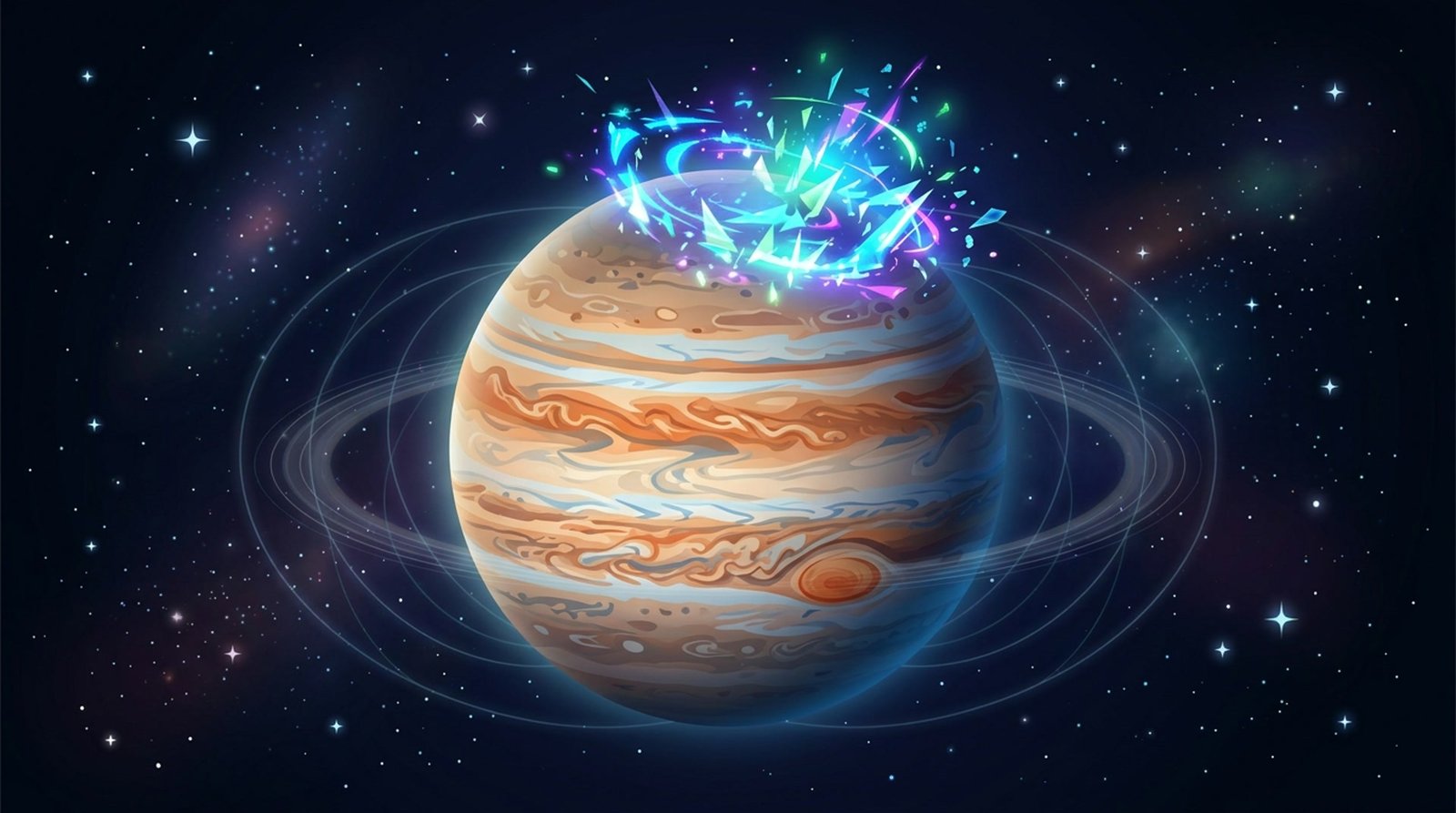
Jupiter's Rule-Breaking Auroras: Why We Were Wrong
Summary
By the end of this article, you will understand how NASA’s Juno spacecraft just busted a 20-year-old theory about what powers the brightest auroras in the solar system.
Quick Facts
- Surprise: Jupiter's auroras are the most powerful in the solar system, putting out 500 gigawatts of energy!
- Salient Idea: Scientists thought the auroras were created by Jupiter spinning its plasma, but new data says otherwise.
- Surprise: Instead of smooth curtains of light, Juno found fragmented, chaotic magnetic currents.
- Surprise: When the solar wind squishes Jupiter's magnetic field, the aurora actually gets brighter, not dimmer!
The Discovery: Busting the Spin Theory
For decades, scientists believed Jupiter’s brilliant main auroras were powered by the planet’s massive spin—a concept called the corotation enforcement theory. It made sense: Jupiter spins incredibly fast, dragging its magnetic field and plasma along with it. This was supposed to create a steady, smooth circuit of electricity raining down on the poles. But when NASA’s Juno spacecraft finally flew directly over Jupiter’s poles, it found a Surprise: the data completely contradicted the math. The currents weren’t smooth; they were fragmented. The auroras didn’t dim when they were supposed to, and the electrical structure was totally lopsided. This meant the reigning theory of the last two decades was fundamentally flawed. The discovery proved that nature is often much messier than our neatest equations.
If the particle acceleration process is stochastic, even regions of down-going currents would have a significant flux of down-going electrons creating auroral emissions.
— B. Bonfond et al.
The Science Explained Simply
This is NOT like a simple battery powering a lightbulb. The old theory pictured a steady, continuous loop of electricity. Imagine a spinning merry-go-round dragging the air around it in a perfect circle. But Juno found that Jupiter’s auroras act more like a stormy ocean. Instead of a one-way street of electrons causing the glow, the Salient Idea is that electrons are zooming in both directions at once! This bi-directional traffic is caused by chaotic magnetic waves, not a steady electric voltage. When the solar wind hits Jupiter, instead of dimming the lights as predicted, it acts like throwing gasoline on a fire. The magnetic field loads up with energy and snaps back, creating brilliant, chaotic bursts of ultraviolet light.
The Aurora Connection
Here on Earth, the Northern Lights are deeply connected to the solar wind crashing into our planet’s magnetic shield. Scientists used to think Jupiter was completely different—that it generated its own auroras entirely from within, using its rapid rotation and volcanic material from its moon, Io. But these six pieces of shattered evidence bring Jupiter a little closer to Earth. We now see that Jupiter’s auroras respond to magnetic loading and unloading, just like Earth’s do during a substorm. By studying how these colossal magnetic fields break down and reconfigure, we learn about the fundamental laws of space weather that protect our own atmosphere from the violent solar wind.
The aurora and the radio kilometric emissions increased during the magnetic unloading phases… similarly to what is observed on Earth.
— B. Bonfond et al.
A Peek Inside the Research
How do you dismantle a famous scientific theory? It takes Knowledge and Tools—specifically, the Hubble Space Telescope and the Juno spacecraft. The team compiled six specific observational anomalies. For example, they measured the ‘bend-back’ of the magnetic field on the dawn and dusk sides of the planet. The old math predicted the dawn side should be much brighter. Hubble’s images proved the exact opposite: the dusk side is three times brighter! By combining magnetic field readings with ultraviolet images, they didn’t just find one error; they found a pattern of six distinct contradictions. It’s a perfect example of the scientific method: when the observation disagrees with the theory, the theory has to change.
Key Takeaways
- The 'corotation enforcement' theory cannot explain Jupiter's main auroral emissions.
- Juno spacecraft data shows that particle acceleration is stochastic and chaotic, not smooth and steady.
- Magnetic unloading—like snapping a rubber band—powers the auroras, similar to Earth.
- Alfvén waves (ripples in magnetic fields) are likely the true spark for these massive light shows.
Sources & Further Reading
Frequently Asked Questions
Q: If the old theory is wrong, what actually causes Jupiter’s auroras?
A: Scientists now believe stochastic processes—specifically chaotic magnetic ripples called Alfvén waves—are accelerating electrons into the atmosphere, rather than a steady electrical current.
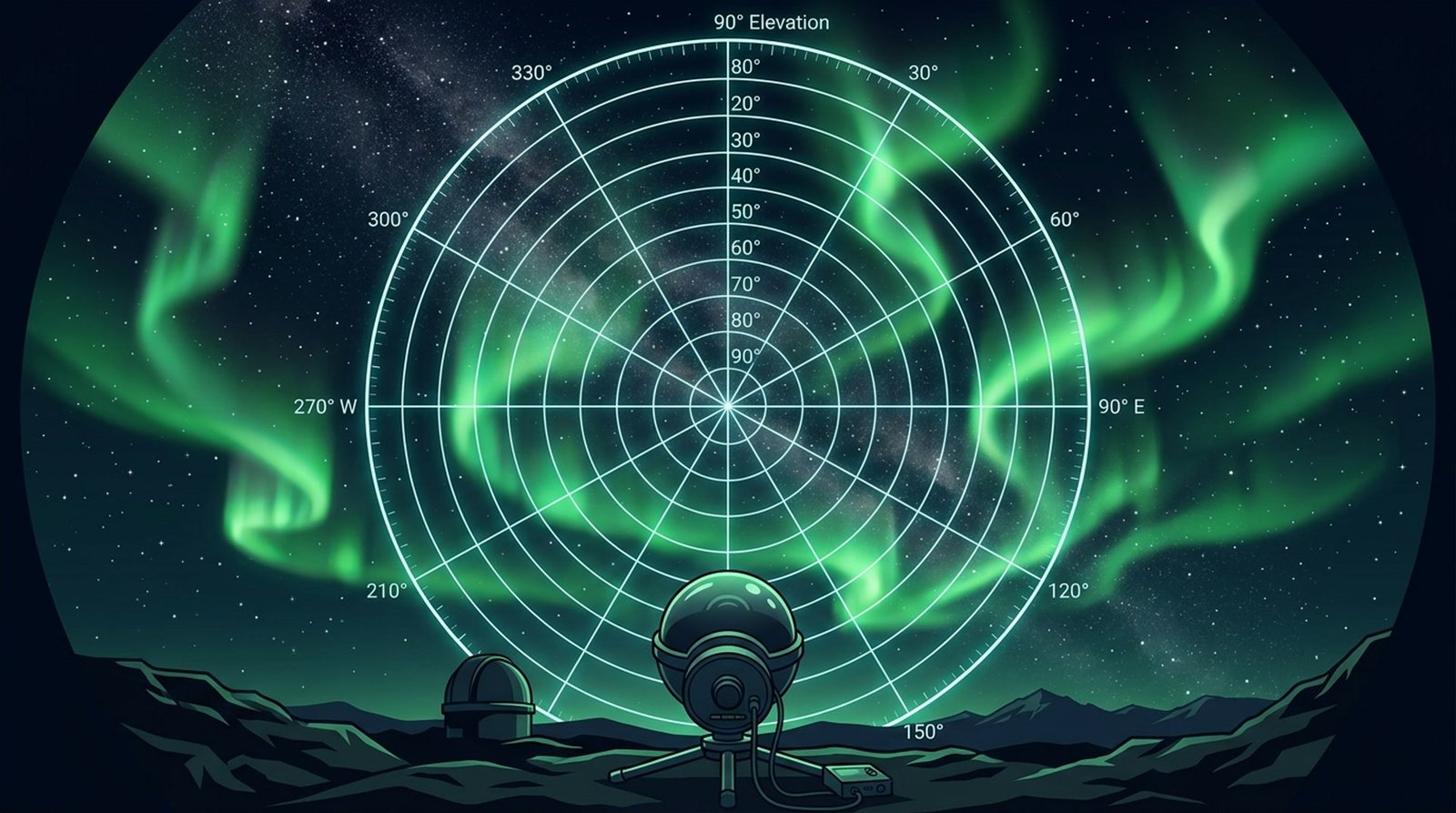
Why Some Auroras Dance Faster Than Others
Summary
By the end of this article, you will understand exactly why small auroras flicker rapidly while large auroral bands stay stable, and how scientists use video math to prove it.
Quick Facts
- Surprise: The Northern Lights are actually painted by invisible electric currents from space.
- Salient Idea: Large auroral shapes (10,000 square kilometers) stay stable for about a minute.
- Surprise: Small auroral shapes (1,000 square kilometers) change entirely in just 10 seconds!
- Surprise: Scientists matched the blinking lights of the aurora perfectly with invisible magnetic field currents.
The Discovery: The Rhythm of the Lights
For a long time, scientists have watched the Northern Lights and noticed some parts flicker quickly while others linger. But watching isn’t measuring. In 2011, researchers pointed an all-sky camera at the sky over Poker Flat, Alaska, and recorded 19 minutes of high-speed video. They didn’t just watch the video; they ran an innovative mathematical analysis to track how long different shapes lived. They found a Surprise: the lifespan of an aurora depends exactly on its size! Large auroral forms (around 10,000 square kilometers) stayed stable for up to a minute. Meanwhile, small auroral ripples (under 1,000 square kilometers) changed in just 10 seconds. They had finally proven the mathematical rhythm behind the dancing lights.
Original Paper: ‘Scale size-dependent characteristics of the nightside aurora’
We find a scale size-dependent variability where the largest scale sizes are stable on timescales of minutes while the small scale sizes are more variable.
— B. K. Humberset
The Science Explained Simply
How do you measure a dancing ghost? This is NOT just taking a photo and eyeballing the changes. To do this, researchers used a tool called a Fast Fourier Transform. Think of it like a musical equalizer, but for pictures. Instead of separating bass and treble, it separates large glowing blobs from tiny flickering dots. By comparing these separated sizes frame-by-frame, they could see exactly when a specific size started to change. The Salient Idea here is ‘scale size-dependent variability.’ Big shapes take a long time to shift. Small shapes are frantic and highly variable. The math strips away the visual confusion to reveal a highly organized pattern in the sky.
The Aurora Connection
The Northern Lights are beautiful, but they are actually the exhaust of a massive electrical machine. The Earth is surrounded by a magnetic shield, and when solar wind hits it, energy funnels down to the poles through Field-Aligned Currents. The researchers compared their video math to magnetic data collected by satellites. The result? A remarkable match. The stable big auroras and the frantic small auroras perfectly mirrored the behavior of the invisible magnetic currents driving them. The visible light is a glowing footprint of Earth’s magnetic shield reacting to the hostile environment of space.
The characteristics averaged over the event are in remarkable agreement with the spatiotemporal characteristics of the nightside field-aligned currents.
— Humberset et al.
A Peek Inside the Research
This wasn’t a simple time-lapse. The team had to analyze over 1.8 billion possible image combinations! To make it work, they narrowed it down to about 18 million calculations. But they faced a massive hurdle: the Earth rotates. If you look at the sky for 19 minutes, the stars and auroras seem to move simply because the Earth is spinning. The team had to write code to artificially ‘untwist’ the video, moving the pixels eastward by 2 kilometers every 10 seconds to lock the sky in place in an inertial frame. It is a triumph of careful data cleaning over raw observation.
We correct for the rotation of the all-sky imager with Earth.
— Research Team
Key Takeaways
- Auroral stability depends heavily on the 'scale size' of the shape.
- Different types of auroras (diffuse vs. active) have completely different lifespans.
- 2D mathematical algorithms can track the lifespan of light structures frame-by-frame.
- The visible light of the aurora is a direct mirror of the invisible electrical currents connecting Earth to space.
Sources & Further Reading
Frequently Asked Questions
Q: Why do some auroras look like they are rapidly pulsing or flickering?
A: Those are the small ‘scale sizes’ of the aurora. Because they are smaller in area, the electrical currents driving them can shift and change much faster, usually in under 10 seconds.
Q: Does the Earth’s rotation mess up the video analysis?
A: Yes! The scientists actually had to mathematically subtract the Earth’s 0.2 km/s eastward rotation from their data so they were only measuring the aurora’s true movement, not the Earth’s spin.
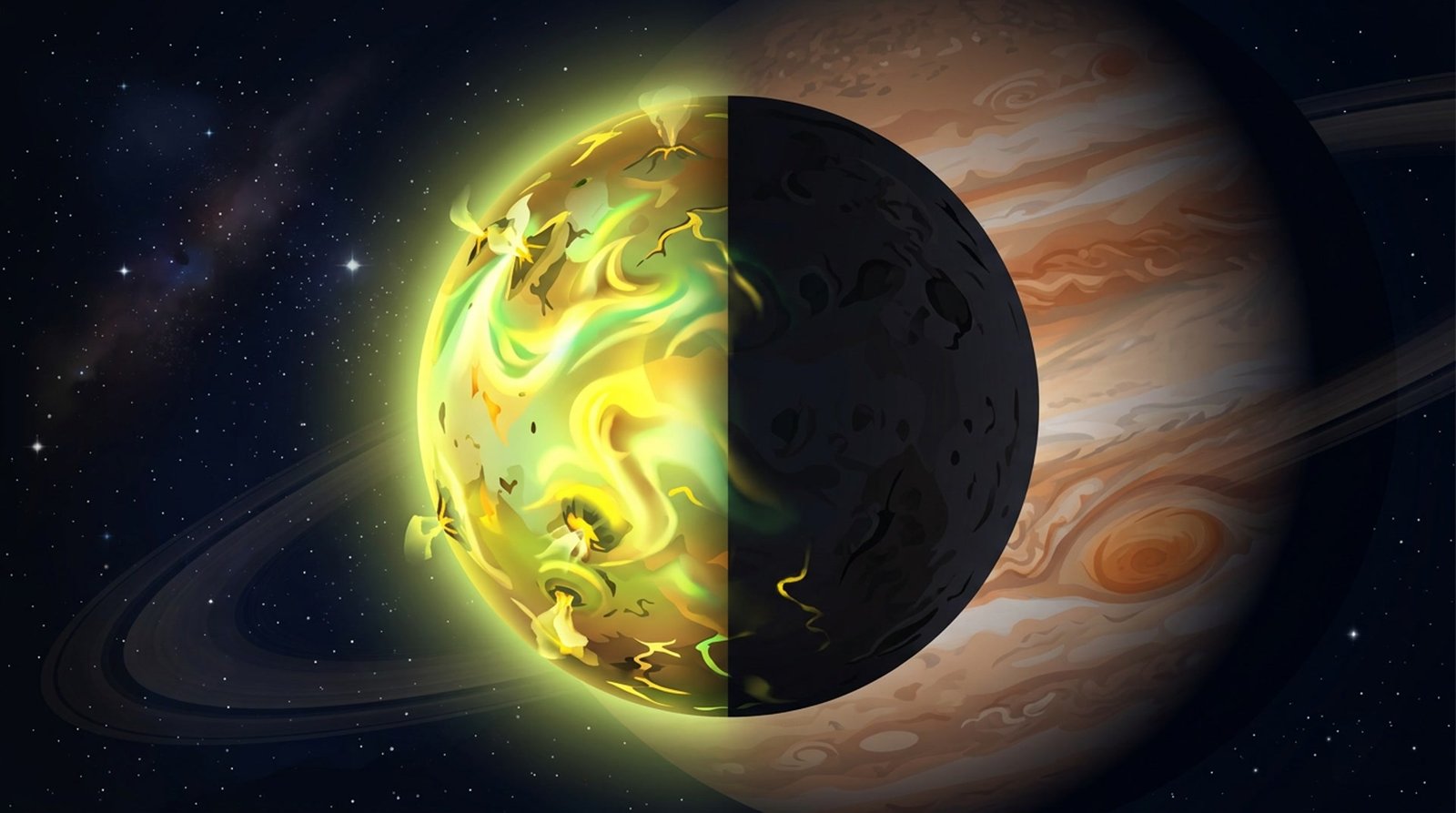
The Moon That Loses Its Glow in the Dark
Summary
By the end of this article, you will understand how Jupiter’s shadow literally turns off the glowing sodium aurora on its volcanic moon, Io, and why scientists were surprised by the chemistry behind it.
Quick Facts
- Surprise: Io's sodium aurora disappears in just 10 minutes when it enters Jupiter's shadow!
- Salient Idea: The glowing oxygen on Io doesn't care about the dark—it only reacts to Jupiter's magnetic plasma.
- Surprise: It takes nearly 2 hours for the sodium glow to fully recover once Io is back in the sunlight.
- Surprise: The aurora is made of vaporized table salt (NaCl) blasted from massive volcanoes.
The Discovery: The Vanishing Glow
Astronomers used powerful Earth-based telescopes to watch Io, Jupiter’s incredibly volcanic moon, pass into Jupiter’s massive shadow. They were looking at its optical aurorae—glowing gases in its atmosphere. They found a massive Surprise: The bright yellow glow of sodium gas plummeted, fading away in just 10 minutes. Yet, the green and red glow of oxygen stayed exactly the same! The oxygen simply tracked the invisible plasma of Jupiter’s magnetic field, entirely indifferent to the sudden darkness. But the sodium’s rapid disappearance meant something else was at play. The shadow wasn’t just cooling the moon down; it was physically turning off a light-powered chemical engine.
Original Paper: ‘Io’s Optical Aurorae in Jupiter’s Shadow’
Io’s sodium aurora mostly disappears in eclipse… e-folding timescales for decline and recovery differ sharply.
— Dr. Carl Schmidt
The Science Explained Simply
This is NOT a simple case of a gas freezing in the cold dark. That happens to Io’s sulfur dioxide, but sodium is different. The Salient Idea here is that sunlight acts as a trigger. In the sun, light breaks down volcanic salt into glowing sodium atoms. When Jupiter blocks the sun, this photochemistry halts. The sodium that is already there quickly escapes into space, and because the sun isn’t making more, the glow dies in minutes. When Io exits the shadow, it takes almost two hours to rebuild the sodium supply. It is a solar-powered chemical factory that gets its plug pulled every orbit.
The Aurora Connection
Earth’s auroras are created when solar wind hits our magnetic field. But Io’s auroras are driven by Jupiter’s rotating magnetic field, which sweeps past the moon, bombarding it with a plasma torus. This plasma directly excites the oxygen in Io’s atmosphere, making it glow red and green regardless of sunlight. But the sodium aurora needs *both*—the sunlight to create the sodium atoms, and the plasma electrons to make them glow. Studying this dual-requirement helps us understand the complex dance between massive magnetic fields, extreme volcanoes, and stellar light in creating planetary atmospheres.
Direct electron impact on atomic gas is sufficient to explain the brightness…
— Research Team
A Peek Inside the Research
How do you see a tiny glowing moon right next to the biggest, brightest planet in our solar system? The team used high-resolution optical spectrographs at observatories like Keck and Apache Point. They had to perfectly subtract Jupiter’s scattered light to isolate Io’s faint emission lines. Because Jupiter spins so fast, its light is actually Doppler-shifted, making this subtraction incredibly tricky! By separating the light like a prism, they tracked the precise brightness of sodium and oxygen minute-by-minute as Io plunged into darkness. It is a masterpiece of removing background noise to reveal a cosmic secret.
Even in ideal observing geometry, the optical spectra of Io in Jovian eclipse are strongly contaminated by Jupiter’s scattered light.
— The Researchers
Key Takeaways
- Jupiter's massive magnetic field bombards Io with plasma, creating permanent optical aurorae.
- Unlike Earth's aurora, Io's sodium aurora relies on a solar-powered chemical reaction.
- Planetary eclipses act as natural on/off switches, helping scientists time the exact speed of atmospheric chemistry.
- Observing this requires extreme precision to block out Jupiter's blinding glare and isolate Io's faint glow.
Sources & Further Reading
Frequently Asked Questions
Q: Why does oxygen stay glowing while sodium fades?
A: Oxygen’s glow is powered completely by Jupiter’s magnetic plasma bombarding the atmosphere, which doesn’t stop in the dark. Sodium needs sunlight to be created from salt molecules before the plasma can make it glow.
Q: Why does it take so long for the sodium glow to come back?
A: When Io leaves the shadow, it has to completely rebuild its sodium atmosphere from scratch. The sunlight has to break down salt molecules step-by-step, which takes nearly two hours to reach full strength.
The Hidden Auroras Dancing in Daylight
Summary
By the end of this article, you will understand how auroras can occur during the day, why they form strange stripes, and how they reveal invisible cracks in Earth’s magnetic shield.
Quick Facts
- Surprise: Auroras do not just happen at night; they happen around noon, too!
- Surprise: Scientists found a brand-new aurora shape and named it the 'Throat Aurora'.
- Salient Idea: Earth's own cold plasma leaks into space and acts like an invisible slide for hot electrons.
- Surprise: Afternoon daylight auroras are caused by heavy protons crashing into the atmosphere, not just electrons.
The Discovery: 7 Years in the Dark
Most people think auroras only happen at night. But researchers at the Yellow River Station in Svalbard, near the North Pole, used the endless darkness of Arctic winters to look at the dayside of Earth. Over 7 years, they captured millions of images. They found a Surprise: dayside diffuse auroras (DDAs) are everywhere. They categorized them into ‘unstructured’ glowing blankets and ‘structured’ patches and stripes. Most incredibly, they discovered a brand new phenomenon sprouting from these stripes. They called it the Throat Aurora—a rare, north-south aligned arc that points directly toward the equator.
A new auroral form, called throat aurora, is found to be developed from the stripy DDAs.
— De-Sheng Han and Research Team
The Science Explained Simply
This is NOT the sharp, bright curtain of light you see in typical nighttime aurora photos. Dayside diffuse auroras are faint, glowing patches and stripes. The Salient Idea here is how they form. High in space, ‘lumps’ and ‘wedges’ of cold plasma leak out of Earth’s atmosphere. These cold wedges act like invisible slides or ducts. When hot, energetic electrons from deep space hit these cold slides, they get dumped straight down into our atmosphere, creating the glowing stripes we see from the ground. It is a cosmic collision of hot and cold.
The Aurora Connection
Why does the ‘Throat Aurora’ matter? It acts as a giant, glowing ‘X marks the spot’ for space weather. Earth is protected by a massive magnetic shield. But sometimes, the solar wind forces this shield to crack open—a process called magnetic reconnection. The researchers realized that the Throat Aurora forms exactly where these new, open magnetic flux tubes are created. By simply looking at the sky, scientists can now map exactly where and when our planet’s invisible magnetic armor is opening up to the harsh environment of space.
The throat aurora is supposed to be a projection of a newly opened flux of reconnection.
— Research Team
A Peek Inside the Research
Discovering a new type of aurora does not happen overnight. It requires Knowledge and Tools, and a lot of patience. The team used a system of three all-sky imagers with special narrowband filters to capture the sky every 10 seconds. They collected data from 2003 to 2009. They had to manually process and visually inspect these images, looking for tiny, pulsating changes in faint green and red light. They then cross-referenced these visual shapes with satellite data and radar maps of high-altitude winds to prove their theory.
We visually inspected all of the images for many times focusing on examining the morphological and dynamical properties.
— Research Team
Key Takeaways
- Dayside diffuse auroras (DDAs) are split into two types: unstructured blankets and structured stripes.
- The structured stripes perfectly align with invisible ionospheric wind currents.
- Cold plasma from Earth's atmosphere is crucial for creating these structured daytime auroras.
- Throat auroras show the exact moment Earth's magnetic field connects with the Sun's.
Sources & Further Reading
Frequently Asked Questions
Q: How can scientists see auroras during the day if the sun is out?
A: They use research stations very close to the North Pole, like Svalbard. During the peak of winter, the sun never rises above the horizon, keeping the sky dark enough at ‘noon’ to see the faint daytime auroras.
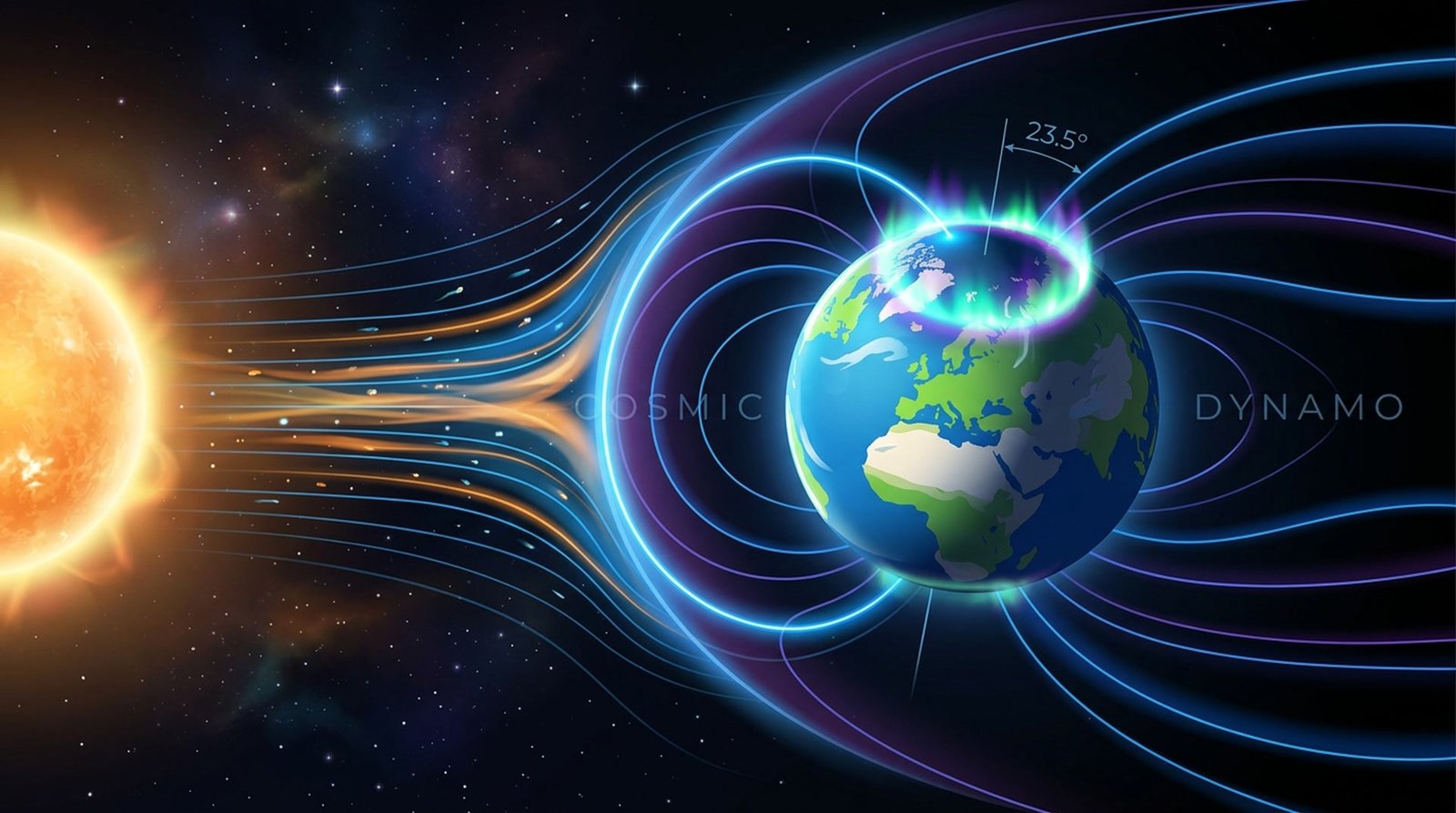
The Cosmic Dynamo: Why Auroras Prefer One Pole at a Time
Summary
By the end of this article, you will understand how a slight tilt in the Sun’s magnetic field acts like a cosmic generator, funneling more energy into one hemisphere and making its auroras glow significantly brighter.
Quick Facts
- Surprise: The Northern and Southern Lights are rarely perfect mirror images of each other.
- Salient Idea: The Interplanetary Magnetic Field (IMF) acts like a directional switch, sending more power to the North or South depending on its tilt.
- Surprise: A tiny magnetic shift of just 2 nanoTeslas in space can drastically change global weather patterns in the upper atmosphere.
- Surprise: This energy transfer is driven by a 'Solar Wind Dynamo'—a literal electrical generator in space.
The Discovery: A Tale of Two Hemispheres
For a long time, scientists assumed the auroras at the North and South poles were identical twins. But a team of researchers using the IMAGE satellite discovered a Surprise. By analyzing thousands of global ultraviolet images of the Earth’s poles, they noticed the auroral ovals were frequently lopsided. They isolated the data based on the Interplanetary Magnetic Field (IMF)—the magnetic field carried by the solar wind. They discovered that when the radial ‘X-component’ (Bx) of this field points away from Earth toward the Sun, the Northern Lights get a significant power boost in the dusk sector. When it points toward Earth, the Southern Lights get the boost. They had statistically proven that the Sun’s magnetic angle picks a favorite hemisphere.
This is the first statistical observational study indicating that IMF Bx can modify the energy conversion between the solar wind and the magnetosphere differently in the two hemispheres.
— J.P. Reistad et al.
The Science Explained Simply
This is NOT simply about the solar wind hitting one side of the Earth harder. The Earth is protected by its own magnetic bubble. The Salient Idea here is magnetic tension. Imagine the Earth’s magnetic field lines opening up and dragging behind the planet like long rubber bands in the solar wind. If the incoming solar magnetic field is tilted (the Bx component), it creates uneven tension. In one hemisphere, the rubber band is pulled tighter. This tension acts exactly like an electrical generator, known as the Solar Wind Dynamo. The tighter the magnetic tension, the more electrical current (Region 1 current) is pushed down into that specific hemisphere’s atmosphere.
The Aurora Connection
How does an invisible generator in space create the aurora we see? The Solar Wind Dynamo generates colossal electrical currents, funneling energetic electrons down along Earth’s magnetic field lines. When these electrons crash into the gases in our upper atmosphere, they transfer their energy, causing the oxygen and nitrogen to glow. Because the Bx tilt makes the dynamo more efficient in one hemisphere, it sends a denser stream of accelerated electrons (typically 1.5 to 2 keV) into that region. The result? A noticeably brighter auroral oval on the dusk side of the favored hemisphere. It is a perfect visualization of invisible space weather.
Hemispheric intensity asymmetries in the aurora… could be a signature of asymmetric Region 1 currents in the two hemispheres.
— Research Team
A Peek Inside the Research
Proving this wasn’t easy. The team needed a massive dataset, but daylight ruins auroral images. The researchers used a technique called dayglow subtraction, creating mathematical models to erase the sunlight from the pixels, leaving only the pure auroral ultraviolet emissions. They carefully selected periods during local winter, ensuring the Earth’s dipole tilt didn’t skew the results. Finally, they used rigorous statistical math (the Kolmogorov-Smirnov test) to prove with 95% confidence that the brightness difference wasn’t a random glitch, but a consistent physical law of our solar system.
We want to exclude, as good as possible, other mechanisms that can produce asymmetric aurora to avoid that the IMF Bx signatures drown in other stronger signals.
— J.P. Reistad et al.
Key Takeaways
- The radial component of the solar wind's magnetic field (Bx) controls auroral brightness.
- A negative Bx (pointing toward the Sun) makes the Northern Hemisphere's dusk auroras brighter.
- A positive Bx makes the Southern Hemisphere's dusk auroras brighter.
- This asymmetry is caused by different magnetic tension forces stretching Earth's field lines like rubber bands.
Sources & Further Reading
Frequently Asked Questions
Q: Does this mean one pole always has brighter auroras than the other?
A: No! The brightness flips depending on the orientation of the solar wind’s magnetic field. It acts like a cosmic toggle switch, shifting the power bias between the North and South as the solar wind changes.
Q: What is the Bx component?
A: Magnetic fields exist in 3D space. The Bx component is the part of the magnetic field that points radially—meaning directly toward or away from the Sun.
How Giant Planets Control Earth's Auroras and Climate
Summary
By the end of this article, you will understand how the orbits of Jupiter and Saturn create a 60-year cycle that controls both the Northern Lights and Earth’s global temperatures.
Quick Facts
- Surprise: Historical records of auroras from 1700 to 1966 perfectly match the ups and downs of Earth's climate
- Salient Idea: A massive 60-year cycle driven by Jupiter and Saturn acts like a cosmic metronome for our solar system
- Surprise: The planets' gravity might actually change the amount of clouds in our sky by altering the Earth's electric field
- Surprise: Based on this 60-year astronomical clock, global temperatures might naturally stabilize in the coming decades
The Discovery: The Cosmic 60-Year Clock
For centuries, people have suspected that the stars and planets affect our weather. In 2012, researchers found a Surprise: by analyzing centuries of historical mid-latitude aurora sightings from 1700 to 1966, they discovered a hidden rhythm. The auroras didn’t just appear randomly. They pulsed in distinct cycles of 10, 20, and exactly 60 years. Even more incredibly, when scientists looked at global temperature records, they found the exact same 60-year heartbeat. This wasn’t a coincidence. They had discovered a shared frequency linking the Northern Lights directly to Earth’s changing climate, acting like a giant cosmic clock.
The aurora records reveal a physical link between climate change and astronomical oscillations.
— Dr. Nicola Scafetta
The Science Explained Simply
This is NOT just the sun getting hotter and colder. It’s a complex chain reaction. The Salient Idea here is planetary gravity. Giant planets like Jupiter and Saturn exert a tidal pull on the sun, changing its magnetic activity. When the sun’s magnetic shield is weak, more cosmic rays from deep space hit Earth. These rays electrically charge our atmosphere. This electric charge actually helps form low-level clouds. More clouds mean more sunlight reflects back into space, cooling the Earth. So, Jupiter and Saturn move, the sun reacts, cosmic rays increase, clouds form, and the Earth cools. It is a brilliant, interconnected solar system machine!
The Aurora Connection
Why use auroras to study climate? Mid-latitude auroras (Northern Lights seen far south of the Arctic) are rare. They only happen when the Earth’s magnetic field is battered by intense solar winds and highly charged particles. Therefore, historical aurora records are actually perfect diaries of our solar system’s magnetic weather. By studying when these massive light shows happened over the last 300 years, scientists can track the exact level of atmospheric electrification. This same electrification drives the cloud cover that changes our temperatures. The auroras aren’t just beautiful; they are visible barometers of the forces steering our global climate.
When the ionosphere is highly ionized by cosmic rays, large auroras would more likely form at the mid-latitudes.
— Research Study
A Peek Inside the Research
How do we prove this 60-year cycle is real? It comes down to incredible data matching. The researcher didn’t just use modern thermometers. They looked at tree rings, ocean sediments, and even a historical diary of meteorite falls in China dating all the way back to 619 AD! By applying advanced mathematical tools like Maximum Entropy spectral analysis, they isolated the background ‘noise’ to find the exact beats of 10, 20, and 60 years in all these records. They then built a harmonic computer model, similar to how we predict ocean tides, to successfully forecast climate trends using only planetary motions.
A harmonic constituent model based on aurora cycles can efficiently both reconstruct and forecast climate oscillations.
— Research Study
Key Takeaways
- Mid-latitude auroras are a hidden proxy for measuring Earth's historical climate patterns
- Cosmic rays and solar winds directly impact how many clouds form in our atmosphere
- The combined tidal pull of Jupiter and Saturn creates rhythmic 10, 20, and 60-year solar cycles
- Climate change isn't just about greenhouse gases; our solar system's orbital dance plays a massive role
Sources & Further Reading
Frequently Asked Questions
Q: Does this mean humans aren’t causing climate change?
A: No, it doesn’t mean that. However, this research suggests that natural astronomical cycles (like the 60-year planetary rhythm) are responsible for a significant portion of warming and cooling, which must be factored into climate models.
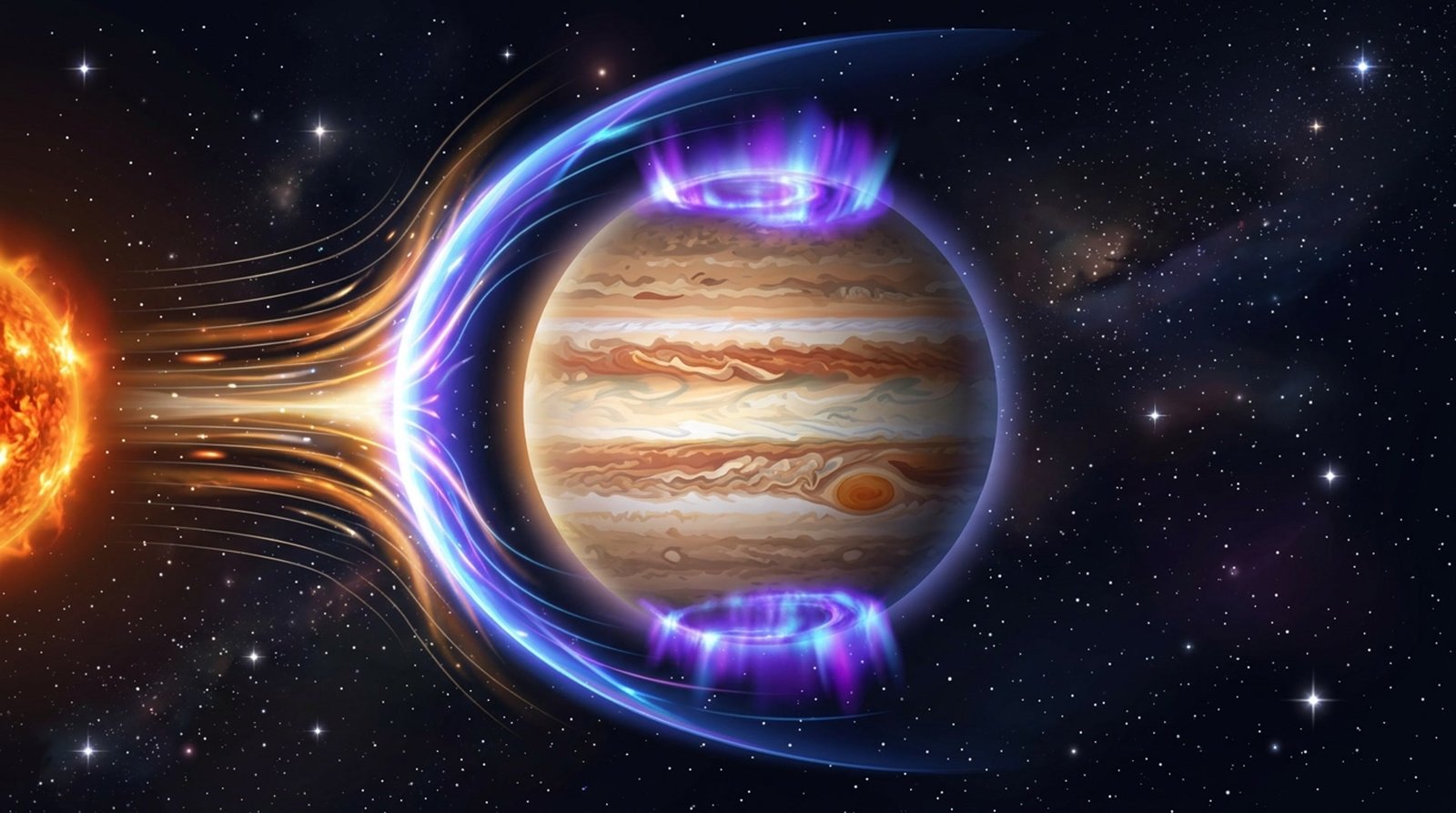
When the Solar Wind Crushed Jupiter: A 12-Terawatt Aurora
Summary
By the end of this article, you will understand how a violent solar storm crushed Jupiter’s magnetic shield, triggering a massive ultraviolet light show, and what this tells us about space weather.
Quick Facts
- Surprise: Jupiter's aurora spiked to 12 Terawatts—about the power of 12,000 large nuclear reactors on Earth
- Salient Idea: The Juno spacecraft actually crossed the boundary of Jupiter's magnetic shield right as it was being crushed
- Surprise: The solar storm compressed the planet's magnetic bubble so fast that the boundary 'overtook' the speeding spacecraft
- Surprise: It took about 4 hours after the peak magnetic crush for the aurora to reach its maximum brightness
The Discovery: A 12-Terawatt Light Show
In late 2022, NASA’s Juno spacecraft was orbiting Jupiter when a massive shockwave from the Sun arrived. This was a rare event. Juno’s instruments detected the outer edge of Jupiter’s magnetic shield—the magnetosphere—collapsing inward under the intense pressure of the solar wind. At the exact same time, Juno’s ultraviolet camera was watching the southern aurora. The Surprise: As the shield crushed inward, Jupiter’s ultraviolet auroras exploded in brightness, hitting a staggering 12 Terawatts of power. That is six times brighter than the baseline level! The timing proved that a powerful interplanetary shock literally squeezed the giant planet’s magnetic field, forcing a massive light show in the process.
Original Paper: ‘Jupiter’s UV auroral response to a magnetospheric compression event’
The auroral brightening was likely caused by a solar wind shock compressing the magnetosphere.
— Dr. R. S. Giles
The Science Explained Simply
To understand this, we have to Build a Fence: This is NOT like a simple light bulb turning on because a switch was flipped. Think of Jupiter’s magnetic field like a giant, invisible balloon. When the solar wind hits it hard, the balloon compresses. The Salient Idea here is that this compression dramatically changes the flow of plasma and electric currents thousands of miles above the planet. The energy from that ‘squeeze’ funnels down the magnetic field lines and crashes into Jupiter’s atmosphere, creating the brilliant ultraviolet light. Interestingly, the light show did not peak the very second the squeeze happened; it took about 4 hours for the energy to fully trigger the main aurora.
It is not a simple circuit; it is a delayed, massive magnetic squeeze.
— Science Team
The Aurora Connection
Here on Earth, our auroras (the Northern Lights) are intimately connected to the exact same process. When the Sun releases a burst of energy, it compresses Earth’s magnetic shield, sending charged particles raining down to create beautiful green and pink skies. Jupiter is doing the same thing, just on an unimaginably larger scale. However, Jupiter also creates its own auroras internally, driven by volcanic material from its moon Io. Cycling on the subject, this specific 2022 event proves that despite its internal power, Jupiter’s biggest, brightest ultraviolet auroras are still highly vulnerable to the whims of extreme space weather and solar wind shocks.
Extreme worlds teach us about the physics of planetary survival and magnetic protection.
— NorthernLightsIceland.com Team
A Peek Inside the Research
How do you measure a magnetic shield collapsing? The scientists used a brilliant combination of tools on the Juno spacecraft. They used the JADE instrument to count charged particles, which spiked when Juno crossed out of the magnetic shield and into the solar wind. They also used the UVS (Ultraviolet Spectrograph) to take wide pictures of the aurora. Because Juno’s orbit has shifted over the years, the spacecraft was perfectly positioned far to the south, giving it a continuous, unblocked view of the entire southern aurora without the planet’s rotation getting in the way. It is a masterpiece of orbital timing.
The Juno mission allows us to simultaneously compare the compression state of the magnetosphere with the total UV auroral power.
— Research Authors
Key Takeaways
- Solar wind shocks act as external triggers for massive energy releases on giant planets
- Juno's unique tilted orbit allows simultaneous measurement of magnetic size and auroral power
- Magnetospheric compression changes the flow of plasma, creating delayed but brilliant ultraviolet light shows
- Not all auroral activity comes from inside Jupiter; the Sun still plays a dominant role in extreme weather
Sources & Further Reading
Frequently Asked Questions
Q: What is a Terawatt, and how bright is Jupiter’s aurora?
A: A Terawatt is one trillion watts. Jupiter’s aurora reached 12 Terawatts during this event, which is thousands of times more powerful than the brightest auroras we see on Earth!
Q: Did the Sun cause this Jupiter aurora?
A: Yes! While Jupiter generates some of its own auroras using material from its moons, this specific extreme brightening was triggered by a massive shockwave of solar wind hitting the planet.
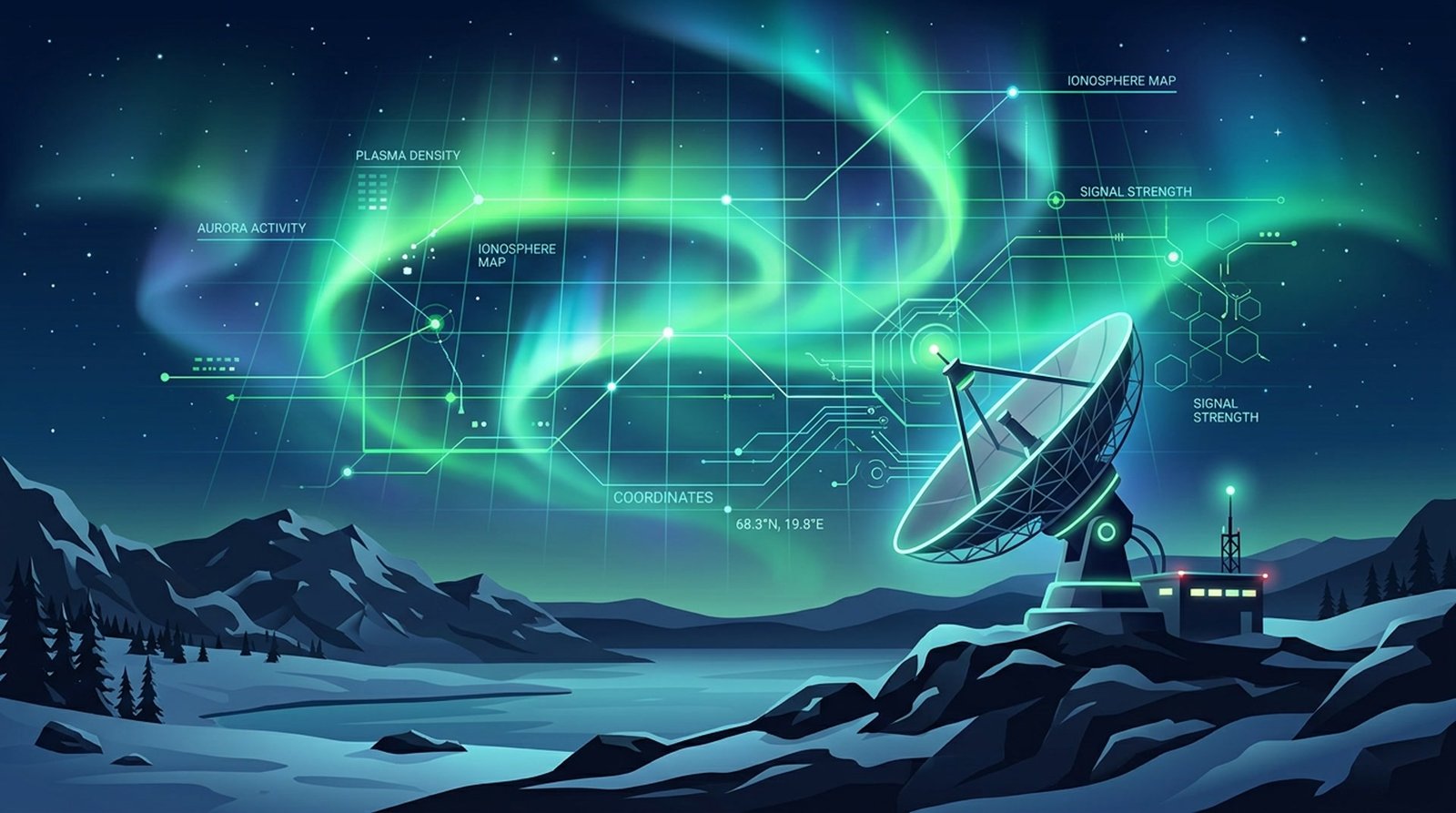
Using Self-Driving Car Tech to Track the Aurora
Summary
By the end of this article, you will understand how scientists are using self-driving car algorithms to track invisible radar echoes in the ionosphere, revealing the hidden electrical forces driving the Northern Lights.
Quick Facts
- Surprise: The ICEBEAR radar system processes an astonishing 200,000 images per second to track space weather.
- Salient Idea: Radars do not 'see' the aurora's light; they bounce signals off chaotic, 3-meter-wide waves in electrically charged plasma.
- Surprise: These invisible plasma storms can travel at mind-blowing speeds of up to 4,100 meters per second (over 9,000 mph!).
- Surprise: A really intense aurora acts like a giant space battery, creating its own electric field that can override the Earth's background magnetic drift.
The Discovery: Tracking the Invisible
The ionosphere, a layer of charged gas 90 kilometers above Earth, is highly chaotic. When the solar wind hits Earth’s magnetic field, it creates the beautiful Northern Lights. But it also creates intense, invisible plasma turbulence. The ICEBEAR radar in Canada was built to study this, recording over 10,000 radar echoes a minute! This created a huge problem: how do you track something so chaotic in a mountain of data? The researchers had a Surprise solution. They borrowed an unsupervised machine learning algorithm called DBSCAN—the exact same point-cloud technology used by self-driving cars to detect obstacles with lasers. By applying this math to the radar echoes, the algorithm automatically grouped the chaotic radar hits into distinct, trackable ‘clusters’. They were finally able to watch the invisible storm move in real-time.
Original Paper: ‘A Point-cloud Clustering & Tracking Algorithm for Radar Interferometry’
The radar aurora bulk motions exhibit key qualities of auroral electric field enhancements that has previously been observed with various instruments.
— Magnus F. Ivarsen
The Science Explained Simply
To understand this, we need to build a fence around the concept: This radar is NOT taking pictures of the aurora’s glowing light. Instead, the radar shoots radio waves into the sky. When those waves hit sharp density gradients in the plasma (specifically, 3-meter-wide ripples called Farley-Buneman waves), the signal bounces back. The Salient Idea here is that these radar echoes act like a tracer dye in a river. By grouping these echoes into a ‘point-cloud’ and tracking their bounding boxes from one second to the next, scientists aren’t just seeing where the plasma is—they are watching the invisible electric field push the plasma around.
The Aurora Connection
The motion of the aurora is governed by massive instability processes in the magnetosphere. When researchers matched their radar point-clouds with optical video of the aurora, they found a perfect match. The invisible radar blobs tracked the visible auroral forms almost perfectly. But the real Surprise happens during intense auroras. A strong aurora creates a localized electric field so powerful that it overrides the Earth’s ambient drift. The radar showed the plasma suddenly ripping parallel to the auroral arc at 4,100 meters per second. The aurora is not just a light show; it is an active, massive electrical generator in the sky.
The local electric field around these unusually intense precipitation regions is strong enough to completely override the ambient drift.
— Research Team
A Peek Inside the Research
How did the team actually track these clouds? It required incredibly clever data mining. The DBSCAN algorithm looks for the ‘nearest neighbors’ of a data point. If enough radar echoes are close together within a specific distance threshold (the noise limit), the AI groups them into a cluster. The team then wrote a script to look at the bounding box of that cluster. If a box in the next frame was roughly the same size and in roughly the same place, the computer knew it was looking at the exact same plasma cloud. This frame-by-frame tracking finally allowed scientists to calculate the actual bulk velocity of the radar aurora.
Our method, which is fully automatic, can be used to mine point-cloud data for irregular and dynamic clustering and flag this data for subsequent analyses.
— Original Paper
Key Takeaways
- An AI clustering tool called DBSCAN helps scientists automatically find and track moving 'blobs' of radar data.
- Plasma turbulence in the upper atmosphere directly follows the movement of visible auroral arcs.
- Intense auroras create extreme, localized winds of plasma that move parallel to the auroral curtains.
- Tracking these invisible structures helps us map the massive electrical currents connecting Earth to the solar wind.
Sources & Further Reading
Frequently Asked Questions
Q: If the aurora is made of light, how can a radar see it?
A: The radar does not see the light itself. Instead, it bounces radio waves off the chaotic, electrically charged gas (plasma) that is stirred up by the exact same energetic forces causing the Northern Lights.
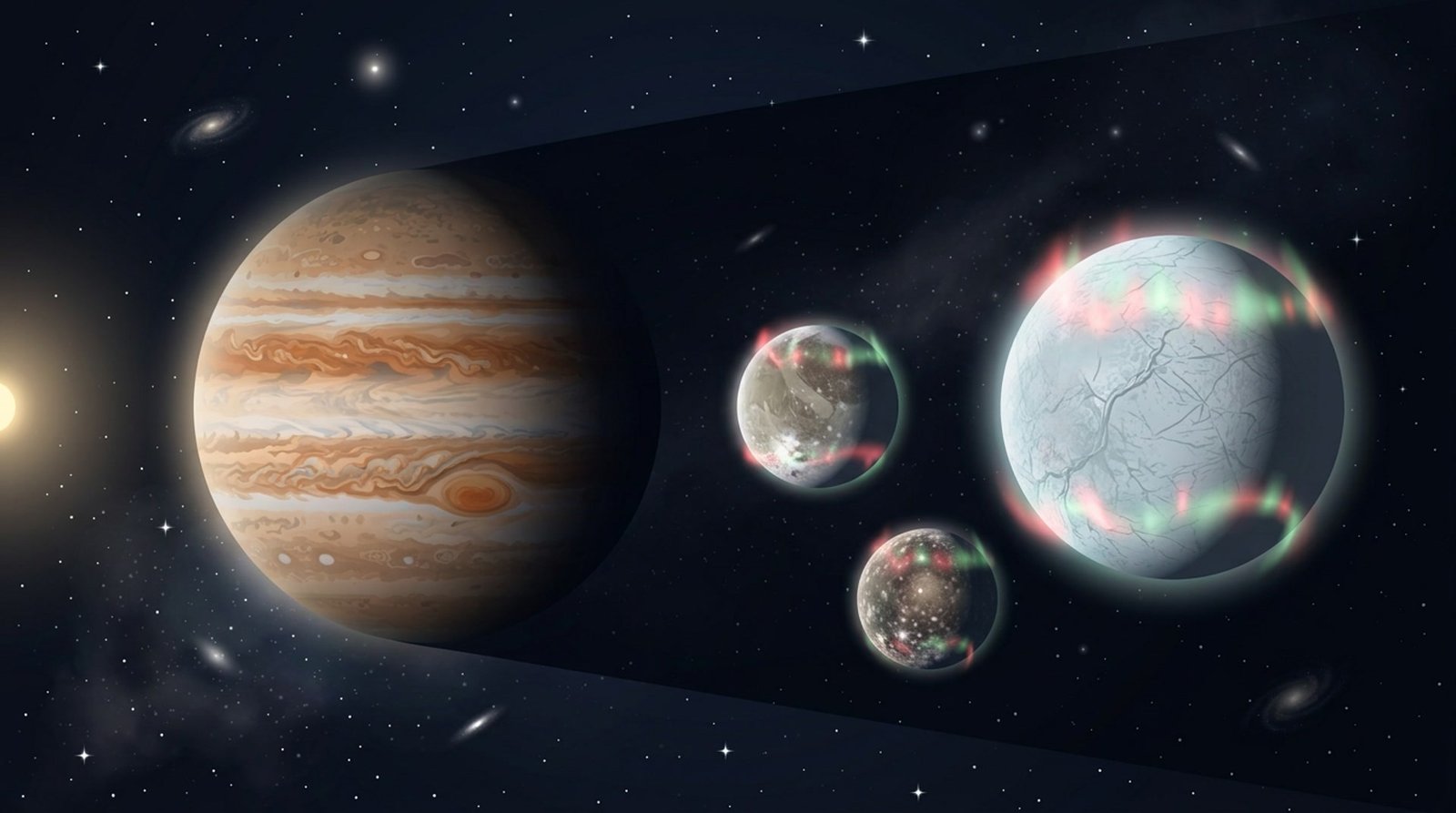
Glowing Moons: Decoding the Auroras of Jupiter's Ice Worlds
Summary
By the end of this article, you will understand how astronomers use giant eclipses to spot glowing auroras on Jupiter’s moons, and what these light shows reveal about alien atmospheres.
Quick Facts
- Surprise: Jupiter's moons have auroras, but you can only see them when the moons are hiding in Jupiter's shadow.
- Surprise: Astronomers detected the first 'optical' (visible to the human eye) auroras on Ganymede and Callisto.
- Salient Idea: The auroras act like chemical fingerprints—specific red and green glows prove the atmospheres are mostly oxygen gas.
- Surprise: Past UV studies thought these moons had wet, water-filled atmospheres, but this new visible-light data shows almost no water.
The Discovery: Glowing in the Dark
To see a faint glow next to a glaring star, you need to turn off the lights. Astronomers used the Keck telescope in Hawaii to stare at Jupiter’s moons—Europa, Ganymede, and Callisto—exactly when they passed into Jupiter’s giant shadow. Stripped of harsh, reflected sunlight, the moons revealed a Surprise: they were glowing. These were the first visible-light auroras ever detected on Ganymede and Callisto. By measuring the exact colors of this light, scientists discovered these atmospheres are dominated by oxygen gas. The Salient Idea here is that eclipses aren’t just cool visual events; they are nature’s way of dimming the background so we can see the faintest secrets of the solar system.
Original Paper: ‘The Optical Aurorae of Europa, Ganymede and Callisto’
We present the first detections of Ganymede’s and Callisto’s optical aurorae… and place upper limits on hydrogen.
— Dr. Katherine de Kleer and team
The Science Explained Simply
This is NOT like Earth’s thick atmosphere where rain and weather happen. The atmospheres on these icy moons are incredibly thin—almost a vacuum. But Jupiter’s powerful magnetic field acts like a particle accelerator, slamming electrons into the moons’ surfaces. When these electrons hit gas molecules, the molecules get ‘excited’ and release light. We call this an aurora. The Salient Idea is that different gases glow in different colors. Oxygen glows red and green. If there were a lot of water vapor, we would see a strong hydrogen glow (a specific red line called H-alpha). Because the scientists saw intense oxygen lines but almost no hydrogen lines, they proved these atmospheres are mostly oxygen, debunking recent theories of water-dominated skies.
The simultaneous measurement of multiple emission lines provides robust constraints on atmospheric composition.
— The Research Team
The Aurora Connection
On Earth, our magnetic field pulls solar wind to the poles, creating the Northern and Southern Lights. But Jupiter’s moons sit inside Jupiter’s massive, spinning magnetic field. This means their auroras aren’t driven by the Sun, but by Jupiter itself! As the moons orbit, they plow through a sheet of plasma (charged particles) trapped by the giant planet. In fact, Europa’s aurora gets brighter and dimmer depending on how deep it is inside this plasma sheet. Understanding these alien auroras helps us understand how magnetic fields interact with atmospheres across the universe, either protecting them or slowly stripping them away.
Europa’s auroral brightness correlates with magnetic latitude… and variations in the electron density.
— The Research Team
A Peek Inside the Research
How do you measure the exact gases on a moon hundreds of millions of miles away? The team used a tool called a spectrograph (the HIRES instrument on Keck). A spectrograph splits light into a rainbow barcode. Each chemical element has a specific set of lines on this barcode. The researchers looked for the exact wavelengths of oxygen (like 6300, 5577, and 7774 Angstroms) and hydrogen. It takes immense patience. The team observed just ten eclipses over 23 years (1998 to 2021) to gather enough light. This meticulous Knowledge and Tool combination allowed them to separate true auroral light from cosmic rays and background noise.
These constitute the first detections of emissions at 7774 and 8446 Angstroms at a planetary body other than Earth.
— The Research Team
Key Takeaways
- Observing moons during a Jupiter eclipse blocks out harsh sunlight, revealing faint atmospheric glows.
- Different molecules (like oxygen or water) emit specific colors of light when hit by high-energy electrons.
- Europa and Ganymede have extremely thin atmospheres made almost entirely of O2 (Oxygen).
- Callisto's first visible-light aurora detection proves it also has an oxygen-rich atmosphere.
Sources & Further Reading
Frequently Asked Questions
Q: Could we breathe the oxygen on these moons?
A: No. Even though the atmosphere is made of oxygen, it is incredibly thin—billions of times thinner than Earth’s atmosphere. It is practically a vacuum!
Q: Why did previous studies think there was water?
A: Previous studies looked at ultraviolet (UV) light on the sunlit sides of the moons. This optical (visible light) study looked at the dark sides during an eclipse, providing a different set of ‘chemical fingerprints’ that strongly point to pure oxygen.