
Cosmic Winds: Peeling Back an Alien Planet's Layers
Summary
Scientists have developed a new technique to map the winds on the ultra-hot Jupiter WASP-76b at different altitudes. By studying how iron absorbs light, they’ve created the first-ever vertical weather profile of this extreme world, revealing how its atmosphere works from the inside out.
Quick Facts
- WASP-76b is a scorching hot exoplanet famous for its 'iron rain'.
- Scientists used iron absorption lines like an X-ray to see different atmospheric depths.
- Stronger iron lines probe higher altitudes, while weaker lines see deeper.
- The planet's powerful, day-to-night winds persist at all altitudes.
- The research suggests magnetic fields play a key role in controlling the planet's weather.
The Discovery: Beyond Iron Rain
We already knew WASP-76b was wild. It’s a world so hot that iron vaporizes on its day side and then rains down as molten metal on its night side. But researchers wanted to look deeper. How do the planet’s ferocious winds, which carry this iron vapor, behave at different altitudes? A team led by Aurora Kesseli and Hayley Beltz pioneered a new method using data from the ESPRESSO spectrograph. They sorted the light-absorbing signatures of iron (Fe I) based on their strength, or opacity. Very opaque lines can only be seen from the very top of the atmosphere, while less opaque lines allow us to peer deeper down. By analyzing these different sets of lines, they could measure the wind speed at different layers for the first time, effectively creating a vertical slice of an alien planet’s weather.
We’re moving from a 2D picture to a 3D understanding of these incredible atmospheres.
— Aurora Y. Kesseli, Lead Author
The Science Explained Simply
Imagine you’re trying to see the ground from a plane on a foggy day. A very thick, dense fog bank (a strong opacity line) would only let you see the very top layer. But if the fog were a much thinner mist (weak opacity), you might be able to see all the way down to the ground. Astronomers used this exact principle with iron atoms in WASP-76b’s atmosphere. Iron absorbs light at many specific wavelengths. Some of these absorption lines are naturally ‘stronger’ than others. The strong lines get blocked high up in the atmosphere, giving us information about the winds there. The weaker lines aren’t fully absorbed until the starlight has traveled much deeper, revealing the wind patterns in the lower layers. By separating and analyzing these, scientists could compare the ‘high-altitude winds’ to the ‘low-altitude winds’ and build a vertical profile.
The Aurora Connection
A key question on a world like WASP-76b is what controls its atmosphere. The researchers tested three different climate models, but the most interesting part was the role of magnetic fields. On Earth, our magnetic field channels the solar wind to create beautiful auroras. On a hot Jupiter, a magnetic field can act like a giant brake, creating friction—or ‘magnetic drag’—on the hot, ionized gases whipping around the planet. The study found that a model including a realistic magnetic field (the ‘3G’ model) did a better job of explaining the observed wind patterns than a simple model with no magnetism or one with a crude, uniform drag. This is strong evidence that, just like on Earth, magnetic fields are a dominant force in shaping a planet’s climate and space weather, even one 640 light-years away.
The data seems to favor a model with magnetic effects, suggesting these invisible forces are shaping the entire planet.
— Hayley Beltz, Lead Author
A Peek Inside the Research
The goal was to see which computer simulation of WASP-76b best matched reality. After using the binary mask technique to isolate the weak and strong iron lines from the ESPRESSO data, the team measured key properties like the wind speed (velocity shift) and the wind’s turbulence (line width) for each atmospheric layer. They then compared these real-world measurements to the predictions from three Global Circulation Models (GCMs): one with no drag, one with uniform drag, and one with a sophisticated magnetic drag. The uniform drag model failed, predicting trends opposite to what was seen. The battle was between the no-drag (hydrodynamic) and magnetic models. While neither was perfect, the magnetic model better matched subtle trends in the data, especially how the signal changed from the start to the end of the transit. This work provides a powerful new way to test and refine our theories about how exoplanet atmospheres work.
Key Takeaways
- A new method allows astronomers to study exoplanet atmospheres in vertical layers, not just as a single slab.
- On WASP-76b, there's a trend of stronger, more focused winds deeper in the atmosphere.
- Computer models that include magnetic fields ('magnetic drag') better explain the observations than models without.
- This is a major step toward creating 3D weather maps of alien worlds.
- Even the best models today can't fully account for the incredible wind speeds on WASP-76b, hinting at missing physics.
Sources & Further Reading
Frequently Asked Questions
Q: So, are the winds different at different heights on WASP-76b?
A: Yes, that’s what the data suggests. The research found tentative trends that winds are more blueshifted (moving towards us faster) and the flow is less turbulent deeper in the atmosphere. Higher up, the wind patterns appear wider and more complex.
Q: What is ‘magnetic drag’?
A: It’s a force that occurs when a magnetic field interacts with a moving, electrically conductive fluid, like the hot ionized gas in WASP-76b’s atmosphere. It acts like a form of friction, slowing down and redirecting the atmospheric winds.
Q: Why can’t the models perfectly match the wind speeds?
A: Exoplanet atmospheres are incredibly complex. There’s likely ‘missing physics’ in the models, such as the effects of hydrogen atoms splitting apart at high temperatures, or perhaps the magnetic field is even stronger or more complex than assumed. This study helps pinpoint where those models need to improve.
Q: Can this technique be used on other planets?
A: Yes, absolutely! This method can be applied to any exoplanet with a clear atmosphere and strong absorption lines observed with a high-resolution spectrograph. As telescopes like the Extremely Large Telescope (ELT) come online, we’ll be able to do this for more planets with even higher precision.


What are northern lights (Steve phenomenon)?
What is the STEVE Phenomenon (and How Is It Different from the Aurora)?
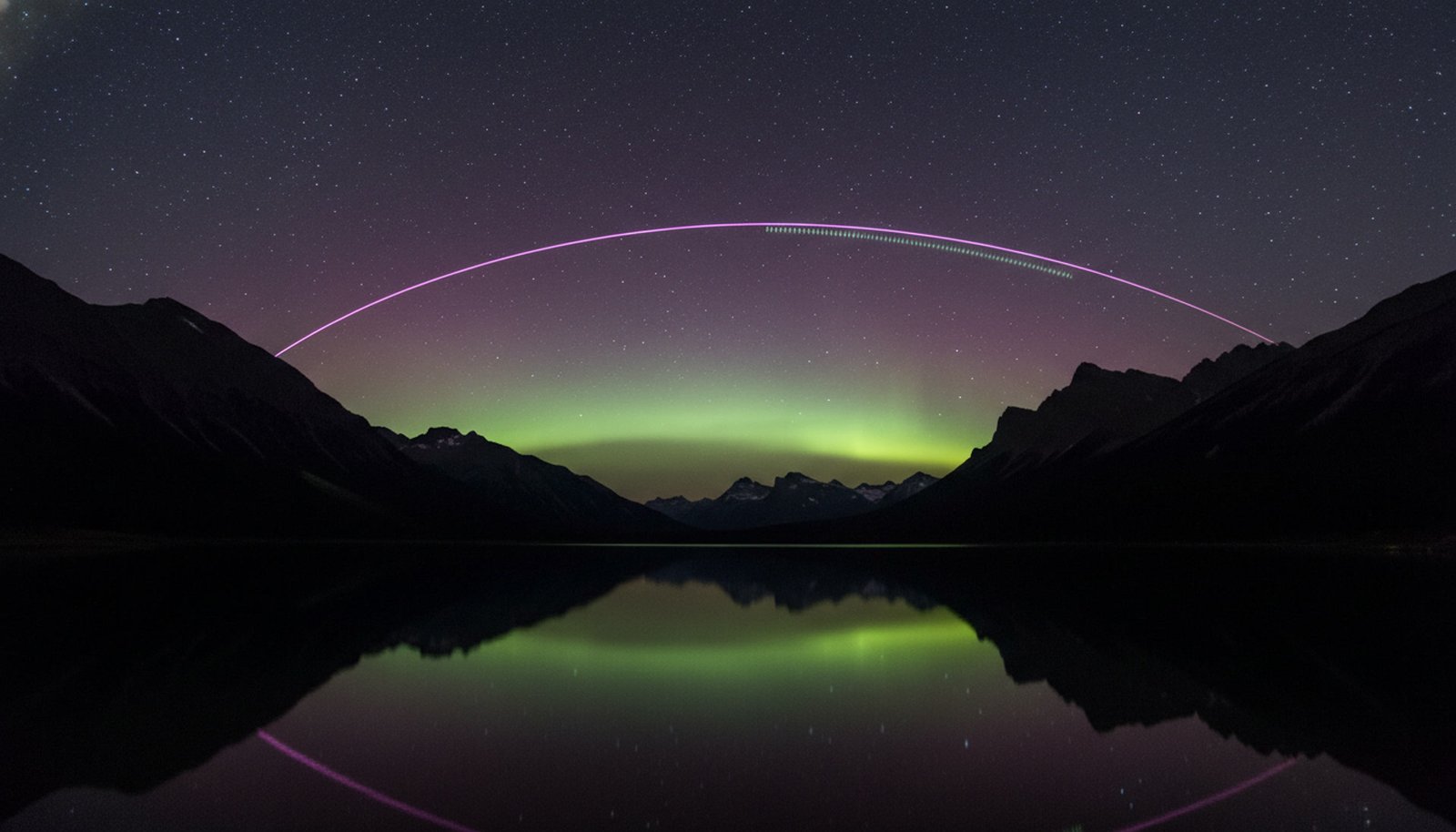
For centuries, we’ve been captivated by the dancing green curtains of the Aurora Borealis. But recently, a new and mysterious celestial feature has joined the conversation: a thin, purple ribbon of light nicknamed ‘STEVE’. First brought to the attention of scientists by citizen sky-watchers, STEVE is not an aurora, but an entirely different kind of atmospheric glow.
This article demystifies this beautiful phenomenon, explaining what STEVE is, how it’s formed, and how it stands apart from its more famous cousin, the Northern Lights. We’ll explore its unique appearance, the cutting-edge science behind it, and how you might be able to spot it yourself.
Understanding the Classic Aurora
To understand why STEVE is so unusual, it’s important to first remember what makes a ‘normal’ aurora. The classic Northern Lights are a well-understood spectacle with a clear cause and appearance.
The Cause: A Rain of Solar Particles
The traditional Aurora Borealis is created when charged particles from the sun, carried on the solar wind, are funneled by Earth’s magnetic field towards the poles. These high-energy electrons and protons then collide with gas atoms in our upper atmosphere, primarily oxygen and nitrogen. This collision excites the atoms, and as they calm down, they release their excess energy in the form of light. Think of it as a cosmic ‘rain’ of particles lighting up our atmospheric gases like a giant neon sign. The strength and intensity of this particle rain directly influence how bright and active the aurora becomes.
The Appearance: Diffuse Curtains of Light
The visual result of this particle rain is the familiar auroral display: broad, shimmering curtains of light that can stretch across the sky. The most common color is a vibrant green, produced by oxygen collisions at specific altitudes. These lights often appear within a predictable region known as the auroral oval, a ring-shaped zone centered on the magnetic poles. While they can dance and move rapidly, their form is typically diffuse and widespread, lacking the sharp, narrow structure that defines STEVE. They are a direct visual representation of solar energy interacting with our planet’s protective magnetic shield.
STEVE: A Different Kind of Light Show
STEVE looks and behaves differently from the aurora because its underlying physical mechanism is fundamentally distinct. It’s not a story of falling particles, but of a super-fast, super-hot river of gas.
What is STEVE?
STEVE stands for Strong Thermal Emission Velocity Enhancement. This scientific backronym was created after citizen scientists humorously named the phenomenon ‘Steve’ from the animated movie ‘Over the Hedge’. Unlike the aurora, STEVE is a visual manifestation of a subauroral ion drift (SAID). This is an incredibly fast-flowing, narrow stream of plasma (hot, ionized gas) moving at speeds over 13,000 mph (21,000 km/h) through the ionosphere. The intense friction and heat generated by this river of gas cause it to glow, creating the distinct ribbon of light we see from the ground.
Appearance and Location
STEVE’s appearance is its most defining feature. It manifests as a remarkably narrow, well-defined ribbon of mauve or pale purple light, often stretching from east to west for hundreds of miles. It can last from 20 minutes to over an hour. Crucially, STEVE appears at lower latitudes than the main auroral display, meaning you could see it from places like southern Canada or the northern United States, south of the main auroral oval. Sometimes, STEVE is accompanied by a separate feature: a series of green, vertical stripes nicknamed the ‘picket fence’, which is still being studied but may be caused by a more traditional particle-rain mechanism.
Key Differences from the Aurora
The distinction is clear. Cause: Aurora is from a ‘rain’ of particles, while STEVE is from a fast, hot river of gas. Color: Aurora is typically green, red, or blue, while STEVE’s main feature is a mauve-purple ribbon. Location: Aurora is in the auroral oval, while STEVE is equatorward (south) of it. Shape: Aurora is made of broad, diffuse curtains, while STEVE is a sharp, narrow arc. While they are both driven by the same overall geomagnetic activity from the sun, they are two separate phenomena that can sometimes appear in the sky on the same night, telling different parts of the same space weather story.
Quick Facts
- STEVE stands for ‘Strong Thermal Emission Velocity Enhancement’.
- It is NOT a type of aurora; it is a separate atmospheric phenomenon with a different cause.
- STEVE is a glowing, fast-moving river of hot gas (plasma) in the ionosphere.
- It appears as a narrow, distinct ribbon of purple or mauve light.
- STEVE is often seen at lower latitudes than the typical Northern Lights.
- The phenomenon was first documented and named by citizen scientists before being formally studied.
- It is sometimes accompanied by a green ‘picket fence’ structure, which may have a different origin from the main purple ribbon.
Frequently Asked Questions (FAQ)
Q: Where does the name ‘STEVE’ come from? A: The name was playfully suggested by citizen scientists from the Alberta Aurora Chasers, inspired by a scene in the animated film ‘Over the Hedge’ where characters name an unknown object ‘Steve’. Scientists later created the backronym ‘Strong Thermal Emission Velocity Enhancement’ to fit the name.
Q: Can I see STEVE and the aurora at the same time? A: Yes, it’s quite common for them to appear during the same geomagnetic event. STEVE will typically appear further south (more equatorward) than the main auroral display, so you might see the green glow of the aurora on the northern horizon and the purple ribbon of STEVE higher in the sky.
Q: Is STEVE a rare phenomenon? A: STEVE is considered less common than the aurora, but it’s being reported more frequently now that both scientists and the public know what to look for. Citizen science platforms have been crucial in gathering more data on its frequency and appearance.
Other Books
- NASA: The Aurora, the Magnetosphere, and STEVE
- ESA: Swarm probes mysterious sky streaks
- Aurorasaurus – Citizen Science Project for Aurora and STEVE sightings

Jupiter's Auroras: Cosmic Chemical Thieves!
Summary
Decades after a comet crashed into Jupiter, scientists discovered its powerful auroras are actively scrubbing a specific chemical from the atmosphere, revealing that these beautiful light shows are also massive chemical factories.
Quick Facts
- In 1994, Comet Shoemaker-Levy 9 slammed into Jupiter, delivering new chemicals.
- Jupiter's auroras are hundreds of times more powerful than Earth's.
- A chemical called hydrogen cyanide (HCN) has vanished from Jupiter's auroral regions.
- Another chemical from the comet, carbon monoxide (CO), remains evenly spread.
- The auroras likely create a type of 'smog' that traps and removes the HCN.
The Discovery: The Case of the Missing Chemical
Back in 1994, the world watched as fragments of Comet Shoemaker-Levy 9 spectacularly crashed into Jupiter. This cosmic collision was more than just a fireworks display; it delivered a cocktail of new chemicals, including carbon monoxide (CO) and hydrogen cyanide (HCN), into the gas giant’s stratosphere. Scientists have been tracking these chemicals ever since, using them as tracers to understand Jupiter’s winds and chemistry. Fast forward to 2017. Using the powerful ALMA telescope, researchers mapped these two molecules with stunning detail. The results were puzzling. The CO had spread out evenly across the entire planet, just as expected. But the HCN was a different story. In the regions around Jupiter’s north and south poles, where the brilliant auroras dance, the HCN had almost completely vanished. It was a cosmic mystery: two chemicals delivered together were now behaving in completely different ways.
Seeing CO spread so uniformly confirmed our models, but the massive depletion of HCN in the auroral regions was a total surprise.
— T. Cavalié, Lead Researcher
The Science Explained Simply
Imagine dropping two different colored dyes into a swimming pool. You’d expect them both to spread out and mix evenly over time. That’s what scientists thought would happen with CO and HCN in Jupiter’s stratosphere. Both were deposited at similar altitudes by the same comet impact. The fact that CO is now found everywhere from the equator to the poles tells us that Jupiter’s high-altitude winds are very effective at mixing things up. This makes the disappearance of HCN even weirder. If the winds are mixing everything, why is there a giant hole in the HCN distribution right over the poles? A simple ‘dynamical barrier’ or wind pattern can’t be the answer, because it would block CO as well. The solution had to be chemical, and it had to be something happening only at the poles.
The Aurora Connection
The prime suspect? Jupiter’s incredibly powerful auroras. Just like on Earth, auroras are created when energetic particles from a planet’s magnetosphere slam into atmospheric gases. But on Jupiter, this process is supercharged. The paper proposes that this intense energy drives the formation of complex organic molecules, which then clump together to form aerosols — essentially a fine, high-altitude haze or smog. This is where the story takes a turn. The researchers believe that HCN molecules are ‘sticky’ and readily bond to the surface of these auroral aerosol particles. In contrast, the more stable CO molecules do not. Once HCN is locked onto these heavier aerosol particles, they slowly sink deeper into the atmosphere, effectively removing, or ‘scrubbing’, the HCN from the upper layers where ALMA can observe it. The aurora isn’t just a light show; it’s an active chemical trap!
We propose that heterogeneous chemistry bonds HCN on large aurora-produced aerosols… causing the observed depletion.
— The Research Team
A Peek Inside the Research
This discovery was made possible by the Atacama Large Millimeter/submillimeter Array (ALMA) in Chile. ALMA isn’t one telescope, but an array of 66 high-precision radio antennas working together. This allows it to act like a single, giant telescope, achieving incredible resolution. By tuning to the specific frequencies (or colors) of light emitted by CO and HCN molecules, ALMA can create detailed maps of their location and abundance. The key was its ability to resolve Jupiter’s disk and isolate the polar regions from the rest of the planet. The team analyzed the lineshape of the signal, which reveals the vertical distribution of the gas—telling them not just *if* the chemical was present, but at what altitude. By combining this with temperature data from the Gemini telescope, they could confidently confirm that the HCN wasn’t just hiding; it was truly gone from the upper stratosphere in the auroral zones.
Key Takeaways
- A 1994 comet impact provided a natural experiment to track Jupiter's atmospheric chemistry.
- Carbon monoxide (CO) from the comet has spread evenly across the planet, showing how winds mix the atmosphere.
- Hydrogen cyanide (HCN) is severely depleted (by up to 99%) in the polar regions.
- This suggests Jupiter's auroras drive unique chemistry, creating aerosol particles that capture HCN.
- Auroras are not just light shows; they are powerful engines that actively change a planet's atmospheric composition.
Sources & Further Reading
Frequently Asked Questions
Q: What is hydrogen cyanide?
A: Hydrogen cyanide (HCN) is a simple molecule made of hydrogen, carbon, and nitrogen. While it’s toxic on Earth, it’s a common building block for more complex organic molecules found throughout space, especially in comets.
Q: Why doesn’t carbon monoxide (CO) get trapped too?
A: Carbon monoxide is a very stable and less reactive molecule. The leading theory is that its chemical properties don’t allow it to easily bond to the surface of the organic aerosol particles in the way that HCN can. It simply bounces off while the HCN gets stuck.
Q: Are Jupiter’s auroras like the ones on Earth?
A: They are created by a similar process—charged particles hitting the atmosphere—but Jupiter’s are on a completely different scale. They are thousands of times more energetic and are mainly driven by Jupiter’s immense magnetic field and particles from its volcanic moon, Io. Earth’s auroras are primarily driven by the solar wind.
Q: So the auroras are both destroying and creating HCN?
A: It’s a fascinating paradox! The research suggests that in the upper layers, auroral aerosols are removing HCN. However, deep inside the main auroral oval, there’s evidence that the same energetic particles are creating *new* HCN from nitrogen gas welling up from below. It’s a complex cycle of creation and destruction happening in the same region.
What is northern lights series about?
What is the 'Series' of Events That Creates the Northern Lights?
When we watch the Northern Lights, we’re seeing the grand finale of a cosmic story—a series of events that connects the Sun directly to our sky. This natural spectacle isn’t a single occurrence but the result of a dynamic process involving immense energy, vast distances, and the fundamental physics of our solar system. Understanding this ‘series’ transforms the viewing experience from simple wonder into a deeper appreciation for the powerful forces at play.
This guide breaks down the entire process, from the initial solar eruption to the final, shimmering curtains of light, explaining each step in this celestial chain reaction.
Part 1: The Solar Broadcast
The entire story of the aurora begins with our star, the Sun. It acts as the engine, constantly sending out the energy and particles that are the essential ingredients for the Northern Lights.
The Source: Solar Activity
The Sun’s surface is a turbulent place. It constantly emits a stream of charged particles, primarily electrons and protons, known as the solar wind. This wind flows outward in all directions. However, the intensity of this wind isn’t constant. The Sun goes through an approximately 11-year cycle of activity, moving from a quiet solar minimum to a very active solar maximum. During active periods, events like solar flares (intense bursts of radiation) and Coronal Mass Ejections (CMEs) (massive clouds of solar plasma) can occur. It is these powerful CMEs that are responsible for the most intense and widespread aurora displays on Earth.
The Journey: The Interplanetary Voyage
Once ejected from the Sun, these particles begin their journey across the 93 million miles (150 million km) to Earth. The regular solar wind travels at speeds around 1 million mph (1.6 million km/h), typically taking 2 to 4 days to reach our planet. However, a fast-moving CME can make the trip in as little as 18 hours. During this voyage, the cloud of particles carries with it a piece of the Sun’s magnetic field, known as the Interplanetary Magnetic Field (IMF). The orientation of this field is a crucial factor in determining whether a strong aurora will occur when it finally reaches Earth.
The Arrival: A Clash with Earth’s Shield
Earth is protected from the constant barrage of solar wind by its magnetosphere, an invisible magnetic shield generated by the planet’s molten core. When the solar wind arrives, the magnetosphere deflects most of it. However, if the arriving IMF is oriented opposite to Earth’s magnetic field (a ‘southward Bz’), the two fields can connect. This process, called magnetic reconnection, opens a gateway, allowing huge amounts of energy and particles to be transferred from the solar wind and funneled down the magnetic field lines toward the polar regions. This is the critical step that powers up the auroral light show.
Part 2: The Atmospheric Light Show
After the solar particles have been captured and guided by the magnetosphere, the final and most beautiful part of the series begins in Earth’s upper atmosphere.
The Collision: Creating Light from Gas
As the energized particles are funneled towards the poles, they accelerate and plunge into Earth’s upper atmosphere at incredible speeds. Here, between 60 to 200 miles (100-320 km) high, they collide with atoms and molecules of gas, primarily oxygen and nitrogen. These collisions transfer energy to the atmospheric atoms, putting them in an ‘excited’ state. To return to their normal state, the atoms must release this excess energy. They do so by emitting a tiny particle of light, called a photon. When billions of these collisions happen simultaneously, the combined light of all those photons creates the aurora we see.
The ‘Episodes’: Different Aurora Shapes
The aurora is not static; it’s a dynamic, evolving display. The ‘series’ can feature different ‘episodes’ or forms. It often begins as a simple, quiet arc stretching across the sky. As the energy input increases, this arc can develop into moving, shimmering curtains or ‘drapes’ of light that seem to dance. During the most intense periods of a geomagnetic storm, known as a substorm, the aurora can explode across the entire sky, forming a dazzling, overhead corona where the lights appear to radiate from a single point. These changing shapes reflect the complex and shifting interactions between the solar wind and the magnetosphere.
Quick Facts
- The aurora is a multi-step ‘series’ of events, not a single phenomenon.
- It begins with the Sun releasing charged particles, either as a steady ‘solar wind’ or a powerful ‘CME’.
- The journey to Earth for these particles typically takes 1-4 days.
- Earth’s magnetic field (magnetosphere) acts as a shield but also funnels particles toward the poles.
- The light is created when solar particles collide with oxygen and nitrogen atoms high in the atmosphere.
- The intensity and form of the aurora, from a simple arc to a dancing curtain, depend on the level of solar activity.
- The most powerful auroras are caused by Coronal Mass Ejections (CMEs) from the Sun.
Frequently Asked Questions (FAQ)
Q: Does this ‘series’ of events happen every night? A: Yes, the basic process of solar wind interacting with the magnetosphere happens constantly. However, the strength of this interaction varies greatly, so a visible aurora is not guaranteed every night, especially at lower latitudes.
Q: What is a geomagnetic storm? A: A geomagnetic storm is a major disturbance of Earth’s magnetosphere that occurs when a very efficient exchange of energy from the solar wind happens. These storms are often caused by CMEs and result in intense, widespread auroras.
Q: How long does a typical aurora display last? A: An auroral display can be brief, lasting only 10-15 minutes, or it can be a series of events that lasts for several hours. The most active periods, called substorms, typically last for about 30-60 minutes at a time.
Other Books
- NOAA Space Weather Prediction Center – The Science of the Aurora
- SpaceWeatherLive – What is a Coronal Mass Ejection (CME)?
- University of Alaska Fairbanks – Aurora Science & Information
What is northern lights season in Iceland?
What Is the Northern Lights Season in Iceland?
Iceland’s position just below the Arctic Circle makes it one of the world’s premier destinations for witnessing the Aurora Borealis. However, timing your visit is everything. The ‘Northern Lights season’ isn’t about when the aurora is active—it’s always happening—but rather about when Iceland has enough darkness for us to see it.
Understanding this distinction is the key to planning a successful aurora-hunting trip. This guide breaks down the official season, the peak months, and the essential factors you need to align for a chance to see the sky dance.
Understanding Iceland's Aurora Season
The aurora season is dictated entirely by the amount of daylight. Iceland’s extreme seasonal shifts, from the 24-hour daylight of the ‘Midnight Sun’ to the deep darkness of winter, create a distinct window for aurora viewing.
The Official Season: Late August to Mid-April
The generally accepted season for Northern Lights in Iceland begins in late August and stretches to mid-April. This is when astronomical twilight returns, meaning the sky gets truly dark for at least a few hours each night. In late August, you might only have a couple of hours of darkness around midnight, but by late September, the nights are long and dark. The season ends in mid-April as the Midnight Sun begins to take hold, bathing the sky in perpetual twilight or daylight and making the relatively faint aurora impossible to see. The periods around the equinoxes (September/October and March/April) are often cited by aurora hunters as times of potentially increased geomagnetic activity, which can lead to more intense displays.
The Peak Months: September to March
While the season is long, the peak viewing period is from September through March. These months offer the most significant advantage: maximum darkness. During the winter solstice in December, Iceland may only experience 4-5 hours of daylight, providing a vast window of over 19 hours of darkness for potential aurora sightings. This extended darkness dramatically increases your odds, as you don’t have to stay up until a specific hour; the show could start as soon as the sun sets. The trade-off is that these months can also bring more challenging weather, with a higher chance of storms and cloud cover. Autumn and early spring often provide a good balance of long dark nights and more stable weather conditions.
Why Not in Summer? The Midnight Sun
From mid-April to mid-August, Iceland experiences the phenomenon of the Midnight Sun. Due to its high latitude, the sun does not set below the horizon for a significant period, especially from late May through July. Even when it does dip slightly, the sky never achieves true darkness, remaining in a state of bright twilight. The Northern Lights are still occurring high in the atmosphere during this time, driven by the constant stream of solar wind, but they are completely washed out by the ambient light. It’s like trying to see the stars during the daytime—they are still there, but the brightness of the sun makes them invisible to our eyes. Therefore, planning an aurora trip during the Icelandic summer is not feasible.
Maximizing Your Chances During the Season
Simply visiting during the right season isn’t a guarantee. Seeing the aurora requires a perfect alignment of three key factors: solar activity, clear skies, and darkness.
Check Both Forecasts: Aurora and Cloud Cover
Two forecasts are critical for a successful hunt. First is the aurora forecast, which measures geomagnetic activity, often using the Kp-index (a scale from 0 to 9). A Kp of 3 or higher is generally good for Iceland. The second, and equally important, is the weather forecast. A Kp-7 storm is useless if there’s a thick blanket of clouds blocking the view. Use the Icelandic Met Office website, which provides both a cloud cover map and an aurora forecast. Look for clear patches in the cloud map and head in that direction. Remember that Icelandic weather is notoriously fickle and can change rapidly, so check the forecasts frequently throughout the evening.
Escape Light Pollution
While it’s sometimes possible to see a strong aurora from Reykjavik, your experience will be infinitely better if you get away from city lights. Light pollution washes out fainter auroras and reduces the vibrancy of the colors. Even a 20-30 minute drive out of the city can make a massive difference. Popular spots near the capital include Þingvellir (Thingvellir) National Park or the Reykjanes Peninsula. For the best conditions, head to more remote areas like the South Coast near Vík, the Snæfellsnes Peninsula, or the Westfjords. The darker your surroundings, the more detail and color your eyes will be able to perceive in the night sky.
Be Patient and Persistent
The aurora is a natural phenomenon and operates on its own schedule. It can appear for five minutes and vanish, or it can dance across the sky for hours. The key is patience. Don’t just pop your head outside for a moment and give up. Find a good, dark spot, get comfortable, and be prepared to wait. It’s recommended to dedicate at least 3-4 nights of your trip to aurora hunting to increase your chances of catching a clear night with good activity. Many people miss the show because they go to bed too early. The most common viewing times are between 10 PM and 2 AM, but activity can peak at any time during the dark hours.
Quick Facts
- Iceland’s Northern Lights season is from late August to mid-April.
- The peak months with the longest nights are September through March.
- No auroras are visible from May to mid-August due to the 24-hour daylight of the Midnight Sun.
- Success requires three conditions: darkness, clear skies, and solar activity (a good Kp-index).
- Always check both the weather forecast for cloud cover and the aurora forecast for geomagnetic activity.
- Escaping city light pollution is crucial for seeing the best colors and fainter displays.
- Patience is essential; plan to spend several hours and multiple nights on your aurora hunt.
Frequently Asked Questions (FAQ)
Q: Can I see the Northern Lights from Reykjavik? A: Yes, if the aurora is particularly strong (Kp 4 or higher), it can be visible from Reykjavik. However, the city’s light pollution will significantly diminish the experience. For the best views, it is highly recommended to travel at least 20-30 minutes outside the city.
Q: What time of night is best for seeing the aurora in Iceland? A: The most common time to see the Northern Lights is between 10 PM and 2 AM local time, as this is often when the sky is darkest. However, the aurora can appear at any time during dark hours, so it’s best to start looking as soon as the sky is completely dark.
Q: Do I need a tour to see the Northern Lights in Iceland? A: A tour is not strictly necessary if you rent a car and are comfortable driving in Icelandic conditions. However, guided tours are an excellent option as the guides are experts at reading forecasts, finding the best dark-sky locations, and navigating potentially icy roads.
Other Books
- Icelandic Met Office – Aurora Forecast
- Guide to Iceland – Northern Lights Information
- NOAA Space Weather Prediction Center – Planetary K-index

Aurora's Twin Spies: A Mission to Solve a Polar Mystery
Summary
Scientists have designed an exciting new mission called AuroraMag, which uses two identical satellites to simultaneously study the Northern and Southern Lights. Their goal is to finally solve the long-standing mystery of why these incredible light shows are often not perfect mirror images of each other.
Quick Facts
- The mission concept is named AuroraMag.
- It uses two identical 'smallsats', one for each pole.
- The goal is to study 'hemispheric asymmetry' - why the auroras aren't perfect twins.
- It will take the first simultaneous X-ray images of both auroral ovals.
- The satellites would fly in a high elliptical orbit, swooping from 400 km to 10,000 km above Earth.
The Discovery: The Aurora's Uneven Glow
We often picture the auroras as perfect mirror images, with the Northern Lights (Aurora Borealis) perfectly matching the Southern Lights (Aurora Australis). But for decades, scientists have known this isn’t always true. Sometimes one is brighter, larger, or shifted to a different position. This phenomenon, called hemispheric asymmetry, is a major puzzle in space physics. Why does Earth’s magnetic shield respond unevenly to the solar wind? To solve this, scientists led by Ankush Bhaskar proposed AuroraMag. This mission concept uses two identical spacecraft, one orbiting over the North Pole and the other over the South Pole. By observing both auroras at the same time with the same instruments, AuroraMag would provide the side-by-side comparison needed to finally understand the forces that create these beautiful, lopsided light shows.
Read the original research paper on arXiv: ‘AuroraMag: Twin Explorer of Asymmetry in Aurora’
This would be the first dedicated twin spacecraft mission to simultaneously study hemispheric asymmetries.
— Ankush Bhaskar, Space Physics Laboratory, ISRO
The Science Explained Simply
Several factors can throw off the symmetry of the auroras. First, Earth’s magnetic axis is tilted, so the poles aren’t perfectly aligned with its rotation. This, combined with the seasons, means one pole is often tilted more towards the Sun, changing how it interacts with the solar wind. The biggest factor, however, is the Interplanetary Magnetic Field (IMF) – the Sun’s magnetic field that flows through space with the solar wind. The IMF can have a sideways component (called ‘By’) that effectively ‘twists’ Earth’s magnetosphere. This twist pulls the magnetic connection points in the northern and southern hemispheres in different directions, causing the auroras to form in non-mirrored patterns. AuroraMag would be able to directly measure how this twisting effect channels energy and particles differently into each hemisphere, turning theory into hard data.
Understanding this asymmetry is crucial for deciphering the intricacies of magnetospheric interactions.
— Jayadev Pradeep, Mission Concept Co-Author
The Aurora Connection
Auroras are more than just pretty lights; they are a visual sign of space weather in action. They show us where energy and particles from the Sun are slamming into our upper atmosphere. For satellite operators and power grid managers, understanding this energy input is vital. A major geomagnetic storm can damage technology, but our current view is often incomplete, like trying to understand a storm by looking out of only one window. AuroraMag would give us a total, global picture. By measuring the energy dumping into *both* hemispheres at once, scientists can calculate the full energy budget of a storm. This data would dramatically improve our space weather models, leading to better predictions that can help protect our vital infrastructure. It’s about understanding the aurora not just as a regional phenomenon, but as a key piece of a planet-wide electrical system.
A Peek Inside the Research
The AuroraMag mission design is incredibly clever. It uses two small, cost-effective satellites, AuroraMag-N and AuroraMag-S. They would be placed in identical but opposite elliptical orbits, flying from a low altitude of 400 km up to a high point of 10,000 km. This ‘rollercoaster’ orbit is key. When far from Earth (at apogee), the X-ray Imager has a wide-angle view to capture the entire auroral oval in one shot. When the satellite swoops in close (at perigee), its other instruments can perform *in-situ* measurements—like taking the temperature of the plasma with the Electron Temperature Analyser, counting particles with the MERiT sensor, and measuring powerful electric currents with its magnetometer. By having two spacecraft perform this dance simultaneously over opposite poles, AuroraMag would provide an unprecedented 3D view of how our planet responds to the Sun.
Key Takeaways
- The Northern and Southern Lights, while connected, often differ in shape, brightness, and location.
- AuroraMag would be the first dedicated mission to observe both auroras at the exact same time.
- It combines imaging (seeing the aurora in X-rays) with in-situ measurements (directly sensing particles and fields).
- Understanding these differences is crucial for creating more accurate space weather forecasts.
- The mission will provide a complete picture of how energy from the solar wind affects Earth's entire magnetosphere.
Sources & Further Reading
Frequently Asked Questions
Q: Why do we need two satellites? Can’t one just fly back and forth?
A: Space weather changes in minutes. For a true comparison, you need to see both the north and south poles at the exact same time. Using two identical satellites is the only way to get a true ‘apples-to-apples’ snapshot of how the auroras are behaving simultaneously.
Q: Why study the aurora in X-rays instead of visible light?
A: Visible light auroras are created by lower-energy electrons. X-ray auroras are produced by the most powerful, high-energy electrons bombarding the atmosphere. Studying the X-rays gives scientists a much clearer picture of where the most intense energy is being deposited during a space weather event.
Q: Is the AuroraMag mission actually being built?
A: Currently, AuroraMag is a ‘mission concept’. This research paper is a detailed proposal presented to the scientific community and space agencies to show why the mission is important and how it could be done. The next step would be for a space agency like ISRO, NASA, or ESA to fund and develop it.
Q: How does knowing about auroral asymmetry help me?
A: This knowledge is key to improving space weather forecasting. Better forecasts help protect the satellites that provide GPS and communications, ensure the stability of our power grids, and keep astronauts safe. It’s fundamental research that strengthens the technology we rely on every day.
Dream Lab 🧪
Click the mic, speak, then click again to see the tags.
Live Transcript
...
Detected Tags
How Can You See the Northern Lights?
How Can You See the Northern Lights? A Practical Guide
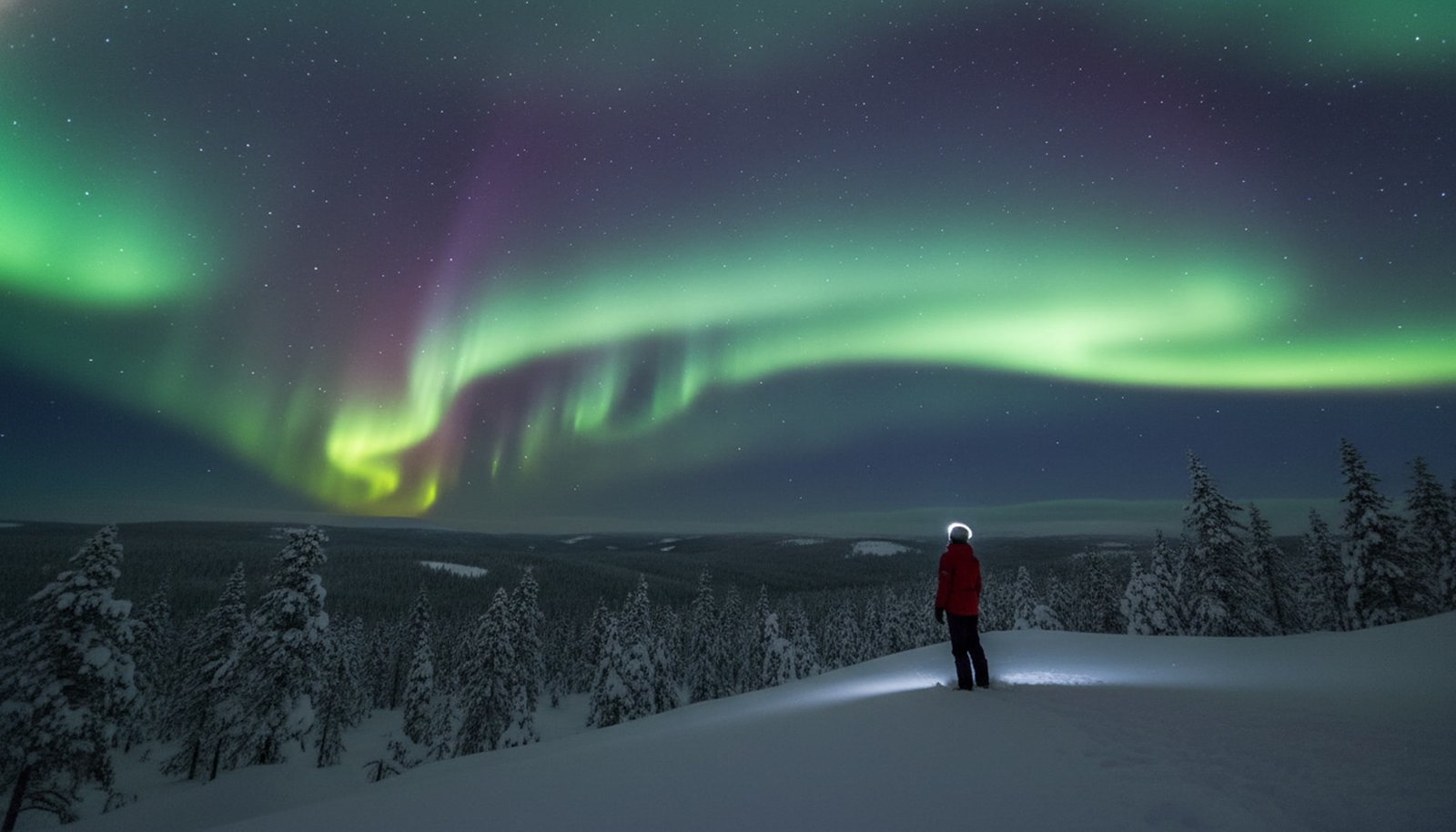
Witnessing the Aurora Borealis is a breathtaking experience that tops many travel bucket lists. These ethereal ribbons of light dancing across the night sky are a reward for those who venture into the cold, dark north. But seeing them isn’t just about luck; it’s about preparation and understanding what creates the perfect viewing opportunity.
This guide breaks down the essential elements for a successful aurora hunt, from choosing your destination to reading the forecasts. By combining the right location, conditions, and timing, you can dramatically increase your chances of experiencing one of nature’s most spectacular displays.
The Three Pillars of Aurora Hunting
Successfully seeing the Northern Lights depends on three critical factors aligning perfectly. If one of these is missing, your chances drop significantly. Think of them as the essential pillars supporting your viewing experience.
Pillar 1: The Right Location (Geomagnetic Latitude)
The aurora occurs in a ring around the Earth’s magnetic poles, known as the auroral oval. To see it, you need to be underneath or very close to this oval. This zone generally falls between 65 and 72 degrees North geomagnetic latitude. Key destinations within this zone include Fairbanks, Alaska; Yellowknife, Canada; most of Iceland; and the northern parts of Norway, Sweden, and Finland. It’s important to note that geomagnetic latitude is slightly different from geographic latitude. The further north you go, the better your chances, as the aurora can appear directly overhead rather than just on the horizon. Choosing a location within this prime viewing band is the single most important decision you’ll make.
Pillar 2: The Right Conditions (Darkness & Clear Skies)
The aurora is a relatively faint phenomenon, so you need two environmental conditions: darkness and clear skies. For darkness, you must get away from city light pollution, which can easily wash out the display. Even a bright full moon can diminish the visibility of fainter auroras, so planning your trip around the new moon phase is ideal. Clear skies are non-negotiable; clouds will block the view completely, as the aurora happens far above them in the upper atmosphere. This is why checking the local weather forecast is just as important as checking the aurora forecast. The best viewing season is from September to March, simply because the nights are longest and darkest.
Pillar 3: The Right Activity (Solar Forecast)
The aurora’s intensity is directly linked to activity on the Sun. A strong solar wind or a Coronal Mass Ejection (CME) hitting Earth’s magnetic field will produce a vibrant and active display. Scientists measure this geomagnetic activity using the Kp-index, a scale from 0 to 9. A Kp of 1-2 might produce a faint glow in the far north, while a Kp of 5 or higher indicates a geomagnetic storm, making the lights brighter and visible from lower latitudes. You can check short-term forecasts using apps and websites like NOAA’s Space Weather Prediction Center. A strong forecast significantly boosts your odds, turning a potential no-show into an unforgettable night.
Practical Tips for Your Viewing Night
Once you’ve planned your trip and the forecasts look promising, it’s time to head out. Here’s how to make the most of your night under the stars.
What to Bring and Wear
Patience is the most important thing to bring, but proper gear is a close second. Dress in warm layers, as you may be standing outside in freezing temperatures for hours. Insulated boots, gloves, a hat, and a thermal base layer are essential. For photographers, a tripod is non-negotiable to get sharp, long-exposure shots. A camera with manual settings (or a modern smartphone with a good night mode) is required. Also, bring a headlamp with a red light setting; red light preserves your night vision, allowing you to see the faint aurora more clearly. A thermos with a hot drink can also make the wait much more comfortable.
How to Look and What to Expect
When you arrive at your dark-sky location, turn off all lights and allow your eyes at least 15-20 minutes to fully adjust to the darkness. The aurora most commonly appears in the northern part of the sky, so orient yourself in that direction. Be aware that a faint aurora can initially look like a wispy, greyish cloud to the naked eye. Your camera’s sensor is more sensitive to the green light and will often pick up the color before you can. Be patient. Auroral displays often come in waves, with periods of calm followed by bursts of intense activity. The show can last for a few minutes or go on for hours, so don’t leave after the first sighting.
Quick Facts
- The best viewing locations are inside the ‘auroral zone’, between 65-72° North latitude.
- Travel between September and March for the longest and darkest nights, which are essential for viewing.
- You must have clear, cloud-free skies and be far away from city light pollution.
- Check both the weather forecast and the aurora forecast (Kp-index) before heading out.
- A faint aurora can look like a grey, moving cloud to the naked eye; a camera will reveal its color.
- Patience is crucial. Be prepared to wait for hours in the cold for the lights to appear.
- A tripod is essential for photography, and a headlamp with a red light helps preserve your night vision.
Frequently Asked Questions (FAQ)
Q: Can I see the Northern Lights with a full moon? A: Yes, it’s possible to see the aurora during a full moon, especially if the display is very strong. However, the bright moonlight will wash out fainter details and make the overall experience less vibrant.
Q: Do I need a special camera to photograph the aurora? A: A camera with manual controls (DSLR or mirrorless) is ideal for high-quality photos. However, many modern smartphones have excellent ‘Night Mode’ capabilities that can capture impressive images of the aurora, especially when mounted on a tripod.
Q: How long does an aurora display typically last? A: The duration is highly variable. A minor display might last only 15-30 minutes. A major geomagnetic storm can produce waves of auroral activity that last for several hours through the night.
Q: What is the best time of night to see the aurora? A: While the aurora can appear at any time during the dark hours, the most active displays often occur between 10 PM and 2 AM local time. However, it’s best to be ready anytime after true darkness falls.
Other Books
- NOAA Space Weather Prediction Center – Official Aurora Forecast
- Space.com – A Guide to Aurora Viewing
- Icelandic Met Office – Cloud Cover and Aurora Forecast


Ganymede's Broken Auroras
Summary
Scientists using the Hubble Space Telescope created the first complete map of the aurora on Ganymede, Jupiter’s largest moon. They discovered its auroral lights aren’t complete ovals like Earth’s, but are split into two glowing crescents, a pattern unique in our solar system.
Quick Facts
- Ganymede is the largest moon in our solar system, bigger than the planet Mercury.
- It's the only moon known to have its own magnetic field.
- Its aurora is created by glowing oxygen atoms, visible in ultraviolet light.
- The auroral lights form two bright 'crescents' instead of a continuous ring.
- This map was created using 46 observations from the Hubble Space Telescope over 19 years.
The Discovery: Mapping a Moon's Crescent Lights
For years, scientists knew Ganymede had an aurora, a faint glow powered by its unique magnetic field. But seeing the whole picture was impossible. Using a massive dataset of 46 observations from the Hubble Space Telescope spanning from 1998 to 2017, a team of researchers painstakingly stitched together the first-ever global brightness map of Ganymede’s ultraviolet aurora. The result was a huge surprise. Instead of a continuous oval of light at each pole, like the ones we see on Earth or even Jupiter, Ganymede’s aurora is distinctly broken. The map revealed two intensely bright auroral crescents on opposite sides of the moon, while the regions in between were dramatically dimmer. This structure had never been seen anywhere else and points to the strange and complex physics happening around Jupiter’s giant moon.
Read the original research paper on arXiv
Our map reveals Ganymede’s auroral ovals are structured in upstream and downstream ‘crescents’.
— Joachim Saur, Corresponding Author
The Science Explained Simply
Imagine Ganymede as a large rock in a fast-moving river. The ‘river’ is the plasma—a gas of charged particles—that fills Jupiter’s enormous magnetosphere and flows past Ganymede at incredible speed. The brightest parts of the aurora, the crescents, appear on the upstream side (where the plasma hits the moon head-on) and the downstream side (in its wake). This is where the interaction is most intense, accelerating particles into Ganymede’s thin oxygen atmosphere and making it glow. The sides of the ‘rock’ parallel to the flow—the flanks facing toward and away from Jupiter—experience a much weaker interaction. This causes the aurora to be 3 to 4 times fainter in these regions, creating the ‘broken’ or crescent shape. It’s a visual map of how Ganymede battles the constant stream of plasma from its parent planet.
The Aurora Connection
Auroras are the ultimate sign that a planet or moon has a magnetic field. Ganymede is the only moon in our solar system with one, creating what scientists call a mini-magnetosphere. This map of its broken aurora is a stunning visualization of that mini-magnetosphere in action. Unlike Earth’s global magnetic field which stands strong against the solar wind, Ganymede’s field is tiny and completely embedded within Jupiter’s colossal magnetosphere. The crescent shape shows us exactly where Ganymede’s magnetic field lines connect with Jupiter’s, creating channels for energetic particles to slam into its atmosphere. Studying this unique, ‘sub-Alfvénic’ interaction helps scientists understand the physics of magnetism on a smaller scale and provides clues about how moons can protect a fragile atmosphere even in the harshest environments.
This map will be useful to understand the processes that generate the aurora in Ganymede’s non-rotationally driven, sub-Alfvénic magnetosphere.
— The Research Team
A Peek Inside the Research
Creating this map was a cosmic puzzle. The researchers used the Space Telescope Imaging Spectrograph (STIS) on Hubble, which observes in ultraviolet light invisible to the human eye. Each of the 46 exposures only captured one hemisphere of Ganymede at a time. The science team had to precisely determine Ganymede’s position and orientation for each image, carefully subtract the glare of reflected sunlight from its icy surface, and correct for the viewing angle. They then projected each clean image onto a flat, global map, similar to how a map of Earth is made from satellite photos. By averaging all 46 maps together, weighted by their exposure time, they built up a complete, high-quality picture of the entire auroral system. This meticulous process turned nearly two decades of snapshots into the first definitive atlas of Ganymede’s alien auroras.
Key Takeaways
- Ganymede's auroral ovals are not continuous rings like Earth's.
- The brightest parts are two crescents on the sides facing into and away from the plasma flow from Jupiter.
- The sides facing directly toward and away from Jupiter are 3-4 times fainter, creating a 'broken' appearance.
- This unique shape is caused by the interaction between Ganymede's small magnetic field and Jupiter's giant one.
- The map serves as a blueprint for understanding 'mini-magnetospheres' and their plasma interactions.
Sources & Further Reading
Frequently Asked Questions
Q: What color are Ganymede’s auroras?
A: Ganymede’s auroras glow primarily in ultraviolet (UV) light, which our eyes cannot see. The color comes from oxygen atoms in its thin atmosphere being excited by charged particles. If we could see in UV, they would likely appear as a purple or faint whitish glow.
Q: Why is Ganymede the only moon with a magnetic field?
A: Scientists believe Ganymede has a molten iron core, similar to Earth’s. The churning motion within this liquid metallic core generates a magnetic field. Other moons are either too small to have retained enough internal heat, or their core composition is different.
Q: Why is it important to map Ganymede’s aurora?
A: The aurora acts like a giant TV screen, showing us what’s happening in Ganymede’s invisible magnetic field and how it interacts with Jupiter. Mapping its brightness and shape helps scientists test their models of plasma physics and understand how this unique ‘mini-magnetosphere’ works.
Q: Will we get a closer look at these auroras?
A: Yes! The European Space Agency’s JUICE (JUpiter ICy moons Explorer) mission is on its way to the Jupiter system and will eventually orbit Ganymede. It carries instruments designed to study Ganymede’s magnetic field and aurora in unprecedented detail, giving us an up-close view of these amazing crescent lights.

Hunting for Iron Skies on Alien Worlds
Summary
Scientists scoured the atmospheres of 12 massive exoplanets for signs of iron hydride, a molecule that acts like a cosmic thermometer. While they didn’t find a conclusive signal, they found tantalizing hints on two super-hot worlds, pushing the limits of how we study alien weather.
Quick Facts
- The search targeted iron hydride (FeH), a molecule made of one iron and one hydrogen atom.
- Data from 12 different hot and ultra-hot Jupiter exoplanets were analyzed.
- The CARMENES spectrograph in Spain was used to collect the high-resolution light data.
- Two planets, WASP-33b and MASCARA-2b, showed weak but possible signals of FeH.
- FeH is a key atmospheric component in cool stars and brown dwarfs.
The Discovery: Faint Clues in Fierce Atmospheres
In a comprehensive search of archived data, a team of astronomers led by Aurora Y. Kesseli went looking for a specific molecule, iron hydride (FeH), in the skies of 12 different hot Jupiters. Their goal was to use this molecule as a sensitive probe of atmospheric conditions. After carefully analyzing the light filtering through each planet’s atmosphere during a transit, they found no definitive detections. However, two planets stood out: WASP-33b and MASCARA-2b. Both showed faint, low-confidence signals right where the signature of FeH was expected to be. What makes this so intriguing is that these two planets have temperatures between 1800-3000°C, the exact ‘Goldilocks zone’ where scientific models predict FeH should be most abundant. While the signals are too weak to be a confirmed discovery, they provide a tantalizing hint that we are looking in the right place.
Read the original research paper on arXiv: ‘A Search for FeH in Hot-Jupiter Atmospheres…’
We found intriguing hints in the exact places we expected to, but the signals are just too faint to be certain yet.
— Aurora Y. Kesseli, Lead Author (paraphrased)
The Science Explained Simply
Why hunt for iron hydride (FeH)? Because it’s a fantastic atmospheric probe. Unlike molecules like water or carbon monoxide, which can exist across a huge range of temperatures, FeH is picky. It only forms in a narrow window of conditions. If an atmosphere is too hot (over 3000°C), the intense heat breaks the bond between the iron and hydrogen atoms. If it’s too cool (below 1500°C), the iron condenses out of the gas phase, forming clouds of solid particles, similar to how water vapor forms ice clouds on Earth. Therefore, finding a strong signal of FeH tells you the temperature of that atmospheric layer with remarkable precision. It acts like a chemical thermometer, giving scientists a clear reading on the conditions in these distant, extreme environments. Its presence, or absence, provides crucial clues for understanding the chemistry and physics of alien skies.
Metal hydrides exist in much more specific regimes… and so can be used as probes of atmospheric conditions.
— Kesseli et al., 2020
The Aurora Connection
At NorthernLightsIceland.com, we know auroras are born from the interaction between the solar wind and a planet’s magnetic field. That magnetic field is generated deep within a planet’s core, which on rocky worlds is made mostly of iron. While hot Jupiters are gas giants, the amount of heavy elements like iron in their composition is a key clue to their formation and internal structure. By searching for iron-bearing molecules like FeH in their atmospheres, scientists can estimate the planet’s overall metal content. A planet rich in heavy elements is more likely to have a dense, differentiated core capable of generating a powerful magnetic field. This invisible shield is crucial for protecting an atmosphere from being stripped away by fierce stellar winds from its nearby star. So, while atmospheric FeH doesn’t directly cause auroras, its detection is a step toward understanding the ingredients needed for a planet to build its own protective magnetic shield.
A Peek Inside the Research
The team used a technique called high-dispersion transmission spectroscopy. As a planet passes in front of its star, they use an instrument called CARMENES to capture the starlight that filters through the planet’s thin atmospheric layer. Molecules in this atmosphere absorb specific colors of light, leaving tiny dark lines in the star’s spectrum. The challenge is that this planetary signal is incredibly faint and buried in noise from the star itself and from molecules in Earth’s own atmosphere (telluric contamination). To find the signal, they use cross-correlation, comparing their noisy data to a clean, theoretical model of an FeH spectrum. This boosts any matching patterns. They also used an algorithm called SYSREM to systematically identify and remove the noise. This painstaking process of cleaning and amplifying the data allowed them to find the faint hints around WASP-33b and MASCARA-2b.
Key Takeaways
- Scientists use specific molecules like FeH to precisely measure the conditions in exoplanet atmospheres.
- No strong, conclusive evidence for FeH was found across the 12 planets studied.
- Weak hints of FeH were found on two ultra-hot Jupiters that are in the ideal temperature range for the molecule to exist.
- Detecting these faint signals is incredibly difficult and requires advanced techniques to remove noise from the host star and Earth's atmosphere.
- This research helps set upper limits on how much FeH can exist on these planets, guiding future studies.
Sources & Further Reading
Frequently Asked Questions
Q: What is Iron Hydride (FeH)?
A: Iron hydride is a simple molecule made of one iron atom bonded to one hydrogen atom (FeH). It’s most commonly found in the atmospheres of cool stars and brown dwarfs, objects with temperatures between stars and planets.
Q: Why didn’t they find it for sure?
A: The signal from an exoplanet’s atmosphere is incredibly tiny, representing just a small fraction of the star’s total light. This faint signal is easily lost in the noise from the star’s own activity and light absorption from Earth’s atmosphere. The possible signals they found were just not strong enough to be statistically certain they weren’t random noise.
Q: What makes WASP-33b and MASCARA-2b special?
A: These are ‘ultra-hot Jupiters’ with equilibrium temperatures over 2000°C. This puts them in the perfect temperature range where iron would still be a gas but cool enough to form molecules with hydrogen. That’s why scientists were hopeful, and not entirely surprised, to see faint hints there.
Q: Is this research a failure if it’s a ‘non-detection’?
A: Not at all! In science, a non-detection is still a valuable result. It places a limit on how much FeH can be in these atmospheres, which helps refine future models and search strategies. It tells other scientists that if the molecule is there, it’s in very small amounts or will require even more powerful telescopes to find.

Jupiter's Two-Speed Auroras Revealed
Summary
Scientists have decoded why Jupiter and Saturn have two different ‘invisible’ auroras—one in ultraviolet (UV) and one in infrared (IR)—that don’t always match. The secret lies in their radically different response times: one flashes in an instant, while the other relies on slower chemistry, acting like a glowing ember.
Quick Facts
- Jupiter and Saturn have auroras in ultraviolet (UV) and infrared (IR) light, invisible to the human eye.
- UV auroras are created instantly when electrons strike hydrogen molecules, taking less than a hundredth of a second.
- IR auroras come from the H3+ ion, which is created through a multi-step chemical process that can take from 10 seconds to several hours.
- The IR aurora's slow response acts like a 'memory' of recent auroral activity.
- This time difference explains why simultaneous images of UV and IR auroras can look surprisingly different.
The Discovery: Solving an Auroral Puzzle
For years, astronomers have observed the magnificent auroras on Jupiter and Saturn using telescopes that can see in ultraviolet (UV) and infrared (IR) light. But they noticed a puzzle: sometimes the UV and IR pictures would show auroras in the same place, but other times they looked completely different. Why would two types of auroras, happening at the same time, not match? Researchers led by Chihiro Tao realized the answer wasn’t in *where* the aurora was, but *when*. They built a detailed computer model to simulate the physics behind each type of emission. The model revealed that the UV aurora is like a flash of lightning—a direct, instantaneous result of an electron hitting a hydrogen molecule. The IR aurora, however, is a much more complex and slower process, giving it a unique character.
The observed differences between UV and IR emissions can be understood by the differences in their time scales.
— Chihiro Tao, Lead Researcher, ISAS/JAXA
The Science Explained Simply
Think of the two auroras like this: the UV aurora is a sprinter, while the IR aurora is a glowing ember.
The UV Sprinter: When a high-energy electron from Jupiter’s magnetosphere zips into the atmosphere, it smacks into a hydrogen molecule (H₂). This collision gives the H₂ a jolt of energy, and it releases that energy almost instantly as a flash of UV light. The whole process, from impact to flash, takes less than 0.01 seconds. It’s a direct, immediate reaction.
The IR Ember: The IR aurora starts the same way, but the electron impact is so hard it knocks an electron off the H₂, creating an H₂⁺ ion. This ion then finds another H₂ molecule and combines with it to form a new, crucial ion: H₃⁺. This chemical creation takes time. Once formed, the H₃⁺ gets heated by the surrounding atmosphere and starts to glow in infrared. Because it depends on this chemical chain, the IR aurora takes anywhere from 10 to 10,000 seconds to build up and fade away, like an ember that glows long after the initial fire has died down.
The ion chemistry, present in the IR but absent in the UV emission process, could play a key role.
— Tao, Badman, and Fujimoto
The Aurora Connection
This ‘two-speed’ system is incredibly useful for scientists. At NorthernLightsIceland.com, we know that Earth’s auroras are a direct window into the space weather hitting our planet. Jupiter’s dual auroras offer an even more detailed view. By comparing the fast UV aurora with the slow IR aurora, scientists can tell what kind of electron precipitation is happening. A sudden, short-lived UV flare with a weak IR response might mean a quick burst of electrons. But a steadily glowing IR aurora suggests a long, sustained shower of energy that has had time to build up the H₃⁺ ion population. It’s like having two different instruments to measure the same storm. This helps us understand the complex magnetic fields of giant planets and how they channel high-energy particles into their atmospheres, creating auroras far grander than our own.
A Peek Inside the Research
The researchers didn’t fly a probe into Jupiter’s aurora. Instead, they used powerful computer simulations to model every step of the process. Their model included the physics of how electrons travel through Jupiter’s hydrogen atmosphere, calculating the rates of different types of collisions. They then added a detailed ion chemistry model to track the creation and destruction of the H₃⁺ ion at different altitudes. Finally, they calculated the resulting UV and IR light emissions. To test their model, they applied it to real-life observations. For example, they simulated the Io footprint aurora—a spot of aurora caused by Jupiter’s moon Io. Their model correctly predicted that the IR glow from this fast-moving spot would be weaker than the main aurora, simply because the spot doesn’t stay in one place long enough for the H₃⁺ ’ember’ to get fully lit. This confirmed that time scales are the key to the puzzle.
Comparative UV-IR studies tell us more about the underlying mechanisms that produce the auroral features.
— Research Team
Key Takeaways
- UV and IR auroras are driven by different physical processes, giving us two ways to study a planet's atmosphere.
- The UV aurora is a direct snapshot of incoming electron energy, like a real-time activity monitor.
- The IR aurora reflects both current activity and the recent history of energy input due to its reliance on ion chemistry.
- The energy of the incoming electrons changes where the aurora forms in the atmosphere, which can make the IR aurora brighter or dimmer.
- This research provides a powerful tool to diagnose the type of 'space weather' hitting Jupiter and Saturn from their magnetospheres.
Sources & Further Reading
Frequently Asked Questions
Q: Why can’t we see these auroras with our own eyes?
A: These auroras shine in ultraviolet (UV) and infrared (IR) light, which are wavelengths outside the range of human vision. We need special telescopes and cameras to capture images of them and translate them into colors we can see.
Q: What is H3+ and why is it so important?
A: H3+ is an ion made of three hydrogen atoms. It’s one of the most common ions in the universe and plays a huge role in the chemistry of gas giant atmospheres and interstellar clouds. On Jupiter and Saturn, it’s a key atmospheric coolant, radiating heat away into space as infrared light.
Q: Does Earth’s aurora have different time scales too?
A: Yes, but in a different way. Earth’s aurora is created by electrons hitting nitrogen and oxygen. The green light from oxygen is relatively fast (about 1 second), while the red light from oxygen at higher altitudes is much slower (taking up to 2 minutes to glow). So the principle of different colors having different ‘lag times’ is universal!
Q: So is the IR aurora just a ‘delayed’ version of the UV?
A: It’s more than just delayed. Because it takes time to build up and fade away, the IR aurora smooths out rapid changes. While the UV aurora might flicker wildly during a magnetic storm, the IR aurora will show a slower, more gradual brightening and dimming, reflecting the average energy over the last several minutes or hours.

Radar Uncovers Invisible Energy Storms
Summary
Scientists in Antarctica have discovered that invisible showers of energetic electrons, a kind of ‘silent aurora’, bombard our atmosphere for hours after the visible light show fades. They used a powerful radar to detect these events, revealing they are far more common and long-lasting than previously thought.
Quick Facts
- The study used the SuperDARN radar at Syowa Station, Antarctica.
- These energy showers are called Energetic Electron Precipitation (EEP).
- EEP events cause a form of radio blackout in the upper atmosphere.
- They are most common in winter, occurring on over 50% of days.
- The invisible energy can continue raining down for 2-4 hours after sunrise.
- The average event detected by the radar lasted for over two hours.
The Discovery: Listening for a Silent Storm
At the remote Syowa Station in Antarctica, scientists were using a powerful high-frequency radar called SuperDARN to study the upper atmosphere. They noticed something peculiar: sometimes, their radar signal would just vanish. Both the signal they sent out and the background radio noise from space would suddenly go quiet. They realized this wasn’t an equipment failure; something in the atmosphere was absorbing the radio waves. By cross-referencing their data with an all-sky camera, they found a match: these radio blackouts happened during pulsating auroras. These are faint, patchy auroras caused by showers of high-energy electrons. The team had found a new way to track these invisible energy storms, even when clouds or daylight made the aurora impossible to see.
We can use the radar to detect this high frequency radio wave attenuation in the D region during energetic electron precipitation events.
— Emma C. Bland, Lead Author
The Science Explained Simply
Energetic Electron Precipitation (EEP) is like an invisible rain of high-speed electrons from space. Guided by Earth’s magnetic field, these particles funnel down towards the poles and slam into our atmosphere. While lower-energy electrons create the beautiful auroras we see at about 100-300 km altitude, these higher-energy electrons dive deeper, down into the D-region (60-90 km). Here, they crash into air molecules, knocking their electrons loose. This process, called ionization, creates a dense layer of charged particles. For high-frequency radio waves, like those used by the SuperDARN radar, this dense layer acts like a thick foam wall, absorbing the signal completely instead of letting it pass through or bounce back. This is why both the radar’s echo and the cosmic background noise disappear.
The Aurora Connection
Think of EEP as the powerful, invisible cousin of the aurora. While the Northern and Southern Lights are the beautiful, visible result of particles hitting our atmosphere, EEP represents a more intense energy transfer. This study specifically linked the radar blackouts to pulsating auroras, a type of aurora known to be driven by these energetic electrons. The most amazing discovery was what happened at dawn. As the sun rose, the camera would stop seeing the faint pulsating aurora. But the radar showed that the radio blackout—the EEP event—continued for another 2 to 4 hours! This means the energy kept pouring into our atmosphere long after the visible light show ended. This ‘invisible afterglow’ constantly affects the chemistry of our upper atmosphere, creating molecules that can impact the ozone layer.
The postmidnight and morning sector occurrence rates reach approximately 50% in the winter and 15% in the summer.
— Bland et al., 2019
A Peek Inside the Research
The scientists developed a clever detection method using two clues from the SuperDARN radar. The first clue was a sharp drop in backscatter power. This is the signal that bounces off the ionosphere and returns to the radar; if it disappears, it means it was absorbed on its way up and back. The second clue was a simultaneous drop in the background noise. This is the natural radio static from space, like lightning on other planets. If this background static also disappears, it confirms that a layer in our atmosphere is absorbing *all* incoming radio waves. When both clues appeared together, the team knew an EEP event was happening. They validated this method by perfectly matching the start times of these ‘double drops’ with the appearance of pulsating auroras in an all-sky camera located right next to the radar.
Key Takeaways
- Specialized radars can detect invisible space weather events that optical cameras miss.
- Energetic electrons create a dense layer in the D-region of our atmosphere that absorbs radio waves.
- The effects of an aurora can persist as an 'invisible afterglow' of energy long after the lights disappear.
- EEP has a strong seasonal cycle, peaking in the polar winter.
- Understanding EEP is crucial for modeling its impact on atmospheric chemistry, like ozone depletion.
Sources & Further Reading
Frequently Asked Questions
Q: Is this EEP stuff the same as the Northern Lights?
A: They are two sides of the same coin! The Northern Lights (aurora) are the visible light created by lower-energy particles. EEP is caused by higher-energy particles that penetrate deeper into the atmosphere, and while it’s associated with a faint type of aurora, its main effects (like radio absorption) are invisible to our eyes.
Q: Why does this only happen near the North and South Poles?
A: Earth’s magnetic field acts like a giant shield, but it has funnels at the North and South Poles. Energetic particles from the Sun and space get trapped by this field and are guided down these funnels into the polar atmosphere, which is why auroras and EEP events are concentrated there.
Q: Does this invisible energy storm affect us?
A: Yes, it can. EEP events can disrupt high-frequency (HF) radio communications, which are still used by aircraft on polar routes. Scientists are also studying the long-term chemical effects, as EEP produces nitrogen oxides (NOx) that can contribute to ozone destruction in the polar stratosphere.
Q: Why do more of these events happen in winter?
A: The polar atmosphere is different in the continuous darkness of winter. The lack of sunlight changes the chemistry and density at high altitudes, which can enhance the effects of EEP. Winter is the prime season for these invisible energy showers, with the radar detecting them on more than half the days.
Privacy Policy – Aurora AI
Privacy Policy – Aurora AI
Last updated: 10.10.2025
1. Who we are
This website is operated by Flotferðir ehf, based in Iceland.
We manage the Aurora AI project — a research and innovation initiative that uses user-uploaded photos to improve the accuracy of aurora forecasts.
Contact: booking@buubble.com
2. What data we collect
When you upload a photo, we collect:
-
The image you upload.
-
Metadata embedded in the image (e.g., date, time, GPS coordinates, camera details).
-
Basic technical information from your browser or device (e.g., IP address, upload time, browser type).
We do not ask for or attempt to identify people, and we actively avoid collecting personal information. If a photo accidentally contains faces, license plates, or other identifiable details, we take steps to remove or blur them.
3. How we use your data
Your data is used only to:
-
Train and improve our Aurora AI model to make aurora forecasts more accurate.
-
Conduct analysis and research on aurora visibility and atmospheric patterns.
We do not sell, rent, or share your data with advertisers or third parties for commercial use.
4. Legal basis for processing
Our processing is based on legitimate interest under Article 6(1)(f) of the GDPR.
You upload your photo voluntarily, with a clear understanding that it will help train our Aurora AI model.
If you ever want your photo removed, you can contact us to withdraw your participation at any time.
5. Data retention
We keep uploaded images and related data as part of our long-term research dataset to allow the AI to learn and improve over time.
If you request deletion, we will remove your photo and related data from our active systems within 30 days.
6. Data security
All data is stored securely in controlled systems using encryption and limited access.
Only authorized team members involved in the Aurora AI project can access the dataset.
7. Your rights under GDPR
You have the right to:
-
Request access to your data.
-
Request correction or deletion of your data.
-
Withdraw participation at any time.
-
Request a copy of your data in a portable format.
-
Lodge a complaint with your local data-protection authority.
To exercise these rights, contact: booking@buubble.com
8. International data transfers
If we store or process data outside the European Economic Area (EEA), we ensure that adequate safeguards are in place, such as the EU-U.S. Data Privacy Framework or standard contractual clauses.
9. Updates to this policy
We may update this policy as our project evolves. The most current version will always be available on this page.
10. Contact
Flotferðir ehf
Email: booking@buubble.com


Planets Control the Northern Lights?
Summary
Scientists analyzing a 438-year-old record of aurora sightings in Hungary discovered that the Northern Lights follow a secret rhythm. This cosmic beat perfectly matches the orbital cycles of the giant planets in our solar system, suggesting they influence the Sun’s activity.
Quick Facts
- The study used a record of aurora sightings in Hungary from 1523 to 1960.
- This 438-year record is longer than the telescopic sunspot record.
- Aurora frequency shows major cycles of about 43, 57, 86, and 171 years.
- These cycles line up with the combined orbital periods of the giant planets.
- The main 171-year cycle matches the time it takes for Uranus and Neptune to align.
The Discovery: A 400-Year-Old Weather Report
Imagine dusting off a centuries-old book and finding a secret code to the solar system’s behavior. That’s essentially what researchers Nicola Scafetta and Richard C. Willson did. They analyzed the historical Hungarian auroral record, a detailed log of Northern Lights sightings stretching from 1523 to 1960. Because auroras are rare in Hungary, they only appear during major solar storms, making this record a fantastic diary of the Sun’s most powerful tantrums. When the scientists graphed the number of auroras per year, they didn’t see a random jumble of data. Instead, they found a clear, repeating wave-like pattern—a harmonic rhythm hidden in the historical sightings for nearly 450 years. This discovery suggested that something was driving the Sun’s activity on a very long and predictable timescale.
These historical records are like time capsules, letting us see long-term patterns that are invisible in our own lifetime.
— Nicola Scafetta, Researcher
The Science Explained Simply
The researchers found that the rhythm in the aurora record wasn’t just any pattern—it was a planetary one. Think of the solar system as a giant spinning machine. The Sun sits at the center, but the massive outer planets—Jupiter, Saturn, Uranus, and Neptune—pull on it with their gravity, causing the Sun to wobble slightly around the solar system’s true center of mass. These pulls happen at regular intervals based on the planets’ orbits. The study found that the major cycles in the aurora record (especially a 171.4-year cycle) perfectly matched the combined orbital rhythms of these planets. It’s like the planets are giving the Sun tiny, synchronized pushes. Over long periods, these small nudges can influence the Sun’s internal dynamo, amplifying its natural cycles of activity and creating a predictable ‘heartbeat’ for the entire solar system.
The four frequencies are very close to the four major heliospheric oscillations… caused by Jupiter, Saturn, Uranus and Neptune.
— Scafetta & Willson, 2013
The Aurora Connection
So how does a planet’s orbit in the outer solar system create beautiful lights over Earth’s poles? It’s a cosmic chain reaction. When the planets align and ‘nudge’ the Sun, its activity level changes. A more active Sun produces more sunspots and unleashes more powerful solar winds and massive explosions called coronal mass ejections (CMEs). These events send a storm of energetic particles hurtling through space. If Earth is in the path of one of these storms, our planet’s protective magnetic field (the magnetosphere) channels the particles toward the poles. As these particles collide with atoms and molecules in our upper atmosphere, they release energy as light, creating the aurora. Therefore, the planetary rhythm gets translated into a solar rhythm, which in turn becomes an aurora rhythm here on Earth. More planetary influence means a more active Sun, which means more spectacular auroras.
A Peek Inside the Research
To uncover this hidden connection, the scientists used a powerful mathematical technique called harmonic analysis. This method is like taking a complex piece of music and isolating each individual instrument’s sound. They fed the 438-year aurora record into a computer model that identified the strongest, most dominant frequencies, or ‘notes,’ in the data. The results showed clear peaks at periods of roughly 43, 57, 86, and 171 years. Next, they performed the same analysis on data showing the Sun’s motion caused by the planets. When they laid the two graphs on top of each other, the peaks matched almost perfectly. This side-by-side comparison provided compelling evidence that the same planetary forces shaping the Sun’s wobble were also driving the long-term frequency of auroras seen from Earth.
Key Takeaways
- Long-term aurora activity isn't random but follows predictable, repeating patterns.
- These patterns strongly suggest a link between planetary positions and the Sun's activity level.
- The gravitational and magnetic forces from planets may 'nudge' the Sun, creating rhythms in its behavior.
- This research supports the 'planetary hypothesis' that planets can influence their host star.
- Historical records are a powerful tool for understanding long-term space weather cycles.
Sources & Further Reading
Frequently Asked Questions
Q: Are the planets really controlling the Sun?
A: It’s a strong hypothesis supported by this research. It’s not that planets ‘control’ the Sun with immense force, but rather that their tiny, rhythmic gravitational and magnetic pulls can synchronize with the Sun’s natural cycles over long periods, amplifying them.
Q: Why did they use an old record from Hungary?
A: Hungary is at a mid-latitude where auroras are rare, so they’re only seen during very strong solar storms. This makes the record a great indicator of major solar activity. Most importantly, it’s one of the longest, most consistent aurora records in the world, which is crucial for studying long-term cycles.
Q: What does this model predict for the future?
A: The model based on these planetary cycles predicts a prolonged period of low solar activity, often called a ‘prolonged solar minimum,’ centered around the 2030s. This could mean fewer intense solar storms and possibly less frequent aurora displays for a couple of decades.
Q: Does this mean planets on other solar systems affect their stars too?
A: Yes, and astronomers have observed this! Studies of other stars have shown that the presence of large, close-orbiting planets (like ‘Hot Jupiters’) can enhance the activity of their host star. This research suggests the same principle applies right here in our own solar system, just on a much longer timescale.
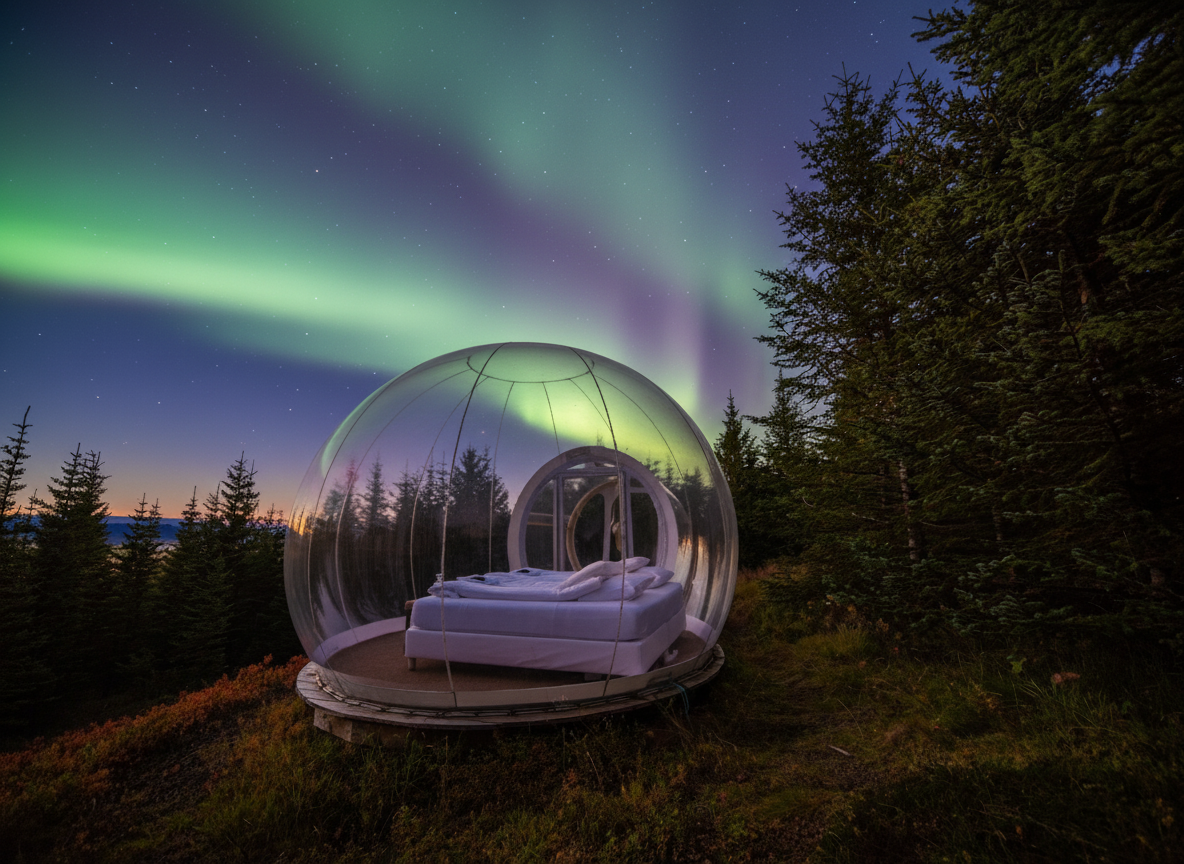
Where Can You See the Northern Lights?
Where Can You See the Northern Lights?
The Northern Lights, or Aurora Borealis, appear in a specific geographic pattern around Earth’s magnetic poles. While they can occasionally be seen farther south during strong solar storms, there are reliable “aurora hotspots” where you have the best chance of witnessing this incredible natural phenomenon.
The Auroral Oval: Where the Magic Happens
The Northern Lights occur in an oval-shaped band centered around the magnetic North Pole, not the geographic North Pole. This “Auroral Oval” typically spans between 60° and 75° latitude, but expands southward during periods of high solar activity.
What Makes a Location Good for Aurora Viewing?
Three key factors determine whether you’ll see the Northern Lights in a specific location:
1. Geographic Latitude
You need to be within or near the Auroral Oval. The closer you are to the magnetic poles, the better your chances.
2. Darkness & Weather
You need clear, dark skies. Light pollution from cities can wash out the aurora. The best viewing spots are away from city lights with minimal cloud cover.
3. Solar Activity
The strength of the aurora depends on solar wind and geomagnetic storms. Higher Kp-index values mean the aurora is stronger and visible farther south.

Decoding the Aurora's Erratic Pulse
Summary
Scientists used high-speed cameras to get a super-detailed look at ‘pulsating auroras’, the flickering patches of light in the sky. They discovered these auroras don’t have a steady beat at all, but rather an erratic, unpredictable flicker that challenges our understanding of how they work.
Quick Facts
- Pulsating auroras are patches of light that flicker on and off over seconds.
- Scientists once thought their rhythm was regular, like a heartbeat.
- This study found the blinking is highly variable and unpredictable.
- The 'on-time' of a flicker typically lasts 3-5 seconds, but can vary wildly.
- The 'off-time' between flickers is very short, usually less than a second.
- The researchers suggest calling them 'fluctuating auroras' instead.
The Discovery: The Aurora's Unsteady Heartbeat
For decades, scientists have been fascinated by pulsating auroras (PA), which appear as soft, glowing patches that seem to blink in the night sky. The common belief was that these pulsations were quasi-periodic, meaning they had a somewhat regular rhythm. However, a team of researchers led by B. K. Humberset decided to investigate this rhythm with unprecedented detail. Using a high-speed all-sky camera in Alaska, they filmed the aurora at over three frames per second. After carefully isolating six individual patches and tracking their brightness frame-by-frame, they found a surprising result: the rhythm was anything but regular. The time a patch stayed ‘on’ varied wildly, from 2 to over 20 seconds. The time it was ‘off’ was consistently short. This chaotic flickering suggests the underlying mechanism is far more complex and erratic than a simple on-off switch.
Historically, PA has been defined very loosely. Our findings show they are not regularly periodic, so a better term may be ‘fluctuating aurora’.
— B. K. Humberset, Lead Researcher
The Science Explained Simply
Imagine a faulty neon sign that flickers randomly. That’s a better analogy for pulsating auroras than a steadily blinking light. The researchers broke down the flicker into two parts: on-time (how long the patch is bright) and off-time (the dim period in between). They found that the on-time had a huge range, but most flickers lasted for about 3 to 5 seconds. The off-time, however, was almost always very brief, with a median of just 0.6 seconds. This discovery is crucial because it tells us that the processes starting the pulse and stopping it are very different. The short off-time means the system can ‘reset’ and trigger a new pulse almost immediately. Furthermore, the amount of energy released in each pulse was also completely variable. A long pulse wasn’t necessarily dimmer than a short, intense one. This randomness is a major clue for scientists trying to model the physics behind the phenomenon.
The large difference in on-times and off-times suggests these terms fit the fundamental characteristics of pulsating aurora better than ‘period’.
— Paraphrased from the research paper
The Aurora Connection
Pulsating auroras are a direct window into the invisible chaos of Earth’s magnetosphere, the magnetic bubble that protects us from the solar wind. These flickers are caused by complex interactions between plasma waves and electrons trapped in the magnetosphere, tens of thousands of kilometers away. These waves, like ‘whistler-mode chorus’, can kick electrons out of their trapped orbits and send them spiraling down into our atmosphere. When these electrons hit atmospheric gases, they create the glowing light we see as an aurora. The highly erratic, fluctuating nature of the pulses tells us that the wave-particle interactions are not a steady, simple process. Instead, they are likely turbulent and unpredictable. By precisely measuring the on- and off-times, scientists can test their models of these distant, invisible processes and get closer to understanding the engine that powers these beautiful light shows.
A Peek Inside the Research
To get this data, the team used an all-sky imager at the Poker Flat Research Range in Alaska. This is like a very sensitive digital camera with a fisheye lens that can see the entire sky at once. It was set to record at 3.3 Hz, meaning it took a new picture every 0.3 seconds. This high speed was essential to capture the rapid changes. The first challenge was to correct for the distortion of the fisheye lens and the rotation of the Earth. Then, they developed a contouring technique to precisely trace the outline of individual auroral patches in each frame. This allowed them to measure the total brightness of just the patch, without being confused by the background glow or neighboring patches. By following each of the six patches over several minutes, they built a detailed timeline of its brightness, revealing the chaotic flickering that had been hidden in lower-resolution studies.
Key Takeaways
- The term 'pulsating aurora' is misleading because the flickers are not periodic or regular.
- The brightness and duration of each pulse are highly variable from one flicker to the next.
- There's no 'charge-up' time; a long pause doesn't lead to a brighter pulse.
- This detailed data provides strict rules that any theory trying to explain these auroras must follow.
- Current theories, like the 'flow cyclotron maser' model, don't fully match these new, precise observations.
Sources & Further Reading
Frequently Asked Questions
Q: So, what is a pulsating aurora?
A: It’s a type of aurora that appears as scattered patches or blobs of light that flicker, seeming to turn on and off. Unlike the flowing curtains of a typical aurora, these are more localized and have a distinct blinking behavior.
Q: Why isn’t it actually ‘pulsating’?
A: The word ‘pulsating’ implies a regular, predictable rhythm, like a pulse or a beat. This research shows the timing of the flickers is actually highly irregular and chaotic. That’s why the scientists suggest ‘fluctuating aurora’ is a more accurate name.
Q: What makes the aurora flicker like that?
A: It’s caused by waves of energy in Earth’s magnetosphere that ‘scatter’ energetic electrons into the atmosphere in bursts. This study’s findings suggest the interaction between these waves and the electrons is very complex and erratic, leading to the unpredictable flickers we see.
Q: Does this discovery change our understanding of the Northern Lights?
A: Yes, it provides a much more detailed picture of this specific type of aurora. It sets new, stricter rules for any scientific theory that tries to explain them. It pushes scientists to develop more sophisticated models of the physics happening far out in Earth’s magnetic field.

The Lopsided Auroras Mystery
Summary
Scientists observing both of Earth’s poles at the same time discovered that the Northern and Southern Lights aren’t always perfect mirror images. A massive 3-hour offset revealed how the Sun’s magnetic field can twist our planet’s magnetic shield, and how Earth fights back to untwist itself.
Quick Facts
- The Northern and Southern auroras can be misaligned by up to 3 hours of local time.
- This is the largest misalignment ever reported from simultaneous observations.
- The twisting force comes from the Interplanetary Magnetic Field (IMF), the Sun's magnetic field carried by the solar wind.
- Earth's magnetic field acts like a stretched rubber band, always trying to snap back to a balanced state.
- This 'untwisting' process creates faster plasma flows in one hemisphere to let it 'catch up'.
The Discovery: A Tale of Two Auroras
On May 18, 2001, scientists got a rare opportunity. Two satellites, IMAGE and Polar, were positioned perfectly to see the North and South poles at the exact same time. What they saw was stunning. A huge, bright feature in the Southern aurora appeared near midnight, but its identical twin in the Northern aurora was located around 9 PM local time. They were offset by a massive 3 hours! This was the largest conjugate displacement ever recorded. It was like seeing the aurora over Iceland, while its southern partner appeared over the southern Atlantic instead of directly below Africa. This discovery was the smoking gun, providing clear evidence that the magnetic ‘footprints’ of the aurora in each hemisphere were severely lopsided, twisted out of their usual alignment by a powerful force from space.
Seeing a 3-hour shift was incredible. It showed us just how powerfully the solar wind can twist our planet’s magnetic field.
— J. P. Reistad, Lead Author
The Science Explained Simply
Imagine Earth’s magnetic field as a giant set of invisible rubber bands connecting the North and South poles. These are our magnetic field lines. The solar wind, a stream of particles from the Sun, carries its own magnetic field, the IMF. When the IMF’s side-to-side component (IMF By) is strong, it pushes on these rubber bands, twisting them. This causes the connection points (or ‘footpoints’) in the northern and southern atmosphere to become misaligned.
But our magnetosphere doesn’t just sit there and take it. It wants to return to its most stable, balanced state. As the twisted field lines are dragged by convection around to the nightside of Earth, the forces become unbalanced. The system then works to restore symmetry. To do this, the plasma on the field line has to move faster in one hemisphere to let its footpoint ‘catch up’ to its partner. This is the dynamic ‘untwisting’ process that scientists observed.
The magnetosphere is always trying to reach a lower energy state, much like a stretched rubber band wants to snap back.
— N. Østgaard, Co-author
The Aurora Connection
So, what does this have to do with the beautiful auroras we see? Everything! The aurora is caused by energetic particles, guided by the magnetic field, crashing into our upper atmosphere. The ‘restoring symmetry’ process isn’t gentle; it releases built-up magnetic stress. This release generates powerful electrical currents that flow along the magnetic field lines, known as Birkeland currents. These currents are the superhighways for the very electrons that create the aurora.
When the field is twisted and lopsided, the currents it creates are also lopsided and asymmetric. In the hemisphere where plasma is flowing faster to ‘catch up’ (the Southern Hemisphere in this study), the currents can become stronger and more concentrated. This directly affects the brightness and shape of the aurora. This research provides a physical model for why the Northern and Southern Lights are not always the perfect, serene mirror images we might imagine.
A Peek Inside the Research
Proving this theory required a trifecta of evidence. First, the IMAGE and Polar satellites provided the pictures. Their simultaneous images of both auroral ovals gave the visual proof of the 3-hour misalignment. Second, the SuperDARN radar network provided the motion. These ground-based radars can measure the speed of plasma in the ionosphere. Their data showed that the plasma in the Southern Hemisphere was indeed moving westward faster than its northern counterpart, confirming the ‘catch up’ motion. Finally, data from the AMPERE satellite constellation, which uses the Iridium communication satellites as a giant magnetic sensor, was used to map the Birkeland currents. The maps showed a clear dawn-dusk asymmetry in the strength of the currents, exactly as the ‘restoring symmetry’ model predicted. By combining these three different datasets, the scientists built an airtight case for their explanation.
Key Takeaways
- The Sun's magnetic field (specifically the IMF By component) directly influences the shape and position of Earth's auroras.
- Earth's magnetosphere is not a static shield; it's a dynamic system that constantly reacts to space weather.
- The process of restoring symmetry drives powerful electrical currents (Birkeland currents) that cause the aurora.
- This research explains why the Northern and Southern Lights are often asymmetric.
- Observing both poles at once is crucial for understanding the complete picture of how our planet interacts with the Sun.
Sources & Further Reading
Frequently Asked Questions
Q: So the Northern and Southern Lights are not always mirror images?
A: Correct! While they are created by the same process, the Sun’s magnetic field can stretch and twist Earth’s magnetic field, causing the location and intensity of the auroras to differ between the hemispheres. This study saw the biggest difference ever recorded.
Q: What is the Interplanetary Magnetic Field (IMF)?
A: The IMF is the Sun’s magnetic field that gets carried out into the solar system by the solar wind. It’s a key component of space weather and its orientation, especially the ‘By’ (side-to-side) component, has a huge effect on how Earth’s magnetosphere behaves.
Q: Can you see this auroral offset from the ground?
A: An individual person couldn’t, because you’d need to be in both the Arctic and Antarctic at the same time to compare! This is why satellite imagery is so essential for seeing the entire global picture of how our planet’s magnetic field works.
Q: Does this magnetic twisting affect us on Earth?
A: This process is a fundamental part of space weather. While the ‘untwisting’ itself happens far above our heads, the currents and energy it releases into our upper atmosphere can affect satellite communications and GPS signals. Understanding these dynamics is key to better space weather forecasting.

Aurora Storms Scramble GPS Signals
Summary
Scientists have discovered that intense, fast-moving auroras during a space storm called a ‘substorm’ can severely disrupt GPS signals, creating highly localized zones where navigation could fail.
Quick Facts
- Intense auroras can disrupt GPS, GLONASS, and Galileo signals simultaneously.
- This effect, called 'phase scintillation', messes with a signal's timing, not its strength.
- The most severe disruption happens at the leading edge of an expanding aurora during a substorm.
- The interference is extremely localized; two towns 120 km apart saw completely different effects.
- The study used specialized receivers in Svalbard, Norway to pinpoint the disruption.
The Discovery: A Storm in the Signals
On November 3, 2013, researchers in Svalbard, Norway, witnessed a spectacular auroral substorm. But they weren’t just watching the sky; they were also listening to signals from navigation satellites. Using highly sensitive GNSS receivers, they noticed something startling. As the aurora erupted and expanded rapidly across the sky, the signals from GPS, GLONASS, and Galileo satellites passing through the brightest, leading edge of the aurora became severely scrambled. It wasn’t the entire auroral display causing the problem, but a very specific, intense, and fast-moving part of the storm. The disruption was so localized that a receiver in Longyearbyen recorded severe interference on half its tracked satellites, while another receiver in Ny-Ålesund, just 120 km away, saw almost nothing. This was concrete proof that the aurora’s most violent moments can create invisible storms for our technology.
Original Research Paper: ‘Severe and localized GNSS scintillation…’ (J. Geophys. Res.)
The area of scintillation followed the intense poleward edge of the auroral oval.
— Christer van der Meeren, Lead Author
The Science Explained Simply
Imagine looking at a coin at the bottom of a perfectly still swimming pool. The image is clear. Now, imagine the water has ripples and waves. The coin’s image becomes distorted and blurry. GNSS scintillation is the same idea, but for radio waves. Satellites send signals through the ionosphere, a layer of our upper atmosphere filled with charged particles. Normally, this layer is relatively calm. But the aurora is caused by a storm of energetic particles from the Sun hitting the ionosphere, creating intense turbulence and swirling pockets of dense plasma. For a GPS signal passing through this chaos, it’s like trying to travel through those ripples in the pool. The smooth radio wave gets jiggled and distorted, messing up the precise timing information that receivers on the ground need to calculate your position. This study focused on phase scintillation, where the signal’s rhythm gets scrambled, rather than its volume.
The Aurora Connection
The Northern Lights are a beautiful result of Earth’s magnetic field protecting us from the solar wind. But sometimes, that interaction gets explosive. An auroral substorm is a dramatic energy release in Earth’s magnetic tail, like a magnetic short-circuit. This process blasts a huge amount of particles into our atmosphere, creating the most intense and rapidly moving auroras. This study proves it’s these violent events that cause the worst problems for GPS. The researchers also saw that polar cap patches—floating clouds of dense plasma—drifted into the auroral zone just as the substorm hit. When the intense auroral energy slammed into these patches, it created a super-turbulent region that caused the most extreme signal scrambling. This shows a direct chain of events: a disturbance in Earth’s magnetic field creates a substorm, which supercharges the aurora, which then disrupts our vital navigation technology on the ground.
This shows that severe irregularities in the nightside ionosphere can be highly localized.
— Kjellmar Oksavik, Co-author
A Peek Inside the Research
To connect the aurora with the signal problems, the science team used a clever combination of instruments. They had a network of special GNSS receivers in the Svalbard archipelago that could measure scintillation 50 times per second. This gave them a high-definition view of the signal disturbances. At the same time, they used All-Sky Imagers—essentially fisheye cameras pointed at the sky—to film the aurora’s every move. By layering the known positions of the satellites onto the all-sky images, they could see exactly which signals were passing through which parts of the aurora at any given moment. This allowed them to prove, without a doubt, that the most severe scintillation happened *only* when a signal’s line of sight went directly through the brightest, poleward-moving auroral arc. This multi-instrument approach turned a correlation into a cause-and-effect discovery.
Key Takeaways
- Auroral substorms are a major source of space weather that directly impacts our technology.
- The strongest GPS disruption is linked to bright, dynamic auroral arcs, not the gentle glows.
- Blobs of plasma from the polar cap amplify the disruption when they interact with the aurora.
- This space weather effect is highly localized, making it very difficult to predict.
- This research is crucial for improving GPS reliability for aviation and shipping in the Arctic.
Sources & Further Reading
Frequently Asked Questions
Q: Could my phone’s GPS stop working during an aurora?
A: It’s very unlikely in a city or at mid-latitudes. This severe effect is mostly confined to high-latitude regions like the Arctic and Antarctica. However, for aircraft, ships, and scientists in these regions who rely on high-precision GPS, this type of interference can be a serious problem.
Q: Are all auroras bad for GPS?
A: No, not at all. Faint, slow-moving auroras have very little effect. The problems occur during intense, energetic events called substorms, which create rapidly changing structures in the ionosphere that scramble the signals.
Q: What’s the difference between phase and amplitude scintillation?
A: Think of it like a radio station. Amplitude scintillation is when the signal gets weaker or stronger, like turning the volume up and down. Phase scintillation is when the timing or rhythm of the signal gets messed up. This study found the aurora mostly messes with the signal’s rhythm.
Q: Why is this research important?
A: As human activity increases in the Arctic—for shipping, aviation, and research—our reliance on GPS is growing. Understanding exactly when and where these signal blackouts can occur helps us build better, more resilient navigation systems and create more accurate space weather forecasts to warn users.

Hubble and Juno: Tag-Teaming Jupiter's Auroras
Summary
The Juno spacecraft is getting an up-close look at Jupiter’s powerful auroras, but it can’t see the whole picture. Scientists are using the Hubble Space Telescope to provide the wide-angle view, creating a cosmic tag-team to unlock the secrets of the gas giant’s magnetic storms.
Quick Facts
- Juno is the first mission designed to fly directly over Jupiter's poles.
- Jupiter's auroras are hundreds of times more powerful than Earth's Northern Lights.
- Juno only gets a close-up look at the aurora for about 6 hours every 14 days.
- Hubble provides the 'big picture' context for Juno's detailed snapshots from millions of miles away.
- This teamwork allows scientists to see both of Jupiter's poles at the same time for the first time ever.
The Discovery: A Cosmic Team-Up at Jupiter
In 2016, the NASA Juno mission arrived at Jupiter with a specific goal: to fly over the planet’s poles and understand its spectacular auroras. Juno is equipped to do something incredible – measure the energetic particles raining down into the atmosphere while simultaneously seeing the auroral light they create. This is like catching the rain and seeing the puddle form at the same exact time. However, there’s a big problem. Juno’s prime science time happens in a frantic, 6-hour window during its closest approach. For the rest of its two-week orbit, its view is limited. Scientists realized that without knowing what the *entire* aurora was doing before, during, and after this flyby, Juno’s data would be like a single puzzle piece with no box. This led to a proposal for a ‘Juno Initiative’, a plan to use the Hubble Space Telescope as Juno’s essential partner in the sky.
Read about the Hubble-Juno collaboration on NASA’s official site
It is of extreme importance that HST captures as much additional information as possible on Jupiter’s UV aurora.
— Denis Grodent, Lead Author
The Science Explained Simply
Imagine you’re a detective investigating a huge, city-wide blackout. The Juno spacecraft is like your agent on the ground, right at the power station, measuring the voltage spikes and seeing which specific wires are sparking. This data is incredibly detailed but tells you nothing about what’s happening in the rest of the city. The Hubble Space Telescope is like your eye in the sky, a satellite showing you a map of the entire city’s power grid. Hubble can see which neighborhoods went dark first and how the blackout spread over time. By combining Juno’s on-the-ground details with Hubble’s city-wide overview, you can finally understand the full story. Hubble provides the crucial global context, showing whether Jupiter’s auroras are having a calm day or are in the middle of a planet-wide magnetic storm while Juno makes its precise local measurements.
The HST UV instruments can greatly contribute to the success of the Juno mission by providing key complementary views.
— The Juno Initiative White Paper
The Aurora Connection
Here on Earth, our beautiful auroras are primarily caused by the solar wind, a stream of particles from the Sun, interacting with our planet’s magnetic field. Jupiter’s auroras are a different beast entirely. While the solar wind plays a role, Jupiter’s light show is mainly powered by its own ridiculously fast rotation—one day on Jupiter is less than 10 hours long! This rapid spin drags its enormous magnetic field through space, scooping up particles from its volcanic moon Io and slinging them into its atmosphere. This makes Jupiter a colossal ‘aurora factory’. Studying this system with both Juno and Hubble helps us understand the fundamental physics of magnetospheres. It teaches us how these invisible magnetic bubbles around planets work, protecting them from space radiation and creating the most spectacular light shows in the solar system, providing clues to how similar processes work around distant stars and exotic cosmic objects.
A Peek Inside the Research
This research wasn’t a discovery, but a crucial proposal to make discoveries possible. The authors argued that the panel reviewing telescope time should create a special category for ‘NASA Juno Mission Support’. This would set aside a large number of Hubble’s orbits specifically for Jupiter observations, ensuring the team-up could happen. The plan involved coordinating Hubble’s STIS and ACS instruments, which see in ultraviolet light (the main wavelength of Jupiter’s aurora), with Juno’s close flybys. For the first time, this would allow for simultaneous views of both the northern and southern auroras—with Hubble watching one pole while Juno flies over the other. This coordinated campaign is a masterclass in mission planning, turning two separate observatories into one powerful, planet-studying machine to solve the long-standing mysteries of Jupiter’s auroras.
We recommend that a category of HST time be allocated specifically for ‘NASA Juno Mission Support’ … a ‘Juno initiative’.
— Grodent et al.
Key Takeaways
- Combining close-up (Juno) and distant (Hubble) observations is critical for understanding Jupiter's complex magnetosphere.
- Hubble provides a global map of Jupiter's auroral activity, giving context to Juno's specific, in-situ measurements.
- Simultaneous observations of both the north and south auroral poles can reveal how they are magnetically connected.
- Because Juno's data transmission is limited, Hubble's continuous monitoring fills in crucial gaps in our understanding of Jupiter's weather.
- Studying Jupiter's massive 'aurora factory' helps us understand giant planets and powerful magnetic objects across the universe.
Sources & Further Reading
Frequently Asked Questions
Q: Why can’t Juno just look at the whole aurora?
A: When Juno is close enough to make detailed measurements, it’s too close to see the entire aurora at once. It’s like trying to take a picture of a whole football stadium while standing on the field – you can only see the seats right in front of you. Hubble provides the view from the Goodyear blimp.
Q: Are Jupiter’s auroras like the Northern Lights?
A: Yes and no. They are created by similar physics—charged particles hitting an atmosphere in a magnetic field. But Jupiter’s are permanent, thousands of times bigger than Earth itself, and hundreds of times more powerful. They also glow brightest in ultraviolet light, which is invisible to our naked eyes.
Q: What can we learn from seeing both poles at once?
A: It helps scientists test their models of Jupiter’s magnetic field. They can see if an event at the north pole, like a sudden brightening, has an immediate and matching effect at the south pole. This reveals how the two poles are connected through the deep interior of the planet.
Q: Why is Juno’s main mission only one year long?
A: Jupiter is surrounded by intense radiation belts that are deadly to spacecraft electronics. Juno’s orbit is designed to minimize its time in the harshest regions, but the cumulative damage will eventually cause the spacecraft to fail. The nominal mission was designed to get the most critical science done before that happens.

Listening to the Aurora's Electric Current
Summary
Scientists used a powerful radar to tune into faint ‘plasma lines’—tiny ripples in the upper atmosphere—to measure the invisible electric currents that power the Northern Lights. This groundbreaking technique provides a new window into the energetic heart of the aurora.
Quick Facts
- The aurora is powered by huge electric currents flowing along Earth's magnetic field lines.
- Scientists used the EISCAT incoherent scatter radar in Scandinavia to study these currents.
- The E-region of the ionosphere, where this happens, is about 100-150 km high.
- The research measured faint signals called 'plasma lines', which are enhanced by auroral electrons.
- They discovered a general upward-flowing current in the faint, diffuse aurora.
The Discovery: Tuning into the Aurora's Hum
In the winter of 1999, a team of Swedish and Japanese scientists pointed the powerful EISCAT radar towards the sky, but they weren’t just looking for the Northern Lights—they were trying to listen to them. Their goal was to measure the invisible river of electricity, known as field-aligned currents, that flows between space and Earth’s upper atmosphere, causing the aurora to glow. To do this, they hunted for an incredibly faint and elusive signal called the plasma line. These signals are like tiny, high-frequency ripples in the ionosphere, created by the same energetic electrons that paint the sky with light. By capturing and analyzing these weak echoes, the team was able to map the direction and behavior of the auroral currents with unprecedented detail, revealing the hidden electrical engine behind the celestial display.
We’ve moved from just seeing the aurora to directly measuring the currents that bring it to life.
— Dr. Ingemar Häggström, Lead Researcher
The Science Explained Simply
Imagine the ionosphere—the electrically charged upper layer of our atmosphere—is a calm pond. When a radar sends a pulse into it, the main reflection is like a big, slow wave bouncing back. This is called the ‘ion line’. But there are also much smaller, faster ripples on the pond’s surface called Langmuir waves. The radar echoes from these tiny ripples are the ‘plasma lines’. Normally, these ripples are too small to detect. However, when the aurora is active, a stream of energetic suprathermal electrons rains down from space. This stream is like constantly skipping thousands of tiny pebbles across the pond, making the ripples much stronger and easier for the radar to ‘hear’. Crucially, these plasma line echoes are split into two types: upshifted and downshifted. By measuring which type is stronger, scientists can tell which way the current of electrons is flowing.
The Aurora Connection
The currents measured in this study are the final link in a gigantic electrical circuit that starts at the Sun. The solar wind, a stream of charged particles, flows past Earth and interacts with our planet’s magnetic field (magnetosphere), acting like a massive generator. This process creates enormous currents that travel through space along magnetic field lines. When these currents are funneled down into our atmosphere near the poles, they’re called field-aligned currents. They deposit huge amounts of energy, exciting atmospheric atoms and molecules and causing them to emit light—the aurora. This research provides a direct measurement of this energy deposition in action. It’s like putting a multimeter on the final wire of the circuit to see exactly how much power is being delivered to light up the sky.
These measurements give us a ground-truth look at the power lines of space weather.
— NorthernLightsIceland.com Science Team
A Peek Inside the Research
Measuring auroral plasma lines is incredibly difficult. The signals are extremely weak and can change in fractions of a second as an auroral arc sweeps across the sky. The research team used a highly optimized experiment with a special transmission technique called an alternating code to boost sensitivity. Even then, the raw data required careful analysis. To determine the altitude and strength of the echoes, they had to fit theoretical signal shapes to the noisy measurements. The team went even further by creating a new theoretical model of the incoherent scatter spectrum that included both the normal, warm ‘thermal’ electrons of the ionosphere and the hot, fast ‘suprathermal’ electrons from the aurora. In one breakthrough case, they successfully performed a full 7-parameter fit to their data, simultaneously measuring the temperatures, densities, and—most importantly—the drift speeds of both electron populations, and thus the electric current.
The highly optimised measurements enabled investigation of the properties of the plasma lines, in spite of the rather active environment.
— Häggström et al., 1999
Key Takeaways
- Incoherent scatter radar is a powerful tool for directly measuring auroral electric currents.
- The strength of faint 'plasma line' signals is directly related to the energetic electrons that cause auroras.
- By comparing upshifted and downshifted plasma lines, scientists can determine the direction of the current.
- Faint, diffuse auroras are typically powered by an upward current carried by electrons raining down from space.
- This research provides a detailed look at the 'final step' of the energy transfer from space that creates the Northern Lights.
Sources & Further Reading
Frequently Asked Questions
Q: What is an ‘incoherent scatter radar’?
A: It’s a very powerful type of radar that can probe the ionosphere. It works by bouncing radio waves off individual electrons, and the faint, ‘incoherent’ echoes carry a wealth of information about the plasma’s temperature, density, composition, and velocity.
Q: What’s the difference between diffuse aurora and an auroral arc?
A: Diffuse aurora is a faint, widespread glow that can cover large parts of the sky, looking like a dim cloud. An auroral arc is a much brighter, more structured, and dynamic feature, often appearing as a sharp ribbon or curtain of light that moves and changes shape rapidly.
Q: What is a ‘suprathermal’ electron?
A: It’s an electron that has significantly more energy than the surrounding ‘thermal’ electrons in the ionosphere. In the context of the aurora, these are the high-energy electrons that have been accelerated in space and are precipitating down into the atmosphere.
Q: Why is it important to measure these currents?
A: These currents are a key component of ‘space weather’. They can heat the upper atmosphere, interfere with satellite orbits, disrupt radio communications, and even induce currents in power grids on the ground. Understanding them helps us predict and mitigate these effects.

Mercury's Secret X-Ray Auroras
Summary
Using powerful supercomputer simulations, scientists have confirmed for the first time how the solar wind creates ghostly, invisible auroras made of X-rays on the surface of Mercury.
Quick Facts
- Mercury has a weak magnetic field, about 1% as strong as Earth's.
- Unlike Earth, Mercury has almost no atmosphere, so solar particles hit the ground directly.
- These impacts cause the rocky surface to glow, but in X-rays, which are invisible to our eyes.
- The location of these 'surface auroras' changes with the solar wind's magnetic direction.
- Mercury's magnetosphere accelerates incoming electrons to 100 times their original energy.
The Discovery: A Planet's Invisible Glow
For years, scientists have puzzled over strange X-ray emissions detected from Mercury by NASA’s MESSENGER spacecraft. They suspected these were a type of aurora, but the exact cause was a mystery. Now, a team of researchers led by Federico Lavorenti has provided the answer using a massive 3D computer simulation. Their model, which is the first to track individual electrons on a planetary scale, shows exactly how the solar wind—a stream of charged particles from the Sun—is responsible. When these electrons are captured by Mercury’s weak magnetic field, they get accelerated to incredible speeds. They then slam into the planet’s rocky surface, causing the atoms in the rock to release energy as X-rays. This process creates an ‘aurora’ not in an atmosphere, but on the solid ground itself, providing a clear explanation for the ghostly glow MESSENGER saw.
We’ve shown for the first time, using a numerical approach, that solar-wind electrons are the source of Mercury’s X-ray auroras.
— Federico Lavorenti, Lead Researcher
The Science Explained Simply
Think of Mercury’s magnetic field as a leaky shield. It’s not strong enough to block all of the incoming solar wind like Earth’s field does. Instead, it acts more like a funnel or a slingshot. It captures some of the electrons from the solar wind and channels them towards the planet. As the electrons spiral down the magnetic field lines, they get a massive energy boost, accelerating to about 100 times their initial energy. This is a crucial difference compared to a body with no magnetic field, like our Moon. The Moon gets hit by solar wind over its entire sun-facing side, but the particles arrive with low energy. On Mercury, the magnetic field focuses these super-charged electrons into specific zones, making their impact much more powerful and capable of generating X-rays. This ‘filtering and acceleration’ effect is what makes Mercury’s space environment so unique and dynamic.
The Aurora Connection
Here on Earth, the Northern and Southern Lights are born when solar wind particles, guided by our powerful magnetic field, collide with oxygen and nitrogen atoms high in our atmosphere. Those atoms get excited and release their energy as visible light. But Mercury has no significant atmosphere to create a light show in the sky. Instead, the super-charged electrons crash directly into the rocky surface. The impact is so energetic that it excites the atoms in the planet’s crust—like silicon, magnesium, and calcium—causing them to emit X-rays. So while the underlying cause is the same (charged particles guided by a magnetic field), the result is totally different. Earth has atmospheric auroras you can see; Mercury has surface auroras that are completely invisible. This discovery highlights the critical role a magnetic field plays in creating auroral phenomena, whether in the sky or on the ground.
Mercury’s magnetosphere turns the planet’s surface into the screen for its own unique auroral light show.
— NorthernLightsIceland.com Science Team
A Peek Inside the Research
To solve this puzzle, scientists couldn’t just watch Mercury—they had to build a virtual one inside a supercomputer. They used a fully-kinetic plasma model, a type of simulation so detailed it tracks the motion of billions of individual virtual electrons and ions as they interact with magnetic fields. The team ran two main scenarios. In one, the Sun’s magnetic field (called the Interplanetary Magnetic Field or IMF) pointed northward. In this case, the simulation showed electrons raining down on Mercury’s polar cusps. When the IMF was flipped southward, the model showed electrons hitting the planet’s night side near the equator. These predicted ‘hotspots’ of X-ray emission perfectly match the fragmented observations from past missions and give scientists a map of what to look for with future spacecraft, like the joint European-Japanese BepiColombo mission currently on its way to Mercury.
Key Takeaways
- Mercury's interaction with the solar wind is a key driver of its 'space weather'.
- The planet's magnetosphere acts as both a shield and a particle accelerator, creating highly energetic impacts.
- This research provides the first independent, computer-modeled evidence of X-ray auroras on Mercury.
- The findings explain observations from past missions like MESSENGER and will help guide the future BepiColombo mission.
- Studying Mercury helps us understand how rocky planets with weak magnetic fields interact with their stars.
Sources & Further Reading
Frequently Asked Questions
Q: Can we see Mercury’s auroras with a telescope?
A: No, you can’t. These auroras are made of X-rays, which are a high-energy form of light that is invisible to the human eye. We can only detect them using special X-ray telescopes on spacecraft orbiting the planet.
Q: Why are they called auroras if they’re invisible and on the ground?
A: They’re called auroras because the fundamental process is the same as Earth’s: energetic particles from the Sun are guided by a planet’s magnetic field and cause something to glow. The main difference is what’s being hit—our atmosphere versus Mercury’s rocky surface.
Q: Does this mean Mercury is radioactive?
A: No, not in the way we usually think of it. The X-rays are only generated when the solar wind is actively hitting the surface, a process called fluorescence. The rock itself isn’t radioactive; it’s just temporarily glowing in response to being bombarded by energetic electrons.
Q: Why is it important to study this?
A: Understanding Mercury helps us learn about the thousands of rocky exoplanets being discovered around other stars, many of which may have weak magnetic fields and thin atmospheres. Mercury is our closest natural laboratory for studying how these types of worlds survive in their stellar environments.

Jupiter's Super-Powered X-Ray Auroras
Summary
Scientists have detected super-energetic ‘hard’ X-rays coming from Jupiter’s auroras for the first time. This discovery solves a long-standing mystery, revealing that these powerful light shows are generated by processes surprisingly similar to those behind Earth’s own auroras, just on a much grander scale.
Quick Facts
- Jupiter's magnetic field is nearly 20,000 times stronger than Earth's.
- These are the highest-energy X-rays ever detected from Jupiter's auroras.
- The discovery was made using NASA's NuSTAR X-ray space telescope.
- The X-rays are created by energetic electrons crashing into Jupiter's atmosphere.
- Jupiter's southern aurora was surprisingly brighter in these powerful X-rays.
The Discovery: A New Light from a Gas Giant
For decades, we’ve known Jupiter has spectacular auroras, but we could only see their lower-energy glow. Scientists suspected something more powerful was happening, but they couldn’t prove it. Using NASA’s Nuclear Spectroscopic Telescope Array (NuSTAR), a team of researchers aimed a powerful X-ray eye at Jupiter. For the first time, they detected ‘hard’ X-rays—a form of light with much higher energy than ever seen from the gas giant. This discovery confirmed that Jupiter’s auroral engine is even more powerful than we imagined. The observations revealed a persistent, energetic glow coming from the planet’s poles, a signature of an extreme physical process at work in its upper atmosphere. It was a groundbreaking moment that opened up a new chapter in understanding the solar system’s largest planet.
We were stunned to see Jupiter producing these incredibly energetic X-rays. It showed us there was a whole new story to uncover about its auroras.
— Kaya Mori, Columbia University
The Science Explained Simply
What’s the difference between these new X-rays and the old ones? It’s all about how they’re made. Think of a hot frying pan: it glows red because it’s hot. That’s a thermal glow. Scientists used to think Jupiter’s X-rays might come from super-heated gas in its atmosphere. But this new discovery points to a different process: a non-thermal one. Imagine a metal grinder throwing off bright, individual sparks. Each spark is a tiny particle moving at incredible speed. That’s what’s happening on Jupiter. Instead of a general sizzle, individual electrons are being accelerated to tremendous speeds and then slamming into the atmosphere, releasing their energy as a ‘spark’ of a hard X-ray. This explains the specific energy signature NuSTAR saw, and it paints a much more dynamic picture of Jupiter’s atmospheric physics.
The Aurora Connection
Here at NorthernLightsIceland.com, we’re obsessed with auroras, and this discovery is thrilling because it connects directly to our home planet. Both Earth and Jupiter have massive magnetic fields that act like giant funnels, guiding charged particles from space toward the poles. When these particles—mostly electrons—crash into atmospheric gases, they create the light we see as an aurora. The basic physics is the same! The main difference is scale. Jupiter’s magnetic field is a behemoth, thousands of times stronger than Earth’s. This allows it to accelerate electrons to much, much higher energies. So while Earth’s auroras glow in visible light, Jupiter’s are so powerful they glow in X-rays. Studying Jupiter’s extreme space weather helps us understand the fundamental forces that protect planets and create the most beautiful light shows in the solar system.
The results highlight the similarities between the processes generating hard X-ray auroras on Earth and Jupiter.
— The Research Team
A Peek Inside the Research
Solving this mystery required a brilliant strategy and two amazing spacecraft. While NuSTAR observed Jupiter from afar, capturing the big picture of the X-ray emissions, another spacecraft was already there: Juno. Juno has been orbiting Jupiter for years, and its JADE and JEDI instruments were able to fly right through the regions where the auroras begin. It acted like a space-weather station, directly measuring the flood of high-energy electrons pouring down into the atmosphere. The science team then used a powerful computer simulation to ask: ‘If these electrons that Juno measured were to hit Jupiter’s atmosphere, what kind of X-rays would they make?’ The result was a near-perfect match for what NuSTAR saw. This incredible one-two punch of remote and in-situ observations gave scientists the ‘smoking gun’ evidence they needed to pinpoint the origin of these powerful X-rays.
It was a unique opportunity to have Juno measuring the electrons at the same time NuSTAR was measuring the X-rays. This is how we connected the cause and effect.
— Charles Hailey, Columbia University
Key Takeaways
- Jupiter produces much higher-energy auroral X-rays than previously known.
- The X-rays are 'non-thermal', meaning they're from high-speed particles, not just super-hot gas.
- The process mirrors how Earth's diffuse auroras are made, linking planetary aurora physics across the solar system.
- Combining data from a distant telescope (NuSTAR) and a close-up probe (Juno) was crucial.
- This research provides a new window into understanding the extreme space weather around giant planets.
Sources & Further Reading
Frequently Asked Questions
Q: What are ‘hard’ X-rays?
A: Hard X-rays are a type of light with very high energy. They are more powerful and can penetrate farther through materials than ‘soft’ X-rays, like the ones used for medical imaging. Finding them on Jupiter means there are incredibly energetic processes happening there.
Q: Can we see Jupiter’s X-ray auroras with a telescope from Earth?
A: No, unfortunately. Earth’s atmosphere absorbs X-rays from space, which is good for us! To see these auroras, we need to send special X-ray telescopes like NuSTAR into orbit above the atmosphere.
Q: Why is this discovery important?
A: It helps us understand the physics of the most powerful auroras in our solar system. By confirming the process is similar to Earth’s, it shows us that the same fundamental laws of physics are at work, just under much more extreme conditions. This helps us model and understand other planetary systems, too.
Q: Does this mean Jupiter’s auroras are dangerous?
A: For any spacecraft orbiting Jupiter, yes. The same energetic particles that create the X-rays create an intense radiation environment that can damage electronics. That’s why missions like Juno are built with heavy shielding, like a tiny armored tank.

The Pale Green Dot: Alien Auroras
Summary
Scientists predict that Proxima Centauri b, our closest exoplanet neighbor, could have auroras 100 times stronger than Earth’s. Detecting this ‘pale green dot’ would be a revolutionary way to confirm its atmosphere and learn about its potential for life.
Quick Facts
- Proxima b is the closest known exoplanet, just 4.2 light-years away.
- Its star, Proxima Centauri, is an active red dwarf that unleashes powerful stellar flares.
- Its auroras could be 100x stronger than Earth's due to its incredibly close orbit.
- During a stellar storm, the auroras might become a staggering 10,000x stronger!
- Detecting the aurora's green glow would be strong evidence for an oxygen-rich atmosphere.
The Discovery: Hunting for an Alien Glow
What if we could spot an exoplanet not by the starlight it blocks, but by its own atmospheric light? That’s the incredible idea behind the ‘Pale Green Dot’ concept. Researchers led by Rodrigo Luger focused on Proxima Centauri b, our nearest exoplanetary neighbor. They knew its host star is an active red dwarf, constantly blasting the planet with a ferocious stellar wind. If Proxima b has an Earth-like magnetic field and atmosphere, it should produce auroras. Because the planet is so close to its star—about 20 times closer than Earth is to the Sun—these auroras wouldn’t just be a minor flicker. The scientists calculated they would be at least 100 times more powerful than Earth’s Northern Lights. During a solar storm, that power could jump by thousands of times, making the planet briefly glow in a specific shade of green light from excited oxygen atoms.
This method would yield an independent confirmation of the planet’s existence and constrain the presence and composition of its atmosphere.
— Rodrigo Luger, Lead Author
The Science Explained Simply
Auroras are like giant neon signs in a planet’s sky, and they work the same way everywhere. First, a star spews out a stream of charged particles called the stellar wind. If a planet has a magnetic field, this field acts like a shield, deflecting most of the particles. However, some get trapped and funneled down toward the magnetic poles. These high-energy particles then slam into atoms and molecules in the planet’s atmosphere. This collision excites the atoms, and when they calm down, they release that extra energy as light. On Earth, when particles hit oxygen high up, we get the famous green glow. The researchers predict the same thing would happen on Proxima b. The key difference is the intensity. Proxima b is getting hit by a stellar wind that’s more like a fire hose than a sprinkler, leading to a much more intense and constant light show.
The Aurora Connection
Here at NorthernLightsIceland.com, we know that auroras are more than just a pretty sight—they are the visible signature of a planet’s protective shield. The same magnetic field that creates auroras is essential for life, as it deflects harmful stellar radiation and prevents the star’s wind from stripping the atmosphere away into space. For a planet like Proxima b orbiting an angry red dwarf, this protection is even more critical. Detecting an aurora there would be monumental. It wouldn’t just confirm an atmosphere; it would prove the existence of a magnetic shield strong enough to help that atmosphere survive. It would tell us that this nearby world has two of the key ingredients necessary for potential habitability: a blanket of air and a planetary force field. The pale green dot is a beacon of hope for finding a protected, and possibly living, world right next door.
Detection of aurorae would constrain the presence of an atmosphere… a crucial step in assessing habitability.
— NorthernLightsIceland.com Science Team
A Peek Inside the Research
So, how do you find a tiny green glow from 4.2 light-years away? The team first looked at existing data from the HARPS instrument, a high-precision spectrograph that originally helped discover Proxima b. They scanned the data for the specific wavelength of green light from oxygen (5577 Ångströms), but found no signal. This wasn’t a failure; it confirmed the aurora wasn’t ridiculously bright and set a baseline. Next, they calculated what it would take for future telescopes to succeed. Their models showed that an Extremely Large Telescope (ELT), paired with a sophisticated coronagraph to block the star’s glare, could detect a powerful aurora from a stellar storm in just a few hours. Detecting the fainter, steady-state aurora would be a bigger challenge, requiring an advanced, nearly noiseless telescope to stare at the system for several nights. This research provides a roadmap for the next generation of planet hunters.
Key Takeaways
- Proxima b's tight orbit and its star's intense activity create ideal conditions for powerful auroras.
- The most likely auroral signal would be a green glow from oxygen, the same element that creates Earth's most common aurora.
- While we can't detect these auroras yet, future Extremely Large Telescopes (ELTs) might be able to.
- A successful detection would confirm the planet has an atmosphere and a protective magnetic field.
- This research pioneers a new method for studying distant, non-transiting worlds.
Sources & Further Reading
Frequently Asked Questions
Q: So Proxima b has auroras just like Earth?
A: The physics would be the same, but the show would be far more intense! Scientists predict its auroras would be at least 100 times stronger than ours on a normal day, and potentially thousands of times stronger during a stellar storm from its very active host star.
Q: What color would the auroras be?
A: If Proxima b has an Earth-like atmosphere, the dominant color would be green. This is because the 5577 Ångström emission from excited oxygen atoms is one of the strongest and most common auroral lines we know of.
Q: Can we see these alien auroras with a telescope right now?
A: Unfortunately, no. The signal is far too faint and buried in the glare of the host star. The paper shows that even our best current telescopes aren’t sensitive enough, but the next generation of 30-meter class telescopes might just be able to spot them.
Q: Does this mean there’s life on Proxima b?
A: Not necessarily, but it’s a very positive sign! Detecting an aurora would confirm the planet has an atmosphere and a magnetic field. These two features are crucial for protecting a planet’s surface and are considered essential ingredients for a world to be habitable.

Saturn's Two-Speed Auroras Revealed
Summary
Using the Cassini spacecraft, scientists discovered that Saturn’s auroras are more complex than ever imagined. By observing in radio, ultraviolet, and infrared light simultaneously, they found parts of the main aurora spin with the planet while other ‘hot spots’ lag behind, revealing a dynamic dance in Saturn’s atmosphere.
Quick Facts
- Saturn's auroras shine brightly in ultraviolet and infrared light, invisible to the human eye.
- The main auroral oval contains features that spin at two different speeds simultaneously.
- Some auroral brightenings are caused by 'substorm-like' events from within Saturn's own magnetic tail.
- Saturn emits powerful radio waves called Saturn Kilometric Radiation (SKR) from its auroral regions.
- The study used four different instruments on the Cassini spacecraft to get a complete picture.
The Discovery: A Cosmic Dance at Two Speeds
In January 2009, NASA’s Cassini spacecraft stared at Saturn’s southern pole for a full planetary rotation, about 11 hours. What it saw changed our understanding of the ringed planet’s auroras. Scientists expected to see a single, unified light show spinning in sync with Saturn’s powerful magnetic field. Instead, they saw two different dances happening at once. The main auroral oval hosted a huge, bright region that was locked in step with the planet’s rotation, a phenomenon known as corotation. But simultaneously, smaller, isolated ‘hot spots’ were also seen drifting along the oval at a slower pace. This sub-corotation matches the speed of the cold plasma trapped further out in Saturn’s magnetosphere. This was the first time both motions were clearly observed co-existing, revealing a far more complex and layered auroral system than previously thought.
Read the original research paper on arXiv
We saw a complex dance: a huge, steady waltz accompanied by smaller, slower-moving spotlights all within the same auroral ring.
— L. Lamy, Lead Researcher
The Science Explained Simply
Like on Earth, Saturn’s auroras are created when energetic charged particles spiral down the planet’s magnetic field lines and collide with gases in the upper atmosphere. The main auroral oval marks the boundary between magnetic field lines that close near the planet and those that stretch far out into space. The discovery of two speeds tells us about the different sources of these particles. The large, co-rotating feature is likely powered by a massive electrical current system that is rigidly tied to Saturn’s fast rotation. In contrast, the smaller, sub-corotating spots are thought to be footprints of plasma blobs moving more slowly in the middle region of the magnetosphere. As these plasma blobs drift, they rain down electrons, creating glowing spots that lag behind the planet’s spin. Seeing both at once means we’re watching two different layers of the magnetosphere interacting with the atmosphere simultaneously.
The Aurora Connection
Here at NorthernLightsIceland.com, we often talk about how the Sun’s solar wind triggers Earth’s auroras. But this study revealed Saturn can create its own ‘space weather’. During the observation, Cassini witnessed a powerful substorm-like event—a massive injection of energetic ions into the inner magnetosphere. This wasn’t caused by the Sun, but by an instability in Saturn’s own stretched-out magnetic tail, likely a plasmoid ejection where a magnetic bubble of plasma is violently released. This internal explosion of energy caused the aurora to flare up dramatically on the dawn side. This shows that while the Sun has an influence, giant planets like Saturn are powerful enough to drive their own auroral activity from within. It’s a reminder that every planet’s magnetic field and atmosphere interact in unique and spectacular ways.
It’s like finding out Saturn can create its own storms, independent of the Sun. The magnetotail stores energy and then releases it in powerful bursts.
— NorthernLightsIceland.com Science Team
A Peek Inside the Research
This groundbreaking discovery was only possible because Cassini used a whole suite of instruments at the same time. The Ultraviolet Imaging Spectrograph (UVIS) captured detailed images of the auroral shapes. The Visual and Infrared Mapping Spectrometer (VIMS) measured the temperature and energy of the aurora in infrared. The Radio and Plasma Wave Science (RPWS) instrument listened for Saturn’s natural radio emissions, known as SKR. And the Ion and Neutral Camera (INCA) detected the injection of energetic particles that fueled the storm. By combining these datasets, scientists could directly link events. They saw that a specific type of flickering radio signal, called an SKR arc, perfectly corresponded to a sub-corotating UV hot spot. It was like hearing a sound and seeing exactly what was making it, a true multi-spectral ‘aha!’ moment in planetary science.
Key Takeaways
- Saturn's main aurora has a dual personality, with a large structure co-rotating with the planet and smaller spots sub-corotating with the surrounding plasma.
- Saturn can generate its own 'space weather' through internal processes, like plasmoid ejections in its magnetotail, which trigger intense auroras.
- Specific radio signals (SKR arcs) have been directly linked to isolated, slower-moving 'hot spots' in the ultraviolet aurora.
- Studying auroras in multiple wavelengths at once is key to understanding the complex energy flow from a planet's magnetosphere to its atmosphere.
- The dynamics of Saturn's aurora provide a window into the structure and behavior of its massive magnetic field and the plasma trapped within it.
Sources & Further Reading
Frequently Asked Questions
Q: Why do parts of Saturn’s aurora move at different speeds?
A: The different speeds reflect different regions of Saturn’s magnetosphere. The fast, co-rotating part is tied to the inner magnetic field which spins rigidly with the planet. The slower, sub-corotating spots are connected to plasma further out, which can’t keep up and lags behind.
Q: What is a ‘plasmoid ejection’?
A: It’s when a planet’s magnetic tail becomes so stretched and loaded with energy that it snaps back like a rubber band. This process violently ejects a massive bubble of plasma (a plasmoid) away from the planet, while sending another burst of energy and particles rocketing back towards it, causing intense auroras.
Q: Could we see Saturn’s aurora with a telescope from Earth?
A: No, not really. Saturn’s auroras are primarily in ultraviolet and infrared wavelengths, which are blocked by Earth’s atmosphere. To see them in their full glory, we need space-based telescopes like Hubble or spacecraft in orbit around Saturn, like Cassini was.
Q: How is Saturn’s aurora different from Earth’s?
A: While both are caused by particles hitting the atmosphere, Saturn’s auroras are more influenced by its rapid rotation and internal magnetospheric processes. Earth’s auroras are much more directly and immediately controlled by the activity of the solar wind blowing from our Sun.

Listening for Alien Auroras: The Mystery of the Silent Planet
Summary
Scientists were thrilled by a faint radio signal from the distant planet τ Boötis b, a potential sign of a massive aurora. But when they listened again with the same powerful telescope, the planet was silent, creating a cosmic mystery.
Quick Facts
- τ Boötis b is a 'hot Jupiter'—a giant gas planet orbiting extremely close to its star.
- It completes a full orbit in just 3.3 days.
- The radio signals scientists are looking for are likely caused by incredibly powerful auroras.
- The LOFAR telescope is a massive network of thousands of antennas spread across Europe.
- The first signal was only a 'tentative detection,' meaning it was a hint, not a confirmation.
The Discovery: The Signal That Vanished
Imagine tuning an old radio and hearing a faint, mysterious broadcast from a station you’ve never heard before. That’s what happened in 2017 when scientists using the LOFAR radio telescope found a tentative signal from the τ Boötis system, 51 light-years away. They suspected it was coming from the planet τ Boötis b, a massive ‘hot Jupiter’. This whisper from across the stars was incredibly exciting because it suggested the planet had a powerful magnetic field—a key ingredient for planetary evolution. But science demands proof. A follow-up campaign was launched in 2020 to listen again, covering more of the planet’s orbit than ever before. The telescope was aimed, the data poured in, but this time… there was only static. The signal was gone.
If confirmed, this detection will be a major contribution to exoplanet science. However, follow-up observations are required to confirm this detection.
— Jake D. Turner et al., Abstract
The Science Explained Simply
So, what kind of signal were they looking for? It’s created by a process called the Cyclotron Maser Instability (CMI). Think of it like a natural cosmic laser. When energetic particles from the star (the stellar wind) slam into a planet’s magnetic field, they get trapped and spiral around the magnetic field lines at incredible speeds. This spiraling motion makes the electrons radiate powerful, focused beams of radio waves. It’s the same basic physics that creates auroras on Earth, but on a ‘hot Jupiter’ like τ Boötis b, this process would be thousands of times more powerful. The radio waves are beamed out like a lighthouse, and we can only detect them if that beam happens to sweep across Earth. This is why finding such a signal is both difficult and incredibly informative.
CMI radio emission is circularly polarized, beamed, and time-variable.
— Philippe Zarka et al., Introduction
The Aurora Connection
On Earth, our magnetic field funnels solar particles to the poles, creating the beautiful Northern and Southern Lights. The signal from τ Boötis b would be the radio equivalent of an aurora on a colossal scale. Finding a magnetic field tells us so much about a planet. It acts as a shield, deflecting harmful stellar radiation and preventing the planet’s atmosphere from being stripped away into space. For rocky planets in the habitable zone, a magnetic field might even be essential for life. For a gas giant like τ Boötis b, it gives us clues about its deep interior, where the field is generated. While this planet is far too hot for life, understanding its magnetic environment helps us build better models for all kinds of planets, including potentially habitable ones.
A magnetic field might be one of the many properties needed on Earth-like exoplanets to sustain their habitability.
— Jean-Mathias Grießmeier et al., Introduction
A Peek Inside the Research
How did the scientists know the silence wasn’t just a problem with their telescope? Their method was clever. For every observation, they used an ‘ON-beam’ pointed directly at τ Boötis and three simultaneous ‘OFF-beams’ aimed at empty patches of sky nearby. This allowed them to subtract any background noise or radio interference from Earth, ensuring that any real signal would have to come from the target. When they compared the ON-beam to the OFF-beams in the new data, they were identical—just cosmic static. The lack of a signal is now a puzzle. Was the first detection an error? Or is the planet’s radio broadcast variable? The star itself has a rapid 120-day magnetic cycle, which could be turning the planet’s radio show on and off. The detectives need more clues.
Our new observations do not show any signs of bursty or slow emission from the τ Boötis exoplanetary system. The cause for our non-detection is currently degenerate.
— Jake D. Turner et al., Abstract
Key Takeaways
- Detecting radio waves is a key method for finding magnetic fields on exoplanets, which are crucial for protecting atmospheres.
- A promising radio signal from τ Boötis b, detected in 2017, could not be found in new, more extensive observations in 2020.
- The signal might have been a fluke, or the planet's radio emissions could be variable—like a radio station that isn't always broadcasting.
- The host star's own magnetic cycle could be influencing the planet's auroras, turning them 'on' and 'off'.
- This research highlights the challenges and excitement of hunting for clues about distant worlds, where even silence tells a story.
Sources & Further Reading
Frequently Asked Questions
Q: So, does the planet τ Boötis b have a magnetic field or not?
A: We still don’t know for sure. The first hint of a signal suggests it might, but the follow-up non-detection makes it an open mystery. More observations are needed to solve it.
Q: Why would the signal disappear?
A: There are a few possibilities. The first signal could have been a very rare fluke or an instrumental glitch. More likely, the planet’s radio emission is variable. The host star’s own activity changes, which could affect the ‘power’ of the planet’s aurora, making it sometimes too faint for us to detect.
Q: What is a ‘hot Jupiter’?
A: A hot Jupiter is a type of gas giant planet, similar in size to our Jupiter, but that orbits extremely close to its star. This makes them incredibly hot, with temperatures reaching thousands of degrees.
Q: Why is it important to find magnetic fields on other planets?
A: Magnetic fields act like a protective shield for a planet, deflecting harmful particles from its star. This can prevent the atmosphere from being blown away into space, which is considered a critical factor for a planet’s long-term habitability.
How Our Aurora AI Learns From the Sky
How Our Aurora AI Learns From the Sky
Aurora forecasts usually depend on satellite data that track solar eruptions, magnetic fields, and charged particles — the physics behind the northern lights. Yet these forecasts only describe what should happen, not what people actually see. Local factors like clouds, moonlight, or weather can change everything.
Our Aurora AI bridges that gap. It uses the same scientific data — Kp index, Bz value, solar-wind speed, and atmospheric conditions — but enhances them with real photos uploaded by people around the world. Each image is linked to the exact time, place, and space-weather conditions when it was taken, creating a feedback loop that shows whether forecasts matched reality.
With every new photo, the model becomes more accurate. It learns to recognize patterns between what’s predicted and what truly appears in the sky, evolving into a living, self-improving forecast that grows smarter over time.
We’re building this system step by step:
-
Phase 1: Collect real-world aurora images and match them with live space-weather data.
-
Phase 2: Train our AI to identify visual and magnetic patterns that correlate with true sightings.
-
Phase 3: Continuously refine the model with new user uploads, turning community observations into measurable learning.
-
Phase 4: Integrate these insights into a global, adaptive forecasting network that improves automatically as more people contribute.
Built entirely in-house, our system is transparent and secure, with full control over how data is used and stored. It’s not a generic AI add-on — it’s a world-first forecasting model that learns directly from human experience.

The Hunt for Alien Northern Lights
Summary
Scientists used one of the world’s most powerful telescopes to hunt for the glowing auroras on two distant ‘hot Jupiter’ planets. But the search came up empty, creating a cosmic mystery about these strange and stormy worlds.
Quick Facts
- Scientists were looking for auroras on two 'hot Jupiters' named WASP-80b and WASP-69b.
- Instead of visible light, they searched for an infrared 'glow' from a molecule called H3+.
- This H3+ molecule is the main source of auroras on Jupiter, Saturn, and Uranus in our own solar system.
- They used the powerful Keck/NIRSPEC instrument in Hawaii to search for the signal.
- Despite the advanced search, no auroras were detected on either planet.
The Discovery: The Search for a Cosmic Glow
Imagine a planet bigger than Jupiter, orbiting so close to its star that its year lasts only a few days. These are ‘hot Jupiters’, and scientists believe they should have spectacular auroras, far more powerful than Earth’s Northern Lights. Researchers aimed the giant Keck telescope at two of these worlds, WASP-80b and WASP-69b, hoping to catch the tell-tale infrared glow of a special molecule called H3+. This molecule is created when energetic particles from the star slam into the planet’s atmosphere, guided by a magnetic field. Finding this glow would be a huge discovery, but after hours of staring into the cosmos, the light just wasn’t there.
The Science Explained Simply
On Earth, auroras happen when solar wind particles hit oxygen and nitrogen, making them glow green and red. But on gas giants like Jupiter, the atmosphere is mostly hydrogen. When charged particles funnel down the planet’s powerful magnetic field lines and crash into the hydrogen gas, they create a new, energized molecule called H3+ (pronounced ‘H-three-plus’). This molecule is unstable and quickly releases its extra energy as infrared light—light that is invisible to our eyes but can be seen by special telescopes. Scientists call H3+ the ‘thermostat’ of Jupiter’s upper atmosphere because this process is the main way the planet cools itself down. Finding this specific infrared light on an exoplanet is the best way to confirm an aurora is happening.
The Aurora Connection
Auroras aren’t just pretty light shows; they are giant signposts in space. The single most important thing an aurora tells us is that a planet has a magnetic field. A magnetic field acts like a planetary shield, deflecting harmful radiation and stopping the star’s wind from blowing the atmosphere away. Finding a magnetic field on an exoplanet would be a first, and it would give us vital clues about the planet’s interior and its potential to hold onto an atmosphere over billions of years. Studying these distant auroras also helps us understand the ‘space weather’ created by the host star, giving us a window into the violent interactions between stars and their planets.
Observations of auroras on exoplanets would provide numerous insights into planet-star systems, including potential detections of the planetary magnetic fields.
— Richey-Yowell et al. (2025)
A Peek Inside the Research
Finding a faint aurora from trillions of miles away is like trying to hear a whisper in a rock concert. The planet’s light is completely overwhelmed by its star. To find the signal, astronomers used high-resolution spectroscopy, a technique that splits the incoming light into thousands of different shades of color. Then, they used a powerful data-sifting method called cross-correlation. They created a computer model of what the H3+ aurora ‘fingerprint’ should look like, with all its dozens of individual light lines. They then compared this model to the real data, shifting it around to match the planet’s velocity as it orbited its star. If a real signal was hidden in the noise, it would pop out when it lined up perfectly with the model. But even with this clever trick, no signal appeared.
Key Takeaways
- Finding auroras on exoplanets would be the first proof of magnetic fields on worlds outside our solar system.
- Magnetic fields are crucial because they can protect a planet's atmosphere from being stripped away by its star.
- Scientists used a clever technique called 'cross-correlation' to hunt for the faint signal, like using a template to find a hidden image.
- This research set the strictest limits yet on how bright these auroras can be, meaning if they exist, they are very faint.
- The mystery continues: are the auroras just too weak to see, or is the H3+ molecule being destroyed in the planet's hot atmosphere?
Sources & Further Reading
Frequently Asked Questions
Q: Does this mean these planets have no auroras or magnetic fields?
A: Not necessarily. It just means that any auroras they have are too faint for our current telescopes to see. The magnetic fields might be weaker than expected, or something else in the atmosphere could be interfering with the aurora’s glow.
Q: Why can’t we just take a picture of the auroras like we do on Earth?
A: These planets are incredibly far away and extremely faint compared to their bright host stars. We can’t resolve them into a picture; all we receive is a single point of light that contains the combined light of the star and the planet, which we must then carefully separate using techniques like spectroscopy.
Q: What is a ‘hot Jupiter’?
A: A hot Jupiter is a type of gas giant exoplanet, similar in size to our own Jupiter, but that orbits extremely close to its star. This makes them incredibly hot, with temperatures reaching thousands of degrees, and gives them very short orbital periods (a ‘year’ can be just a few Earth days).
Q: What’s the next step in the search for alien auroras?
A: The next step is to use even more powerful observatories, like the upcoming class of Extremely Large Telescopes (ELTs). With their giant mirrors, they will be sensitive enough to either finally detect these faint auroras or confirm that they are truly absent, deepening the mystery.

Mars' Epic Scar: The Impact That Split a Planet
Mars' Split Personality
Ever looked at Mars and wondered why it looks so different from one side to the other? Scientists call this the Martian Dichotomy, and it's one of the biggest mysteries of our solar system! Imagine our red neighbor having two distinct "faces": the northern hemisphere is mostly flat and low, with a thin crust, almost like a giant smooth plain. But travel south, and you'll find a rugged, mountainous terrain with a much thicker crust, towering high above the north. For decades, scientists have puzzled over how Mars ended up with such a dramatic, planet-spanning scar. Was it a cosmic accident, or something even more spectacular?
The Giant Impact Theory

For a long time, the leading idea was that a giant asteroid smashed into Mars' northern hemisphere early in its history. This colossal collision was thought to carve out a massive basin, known as the Borealis Basin, creating the flat northern plains we see today. It sounded like a perfect explanation for Mars' split personality! However, many of the earlier studies used simplified models, like trying to understand a complex car engine with just a few basic drawings. They didn't fully account for things like the strength of Mars' rocky interior or how crust actually forms after such an immense event. This meant the "Borealis" theory might have been missing some crucial pieces of the puzzle.
Simulating a Cosmic Catastrophe

To truly solve this Martian mystery, our brilliant scientists went back to the drawing board, armed with supercomputers and advanced physics. They used something called Smoothed-Particle Hydrodynamics (SPH) simulations, which are like creating a digital movie of a cosmic crash, but with incredibly detailed physics. Crucially, their models included the strength of Mars' rock and a more sophisticated way to understand how new crust forms from molten rock. They ran thousands of scenarios, testing giant impacts on both the northern and southern hemispheres, trying to find the perfect cosmic "fingerprint" that matched Mars' current appearance. It was like a planetary detective story, but with super high-tech tools!
The Southern Hemisphere's Secret

And the results were a huge surprise! The classic "Borealis" impact in the north, as previously imagined, just didn't work out. It would have created too much new crust and left strange effects on the opposite side of Mars that we don't see today. Instead, the simulations pointed to a giant impact in the southern hemisphere! This colossal crash wouldn't just make a crater; it would have created a massive, localized magma ocean deep beneath the surface. As this molten rock slowly cooled and solidified, it would have produced the incredibly thick crust we observe in Mars' southern highlands today, leaving the north relatively untouched and thin.
The Culprit Revealed

So, what kind of cosmic cannonball caused all this? Our best-fitting simulations suggest the object that hit Mars was enormous – a projectile between 500 and 750 kilometers in radius! That's bigger than some dwarf planets! It didn't hit Mars head-on, but rather at a glancing angle of 15-30 degrees, traveling at an incredible speed of about 6-7 kilometers per second. This specific combination of size, angle, and velocity created the perfect conditions for that southern magma ocean, forever changing Mars and giving it its distinctive, two-faced appearance. This new understanding completely rewrites a major chapter in Mars' dramatic history!
Video Explanation

The Planet That Rains Molten Iron — And What It Reveals About Auroras
Summary
Scientists studying WASP-76b — a giant planet 640 light-years away — discovered that its skies may rain molten metal. This strange world helps us understand how heat, magnetism, and space weather shape the Northern Lights on Earth.
Quick Facts
-
WASP-76b is an ultra-hot gas giant where iron can vaporize and fall as molten rain.
-
It’s tidally locked, meaning one side always faces its star.
-
Temperatures reach up to 2,400 °C (4,350 °F) on the day side.
-
Winds move metal vapor to the cooler night side, causing metallic rainfall.
-
Similar magnetic interactions drive auroras on Earth and other planets.
The Discovery: A World of Fire and Iron
In 2020, astronomers using the European Southern Observatory’s Very Large Telescope (VLT) observed something extraordinary on a distant exoplanet known as WASP-76b. Spectroscopic data revealed clear signatures of ionized and neutral metals, including vaporized iron, in its upper atmosphere — a discovery that sparked intense interest across the astrophysics community.
Building on that initial detection, a 2021 analysis led by Ehrenreich et al., published on arXiv as “The three-dimensional structure of the ultrahot Jupiter WASP-76 b” (arXiv:2102.01095v1), explored how the planet’s extreme temperature differences drive such exotic chemistry. Their findings suggest that the day side of WASP-76b — blasted by constant stellar radiation — reaches over 2400 °C (≈4350 °F), hot enough to vaporize metals like iron.
Intense supersonic winds then carry these metallic vapors toward the cooler night side, where the temperature drops dramatically. There, the vapor condenses into molten droplets of iron rain — a literal storm of liquid metal falling through alien skies.
“It’s like a cosmic foundry — one side acts as a furnace, the other a cooling chamber,” explains Dr. David Ehrenreich of the University of Geneva, lead author of the study.
The Science Explained Simply
WASP-76b is what scientists call an ultra-hot Jupiter — a gas giant similar in size to Jupiter but orbiting extremely close to its star. It’s so close, in fact, that a full “year” on the planet lasts less than two Earth days. Because of this tight orbit, WASP-76b is tidally locked, meaning one side permanently faces its star while the other remains in endless night.
This leads to staggering temperature contrasts. On the day side, conditions are so extreme that molecules break apart and metals like iron literally turn into vapor. Meanwhile, the night side is much cooler — still thousands of degrees hot, but cold enough for those metal vapors to condense back into liquid.
The study by Ehrenreich et al. (2021, arXiv:2102.01095v1) used a method called high-resolution transmission spectroscopy to map how gases move across the planet. By watching how starlight filters through different parts of the atmosphere during its orbit, researchers could trace wind speeds, temperature gradients, and chemical signatures in three dimensions.
What they found was a massive heat-driven circulation system — winds likely exceeding 5 km per second (about 18,000 km/h) transporting vaporized metals from the scorching day side to the cooler night hemisphere. Once there, the vapor condenses and falls as molten iron droplets before being re-vaporized when the winds carry it back into daylight again.
In essence, WASP-76b operates like a planet-sized metal recycling machine, continuously melting and raining iron in a dramatic loop powered by stellar radiation.
This discovery matters not just for its strangeness, but because it gives astronomers a glimpse into how extreme heat, magnetism, and atmospheric flow interact — processes that also influence space weather and auroral activity throughout the galaxy, including here on Earth.
The Aurora Connection
Why does a planet hundreds of light-years away matter to Icelanders watching the Northern Lights?
Because the same forces are at work.
The way charged particles move in WASP-76b’s magnetic field mirrors how the solar wind interacts with Earth’s magnetosphere to produce auroras.
Studying these alien storms helps scientists predict how radiation and plasma behave in extreme conditions — improving models of space weather that affect satellites, GPS, and auroral activity.
A Peek Inside the Research
The discovery relied on spectroscopy — analyzing starlight as it passes through a planet’s atmosphere.
Different elements absorb specific wavelengths, creating a chemical “fingerprint.”
By detecting these signatures, scientists can tell which gases are present — even from hundreds of light-years away.
“Spectroscopy is our interstellar thermometer and barometer,” explains Dr. Ehrenreich. “It tells us what’s happening in atmospheres we can’t physically reach.”
Future missions like the James Webb Space Telescope will look for similar signs of metallic weather — and possibly even aurora-like glows on other worlds.
Key Takeaways
-
WASP-76b is a tidally locked, ultra-hot Jupiter about 640 light-years away.
-
Its day side is so hot that iron turns to vapor and condenses into metal rain.
-
Spectroscopy lets scientists detect these processes remotely.
-
Studying such planets deepens our understanding of magnetism and auroras.
-
It’s a vivid reminder that space weather is universal — not just an Earthly phenomenon.
Sources & Further Reading
-
-
Nature Astronomy (2025): Extreme Weather on Ultra-Hot Jupiter WASP-76b
-
ESO News Release: Evidence of Iron Vapor on WASP-76b
-
NASA Exoplanet Archive: WASP-76b Overview
-
Frequently Asked Questions
Q: What is WASP-76b?
A: It’s an ultra-hot gas giant orbiting very close to its star. The extreme heat vaporizes metals like iron.
Q: Does it really rain metal there?
A: Yes — iron gas from the day side likely condenses and falls as molten droplets on the night side.
Q: What does this have to do with auroras?
A: Both involve the movement of charged particles and magnetic fields — studying one helps us understand the other.
Q: Can telescopes actually see the rain?
A: Not directly. Scientists infer it from the light signatures captured by spectrographs like ESPRESSO and HARPS.
Q: How far away is WASP-76b?
A: Roughly 640 light-years from Earth, in the constellation Pisces.


Jupiter's Cosmic Light Show: When the Sun Flexes Its Muscles
Jupiter's Own Northern Lights
Imagine the most spectacular light show you've ever seen, but on a planet far, far away! Jupiter, the solar system's giant, boasts its own incredible aurorae – dazzling displays of light at its poles, much like Earth's Northern and Southern Lights. For a long time, we knew that most of the energy for these lights came from Jupiter's super-volcanic moon, Io. Io constantly spews out material, filling Jupiter's massive magnetic bubble. But recent research shows there's another powerful force at play, one that originates much closer to home: our very own Sun!
The Sun's Fiery Breath Reaches Jupiter

The Sun isn't just a giant ball of light; it's constantly sending out a stream of charged particles called the solar wind. Think of it as the Sun's fiery breath, traveling across space at incredible speeds. When this solar wind reaches Jupiter, it slams into the planet's enormous magnetosphere – its protective magnetic shield. Sometimes, the solar wind is particularly strong, causing a 'compression' of Jupiter's magnetosphere. This intense pressure can squeeze the magnetic field, releasing huge amounts of energy and, you guessed it, powering even more spectacular auroral displays!
Two Ways Jupiter's Lights Respond

Scientists have now identified two distinct ways Jupiter's aurorae respond to these solar wind events. First, there are transient localized enhancements – imagine quick, bright flashes of light that appear in specific spots. These can happen even when the solar wind isn't particularly strong. But then there are long-lasting global enhancements – these are massive, widespread light shows that cover huge areas of Jupiter's poles and last for much longer. Crucially, this second type of aurora only appears when the solar wind is intensely compressing Jupiter's magnetosphere. It's like Jupiter has two different 'modes' for its light show!
Jupiter: A Giant Solar Wind Detector

This discovery is super exciting because it means Jupiter's aurorae aren't just pretty lights; they're a powerful diagnostic tool! By observing the type of aurora Jupiter is displaying, scientists can actually figure out what the solar wind is doing at that moment, even without a spacecraft directly measuring it. This is incredibly useful for studying distant planets where sending a probe might not be possible. Jupiter's cosmic light show acts like a giant, natural solar wind detector, helping us understand how planets across the universe interact with their stars and the space environment around them. Pretty cool, right?
Video Explanation
The Planet Where It Rains Molten Iron!
Summary
Scientists studying WASP-76b — a giant planet 640 light-years away — discovered that its skies may rain molten metal. This strange world helps us understand how heat, magnetism, and space weather shape the Northern Lights on Earth.
Quick Facts
-
WASP-76b is an ultra-hot gas giant where iron can vaporize and fall as molten rain.
-
It’s tidally locked, meaning one side always faces its star.
-
Temperatures reach up to 2,400 °C (4,350 °F) on the day side.
-
Winds move metal vapor to the cooler night side, causing metallic rainfall.
-
Similar magnetic interactions drive auroras on Earth and other planets.
The Discovery: A World of Fire and Iron
In 2020, astronomers using the European Southern Observatory’s Very Large Telescope (VLT) observed something extraordinary on a distant exoplanet known as WASP-76b. Spectroscopic data revealed clear signatures of ionized and neutral metals, including vaporized iron, in its upper atmosphere — a discovery that sparked intense interest across the astrophysics community.
Building on that initial detection, a 2021 analysis led by Ehrenreich et al., published on arXiv as “The three-dimensional structure of the ultrahot Jupiter WASP-76 b” (arXiv:2102.01095v1), explored how the planet’s extreme temperature differences drive such exotic chemistry. Their findings suggest that the day side of WASP-76b — blasted by constant stellar radiation — reaches over 2400 °C (≈4350 °F), hot enough to vaporize metals like iron.
Intense supersonic winds then carry these metallic vapors toward the cooler night side, where the temperature drops dramatically. There, the vapor condenses into molten droplets of iron rain — a literal storm of liquid metal falling through alien skies.
“It’s like a cosmic foundry — one side acts as a furnace, the other a cooling chamber,” explains Dr. David Ehrenreich of the University of Geneva, lead author of the study.
The Science Explained Simply
WASP-76b is what scientists call an ultra-hot Jupiter — a gas giant similar in size to Jupiter but orbiting extremely close to its star. It’s so close, in fact, that a full “year” on the planet lasts less than two Earth days. Because of this tight orbit, WASP-76b is tidally locked, meaning one side permanently faces its star while the other remains in endless night.
This leads to staggering temperature contrasts. On the day side, conditions are so extreme that molecules break apart and metals like iron literally turn into vapor. Meanwhile, the night side is much cooler — still thousands of degrees hot, but cold enough for those metal vapors to condense back into liquid.
The study by Ehrenreich et al. (2021, arXiv:2102.01095v1) used a method called high-resolution transmission spectroscopy to map how gases move across the planet. By watching how starlight filters through different parts of the atmosphere during its orbit, researchers could trace wind speeds, temperature gradients, and chemical signatures in three dimensions.
What they found was a massive heat-driven circulation system — winds likely exceeding 5 km per second (about 18,000 km/h) transporting vaporized metals from the scorching day side to the cooler night hemisphere. Once there, the vapor condenses and falls as molten iron droplets before being re-vaporized when the winds carry it back into daylight again.
In essence, WASP-76b operates like a planet-sized metal recycling machine, continuously melting and raining iron in a dramatic loop powered by stellar radiation.
This discovery matters not just for its strangeness, but because it gives astronomers a glimpse into how extreme heat, magnetism, and atmospheric flow interact — processes that also influence space weather and auroral activity throughout the galaxy, including here on Earth.
The Aurora Connection
Why does a planet hundreds of light-years away matter to Icelanders watching the Northern Lights?
Because the same forces are at work.
The way charged particles move in WASP-76b’s magnetic field mirrors how the solar wind interacts with Earth’s magnetosphere to produce auroras.
Studying these alien storms helps scientists predict how radiation and plasma behave in extreme conditions — improving models of space weather that affect satellites, GPS, and auroral activity.
A Peek Inside the Research
The discovery relied on spectroscopy — analyzing starlight as it passes through a planet’s atmosphere.
Different elements absorb specific wavelengths, creating a chemical “fingerprint.”
By detecting these signatures, scientists can tell which gases are present — even from hundreds of light-years away.
“Spectroscopy is our interstellar thermometer and barometer,” explains Dr. Ehrenreich. “It tells us what’s happening in atmospheres we can’t physically reach.”
Future missions like the James Webb Space Telescope will look for similar signs of metallic weather — and possibly even aurora-like glows on other worlds.
Key Takeaways
-
WASP-76b is a tidally locked, ultra-hot Jupiter about 640 light-years away.
-
Its day side is so hot that iron turns to vapor and condenses into metal rain.
-
Spectroscopy lets scientists detect these processes remotely.
-
Studying such planets deepens our understanding of magnetism and auroras.
-
It’s a vivid reminder that space weather is universal — not just an Earthly phenomenon.
Sources & Further Reading
-
-
Nature Astronomy (2025): Extreme Weather on Ultra-Hot Jupiter WASP-76b
-
ESO News Release: Evidence of Iron Vapor on WASP-76b
-
NASA Exoplanet Archive: WASP-76b Overview
-
Frequently Asked Questions
Q: What is WASP-76b?
A: It’s an ultra-hot gas giant orbiting very close to its star. The extreme heat vaporizes metals like iron.
Q: Does it really rain metal there?
A: Yes — iron gas from the day side likely condenses and falls as molten droplets on the night side.
Q: What does this have to do with auroras?
A: Both involve the movement of charged particles and magnetic fields — studying one helps us understand the other.
Q: Can telescopes actually see the rain?
A: Not directly. Scientists infer it from the light signatures captured by spectrographs like ESPRESSO and HARPS.
Q: How far away is WASP-76b?
A: Roughly 640 light-years from Earth, in the constellation Pisces.

Jupiter's Unstoppable Lights: A Twisted Magnetic Mystery!
Jupiter's Unstoppable Light Show!
Imagine a light show so powerful, it never stops! That's what Jupiter's polar aurora is like – incredibly bright and persistent. Unlike the beautiful but often fleeting Northern Lights we see on Earth, Jupiter's glow is a constant, dazzling spectacle. This huge difference immediately tells scientists that something fundamental about Jupiter's magnetic field, its invisible shield, must be completely unlike our own planet's. It's a cosmic mystery: what makes Jupiter's light show so unique and unstoppable?
Earth's Magnetic Shield: Open for Business

On Earth, our planet has a fantastic magnetic shield that mostly protects us from the sun's energetic particles. But at our poles, this shield has 'open doors.' When the sun's particles hit these areas, our magnetic field lines can reconnect with the sun's, creating a path for particles to stream in and light up our skies – that's our aurora! Scientists call this an 'open' polar cap. But Jupiter's colossal magnetic field doesn't easily do this. The reconnection rate is super slow, meaning Jupiter’s poles are mostly 'closed off' to the solar wind, or so we thought. So, where does its constant light come from?
Jupiter's Wild, Helical Magnets

Here's where Jupiter gets really weird! Instead of 'open doors,' most of Jupiter's polar cap is threaded by something called helical magnetic flux. Think of these as giant, twisted, glowing rubber bands of magnetic energy that actually close back within the planet itself, rather than stretching out into space and connecting with the sun's field. These incredibly strong, twisted field lines extend far into Jupiter's outer magnetosphere. As Jupiter spins incredibly fast, this powerful rotation drags and pulls these magnetic lines, causing them to pile up and compress near its 'dawnside flank' – basically, the side of the planet facing the direction of its spin.
The Twist That Powers the Lights

This unusual magnetic topology – these twisted, internal magnetic field lines that get stretched and compressed by Jupiter's rapid spin – is the secret sauce behind its distinctive aurora. It's not primarily about particles from the sun slamming into an 'open' magnetic field, as on Earth. Instead, the constant twisting, stretching, and piling up of Jupiter's own magnetic field lines generates immense amounts of energy. This energy then funnels charged particles down into Jupiter's atmosphere, creating those incredibly bright, persistent, and powerful auroras. It’s a self-sustaining light show, powered by Jupiter’s own internal magnetic gymnastics!
Video Explanation

Best time to see Aurora Borealis in Iceland
Chasing the Celestial Dance: Your Guide to Iceland's Aurora Borealis
Witnessing the Aurora Borealis in Iceland is a bucket-list experience for many, a mesmerizing celestial ballet that paints the Arctic skies with vibrant hues. These spectacular events, often referred to as the Northern Lights, are a direct result of space weather – charged particles from solar eruptions interacting with Earth's magnetic field and atmosphere. Iceland, situated perfectly within the auroral oval, offers some of the world's most prime viewing opportunities. To truly maximize your chances of seeing this natural wonder, understanding the optimal conditions and timing is paramount. This guide will illuminate the best times and tips for your unforgettable aurora hunt in the land of fire and ice.
The Golden Window: Iceland's Dark Winter Months

The most crucial factor for aurora visibility is darkness, and Iceland's long winter nights provide the perfect canvas. From late September to late March, the country plunges into extended periods of darkness, offering ample hours for the Northern Lights to appear. While auroras are technically present year-round, the continuous daylight of the Icelandic summer makes them invisible. Therefore, planning your trip within these months significantly increases your odds. The peak season generally runs from October to February, when the nights are at their longest and darkest, creating an ideal environment for these ethereal displays to shine brightly across the sky.
Beyond Darkness: The Imperative of Clear Skies

Even with optimal darkness, clear skies are absolutely essential for aurora viewing. Clouds act as a natural curtain, obscuring any potential light show. Iceland's weather is famously unpredictable, with conditions changing rapidly. Therefore, flexibility is key. It's advisable to check local aurora forecasts and cloud cover predictions regularly. Many tour operators and local websites provide real-time updates. Seeking locations away from coastal cloud formations or higher elevations can sometimes offer better chances. Patience and persistence are virtues when chasing the Northern Lights, as clear patches can emerge unexpectedly, revealing the aurora in all its glory.
Harnessing Solar Power: Geomagnetic Activity and Aurora Strength

The intensity and vibrancy of the aurora are directly linked to solar activity and subsequent geomagnetic storms. These space weather events cause charged particles to stream towards Earth, resulting in more energetic and visible displays. While we can't control the sun, monitoring Kp-index forecasts can help predict the likelihood and strength of an aurora. A higher Kp-index (e.g., Kp 3 or above) indicates increased geomagnetic activity and a greater chance of a spectacular show. While even a low Kp can produce beautiful auroras, a strong solar event can transform the sky into an unforgettable spectacle of dancing colors.
Timing Your Gaze: The Best Hours of the Night

While the entire dark period offers potential, the best hours for aurora viewing in Iceland typically fall between 9 PM and 2 AM. This window often sees the most active and intense displays. However, it's important to remember that the aurora is a natural phenomenon and can appear at any time during the dark hours. Many aurora hunters recommend being prepared to wait and scan the sky periodically. Dress warmly, bring hot drinks, and find a comfortable spot away from artificial lights. The anticipation is part of the experience, and the reward of seeing the lights dance after a patient wait is truly magical.
Escaping the Glow: The Importance of Dark Skies

To fully appreciate the aurora's subtle beauty, it's crucial to escape light pollution. City lights, even small towns, can significantly diminish the visibility and vibrancy of the Northern Lights. Venturing into the remote Icelandic countryside is highly recommended. Popular spots include areas around the Golden Circle, the Snæfellsnes Peninsula, or the vast landscapes of the Highlands (accessible in winter with guided tours or appropriate vehicles). The darker the location, the more vivid and detailed the aurora will appear. Consider staying in rural accommodations or joining a dedicated aurora hunting tour to ensure you're in the most pristine dark-sky environments.
Tonight's Aurora Forecast for Reykjavik, Iceland: Poor Viewing Conditions (Clouds)
Aurora Borealis Forecast for Reykjavik, Iceland
Published: Friday, September 25, 2026 at 10:20 PM
Poor Viewing Conditions (Clouds)
Even if there is aurora activity, heavy cloud cover will likely block the view.
Geomagnetic Activity
0.0 Kp
Quiet (G0)
Best Viewing Window
N/A
Unfortunately, heavy cloud cover (minimum 56%) is expected throughout the night, which will likely obstruct viewing.
Astronomical Conditions
- Sunset: 19:18
- Sunrise: 07:19
- Moon Phase: full moon
- Moonrise: 18:49
Visual Aurora Forecast
The image below from the NOAA Ovation model shows the predicted intensity and location of the auroral oval. The brighter the green, the higher your chances of seeing the aurora overhead in that location.

Detailed Hourly Local Weather
Cloud cover is the most critical factor for viewing the aurora. The table below shows the hourly forecast for Reykjavik, Iceland. Prime viewing hours after sunset are highlighted.
| Time | ☁️ Cloud Cover | 🌡️ Temp (°C) | 💨 Wind (km/h) | 👁️ Visibility (m) |
|---|---|---|---|---|
| 00:00 | 100% (Low: 94%) | 9.8°C | 10.1 km/h | 50000 m |
| 01:00 | 99% (Low: 61%) | 10.1°C | 7.6 km/h | 17260 m |
| 02:00 | 100% (Low: 100%) | 10°C | 9.4 km/h | 21980 m |
| 03:00 | 100% (Low: 72%) | 9.6°C | 21.2 km/h | 23360 m |
| 04:00 | 100% (Low: 37%) | 9°C | 22 km/h | 20980 m |
| 05:00 | 21% (Low: 0%) | 8.8°C | 16.2 km/h | 50000 m |
| 06:00 | 64% (Low: 58%) | 8.6°C | 16.6 km/h | 17940 m |
| 07:00 | 46% (Low: 43%) | 8.4°C | 14.8 km/h | 18040 m |
| 08:00 | 100% (Low: 100%) | 8.6°C | 14 km/h | 50000 m |
| 09:00 | 100% (Low: 100%) | 8.8°C | 10.8 km/h | 20020 m |
| 10:00 | 100% (Low: 100%) | 8.9°C | 9.7 km/h | 50000 m |
| 11:00 | 100% (Low: 100%) | 9.2°C | 4 km/h | 50000 m |
| 12:00 | 100% (Low: 100%) | 9.3°C | 4 km/h | 50000 m |
| 13:00 | 100% (Low: 100%) | 9°C | 2.9 km/h | 28240 m |
| 14:00 | 100% (Low: 100%) | 8.9°C | 7.9 km/h | 23580 m |
| 15:00 | 100% (Low: 100%) | 9.2°C | 7.2 km/h | 18420 m |
| 16:00 | 100% (Low: 100%) | 8.7°C | 19.1 km/h | 18880 m |
| 17:00 | 100% (Low: 100%) | 8.1°C | 24.5 km/h | 50000 m |
| 18:00 | 100% (Low: 94%) | 7.8°C | 22.7 km/h | 50000 m |
| 19:00 | 100% (Low: 100%) | 7.6°C | 22 km/h | 25320 m |
| 20:00 | 100% (Low: 18%) | 7.4°C | 23 km/h | 50000 m |
| 21:00 | 99% (Low: 5%) | 7.2°C | 24.5 km/h | 28860 m |
| 22:00 | 56% (Low: 4%) | 6.6°C | 24.5 km/h | 50000 m |
| 23:00 | 95% (Low: 8%) | 6.2°C | 20.5 km/h | 50000 m |
Detailed Space Weather Data
The Bz is not currently negative, which may result in less intense displays.
The Kp-index indicates the level of geomagnetic activity. A value of 4 or higher is a good sign for visible auroras in Iceland. Below is the 3-hour forecast for the next 24 hours.
| Time (UTC) | Kp-Index | Geomagnetic Storm Scale |
|---|
Essential Aurora Viewing Guide
What is the Kp-Index?
The Kp-index is a global scale from 0 to 9 that quantifies disturbances in Earth's magnetic field. While not a direct measure of the aurora, it's the most common indicator for its potential visibility. For Iceland, a Kp of 3 might be visible on the northern horizon, a Kp of 4 or 5 can be bright overhead, and a Kp of 6 or higher can lead to a spectacular, fast-moving "corona" aurora that fills the entire sky.
What is Solar Wind and Bz?
The sun constantly emits a stream of charged particles called the solar wind. The aurora is caused when this wind interacts with our planet's magnetic field. The most important component is the Interplanetary Magnetic Field (IMF) and its north-south orientation, known as "Bz". When the Bz is strongly negative (pointing south), it effectively opens a door in Earth's magnetic shield, allowing more solar wind particles to pour in and create intense, vibrant auroras. A positive or neutral Bz makes it much harder for the particles to enter, resulting in weaker displays.
Tips for a Successful Hunt
- Get Away From City Lights: Light pollution is the enemy. Drive at least 20-30 minutes away from Reykjavik for the best experience.
- Dress Warmly: Wear multiple layers, insulated boots, gloves, and a hat. You will be standing outside in the cold for long periods.
- Be Patient: The aurora can appear and disappear quickly. Plan to be out for at least a few hours during the "Best Viewing Window" mentioned above.
- Check This Page Often: Conditions can change rapidly. This forecast is updated automatically with the latest data.
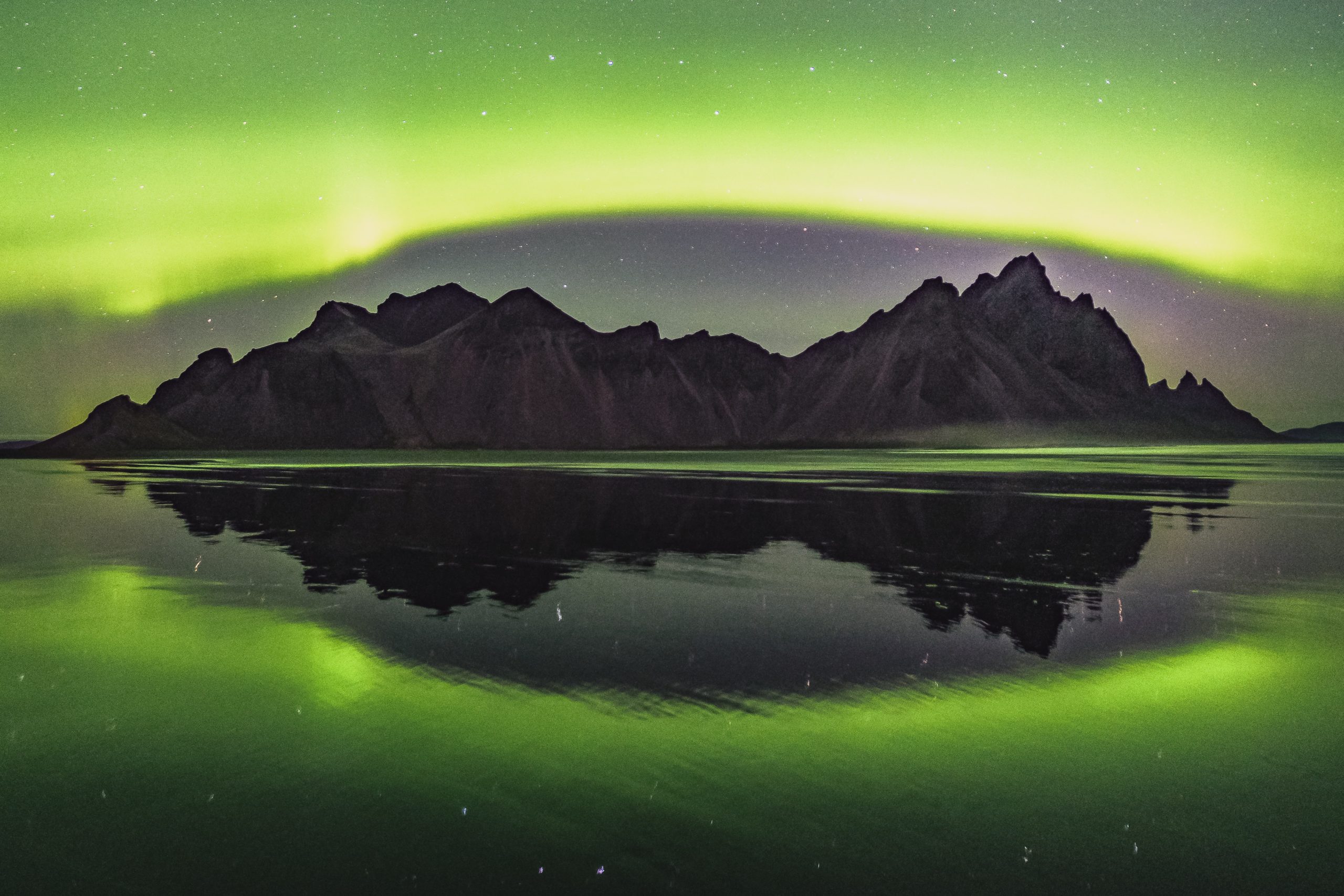
10 Things To Do & Places to Visit In Iceland
10 Things To Do & Placesto Visit In Iceland
By Robert Robertsson - Verified Travel Expert
Discover all of Iceland’s must-see attractions – natural marvels, cultural events or hidden gems alike! Read up and discover where and what await you on your travels in this Nordic nation. Iceland offers too much to keep track of.
Iceland is an intriguing land of stark contrasts: rivers carving through deserts and molten lava bubbling out from an island frozen over by glaciers; while its nature fluctuates between fire and frost with winter nights seemingly never-ending and summer nights boasting sun that never sets.
Before booking, many factors need to be considered: such as accommodation choices offered across Iceland before even considering car rental offers – some offering discounts!!
Where to Go in Iceland
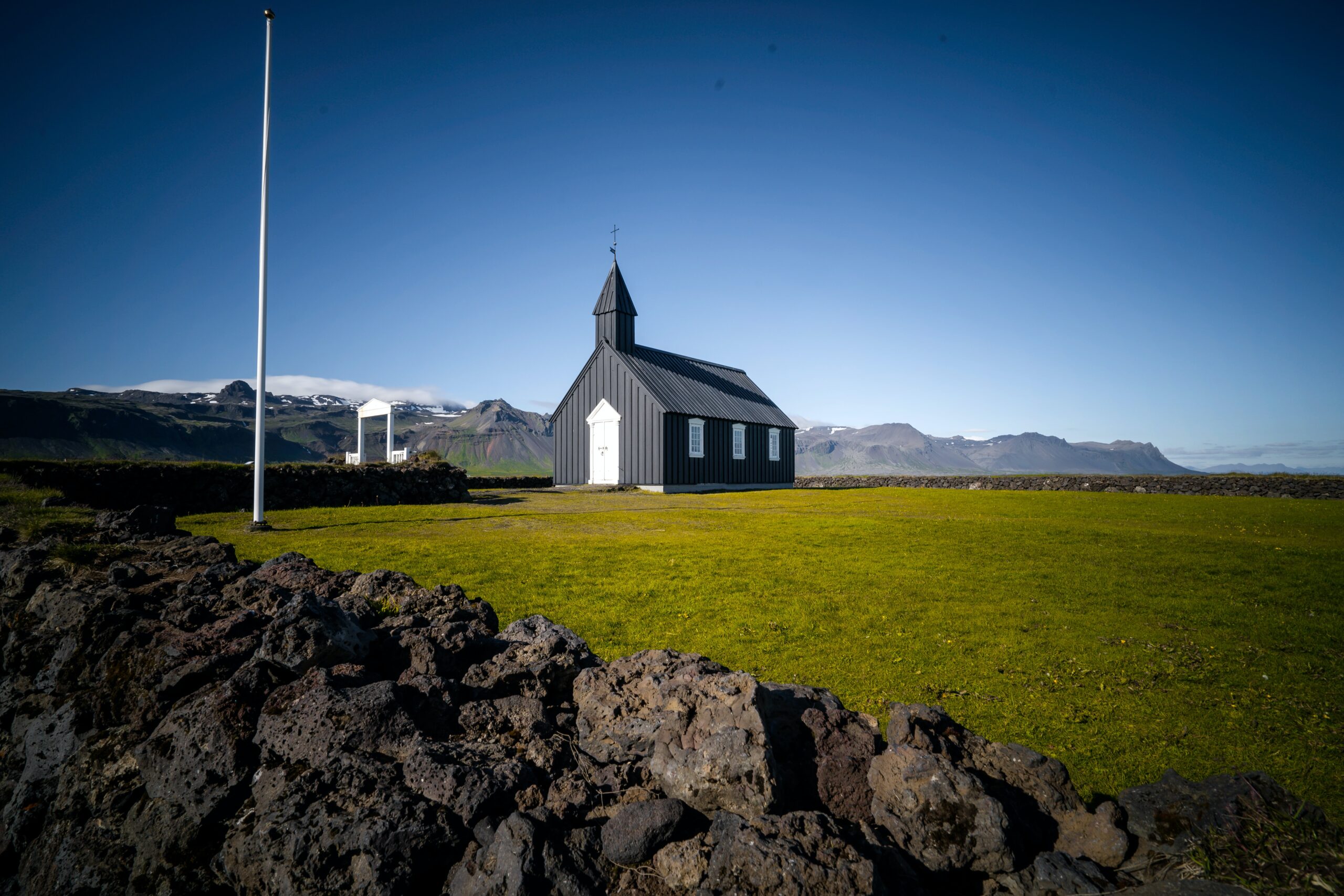
Iceland boasts many natural wonders and cultural attractions to delight any traveller, and no matter the length of your stay in this Nordic nation you are sure to discover incredible destinations that match up perfectly to your interests and travel requirements. Reykjavik will likely be their initial stop when visiting Iceland, arriving via flying into Keflavik International Airport and driving over Reykjanes Peninsula. Iceland’s capital boasts stunning landmarks like Hallgrimskirkja church, Harpa Concert Hall and Perlan’s interactive museum – not to mention wildlife such as whale and puffin watching tours in Faxafloi Bay as well as conservation reserves like Seltjarnarnes and Heidmork!
City offers numerous high-end accommodations that provide an ideal starting point for exploring further. Of particular note is its Golden Circle sightseeing route – easily toured in just one day! On this trail you’ll encounter Thingvellir National Park- a UNESCO World Heritage site between two tectonic plates- as well as Geysir Geothermal Area and Gullfoss waterfall- two iconic attractions of which are listed as World Heritage. Additionally, longer excursions could uncover lesser-known but equally beautiful attractions, like Kerid Crater Lake. Reykjavik makes exploring Iceland’s South Coast sightseeing route an accessible endeavor, taking visitors past famous waterfalls like Skogafoss and Seljalandsfoss as well as black sand beach Reynisfjara and impressive volcanoes such as Eyjafjallajokull – known for erupting spectacularly in 2010.
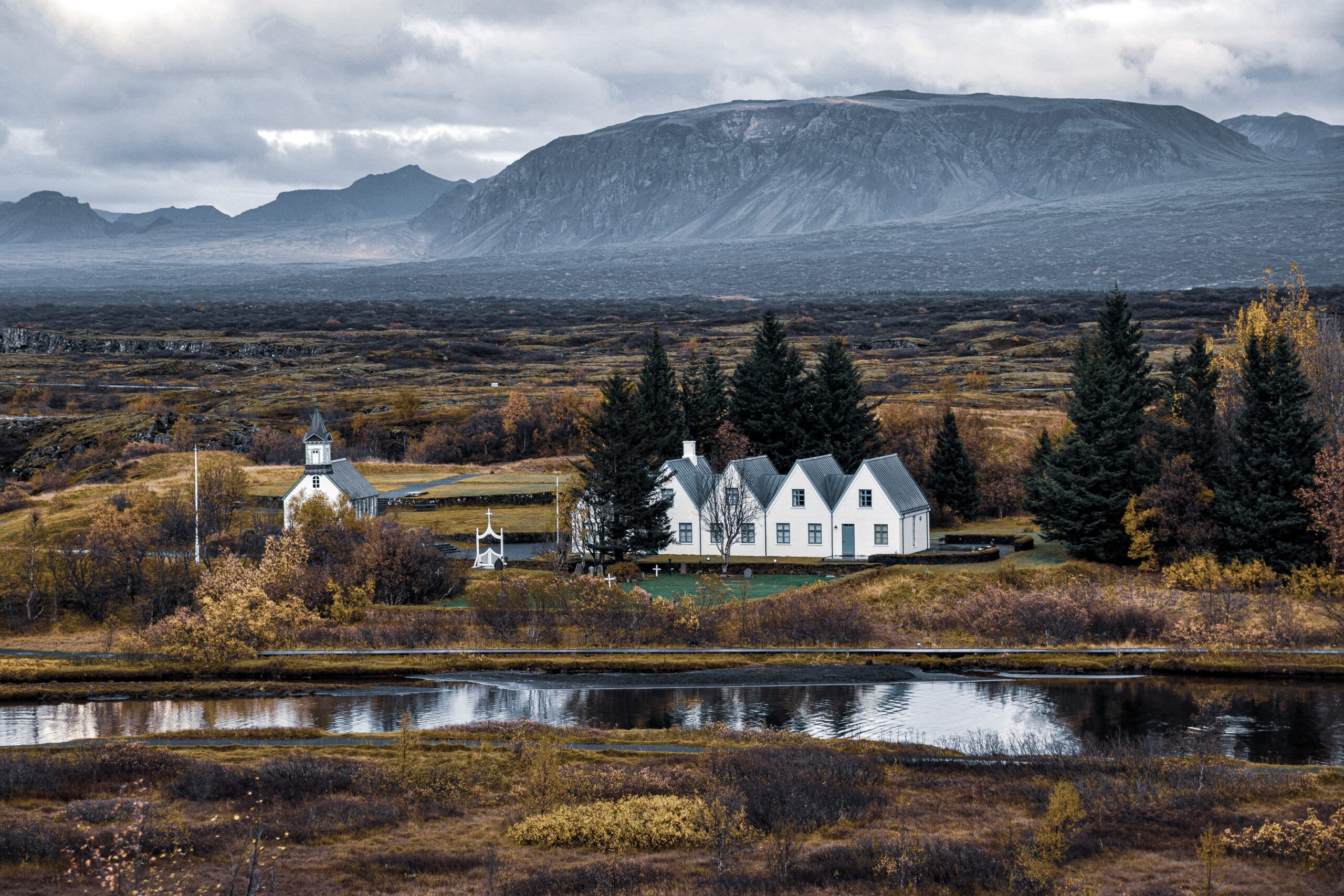
Further along Iceland’s South Coast are other incredible attractions such as Skaftafell Nature Reserve and Jokulsarlon glacier lagoon, easily reached within one day from Reykjavik by dedicated travelers; for an enhanced experience however, staying overnight or taking an epic ring road adventure trip are recommended for maximum exploration! The Ring Road offers the ideal holiday for exploring Iceland’s diverse nature and all that its nature has to offer. Travel along its length can introduce visitors to stunning Eastfjords, Lake Myvatn in North Iceland’s geothermal power and other stunning attractions – and more besides.
What is great to see in Iceland
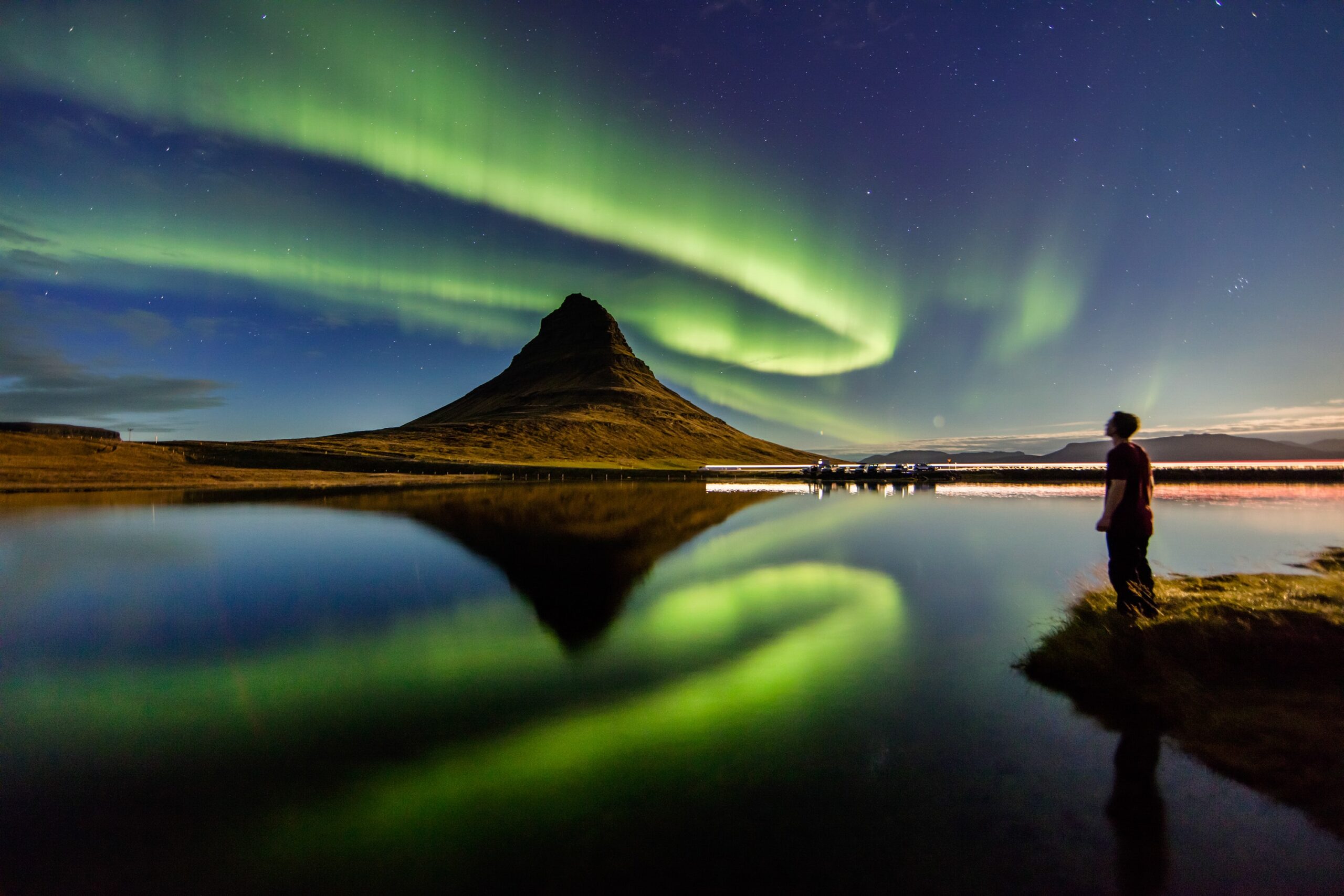
Whenever I think of Iceland, it’s like my mind jumps straight into a storybook. It’s hard to believe a place so magical is real. With so few people around, nature’s had a chance to go wild in the best way. You’ve got these incredible volcanoes and glaciers that look like they’ve been chiseling away at the land for ages. And the waterfalls – they’re not just trickles but epic cascades that could drown out any conversation. Then there are these hot springs, bubbling away and steaming like something out of a fantasy novel. Don’t get me started on the icebergs and that almost alien, moon-like landscape! And the wildlife? It’s like they’re from a different world too, especially those playful whale dolphins and the birds along the coast. Iceland’s just unreal, like nature’s showing off all its best bits in one place
If you’re into birdwatching and find yourself traveling in summer, you’re in for a treat in Iceland. The puffins here are something else – they’re like little clowns of the sea, all decked out in their colorful beaks. They hang out on the islands and cliffs, and honestly, Iceland’s got to be the top spot in the world to catch a glimpse of these quirky birds. And oh, the summer in Iceland has its own kind of magic, especially with the midnight sun. Picture this: It’s July, and you’re there from mid-May to August, and the sun just doesn’t bother to set. It hovers there, on the horizon, all night long. This means you get these insanely long days, where 2 AM looks like early evening and you can just keep exploring, hiking, or whatever tickles your fancy, without worrying about it getting dark. The whole midnight sun thing? It’s a game-changer for sightseeing and soaking up as much of Iceland as you can.
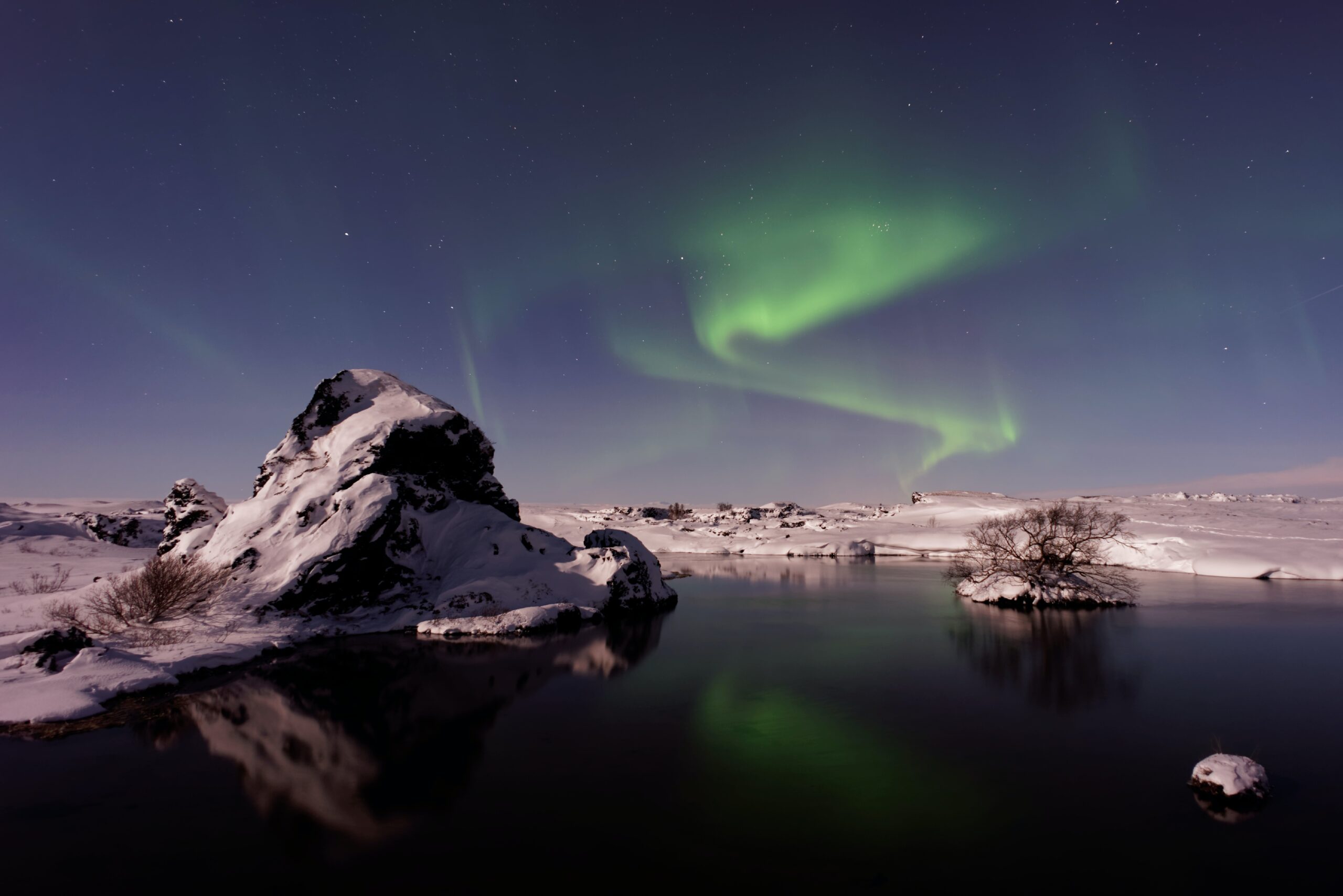
There’s something about Iceland’s winters that feels straight out of a fairy tale, especially with the northern lights, or aurora borealis, painting the night skies. Imagine this: you’re there between September and April, the sky’s dark and clear, and you’re just waiting, breath held, for that magical display. Seeing the northern lights dance above you is a dream come true for almost every winter traveler – it’s like nature’s own light show. And then there’s Mount Kirkjufell, with the northern lights reflecting off the sea like a mirror. It’s a sight you have to see to believe. But that’s not all winter in Iceland has to offer. You’ve got these incredible ice caves, this brilliant crystal blue, hidden away in the glaciers. They’re rare, these formations, and constantly changing. When you step inside and the sunlight hits the ice, the whole world turns this surreal shade of blue. It’s like walking into a fantasy, a whole different realm!
Our Selection of Top Attractions in Iceland
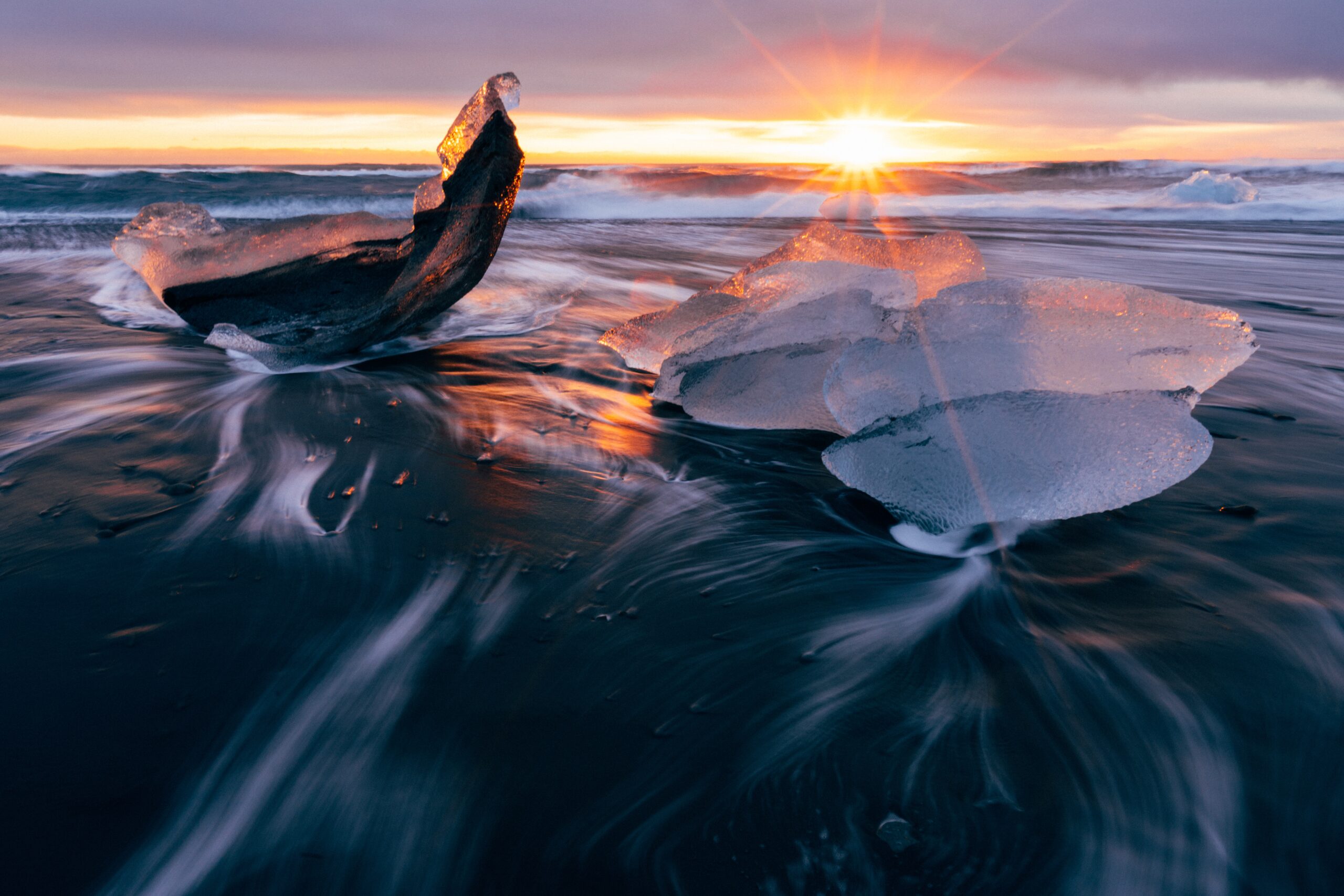
Talking about Iceland’s wonders, I’ve already touched on some big names like Reykjavik, the Golden Circle, the South Coast, and those mesmerizing northern lights. But trust me, there’s a whole lot more to this island than just its headliners.
Take the Blue Lagoon, for instance. Picture a steamy bridge crossing over its warm waters. Of all the geothermal spas sprinkled around Iceland, the Blue Lagoon is a standout. Right near the Keflavik International Airport on the Reykjanes Peninsula, it’s the perfect spot to either kick off or wrap up your Icelandic adventure.
Then there’s the Snaefellsnes peninsula, affectionately dubbed ‘Iceland in miniature. ‘ Everything you love about Iceland, packed into West Iceland – historic villages, wildlife, mountains that take your breath away, waterfalls, and beaches you won’t believe. The Snaefellsjokull National Park, with its namesake glacier, is a highlight not to be missed.
Ever heard of the Westfjords? This remote, sparsely populated area is like stepping into another time, with dramatic fjords set against enormous mountains. It’s a bit off the beaten path, only really accessible in summer, but oh so worth it for its untouched nature, quaint fishing villages, and wildlife – think arctic foxes, whales, seals, and puffins.
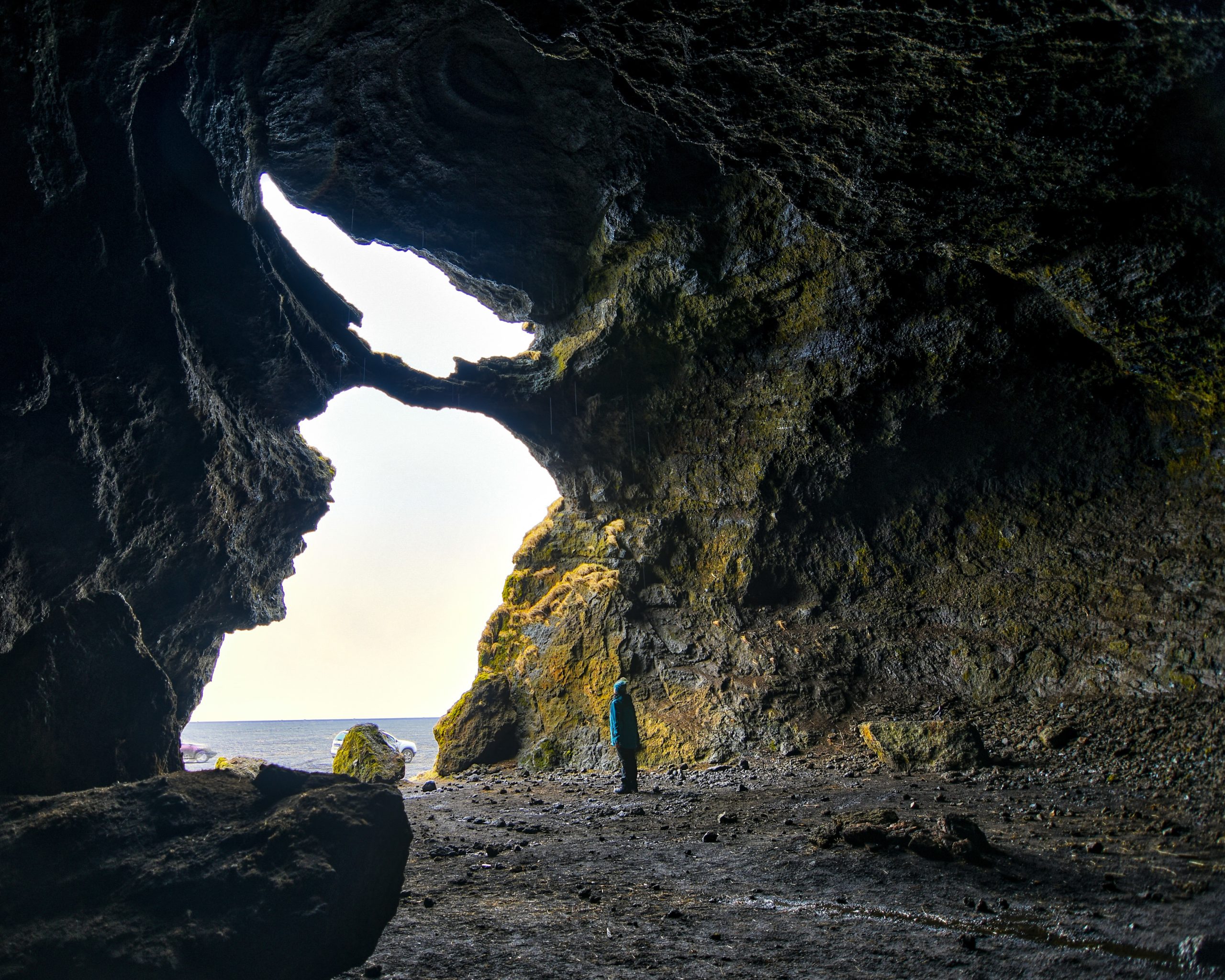
North Iceland is another gem, famous for the Lake Myvatn area and the lovely town of Akureyri. But it’s the Diamond Circle that steals the show, with sights like the Asbyrgi canyon, Husavik for whale-watching, and Europe’s second-most powerful waterfall, Dettifoss. And if you’re up for it, there are plenty of hidden treasures off the main roads here.
The Eastfjords, unlike the Westfjords, are accessible all year round and are part of the Ring Road circuit. Dramatic mountains, charming little bays, and tiny villages abound, and it’s the only place in Iceland where wild reindeer roam. And then there’s Mount Vestrahorn, stunning even in winter’s snow, and Vatnajokull National Park.
Centered around Europe’s largest ice cap, the Vatnajokull glacier, its south side is especially popular, with the Jokulsarlon glacier lagoon and the awe-inspiring Skaftafell Nature Reserve.
Lastly, for the true adventurers, there are the Highlands. Untouched, uninhabited, and wild with volcanoes, hot springs, and glaciers – it’s a hiker’s paradise. The Laugavegur trail, linking Landmannalaugar Nature Reserve to Thorsmork Valley, is a journey through some of the most dramatic landscapes you’ll ever see.
10 Best Things To Do in Iceland
Planning your Iceland adventure and wondering how to tackle it? Whether you’re hitting the road on a self-drive journey or opting for a guided tour, I’ve got you covered. Here’s my handpicked list of the top 10 things you absolutely must do in Iceland. From can’t-miss spots to unique experiences, and even a few things to steer clear of, this guide is your ticket to making the most of your Icelandic escapade.
10. Snaefellsjokull Glacier
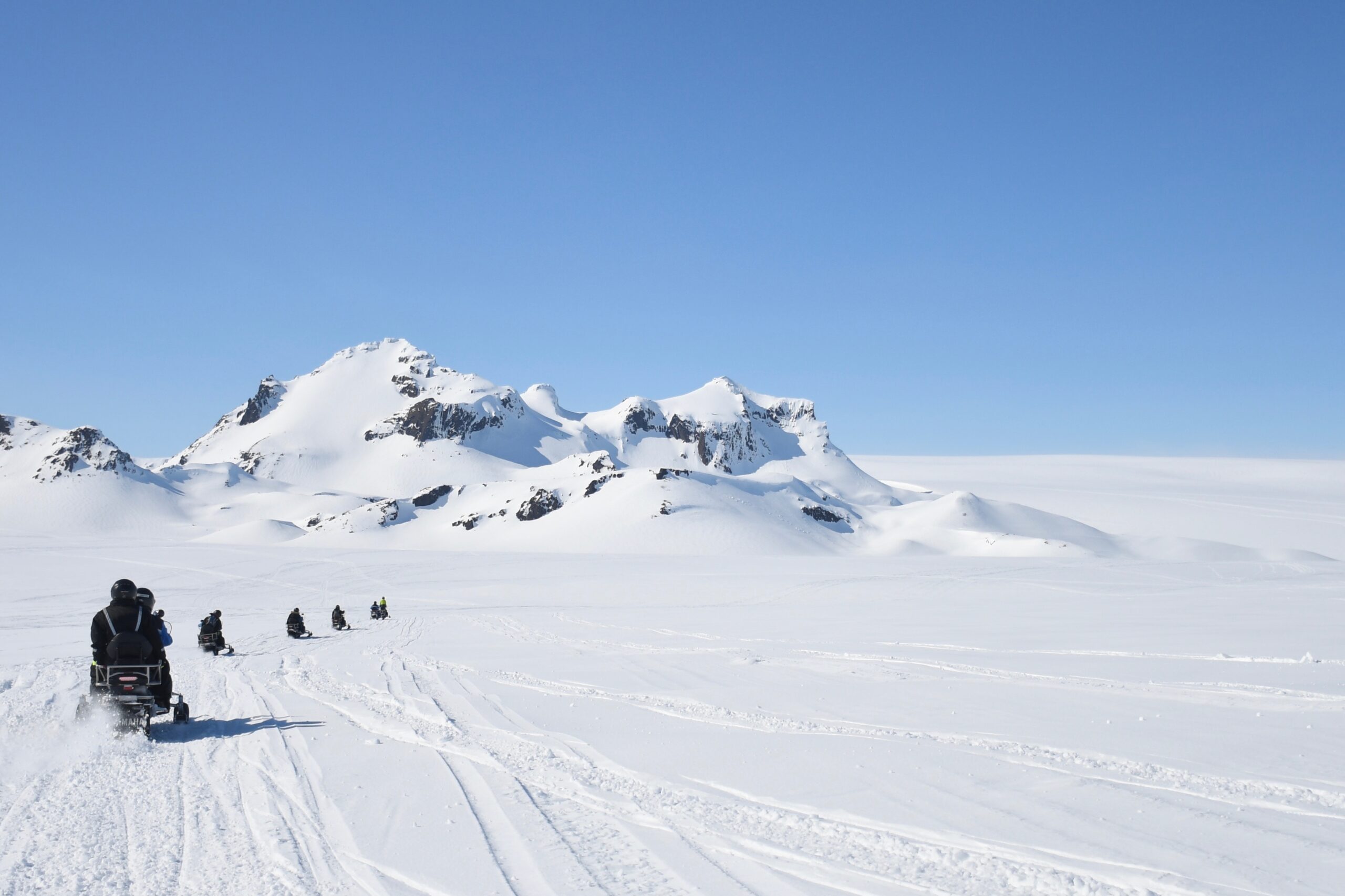
Craving a taste of all the diverse landscapes Iceland has to offer? A day trip to the Snaefellsnes peninsula might be just what you need. It’s like a microcosm of the whole country, which is why they call it ‘Iceland in Miniature.’ Trust me, there’s so much to see and do there that you’ll want to dive into our ultimate guide to the Snaefellsnes peninsula.
Now, the real star out here is the Snaefellsjokull glacier. Picture this: a majestic twin-peaked glacier sitting atop a volcano, with rugged lava fields and a dramatic coastline wrapping around three sides. It’s so striking that you can’t miss it from other top spots nearby, like the quiet, almost mystical village of Budir or the imposing Londrangar sea stacks.
This glacier isn’t just a pretty face; it holds a special place in the hearts of Icelanders. So much so, that they made it a National Park in 2001, a title shared with only two other sites in Iceland. And the Snaefellsjokull isn’t just famous for its looks – it’s a muse for artists and writers alike. Ever heard of Jules Verne’s ‘A Journey to the Center of the Earth’?
That classic sci-fi adventure from 1864 was inspired by this very glacier. If you’re wondering what’s a must-see in Iceland, put this glacier high on your list. On a clear day, its towering presence is visible all the way from Reykjavik, across Faxafloi Bay. But nothing beats getting up close and personal with it. And while it’s totally doable to drive to and from the glacier in a day, you might find yourself wanting to linger longer. It’s a highlight of many self-drive tours, like a six-day winter trip around Iceland’s Golden Circle & Snaefellsnes. Trust me, you’ll need more than a day to soak it all in!
9. Black Sand Beach in South Iceland
If those places that’s not just a destination, but a journey into a world so beautifully different. If you’re ever in Iceland and wondering where to go, let the South Coast be at the top of your list. This place isn’t like the rest of Iceland’s coastline, which is wild and rugged thanks to years upon years of battling the elements.
Here, it’s as if the past glacial floods wanted to tell a different story, smoothing out the rocks into these vast, mesmerizing stretches of black sand. There’s this one time I remember flying over Reynisfjara beach during the golden hour. The view from above? Absolutely unforgettable.
The black sands shone like a sheet of onyx under the soft glow of the setting sun. When you find yourself on the South Coast, take a stroll along these beaches, especially Reynisfjara near Vik. It’s more than just a popular spot; it’s a testament to nature’s artistry, with its stark beauty and dramatic contrasts. But, as much as these beaches captivate you, remember they demand respect.
The sea here isn’t for swimming – it’s beautiful but perilously cold and unpredictable. Reynisfjara, in particular, is infamous for its sneaker waves. They can catch you off-guard, rushing up the shore faster than you’d expect. I always advise friends to keep a safe distance, at least 67 to 100 feet (20 to 30 meters) from the water’s edge. Safety tips are there for a reason – heed them. It’s all about experiencing the breathtaking beauty of the South Coast without any risks. After all, Iceland is about embracing the wild, safely and memorably.
8. Diamond Beach is a Diamond
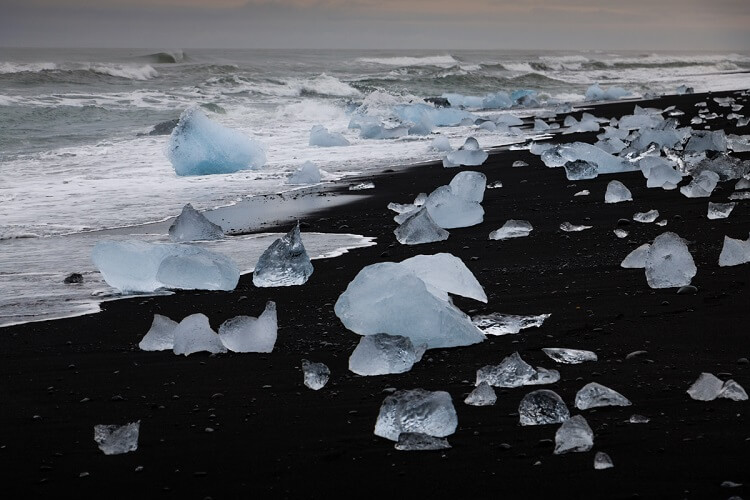
Beyond the well-trodden paths of Reynisfjara lies another treasure of the South Coast, a place some fondly call ‘the crown jewel of Iceland’s nature’ – the enchanting Jokulsarlon Glacier Lagoon and its neighbor, the mesmerizing Diamond Beach.
Standing there, with the surf rhythmically colliding against ice chunks on Diamond Beach, is an experience that words barely do justice. It’s like witnessing the earth in conversation with its elements. Throughout the year, the lagoon releases icebergs from a nearby glacial tongue, each embarking on a solemn march towards the ocean.
Their final act, a dramatic dance upon the waves, ends on the shores of Diamond Beach. This spectacle, where icebergs lay strewn across the dark sands, gleaming like diamonds, is hypnotically beautiful. There’s a striking contrast at play here – the vivid blue of the ice clashing against the beach’s ebony sands. It’s a painter’s palette, nature’s own masterpiece, making Diamond Beach not just a sight to see, but a wonder to behold.
Imagine this scene under the surreal glow of the northern lights or bathed in the endless daylight of the midnight sun. It’s like stepping into a scene from a fantasy book, too majestic and mystical to be real. And just when you think it can’t get any more magical, you might spot seals playfully navigating the lagoon or curiously peeking above the ocean waves. It’s these moments, where nature’s charm is at its most playful, that truly capture the heart of Iceland.
7. See the hole on Dyrholaey
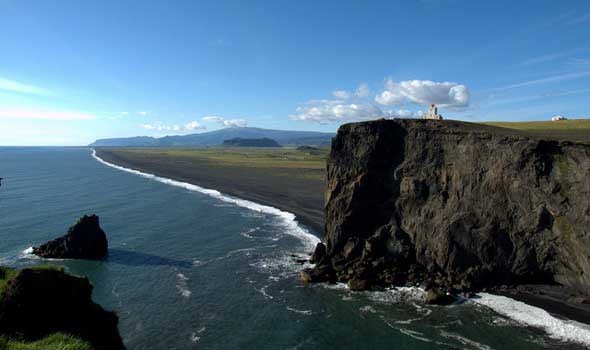
Whenever I wander over to Dyrholaey, just a casual walk from the haunting Reynisfjara beach, it feels like stepping into a postcard. Climbing atop this magnificent sea arch, you’re greeted with a view that’s simply out of this world – the endless Atlantic stretching out before you, framed by Iceland’s dramatic coast.
But what really steals the show in summer are the puffins. These quirky, colorful birds make Dyrholaey their home, adding a splash of life to the rugged scenery. Every time I visit, it’s like a personal rendezvous with the wild, unbridled spirit of Iceland. Dyrholaey isn’t just a place to see; it’s a place to feel the pulse of this incredible island.
6. The Blue Lagoon unforgettable experience
Ah, the Blue Lagoon in Iceland! Let me tell you, it’s nothing like the usual pool or beach experience. Nestled in the rugged Reykjanes peninsula, this geothermal spa is a world apart. The water’s this surreal shade of blue – think milky, opaque, and totally inviting.
The first time I eased into it, it felt like slipping into a warm bath, but a thousand times better. There’s this whole thing about the water being packed with minerals. I even slapped on one of those silica masks they give out – felt like a proper spa day right in the lagoon. People say it’s healing, and honestly, my skin never felt better afterward.
The setting is wild – you’re right there in the middle of these cool lava fields covered in this soft grey moss, and the steam curling up around you makes the whole place feel like you’ve stepped onto another planet. If you’re planning your Icelandic trip, make this your first or last stop. It’s super relaxing, perfect for shaking off jet lag or easing those post-hike muscles. And if you’re in the mood to splurge a bit, try their private treatments.
I went for an in-water massage once, and it was epic. They’ve even got these fancy beauty treatments tailored for different skin types, which is pretty cool. Getting there’s a breeze too. It’s just a short hop from Keflavik Airport and not too far from Reykjavik. You can easily grab a transfer from the airport, no fuss. Seriously, the Blue Lagoon is one of those ‘you’ve gotta see it to believe it’ kind of places. It’s an experience that’ll stick with you – like, ‘remember when we were in that incredible blue water in Iceland?’ kind of memory.
5. Wildlife in the Hornstrandir
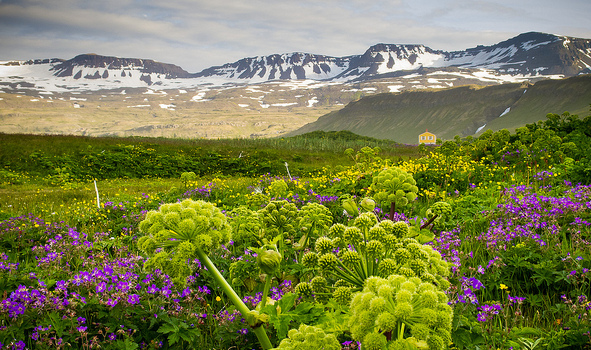
You know, there’s this spot in Iceland, Hornstrandir, that’s straight out of the old Sagas. Tucked away in the northernmost part of the Westfjords, it was abandoned ages ago because it was just too remote. You might think, “Why bother with a place like that on an Iceland trip?” But here’s the twist – it’s been reborn as this incredible nature reserve. It’s so wild and untouched that if you’re into wildlife or photography, this place is like hitting the jackpot. It’s one of those rare spots, super quiet and barely any people around, just like the Highlands, but it’s the animals that are the real locals here.
Picture this: you’re out there, and there’s an Arctic fox, just doing its thing, and you’re close enough to snap that perfect photo. These cliffs around here, they’re massive, soaring up to 1,752 feet, and they’re like a condo for thousands of seabirds. But the coolest part? The Arctic foxes. They’re actually kind of fearless around people. I mean, you shouldn’t feed wild animals, but these foxes have no qualms coming right up to you. Getting to Hornstrandir is a bit of an adventure in itself. You catch a ferry from Isafjordur or the Strandir area. And if you don’t want the hassle of figuring it all out yourself, there are tours of the Westfjords that’ll take care of all the details.
So, if you’re planning a trip to Iceland and want to see something completely different, out-of-the-way, and full of nature’s wonders, Hornstrandir has to be on your list. It’s like stepping into a completely untouched piece of the world.
4. The magic of Lake Myvatn
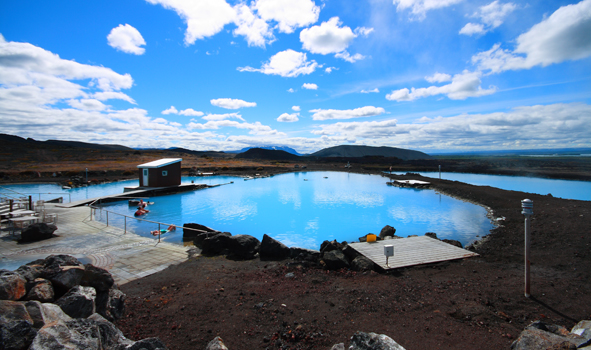
So, about 49 miles east of Akureyri (they call it the ‘Capital of North Iceland’), there’s this place that’s like a playground for geology and nature buffs – the Lake Myvatn area. Picture a landscape shaped by epic volcanic eruptions over 2,000 years ago. Now, it’s this awesome spot with tons of hidden treasures you can check out on a tour around Myvatn. The lakes themselves? Absolutely stunning. They’ve got this unique formation and are teeming with life. And if you’re visiting in summer, get ready for a bird-watching fiesta – the place is a magnet for dozens of bird species.
Oh, and keep your eyes peeled for these rare moss balls; they’re pretty cool and super rare. But wait till you see the geology around Lake Myvatn. It’s mind-blowing! There are these pseudo-craters – they look like mini volcanoes but aren’t. You can hike up and around them, dive into Iceland’s volcanic history, and feel like a real explorer uncovering ancient secrets.
Then there’s Dimmuborgir, or the ‘Black Fortress’ – a field of lava formations so wild and dramatic, it feels like stepping onto another planet. Hidden in this maze of lava, there’s this cave with the Grjotagja hot spring inside. Fun fact: it’s so famous now because of ‘Game of Thrones.’ Remember that steamy scene with Jon Snow and Ygritte? Shot right there! The colors of Lake Myvatn, with all those blues and greens, are just a feast for the eyes.
And if you’re itching for a dip in geothermal waters (who isn’t, right?), check out the Myvatn Nature Baths. It’s the perfect spot to just chill and soak in all the beauty of this incredible area.
3. The Beautiful Asbyrgi Canyon
Off the usual tourist track in Northeast Iceland, there’s this spot called Asbyrgi canyon. It’s not your everyday sight – it’s got this horseshoe shape that looks like it’s been plucked straight from a Norse myth. Legend has it that Odin’s eight-legged horse, Sleipnir, left its mark here, literally. When you’re there, it’s like stepping right into a storybook, especially if you’re into Norse mythology. I remember the first time I stood on those cliffs and looked out over the plateau. The view was something else – like being transported back to a time when the world was wilder.
But the real surprise is inside the valley. It’s this lush, green world, full of birch and willow trees, different kinds of firs, larches, and pines. It’s so unexpectedly green and vibrant, you almost can’t believe you’re still in Iceland. The place is also rife with elf stories. With all that natural beauty and an almost tangible sense of old-world magic, it’s easy to imagine little elfin creatures darting between the trees. Asbyrgi is one of those rare places that make you think maybe, just maybe, those old legends might be true.
For anyone hitting up Iceland, I’d say Asbyrgi canyon is a must-visit. It’s not just the scenery – it’s the whole vibe of the place. It’s perfect for nature lovers, photography buffs, or anyone who just wants a taste of Iceland’s mythical side. Trust me, it’s an experience that sticks with you.
2. Do the Golden Circle
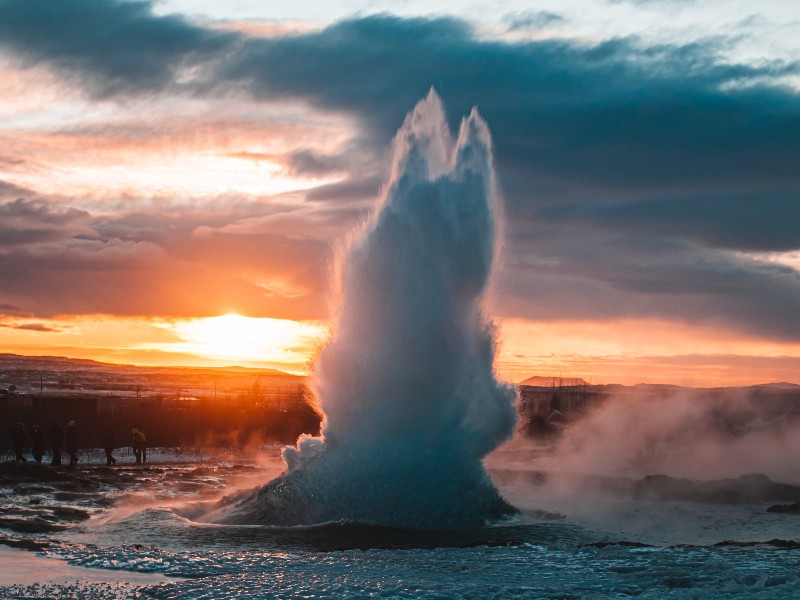
Oh man, let me tell you about the Golden Circle in Iceland. It’s this 186-mile loop that’s packed with some of the coolest sights in the southwest part of the country. We’re talking Thingvellir National Park, the Geysir Geothermal Area, and the incredible Gullfoss waterfall. You know what’s wild? You can actually snorkel and dive there all year round. Imagine floating between two continents at Thingvellir, which is also the only UNESCO site on Iceland’s mainland. The place is like a scene from a fantasy movie, with these crazy lava fields and forests, and these streams so clear you won’t believe your eyes.
Then there’s the Geysir area. You’ve probably heard the word ‘geyser’ before, right? It actually comes from the Geysir there, which is pretty cool, but these days it’s the neighbor, Strokkur, that steals the show. It erupts like a fountain, shooting water over 65 feet high every few minutes – it’s a camera’s dream. And Gullfoss? Wow, just wow. This waterfall is like nature turned up to eleven, with water thundering down into this massive valley. If you hit it on a sunny day, you might get lucky and see rainbows cutting through the spray.
A lot of folks do guided tours of the Golden Circle, but if you’re up for a bit of adventure, driving it yourself is the way to go. You get to take your time, soak it all in, and really make it your own. Trust me, it’s one of those things you’ve got to see to believe.
1. Chase the Midnight Sun or the Northern Lights
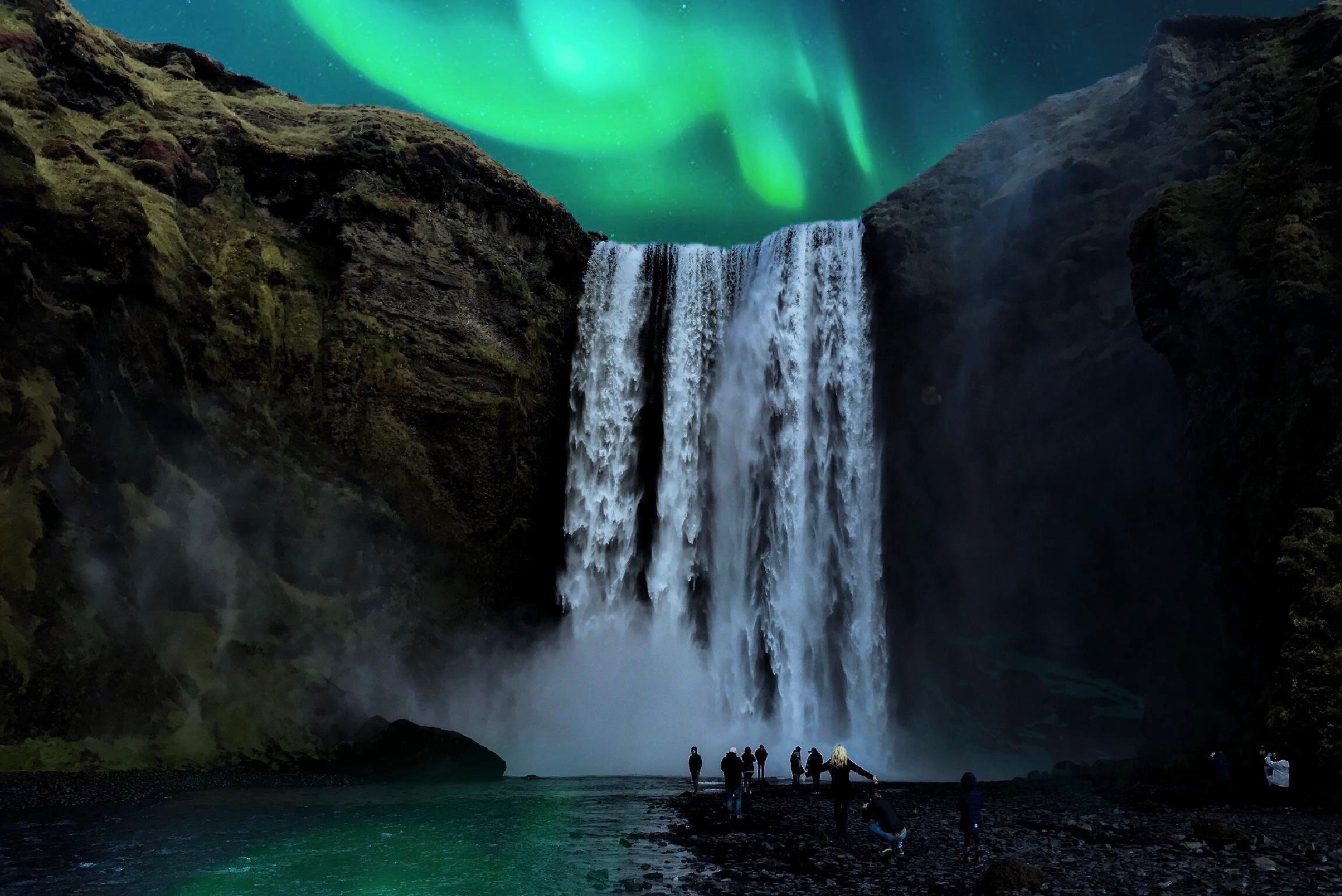
You know, Iceland’s got these two natural wonders that’ll just knock your socks off – the never-setting midnight sun and those mind-blowing northern lights. They’re not ‘sites’ in the usual sense, but man, are they the ultimate Icelandic experiences. We’ve even got a whole post dedicated to figuring out the best time to catch the northern lights. Usually, you’re looking at late August to April, with the heart of winter being prime time. And a hot tip? Jump on a northern lights tour. The guides know all the best spots and tricks to increase your chances of seeing that magical aurora borealis. Picture this: Mt. Kirkjufell on the Snæfellsnes peninsula, mirrored in the still water under a sky dancing with color. It’s something else, really.
But hey, if you’re more of a summer person, Iceland’s got you covered with the midnight sun from May to August. Imagine the sun just hanging there on the horizon, all through the night. There are loads of midnight sun tours where you can soak up those endless golden hours. We’ve got the whole lowdown on this phenomenon in our guide to the midnight sun. Honestly, both the northern lights and the midnight sun are so uniquely Icelandic that you might just want to visit twice – once for the winter’s aurora magic and again for the endless summer days. It’s like two different worlds, each with its own kind of magic.
Whether you’re watching the sky light up with green and purple lights, or basking in the glow of a sun that refuses to set, you’re in for an unforgettable experience. Iceland, with its natural light shows, is truly a place where nature’s wonders never cease to amaze.
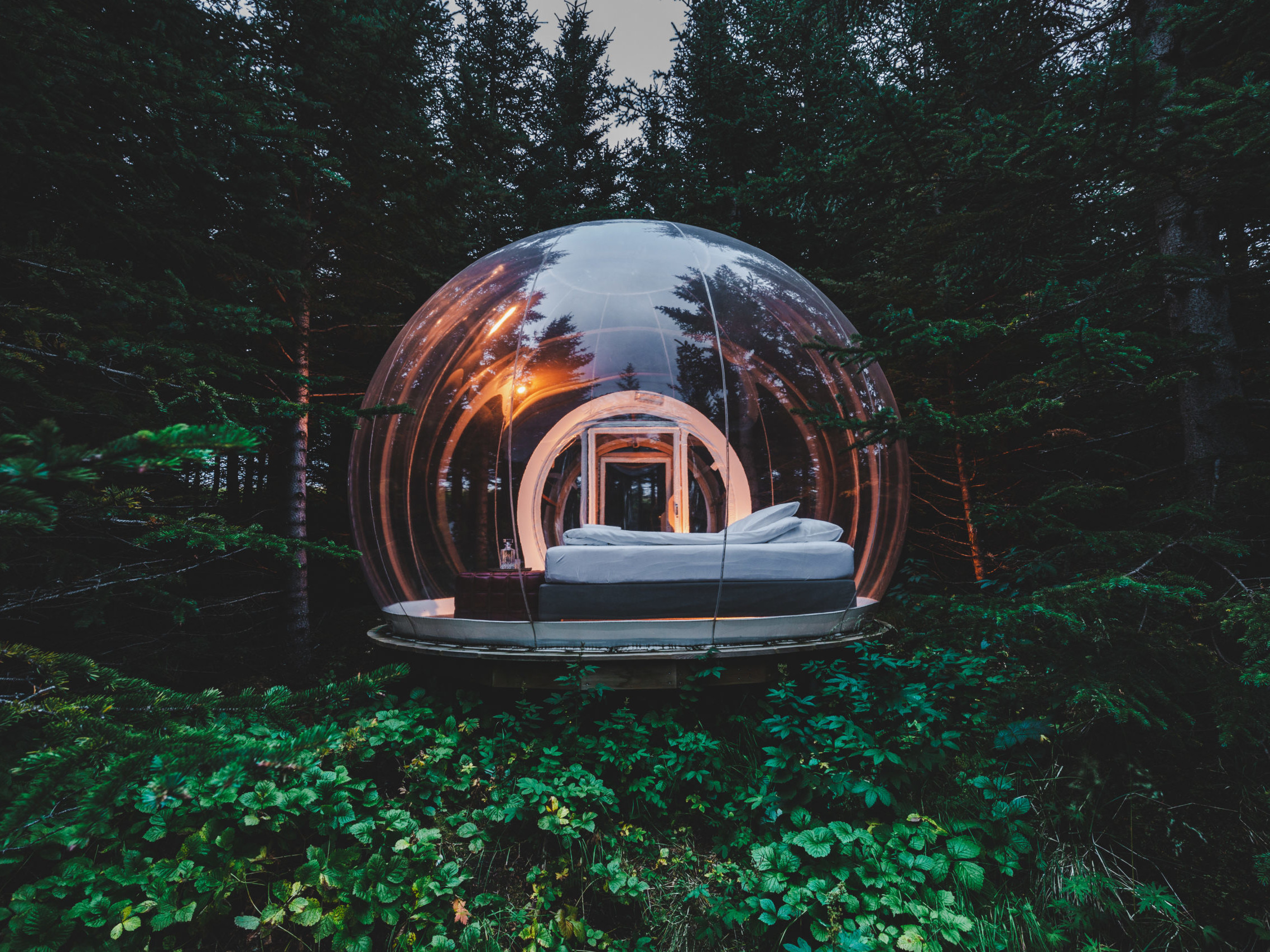
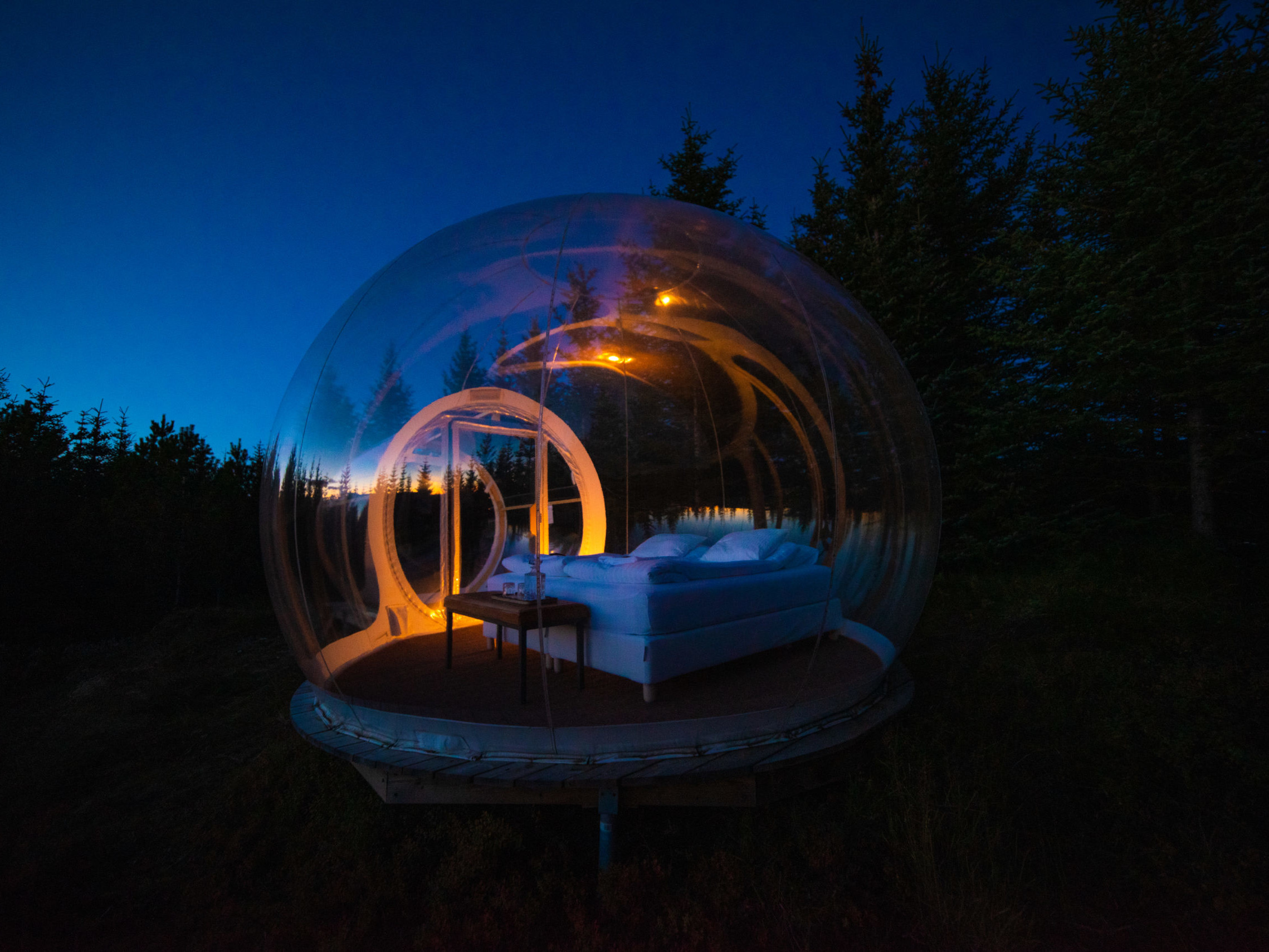
The Northern Lights at Jokulsarlon Glacier Lagoon
The Enchanting Northern Lights at Jokulsarlon Glacier Lagoon:A Captivating Experience in Iceland
By Robert Robertsson - Verified Travel Expert
Unforgettable to say the least
Jokulsarlon Glacier Lagoon in Iceland draws visitors from across the world who come for its magnificent Northern Lights show, often called “The Crown Jewel of Iceland. ” With beautiful natural surroundings featuring mountains, icebergs, wildlife and more – its idyllic settings create the ideal setting to witness it – visitors may even witness it washing up onto nearby Diamond Beach! In Icelandic the name is Fellsfjara.
Aurora Borealis or Northern Lights, are spectacular natural displays found near Earth’s poles caused by collisions of charged particles from the sun with Earth’s magnetic field and atmospheric molecules, producing energy releases as light that create spectacular and colorful displays known as Northern Lights. Jokulsarlon Glacier Lagoon in Iceland’s remote setting away from light pollution offers one of the finest opportunities on Earth for witnessing such stunning natural displays as part of this wondrous natural spectacle – you won’t soon forget witnessing such wondrous spectacle as long after leaving Iceland!
So make the time and visit Jokulsarlon Glacier Lagoon this winter season to witness its splendid illuminations!
The Beauty of Jokulsarlon Glacier Lagoon
Jokulsarlon Glacier Lagoon can be found within Vatnajokull National Park in southeast Iceland and features an ever-evolving, dynamic ecosystem filled with floating icebergs from Breidamerkurjokull Glacier that detach from it, providing a constantly shifting and mesmerizing spectacle. When frozen over in wintertime, its contrast of shapes and colors becomes especially stunning; reflection of Northern Lights on these frozen bodies of water add to their allure further enhancing this captivating view of beauty; seals and seabirds populate this ecosystem that makes Jokulsarlon’s dynamic ecosystem harmonious yet diverse! Jokulsarlon Glacier Lagoon’s allure lies in its ever-evolving landscape.
Icebergs that drift along its waters range in shape and size from small chunks of ice to massive structures resembling sculptures; as these move and melt, its scenery changes accordingly; visitors to Jokulsarlon can witness nature at work as graceful floating icebergs reflect vibrant Northern Light colors in graceful motion. As well as its stunning icebergs, Jokulsarlon Glacier Lagoon also provides stunning mountains as a beautiful background to this lagoon.
These towering snowy peaks create a dramatic juxtaposition with the night sky; when lit by Northern Lights dancing above them they add yet another level of beauty and grandeur that leaves visitors speechless. No matter who your target may be – nature enthusiasts, photographers or anyone seeking peace and serenity alike- Jokulsarlon Glacier Lagoon won’t disappoint you in either regard!
Enhancing Your Chances of Seeing the Northern Lights
To increase the chance of seeing the Northern Lights at Jokulsarlon Glacier Lagoon, a guided tour or package should be booked with an authorized operator. Different tour options exist – some combining caving with sightseeing; and September-April is considered prime viewing period – check your aurora forecast and weather conditions carefully to get optimal viewing!
Tour operators offering guided tours with established guides increase your odds of witnessing this breathtaking spectacle; experienced guides possess vast local knowledge that will lead you directly to prime viewing spots of aurora borealis or provide accurate aurora forecasts, increasing chances of seeing lights. Finding an appropriate time and tour operator are both key aspects for an incredible Northern Lights journey; being prepared can only enhance that journey further!
Dressing warmly in layers is key as temperatures can drop significantly at night during winter months; waterproof clothing should also be brought as these facilities at Jokulsarlon Glacier Lagoon may not always be open by nightfall. Being well informed increases chances of witnessing this natural wonder in its full glory!
Preparation and Tips for the Experience
Visit Jokulsarlon Glacier Lagoon during night hours by wearing layers, waterproof clothing, sturdy boots and essential supplies such as food and water; essential lighting must also be brought along; flashlight/headlamp use for visibility purposes should also be brought; these measures should ensure visitors enjoy an unforgettable experience at this remarkable lagoon. Dress appropriately and bring essential items; when planning to visit Jokulsarlon Glacier Lagoon to witness Northern Lights, other tips should also be kept in mind.
Weather forecasting and aurora activity should always be closely observed prior to planning any trip – clear skies with strong aurora activity will increase your odds significantly of seeing Northern Lights; many websites and apps provide real-time aurora forecasting so you can plan effectively for your visit. Arriving early at a lagoon gives you ample time to explore its surroundings, prepare camera gear needed for photographing Northern Lights, and locate an inviting space where you can rest for the evening. Arriving early could give you the best opportunity of seeing glimpses of its magnificent twilight hours – adding even more mystery and splendour to your Northern Lights experience!
Capturing the Northern Lights at Jokulsarlon Glacier Lagoon
At Jokulsarlon Glacier Lagoon, a photographer captured an outstanding display of Northern Lights with a Sony a7R camera equipped with a Zeiss 16-35mm lens and ISO 1600 setting at 30-second exposure, manual focus, wireless shutter release and Manfrotto tripod. Shooting with full frame camera produced less noise compared to an APS-C camera; see technical details provided for more accurate Northern Light photography at Jokulsarlon Glacier Lagoon. Photographing the Northern Lights can be both difficult and fulfilling.
To achieve stunning photographs of them, using appropriate equipment and settings are key – for instance using a full-frame camera can result in less noise in photos compared to an APS-C one, and wide angle lenses like Zeiss 16-35mm used by this photographer are perfect for capturing both its expansive skyscape and surrounding terrain. When setting your camera to capture Northern Lights images, a higher ISO, such as 1600 is often recommended to capture their faint glow. But finding the appropriate balance is crucial, since higher ISO can add noise into images.
Experimenting with different exposure times (the photographer used 30-second exposures for effect). Manual focus may help since autofocus may struggle in low light conditions to be accurate enough; using wireless shutter release/remote controls helps minimize camera shake for sharp images while sturdy tripods keep everything still during long exposures. Making beautiful photographs of the Northern Lights requires more than having all the appropriate equipment and settings in place; to capture its true essence you need more than technical know-how alone. Finding that ideal composition, framing the scene so as to highlight their magnificence and being patient yet observant are keys for successful photos of this phenomena. Each display of Northern Lights can bring something different; being present and immersing yourself into this experience will yield incredible photographs!
Boat Tours and nearby attractions such as Ice-caves
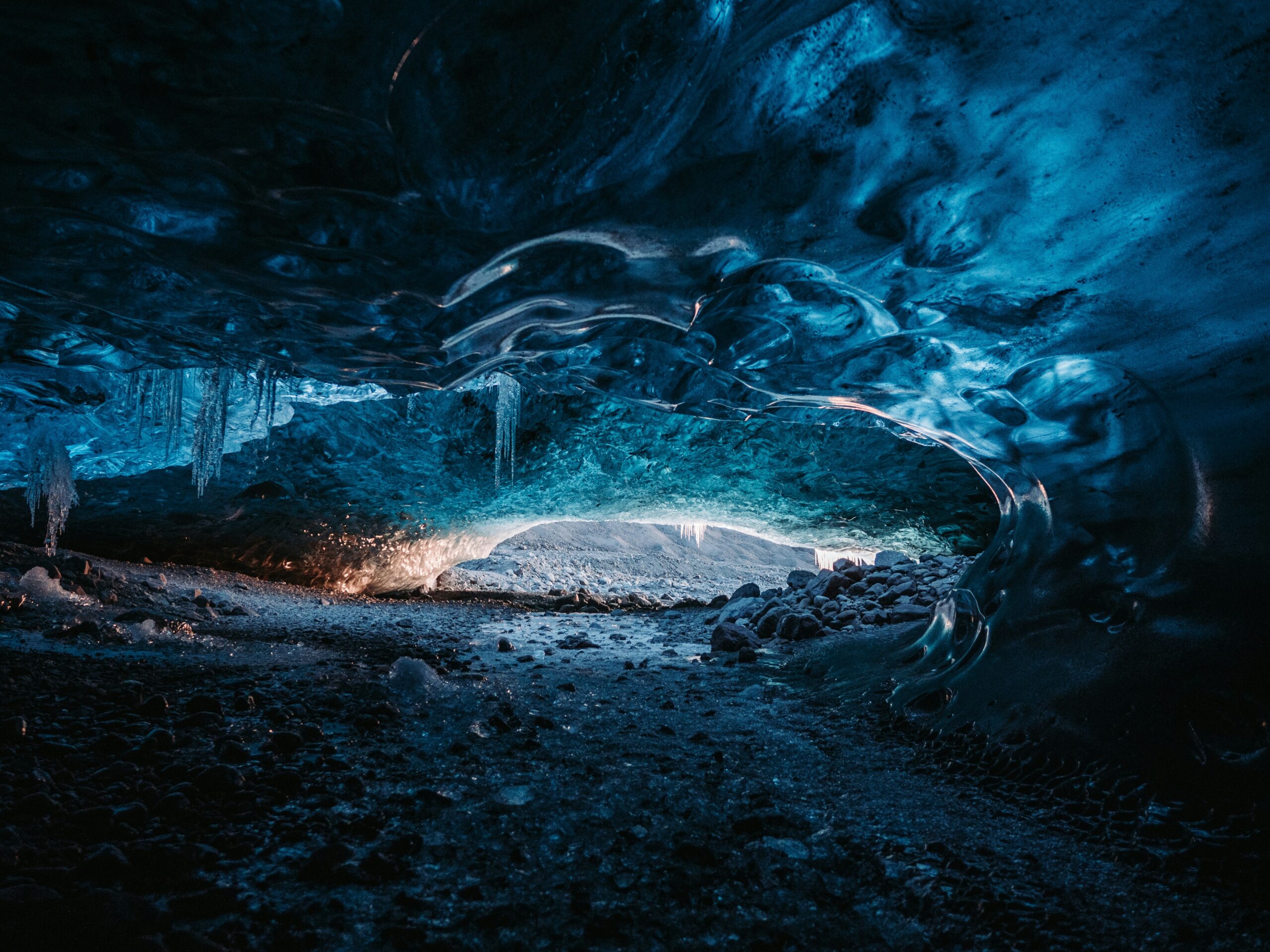
Boat tours at Jokulsarlon Glacier Lagoon allow visitors to come face-to-face with icebergs for a spectacular encounter and offer visitors a truly unique perspective of these glacier lagoons. In particular, exploring Jokulsarlon Glacier Lagoon through boat tours and visiting Diamond Beach are surefire ways of increasing the overall Northern Lights viewing experience. Watching the Northern Lights from Jokulsarlon Glacier Lagoon can be an incredible experience, yet taking a boat tour brings them even closer.
After exploring the lagoon, Diamond Beach should also be included on any itinerary because its name refers to shimmering icebergs coming ashore onto black volcanic sand that give off diamond-like reflections when seen up close – truly an inspiring sight that adds extra magic to Northern Lights experience! A night you will never forget in your life.
Walking along its shoreline and witnessing these shimmering gems up close is truly mesmerizing; their combination with dark volcanic sand creates an eye-catching spectacle unlike anything else! Boat tours or exploring Diamond Beach at Jokulsarlon Glacier Lagoon provide additional experiences that help bring Iceland’s natural world alive for you, offering unforgettable memories long after visiting. Immerse yourself in its majestic icebergs while appreciating nature’s delicate balance – combined with witnessing an awe-inspiring display from Northern Lights this experience will stay with you long after visiting Jokulsarlon Glacier Lagoon!
Conclusion
Jokulsarlon Glacier Lagoon in Iceland provides a spectacular opportunity for witnessing the Northern Lights. A guided tour, careful monitoring of aurora forecasts, adequate clothing and camera gear should all help increase your chance of witnessing it at Jokulsarlon; taking pictures can bring lasting memories while boat tours and close encounters with icebergs only add further magic! Don’t miss this unforgettable journey – come experience Jokulsarlon today!

Destination black sand beach Iceland: 10 of our favorite unforgettable beaches to watch the northern lights from
If you’re looking for some black sand to aurora watch from, look no further. With nearly 5000 km. of coastline, Iceland has you covered.
Picture it. Destination: black sand beach Iceland. Sparkling dark sand is the gift of many volcanic hotspots, but up here in the North, Iceland is among the few. Imagine the incredible darkness of sitting on the velvety black sand, while auroras dance in the black night.
Aside from the mystical moving lights, the only thing you can see are the stars and the white surf. It’s not a sight to miss, so we’ve gathered up a few of our favorites. Many things are otherworldly about black sand Iceland- but this is surely one of the most surreal.
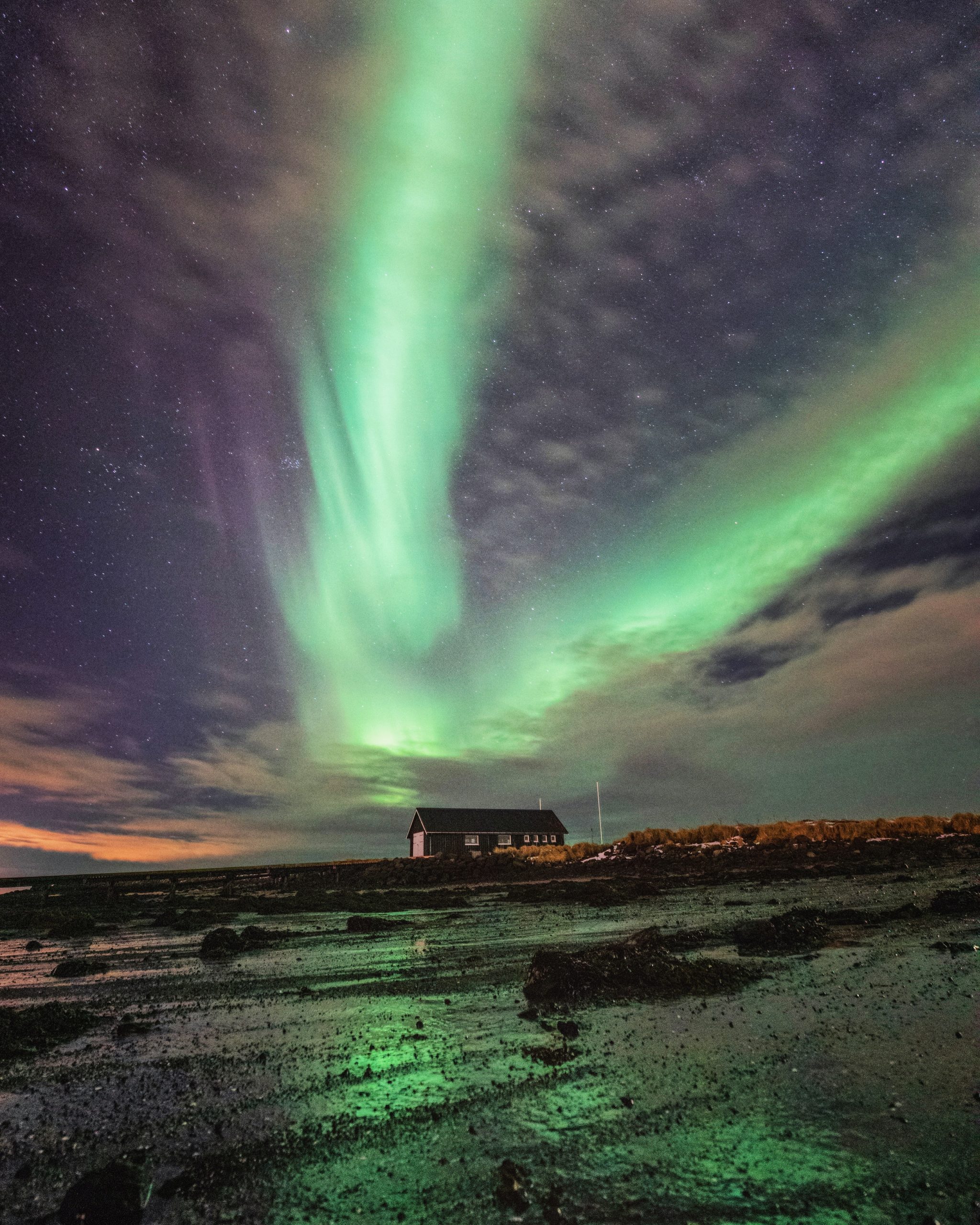
1. Seltjörn, Ægisíða, and Kirkjusandur: The City Coast
Despite Reykjavik’s cosmopolitan appearance, this is a seaside town. And with the sea, comes miles and miles of coastline. There are many places where you can’t access the water because of barriers, big rocks, or just a lack of places to stand, but these are not among them.
These three beaches represent only a fraction of the accessible coast, but they are gorgeous hideaways to stroll in the sunlight. (Or the moonlight, if you’re keeping an eye out and watching the tide.) If you’re enjoying a walk on the seafront paths, you can find Seltjörn and Kirkjusandur at either end of it.
Kirkjusandur is the closer beach to the city center, and like many city spots, depending on the tide it may or may not be there when you arrive! It is a good reminder that despite our concrete home, we are never too far from nature in black sand beach Iceland.
If you find yourself down by Grótta, you will have plenty of time to enjoy Seltjörn. The home of one of Reykjavik’s most notable lighthouses, a nature reserve, and a beloved aurora watching spot- this entire area feels lightyears removed from the hustle and bustle of the city just behind it.
And if you find yourself in Reykjavik’s cozy Vesturbær neighborhood, you can enjoy a walk down Ægisíða. An area of trails and recreation, Ægisíða is a tiny stretch of shore dotted with fisherman’s huts and reminders of a time when a day’s work was a good catch and a small boat.
On a clear day, you can see all the way to Reykjanes from this spot. There are many tiny beaches in the city, some of them with no name at all.
They are all different windows into what life used to be like, with different gifts like sea glass, urchin shells, and long strands of luminous seaweed decorating their shores. And if you’re careful, each one of them is a glorious place to watch for northern lights.
2. The world-famous Diamond Beach, also known as Breiðamerkursandur
When reading about black sand beach Iceland, it’s hard to miss the glory of Diamond Beach. A small piece of the larger Breiðamerkursandur coastline, this is a popular spot. Though it’s a bit of a drive from the capital this is the home of the Jökulsárlón glacial lagoon, and it is from there that the diamonds are provided.
This area is fed by the glacier Vatnajökull, which is so big that pieces of it have their own names. This part of the glacier is called Breiðamerkurjökull. As pieces of ice calve off of the glacier, they fall into the Jökulsárlón lagoon.
From here they travel out to sea, sometimes finding themselves festooned upon the beach there. These enormous chunks of ice bob up and down in the waves, heavy when they’re on the shore, but light as air when they’re being thrown about by the waves.
If you’re visiting black sand beach Iceland- you simply cannot miss a night spent among these titans. Black sand, chunks of ice as big as a man, and the lights coming down to dance on the lagoon.
3. Reynisfjara: The postcard beach
A trip to black sand beach Iceland can’t happen without a stop on Reynisfjara. Charting as one of Iceland’s most dangerous beaches due to strong currents and sneaker waves, this beach in front of Vík has been featured in countless films and television shows.
Instantly recognized by its huge basalt caves, rock stacks, and the Dyrhólaey promontory. Iceland’s south coast is one long stretch of beaches and sand deserts. Many of these formed because of powerful volcanic eruptions and the glacial outburst floods (or jökulhlaup) that they created.
Reynisfjara is a great spot for grabbing a bite to eat or staying the night. If you plan to aurora hunt from here, make sure to keep a safe distance from the water. This beach is not staffed and getting caught in a sneaker wave can be deadly.
Fortunately, the town is right up on the beach, and you can watch the aurora from a cozy little bench among the dunes, while you listen to the crashing of the big waves on one of the most famous spots in all of black sand beach Iceland.
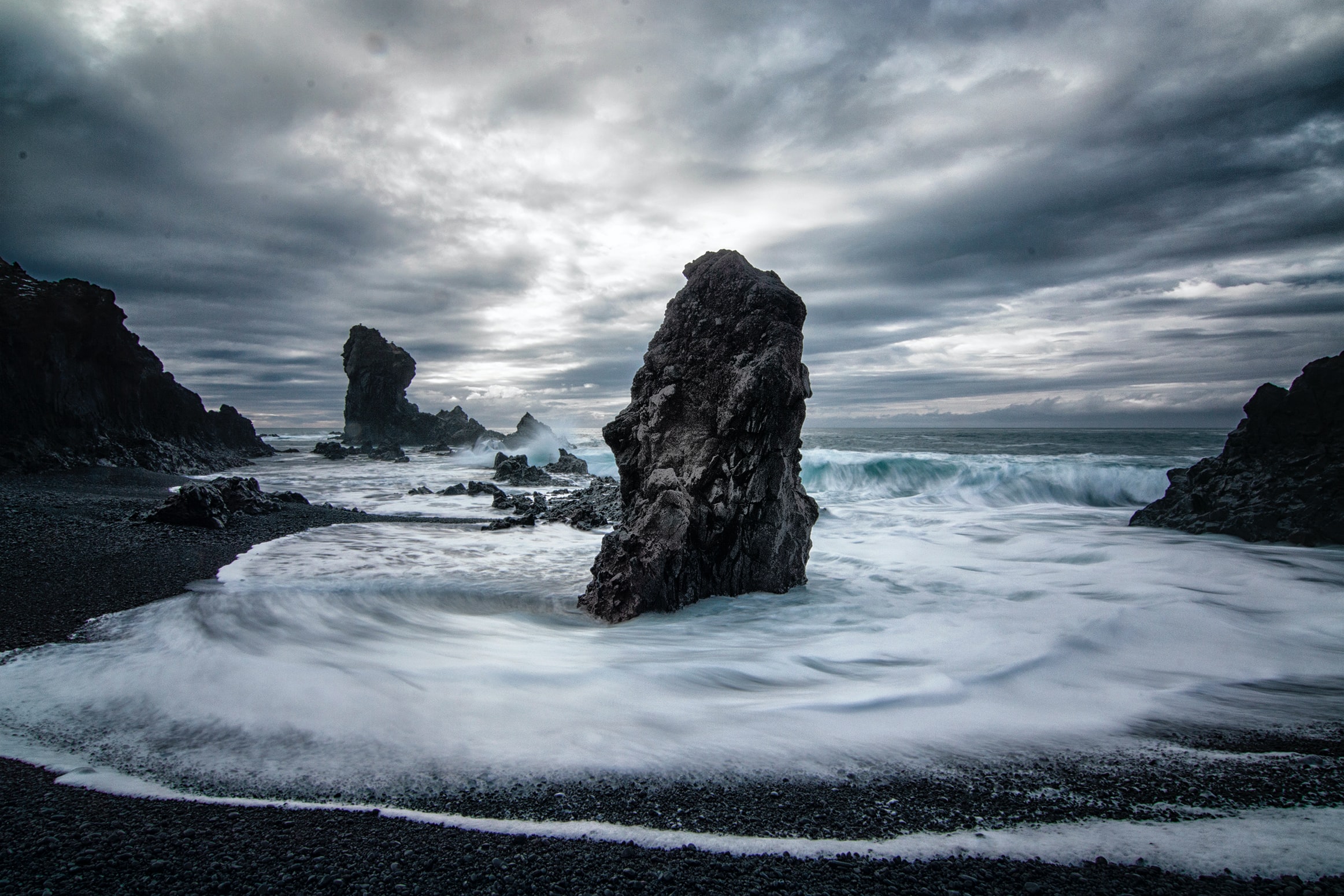
4. Djúpalónssandur at the edge of the world
If you find yourself in Snæfellsnes at the foot of another famous glacier, you must certainly make a stop at Djúpalónssandur. This is a place of many curiosities and treasures in black sand beach Iceland, so tread carefully here.
Located at the edge of the Snæfellsnes peninsula, you’ll find that the sand is hidden under a layer of polished black pebbled. These are Djúpalónsperlur, or the “Pearls of Djúpalón”.
They are protected, and so are the twisted pieces of metal that rest on top of them. These are pieces of the British trawler the Epine GY7, and they rest on this beach in memory of the men that lost their lives in a blizzard there.
This is only one of many stories on this beach, as it used to be an epicenter of activity when fishing was a smaller industry in the hands of the people.
Nearly all of the rock formations, springs, and sea stacks have names and stories, and tales of being elven structures or frozen trolls who saw the daylight. You could spend weeks in these coves learning the history of each mark in the land.
If you’re a history buff or a story lover in black sand beach Iceland, make sure to grab some literature about this area, and leave nothing but footprints in the sand behind you. This is a hallowed place of memories gone by, and a protected zone.
Not to mention, a remote area with similar wave patterns to Reynisfjara. Enjoy the aurora from a safe distance, and be respectful of the different souls that may be watching with you.
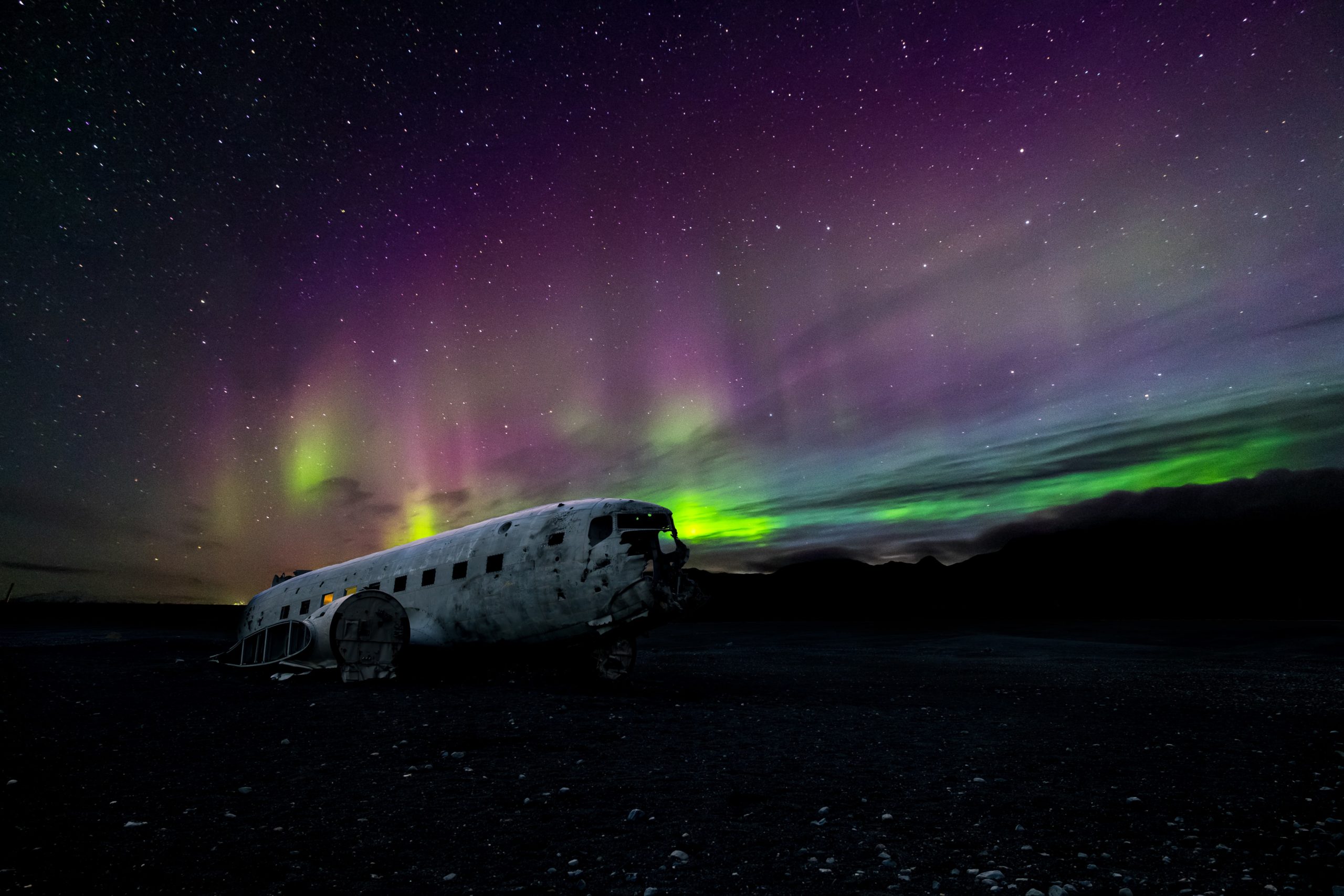
5. Solheimasandur and the plane wreck
There are a lot of beaches in black sand beach Iceland, but this is a special one. A smaller part of the big stretch of the long southern coast, Solheimasandur is another creation of volcanic eruptions creating glacial outburst floods, and the sand flats of this area are vast.
Because of its volcanic history, Solheimasandur is not home to any villages or large settlements. It is, however, home to the US Navy DC-3 plane wreck, a landmark sought by photographers and curiosity seekers alike.
In 1973 due to a fueling problem, this plane crash-landed here on the sand. All parties involved survived, and walked away from this impromptu landing in one piece, so it is not truly a memorial piece.
Getting to the wreck takes a bit of a walk, but it’s worth it to gaze upon this strange visitor among the sands. This is a truly desolate place, so take caution if you are visiting here in the nighttime or the winter season.
It is good to check ahead on the weather, as the sand wastes are disorienting and visitors in the past have gotten lost here. With little to nowhere to hide, it is possible to risk exposure and it is unlikely that you will come across much help.
Though this is a popular northern light photo opportunity, look out for your safety first. Those airmen walked away from this wreck, and in order to enjoy more of black sand beach Iceland, so must you.
6. Catch a wave on Thorli Beach
The Reykjanes peninsula is known for its big, consistent waves, and believe it or not, is a long time favorite of arctic surfers. Thorli is a fairly advanced spot near the town of Þorlákshöfn (Thorlákshöfn) and it sports an unusual mix of both black and yellow sands.
Beloved by local and visiting surfers, Thorli is a long crescent of sand at the heart of Iceland’s surfing community. And though there are different waves to catch throughout the year, the high point for big surf is right smack in the middle of aurora season.
If you’re a seasoned surfer, this is the beach for you. (And if you’re an aurora hunter- the best of both worlds!)
7. Stokksnes the Mirror Beach
Stokksnes is a photographer’s dream. At the eastern edge of Iceland lies the long flat shore of Stokksnes, and the jagged dragon’s-teeth peaks of Vestrahorn. Close to the town of Höfn, this area either welcomes you back to the sand deserts of the south or announces your arrival to the dramatic mountains of the east.
But before you go further either way, you should take a moment to stop at Stokksnes. This beach is wide and flat, which causes the tide to leave water behind as it recedes. This creates a shallow and incredibly reflective surface, allowing incredible reflection pictures of the mountain Vestrahorn, the surreal black dunes, and potentially, the colorful, dancing aurora.
There is a small fee to visit the beach, as it is privately owned land- but it is more than worth it to help preserve the majesty of this place.
8. Everybody’s gone surfin’...In Sandvík and Grindavík
For those who aren’t ready to catch a big Thorli wave, there is the slightly more forgiving beach break of Sandvík, where many locals catch their first waves. Most of Iceland’s surfing beaches are reef or point breaks, which means you’ll be dodging a lot of sharp volcanic rocks, and maybe some sea urchins.
For those who are only here to watch auroras, you are in great company. The peninsula of Reykjanes boasts long coasts of lonely beaches, and many friendly seaside towns to pick up snacks in.
(Including Grindavík, one of Iceland’s happiest towns! And the nearby neighbor of our recent fissure volcano, Fagradalsfjall.) In black sand beach Iceland, you can’t go wrong with cruising quiet Reykjanes.
9. The Seal Circle at Vatnsnes
You’ve heard of the Golden Circle, and even the Diamond Circle- but what about the Seal Circle? The 711 road around the peninsula of Vatnsnes is a great spot for black sand, seals, and auroras. If you’re lucky, you can spot harbour seals, grey seals, harp seals, bearded seals, hooded seals, ringed seals, and maybe even a rare walrus or two!
The Illugastaðir beaches on the western side of the peninsula have been a notable home for them for many years, but these creatures can be spied year round throughout the peninsula. It is even possible to see them on the eastern side basking near famous Hvítserkur, a popular aurora photo spot.
You can stop in Hvammstangi to visit the Icelandic Seal Center to learn more about these curious residents, but don’t forget to keep your eyes on the sky. This is a popular aurora spot with low light pollution and many beloved foreground landmarks for great aurora shots.
10. Ólafsfjörður on the Arctic Coast Way
North Iceland is a magical place punctuated by a more extreme climate, big mountains, and beautiful small towns throughout the fjords. There is a lot of history and tradition here, and even though it’s not by much- you are that much closer to the pole when you visit.
Ólafsfjörður is located in between the shark fishing village of Siglufjörður in the north, and Dalvík just below- home to world class skiing and “The Great Fish Day” festival (Fiskidagurinn mikli). This is another great peninsula to explore, and you guessed it, every single one of these towns boasts its own piece of black sand beach Iceland.
These are long, picturesque coastlines framed in by tall mountains and sweeping fjord views out to sea. They have long histories and unique cultures, even from village to village. And just like their skiing, when it comes to auroras- they are unparalleled.
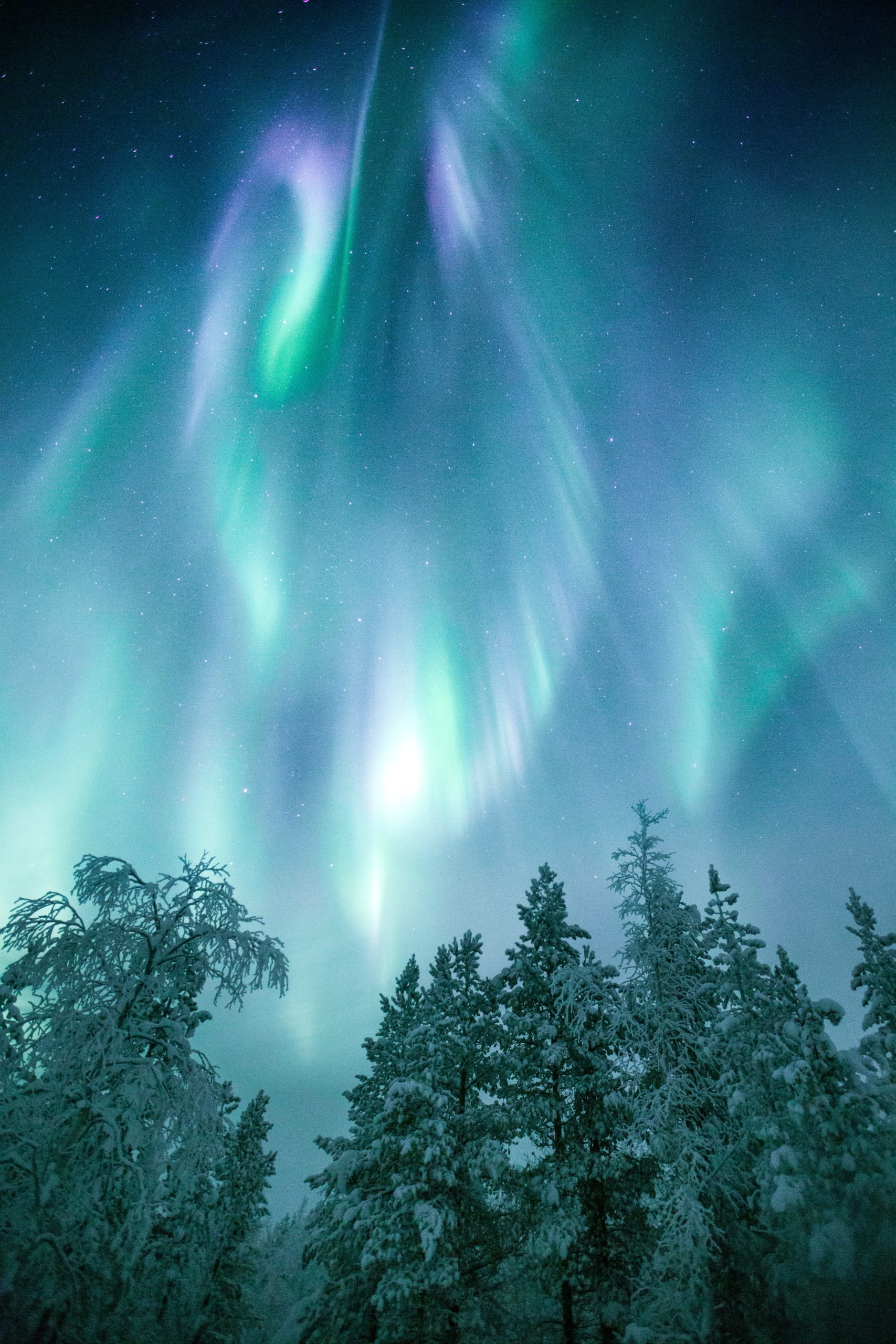
Top 7 aurora trails: the best hiking in Iceland near Reykjavik
Are you in the capital looking for auroras? Here are some of our favorite paths for northern light discoveries.
Looking for the best hiking in Iceland near Reykjavik? Well, cities aren’t usually known for their outdoor activities, but Reykjavik is the epicenter of wild adventure! You can find countless things to do here, and nearly all of them pick up in town.
But what about hiking? Going for a stroll while you search the skies is a great way to get some fresh air and increase your chances away from the light pollution. Here are a few of our favorite local haunts- how many of these have you tried?
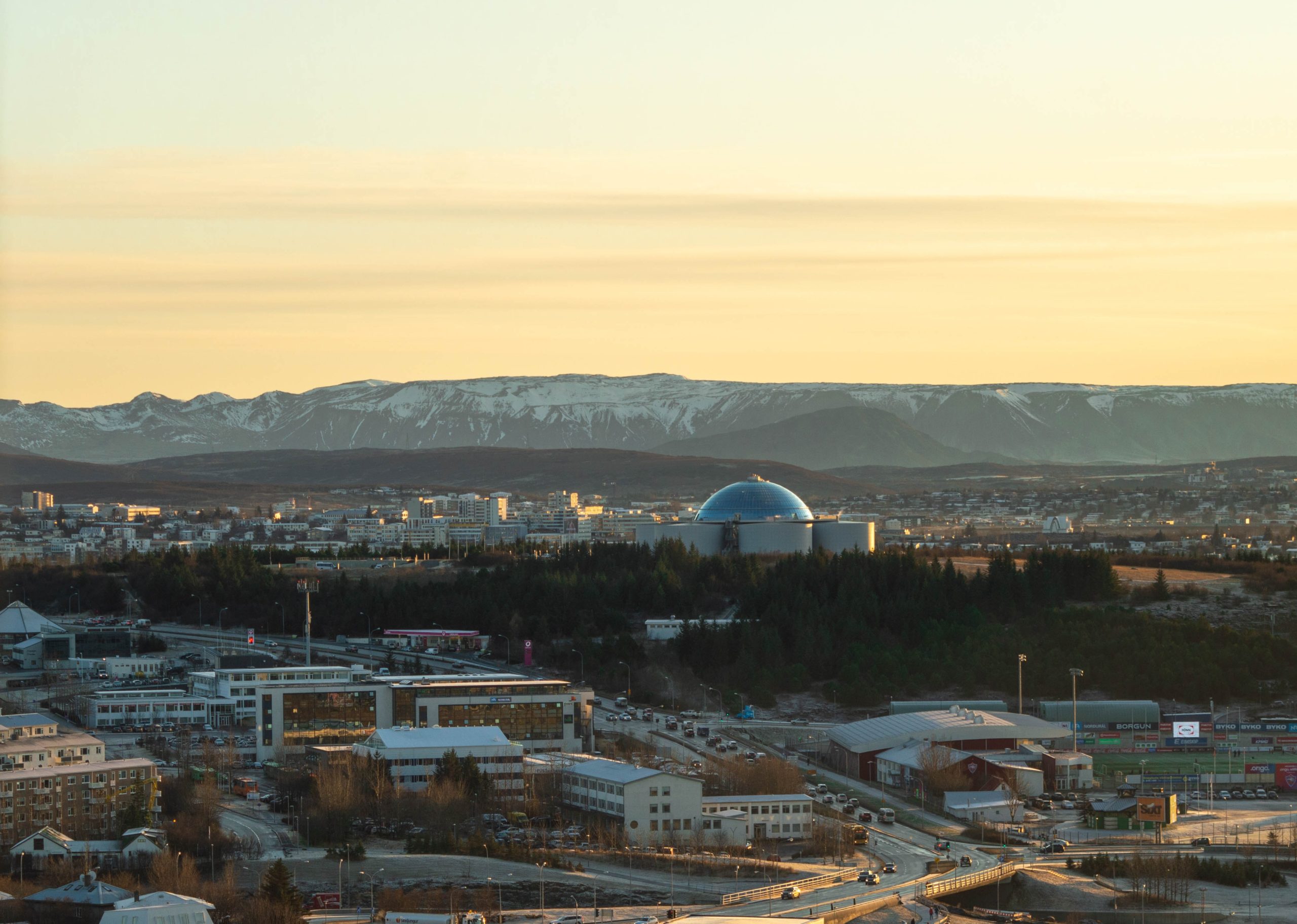
1. Öskjuhlíð: Head to the hills!
Chances are you’ve seen the glistening dome of Perlan from your window on your way into town. Or perhaps it already caught your eye on a walk around town? It is on top of one of our highest hills, after all. Perlan rests on top of an area called Öskjuhlíð.
This area is home to some of the best hiking in Iceland near Reykjavik, because not only is it directly in Reykjavik but it’s filled with charming forest paths. It’s also next to the Nauthólsvík beach, another great place to stroll or swim. (Don’t worry, it’s heated! Just.. Maybe come back after aurora season for this one.)
There are multiple trails to enjoy in Öskjuhlíð, and if you make it to the top you’re met with a sweeping view of the sparkling town below you. (You are still within the grip of city light pollution here, but on a good night, you can see past it. And it makes for great photos!)
Easily accessible on foot or by public transport from most of town, the paths here lead on to many of our other favorite Reyjavik walks- including the coastal road to the Grótta lighthouse, Fossvogur, and Elliðaárdalur, all the way down to the red rocks of Heiðmörk. No matter what time you visit, a walk in Reykjavik’s local forest is a beautiful experience.
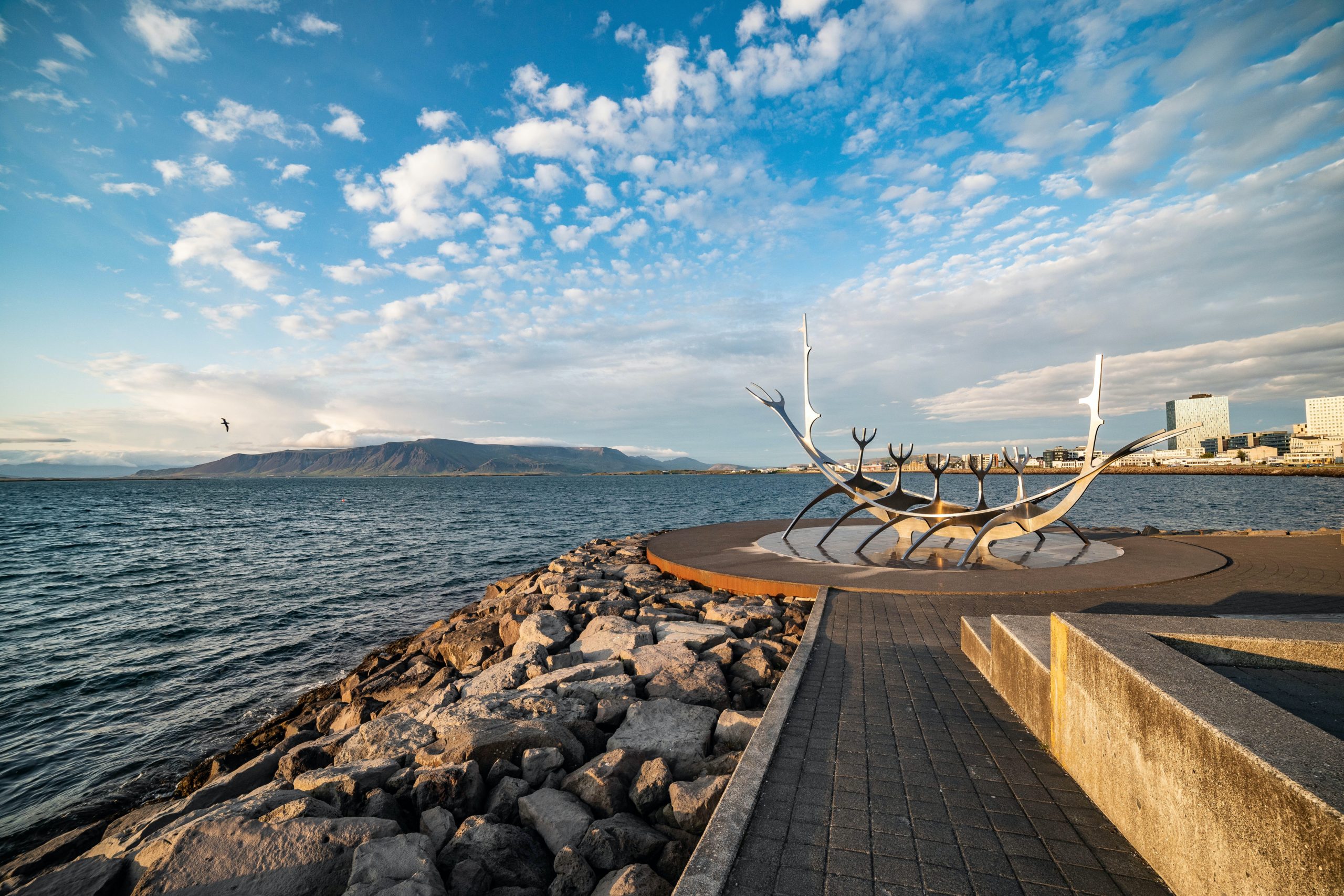
2. The Coastline path from Hafnarfjörður to Mosfellsbær
The wide arms of the capital region don’t stop at Reykjavik. They include the towns of Hafnarfjörður in the south and Mosfellsbær in the north. Nestled along the jagged coast, you can walk to and from all of these places using the Blá lykilleið (Blue main path), also known as the Strandleið (Coastline) walk.
You can ride or bike all the way to either end. While it might take you a while to complete, this connection gives you a huge amount of coastal path to tread. Depending on the cloud cover, you’ll find people populating the Reykjavik half of it often as they set cameras up for some aurora watching.
Looking towards Esja gives you a dark northerly view over the water, and helps to cancel out some of the city light. The further away from town that you go, the darker it’s likely to get- so an evening walk on these fine paved city paths may be a great spot for you.
You can see the lay of the walk here, and look at all the other options! This might not be the first thing you think of when you envision trekking, but after you’ve enjoyed it once you’ll see why we’re calling it some of the best hiking in Iceland near Reykjavik.

3. The red hills of Heiðmörk
The nature reserve of Heiðmörk is a constantly evolving treasure of the city, and arguably some of the best hiking in Iceland near Reykjavik. Heiðmörk is a large area that actually encompasses some of our other favorite spots, so you’ll want to check out a map to see all of it quickly.
The city has been busy in Heiðmörk over recent years and has maintained and created multiple trails, recreation areas, and even some camping grounds. And the wonders here are countless.
From its moss-covered lava fields to the nearly Martian Rauðhólar pseudocraters, to the Christmas tree forest at Holmsheiði, this is an area that you’ll need a lot of time to discover. Because of its location on the edge of town, Heiðmörk is an ideal tangle of trails that you can walk in search of the lights.
The paths here are well cared for and fairly simple difficulty wise, so it’s a good spot for adventurers of varying abilities. It’s also accessible by local bus! But before you go, double check the schedule to make sure you know the time of the last ride out. It’s a long walk back into the city center!
4. Elliðaárdalur: A city oasis
While hunting for the best hiking in Iceland near Reykjavik, you are likely to hear about the Elliðaárdalur valley. Elliðaárdalur is a lush green space tucked away in the city, cradling the protected Elliðaár river.
After walking the concrete streets and paths of Reykjavik, Elliðaárdalur is like a rare portal into a fairy world. Punctuated by recreational trails and tiny waterfalls, Elliðaárdalur is home to a surprising amount of wildlife.
Watch out for all the mink and rabbits who call this place home, as you will likely see some on your journey. (And keep an eye out for salmon! They populate this crystal clear river, making it an important fishing spot close to town.)
This area is connected to many other green spaces and is great for pedestrian adventuring. You can link up to other walking and cyclings paths through Fossvogsdalur, and even as far as Heiðmörk.
Elliðaárdalur borders many popular Reykjavik neighborhoods and is a great spot to visit if you happen to be spending most of your time in town, but still want to get a glimpse of Icelandic nature.
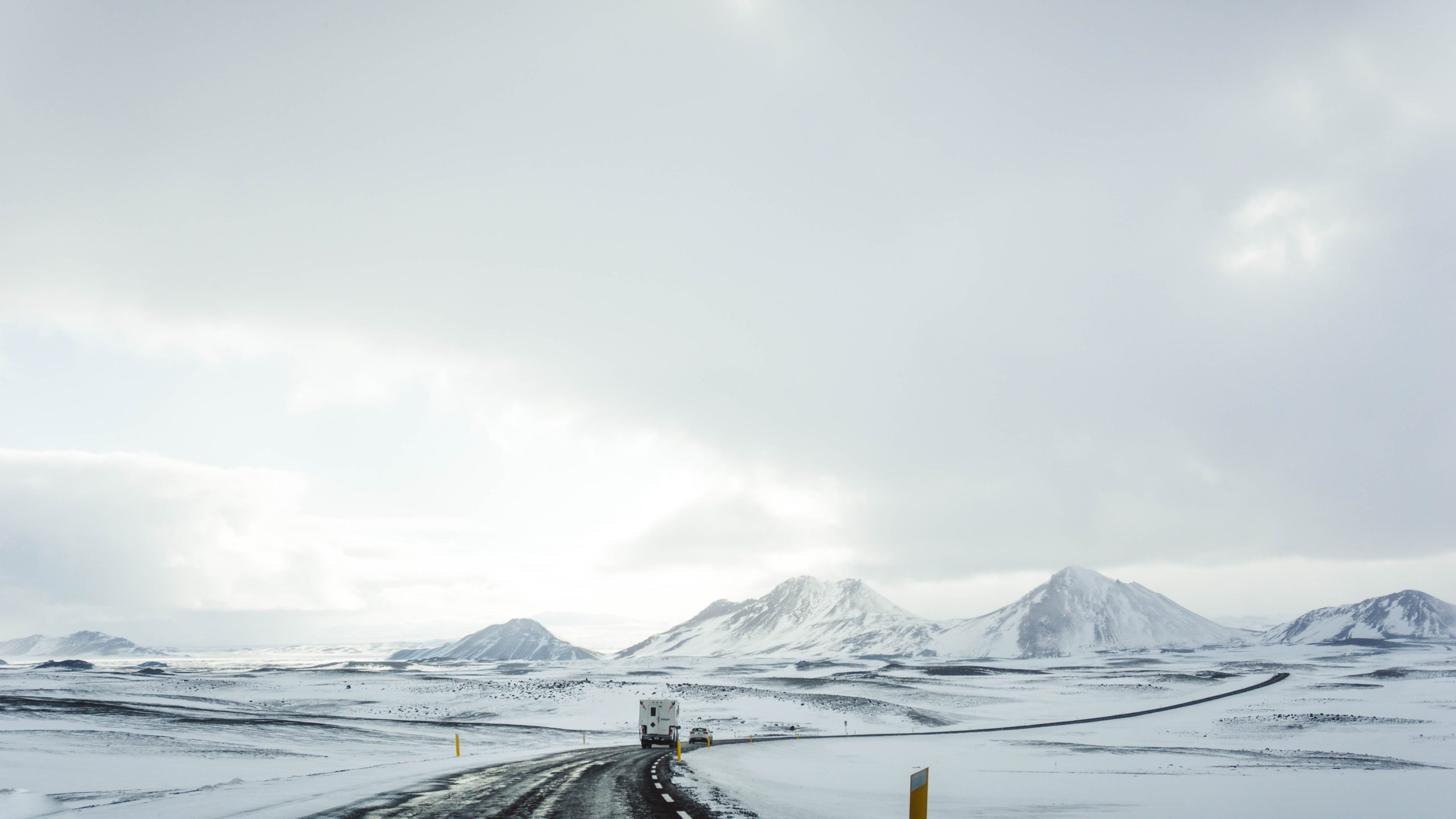
5. Vífilsfell and the Blue Mounatins
Vífilsfell is a possible option for those that have wheels and are used to winter trekking. There are many mountain paths that are popular hiking in the capital area that we’ve left off of this list, primarily because they are maybe not the easiest options for nighttime winter adventuring.
Vífilsfell on the other hand is a gorgeous choice if you’re surefooted and looking for some big views outside of the immediate grasp of town. Nestled within the Bláfjöll (Blue Mountains), this area is popular for trekkers and winter sport enthusiasts alike.
The road up to the Bláfjöll ski area passes right by, and other trails in the area populate the zone as well. This is a quiet part of town just off the route 1 highway, so you may want to save this trek for a time that you have access to a vehicle.
And don’t fret! If you’re not feeling up to a mountain hike, this is a great spot just for hanging out or checking out the slopes. The best hiking in Iceland near Reykjavik doesn’t even require hiking, you can see it just fine from the parking lot at Litla Kaffistofan across the street.
Even if you only drive through Bláfjöll on your aurora hunt, it’s worth it just to see the sudden majesty of snow-covered volcanic peaks rising out of the earth right after exiting the glowing city. The peace here is vast, colorful, and lonely- and a great first look at the wild country beyond the manicured city streets.
6. Grafarholt and Úlfarsárdalur in the shadow of Úlfar’s Mountain
Another hidden-away escape are the vast meadows of Grafarholt and Úlfarsárdalur, peacefully wrapped around the mountain Úlfarsfell. This is a residential area and outdoor recreational spot just north of the quiet neighborhood of Grafarholt.
In the summer, this place is absolutely flush with purple lupin flowers and gentle meadow grasses- at least, in between the sprawling lava fields. Curled around the river Úlfarsá, this is another place where you’ll find copious bird life and salmon. (And maybe even a few horses! Many of them call this area home.)
The trails in this area are family-friendly and accessible, and you can access this zone via public transport. If you’re looking for a bit more of a challenge, Úlfarsfell is likely one of the more reasonable winter mountain hikes available. (..You guessed it! We’re going so far as to call it one of the best hiking in Iceland near Reykjavik!)
In all seriousness, the highest point on Úlfarsfell is around 307 m. (1007 ft.) and is accessible via a fairly even and wide path. There are great views of Reykjavik and the sea from the summit, and it only takes around 2.5 hours to complete. As far as vistas go, this is a great place to catch the lights, and you are likely to have the whole thing to yourself.
TIP: This mountain is near Esja, one of Reykjavik’s most famous landmarks. It goes without saying that Esja is some of the best hiking in Iceland near Reykjavik, but it is also some of the most challenging.
While these paths are steep in good conditions, braving them at night in high winter is not recommended for most trekkers. You can try for an Esja hike in the autumn, but otherwise, seeing her from nearby Úlfarsfell is a great compromise.
7. Viðey: The island’s island
Looking for an island getaway from your island getaway? You’ll be hard-pressed to find a closer option than nearby Viðey. Once the home of a monastery, Viðey is the home of Yoko Ono’s Imagine Peace Tower, and countless trails.
There is a lot of history on this little island, and some of the oldest rock in the Reykjavik area. In fact, nearly 2 million years ago, it was a volcano! (Considering where we are, this may not come as much of a surprise to you.)
These days, however, we have to say it’s some of the best hiking in Iceland near Reykjavik, not to mention one of the most exclusive city spots to watch the northern lights. But how does one get there?
In the summertime, the ferry runs pretty regularly. But in the wintertime, the ferry only runs from the harbor Skarfabakki on weekends. There are however aurora boat tours available that can land on Viðey for a portion of the tour, giving you a chance to grab some solid ground to plant your tripod in for a lucky northern lights shot.
However you manage to get there, hopefully, you’ll get to take advantage of some of these historical trails. This place has seen and housed invaders, paupers, politicians, farmers, and more puffins than you’d expect. But today, it is protected and allowed to finally thrive. A true shoo-in for the best hiking in Iceland near Reykjavik.
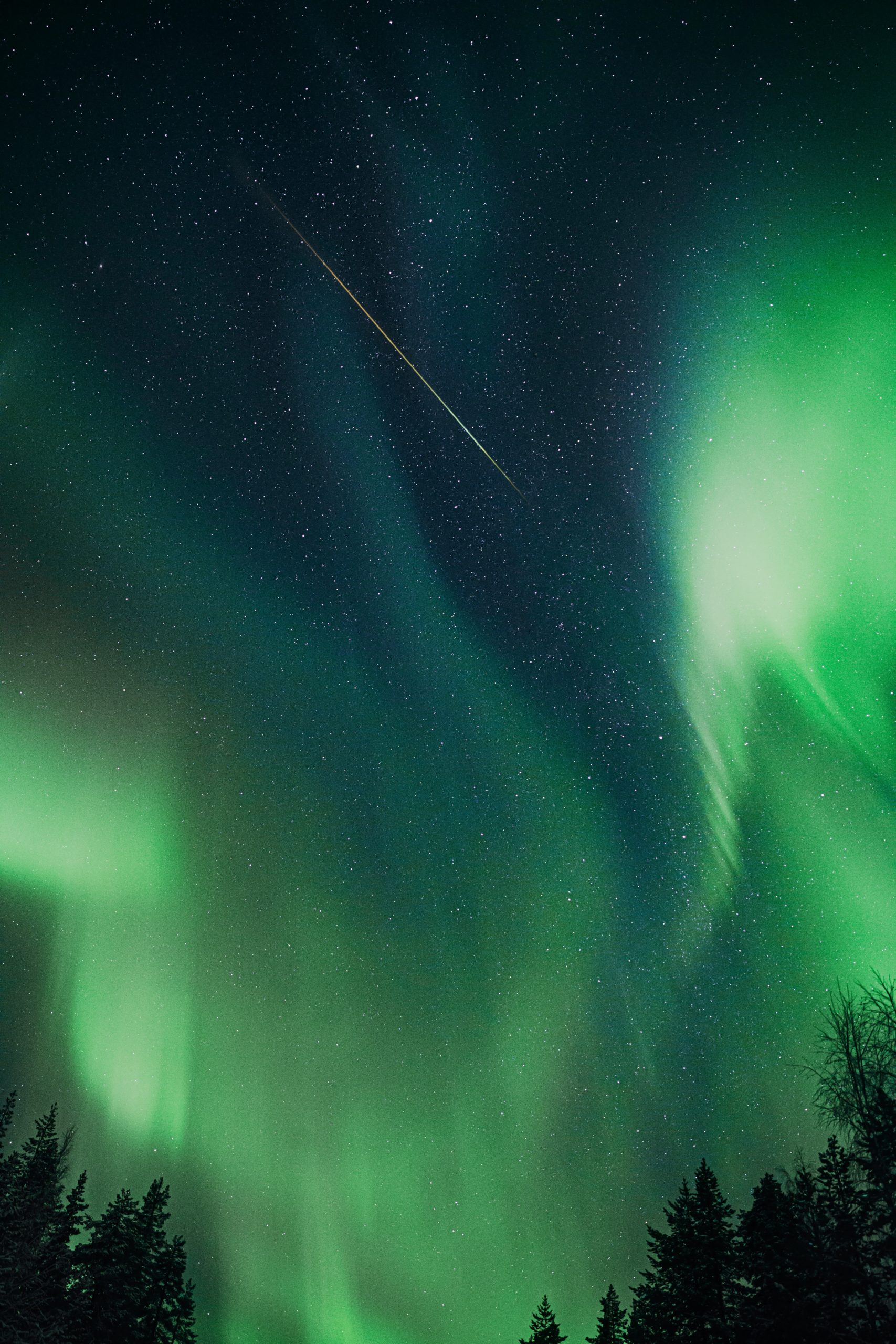
Beautiful Northern Lights...and 10 important safety tips to remember while you look for them
Do you know how to keep safe while you chase the beautiful northern lights?
We all know how beautiful northern lights are, but what about how to stay safe while we look for them?

1. Dress for the hunt
Dressing in layers is key for surviving Icelandic weather. Because of the Gulfstream, the climate in Iceland can be surprisingly moderate- but because of its North Atlantic location, that moderate climate can include some quickly changing weather conditions. In order to manage the unpredictability of weather or temperature, you might need a few layers of clothing.
This can help you regulate between inside and outside temperatures quickly, and can give you that extra warmth you might need to stay outside hunting just a little bit longer. The temperature might not be astronomical, but it can add up if you’re out for a few hours.
If you can swing it, try adding a waterproof layer to your collection. This could be waterproof pants for maneuvering in snow or even a waterproof top layer. In the autumn months when there’s a lot of rain, this kind of coverage could be key to enjoying the evening.
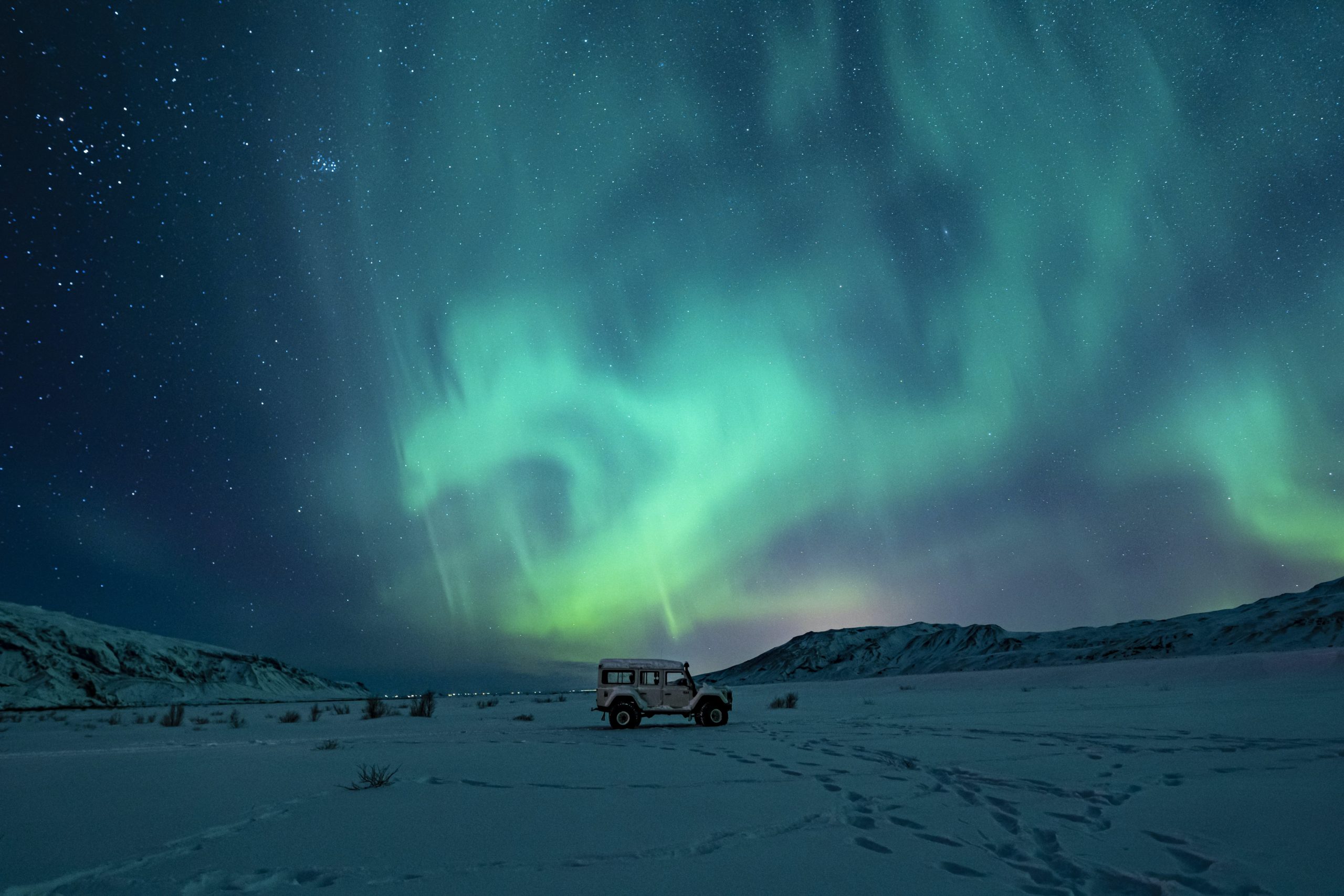
2. Be careful where (and how) you park your vehicle
The first point of this tip is to never park on the road. We don’t need to elaborate on that, because no version of it should be on the table. The roads in Iceland are typically narrow and do not always have a shoulder, so it is not recommended to attempt a pullover for the sake of those beautiful northern lights.
Many of these roads are somewhat raised and have a sloped edge that cannot always be easily seen in the dark. This and other obstacles like lava fields can be easily hidden by accumulated snowfall.
Nighttime driving is difficult under the best conditions, so keeping an eye on the weather, visibility, and the other speedy travelers that you’re sharing the road with is enough pressure already.
If you’ve seen the lights from your window, don’t panic! Though it may be a sacrifice for the driver, the passengers in your car can still snap a shot or two while you search for a safe place to pull over. This could be a designated observation point, a parking lot, a safe place off of the main road.
Try to be respectful of private property, and avoid opening any gates that you may come across. These gates are often keeping livestock from straying onto the road, which is a good reminder for us as well. The beautiful northern lights may be calling… But never let them lead you into the road.
3. Try reflectors!
If you’re local, you probably already have one somewhere on your person. They can be painted onto your clothes, clipped to your zipper, or even taped onto your gear. Reflectors come in a variety of applications, and there’s one for everyone.
Iceland is dark for a large part of the year (which is why we get to see the beautiful northern lights), so reflectors are a popular accessory here. They can help you maintain some visibility in the dark, which could help a group leader to keep track of you, or help a motorist see you from further away.
If you don’t have one, these can often be picked up in gas stations, outdoor gear shops, and even souvenir shops. Look for a fun one that you can use as a zipper pull!
4. Tell someone where you're headed
This is a safety tip that you should use no matter where in the world you’re adventuring! If you can’t tell a friend where you’re going (because they’re coming too!), you can submit a travel plan to websites like SafeTravel.is.
If you’re headed out into the wilds looking for beautiful northern lights, you can also rent a Personal Location Beacon (PLB) from them as well, should you need it. These types of precautions may seem extreme, but it is always good to be prepared.
Simple trips can meet with surprise conditions, and it’s better to not need your extra planning than to wish you’d done it.
5. Check the conditions before you go
We may have mentioned this a few times already, but conditions in Iceland change fast. It’s hard to fully understand the weight of that statement until you’ve experienced it a few times, so this might have to be a point that you deposit some trust on.
Iceland’s lonely location in the North Atlantic means that we can be at the receiving end of low-pressure systems, incredible winds, and swiftly moving storms. There’s a lot of precipitation, and lots of domestic concerns like seismic activity, avalanches, and more.
You can’t predict all of it, but you can educate yourself and stay on top of the predictions by checking sites like vedur.is and safetravel.is. These websites can not only keep you safe, but they can also make you aware of new alerts and help you find those beautiful northern lights that you’re after.
Know the season that you’re visiting in, and be aware of the types of weather that most commonly happen within them. Being ready can help you decide how to proceed in a dicey situation.
6. Learn how to walk on ice
This is less of a requirement and more of a reminder to be aware of your surroundings. In the colder months, the temperature can fluctuate throughout the day. This means that Iceland is a great spot for producing ice. (Surprising, I know.)
If there’s one thing people usually aren’t doing when hunting the beautiful northern lights, it’s usually looking at the ground in the dark. Falling on ice is a big concern in these colder months, and it goes without saying that it’s an important safety tip to remember.
You can stay upright by looking where you’re going, paying attention to how you’re walking, and protecting yourself with gear. This can mean smaller steps, keeping your weight centered above your feet (less diagonal weight-bearing with long strokes or leaning), and maybe trying out a pair of shoe spikes.
Shops throughout Iceland carry different shoe attachments for this purpose, but you will likely find them at home too. When in doubt, however, look at penguins! They seem to have mastered the technique with their upright shuffle.
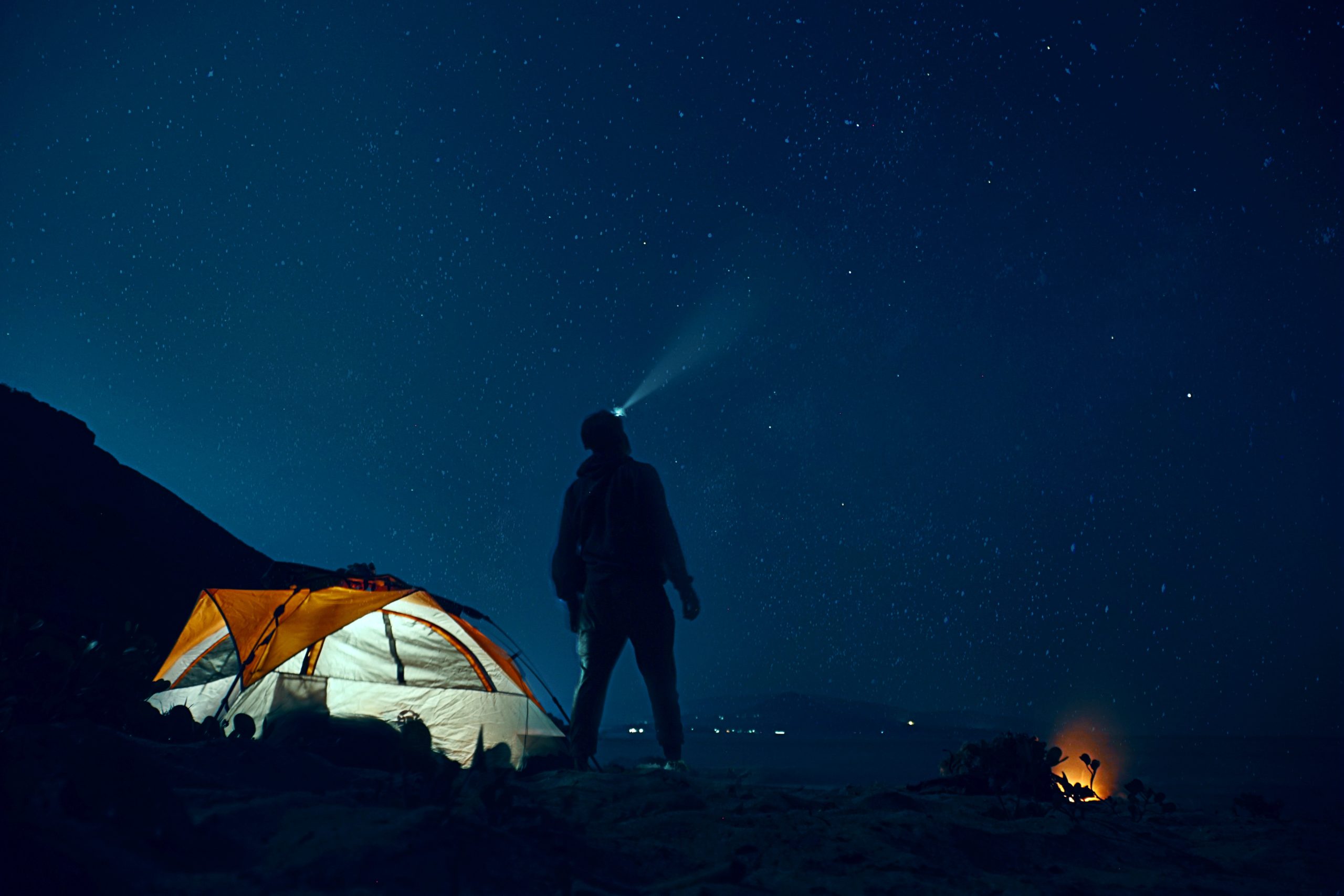
7. Bring your own light
Don’t forget your gear! Safety tips are one thing, but being well prepared is another. Depending on where you are going and what you’re doing, you will need to pack different things. Typically for nighttime activities, the biggest recommendation is a torch or headlamp.
You may also want to make sure that you have charged your communication devices and cameras, and that you are outfitted to stay warm outside. This means hand, ear, and head coverings if possible. If you are headed out into the wilds, you may want to consider a satellite phone or a Personal Location Beacon.
Organize and check all of your gear before you head out, to make sure that everything is functioning properly, and that you don’t forget anything. Oh! And don’t forget snacks! Even if you’re just out for the night, an aurora hunt is hungry work and you might not find many restaurants open after midnight.
8. Look where you're going
This is a nighttime activity, and if you’re hunting in a great spot, you will likely have some impressive dark cover, making it harder to see where you’re walking. We covered ice earlier in our list, but what about terrain? If you’ve had a chance to wander around in the daytime, you may have noticed how uneven Icelandic ground can be.
Iceland’s biome is Arctic tundra, which means that while you may not run into many trees, you will find thick brush and other low-lying grasses that can obscure variation in terrain. In many places that would be manageable.
But in Iceland, that terrain is likely to contain lava fields and rock protrusions. The ground might look flat, but watch out for holes! Like many of the simplest safety tips, this seems like one that doesn’t need to be mentioned, so let’s stay on the path, and keep it that way.
9. Beware the water's edge
Another terrain tip! (Are you starting to get the feeling that these might be linked to many avoidable accidents?) Water is a big part of Iceland’s terrain. Whether it’s the huge amount of precipitation that we get, to the frothing glacial rivers, the surrounding ocean, or the placid lakes and ponds of our inland areas.
Many of these bodies of water may look similar to others you’ve seen before, and they may be! But at least during these nighttime activities, they are best left alone. At the time of this writing, the ocean near Reykjavik was a whopping 3.1°C (37.58°F).
This temperature paired with strong currents and stormy winter weather is not safe for inexperienced swimming. There are very few places that one can swim in the ocean here, so you will not find beaches staffed with lifeguards, monitoring the waves.
A fall into one of these frigid bodies of water can be treacherous during the day, but at night it can be lethal. So while you’re keeping an eye out for ice, and looking for holes in the lava- try to keep a respectful distance from the water, and stick to hot pots.

10. Stay rested
The beautiful northern lights are only visible at night, which is usually when most of us sleep. If you’re visiting, you probably have some pretty packed days ahead of you. Sightseeing, activities, restaurants, maybe even some hiking.
It’s easy to forget to take a break when you’re hurrying to see all the things on your list. (Have you ever needed a vacation after your vacation? Tell me about it.) There’s stuff to do! Stuff to see! And tonight is a great night for auroras! It sneaks up on us.
But don’t forget to slow down and take a break, or a nap, before heading out for the night. Many visitors go from day trips to aurora hunts, and if you’re driving it can be a lot to handle.
Make sure to eat an early dinner, and take a small nap before you go, just to refresh. Being out in the elements is hard work, and sleepy night driving is a dangerous chance to take. Not to mention following all of these other tips!
Be careful with yourself. We want you to come back, for all the beautiful northern lights yet to come.
Aurora Hunter Top 10: Where is the best place to see the Northern Lights on the South Coast?
When the sky is only clear in one region, that’s where you’re headed! But once you get there, then what?
So you’re headed down south, and you want to know: “Where is the best place to see the northern lights on the South Coast?” So we’ve put our heads together and gathered up a few of our favorite spots along Iceland’s southern coast for aurora hunting. From the rare to the luxe, we’ve got one in here for everyone.
1. Gígjagjá at Hjörleifshöfði: The Yoda Cave
The south coast of Iceland is a dramatic landscape, no matter what season you visit. But if you’re looking for a spot a bit off of the beaten path to aurora watch from, look no further than the “Yoda Cave”.
The cave’s real name is Gígjagjá, but it is fondly known as “The Yoda Cave” since the entry to the shallow cave resembles a particular green individual. It is located in Hjörleifshöfði, which is an inselberg on the Mýrdalssandur plain near Vík.
Surrounded on all sides by vast black sand and seagrass flats, it is said that Hjörleifshöfði used to be an island, and the resting place of old Hjörleif himself. These days, you can drive up to it and enjoy multiple trails in its vicinity.
When inside the cave, you’ll find that the light from the outside illuminates the entry, creating a curiously familiar silhouette. Because of its shape, the cave entry is an amazing sight no matter when you visit. But imagine that shape filled with the majesty of dark sky, a million stars, and the dancing northern lights.. Not a bad spot.
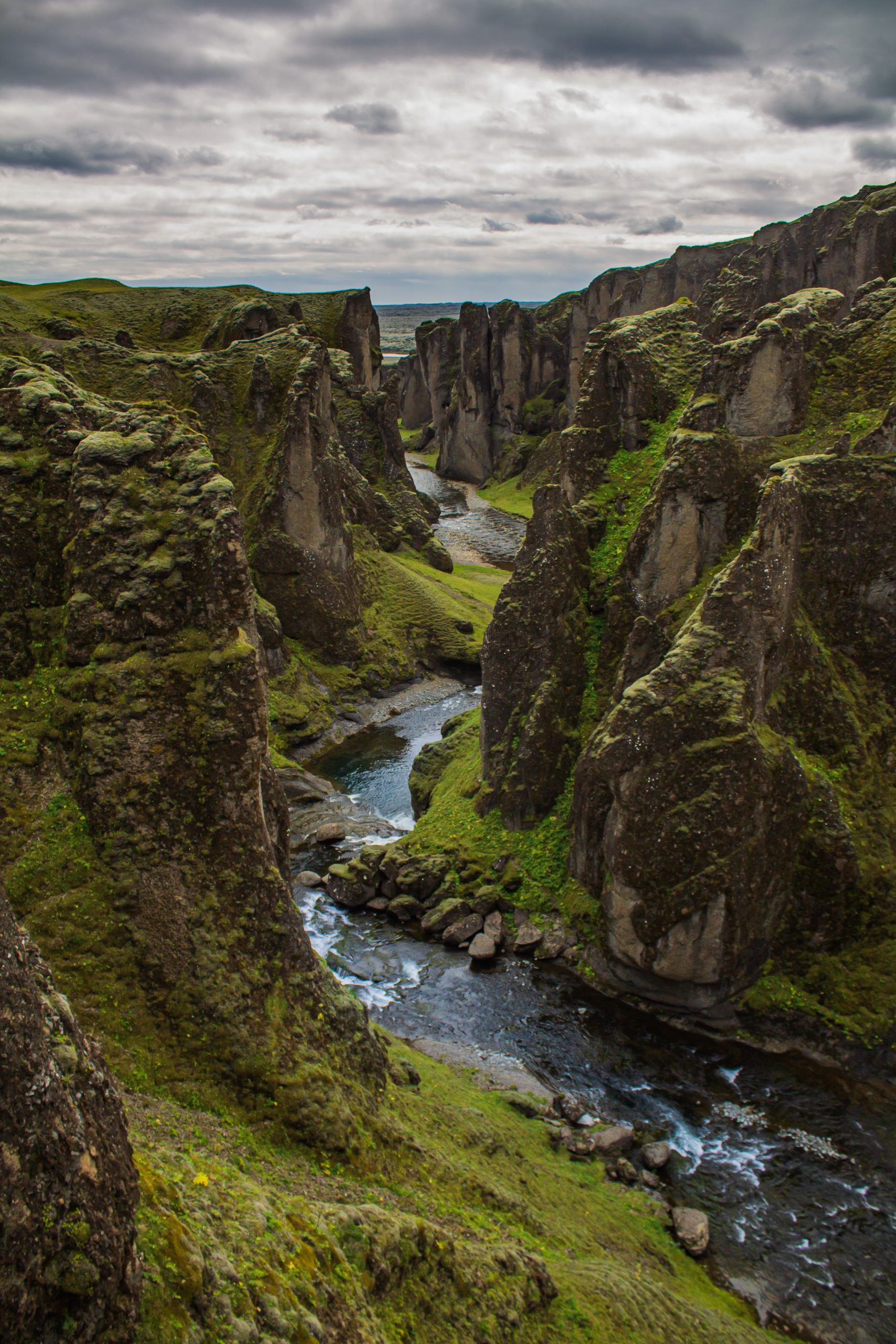
2. Fjaðrárgljúfur
At the more eastern edge of Iceland’s south coast, lies this ethereal canyon. Unlike many popular canyons, this one is not far from the main road. Right off of the village Kirkjubæjarklaustur, this canyon is nearly 2 km. long and houses the Fjaðrá river.
In good weather, the road to the canyon is accessible by all types of vehicles, and the hike along the canyon trail is easy and dry! This is key for those of us who are here to aurora hunt because unless you’re staying in Kirkjubæjarklaustur, you are probably not near a change of clothes.
The bottom of the canyon is home to an active river and a few waterfalls, not to mention protected vegetation and wildlife. Plus, the best view is on top. Fjaðrárgljúfur is a landscape photographer’s dream, so make sure you’re in the right place when the show starts!
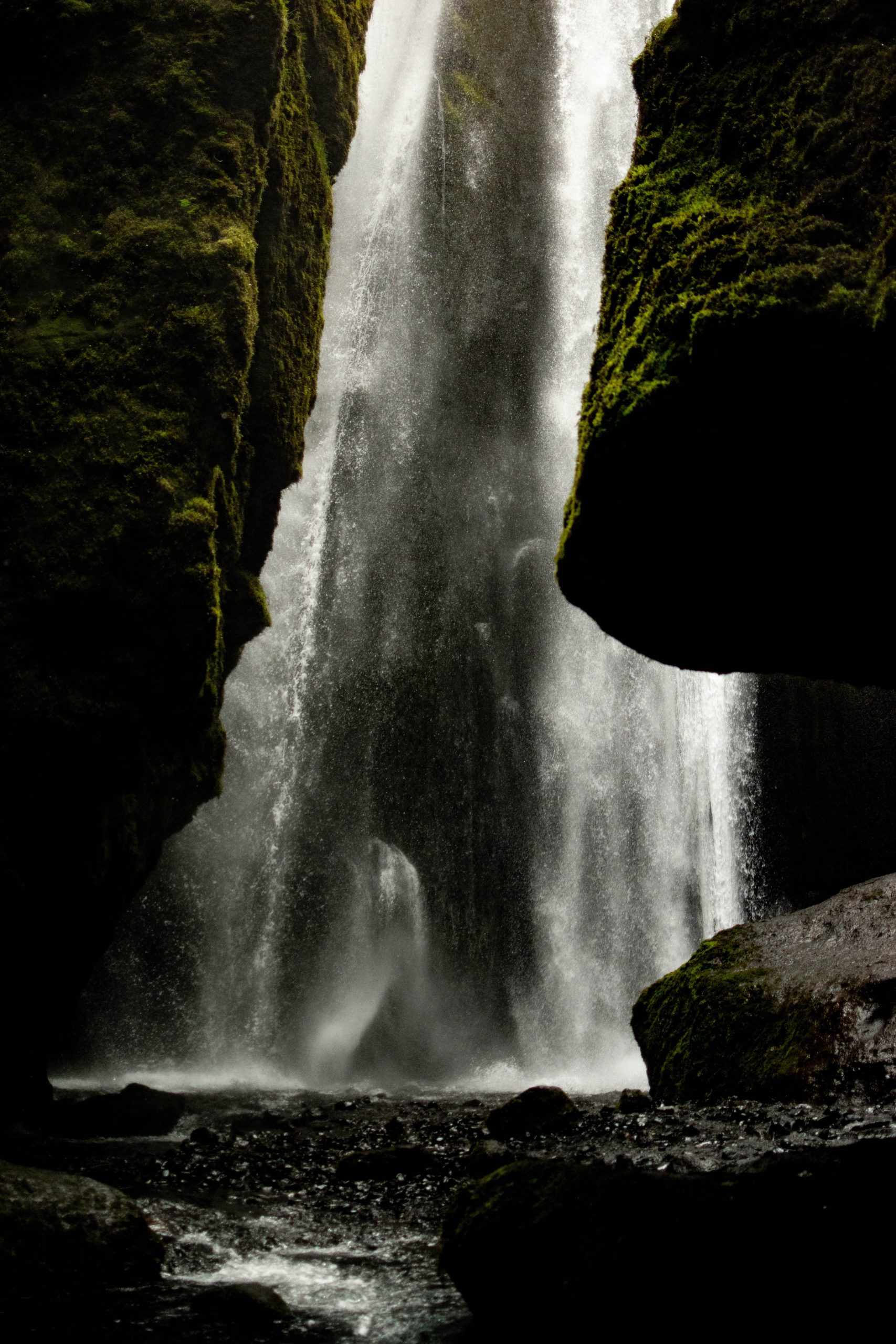
3. Gljúfrabúi & Seljalandsfoss
You probably already know Seljalandsfoss, but do you know its neighbor Gljúfrabúi? After walking behind the towering falls of Seljalandsfoss- an incredible spot in its own right – there’s a little known secret just a stone’s throw away.
Hidden in the same massive rock shelf that feeds Seljalandsfoss, this little waterfall is a hidden treasure of the south coast. When you approach, you see the stream of water first. Further down, you can see the falls peeking through the walls of the canyon. To access them up close, one must walk down the stream through the “halls” of rock.
Depending on the time of year and the conditions at the time of your visit, you may get wet! But once you make your way through the tiny canyon, you empty out into a natural room in the rock, where you can see the waterfall up close, and the sky up above.
Imagine seeing the aurora here, in Gljúfrabúi’s hidden chamber, with the mist of its spray all around. What’s the best place to see the Northern Lights on the South Coast? This is definitely one of them!
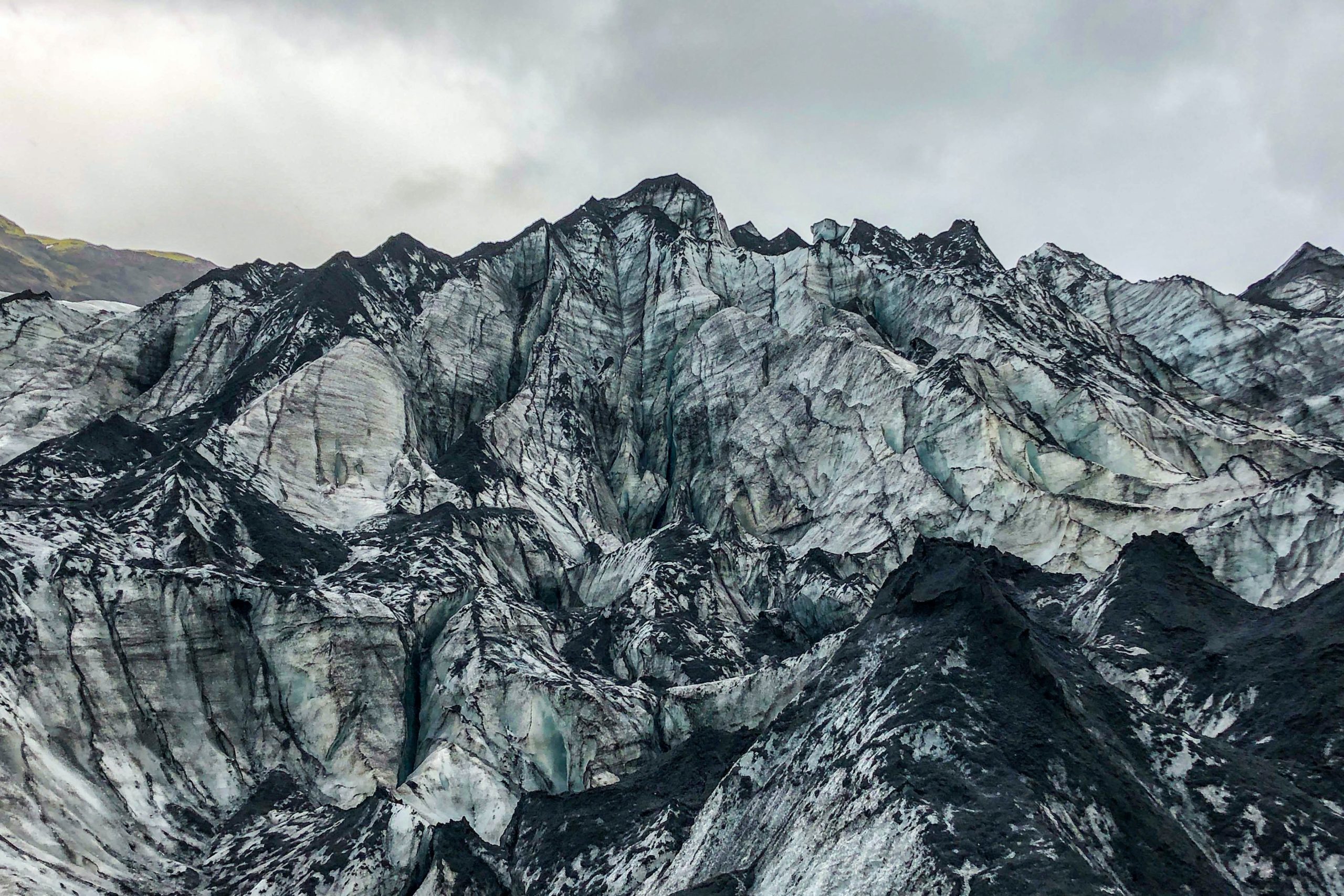
4. Sólheimajökull
Sólheimajökull is a piece of the larger Mýrdalsjökull, the south coast’s resident ice cap. (Mýrdalsjökull isn’t alone out here though, it shares the south with Vatnajökull, a glacier so big that it reaches through multiple regions!) This piece of the glacier is a popular location for glacier walking, ice caving, hiking, and just general wonderment.
This ice giant is incredible to see up close, and it is changing by the minute. One can visit the glacier on their own, but due to the extra training that it takes to traverse ice, it is only recommended to climb on with a guide.
Because of how quickly they are receding, one can’t make enough trips out to see the glaciers. They are visible reminders of how many gifts nature has bestowed upon us. …And seeing the lights in their presence is just one more gift on the neverending pile.
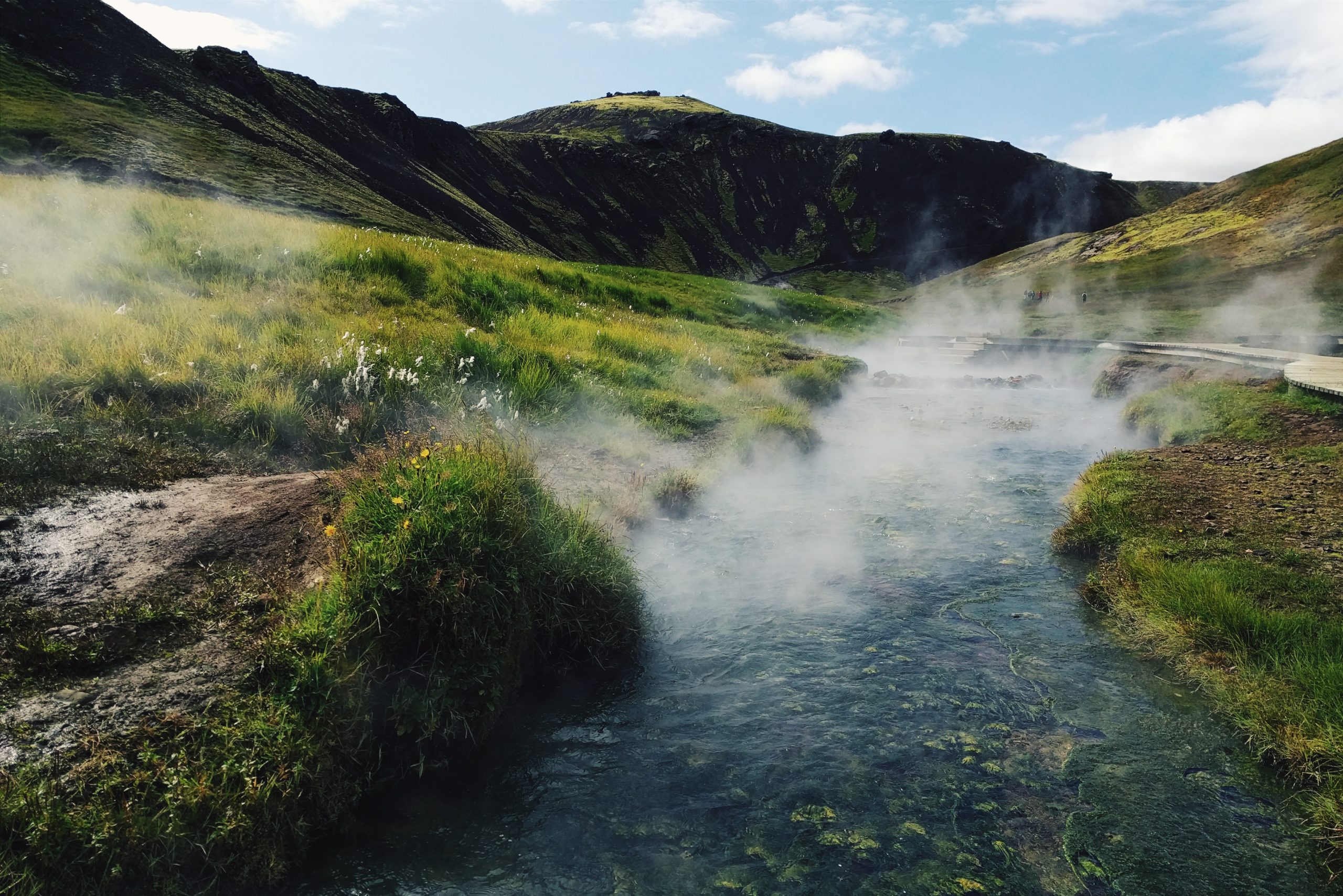
5. Reykjadalur
Reykjadalur is nearly 30 minutes from Reykjavik, so in some ways, it’s like the gateway to the south coast. Resting in the mountains above Hveragerði, Reykjadalur is a favorite of locals for its beauty, its accessibility, and its naturally hot water.
Reykjadalur means “Valley of Steam”, and it houses a geothermally heated river. This is a colorful area full of steam, bubbling mud, and incredible views as you ascend into these seemingly living mountains. It’s also mostly undeveloped!
There are maintained trails and even some protective boardwalk in the area around the water, but at this time there is no entrance fee, no buildings, and no facilities in this area. This could change over time, but for now, Reykjadalur is a place that belongs only to nature. The hike up takes around 45 minutes to an hour, and once you’re up there it is beyond heavenly to peel off your hiking gear and just lay in the warm river.
It is an incredibly restorative experience. Be careful, though! There are different temperatures throughout the water, so the further down the river you go, the hotter the water gets. This is mountain territory, so while the hike is not considered difficult, winter conditions can add some challenge to the terrain- even for the most seasoned hiker.
Things like early darkness, low clouds, and ice can make this an intense trek, so don’t forget your spikes and torches. But if you do make it up here, laying back in the hot water with your eye on the dancing sky- we’ll leave it to you to answer “Where is the best place to see the northern lights on the south coast?” I think we know what you’ll say.
6. Bláfjöll
Even though we just crowned Reykjadalur as the gateway to the south coast- some could argue that that title truly belongs to Bláfjöll. Known as the “blue mountains”, Bláfjöll is a small mountain range that lies about 30 km from Reykjavik, just before Hveragerði.
Though popular for hiking, caving, and lava tubing pursuits- this area shares its name with the ski slopes that live amongst them. Driving through this area is one of your first tastes of wild country outside the capital, and it provides many quiet spots for aurora watching off the main road.
If you visit before the snow, you may get to experience a different type of lush covering- Bláfjöll’s endless fields of Icelandic moss. This moss covers the lava fields and huge swaths of the mountains themselves and can be seen for miles around.
Insulated by the snow in the height of winter, it returns to us every year despite its fragility. The moss takes ages to regrow after damage, so be careful not to walk upon it when hiking.
7. The plane wreck at Sólheimasandur
One of the more unusual stops, this is a pretty interesting one. Though it sounds grim, this plane wreck was non-fatal, and all of the passengers escaped unharmed. In 1973, a US Navy DC plane appeared to run out of fuel and had to crash land on Sólheimasandur– a vast black sand beach on the south coast.
The people inside made it out, but they left their airplane behind. The wreck of this plane is still resting on the beach today, a bit worn and smoothed by the endless Icelandic wind and the movement of the volcanic sand. It is a favorite location of photographers, and many have watched the lights from its empty belly.
If you choose to visit this spot, please exercise caution. While it is a flat land hike, it does take around an hour of treading sand to reach the wreck, and it cannot be seen from the road. You can leave your vehicle in the parking area, but you can no longer drive up to the location. This area is vast, and it is not populated by many landmarks- so it is easy to get disoriented here.
Be aware of the weather before you head out, as there have been accidents of exposure and hypothermia in the past. It is possible to visit the location with a guide, but be respectful of the area nonetheless. Just like the moss, we wish to preserve the unique strangeness of the wreck for years to come- so that many can spy the aurora from its wings.
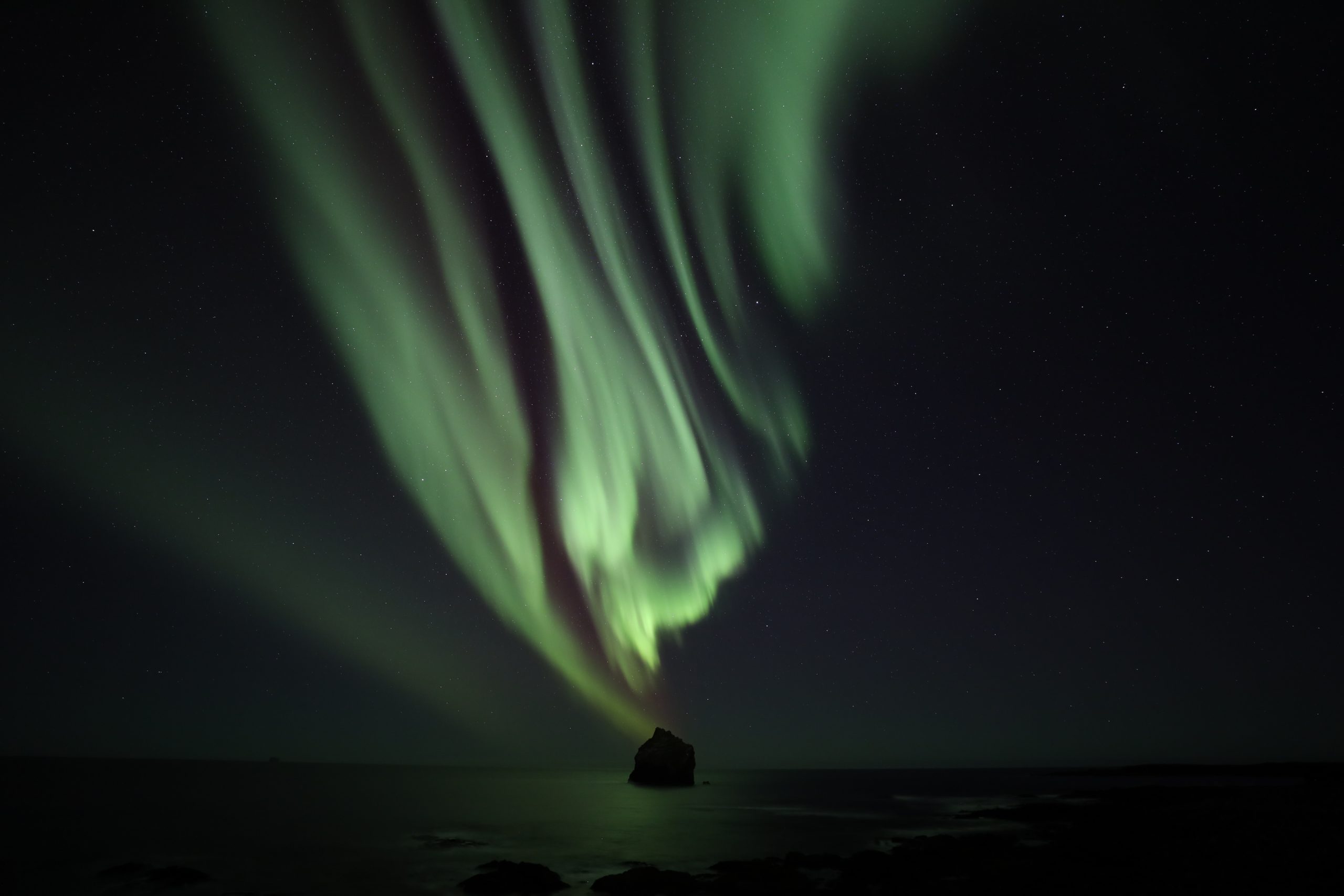
8. Þorlákshöfn (Thorlakshofn)
Wedged right in the corner of the coast where the Reykjanes peninsula meets with the full curve of the island, lies the little town of Þorlákshöfn. Known around the country as one of the primary places to catch a ferry to the Westman Isles– this is a charming seaside town.
Right along the edge of the coast, there are gorgeous villages to explore, and this is only one of them. This town rests at the end of the Ölfusá river and counts many curiosities among its hiking trails, bustling port, and beautiful sights.
If you’re planning a night out of aurora watching by the sea, this is certainly a good place to stop for a bite first. (Or to ride ATVs, horses, do some rock climbing, check out some sea caves, and more!)
This is a beautiful community where you can appreciate the brevity of Icelandic living, and the relationship between the sea and the warm volcanic land in which that life continues to thrive.
When we asked “Where is the best place to see the northern lights?”, it was not hard to imagine this place. (But don’t end your adventure here! If the weather is mild, hop the ferry to the Westman Isles! Southern Iceland really is a whole world of its own.)
9. Reynisfjara
This is a popular spot, but it sure is hard to argue with. Reynisfjara is the name of the black sand beach near the village of Vík. Seen in countless films, tv productions, photographs, and artistic works- it’s a must see location.
Vík is the southernmost village on the island, and a great spot to branch out from if you plan on exploring the south coast region. Home to many activities, restaurants, and shops, this area is lined by dramatic basalt cliffs that thousands of seabirds call home in the summer season.
Though beautiful, the waves here can be massive and are known to be dangerous, so please exercise caution near the shoreline. Due to the small population of the town, you’ll find great dark skies here. We love Reynisfjara year round, but it truly is a magical place to watch the northern lights, in the shadow of slumbering Katla.
10. Skógafoss
Last but not least, we can’t leave this thundering giant off of a south coast adventure list. Not only is it close to some of our favorite northern lights hotels, but it makes an incredible aurora vantage point.
If you visit earlier in the day, you can climb to the top of the falls and enjoy the 25+ waterfall trek known as waterfall way! (You thought the show was just Skógafoss? Guess again!)
Skógafoss is the grand finale of the Fimmvörðuháls path, a 22 km. trek into the hiker’s paradise, Thórsmörk. While this adventure might not be possible in high winter, you can catch the tail end of its availability in autumn. For those that don’t wish to make the full 22 km., waterfall way is only about 8 km. one way, following the river.
But this is extra. Skógafoss itself is phenomenal. Standing at 60 m. high and 25 m. across, you can see this wonder right from the main road. It creates huge clouds of mist, and it empties out on a vast plane of land that runs out to the sea.
You could spend a whole day here exploring the surrounding area and enjoying the falls from different vantage points. You can even throw up a tent and camp out nearby, lulling yourself to sleep to the constant hum of falling water. Don’t forget to look up though! The rainbows in the mist during the day are hard to compare to the aurora curving over the cliff edge at night.
Northern Lights Painting...and 5 other fun things to do when the lights aren’t out
We spend a lot of time looking for auroras, but what do we do when we can’t find one? Fellow hunters, meet northern lights painting.
Northern lights painting may not be the first thing you think of when you pack your bags for a hunt. (And it might mean something different to different people! Don’t worry, we’ll come back later for the crafters.)
But if we’ve learned anything at all from years of chasing the aurora, it’s how to be prepared for any and all kinds of nights. Whether there’s a show to see, or not.
1. Light painting, or, Northern Lights Painting
Known as “Light Painting” or “experimental long exposure photography”, this is the ultimate activity when you’re waiting on the lights to show up. It may not be auroras, but it’s a fan favorite for a dark night with no show.
Popular in its own right, light painting or, northern lights painting, as we like to call it, is an activity that requires a camera. All you need to do this is a DSLR camera or a camera that can accommodate a long shutter setting, a tripod or flat surface, and a light.
This is an experimental process for a reason, and there is no wrong way to do your own northern lights painting. (Well, as long as you’ve got the flat surface and the long shutter. If your camera is moving you’ll have a hard time capturing an image, and if you can’t access a longer shutter, it will be harder to create these effects.)
That being said, this is an activity for people of all levels of artistic skill. The photos you make will look differently depending on where you are, what settings you try, and what tools you use to create light.
You can even do this inside! (Though, we find ourselves doing this outside most of the time, since we’re always waiting on the aurora to show up.)
Once you’ve got your tripod and your camera set up, you’ll be using a lot of the same settings you’d use for a northern lights shot. This means low aperture, and typically a higher ISO than you’d use for a daylight photo.
(Depending on the effect you’re going for, this could be an ISO as low as 400, and as high as 3600- but don’t take our word for it! This is art, so you’ll have to try different combinations out to see what look works best for you.)
And the key of course, is the extended shutter. Most cameras can accommodate up to 30 seconds of shutter, which is plenty for time for you to create a compelling shape or image. If you find that this is too bright, remember the golden rule of northern lights painting, and adjust till you get the look you want.
These photos are created by manipulating lit items in the camera’s field of vision. This means you can use fairy lights, mobile phones, torches, sparklers, LED tools, and so on. You can write messages, create three-dimensional patterns, draw shapes- the opportunities are endless. You can make your own aurora! (It is northern lights painting, after all..)
This is a great activity whether or not the lights are out, and we suggest checking out the work of other light painters. There are a lot of opinions on the best types of light, how to diffuse light with tracing paper, and how to color white light with plastics.
There are also countless tutorials on how to make the tools themselves, in order to achieve certain looks. (We are big fans of the long piece of wood with fairy lights taped to it.) If you choose to go the sparkler route, be careful!
Activities like this can spark dry grasses and create wildfires. Make sure you are operating in a damp area, and practicing fire safety while you work. No photo is worth an accidental blaze.
2. Stargazing and Telescoping out the heavens
Northern lights painting gives us something to do down here on Earth, but what about when we’re back to eyeing the skies?
That’s when it’s time to stargaze. While this activity does require the same clear skies as auroras, it doesn’t necessarily require any special equipment. (But don’t worry gadget collectors- there definitely is some.)
With a little knowledge and a lot of darkness, you can find constellations, planets, nebulas, and all sorts of celestial bodies. One can follow satellites, shooting stars, and even an eclipse or two in the Icelandic sky. (And you ought to make the best of it while you can, because we miss out on nearly ever summer event!)
However, if you want to elevate your stargazing experience, there are a lot of tools that can help you do this. Telescopes, binoculars, star maps, and more apps than you can imagine exist just for this very purpose.
Stargazing is a burgeoning hobby with an incredible community, and depending on where you are- there is likely a whole contingent of fellow gazers that you can learn from and watch with.
There also happens to be a lot to learn, so this hobby may stay with you far beyond an Icelandic holiday. Amateur space weather enthusiasts all over the world are even helping contribute to modern science.
In fact- it was stargazers that helped us understand STEVE. But, it’s a wide world out there. What far off planets or mysteries of the verse are YOU going to discover?
3. Astrophotography, Star Trails and Galaxy Hunts
While stargazing and northern lights painting can both become camera-centric activities, this is definitely one. Many aurora hunters end up becoming photographers out of necessity- because it is just too hard to chase such an ethereal thing and not keep a piece of it for yourself.
Photos are one of the many pieces of the magic, and they are not easily come by. Their rarity and the work that goes into making them is in some ways just as rewarding as the aurora hunt itself.
(Not to mention, a well-timed photo can be a great early detection tool in actually finding the northern lights on a dim evening.)
As many of you know, a great photo is the ultimate souvenir. It’s hard for a t-shirt or a fridge magnet to beat that kind of memento. But what do you do when there’s no aurora to capture?
That’s when we widen our scope even more, to astrophotography. Astrophotography is a big term that includes aurora photos- and about a thousand other things. The reality is that we can access so much more of the sky than we realize.
With the naked eye and our usual context in light polluted places, there’s a lot that we don’t see. But with a great lens (be it in a camera, telescope, or slick pair of binoculars,) suddenly the far rings of Saturn, or the super up close topography of the moon, become easily viewable.
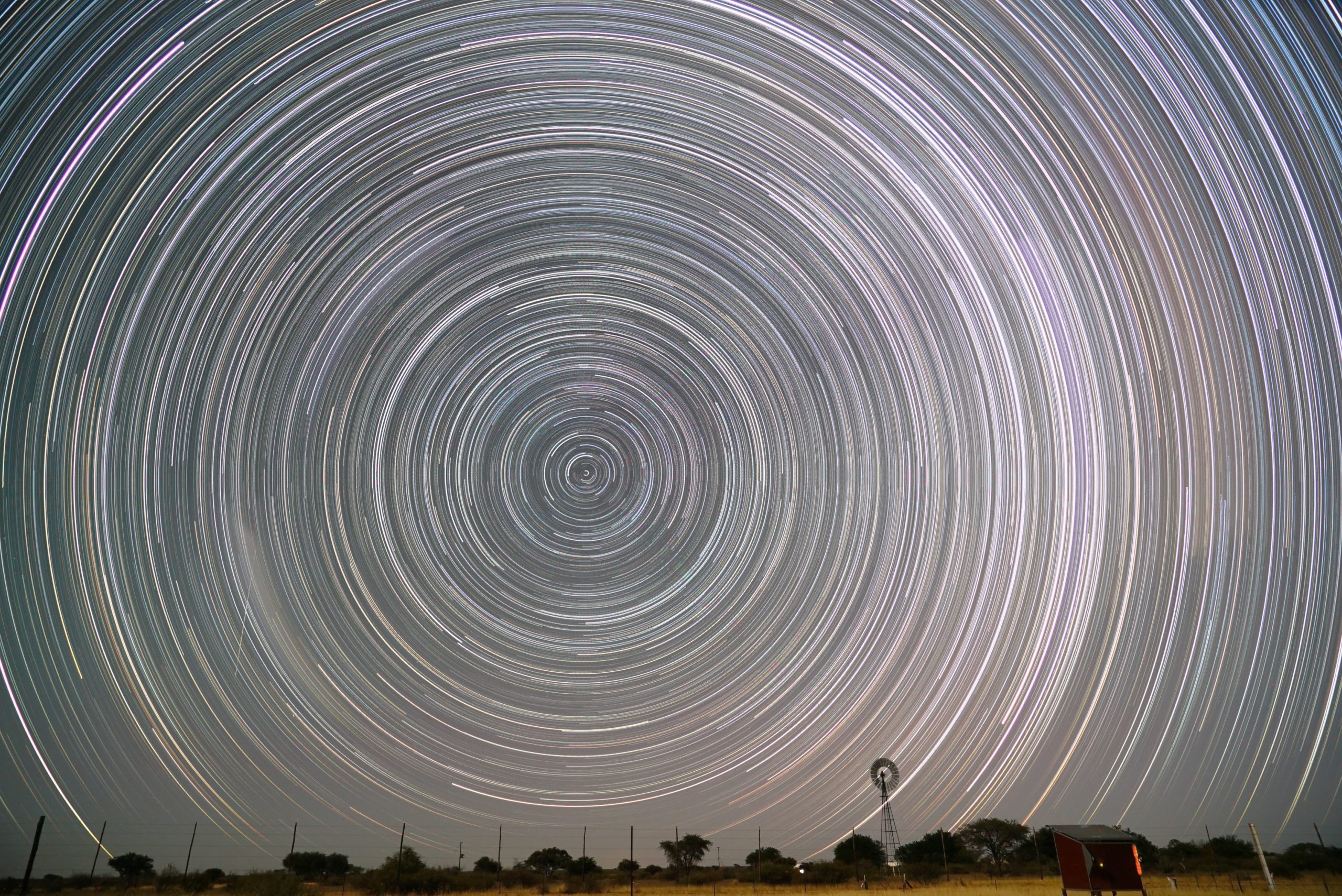
Star Trail images
So after you’ve done your northern lights painting of course, turn your lens to the stars. If you’ve got your tripod and plenty of battery, you can create star trail images by setting your focus to infinity and using the longest exposure you’ve got available to you.
This can be a tricky situation, because you may need to set your camera to the bulb setting, or acquire a cable release for your specific camera model to allow these unusual levels of exposure. (We are talking about 15-30 minute long exposures here!)
But, thanks to aids like Startrails, you can also take shorter exposure images, and the program will layer them together for you. This process makes this type of photography a bit more accessible to the novice astrophotographer, and it cuts down on image noise as well.
This is a special branch of nighttime photography, so have a look around if you’re interested! There is a whole world of star trail enthusiasts, and a million tried and true practices for getting the kind of images you want.
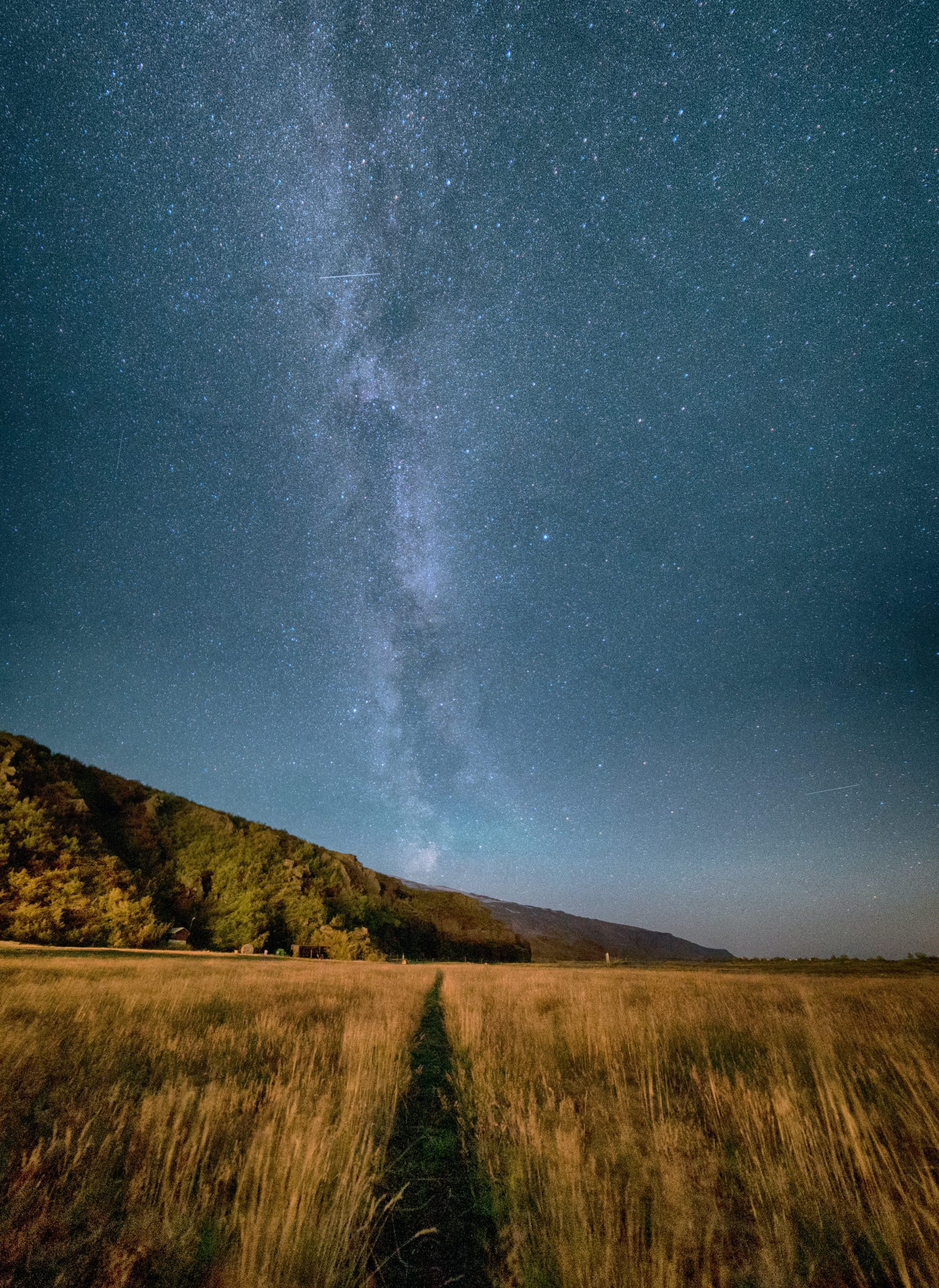
Galaxy Photos
If you’re looking to capture nebulas and far off bodies of celestial light, you may need some specialized gear. Many of these photos are taken with professional attachments and some are even captured through telescope attachments!
If you’ve got a telescope with you and want to venture into that realm of photography, go forth and please send us a copy! We’d love to see it. But for those of you who are trying to capture a galaxy with your DSLR, you may be in luck.
It’s not the easiest, but it is possible. You’ll need a lot of the same stuff you’d bring with you for northern lights photos, so make sure you’ve loaded up your manual capable camera, a sturdy tripod, a fast lens and some patience.
A new item that you’ll need is a starmap app. An interactive map can help you locate the milky way for that evening, which will cut out a lot of the guess work. Above all, you need to be in a dark place. Just like aurora hunting and northern lights painting, light pollution drowns out the good stuff.
Just like the star trail photos, you’ll be working with a pretty long shutter. As you try this out, don’t be disappointed if your photos don’t look quite as outrageous as some of the galaxy shots you’ve seen.
Many photographers in this field are utilizing specialized gear, processes like time blends and startracking, and doing a lot of heavy lifting in a post processing software like Photoshop.
These images are sometimes the product of a great composite job, or a lot of really skillful editing in a RAW image. You can certainly capture a viable shot with your regular aurora gear, but if you’re interested in this- don’t despair! All of these tricks can be learned, and there is ample information on the web to help you. Everybody has to start somewhere.
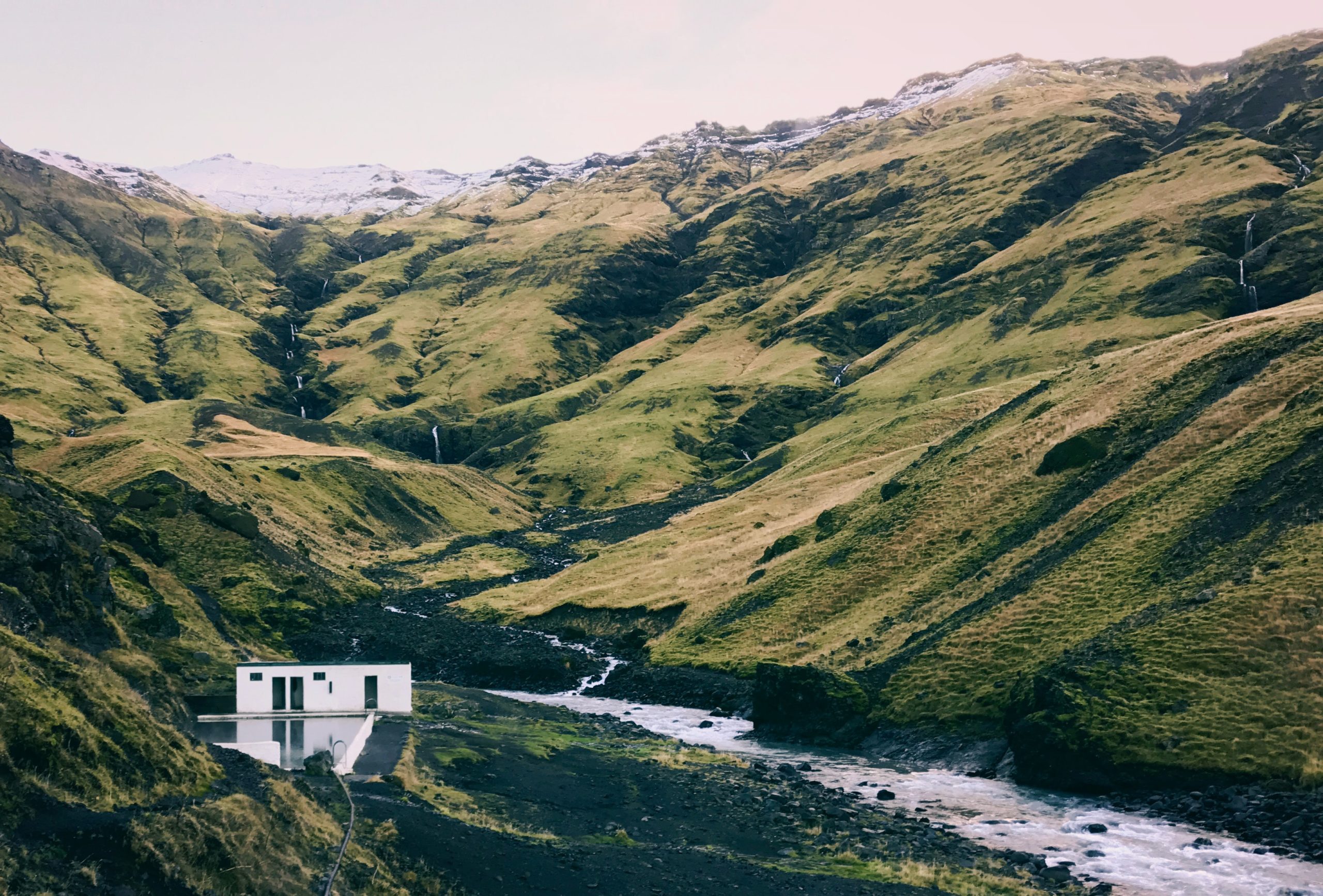
4. Hot spring night soaks
Now here’s an activity that you don’t need a camera for. (Unless you want to make some friends extra jealous.) Half of the time, we’re doing this instead of setting up the cameras- and sometimes the lights come out anyways!
The best seat in the house is always in the hot pot. Iceland’s geothermal landscape is a treasure chest of natural hot springs and great places to soak. But despite that, Icelanders have installed geothermally heated swimming pools in nearly every town, and hot tubs at many summer houses.
If there’s a pool to sit in, we can almost promise it’s heated. (Unless it’s an ice pool, that’s a thing.) If you’re staying in town, there’s a swimming pool near you that is accessible for a low price year round, and if you’re extra lucky, you may have a hot pot in your vicinity.
If you’re a hiker, you can venture forth into a natural hot spring like Reykjadalur, or even Landmannalaugar. If you choose these wilder options, remember to be careful.
Hiking in the colder aurora season and in the darkness is a next level activity, and should only be taken on by aurora hunters that are confident in their trekking skills. Make sure to tell a friend where you’re headed, and bring the appropriate gear.
And check the weather! Some of these natural springs are in mountainous places that experience quickly changing weather and limited visibility, so it’s good to understand the area before you set out.
But if you make it.. Enjoy! There’s nothing in the world like laying in a wild hot spring at night watching nature make its own northern lights painting, just for you.
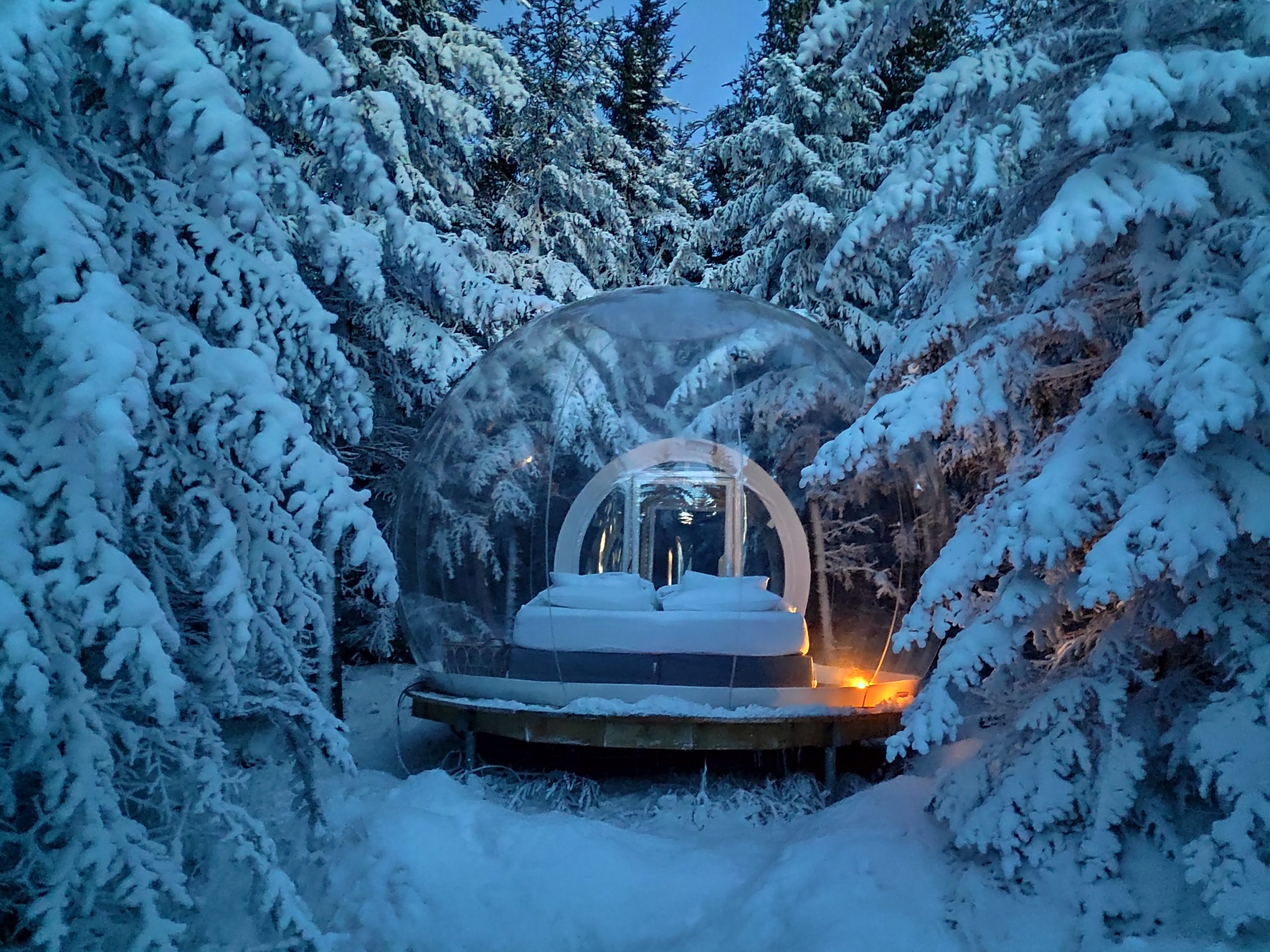
5. Lay back and pop some Bubbly
As we near the more.. Luxurious end of our list, it feels only right to mention the northern lights igloo option. If the lights are out, this is an incredible option. If they aren’t out, it’s an incredible option. If you’re here in the summer, it’s an incredible option. You can’t go wrong with this activity.
The Bubble Hotel of Iceland consists of a handful of fully transparent domed igloos that are tucked away in the embrace of two lush forests. This means you’ve got two location choices, and all the nature you can handle.
These hideaways are sequestered in their own groves, heated, and outfitted with their own luxury sleeping accommodations. To catch the lights, we often wait outside for long periods of time in the wind, weather, and low temperatures.
But imagine if you could do it wrapped in a down comforter with gourmet treats, in bed? Because of their rural locations, you’ll have all the darkness you need for optimal aurora watching or stargazing.
If you catch the lights out here, there’s no better seat. But if you don’t- you still get to walk away with a night spent in the height of luxury, surrounded by the grandeur of raw Icelandic nature on all sides.
It’s certainly the furthest away you can get from roughing it, while still being right in the middle of the woods. So excuse us while we slip into something a bit more.. Comfortable.
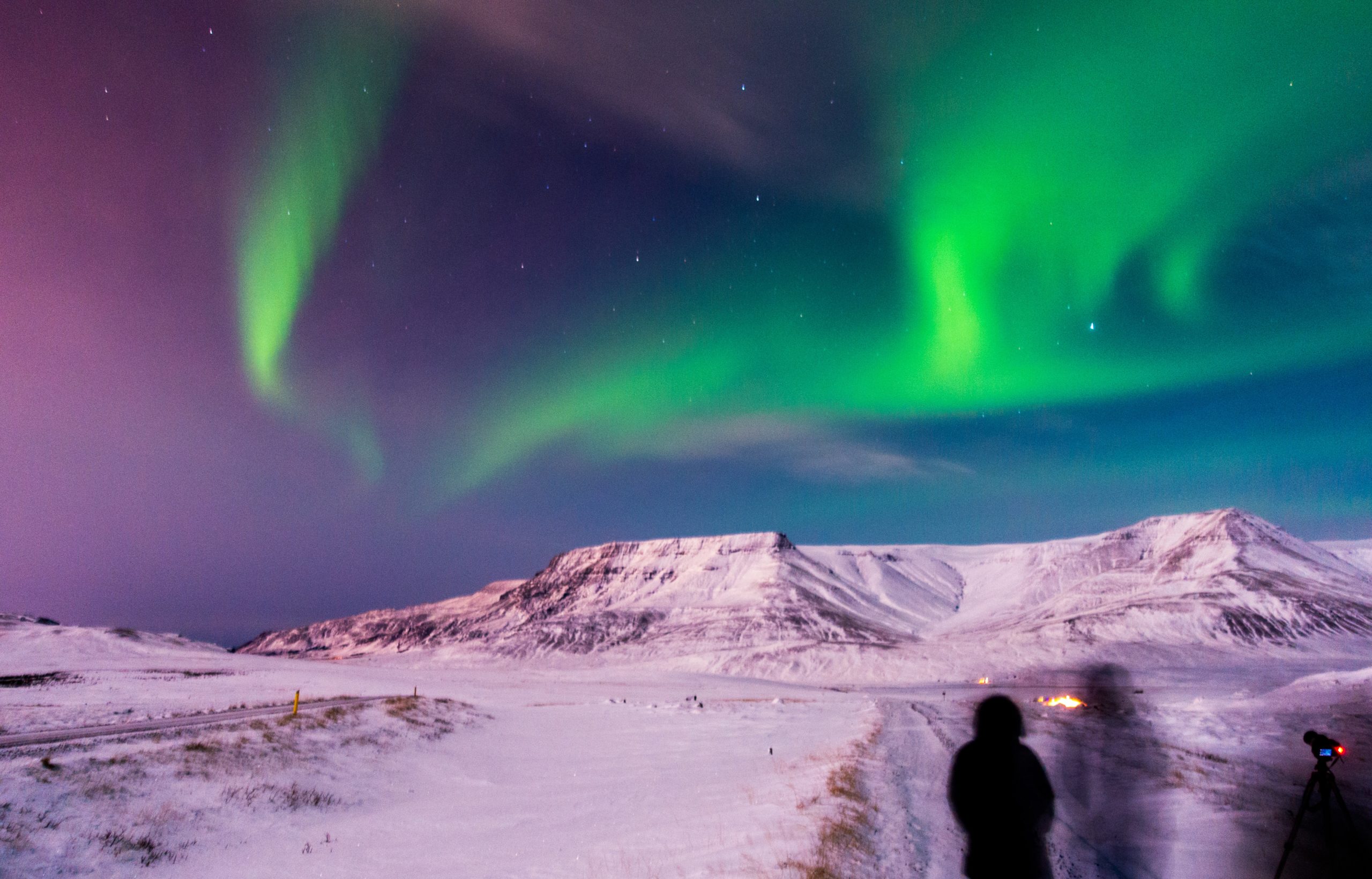
The best place to see Northern Lights in Iceland: 10 of the most magical spots for aurora watching and stargazing
No matter how many times we’ve seen the aurora, we’re always looking for the best place to see northern lights in Iceland.
We never stop looking for the best place to see northern lights in Iceland. From the far reaches of the west, to the lush forests of the east- it is impossible to count them all. Iceland may be a small island, but the hidden treasures here are many. Where was the best place you watched the sky from?
1. Vestmannaeyjar
Vestmannaeyjar, or The Westman Islands, lie right off of Iceland’s south coast. Accessible by ferry or plane, they are an often overlooked gem and in our opinion, a best place to see northern lights in Iceland.
The Westman Islands are a self-contained world all to themselves, and boast some of the warmest annual temperatures in the entire country! Benefitting from the gulf stream, they are known as a wildlife-rich area that enjoys plentiful fishing, whale and birdwatching, and music festivals and sport in the summer.
A visit to the Westman Isles is punctuated by incredible sights. Lighthouses on rock stacks, one of the most famous volcanic eruptions in modern history, vast sea caves, and a whole chain of gorgeous, uninhabited islands. And being far south, one of the last places to catch the lights at the end of the auroral season.
Many great country aurora spots are remote, but here in Vestmannaeyjar you’ve got everything you can think of within a few kilometers. Including some of Iceland’s most notable golfing and dining!
2. Hellnar in Snæfellsnes
The peninsula above Reykjavik is known as Snæfellsnes. A place that enchanted Jules Verne and featured in many historical Saga tales, Snæfellsnes became an EarthCheck community in 2008.
Truthfully you could travel the whole of the peninsula, and find thousands of good aurora spots. This is not a heavily populated zone, and during the day it is a phenomenal sightseeing location.
But we’re spilling the details on our favorite spots, so Hellnar has to make the cut! An ancient fishing village for many generations, Hellnar is perched on the tip of the peninsula overlooking the curved basalt coastline and the thundering sea.
People come from miles around to seal and whale watch, enjoy the varied geology of the area and view the countless natural landmarks in peace. You can travel quietly here, and enjoy the high-quality darkness of this northerly locale.
When in Hellnar, one can nearly imagine what it might have been like in centuries past- a bustling destination under a slumbering volcano.
3. Hvalfjörður
Just outside of Reykjavik lies a hidden treasure off the main road. Hvalfjörður is the name of the fjord that lies between Mosfellsbær and Akranes. A short trip from the capital city, Hvalfjörður is home to many small waterfalls and hiking paths.
The popular trek to Glymur starts here, and many coastal hikes as well. The fjord itself is 30 kilometers long and there is not a stitch of it that does not house some kind of tiny wonder. Often passed over for more notable climes, this is a calm and beautiful place to aurora watch, with multiple marked observation points that are safe to park in.
Great for some daytime and evening hiking while you wait, the textured vistas and low traffic certainly make Hvalfjörður feel like the best place to see northern lights in Iceland.
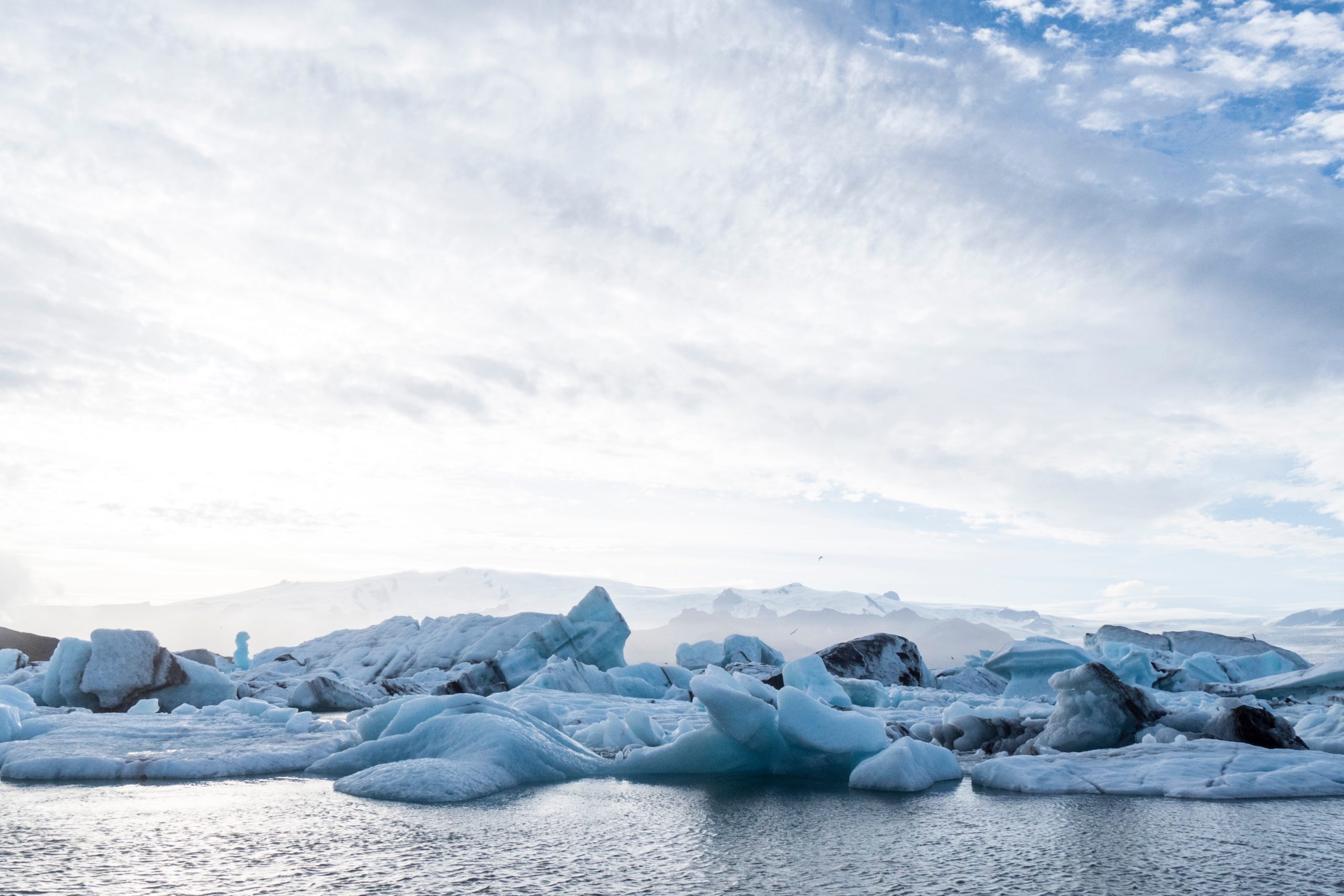
4. Jökulsárlon and Fjallsárlón
You have likely already seen Jökulsárlon on lists like these, and it is admittedly hard not to include it. One of the most dramatic glacial lagoons on the island, Jökulsárlon feeds out to sea across a black sand beach littered with giant chunks of ice.
Watching the huge pieces of ice swirl in the surf as if weightless, is a close competitor for the northern lights. But what about nearby Fjallsárlón? Only about 10 kilometers west of well known Jökulsárlon, lies this smaller more intimate lagoon.
Spectacular during the day, at night the lagoons can provide gorgeous reflection photos for aurora hunters and stargazers alike. Time spent next to these otherworldly spaces is special and fleeting.
They are truly impermanent and no repeat visit to them will ever feel the same. All the better reason to hurry- both the lights and the ice do not keep.
Tip: When visiting these spaces, be extra careful around the water and the ice. It is tempting to hurry forth and touch, but the calving of the glacier is unpredictable and can create impressive waves. The ice left on the beach is easily moved by the ocean, and just like the lagoons, can be dangerous up close. (What looks light in the sea, may feel rather heavy when dropped on your feet!)
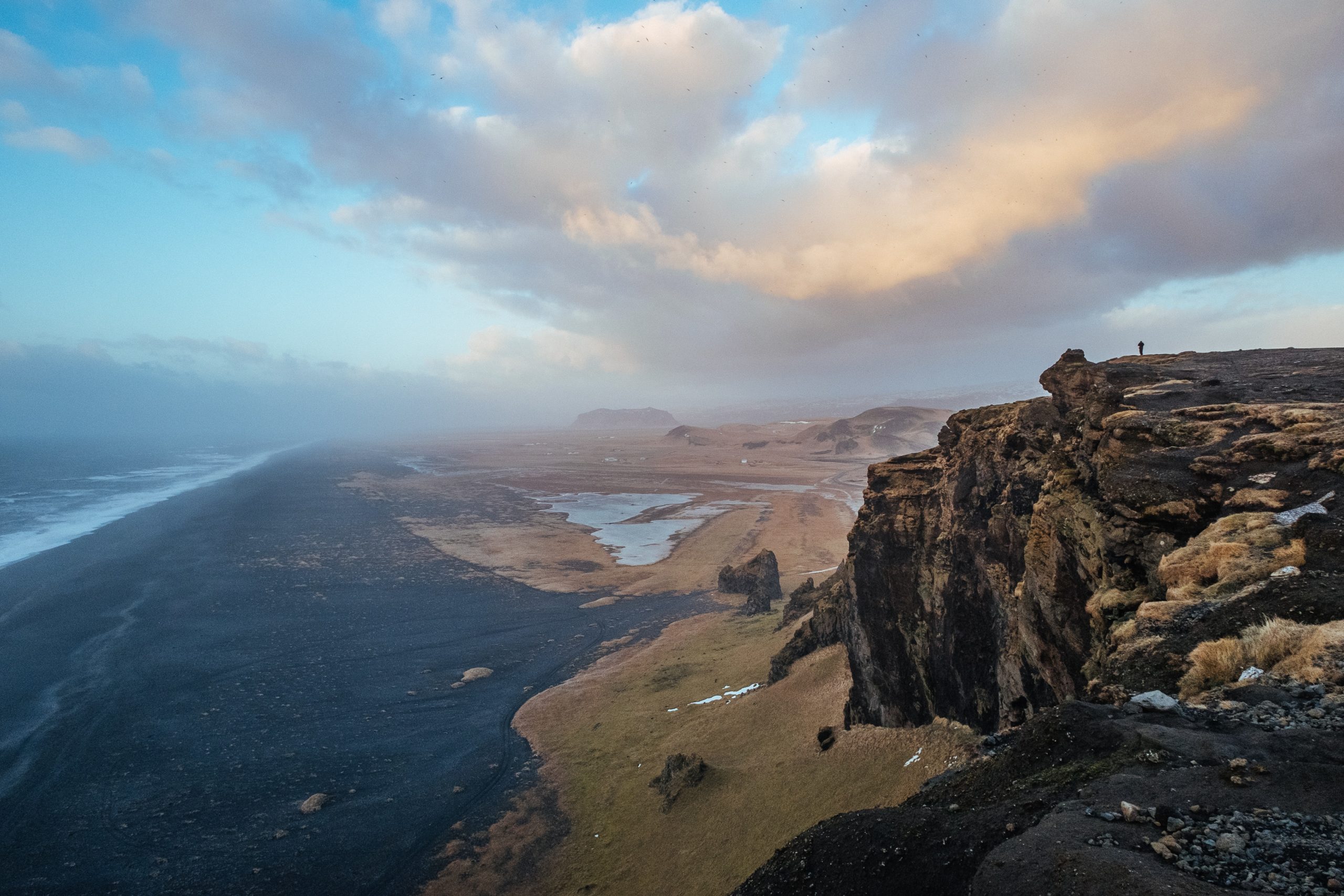
5. Dyrhólaey
Near the coastal village of Vík, there’s a promontory called Dyrhólaey. Named for the arched holes in the rock- or “door holes”, this is another ever-changing gem of the island, not to mention the southernmost point of the mainland! Featuring multiple paths, Dyrhólaey is a paradise of vistas.
There are many famous shots to be had here, and hardly anything to get in the way of them. An easy jaunt from the nearby village, Vík is a great refueling stop for explorers of this area. The south coast is punctuated by black sand beaches, huge basalt sea caves, and towering cliff waterfalls.
There are even northern light igloos that one can hide away in, which makes the south coast in general a great choice for the best place to see northern lights in Iceland.
Tip: Mind the pathways and signs when visiting this area. Dyrhólaey is changing, and pieces of the landmass are sometimes lost to the sea. Places that are roped off are roped off for a reason.
Check any signage you see before you hike out, as rangers in the area often update it due to shifts in the conditions of the land.
The ocean around this area is fierce and has claimed many lives. When visiting the shoreline, keep your distance from the waves- this beach is known for “sneaker waves” and unforgiving currents.
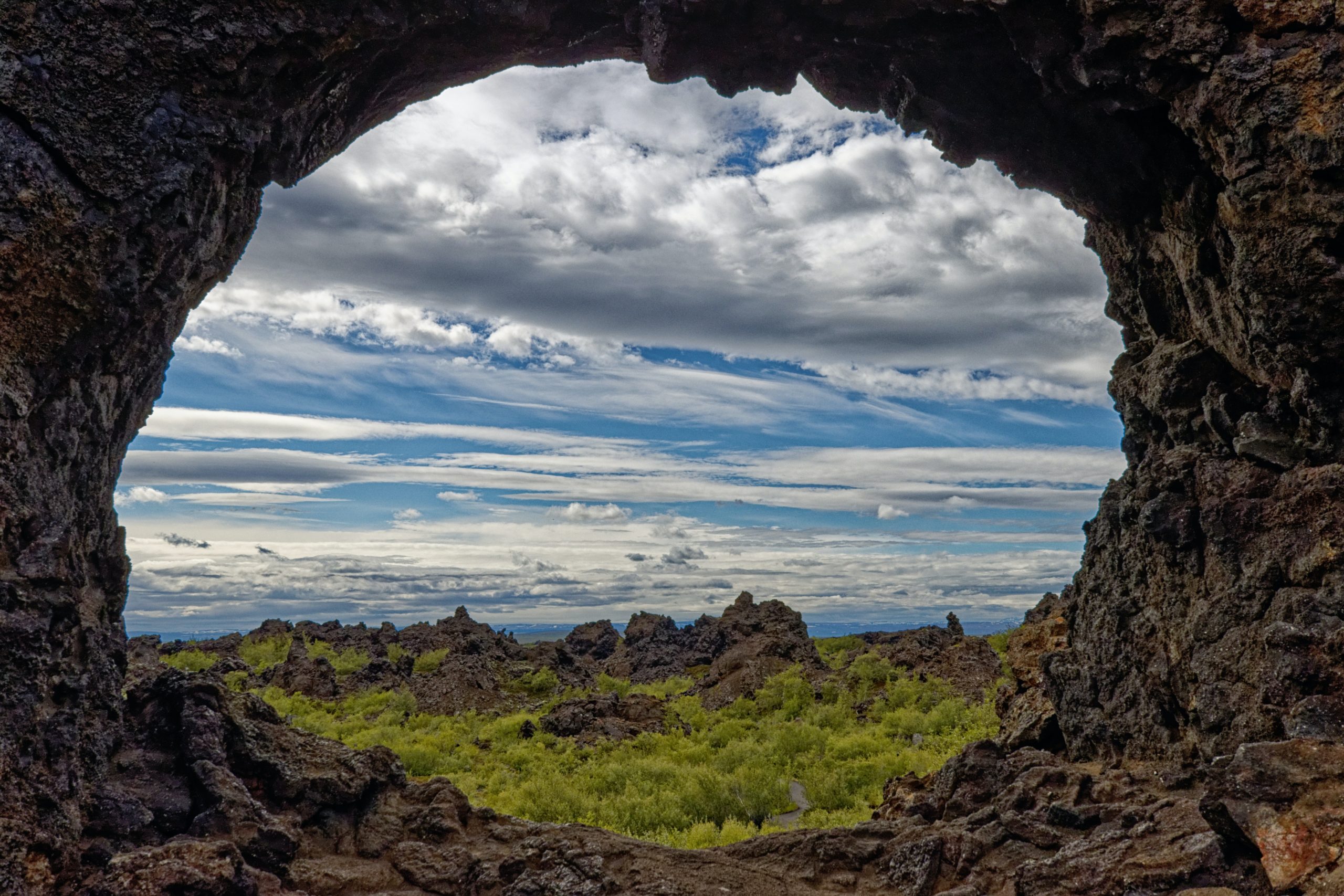
6. Dimmuborgir
In the north of Iceland near Mývatn, lie the dark castles. Otherwise known as Dimmuborgir, this strange lava field has captured the eye of many, from Norwegian metal band Dimmu Borgir, to the wildlings of Game of Thrones.
Characterized by the unusual rock stacks and tunnel formations, Dimmuborgir is a place of many stories and beliefs. But, regardless of what you believe, it is a shoe-in for best place to see northern lights in Iceland.
Being located in the picturesque Mývatn region, the dark cities overlook miles of great lakeside hiking and some of the north’s best geothermal bathing. For amateur and expert photographers alike, the craggy peaks of the lava and the still waters of Mývatn make incredible photos against the bright colors of the auroras.
Between the breathtaking natural wonders and the nearby amenities, it’s hard to find a better spot!
Tip: Visit this place during the daytime to familiarize yourself with the terrain. Mývatn may not be hugely difficult hiking, but these rocky areas can be challenging to navigate for the first time in the dark. Double up on your protection by bringing a headlamp or torch- extra points if it’s a red light for night vision preservation!
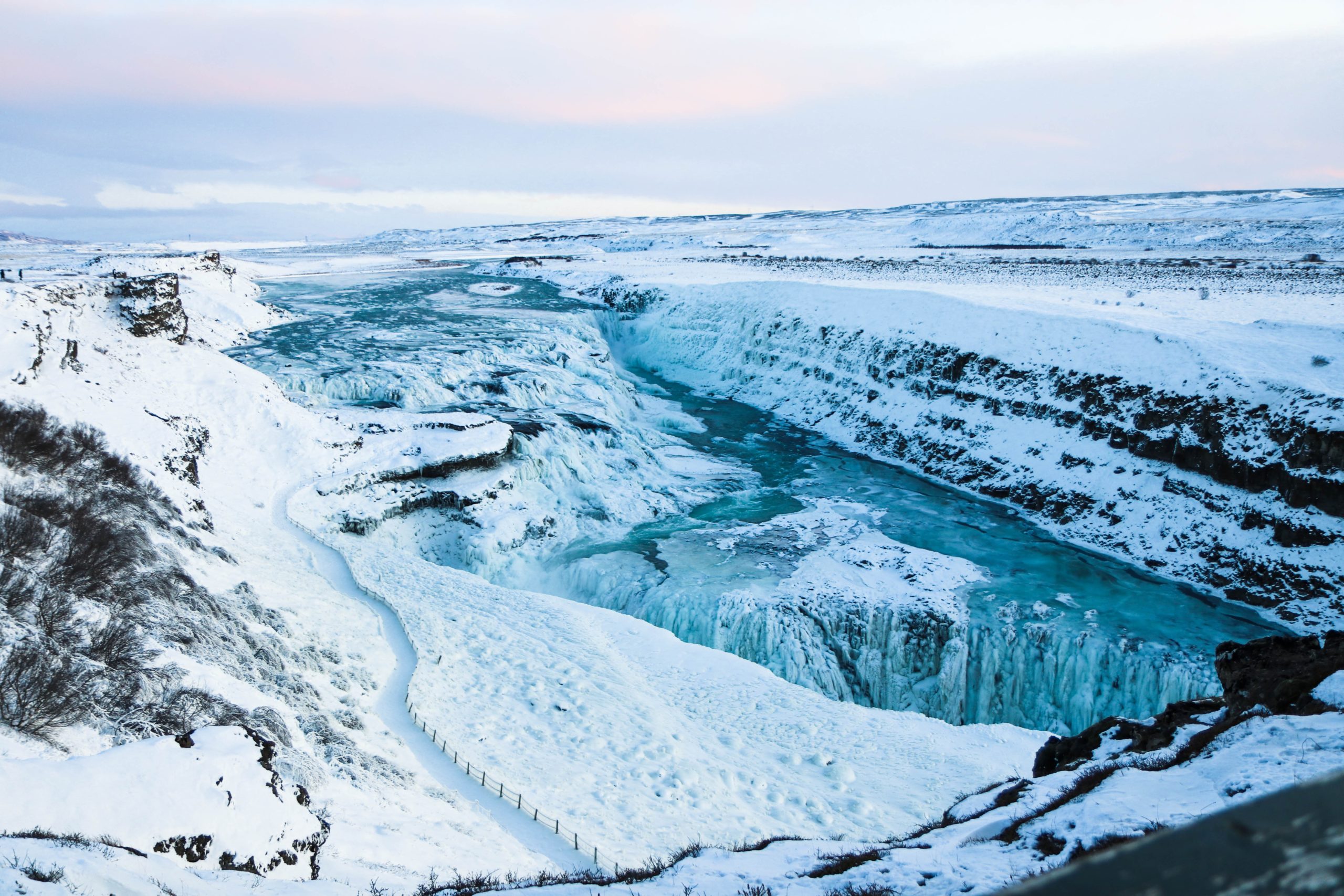
7. Gullfoss
Imagine reclining on a bench watching the northern lights, while a waterfall rumbles nearby. Doesn’t get any more peaceful than that! On our hunt for the best place to see northern lights in Iceland, we had to include a waterfall. Iceland is simply riddled with these gifts of nature, and Gullfoss is a big one.
Named for its golden illuminated appearance in the daytime, what is even more spectacular is the light that hits it in the nighttime. About 1 hour and 45 minutes from Reykjavik, Gullfoss is a protected area that hosts observation points, walking paths, and a parking lot with a cafe.
It’s rare to find a good aurora spot with a safe place to park your car, so spots like these should not be overlooked. The golden circle region is a great daytrip, and the roads are well maintained in the winter months.
Tip: If you plan on visiting the cafe or shop on your trip, make sure to check ahead and see what the hours are. These things can vary depending on the season, so it’s better to go in with no surprises. (Or at least one less- the lights are a big enough surprise on their own.)
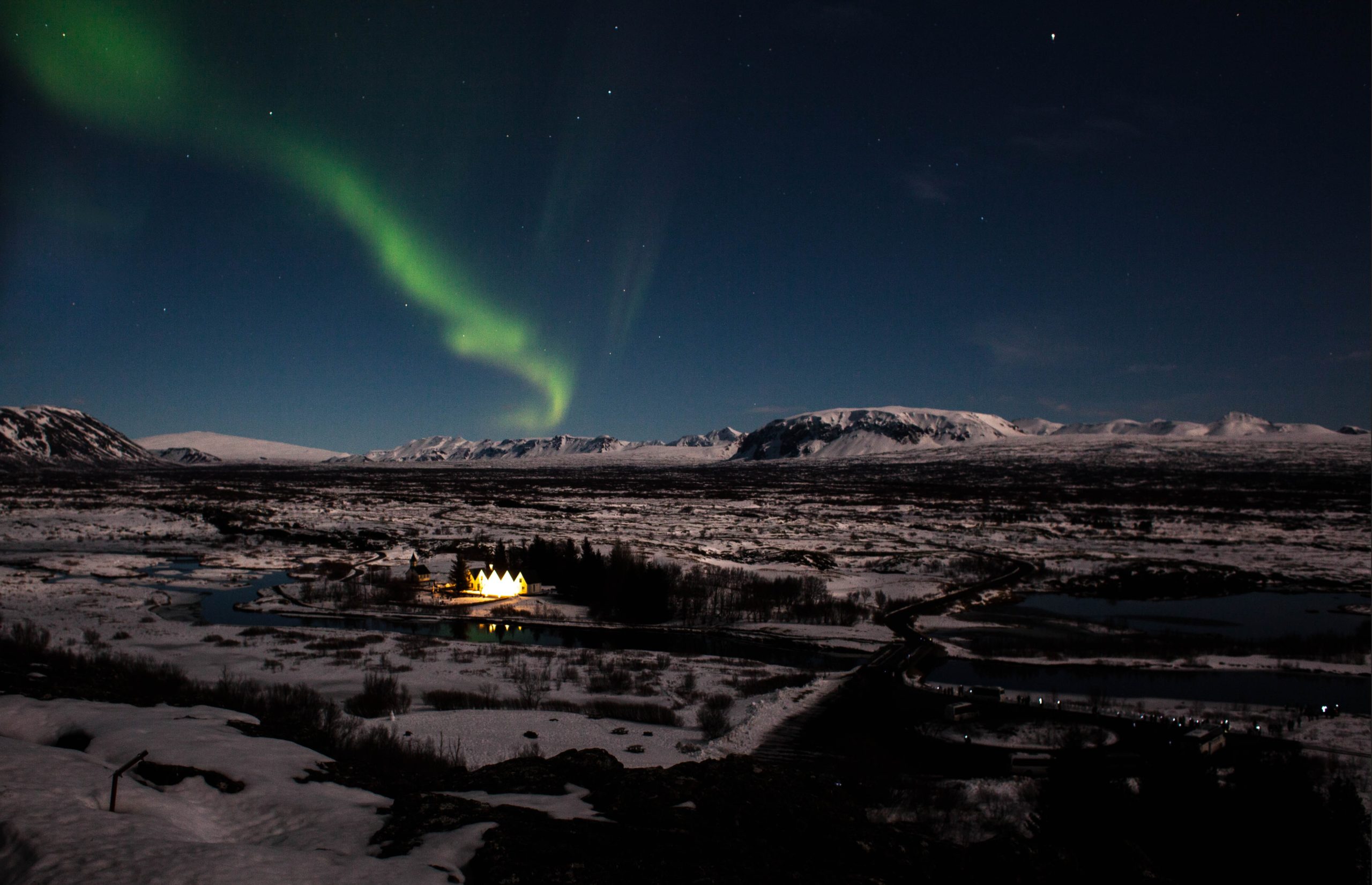
8. Þingvellir National Park
Only about 35 minutes from the capital, Þingvellir or Thingvellir should be on the top of your list for best place to see northern lights in Iceland- no matter where you’re staying. Once upon a time, Thingvellir was the most important gathering point for Icelanders, and it isn’t hard to see why.
Home to a massive lake, miles of hiking, and incredible views- Thingvellir is a place of activity. It’s also one of the places where you can see the continental rift! But as far as lights go, it’s a veritable playground.
When you’re out aurora hunting, you have to consider logistics. Things like places to park, places to get a snack, bathrooms, proximity to lodging, access to darkness, and so on. Most places will only have a few of these, but Thingvellir hits them all.
Being a national park, it’s designed to accommodate vehicles and wanderers. There are loads of paths to travel, established hiking routes, and plenty of parking lots and observation points to safely stow a vehicle.
This is a big win, because Iceland is full of narrow roads with few places to pull over for a show. Thingvellir is also aware of us aurora hunters, and so there are occasionally places to grab a coffee or a bathroom break along the way.
(Depending on how late you’re out, of course. Double check this before you go if it’s your destination.) You’re also in a great spot when you’re here. Thingvellir is just a half-hour north of Reykjavik, and rests at the entrance to the Golden Circle region. (Or exit, if you came the other way!)
And even though you’re close to town, you will find that Thingvellir is home to some surprisingly good darkness. Because of its inland location and its historical importance as a gathering point, it’s well-positioned on the edge of the highlands.
And there’s tons to do! The only mistake you can make by aurora hunting here is to skip visiting in the daytime. In the autumn, Thingvellir is a rainbow of foliage.
9. Ásbyrgi
This is a rarer stop in the north of Iceland. Located on the Diamond Circle, Ásbyrgi is a horseshoe-shaped canyon that some believe was made by a glacier.. But really we know it is where Sleipnir touched hoof to Earth.
The views to be had here are unique, as the steep walls of the canyon protect a vast forest within their embrace. Because of this “Shelter of the Gods”, Ásbyrgi is an incredible place to visit in the autumn months to catch the color changing of the leaves, and the crystal pond among them.
There is a campsite here, and multiple trails to enjoy all the different views that the huge canyon has to offer. But be careful while you’re here- to us this may be the best place to see northern lights in Iceland, but to some it is the elven capital. Tread lightly!
10. Gamla Laugin: The Secret Lagoon near Flúðir
The truth about the best place to see northern lights in Iceland, is that it will change with the weather, and with your expectations. Maybe you have a certain photo you want to get, or a certain thing that you want to see. Maybe you want to stay in a specific region, or are looking for cozy places to unwind while you you look.
Places like the Secret Lagoon near Flúðir, perhaps. We are pretty big fans of watching the lights from warm places, and this is one of the warmest. If your plans and the weather both allow it- watching the aurora from a natural hot spring is an incredible experience.
Particularly one as beloved as the Secret Lagoon. One of Iceland’s oldest “swimming pools”, this is the place where many southern Icelanders first learned to swim.
And within 24 hours, it has replaced its own water as it continuously flows. One of the most authentic bathing experiences there is, coupled with one of the most authentic aurora watching spots we know.
Tip: Check the website before you go to see what the conditions are for that day. Depending on traffic, you may need to book in advance. (The lagoon is big, but it is always better to plan ahead if you can.) The hours of the lagoon may change, so double-check the schedule to see how late they’ll be open when you visit.
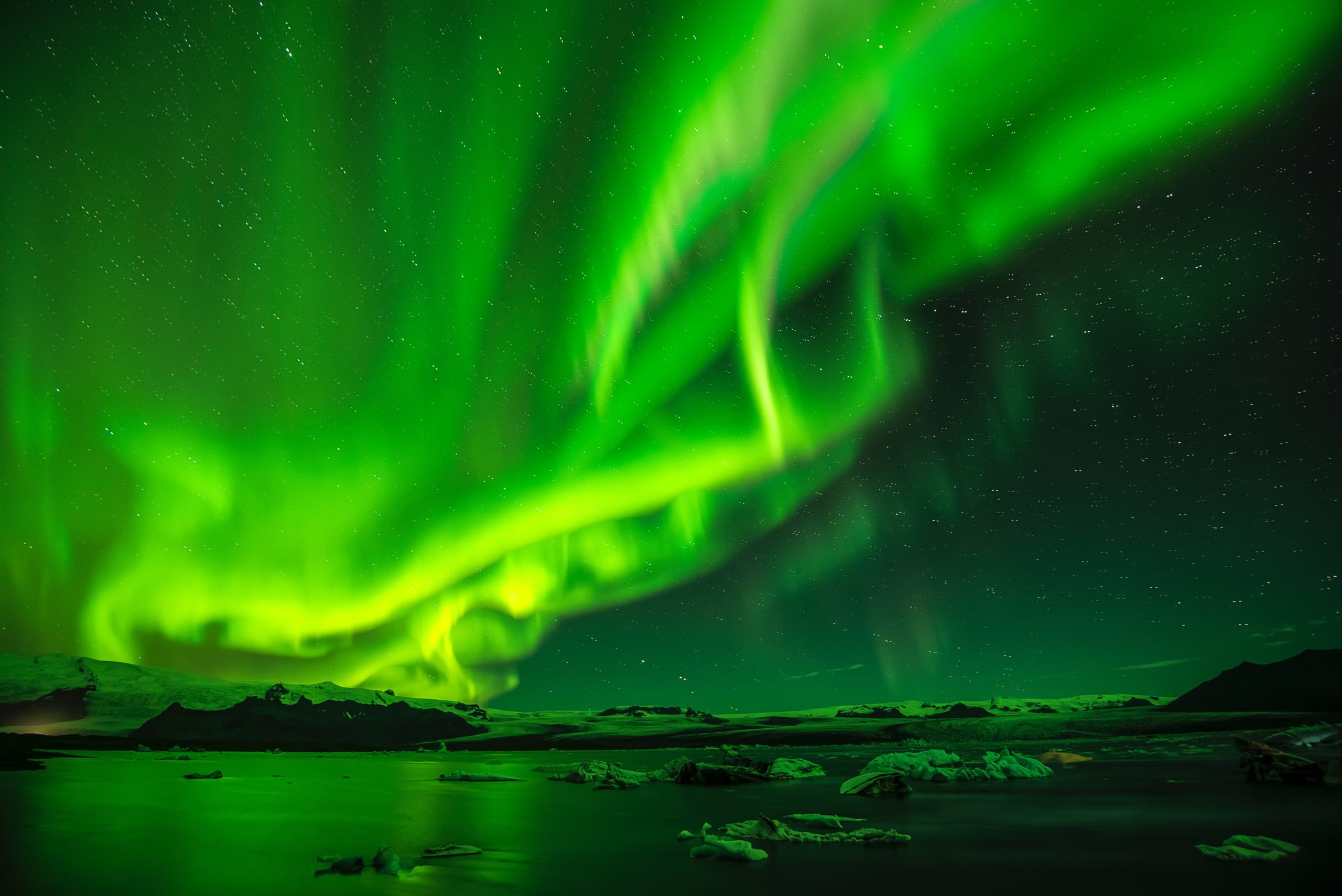
How to hunt Northern Lights in Iceland: 10 important tips for catching the aurora
Heading out on an aurora hunt? Don’t go too far without these tips!
There’s a lot of info out there about aurora hunting, but what about how to hunt northern lights in Iceland? With its ethereal landscape, rapidly changing weather, and, convenient location, these tips are penned with that special island in mind. After a few visits, you’ll see what we mean.
1. Check THE aurora forecast
There are countless aurora forecasts and apps floating around on the web. The more used to them you are, the quicker you can understand how to hunt northern lights in Iceland. Eventually you may find that it can be to reference a few of them before heading out, but for now, here is our favorite.
If you’re new to the aurora forecast scene and you need to know what’s going on in Iceland, you’ve got to check the forecast put out by the Icelandic Meteorological Office. We like this forecast because we know it’s focusing on the cloud cover in our area, and not a global average or a hidden location behind a percentage.
It’s also a great place to catch any unusual weather alerts or natural events that might not be covered in your own home forecasts. Things like avalanche warnings, seismic activity, and volcano alerts. This website is your one stop shop for all forecasting needs in Iceland.
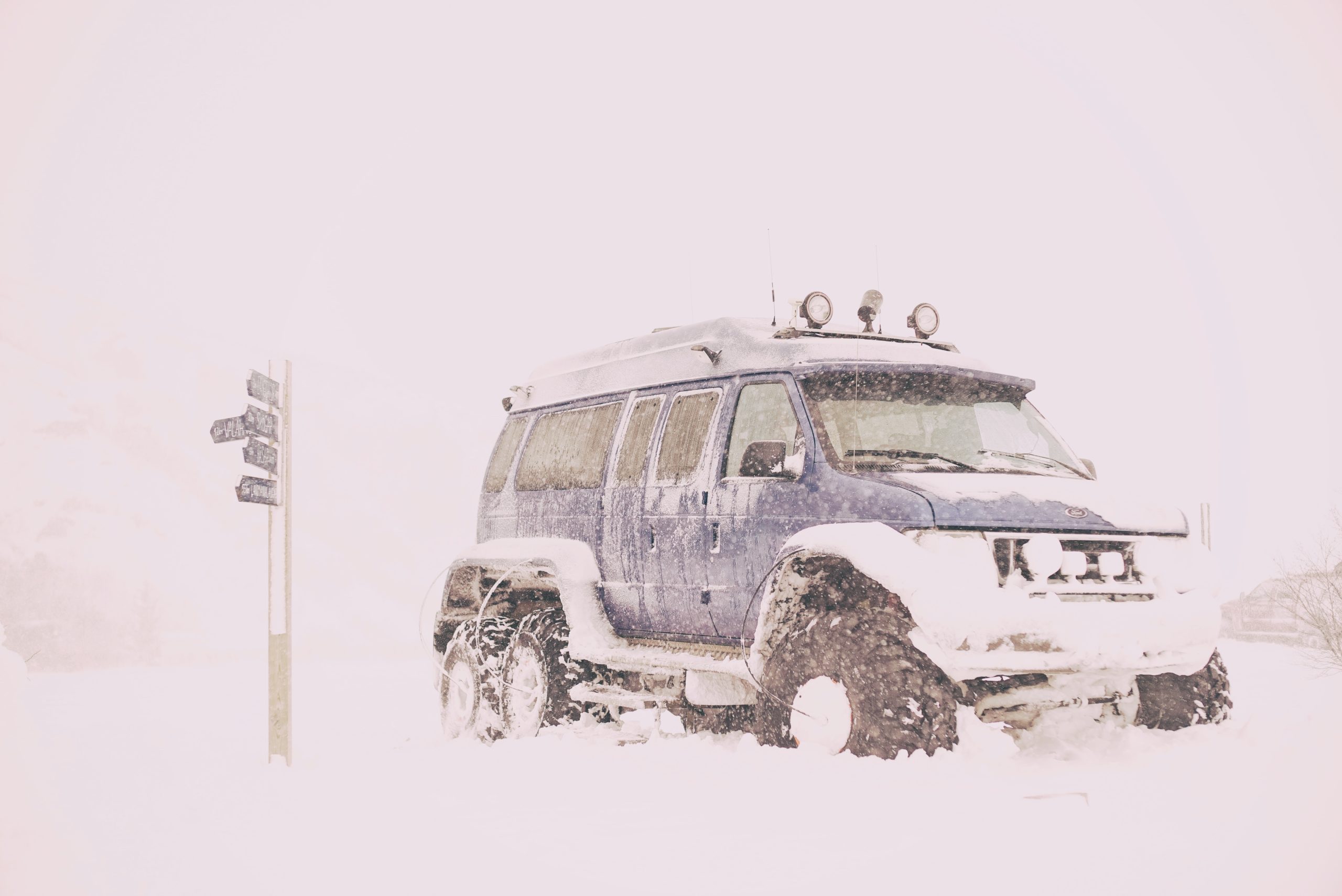
2. ..And then check the weather
You looked at the aurora forecast, and it looks great! But what is the actual weather doing? Chances are, if the cloud map looked ok, you might be in luck. But it’s always best to double check, because of how quickly Icelandic weather can change and develop by area.
Knowing how to hunt northern lights in Iceland is greatly benefited by knowing about general weather alerts, low pressure systems, high wind, icy conditions and storms in areas that you may be heading to are all things you will want to know before you head out. It might be clear at your starting location, but an hour away might be a different story.
Make sure to scroll through the hours that you’ll be out and see how the prediction develops over time. These things can make or break your trip, and it’s important to be safe while traveling in dark conditions.
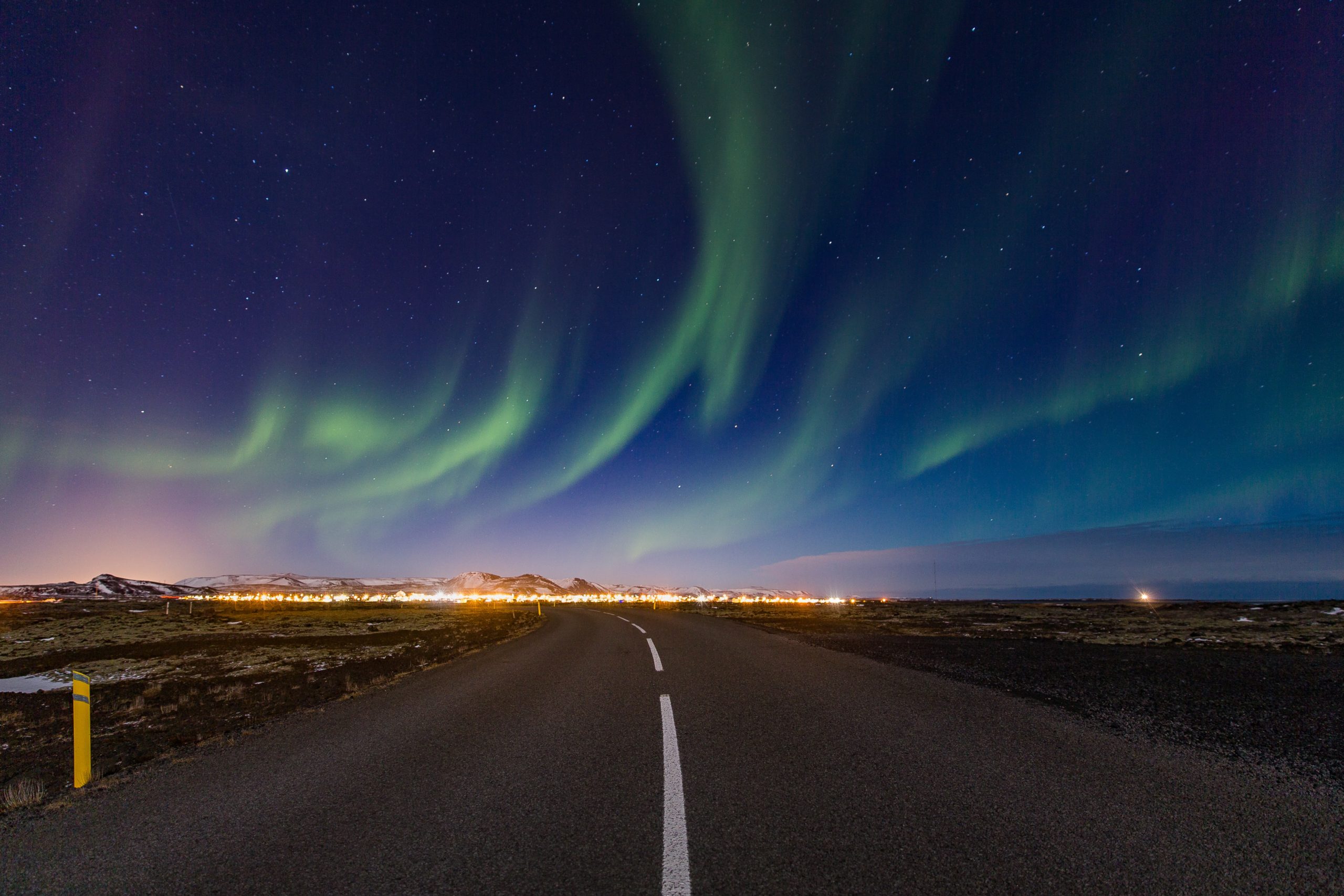
3. Set a heading
If you’ve seen the aurora forecast, you probably have a good idea of where to go. (How? Because you saw where the sky clarity was!) When choosing a direction to venture in, we are looking for areas of clarity first, and then figuring out what roads and landmarks follow that window.
Depending on what time of year you’re hunting in, you may need to check the roads along your projected path, as not all areas receive service in the winter months. Some roads close, some are unpaved, and some may be dangerous at certain times.
The good news is, you can find out all of this info, and see a webcam view of most of them. (The webcam view might not do you much good at night, but it’s a nice tool for daytime use.) Websites like road.is keep track of the status of the roads, if they’ve been serviced, and if they are safe to travel.
This information gets updated frequently, so it’s also a good tool to use while you’re out. It can also help to familiarize yourself with the roads that are in the clear areas you saw on the aurora forecast.
Be careful though, and make sure that you are never stopped on one of these roads while hunting. Icelandic roadways are often small and often lack a shoulder for pulling over, so it is key to wait until you reach a safe space to stop- no matter how good the show is.
(And be careful about private property and gates! Much of Iceland is private farmland, so try to be respectful of where you hunt, and never leave a gate open behind you.)

4. Don’t leave the house without a full charge!
This might be a no brainer to some, but it can be the difference between getting that great shot, and being left empty handed. Batteries drain faster in cold weather, so don’t rely on a half charged battery for a long aurora hunt. These treks can last a few hours, and you can’t always gauge when the aurora will reveal itself.
Do yourself a favor, and hook all of that gear up before you go. That could mean phones, camera equipment, drones, headlamps, backup batteries, whatever you’ve got. In this respect, it’s better to be too prepared.
(..And don’t forget a USB cord for the road! Depending on your travel situation, many cars and busses have USB ports that can boost a dying device in a pinch.)
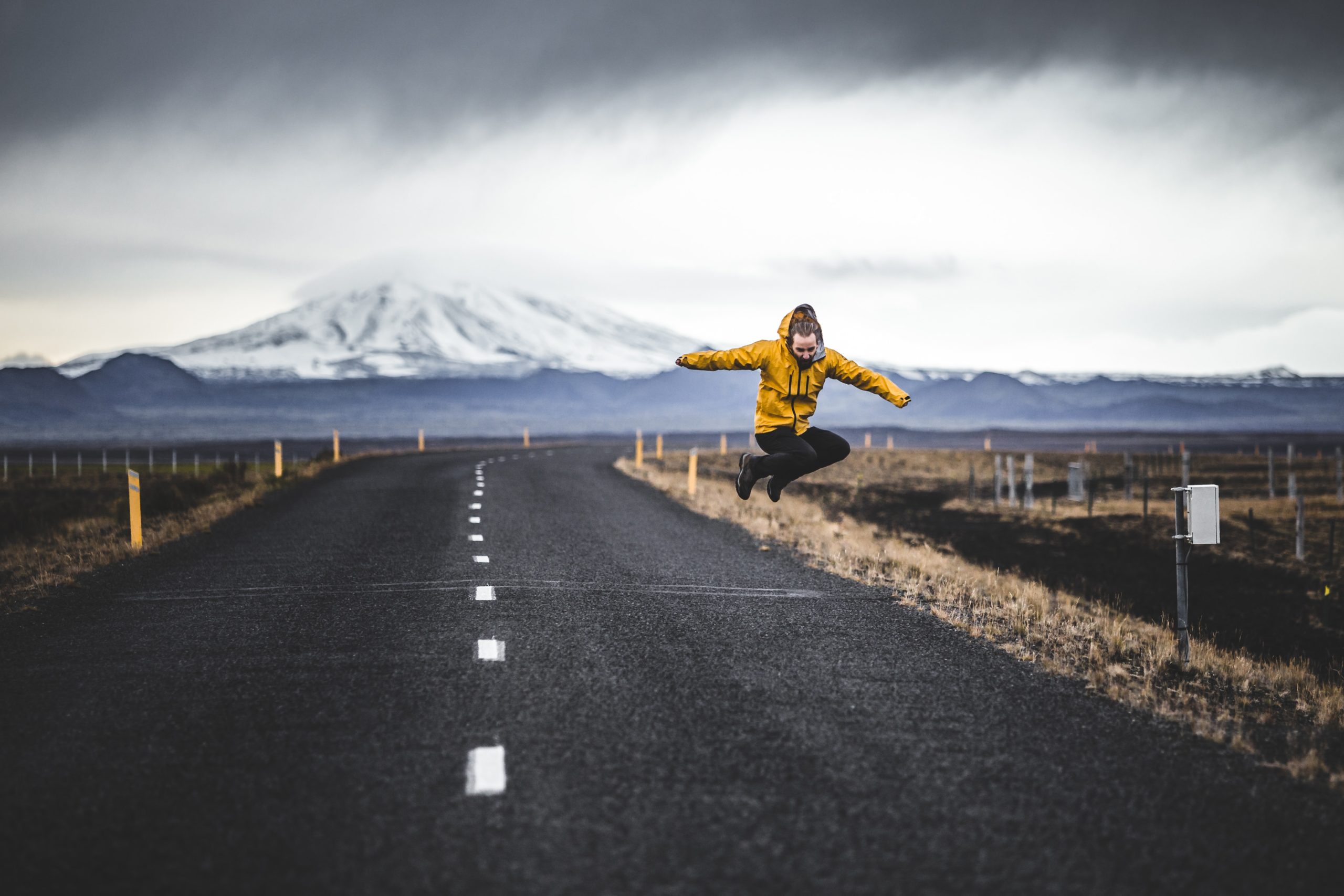
5. Dress for success
This is a point that often gets overlooked, and it’s a very Iceland appropriate topic. If you’re headed out into that dark wintry night, you had better make sure you’re layered, and at least partially waterproof.
You can give or take some of these things depending on how long you’ll be out and what your level of activity will be; but if you’re diving in, you won’t regret it.
Due to a fairly moderate climate (as far as Arctic climates go,) Iceland can be quite wet throughout the auroral season. Pair this with increased wind speeds in the evening, and you’ve got a recipe for some frigid legs. If you’re spending a few hours outside at night, you could benefit from some waterproof gear or insulated pants.
You may also want to dress in layers, as hopping in and out of a vehicle can sometimes be an extreme temperature experience. And don’t forget fingers, necks, ears and ankles!
These are parts that you may need to expose to work cameras, phones, and gadgets- but even the strongest mitts need a break. You might not wear them the whole time, but you’ll appreciate having the choice.
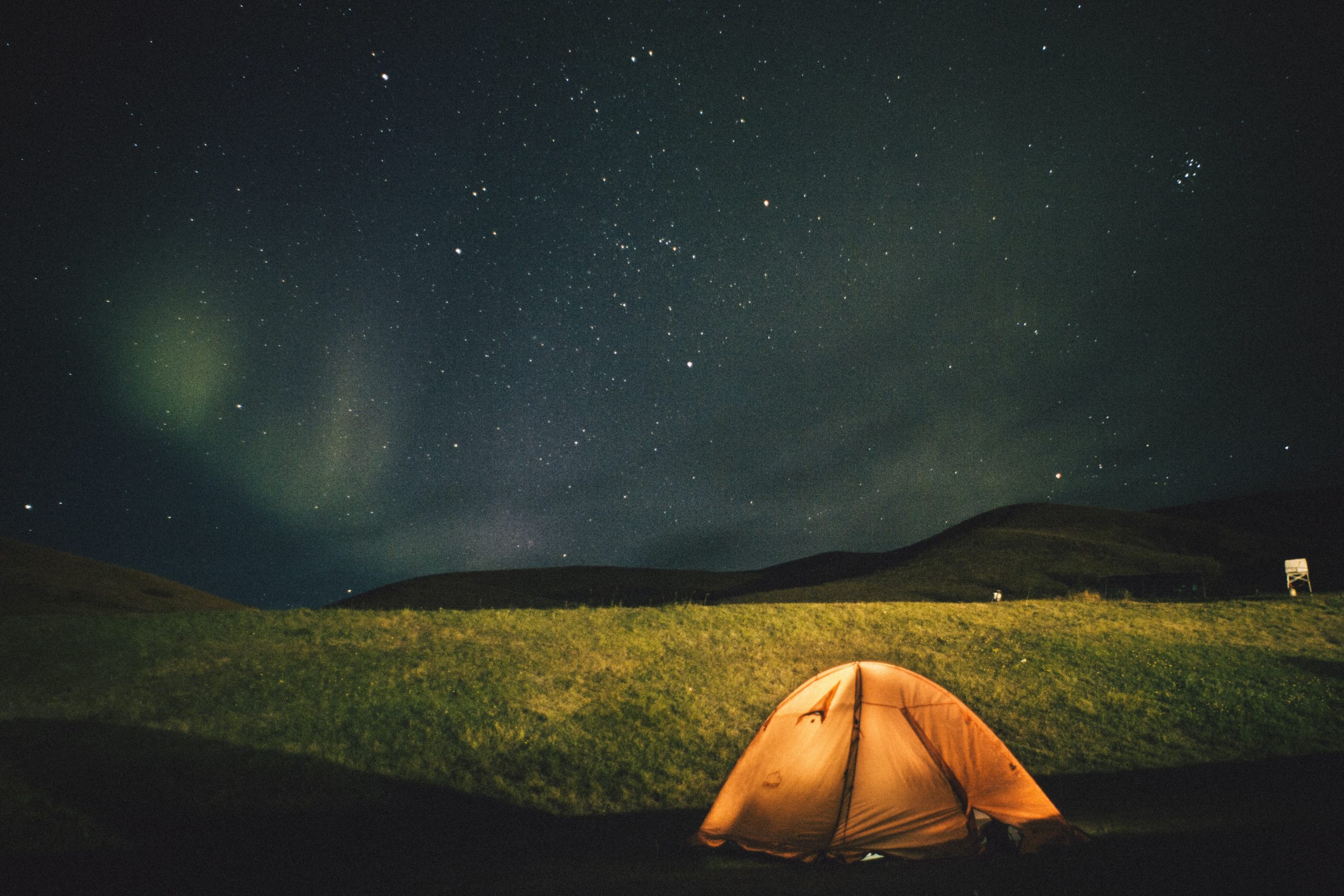
6. Start the hunt before you leave the house
When thinking about how to hunt northern lights in Iceland, checking the forecast and dressing in layers seems pretty straightforward. But what about preparing yourself? For some people, the hunt starts the minute they head out into the darkness.
But for a true aurora hunter, it begins in the afternoon and early evening, when you’re getting that early dinner and pre-hunt nap. You might be out late, and you might work up an appetite!
It’s a real drag to roll back into town around 1:30 am cold and hungry, only to find that your options are severely limited to convenience store snacks at best. If you’re lucky, you may be able to find a 24 hour grocery, but otherwise, most restaurants and eateries will be closed by the time you’re done chasing the lights.
So give your hunt the full attention that it deserves, by making sure your belly is full, and your body is rested. (…And maybe preemptively pick up some snacks for the road. Aurora hunting is hungry work!)
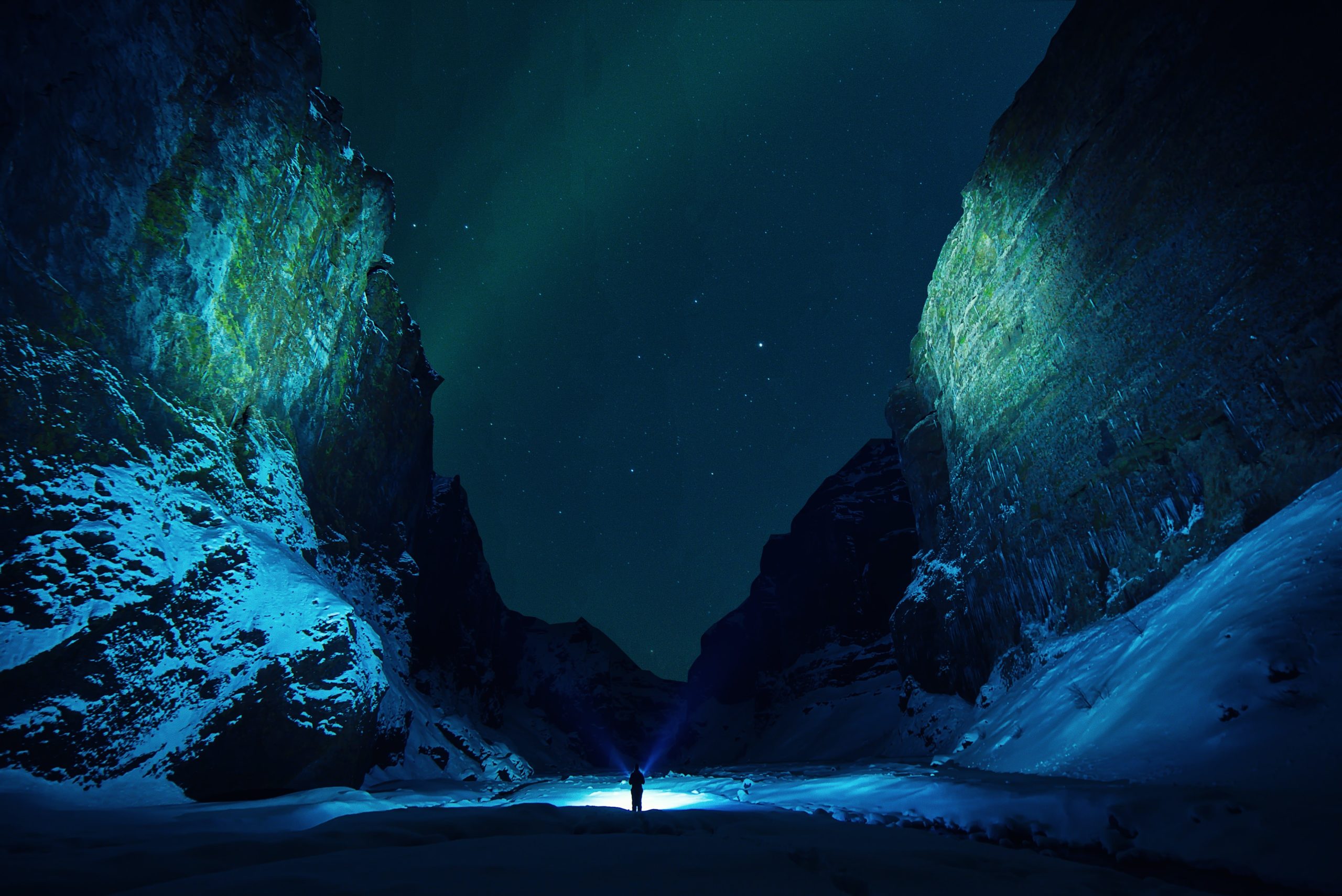
7. Know what you're looking for
When people talk about how to hunt northern lights in Iceland, they often forget to mention this part. It’s important to be prepared for auroras that may not look like what you’ve seen on postcards and films.
The average, low level aurora may be a bit smokier, darker, or less saturated than you expect. Knowing that they can begin this way can help hone your vision, and can also be the tip that helps you decide between the “cloud or lights?” game that many hunters have to play.
It can also help to know that not every aurora is a swirly ribbon of quickly moving spikes, and they may not even be the color you’re expecting! Some auroras can appear as a diffused glow, spots of activity, or even slowly moving bow shapes.
(Not to be confused with ambient city glow! On a cloudy night, a nearby town can throw off a surprising amount of warm glow into the sky.) Keep an eye out for cool extras like the Imagine Peace Tower in Reykjavik, shooting stars, satellites, constellations, planets, and even STEVE!
8. Go easy on your eyes
This can be a difficult tip depending on your situation, but it’s a good reminder. Our eyes are not designed to view color well in darkness, so aurora hunting can be hard on us.
Depending on your eyesight, the context you’re in, and your own color processing ability, you may find that your experience of viewing the lights is different from the person next to you.
Make sure to compare what you’re seeing, and talk about it! You would be surprised by how different we are. But no matter how sharp your night vision is, remember that you can help it by giving your eyes time to adjust, and avoiding bright lights while you’re out.
Things like phone and camera screens can be adjusted, and easier sources of light like red light flashlights can be acquired to really set the scene and spare your peepers. You don’t have to go full infrared mode, but don’t forget to be gentle to yourself. Aurora hunting is magical and difficult, so go easy on your senses.
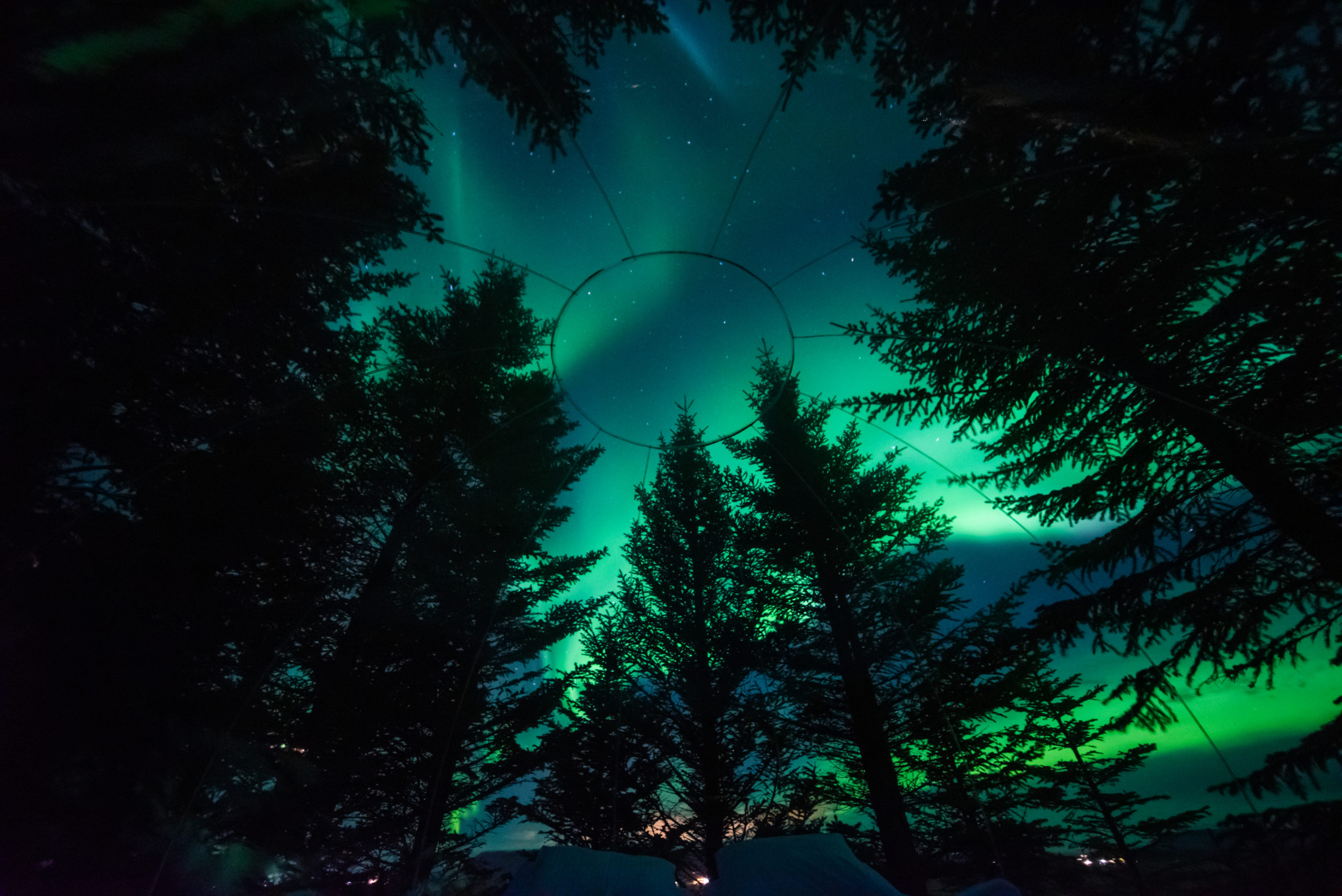
9. Keep moving
This isn’t a requirement, but it can be a helpful strategy. If you have a great spot to watch from, (like a northern lights igloo!), then moving might not be the play for you. But if you’re in a vehicle, or just out wandering, switching up your vista can sometimes help.
When we view the sky, it can feel like we’re seeing the whole thing- but we aren’t. The area you’re watching is a slice. And that slice might be impacted by the grade of the land, obstacles like mountains, trees, or buildings, and sometimes clouds.
It’s good to remember that the northern lights are a global event that are happening to our planet, and not necessarily just us. This can mean that we just aren’t underneath whatever is happening, so movement can sometimes be that extra step that gets us a glimpse.
10. Don't forget those test shots
If you’re waiting on that dream photo, this tip is for you. Don’t wait until you’re SURE it’s an aurora, shoot early, and often! If you think you saw something and you’re not sure, a test shot can be a great way to find out.
Low level wispy activity can be easily sussed out with a sample shot, and it can be a great way to gauge how you’ll need to adjust your settings for that subject. You’d be surprised how dark the lights can be when they’re just getting started, and how much color the camera can pull out in a simple test image, that our eyes could not.
This is a strategy that can also help if you’re in a brighter place and are really struggling to see. The settings dont have to be perfect, but you’ll get a good confirmation when you see that neon green pop up on your camera.
Or not! Sometimes, it really is just a cloud. But until you’re sure, a test is a great way to hone your hunter’s eye and get used to the various forms an aurora can take.
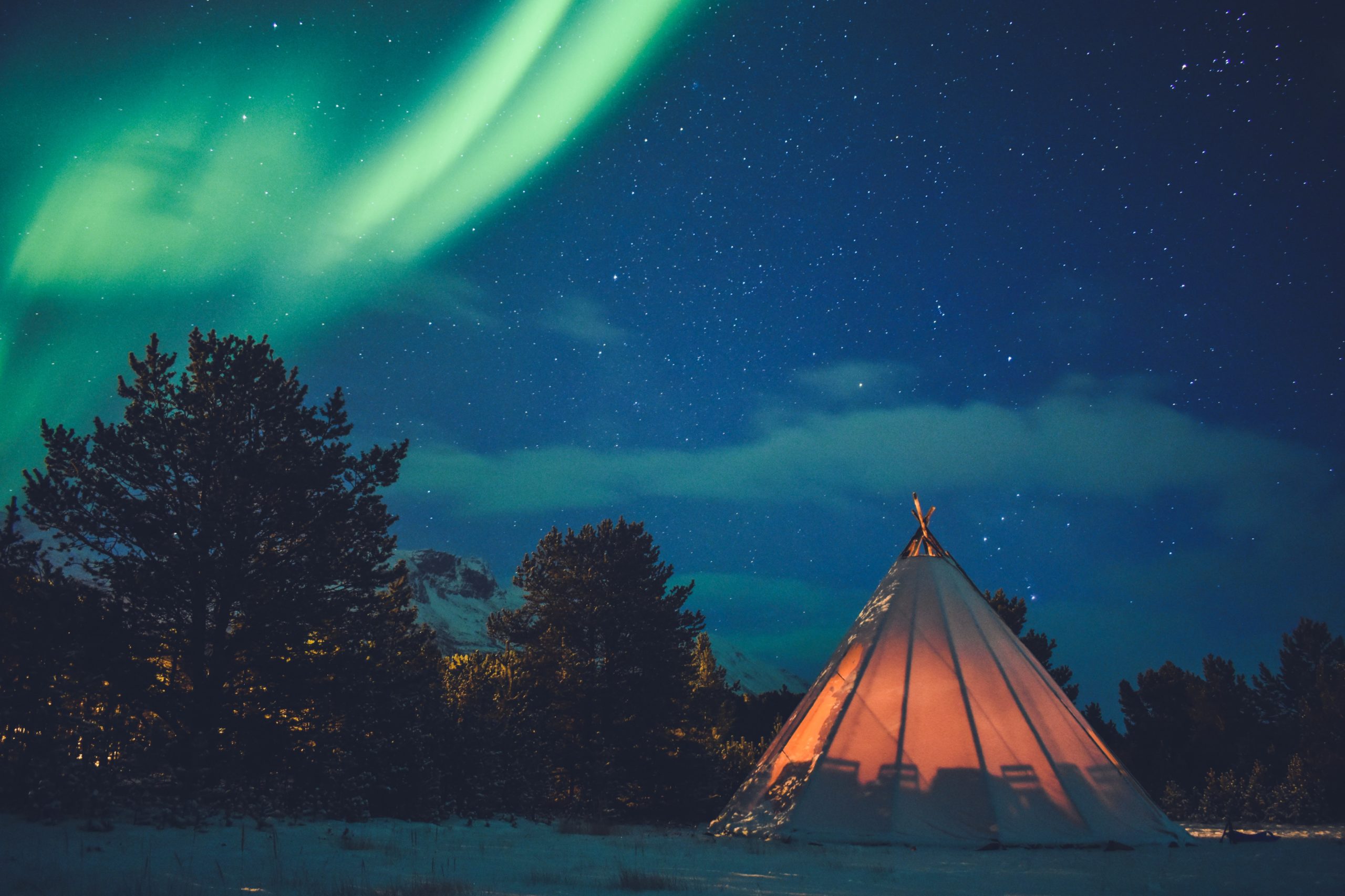
Next level Aurora Hunting: 5 wild places to watch the Northern Lights in Iceland
Looking to up the ante on your aurora hunt with a getaway to a rare location? Look no further.
Seeing the northern lights is phenomenal no matter where you are. But for some next level aurora hunting, we’ve reached deep into our own favorites for some rare spots that we think you’ll enjoy. Seeing these places at all is a big win, but aurora hunting in them? Unforgettable.
1. Grímsey: The Gateway to the Arctic
Grímsey is the one point in Iceland that actually reaches the Arctic Circle. Resting about 40 km. north of mainland Iceland, Grímsey straddles the actual Arctic Circle and is the northernmost inhabited land in Iceland. (There is a smaller island further north, but it is uninhabited and is predicted to soon be claimed by the sea.)
Getting to Grímsey is fairly straightforward. You can hop on the ferry for a 3 hour trip both ways, or catch a quick 25 minute flight from Akureyri Airport. Believe it or not, you can access this northern gem year round.
Home to only about 100 people, Grímsey is a popular destination for aurora hunting, birdwatching, history buffs and those that seek the rare and covetous Arctic Circle certificate! When in Grímsey, one can actually visit the border that denotes the current location of the Arctic Circle boundary.
This intersection is marked by a nearly 9 ton stone sphere called “Orbis et Globus.” This giant art piece is a monument that was made to mark the Arctic Circle boundary, and follow its movement. In fact, it’s round because they never intended this monument to be static- just as the Arctic Circle is not static.
At the time of this writing, the Arctic Circle is marked at 66.5 degrees northern latitude, but it is constantly moving further north of us. The circle is moving about 14-15 meters north every year, and will likely continue this journey for 10-20,000 more years.
At that time, it is expected that it will move south once again. Till then, we have the century stones on Grímsey to mark its passage. You can visit these three stones, that mark the past locations of the Arctic Circle border from the summer solstice in 1717, 1817, and, 1917.
Depending on how things go, Orbis et Globus may have to roll into the sea! Despite Grímsey’s diminutive size and small population, it is a place of thriving life and a phenomenal aurora hunting spot.
There are multiple options for lodging there, multiple historic locations to view, and many hiking paths where you will truly be alone with nature at the edge of the world. Out here it’s just you, the northern lights, and about 1 million estimated sea birds.
This close to the pole your ability to pick up low level solar activity increases, and of course you can’t complain about the quality of darkness out in the Arctic waters. Not to mention, the certificate!
There are multiple ways to acquire one of these rare documents, and for many, they are a trip highlight. You can secure yours by taking a Nordlandair/Air Iceland flight, or by purchasing one in the Gallerí Sól giftshop.
(According to the town of Akureyri’s webpage, Gallerí Sól is open Monday, Wednesday, and Friday during the summer months, which may not line up with many Aurora hunters. If you plan on taking the ferry, make sure to write or call ahead to pre-reserve your diploma by phone (+354) 4673190 / (+354) 4673156 or by email: gullsol@visir.is. Can’t leave without it!)
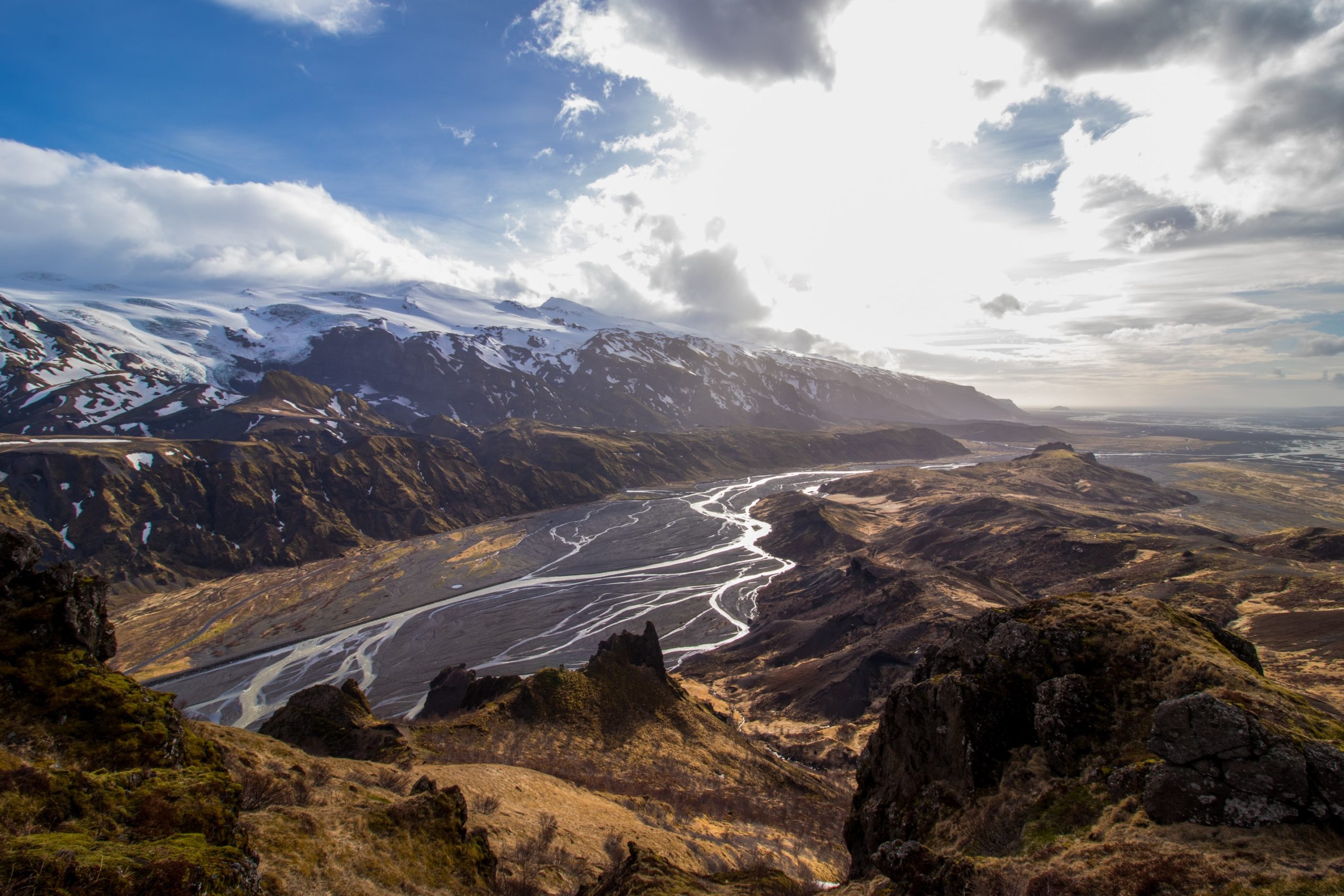
2. Þórsmörk/Thórsmörk: Valley of the God
In English, this place is The God’s Valley. Named for Thor, you don’t have to be here very long to see why this place is divine enough to be a deity’s backyard. Thórsmörk makes the list not only because it’s painfully gorgeous, but it is also not so easy to get to.
Nestled in the southern Icelandic highlands, this nature reserve is officially a trek. Though it doesn’t take too long to get there from the main ring road, it does require some F-road travel and depending on conditions, a couple of river crossings.
These are glacial rivers, and because of that, it can be hard to predict how deep, how turbulent, or how difficult a crossing will actually be at the time. Glacial rivers are affected by climate change, seismic and geothermal activity, and just weather in general, so this is a location that we recommend some help to access.
While it is perfectly legal to attempt this journey yourself, most rental insurance does not actually include water damage to the undercarriage of a vehicle, which is good to know before you take a 4×4 into the middle of a river for the first time.
Even the experts get stuck sometimes in their specially modified highland crawler trucks- so it’s a good thing to take seriously. Fortunately, there’s another way!
Thórsmörk is home to some cool mountaineer lodging and endless beautiful hiking trails, there are many different guides that can help ferry you into the god’s oasis.
These experiences range from private super jeep expeditions, all the way down to the Highland Bus, which is a specially altered bus meant to navigate river crossing and get you over Eyjafjallajökull’s still standing piles of fine ash.
If you’re able to make this journey in the winter, be ready with your cameras. There are some unbelievable vistas in this area, and some of them are quite manageable for the novice hiker.
Proceed with caution though, because colder months of the year bring additional navigation and footing challenges that should not be overlooked. These are the true highlands, and people aren’t kidding when they say it’s another planet.
Between the climate microcosms and the rapidly changing conditions, it is good to be extra mindful out here. Keep in mind that some of these pathways into the reserve may not receive extensive service in the height of winter, and so if you are aurora hunting then, it is recommended to go with a guide.
If you are visiting in the earlier or later halves of the aurora season, it may still be clement enough to venture out on your own, if you are an experienced outdoors person, or you’re hitching a ride on the Highland Bus.
Thórsmörk in the autumn months is colorful and covered in berries, and a great place to spend the night for a northern lights show like you would not believe. When you’re there, you know you are watching from Thor’s own theatre.
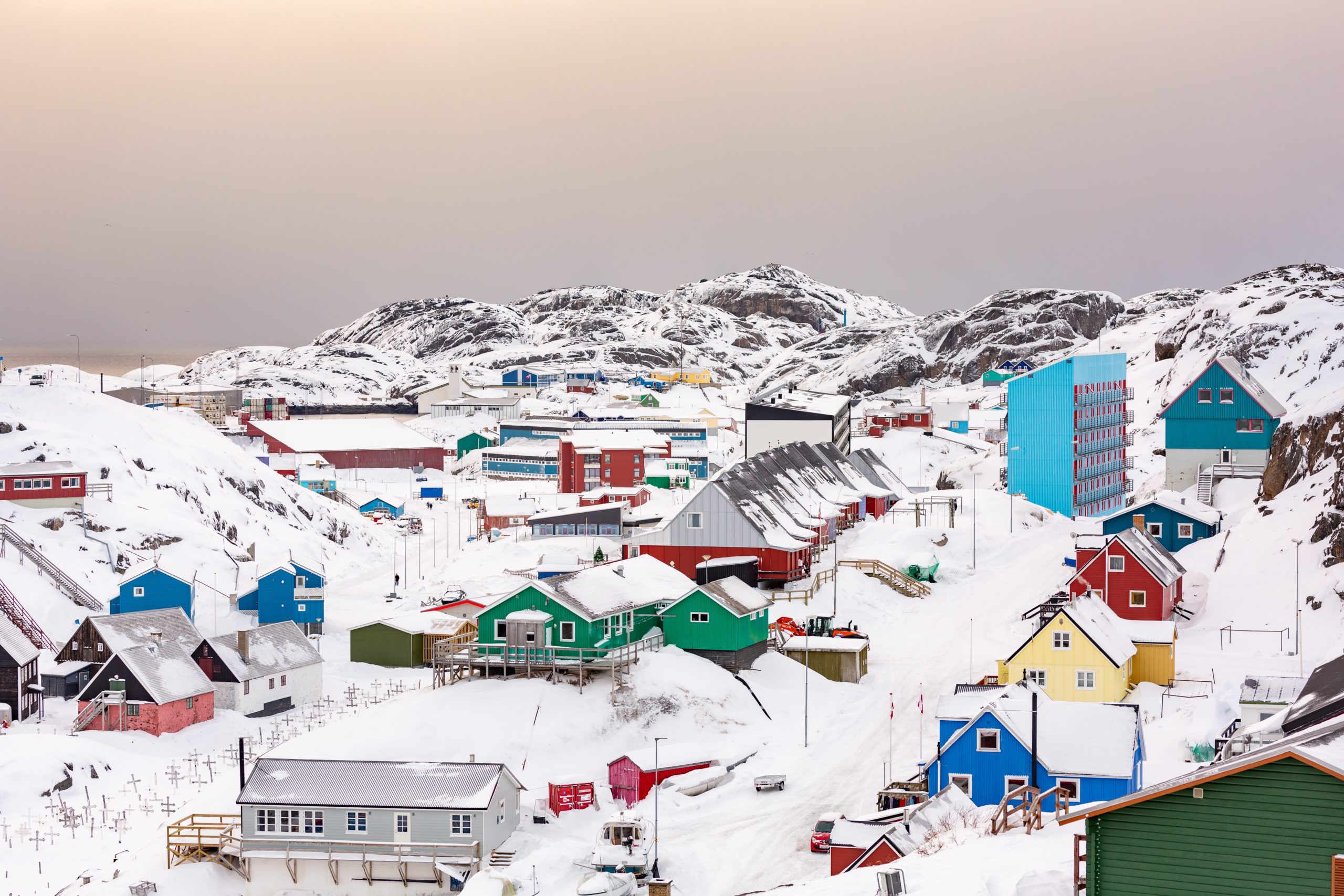
3. Greenland via Reykjavik or Akureyri
I know what you’re thinking! Greenland? But this isn’t a rare spot in Iceland? And you are correct. However, for the intrepid aurora hunter or day-tripper, it is good to know that the icy shores of Greenland, or Kalaallit Nunaat, are accessible from multiple city airports in Iceland.
You can catch a quick flight in Reykjavik’s domestic airport to the capital city of Nuuk, and it only takes about 3 hours and 20 minutes. These flights visit multiple locations in Greenland however, so if you’re looking for a longer stay you can visit Ittoqqortoormiit, Kulusuk, Narsarsuaq or Ilulissat.
Though this is another country, we had to include it on the list as a rare and magical aurora hunting dream spot- because it has not been possible in recent years to get many direct flights to this area outside of Iceland or Denmark.
Thanks to Greenland’s small population, remote towns, and low light pollution, this is a phenomenal place to chase the lights. This large landmass also boasts fairly clear skies most of the time and is large enough that you can move around to avoid some of the relentless low-pressure systems that are so populous in the high winter of the year.
There are many things to do while you wait, like fishing in the pristine ice fjords, dog sledding, hiking, climbing, and visiting one of the biggest ice caps in the area. But don’t stray too far from the towns- with their colorful houses and local delicacies, they are just as incredible and bright as the light show you’ve come to witness.
4. The Bubble Hotel of Iceland: Imagine if the only thing between you and the lights was a bubble?
Though rare, this spot might be easier for you to get to- with some help from their intrepid guides. The Bubble Hotel of Iceland is a surreal paradise tucked away into two different Icelandic forests.
These wholly transparent spheres are heated and nested into private groves so that you can melt into nature while wrapped in a luxurious down comforter. This might be our coziest location yet!
Typically when aurora hunting, you have to give it a rest when you go inside. Sometimes we miss prime aurora hours, or even a whole show when we head in to get a hot chocolate and thaw out.
But not here at the Bubbles. At the Bubbles, going inside never means missing the sky. You can lay outside for the whole night, and see everything around you from your 360-degree nest in the woods. It’s hard to beat!
If you plan on visiting the Bubbles, it is good to note that there are not many of them, and they book up months in advance. They exist in order to protect the woodlands they’re in, and provide an alternative revenue source to the farmers in the area so that they do not have to sell their lumber.
Protecting long-term growth in new forests is an important task, and so not only are the Bubbles a fun choice, they are a responsible one. They are located out in the country near the Golden Circle region, and the South Coast region, and upon booking, one of their local guides will collect you in Reykjavik and give you a chauffeured tour on the way to your destination.
They will also pick you back up the next day, and return you to town. From start to finish, a trip to the Bubbles is the ultimate luxury and a rare chance to turn off your brain and connect to the world around you. Not a bad state of mind for some aurora hunting.
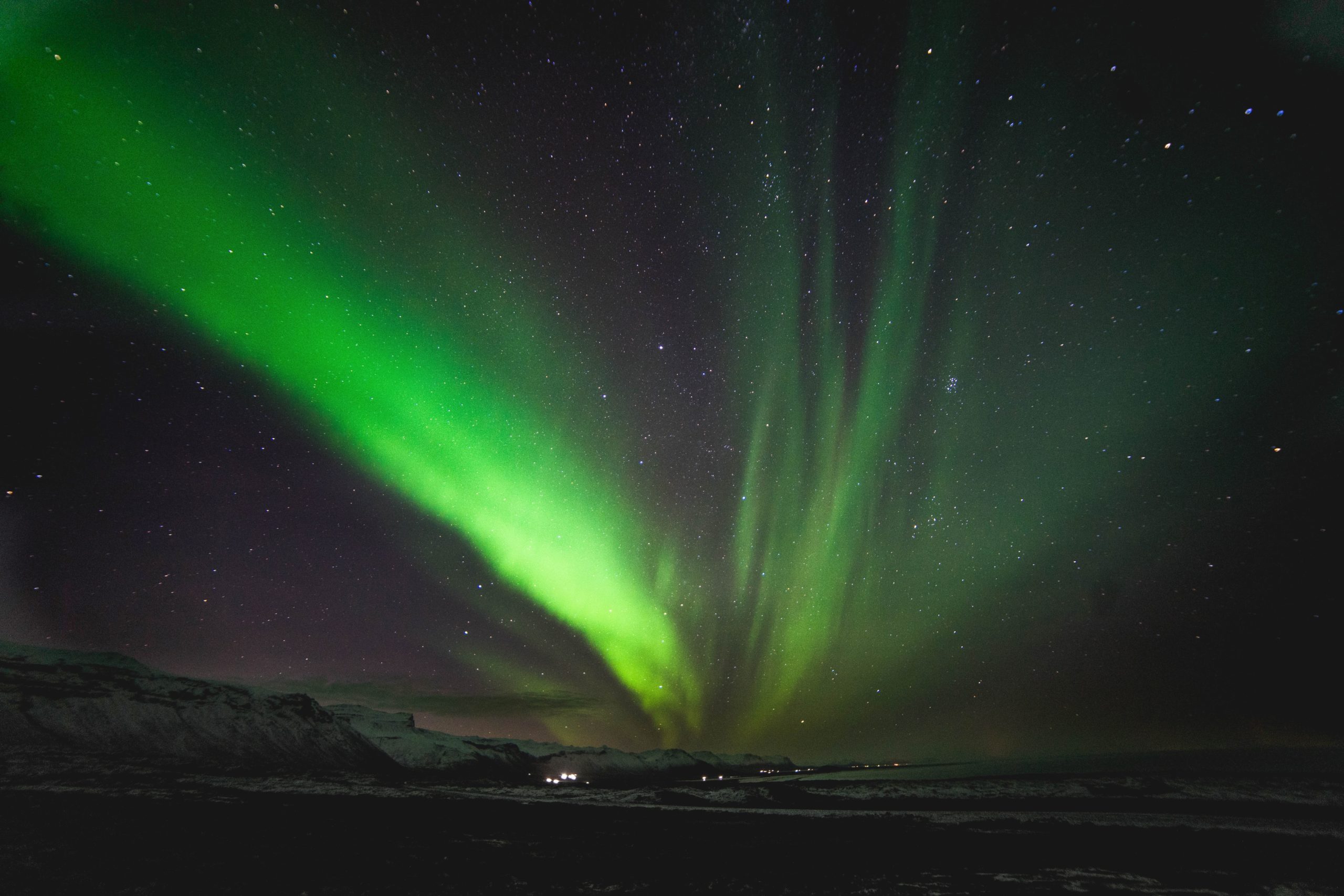
5. The Arctic Henge at the top of the world
Unless you’re already stationed up in the north, it may take you quite a while to get to this one. Sitting at 2 hours and 2 minutes drive from Húsavík, this monument is nearly the highest mainland point in Iceland.
Designed by Artist Haukur Halldórsson, the Arctic Henge is much like Stonehenge and is built as a reminder of figures from Norse mythology. The henge itself represents four dwarfs from the Prose Edda book who were tasked by Odin to hold up the sky.
It acts as a sundial and a calendar of sorts, reminding us of all of the dwarves that help to build this chronological map of the seasons. Right now the henge consists of four six meter tall gates and one ten meter high column, but it is still under construction.
The stones used to create it are massive, Set on a hill in the seaside town of Raufarhöfn, this is a historical place with an incredible spectrum of wildlife. If you don’t visit Grimsey, this is nearly as far north as you can get in Iceland.
The clarity in the northern climes and lack of light pollution is sublime, and few photos can rival a choice shot of the lights dancing among the henge. (Perhaps even a video punctuated with the wild cries of Arctic foxes darting in between? This is their turf, after all.)
Keep in mind when you visit that the henge is a holy place celebrating the Ásatrú belief. It may yet be under construction for some time, and so it may take a few visits to see everything that has been planned.
Though it is out of the way, don’t sleep on Raufarhöfn and its beautiful henge. Aurora hunting is a place of deep magic is not an opportunity to be missed.
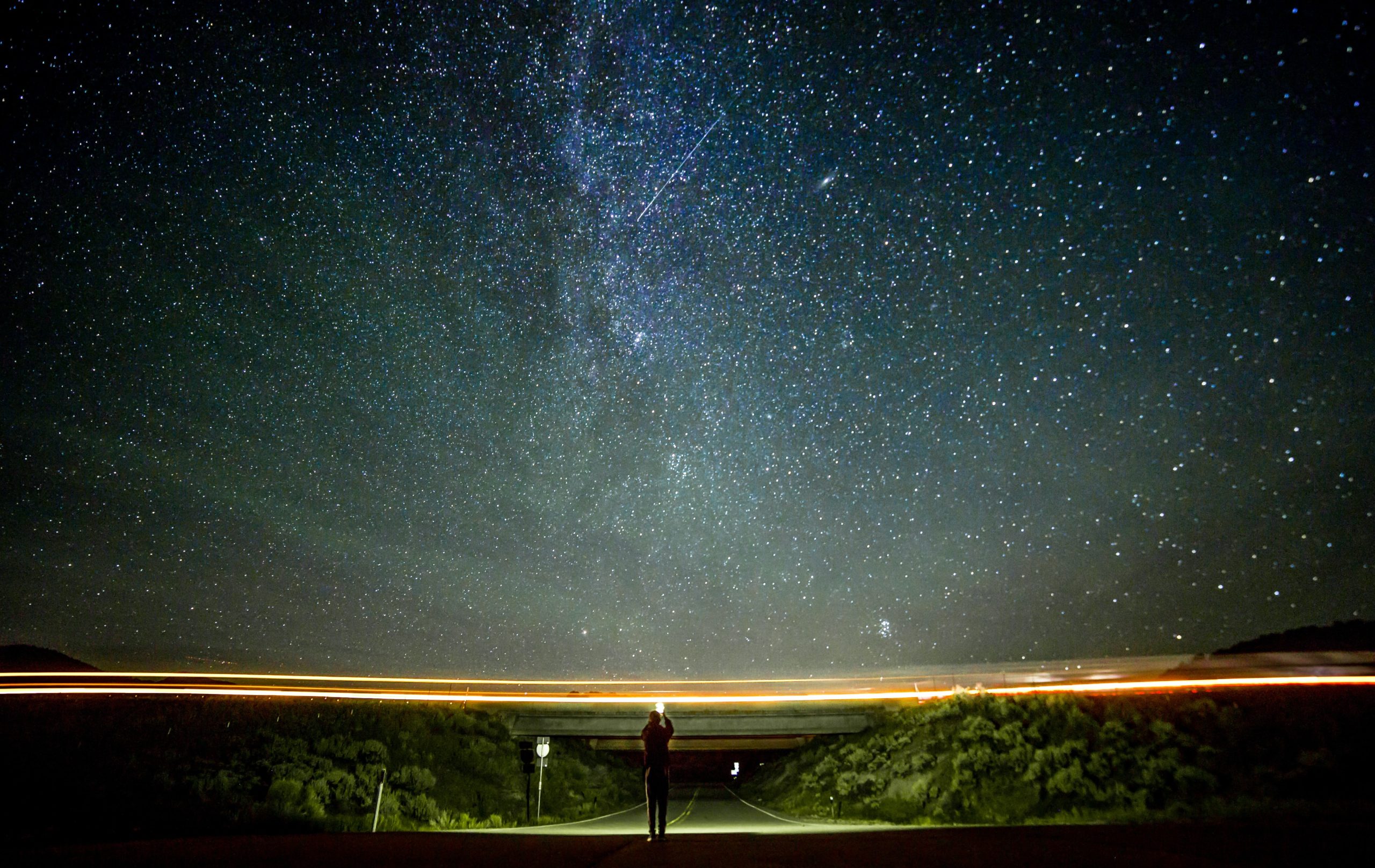
Don’t miss that shot! 10 important tips for photographing aurora borealis
Camera? Check. Gloves? Check. Tips for photographing aurora borealis? Double check.
Planning to capture some once-in-a-lifetime shots on your aurora hunt? Don’t head out without these tips for photographing aurora borealis!
Seeing the lights in person is one thing, but being able to revisit that memory is priceless. Here are some of the tips and tricks that we use when setting up for a night of astrophotography. Share some of yours in the comments!
1. Keep your image sharp with a tripod
It can be hard to tell, but we move a lot. Try taking a few photos on a long shutter and you’ll see how much. In order to achieve a crisp and unblurred image, you’ll need a tripod or a solid surface to set your camera on for the duration of its shutter process.
Tripods are the best option. Because you never know when you’ll get a flat enough rock at the right height. (Not to mention the wind! A brisk evening wind has taken out many an expensive camera- so make sure yours is both attached and weighted enough to be left alone!
And if your images still suffer from shake, try a remote shutter release, or set a 10-second timer. You’d be surprised how disruptive one shutter press can be!)

2. Check for manual mode
When you’re heading out on your first aurora excursion, make sure you have the right gear for the job. Many first-time hunters make the mistake of bringing cameras that don’t have a manual capability or a way to adjust settings.
Things like disposable cameras and many lower-level point and shoot varieties function on pre-created settings that don’t allow for much tweaking if any. These settings are most often intended for specific contexts like traditional daytime sunlight and indoor lighting.
You may find that you have limited control over novelty gear and smartphones as well, so it is good to check beforehand to make sure you know what you’re working with. Popular options for aurora photography are SLR and DSLR cameras with a manual mode, and as technology develops- even some smartphones and drones.
Many of the newer smartphones have night mode settings and are only getting better. But till then- it’s hard to beat good old-fashioned manual mode, which gives you full control over your image and how you capture the light around you.
3. Do your business before you leave the house
If you’re just starting out, get familiar with your camera settings before you leave. Finding an unfamiliar button or dial in the dark can be a struggle, especially if there’s an aurora actively happening overhead.
You can set and test basic settings (shutter speed, ISO, aperture, etc) before you head out, giving yourself just one less thing to do in the field, and a chance to troubleshoot any problems.
Keep in mind though, that a good understanding of these settings is helpful as you may have to adjust them based on what conditions you’re seeing. (Oh. And do use the facilities before you go- you never know when you’ll see another bathroom out in the wilds of nighttime Iceland.)

4. Get focused
You already know to put the camera in a manual setting, but what about your lens?
The autofocus function works really well during the day, but at night the camera will struggle to use this tool. Picture it- you’re all set up, there’s a glorious display of northern lights, you’ve pressed the button, and.. The lens is just grinding into infinity.
When in autofocus in a dark place the camera isn’t quite sure what to focus on, so it just spins the lens over and over trying to find a subject. So don’t forget to set your camera to manual focus! (..And then to actually focus, using another bright object in the area.)

5. Keep your batteries warm
Most cameras are powered by lithium-ion batteries, and lithium-ion batteries don’t do well in the cold. This could spell trouble for your smartphone, your cameras, and even your gadgets or tools.
In order to keep yourself prepared, the best thing to do is to make sure you have fully charged backup batteries on hand. But if it’s too late, you can still salvage the one you’ve got by warming it in your pocket, wearing your gear close to your body, or utilizing hand warmers.
Make sure to not leave your batteries in a cold place overnight, and if you need to do an emergency charge, try to avoid charging a cold battery. You may find that it won’t take the charge!
6. Open it up!
You’re packing your camera bag and making last minute lens decisions- so what are you bringing? Our favorite aurora lenses are fast, wide, luminous and light.
That means that they can access a low digit (fast) aperture, they can capture a wide view of the sky, they aren’t overly heavy, and they manage low light conditions well and without distortion.
Choosing a lens is a big investment, so make sure you’re going with something that works for your camera and will meet your photographic needs. Auroras can take up a huge vista, so when in doubt, go wide!
7. Keep down the noise
When setting your camera for nighttime photography, one of the most important settings to remember is ISO. ISO is a function that controls the light sensitivity of the camera’s imaging sensor.
In this case, that means that the ISO is helping the camera “see” light in a dark place. ISO is always in play, even if you’re using a pre-programmed setting, and we recognize it as a number scale.
Typically, a daytime ISO is between 100-200, and a nightime ISO starts at 800, and can go quite high depending on the conditions at hand, and the length of your shutter speed. (Too much on both can create a washed out image!)
You will find that you’ll have to experiment a bit with the best ISO for your shot, and it’s good to try a few. For most cameras, we recommend staying below 6400, but always experiment with these combinations- as higher end cameras will have different processing strengths.
But beware- the ISO may make the aurora in your photo brighter, but you can have too much of a good thing! An ISO that is too high can create “grain” in your photo, or noise.
This can be hard to see in a thumbnail, so make sure to capture shots with multiple setting combinations to avoid getting a great shot- but with too much texture.
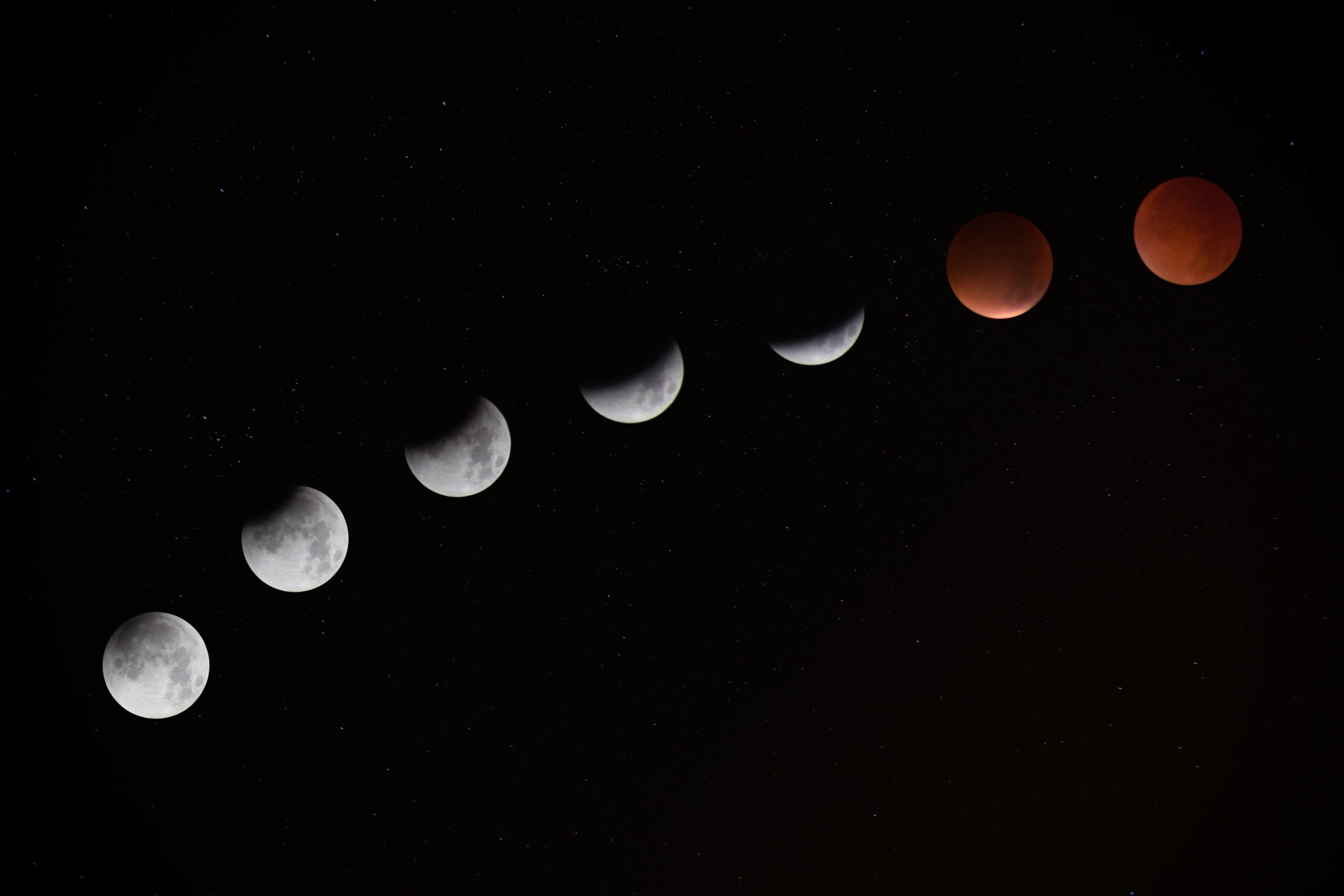
8. Catch every movement, the easy way
Photos are great, but what about animation? Live filming of nighttime shots has been difficult for a long time, but is starting to become possible on certain cameras.
The difficulty here is that most cameras do not allow manual setting control during video, but instead they give you a pre-set daytime mode. In order to capture an aurora on video, you still need access to those nighttime settings just like you do in photos.
The good news is that tech is catching up and allowing us these options more and more- but what if you don’t have one of those gadgets? Luckily, you can go the route of a traditional aurora hunter and try out time lapse.
A time lapse is a collection of many photos taken in quick succession, that are put together later to create a slideshow. After controlling the speed of this slideshow, you can use photos to simulate filmed movement in an auroral occurrence.
Many cameras have a time lapse function already, so you can just set it, and forget it! (Make sure to test it before you go out, this can be a tricky one to troubleshoot in the field.)
9. Don’t forget to turn ON the lights
Believe it or not, there are actually moments where a little light pollution can help us out. In instances where you want to be in the shot, or want to light the foreground a bit, try experimenting with small lights or vehicle headlights to carefully illuminate a smaller foreground object.
These photos takes some experimenting to get right, as too much light during a long shutter process can create overexposure. Sometimes it’s enough to just flash a cell phone light for a few seconds, and allowing the camera to capture that moment and layer it in.
A well diffused porch light can do the trick- or even a good flashlight. And if the northern lights are running late, don’t forget about light painting!
Allowing a camera to take a photo on an extra long shutter can create motion blur in a photo- which gives you a chance to write a message or draw a symbol with a small light.
You’ve likely seen some of these images before- and they can be a lot of fun on a night when you’re biding your time waiting. Try setting your shutter to bulb for more time, and experiment with star trail shots as well! After all, the aurora isn’t the only light up here.
10. Pick your favorite color
Disclaimer: If you can, shooting in RAW is a preferable starting place. The RAW image format allows the image to retain more data, which helps you out later if you plan on post processing the image later.
A RAW image would retain enough data that you would be able to adjust the white balance later on. However, if you don’t have this ability, or you don’t want to bother with post processing, this tip is for you.
Once you’ve set your camera within the typical nighttime setting range, you’ll find that funny things can happen with color. Messing with somebody’s concept of light can do that.
However, don’t fret! If your photo is exceptionally orange or extremely blue, this can be quickly remedied by changing the white balance on your camera. The white balance option often has its own button indicated by “WB”, but can also be found in your camera’s settings menu.
This function gives you a menu of different icons that correspond to different “temperatures”. These temperatures will change the color cast of your images, so you can use them to control the warmth or coolness of your shot.
This is a pretty subjective setting, so you may need to try a few to get the look that you want.
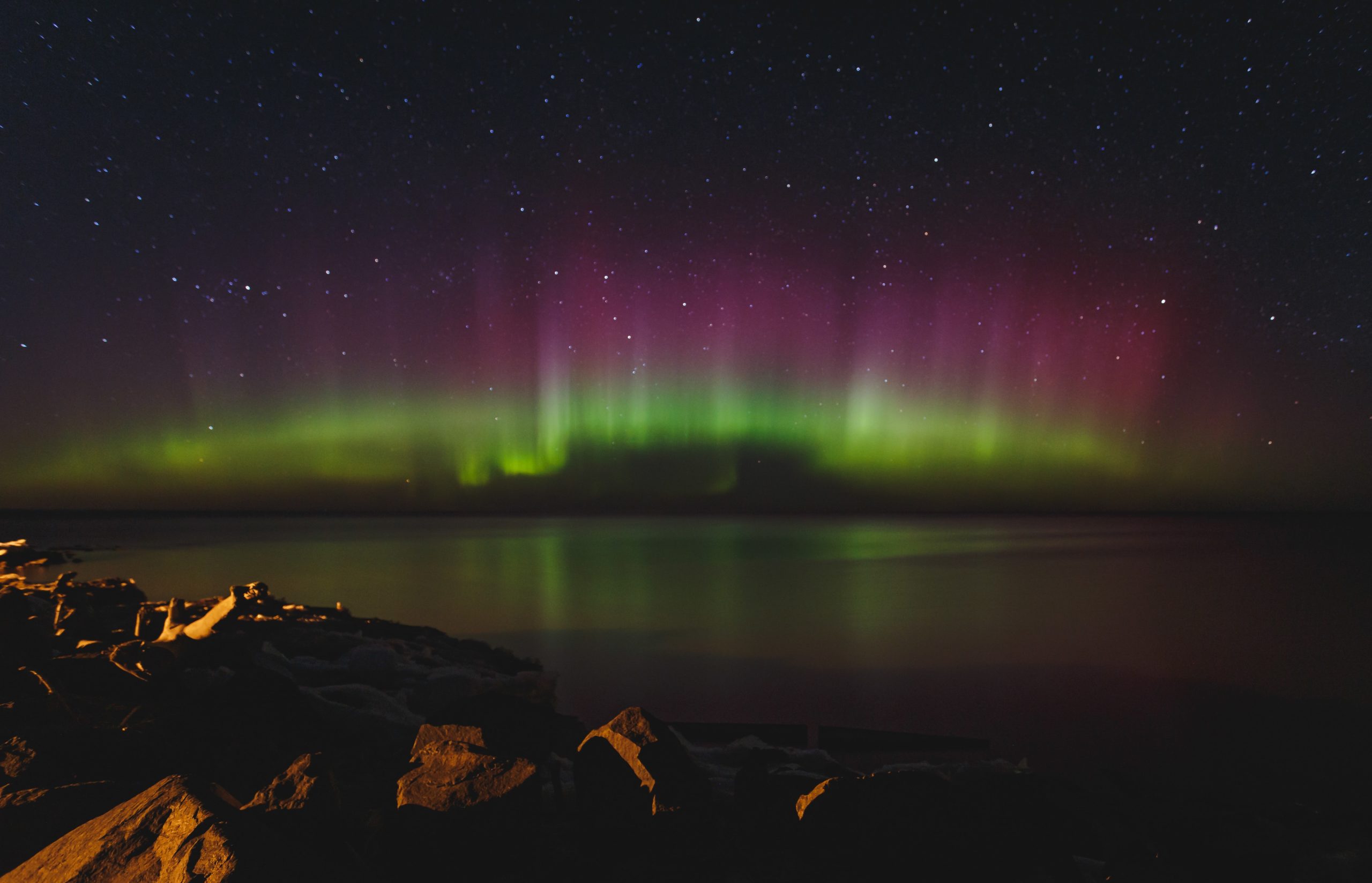
“Can you see the Northern Lights in Michigan?” and 10 other true or false questions from the secret vault!
One of nature’s most mysterious natural phenomena gets unmasked here and now, with these 10 true or false questions from the frequently asked question vault!
We’ve heard hundreds of different questions, facts, and myths from all over the world. From quandaries as simple as “Can you see the Northern Lights in Michigan?”, to more difficult wonders about what they look like on different planets, and why?
Some of these questions we’ve found answers to, while others are still up for discussion as the science develops- but we’ve gathered some of the popular ones here.
What are some questions you’ve heard about the Northern Lights? Did you find an answer? Compare in the comments below!
1. It has to be cold to see Northern Lights
FALSE. In artwork, the aurora is often depicted in snowy, Arctic settings, and connected to cold weather. This is definitely an accurate season for aurora watching, but so is the end of autumn, and the beginning of spring. The reason for this is not the temperature, but rather the light cycle during this half of the year.
From the end of April to the beginning of August, it is too bright in Iceland to see auroral light with the naked eye. Auroras can still happen, but we lack the proper darkness to view them. Because the aurora happens above our weather system the warmer temperatures during this off-season do not affect them.
You will find that cloudless nights and cold temperatures do often go together, which helps with visibility. This is because the Earth absorbs the Sun’s heat during the day, and the clouds insulate the Earth and keep that heat from escaping.
If there are no clouds that night, you’ll find that the temperature is colder. A cloudless night certainly does help us see the show, but it isn’t the catalyst that causes the show to happen. So don’t pass up a September or March aurora hunt!
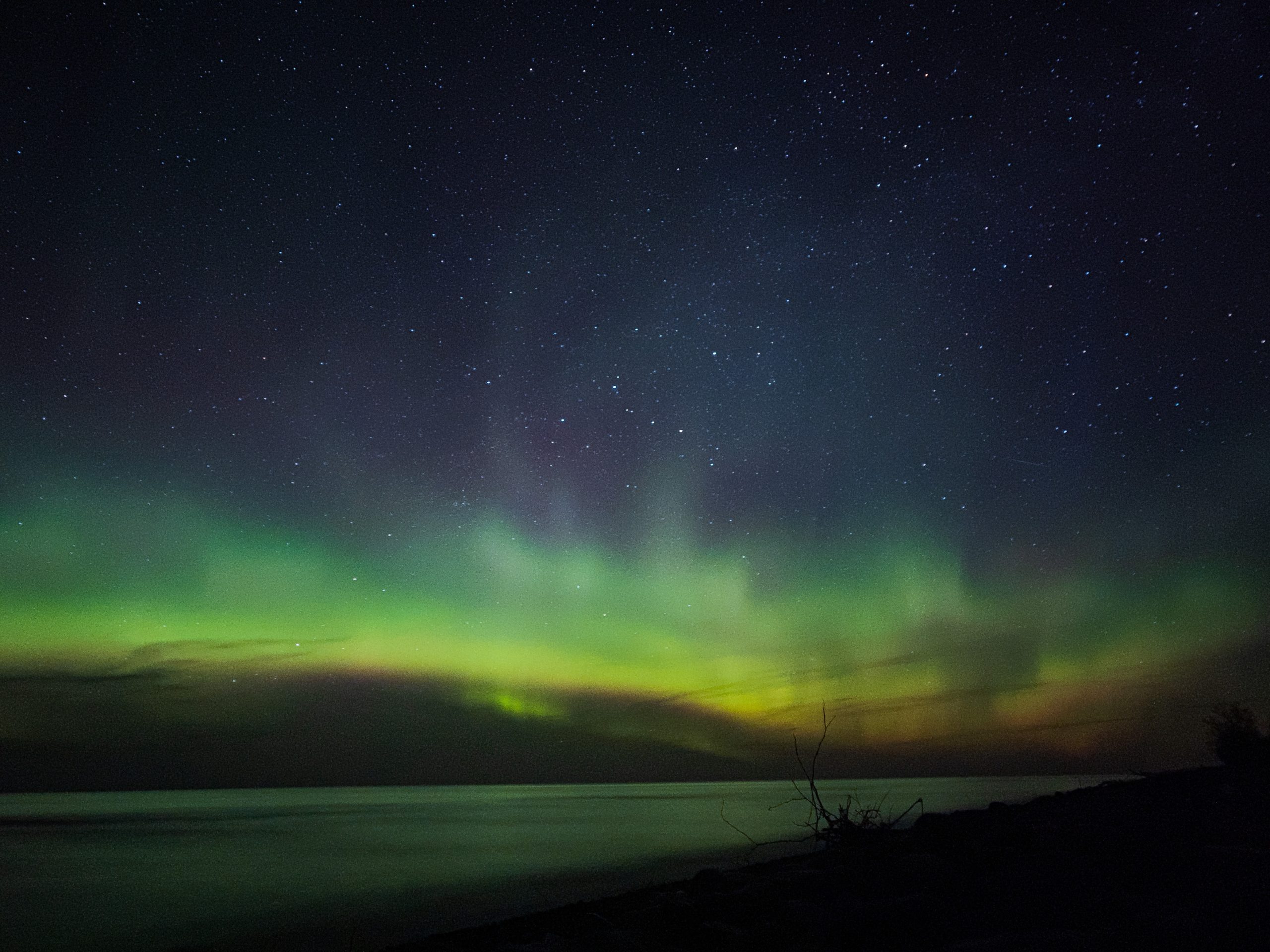
2. All auroras look just like the photos
FALSE. No two auroras are the same, and that goes for the conditions you’re viewing them in as well. Add that to the variety of equipment and information out there, and you’re looking at a whole spectrum of opportunity.
On average, an aurora viewed with the naked eye will not match the photos and films that you see in professional publications. This isn’t necessarily because of photoshop, (it can be), but rather because of how the human eye and nighttime photography work.
In a nutshell, human eyes were not designed to perceive light well in dark places, so we have trouble seeing full color at night. Cameras on the other hand do not have this problem and are able to be manually adjusted to brighten certain aspects of a scene.
This is a type of photography commonly used to create dramatic portraits, realistic theatre or performance shots, and nighttime or astronomical photos. Pictures like these are made by utilizing a higher ISO, a longer shutter speed, and a lower aperture, among other things that are up to the photographer.
Depending on how bright the location is and how strong the aurora is, you may have to adjust in different ways to get the image you want. These types of photos traditionally required fairly advanced gear, but with the advancement of available technology, it is becoming easier to capture more realistic images.
These days, you can snap a shot on a smartphone, or even live film with a camera that allows manual control during filming. This doesn’t mean that the photos that you see are fake, but it can mean that they are processing the low lumen light in a more efficient way than the human eye, creating a more saturated and complete image.
Of course, we can’t speak for every image, so there are always possibilities that additional editing was applied. You may find that your own color processing ability is also at play while aurora watching, and should compare what you’re seeing with those around you. You would be surprised how many people see the same thing in different ways!
3. You can see the Northern Lights in Michigan
TRUE. One of the most important and popular questions of all time, is if you can see the Northern Lights where you live. We hear these questions often from people in continental Europe and the northern areas of the United States, and the short answer is that it IS possible.
It may not be a regular occurrence, but during a geomagnetic storm or a night of intense auroral activity, the lights can and have crept down that far. There are photos of aurorae visiting uncommon places all over the web, and even just recently an alert from a past storm that they might travel down as far as Maryland.
On average, low-level activity stays close to the pole, which is why it is so common in the Arctic area. But the more geomagnetic activity that there is, the more possible it is for it to appear further away from those poles.
We also now have STEVE to look forward to, which has been reported to occur closer to the equator. So if you’re in Michigan, don’t lose hope! Every now and then Lady Aurora definitely does makes a trip.
4. A full moon will make it impossible to see the Northern Lights
FALSE. When looking for the northern lights, it is recommended to remove yourself from all sources of light pollution. This includes manmade sources like streetlights and city lights, but it can also mean organic sources like the Sun, or moonlight.
There is often a lot of chatter about checking the moon phase before you go out, and many forecasting services often include it. But it certainly does not mean you’re 100% out of luck if you find yourself stuck with a full moon.
In my experience, a darker sky can mean easier viewing, but some brightness can be a photographic dream. The light from a fuller moon can provide you with important foreground illumination that can help highlight a landmark, landscape, or even a person.
These shots may require some tinkering to get the correct settings and avoid overexposure, but they can be some of the most beautiful. A full moon can be hard on your eyes, but it definitely isn’t game over for an intrepid hunter.
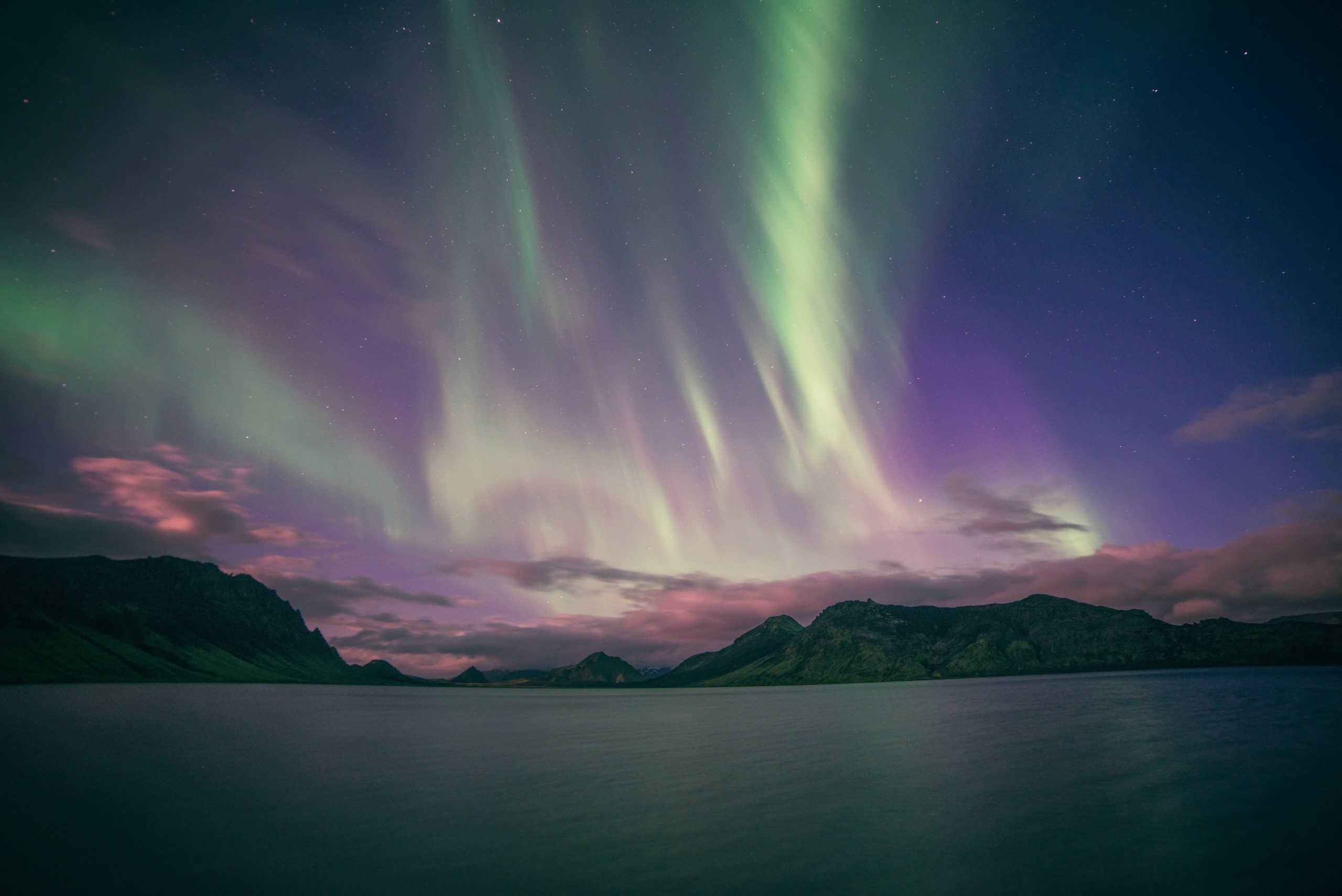
5. You have to look north to see the Northern Lights
FALSE. Typically, northern lights will occur in a northerly direction more often than not, because few things are further north than the magnetic pole. All of us are more than likely going to be below the activity, which makes this an easy tip to give someone who is trying to orient themselves.
However, if you’re already pretty far north, (which we are), and the geomagnetic activity is high, it is possible that the aurora is not always happening north of you. Activity can manifest overhead, or to the south- or even to the side.
This can depend on the optical illusion of where you are while you watch, what obstacles or landmarks are obscuring your view, and how the activity is manifesting in the sky at that moment.
If you have a wider and further reaching view to the East, you may be more likely to catch a visualization in that direction rather than in a direction where you may be up against a mountain.
At the end of the day, we are small, and the Earth and the Northern Lights are huge, and it can be hard to grasp the visual scale or distance of a celestial event. The lights will always be north to someone, but don’t forget that that person may not be you- and look around! They do have a tendency to sneak up on you when you least expect it.
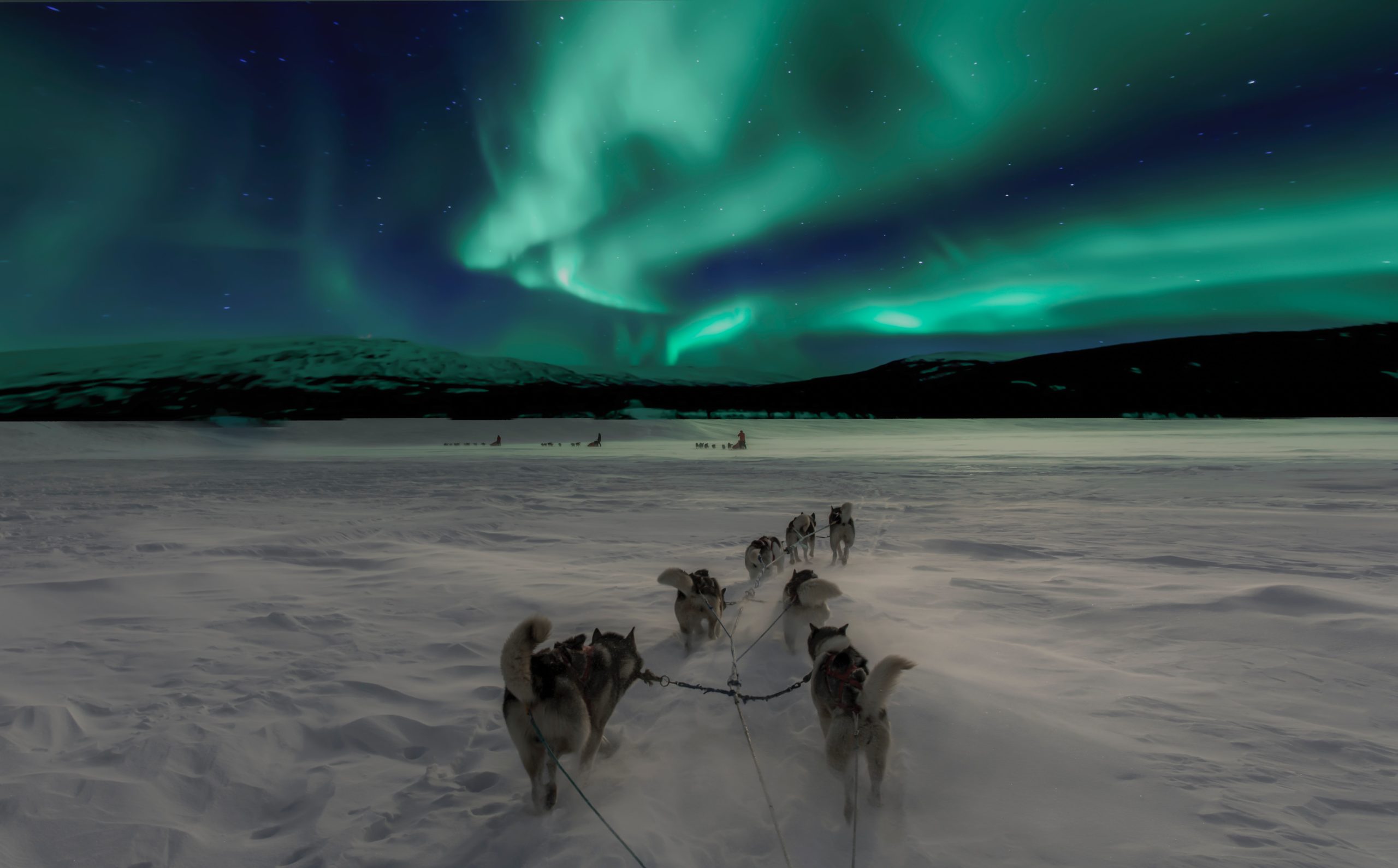
6. The Northern Lights and the Southern Lights happen at the same time
TRUE. Over the past 20 years, scientists have been hard at work getting to know the full impact and behavior of geomagnetic activity and also improving the imaging technology that we use to perceive such systems on Earth.
Multiple studies have been conducted over these past two decades that have taught us that the lights are not twins, but siblings. While they do happen simultaneously at both poles, they do not perfectly mirror each other as many have said in the past.
So yes, it is true that they happen at the same time, but currently untrue that they are identical. Stay tuned as further developments surface!
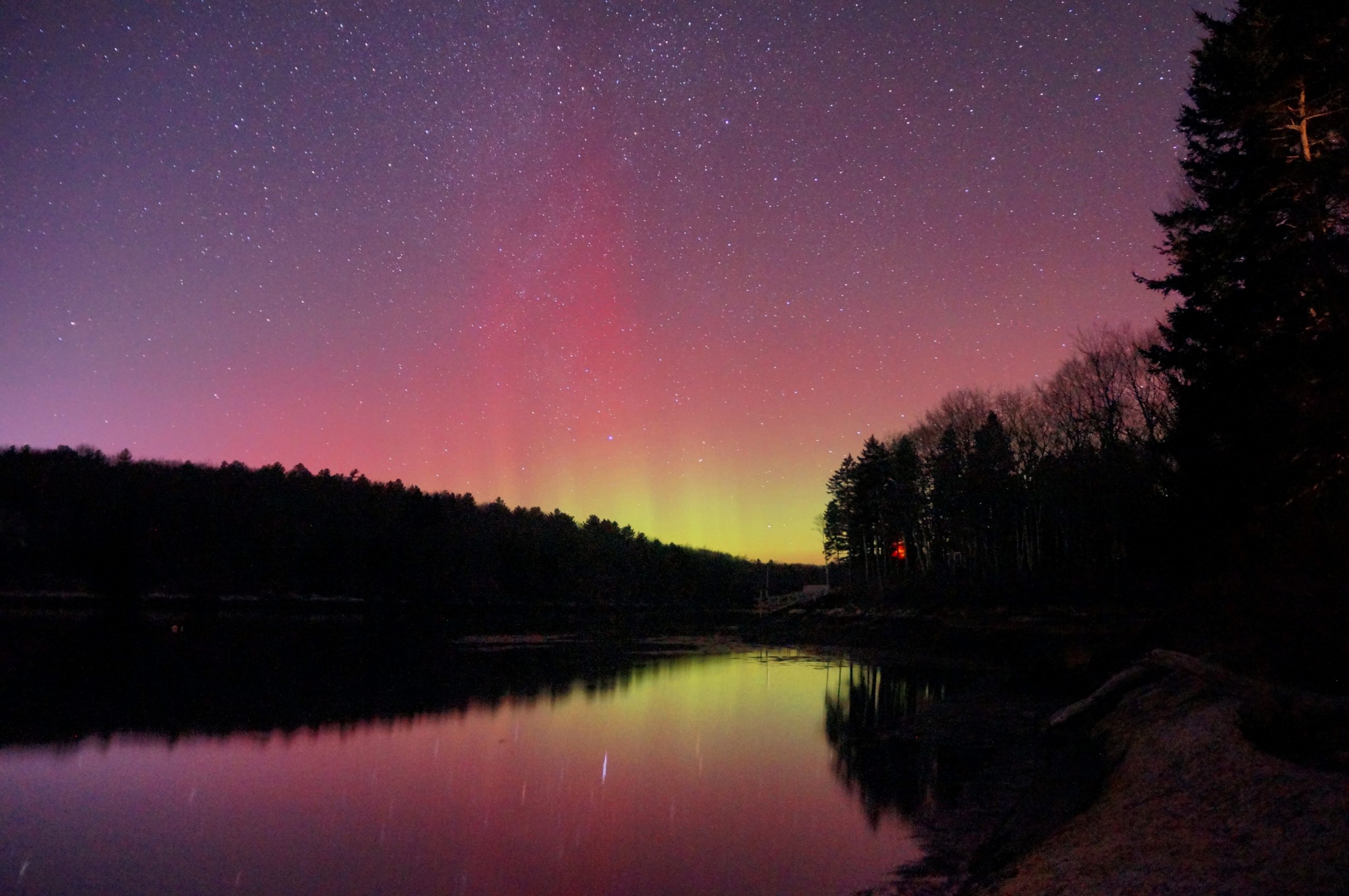
7. Ancient people believed that red Northern Lights meant war or danger
TRUE. This is one of the more modern and widely shared folkloric beliefs pertaining to the northern lights. Aurora myths have been held as an oral tradition in many areas around the world, including the Southern Hemisphere.
Due to their striking appearance and occasional intense coloring, one can imagine how the appearance of intense auroral activity may have been frightening to ancient, and some not so ancient, people.
There is even as recently as the 1800s, written proof that multiple cultures linked large instances of northern lights with notable battles and disasters. Read more about the spectrum of beliefs here.
8. The Northern Lights affect animals
TRUE. This is a question that has been asked for a long time and has only very recently been verified. Though the full effects of geomagnetic activity are surely not known in entirety, scientists believe that their magnetism may interact or interfere with the magnetism belonging to animals and other biological creatures.
It is not news to many that migratory animals move North to South throughout their lives in order to nest, reproduce, and follow feeding routes. This is a phenomenon seen throughout the world in many climates, particularly here in Iceland where we are visited by multiple migratory species, namely puffins and whales.
As recently as 2018 scientists have begun to study the magnetism of mammals, insects, and even bacteria. There have been many theories put forth about emotional interference, different health and sleep functions, and other curiosities, but thus far these things are all still being researched.
So for now, this question stands at “True”. While we currently have no findings to prove that geomagnetic activity is harming life, we can certainly infer that a big storm may temporarily put animal navigational systems offline for a bit. And maybe us, too!
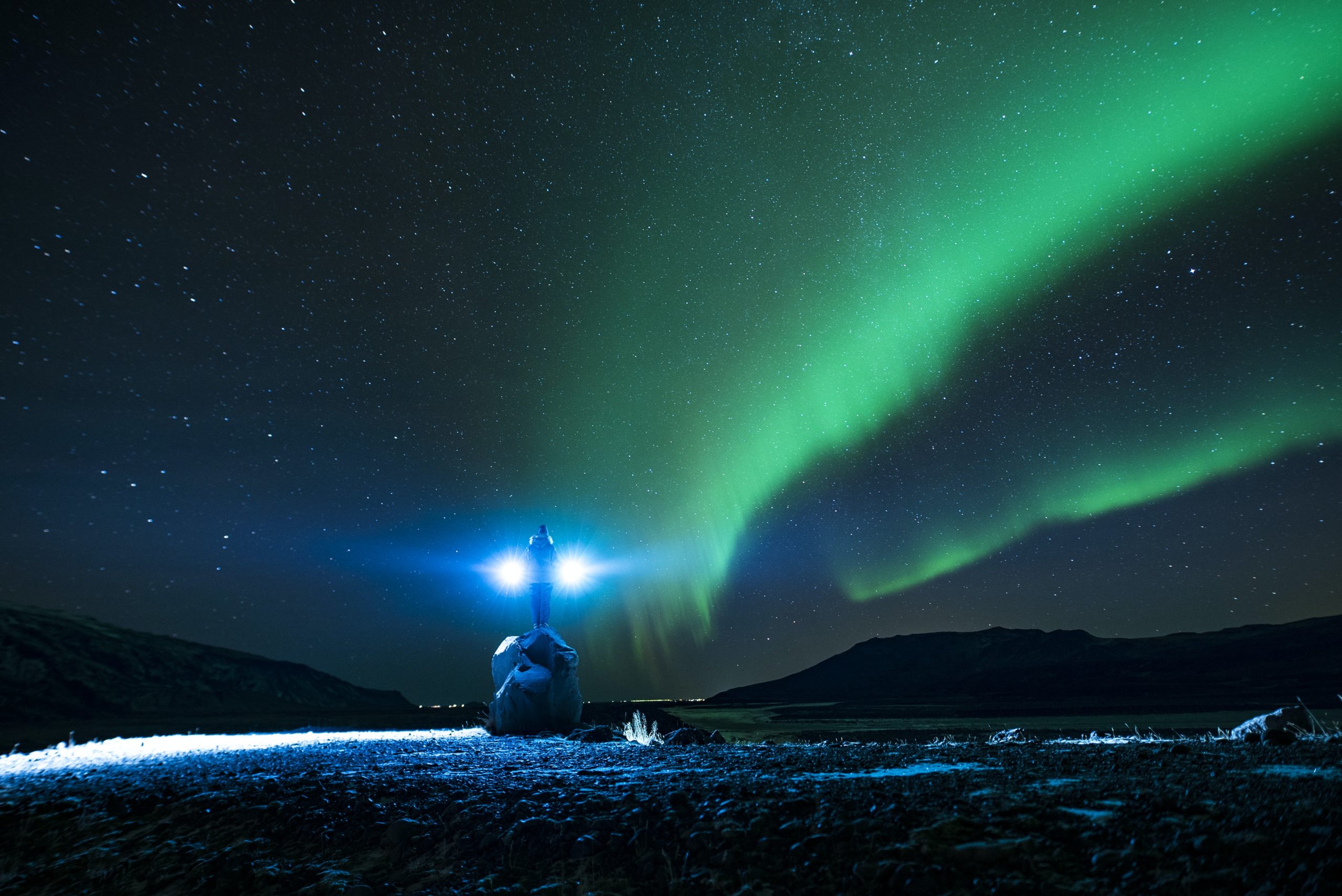
9. The Northern Lights make noise
TRUE. This question has been making the rounds for years, and many aurora hunters have their own anecdotal answer. Right now, multiple branches of research are being conducted about if this is true, and if so, how?
One of the more popular theories is from a research group headed by Aalto University Professor Unto K. Laine. They’ve introduced the “inversion layer hypothesis”, which infers that sound is born through a geomagnetic storm’s interaction with our atmosphere’s inversion layer.
The charges activated by the storm cause the popping and crackling sounds that people have reported hearing during certain auroral occurrences. But this is only one of the theories, there are multiple others floating around currently being researched, many by universities.
(One of them says pine needles are to blame!) But don’t take our word for it- have you ever heard the northern lights? Let us know in the comments!

10. You can photograph or film the Northern Lights with any camera
FALSE…FOR NOW. As technology advances, the answer to this question changes dramatically. Up until recently, the only way to capture the northern lights on film was to use a camera that allowed manual control.
This meant that typical point and shoot machines of the 2000-2010s, disposables, phone cameras, basic film, and nearly all auto-setting cameras were out of luck. The reason for this is not that they are necessarily lacking some feature, but more that they were using a default daylight setting array to create photos.
The settings that we use to create nighttime photos do not come naturally to the camera, as they would be challenging to use and would make it difficult for us to capture typical photos of a lit subject.
So if the tool you are using to take photos does not allow you to adjust the ISO or the shutter speed (among other things), you may find yourself with a roll of dark images!
These days, however, technology is catching up to us and many simpler photo tools (like phones) are coming prepackaged and ready with “Night mode”! This is an exciting feature that puts auroral photography into the hands of nearly any hunter, and has only been the product of the past few years!
Who knows how easy it will be to make phenomenal photos in the future?
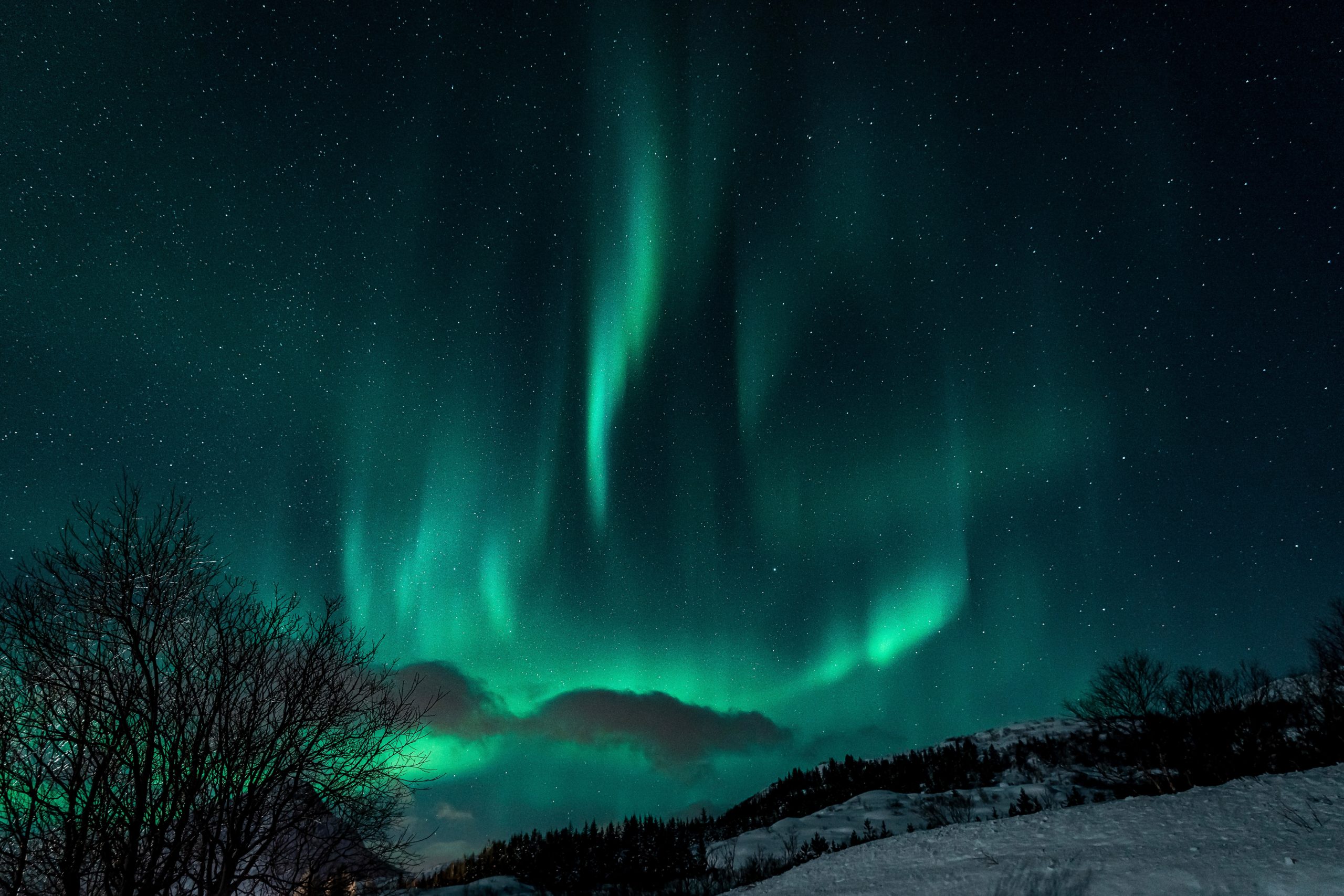
“If I never get to see the northern lights…”: 10 important reasons why you WON’T see an aurora!
Stop right there! If you’re looking for lights, here are 10 obstacles that you need to know about.
“…if I never get to see the northern lights.” We hear things like this a lot. For many, auroras are a once-in-a-lifetime experience. People come from all over the world, with very little time, and big hopes to catch one- and if possible, we want to help make that happen.
Maybe you’ve even tried already but came away unsuccessful. Perhaps you live in a place where auroras could possibly happen?
Either way, we want to make sure that you DO see the northern lights. So we’ve gathered together our biggest glow-pas (ha), in hopes that they will better prepare you for the hunt. Have one to share? Let us know about it!
1. You visited in the off-season.
Once I overheard a woman in a cafe angrily describing a trip to Zimbabwe. I had to listen in, because I couldn’t imagine how a dream trip like that could go awry. It turns out she had been planning this trip for ages and had come to see the great thundering waters of Victoria Falls.
But she missed a key detail to the plan- and that was WHEN to visit. You see, she wanted to see Victoria Falls in full spray, active with gushing water and huge currents.
But Victoria Falls experiences a wet season, and a dry one- and in the dry one, there may still be water, but it’s a bit less than what you might have seen on that postcard or commercial.
While there are still just as many reasons to visit in the dry season (like being able to walk across the falls to Zambia!)- if you expected to see the crashing water, you might be disappointed. Iceland is like this in many ways, in that we experience a “light season”, and a “dark season”.
This means that while the aurora happens above us all the time, we can only see it from mid-August to mid-April, at best. The brightness of the Midnight Sun in our summer months is just too great to allow visibility of auroral light, so we have to wait for the return of true darkness in the autumn.
Just like Victoria Falls, we have a lot of incredible things going on in our summer period as well- but if you came for auroras, you might find yourself disappointed.
2. You’re out too early.
Visiting in winter and finding it a bit dark? Don’t worry, so are we. In the height of winter, we only receive a few hours of direct sunlight- and that’s on a good day. If it’s overcast (which it often is), you may feel like you haven’t seen the sun in days!
(And in some parts of Iceland, that may be true!) Iceland experiences the maximum of dark hours at the winter solstice in December, and after that, the nights begin to shorten.
While this does often mean you can start aurora hunting a bit earlier, it does not mean that you can set out at 4:00 pm. Is it after sunset? Yes! But there are layers of darkness, so to speak, and you still need to wait for optimal dark hours to be able to perceive the northern lights with the naked eye.
On a great night with huge activity, it can be possible to view an aurora as early as 8:00 pm, but typically most hunters will be out looking between 10:00 pm – 2:00 am on average.
This doesn’t mean that nothing can happen before and after that window, but typically we experience better visibility at this time.
Keep an eye out on the light cycle though, wherever you are! These hours may fit Iceland, but depending on how close you are to the pole, your cycle may vary.
3. You are a victim of cloud cover.
This may sound dramatic, but every aurora hunter has been taken down by clouds at least once. The northern lights happen above our weather system, so if it’s cloudy, there can be a phenomenal show going on and we can still miss it.
This can be difficult in a place like Iceland, where midwinter brings us not only the greatest dark hours, but also the greatest low-pressure storm season. These are big, moody, windy storms that can bring a great deal of precipitation or cloud cover.
They can move fairly quickly, which sometimes means that the next day will be clear skies and mild weather. But, sometimes they linger for days. This can be a good reason to look for lights early in your visit, in case you do cross paths with one of these blustery visitors.
But even on a stormless night, you can still meet some impressive cloud cover. (We are in the middle of the North Atlantic, after all!) When you head out for a hunt, make sure to check the aurora forecast first. These forecasts will let you see the cloud cover over time, and will also tell you what layers of the sky are experiencing cover.
This can be good to know, because different types of clouds exist at different altitudes, and can mean different types of cover.
The way that a good hunter picks a trajectory, is by seeing what areas will be clear. But don’t fret! Cloud cover can and will move throughout the evening, and the forecasts do not always have the ability to account for small holes of clarity within them.
Sometimes, all you need to catch the show is a single window in the sky.
4. It was too bright!
Sometimes, not even the brightest blaze can compete with Lady Aurora. But on an average night, we need a little extra help to see her. The Northern Lights occur at a low lumen, and so it helps if your eyes have been able to adjust to the darkness when you look for them.
If you are in a brightly lit area, near a streetlight, or hanging out in the headlights of your car- you may struggle to pick out the faint green tail of an auroral glow. In fact, some people will only use red light flashlights when they’re out hunting- and may dim the light settings on their equipment.
These steps are pretty serious, but it is a good reminder that your eyes do need time to adjust to darkness and that you should be prepared to search for lower level auroras.
Not all occurrences appear as huge jagged shapes with supernatural brightness. Some are soft glows that are so dim, that they can only be picked up by camera. (So if you’re scanning the horizon and you’re not completely sure, try a test shot!
A correctly set camera will proliferate the light, so this can be an easy way to discern if what you’re seeing is aurora, or just wispy clouds passing through. (This doesn’t mean that you have to go hours away into the interior of the country, but if you do have the option, getting outside of the city can help.
The quality of darkness improves a great deal even just 15 minutes outside of town. Cities create big bubbles of light pollution around themselves, and while Reykjavik or Akureyri don’t create nearly enough light to compete with mainland light pollution, it is still surprising how much it changes your surroundings to be near it.)
5. You didn’t budge. (Your eyes, OR yourself!)
There are a lot of tips and tricks out there, but none of them can compete with the fact that an aurora is a planetary occurrence that is happening to Earth from Outer Space.
What I’m getting at here is that it’s huge, and the piece that we sometimes see is only a piece of a greater whole, and that whole is moving. It can be hard to imagine how minuscule we are in comparison, but what might be a sky-filling explosion of light to us, may just be a fraction of a bigger occurrence.
You can get a better idea of what I mean by viewing an aurora from space, or by checking out a forecast model that shows the predicted footprint of the northern lights on our planet.
The obstacle here is understanding that the northern lights are less like a piece of lightning, and more like the storm system that the lightning belongs to. (Unless we’re doing a different metaphor, then the northern lights are definitely like a lightning strike. But I digress.)
Sometimes you get lucky, and the aurora wanders right up when you’re having a drink outside in your hot pot. But other times, the northern lights really do require a hunt, and that means movement to keep up.
It is not uncommon for groups of hunters to report different findings, or for neighbors to see an aurora, while neighbors a few kilometers away did not. This could mean that your section of visible sky was active, but maybe the vista a stone’s throw over was not.
Sometimes this can be because of actual obstacles in your path- like the grade of the land, a mountain range, or how close your house is to another house. These obstacles don’t always seem as problematic as they may be, but if you are looking out of one view all night, you get just that. One view.
And sometimes, this can mean just simply turning your body. Many sources tell you to keep your eyes on the north for the lights, but that is not always the case. Oftentimes in a place as far north as Iceland, it can feel like the aurora is happening overhead, or even in a direction other than north.
(This is where that detail comes in again- that the lights are a global occurrence, and they are happening to EARTH. Not just Iceland.) So stay alert while you’re out, and keep an eye peeled in every direction. You never know where Lady Aurora is going to sneak up from.
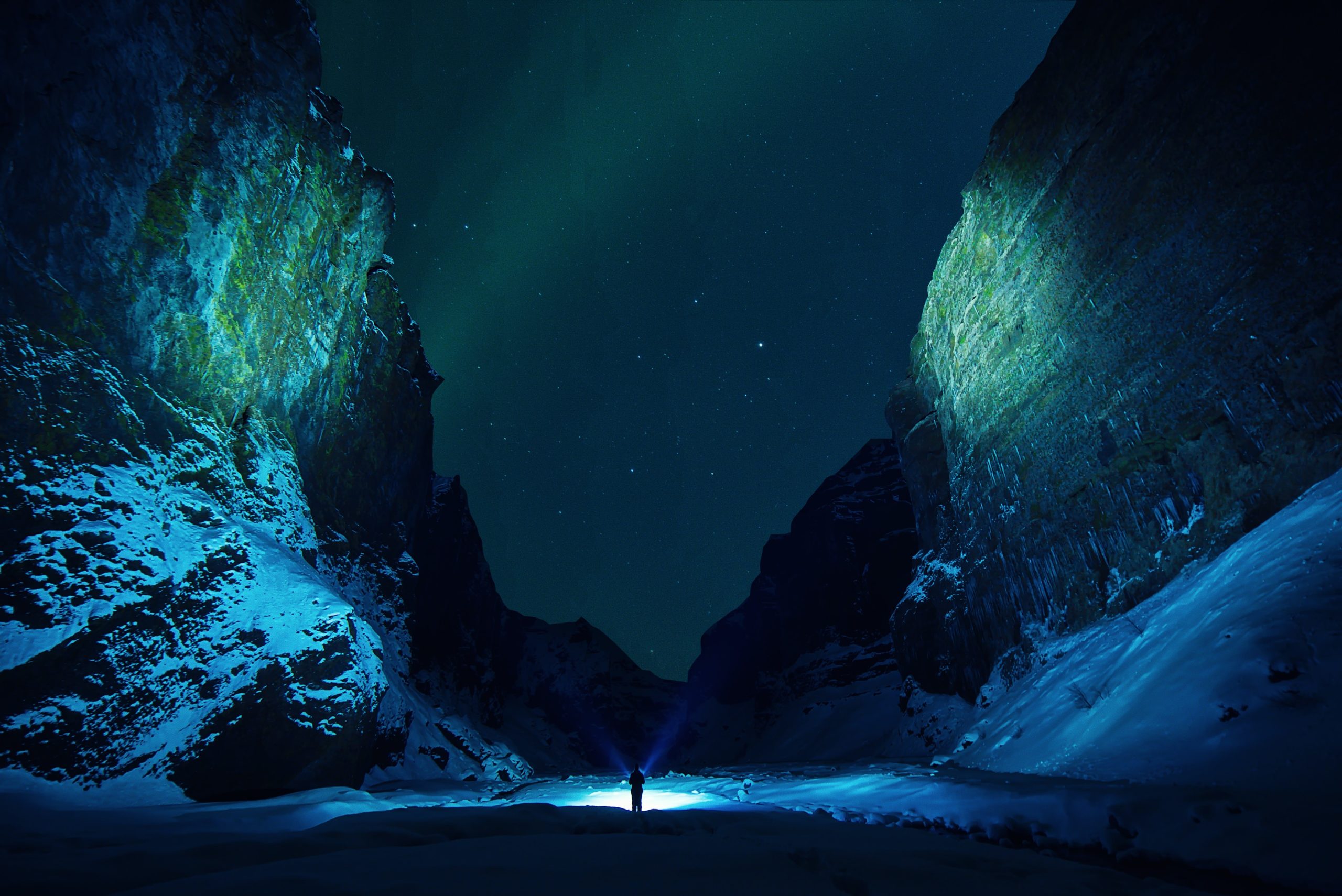
6. Surprise! You actually DID see it- but you didn’t recognize it.
This is not an obstacle per se, but it certainly is a thing that comes up. No two instances of northern lights are ever the same, so it can be hard to recognize if you’re not used to seeing it.
This is especially the case when the aurora is low level or occurring in an unfamiliar shape or color pattern. Many people set out on their first hunt after seeing incredible footage from world-class photographers and documentarians.
These shots are career-making images that likely took a lot of time and skill to create. The typical stuff doesn’t usually make the postcards and National Geographic covers. Seeing ANY kind of aurora is spectacular and special- but be ready to catch whatever comes to you.
This may mean darker colors that are harder to pick out, like misty whites, strange olive greens, and cool grey purples. It may also mean shapes that aren’t particularly “snakey”, like diffused glows, cirrus cloud shapes, whisps, and long bowed streaks.
The aurora can move quickly and appear to “dance”, but this is not always the case. Sometimes it’s a slow pulse, or even just a fade that you fail to clock until it’s gone. A softer aurora can appear to be a cloud, or a smoke formation- which can get pretty confusing when the wind is quickly blowing the clouds and the ground is puffing up huge geothermal breaths of hot white steam into the night.
An easy way to check can be to take a long-shutter/high ISO camera shot of the “thing” in question, but after a while, you do get used to the telltale sign of a quiet little aurora starting out in the night.
They may not all be full-on Carrington Events, but each one of them is a rare gift, that traveled all the way from the Sun, to you.
7. You stayed in the city!
Look, we get it. Reykjavik has one heck of a nightlife, and there are at least a hundred different places to eat that we still haven’t tried- and it’s so cozy… But! It’s also full of twinkly Christmas lights, and street lights, and illuminated windows and art installations, and whathaveyou.
As you know from tips 4 and 5, these things can get in the way of an optimal auroral view. And sometimes you just can’t help it, you don’t have wheels! If you’re here for the lights, we highly recommend getting yourself out of the hustle and bustle into the real country darkness.
Even if you only head about 10 minutes out, the quality changes considerably. But, if you’re only in town for a few nights, you can still check out some of Reykjavik’s best aurora spots, get chauffeured out to a northern lights igloo for one evening, or even grab a tour for a few hours.
All of these options will secret you away to some better watch locations, and one of them gets you a warm down comforter with a bottle of bubbly.
8. The Sun is on a break.
This obstacle is one of the bigger ones, and by bigger, I mean sun-sized. All of our northern lights come from one place, and that place is the Sun. Every swirly green burst of polar light that you’ve ever enjoyed began as a volatile little send-off from our galaxy’s most important star.
The good news is that the Sun is a fiery individual, and is regularly sending out pieces of itself through solar wind. Solar wind passes over our planets (and everything else), and can create aurorae on a fairly regular basis because of Earth’s magnetic field.
Sometimes, the Sun expels a great deal of activity through solar flares or Coronal Mass Ejections, and larger geomagnetic storms make their way over to us. Geomagnetic storms usually create larger, more impressive lights- and can even in rare circumstances create Carrington Events, which can affect our electrical grid.
Carrington Events are extremely rare, but geomagnetic storms can happen a couple of times a year- depending on the year and the solar cycle that we are in at the time. But every now and then, the Sun is quiet. This is fairly rare, but you can see how things are going in an aurora forecast.
These forecasts will tell you on a scale of 0-9, how much geomagnetic activity is bopping around in our atmosphere. This is known as the K-index, or Kp scale, and is a paraphrased way for us to measure this solar activity, and infer how far from the pole an aurora might be able to reach.
This system is still very much a developing science, so if you see a zero on the forecast, do not fret! Odds are, this may be a visually quiet night, but activity has still been known to appear on Kp 0 nights with clear skies.
9. You were in the bathroom!
Some instances of the northern lights blink on and off all night for hours. These are usually dreamy nights in the countryside, where you don’t need to move about, you can just kick back and watch. In the city, you can watch a good show for a few minutes, or maybe a half hour, walking down the street or parked at a cafe with a coffee.
Some of these city lights are so fleeting, that you find out about them after they’ve happened, from local photos and the forgotten alerts on your aurora apps.
It may be that someone in a darker place is watching this aurora for a bit longer, but in a brightly lit place, it is harder to pick out the finer pieces and more diffused glows, so you can end up watching for less time.
It’s a frustrating reason to miss the lights, but when you’re struggling with light pollution every minute counts. So be quick about those bathroom breaks!
10. You left the party!
And on the other end of the time spectrum, we have the old adage “good things come to those who wait”. Many a disappointed adventurer has bemoaned their fruitless hunt, only to hear from the person next door that they were successful! But how?
Sometimes it’s something as simple as the areas you were both in, the cloud cover differences, or even the amount of light pollution. As wee human beings, we can only cover so much ground.
But sometimes, it’s the waiting. It’s not always the most comfortable activity, cruising around in the darkness and braving winter weather. Hunting for a thing that can be challenging to find, maybe for many hours. It’s no wonder that some people call it quits early.
There have been nights where I myself have done the same. But when you’re out there, know that every night is different, and the activity displays itself on its own time, if at all.
So despite all of the tips and tricks in the world, sometimes one of the best things you can do on a hunt is take your time. Lady Aurora often shows up you when you least expect her.
10 facts about the Northern Lights to dazzle your mind and ignite your imagination
You’ve heard about why the lights happen, what changes the colors, and when is the best time to see them.. But what else is there to know?
The aurora is one of nature’s most mysterious phenomena. We spend a lot of time talking about it, reading about it, and looking for it– so we put together these 10 facts about the Northern Lights that might be interesting to another aurora enthusiast.
How many of them did you already know? Let us know in the comments!
1. Galileo gave the aurora the name we use today
Sometime around 1619-1621 A.D., Galileo Galilei, and Pierre Gassendi witnessed an aurora. A time of great astronomical advancement, this event kickstarted the aurora madness that we all know so well today.
This is where the name “Aurora Borealis” was born. Coming from the name for the Roman goddess of the dawn (Aurora), and the Greek god of the northern wind (Boreal), the term we are so familiar with today was penned.
Though Galileo and Gassendi are credited with some of the earliest modern writing, there are multiple historic records of early cultures recording their glimpses of the lights.
And despite having named it, Galileo didn’t actually know what it was. In fact, he named it “aurora” because he thought it was the sunlight reflecting off of the atmosphere.
We didn’t know the true source of the aurora until the early 1900s when…
2. Kristian Birkeland developed the theory of atmospheric electric currents, therefore revealing the origin of the Northern Lights.
Often referred to as “The Father of the Aurora Borealis”, Norwegian scientist Kristian Birkeland is responsible for introducing us to the real source of the Northern Lights.
Between 1899 and 1900, he organized the Norwegian Polar Expedition to study the global patterns of electric currents. He did this by making magnetic field measurements from Earth, and the theory he was able to develop through this study is the basis of the theory we use today.
He released this information to the world in 1908 in his book, “The Norwegian Aurora Polaris Expedition 1902–1903”. Birkeland went on to be nominated for 7 Nobel Prizes, but in his lifetime his work was highly contested and considered a fringe theory at best.
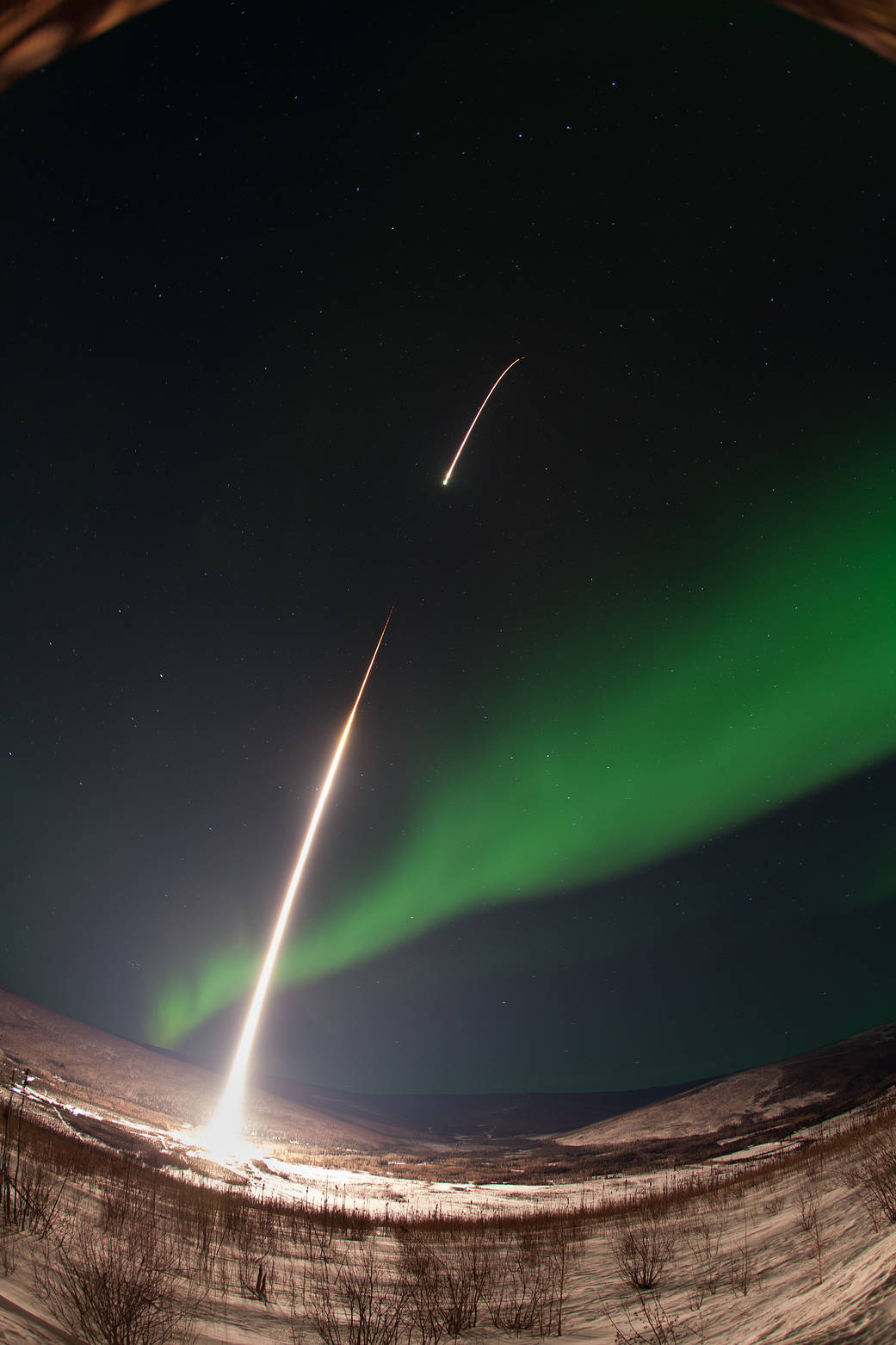
3. We didn’t believe Birkeland’s theory until 1967!
(Ok well maybe some people did.) Kristian Birkeland died in 1917 at the age of 49, and at the time of his death, many mainstream scientists did not believe his theory about the aurora. The difficulty here was that his experiments were costly, and it was believed that this theory could not be proven by ground measurements alone.
(It also didn’t help that it was the early 1900’s, and getting to space wasn’t an option yet.) Things changed in 1967 however, when the U.S. Navy sent satellite 1963-38C up into space. This probe carried a magnetometer above the ionosphere, proving the existence of magnetic disturbances, and therefore, Birkeland currents.
Like many scientific discoveries, the origin of the aurora was only made possible by the study of many, many curious people. Birkeland’s study was the next step here, but for him these hypotheses were made possible by the work of scientists like Anders Celsius and Olof Hjorter before him.
It makes you wonder what discoveries will be born of our curiosities now!
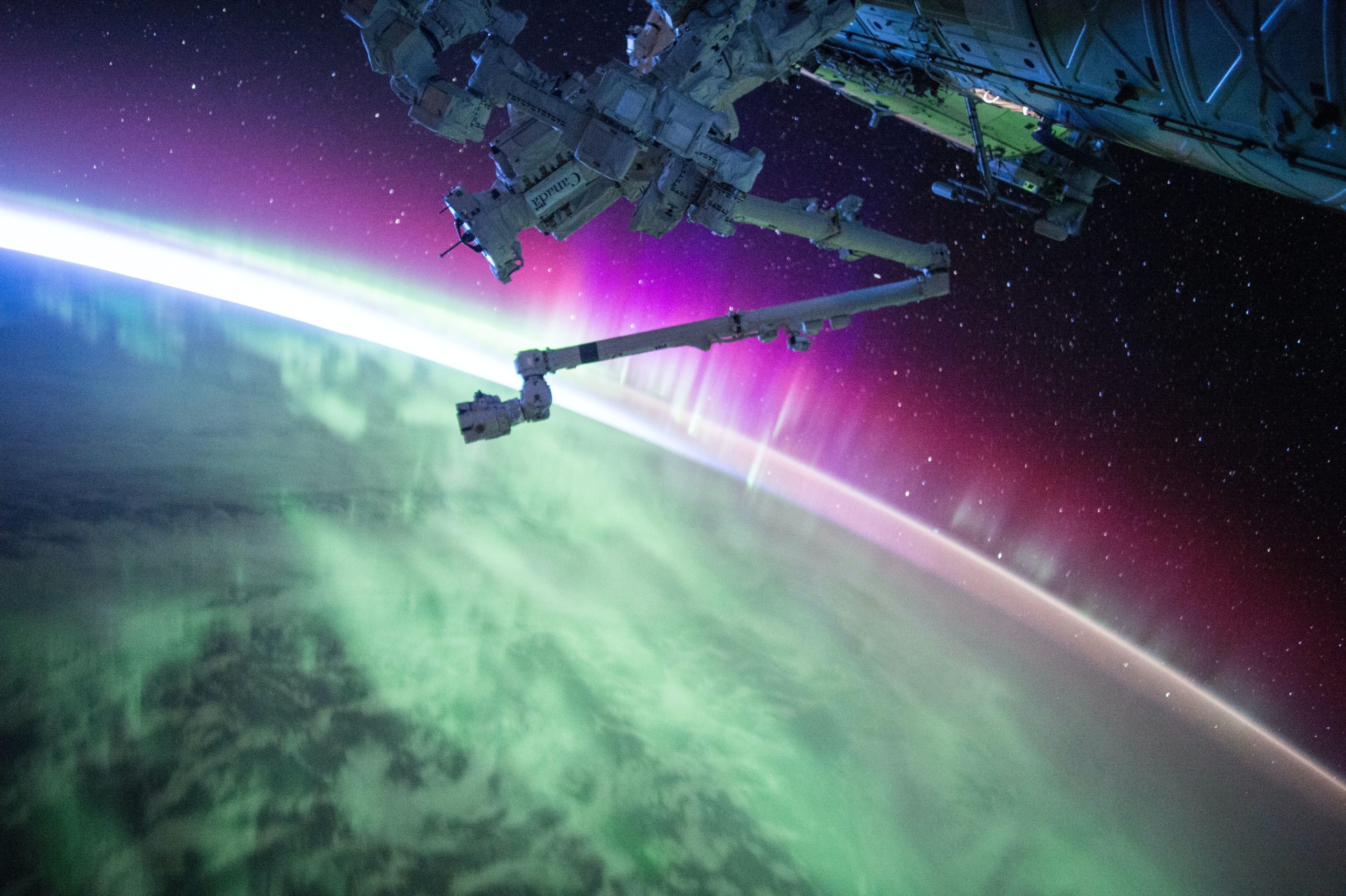
4. We continue to study the aurora.
Our quest for auroral knowledge did not end with that Navy probe, or with Kristian Birkeland. In fact, it proliferated. Citizen scientists have been hard at work monitoring space weather and collecting data on what they can see- and even NASA is hard at work filling in the blanks!
This is still very much a developing branch of science, and even as recently as June 2021 new data has been collected via NASA’s Magnetospheric Multiscale mission.
Satellites, sounding rockets, multiple study missions, and laboratory experiments here on Earth are just some of the ways that we are inching closer to a better picture of what creates our favorite light show, and how it can be affected by different factors that we have yet to fully understand.
Perhaps this study will far surpass our lifetimes, just like Birkeland. Imagine the strangeness of today’s facts becoming tomorrow’s misconceptions. The journey continues!
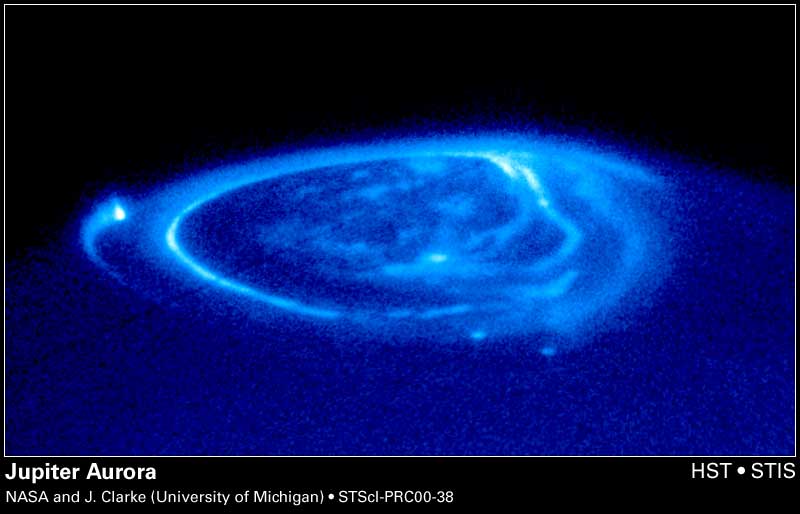
5. We’re not the only ones with auroras!
As you may know, there are two different areas on Earth where one can view auroras. There’s the Aurora Borealis in the north, and the Aurora Australis in the south. But now that we can see a bit further out of our own planetary neighborhood, we know that other planets host auroral light as well!
Because we know that the look of an aurora is caused by the atmospheric gases that it collides with, we can make a lot of inferences based on what we believe the atmospheric makeup of a certain planet to be. We now know that planets like Saturn, Uranus, and Neptune have auroras due to the interaction of solar wind with planetary magnetic fields.
We also know that nearby Mars and Venus have them as well, due to solar wind engaging with their atmospheres. Tools like the NASA/ESA Hubble Space Telescope and NASA’s Juno spacecraft have been able to not only confirm this, but also capture images of planets like Jupiter in full glow.
Just by seeing these things, we are able to learn more about how our sun functions, and how other planets are not just different from ours, but alike.
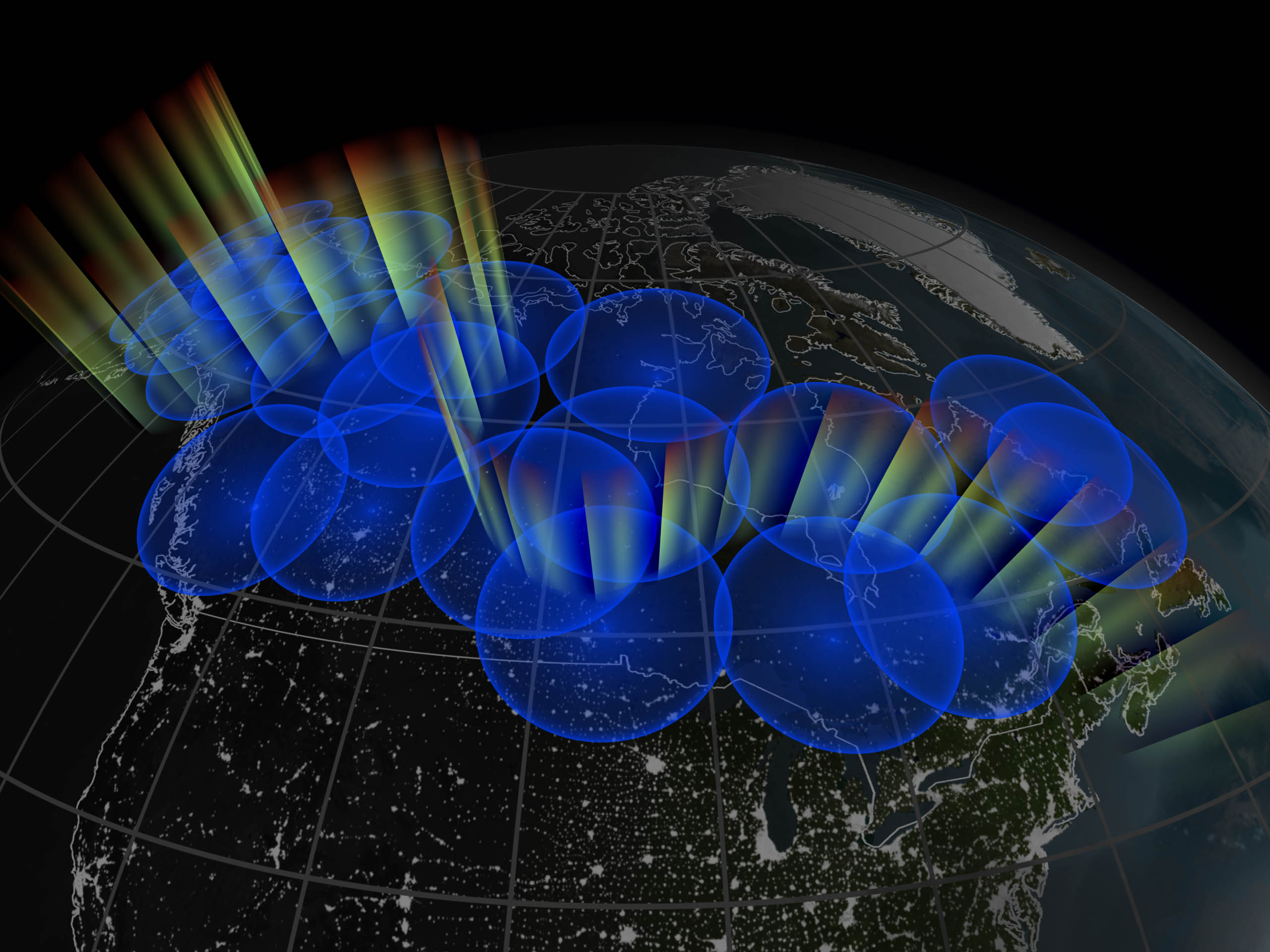
6. It isn’t just NASA making discoveries. Citizen science is at an all-time high!
Being on Earth in the 21st century is an exciting thing. There is more information available to us than ever before, and more accessible tools than we’ve ever been able to acquire. (It also helps that we are less likely to be burnt at the stake for pursuing a scientific theory. Maybe.)
And in that spirit of advancement, in 2016 in western Canada, citizen scientists made an incredible discovery. We know that discovery today as STEVE, or, Strong Thermal Emission Velocity Enhancement.
STEVE was originally named after a reference from the animated film “Over the Hedge”, in which the character’s named a hedge without knowing what it was. Early viewers of STEVE also weren’t sure what it was, so the name stuck.
STEVE is a pinkish “streak” that can appear in conjunction with auroral activity (often appearing as a spiky picket fence), and though we’ve actually been seeing it for centuries, it was never truly researched until this sighting.
STEVE is created by particle friction, which explains its incandescent color. It occurs closer to the equator than the lights typically do, and because of the collaboration of astronomical photographers and scientists, we were able to learn more a lot more about what actually causes it.
It just goes to show that there is always more to discover, and any one of us can lend a hand.
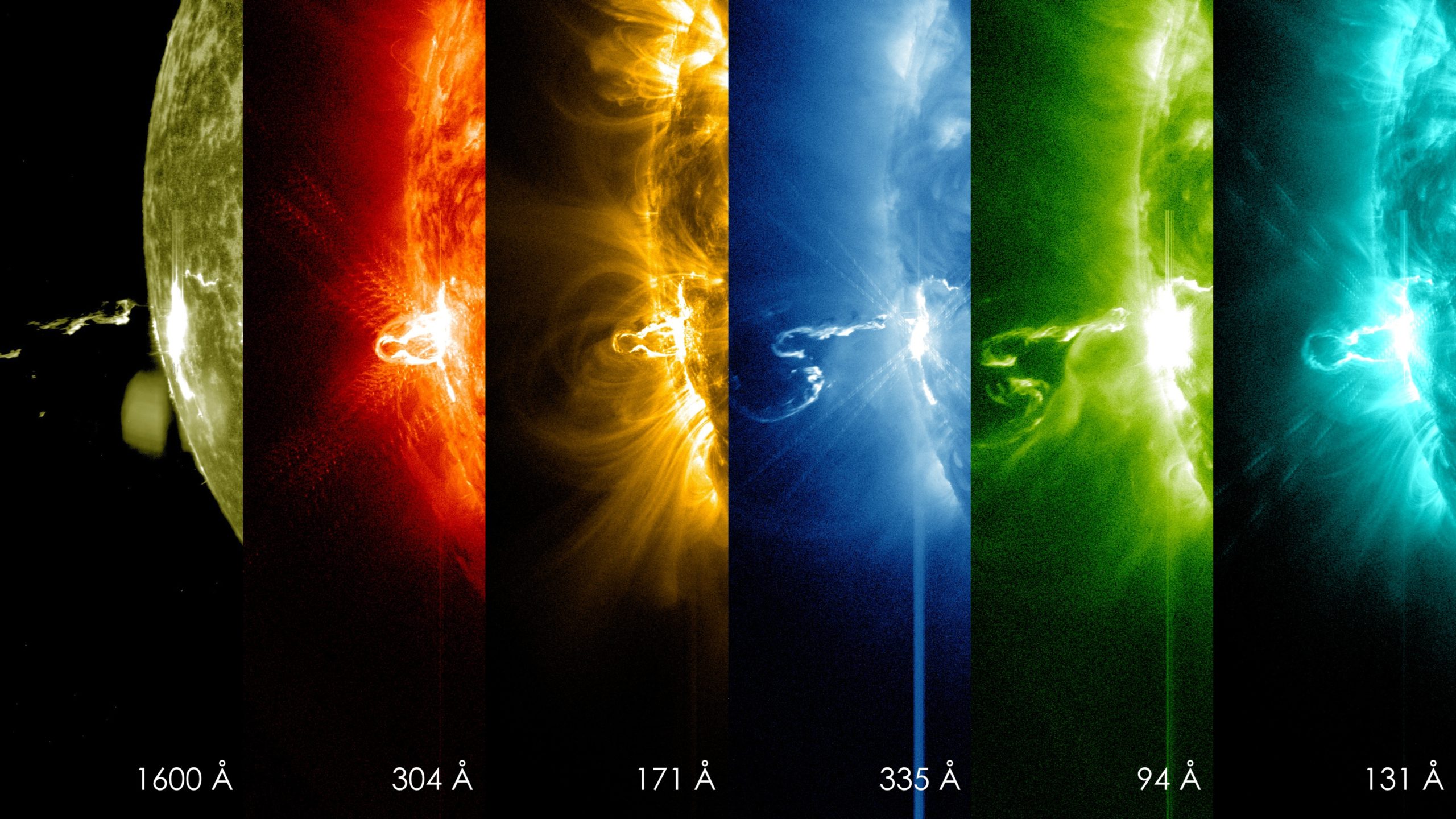
7. Auroras may not be dangerous, but space weather can be.
Though uncommon, space weather can disrupt us on Earth. The most dramatic record of this is the geomagnetic storm of August-September 1859, otherwise known as a Carrington Event.
Named for the British astronomer Richard Carrington, whose work helped to prove the existence of solar flares and their effect on Earth and the lights. When this geomagnetic storm happened, it damaged telegraph lines and injured the people working with them.
Technicians were shocked, telegraph papers were set ablaze, and lines were electrified. The Northern Lights were visible as far south as far as Hawaii and Cuba. On March 13th, 1989 a similar geomatic storm occurred, affecting the electrical grid again by creating a power blackout in Canada.
This event affected power grids in Canada, all the way down to New Jersey in the United States. Our electrical systems had updated a bit by then, so there were no telegraph papers to set on fire- just transformers to damage.
As you can see, these types of things are few and far between, but there are sources of information about how to prepare for similar events.
(Though, Carrington Events are not a common occurrence, and you are likely better served by preparing for the natural disasters that we see more frequently in our respective corners of the globe.)
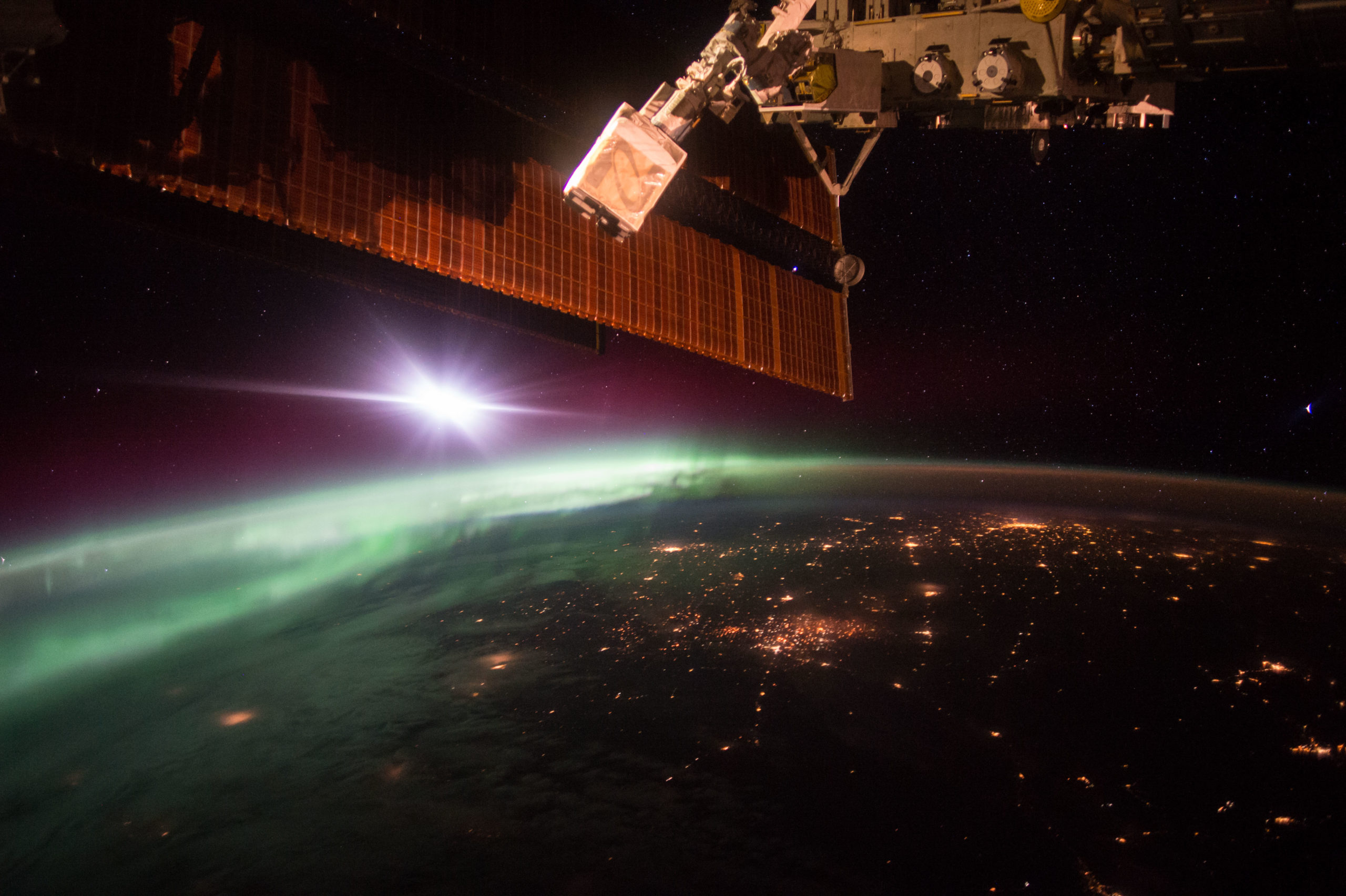
8. We’re not the only ones watching.
So we know we’re watching it, photographers are watching it, citizen scientists and space weather enthusiasts are watching it- but who else? It turns out there are a lot of student researchers and working astronomers keeping tabs as well!
Researchers on the THEMIS mission under NASA’s Explorer Program used satellites in 2008 to find out what causes movement in aurorae. In 2016, The ESA’s Sentinel-3A satellite danced right through the aurora after a launch.
There are countless aurora and space weather observatories throughout the world, and even the astronauts in the International Space Station are up there looking down on the dancing lights.
Sometimes, there’s even a chance to watch together in programs like #AuroraHunters, hosted by the ESA and the Norwegian Space Centre.
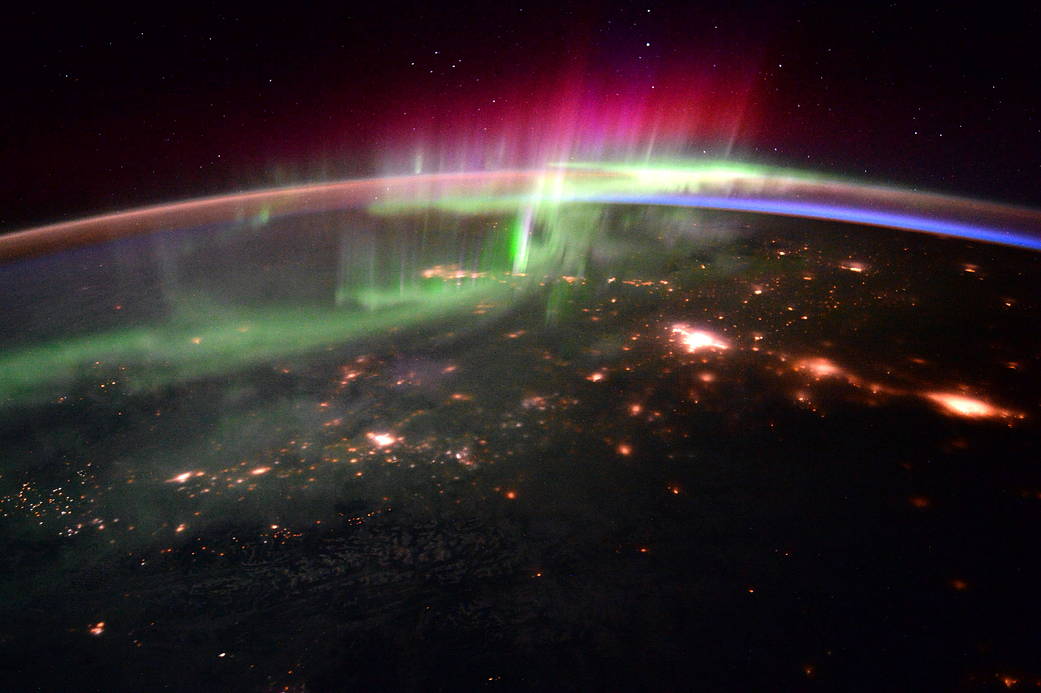
9. They’re pretty high up there!
The Northern Lights are a unique combination of space weather, and Earth’s magnetic field- so where exactly do they happen?
An average auroral occurrence can occur as low as 80-100 km. above Earth.
This doesn’t sound like much, but if you think about it, airplanes only fly about 10 km. above us, and Mount Everest only reaches just under 9 km.! Depending on varying factors, the aurora can reach as high as 500-1000 km. above Earth, which means that it has some interesting neighbors in the middle.
One of which is the International Space Station, sitting at an orbital height of 408 km, and height neighbor Tiangong Space Station, who varies between 340 and 450 km.
Because of this, cosmonauts in either station could one day look out the window and see the lights around them, instead of below or above. Keep an eye out on their socials to see the amazing captures that they make!
10. Before we could photograph the lights, there was art.
Our ability to photograph and film the lights has been such a recent advancement in the long timeline of human creativity. One could say that the accessibility of this art continues to grow even now, as SLR cameras become easier to get, and smartphones get.. Well, smarter.
We have drones, phones, tiny waterproof cameras, and all kinds of things. This method of capture creates amazing work, especially due to the camera’s ability to process low light better than our limited human eyes. But before this technology, there was still art and the drive to capture this beautiful thing.
Thousand upon thousands of works depicting the lights have been made, but one of the earliest comes to us from Cro-Magnon cave paintings around 30,000 B.C.
There are works referenced from early China and the belief that the sighting of Northern Lights may have become entwined with belief in great supernatural dragons.
There were many painters in the more mobile days of the late 1800s like Danish painter Harald Viggo Moltke, and American painter Frederic Edwin Church, two individuals inspired by their experiences on Arctic expeditions.
Today we continue the tradition with thousands of technological installations, museum exhibits, handicrafts, and more. As we learn more about this incredible gift of nature, it seems, so does our curiosity and our devotion to its existence.
Perhaps the one thing over time that has never changed. Fact.
Iceland Northern Lights Hotel: 10 cozy hideaways to watch the skies from
Aurora hunting is a popular activity for many visitors to Iceland. But what if you could do from your room?
Stargazing in luxury
Looking for an Iceland Northern Lights hotel on your winter adventure? Choosing your activities while you’re here is one thing, but what about where you’re staying?
From the northernmost reaches of the island to transparent dome accommodations, there’s a whole spectrum of choice for those that have auroras on the brain.
We’ve done some of the legwork for you, and collected 10 of our favorites, in no particular order, other than clockwise around the country. Let us know which ones you’ve tried!
The 5 million star hotel: Bubble Hotel Iceland (South Coast and Golden Circle)
Nothing maximizes your chances of catching a rogue aurora quite like staying in a northern lights igloo.
These “Bubbles” are completely transparent dome structures, outfitted with heating and luxurious downy beds.
Sequestered in two forests, one in the South Coast and one in the Golden Circle– one can be collected in Reykjavik and treated to a private tour before being chauffeured to your private forest grove.
You can’t get much closer to nature, and you certainly won’t be warmer than this on an aurora hunt.
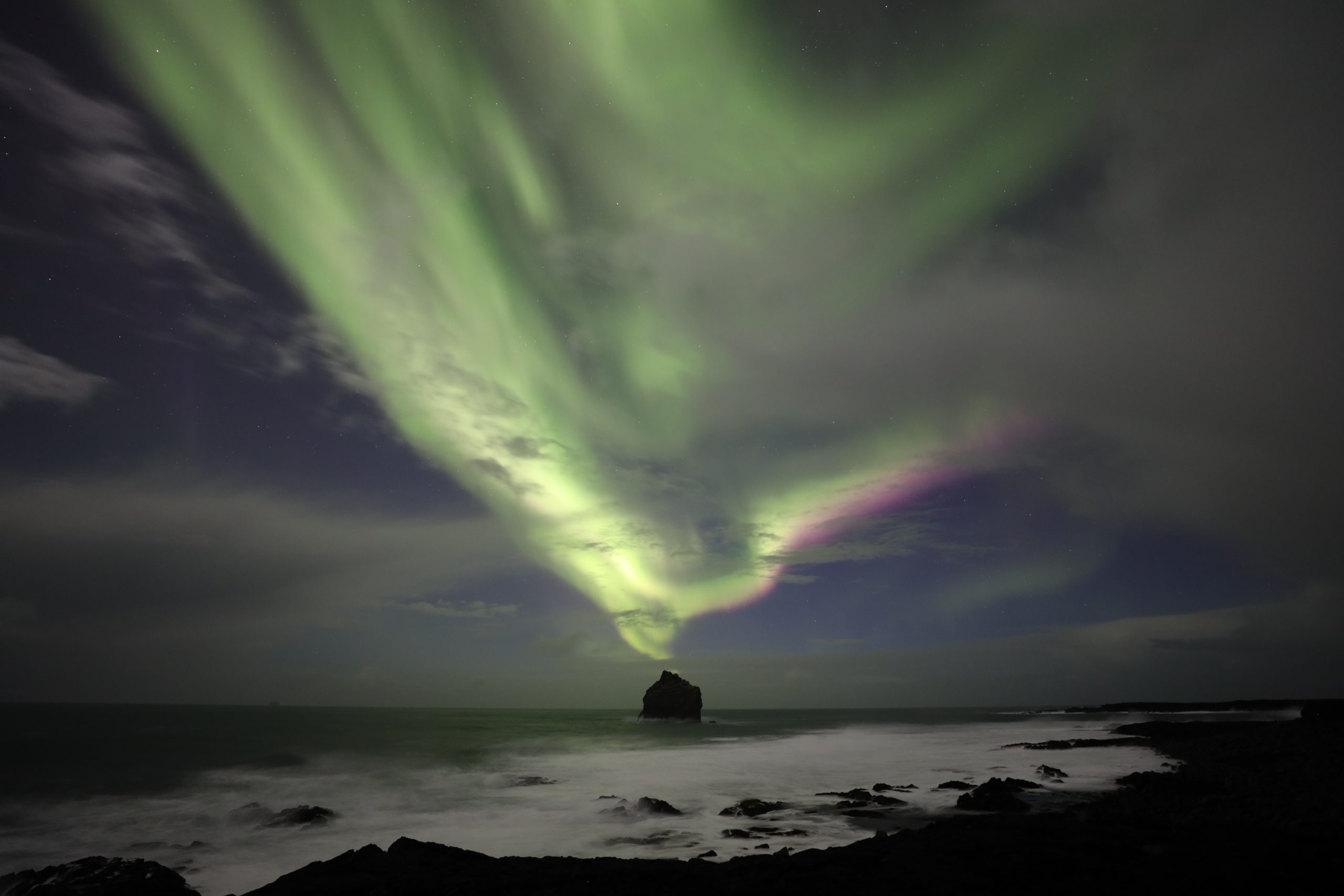
The Northern Light Inn in Reykjanes (South, Capital Region)
Located close to the Blue Lagoon and the airport, this is a great spot for those on a short stopover, or with an early flight the next day.
Tucked away in the lava fields of the Reykjanes peninsula, this cozy getaway has a great restaurant (named after the owner’s golden retriever, Max), and an observation deck for aurora viewing.
And like many of these hotels, there’s a northern lights wake up service!
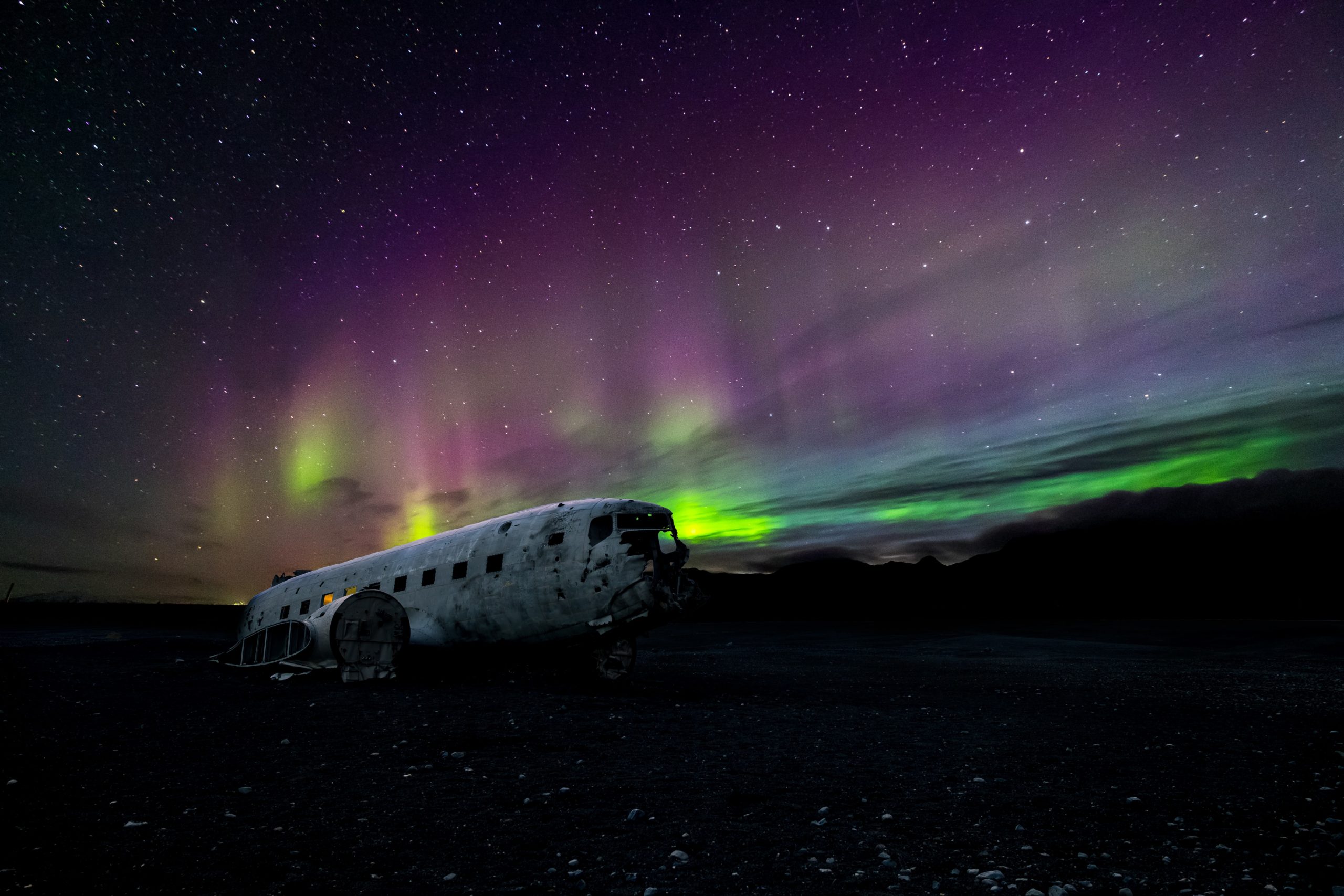
Hotel Rangá in Hella (South Coast)
Heading down the southern coast, is Hotel Rangá. A favorite for skygazers due to its on site observatory and telescope room, you will certainly find yourself thoroughly entertained while staying here.
Whether you’re watching from your themed bedroom, or a geothermal hot pot, the log cabin walls of Rangá are a special treat to experience.
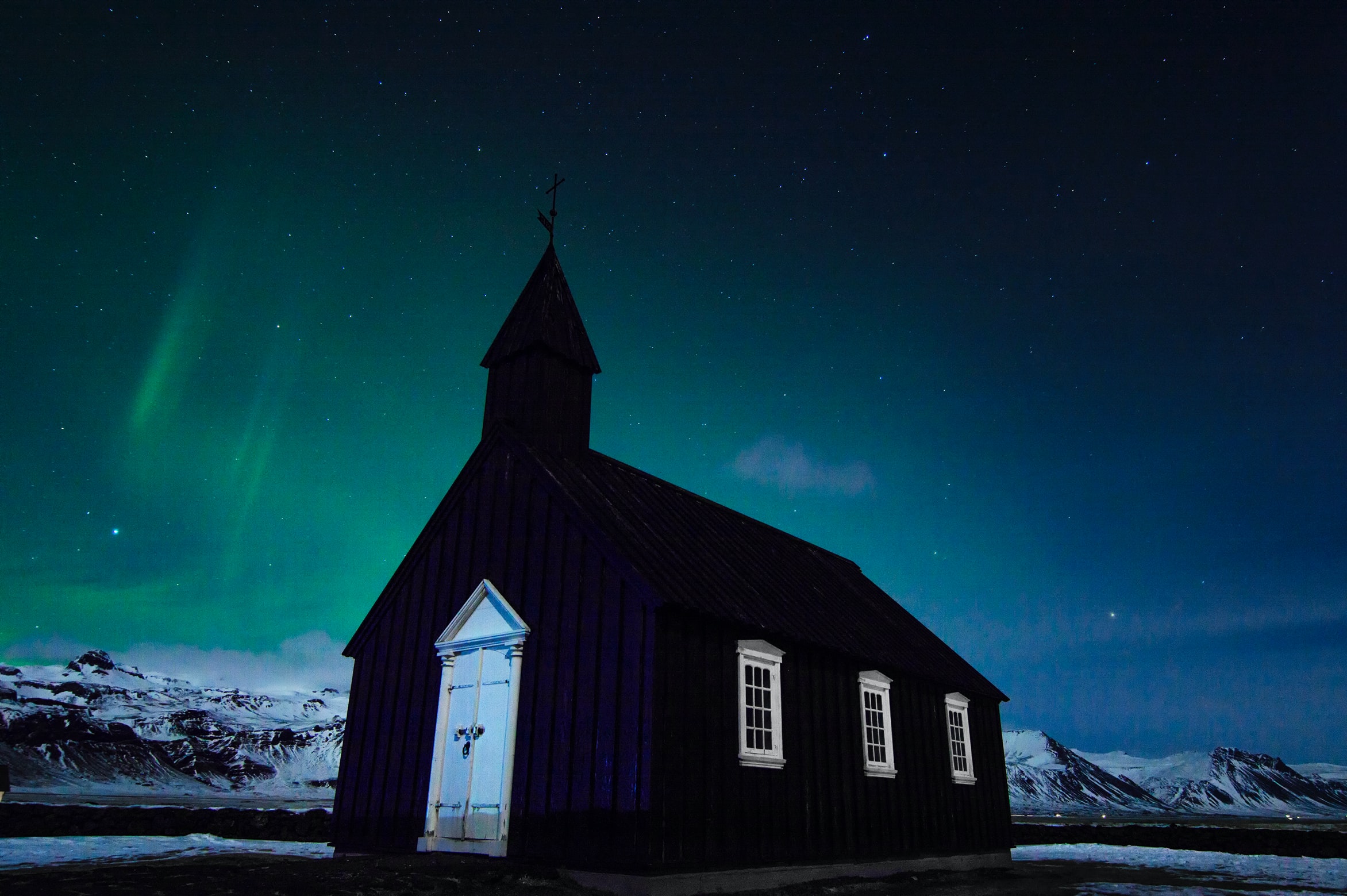
Hótel Búðir in Snæfellsnes (West)
If you’ve made it to the western wilds of Iceland, you’ll appreciate a stay at the boutique Hótel Búðir.
With views of the famous black church (of the same name), this is a gorgeous destination.
You may have a hard time only focusing on the lights here- in between the carefully decorated hotel, the towering glacier, and the vast countryside at your doorstep.
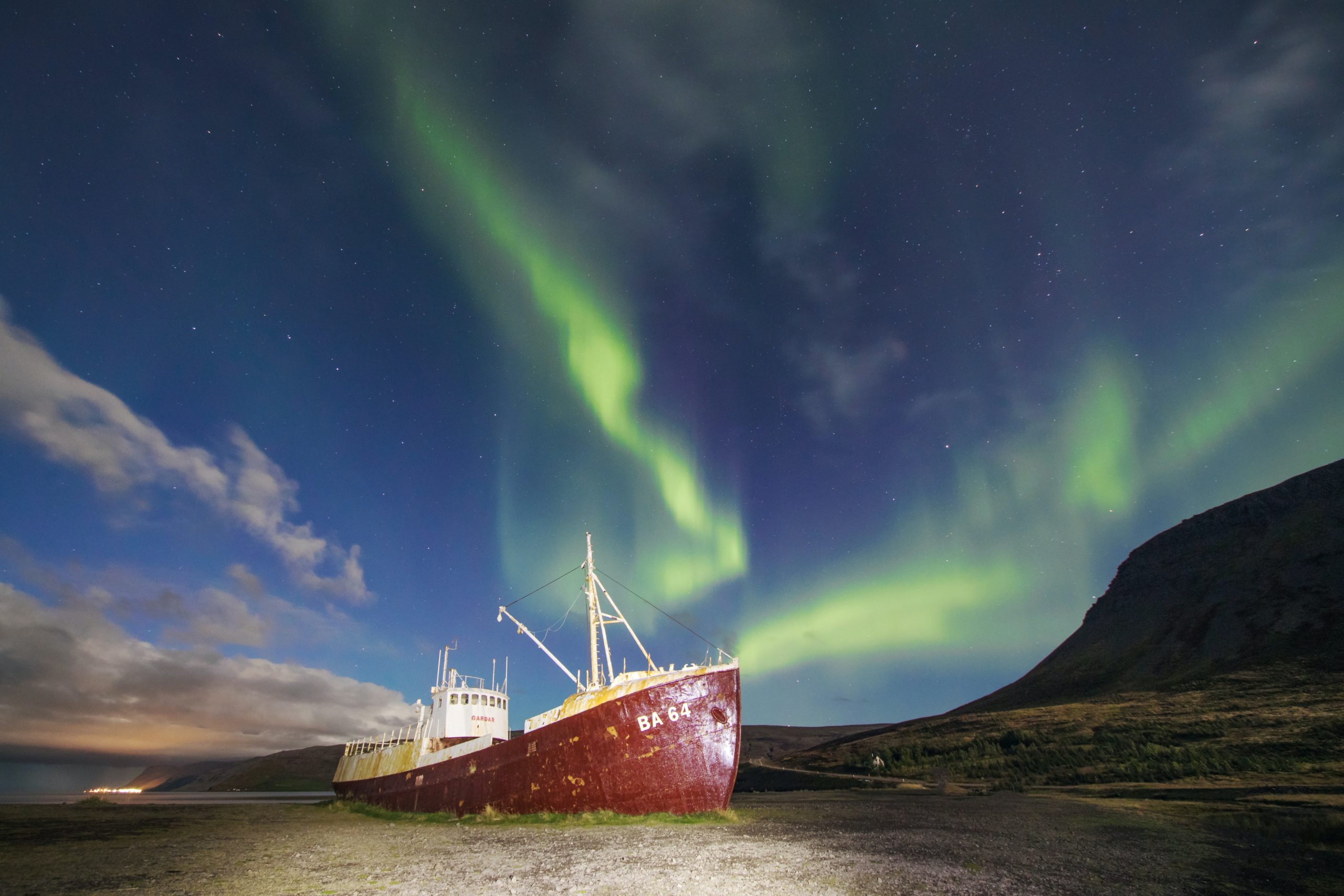
Holt Inn Country Hotel in Önundarfjörður (Westfjords)
Many brave the ring road, but few make it to Iceland’s hidden gem, the Westfjords.
The Holt Inn is both family-run and built in an old school house. A visit here is an experience not to be missed.
Nearby to some of Iceland’s only colored beaches, from here you can set out to see white and even red sand.
The light pollution in this area is nearly unmatchable, as the Westfjords are not heavily populated.
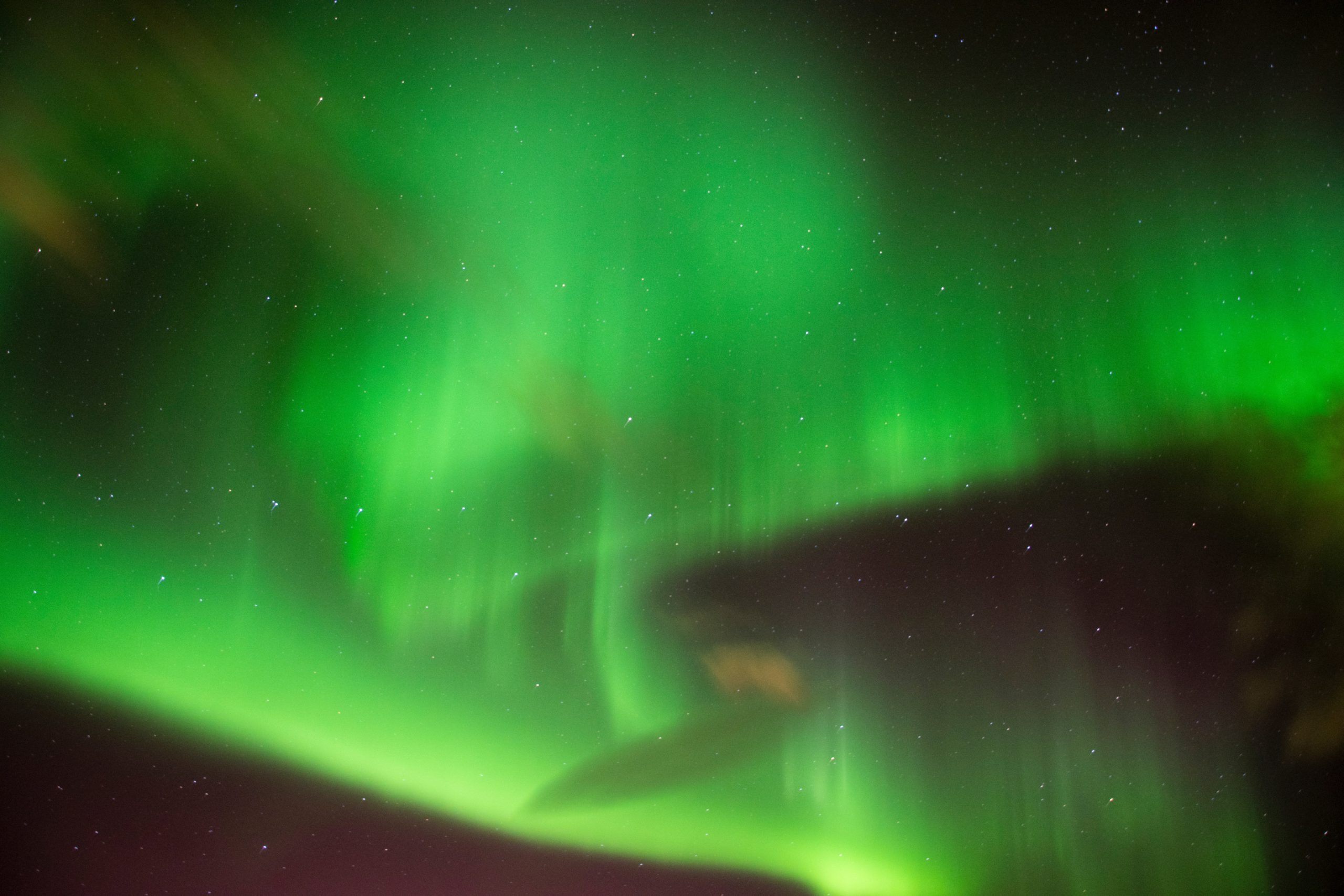
Deplar Farm in Ólafsfjörður (North)
Tucked away in the dramatic mountains of north Iceland, Deplar Farm is a destination for those who crave adventure and solitude.
This converted sheep farm is outfitted with helipads, geothermal pools and an outfitted band loft for live music.
If you can pull yourself away from the activities and the spa, you might find that you’re in a great spot to aurora watch.
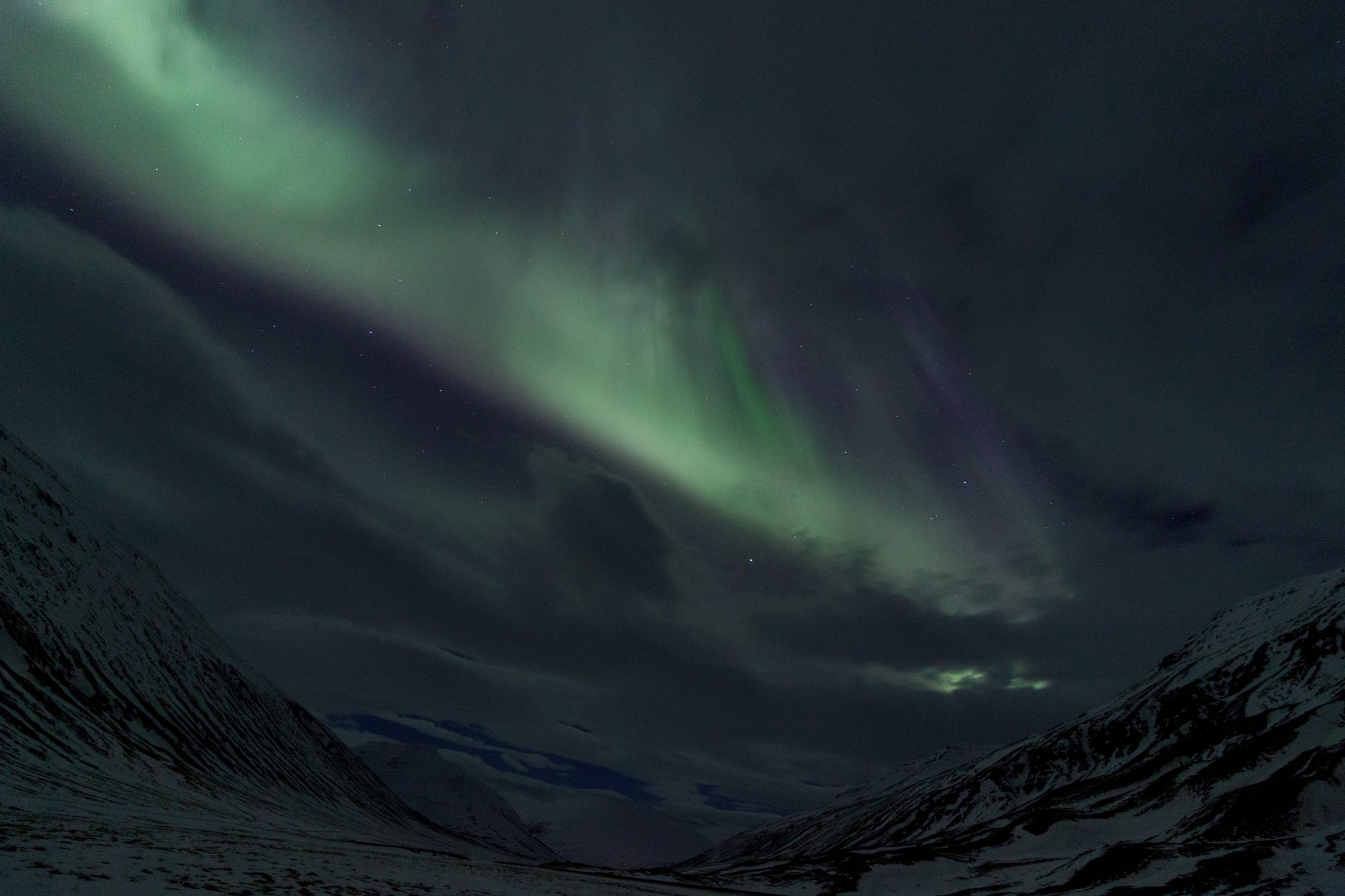
Hótel Kjarnalundur in Akureryi (North)
Just 3.5 km outside of the “capital of the North”, Hótel Kjarnalundur is an oasis in a sea of trees.
For those that seek some proximity to bustling town life while still enjoying the peace of the northern countryside, this is a great spot to watch from.
And it doesn’t hurt that they’re surrounded by lush forest hiking trails! This area promises a myriad of places to set up your camera and wait undisturbed.
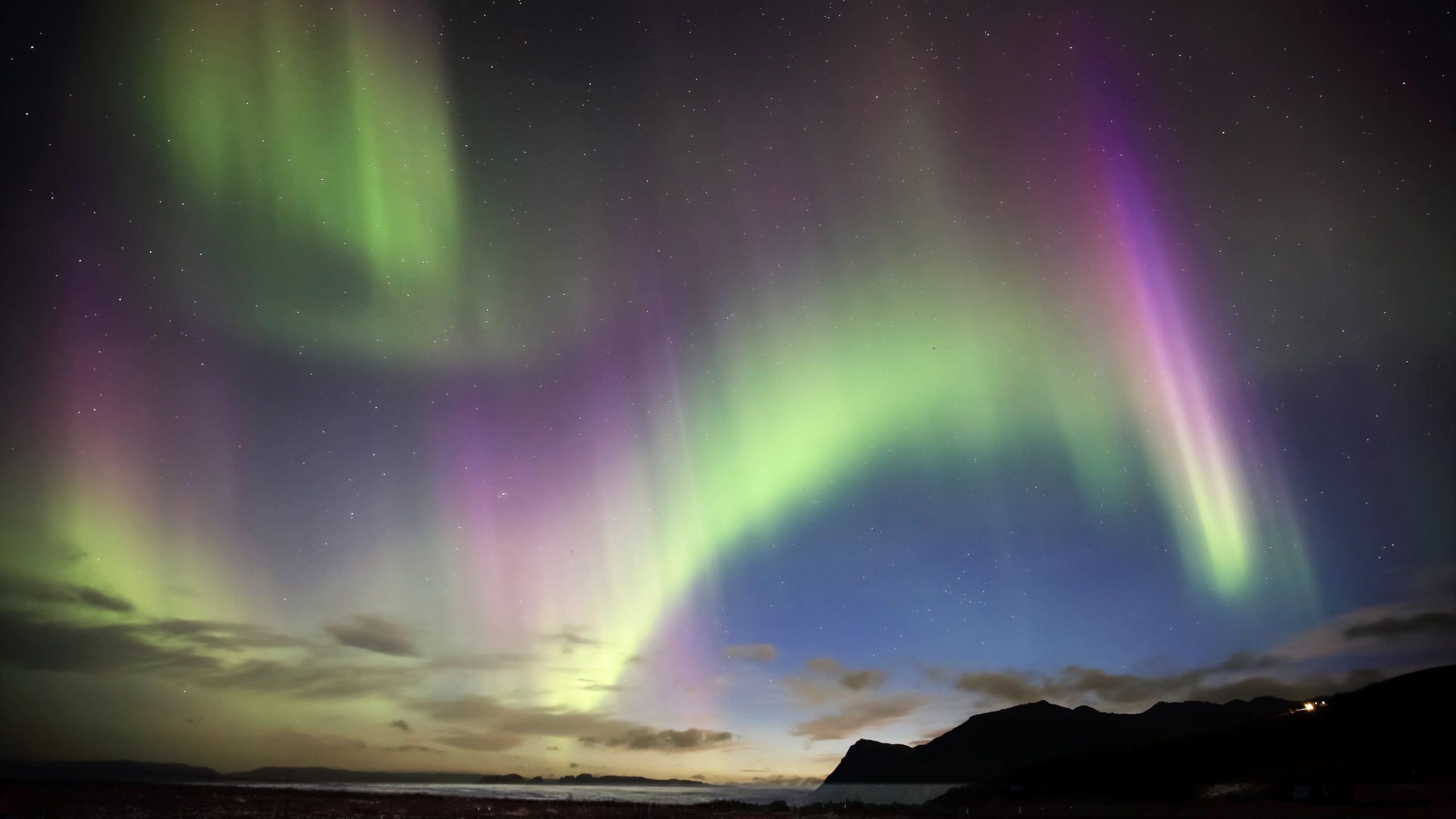
Hótel Norðurljós in Raufarhöfn (North)
Nearby to the northernmost point in Iceland is the Hótel Norðurljós. This spot is a bit out of the way for the typical traveler, but it is worth the trek.
This hotel is located in the same area as the Arctic Henge, a colossal stone monument reminiscent of Stonehenge.
A trip out this way is worth it just to see the Henge, but this area is also known for Arctic deep-sea fishing, bird watching, and even Arctic Foxes.
A great stop in the summer as well (as the Henge is a giant sundial of sorts), a northern lights photo in front of this landmark is not to be passed up.
Aurora Cabins in Höfn (East)
With mountain views and a grill for each cabin, you can’t argue with a stop at the Aurora Cabins in Höfn.
One of the largest towns in the southeast, Höfn is well known for its lobster dishes and dramatic mountains.
There are some great photos to be had out this way, and some great restaurants as well. On a ring road trip, it can be a nice change to have a whole cabin to yourself.
(Especially when there’s a BBQ on the front porch!)
Fosshótel Glacier Lagoon (East)
Just down the road from some of Iceland’s most famous glacier lagoons and the Diamond Beach, is this luxe hideaway.
Fosshótel is a known institution throughout the country and has now put up a location along one of the quietest stretches of the route 1.
This is a peaceful area alongside the towering glacier and the black sand deserts. And as you will be out here nearly all alone, you can bet that the skies will be plenty dark when the aurora shows up.
Northern Lights forecast Iceland: 10 brilliant tips for deciphering every aurora hunter’s key tool
Every expert has a toolkit. In the aurora hunter’s kit, whether they be photographers, astronomers, or excursion guides- a good forecast is one of the best. (Well, that and a cozy jacket!)
Tip #1: Get Local
These days there are countless apps and websites that promise key insight into the northern lights forecast in Iceland. Many of them work in different ways and are focused on different parts of the globe- or sometimes even the planet as a whole.
(The Northern Lights ARE a planetary occurrence!) This can create some interesting changes in how that data is interpreted, that you may not even be aware of.
For instance, some of these services are factoring in sky clarity, or cloud cover, into their prediction. This can happen often in apps where a percentage of visual probability is given.
If this cloud radar data is not for the area that you’re in, you might be getting someone else’s prediction! It can be challenging to know what data the service is using, sometimes. Especially as these details are not always transparent.
That’s why one of our favorite services is the Icelandic Meteorological Office. Since we’re looking for Northern Lights in Iceland, it helps that the cloud radar that we’re seeing on their webpage is specifically for Iceland, and not say- for Alaska or Svalbard.
(Which, don’t get me wrong- super interesting stuff! But if I’m cruising the coast in Akranes looking for a glow, that’s not going to give me much to go on.) When you’re mapping out a trajectory, make sure you’re checking the sky in the place you’re currently in!
Tip #2: Take all forecasts with a grain of salt
Scientific knowledge of the aurora is fairly new, in the grand scheme of things. (Especially when you think about how recent some of the folktales are!) All things considered, people have gotten quite good at figuring out how and when it may happen.
Many questions about the aurora have been answered even over the past few years, and the ability to track and study the phenomenon has flourished. Research stations all over the globe and places like NASA’s Heliophysics laboratory have added many layers to what we initially knew about one of the planet’s most curious light shows. But, we are still learning.
Perhaps we will never stop. It is good to remember this when you are busy interpreting a forecasting tool.
It is possible for the Kp number to be incorrect, or the cloud radar to be slow. Auroras are space weather, and though our predictions are guided by years of data, it is still possible for us to gauge the speed of an incoming solar storm incorrectly.
After years of watching the forecast every day, it has happened that on a Kp 0 night, we got lucky! It has also happened that on a Kp 7 or 8 night, we were not. Always remember that forecasts are a great tool, and a guideline- but they are not 100%.
If you’re visiting Iceland within the auroral season, and the sky is clear- it is always worth having a look.
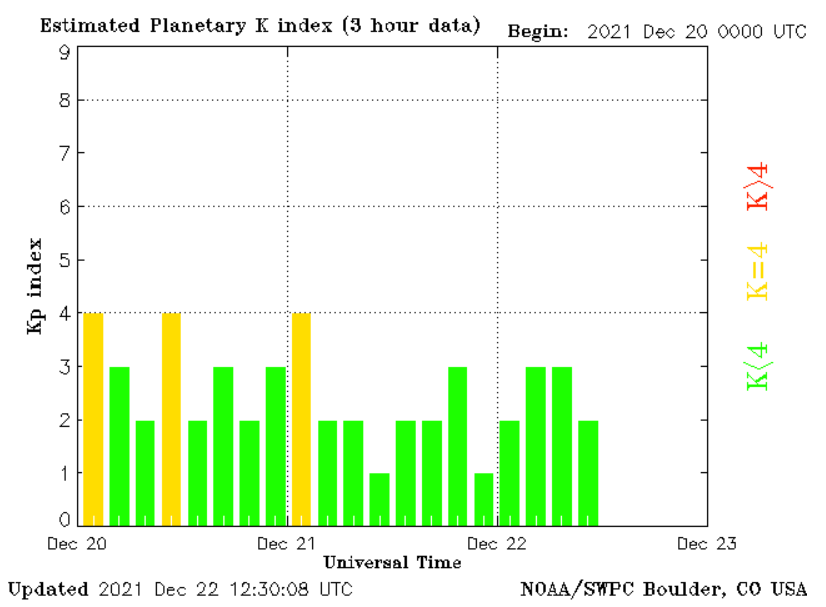
Tip #3: Get to know the index
So you’ve seen an aurora forecast, but what’s that number, and why is everyone saying it’s a “5 night”? This is the Kp planetary index, K-index, or Kp index. This number belongs to a 0-9 scale that references a metric that people use to gauge the level of geomagnetic activity.
This number is referencing the activity within a 3 hour period, in order to achieve a more realistic picture of the activity at that time. This is why checking the forecast in advance can be tricky.
This number is a great guideline for what’s going on, but it is not definitive, and is only as good as the data being collected to create it. Different factors can affect how this number is achieved, and how it applies to us- and so for this reason it is important to remember that it is one of the many tools in a hunter’s kit, but not the only one.
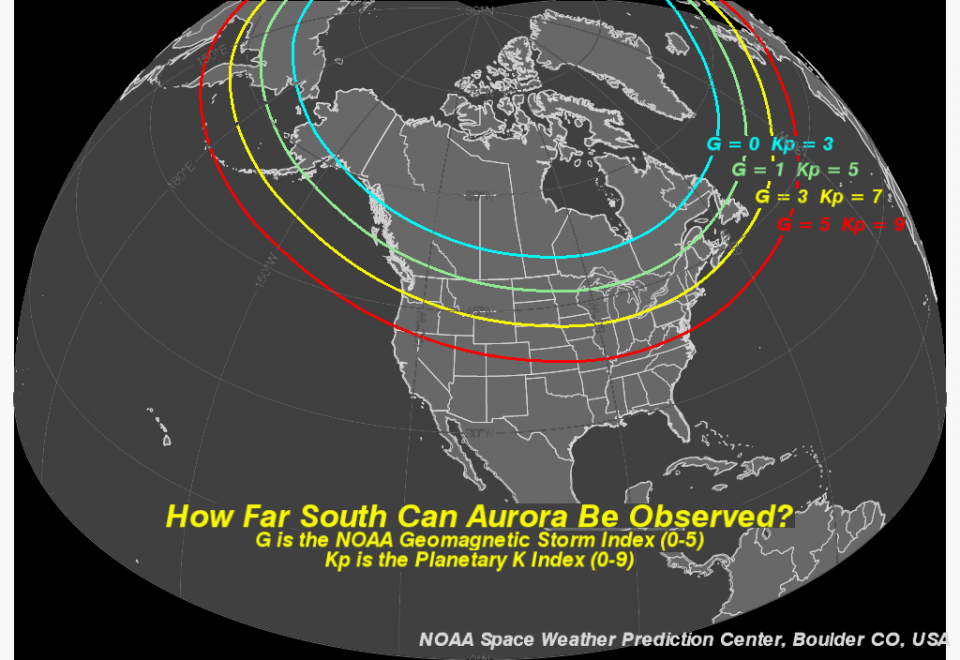
Tip #4: The K-index and Earth
This whole situation is layered! Once you know about the K-index and what it stands for, it’s helpful to know how that applies to where we are.
We know that the aurora is a polar phenomenon most of the time, but then why does it sometimes show up in North America or continental Europe?
It’s possible, and understanding why helps to explain the K-index in a different way. Because of all of this data collected over time, scientists have been able to gauge how high the level of activity needs to be, for an aurora to grow a certain distance away from the pole.
Like everything else related to forecasting, this too is not 100%, but it is a system built over time that is supported by carefully collected data.
(Science and nature do love an exception!) You can see on many charts and graphics just like this one, that the Kp or K-index typically correlates to a specific “ring” or “slice” of the globe.
These numbers from the chart tell us that if the solar activity is at a 5 level of strength, it is possible for it to reach as far as South Dakota on the globe.
Does that mean that on a 5 night, it definitely will? Or that if it does, we are guaranteed to see it? Not necessarily.
It means that should all factors occur as on a typical level 5 night, it is possible for the activity to reach that far south.
However, it does not take into account what the clarity and light pollution factors are in your area, which is why the K-index is only one piece of an aurora forecast.
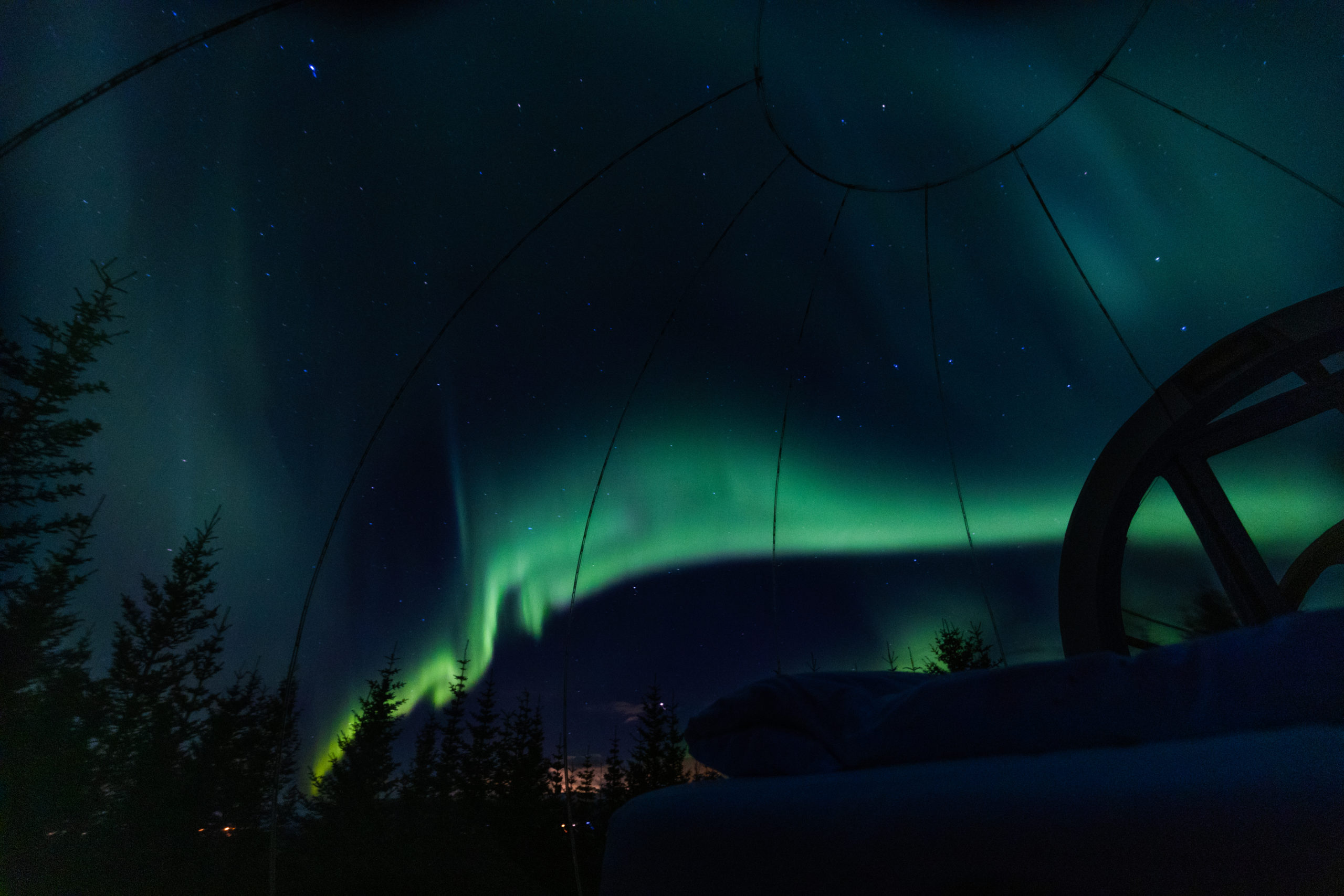
Tip #5: Live in the moment
When forecasting an aurora, we typically don’t look too far ahead of ourselves. This is a bit out of our hands, as the Kp index functions on such a small time period anyways. Our very own northern lights forecast in Iceland even runs on three days cycles at a time.
So figuring out when we can see the northern lights is on our minds often!
And of course, if you’ve been here before- you’ve probably already heard someone say “If you don’t like the weather, just wait five minutes.” Icelandic weather is at times capricious and volatile, so it seems we have something in common with space after all.
If you’re hunting for auroras, it’s important to remember to exist in the NOW. They are elusive, they defy all odds, and no two are ever alike. If you’re planning an excursion, try to book it near the beginning of your trip so that you have time to try again if you need to.
And above all else, keep your eyes peeled! If the sky is clear, there is always a chance. Some of the best auroras have happened to us while taking out the trash, driving home, or while having a tiny impromptu stroll. Like some of the best things, it often happens when you’re paying the least attention.
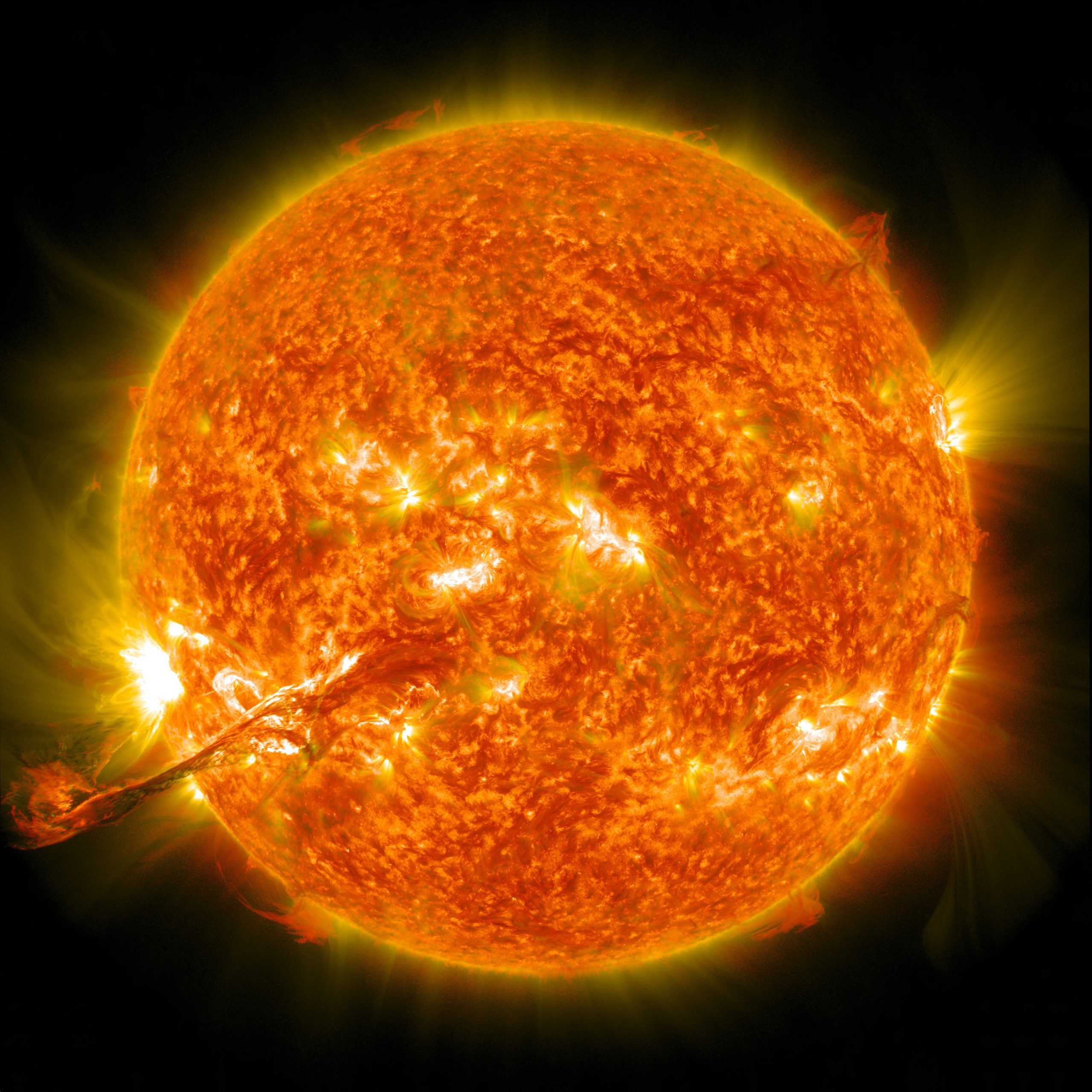
Tip #6: …But don’t forget to play the long game
Now that we’ve told you to loosen your collar and get spontaneous- here’s some advice from the other end of the spectrum! (..You will find that this is very characteristic of aurora hunting. Do everything, and nothing, all at once!)
The forecast itself is very focused on the current time, but what about the science of it all, and the bigger picture? Well, it’s true. For the next-level hunter, there are some old reliables that you can depend on when making your predictions. We’re talking about solar cycles and the tracking of sunspots.
To simplify it all the way down, we are all spinning, and these orbital patterns create seasons or sections of measurable time. The Sun also experiences this and has cycles that we refer to as solar maximum and solar minimum.
These are believed to be 11 year cycles in which the Sun’s magnetic field flips from north to south, and is characterized by sunspot activity or prevalence.
Therefore, in solar maximum you can expect more sunspots or increased sunspot activity than you would in solar minimum. A prevalence of active sunspots can be good news for aurora watchers, as they are often responsible for more volatile solar activity, like the release of solar flares and prominences.
They are almost like volcanoes in that way, and these bursts of activity that they send off mean better and more powerful displays of auroral light. One can track these sunspots, as they are visible fixtures on the surface of the sun.
You can even try it out yourself at home with activities like this. For people that regularly track auroras, knowing when a sunspot is coming up is a nice way to gauge when activity might be high again in the future.
Like all aspects of auroral activity, this is not guaranteed, but it is one of the more long-term dependable factors that we know of at this time. Not visiting on a sunspot night, or even within solar maximum?
Don’t worry! These factors may result in high activity, but it has been proved time and time again that we do not require them for great northern lights adventures.
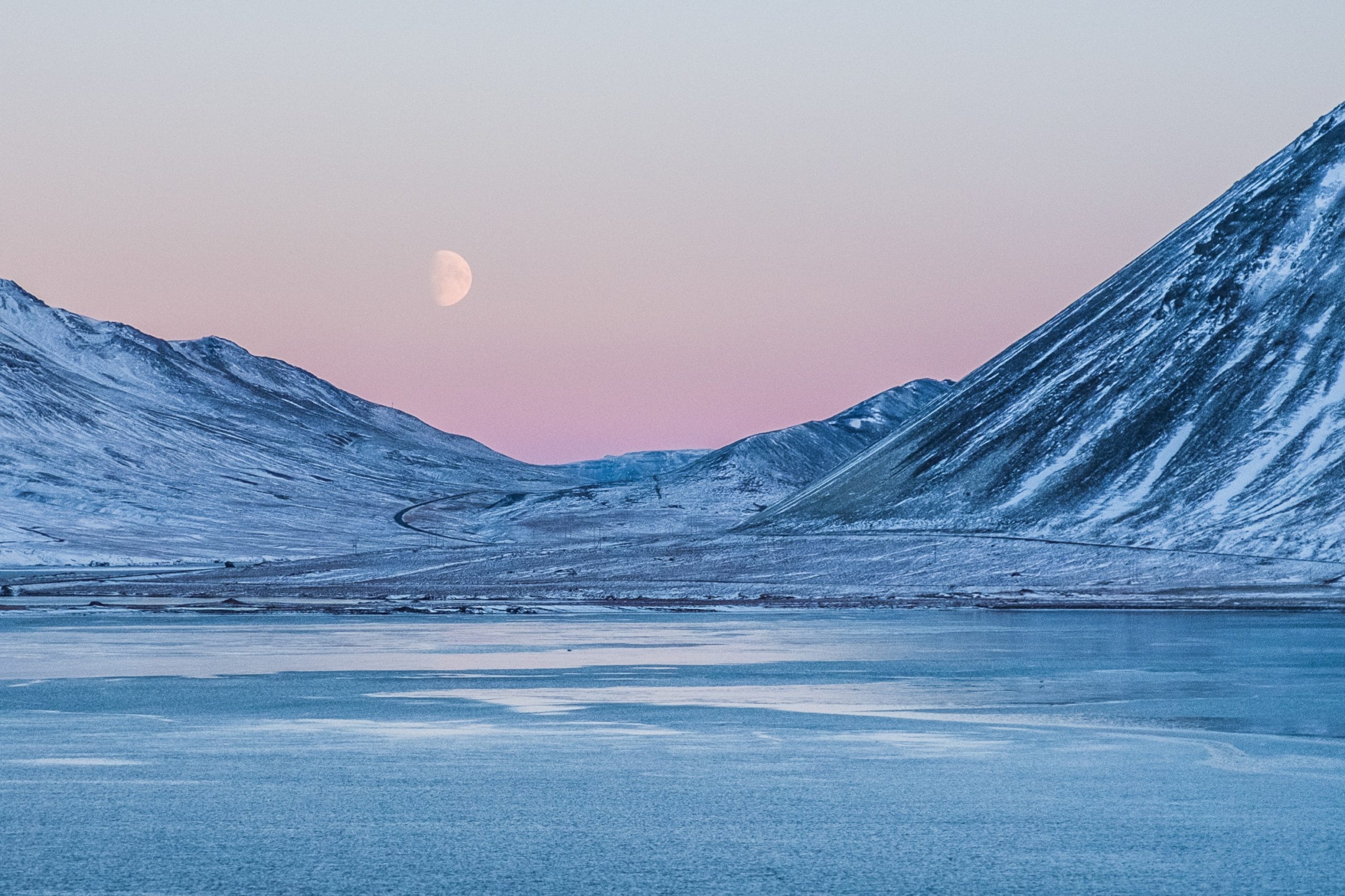
Tip #7: Don’t fight the moonlight
The forecast is looking good, you’ve got an idea where you’re headed, and the plans are in place. You’re even preparing to take a few photos while you’re out. But what are the conditions going to be while you’re out?
It can be helpful to know what the moon phase will be while you’re out so that you have an idea of what kind of visibility conditions you’ll be working in.
Don’t worry if it’s a full moon- though it can create a great deal of light pollution, it does not make visibility impossible. A full moon can create some really helpful foreground light so that you can capture a semi-lit nature shot.
Though a darker sky can be easier on the eyes, there’s certainly something special about a full moon shot. Be ready to adjust your camera settings accordingly!
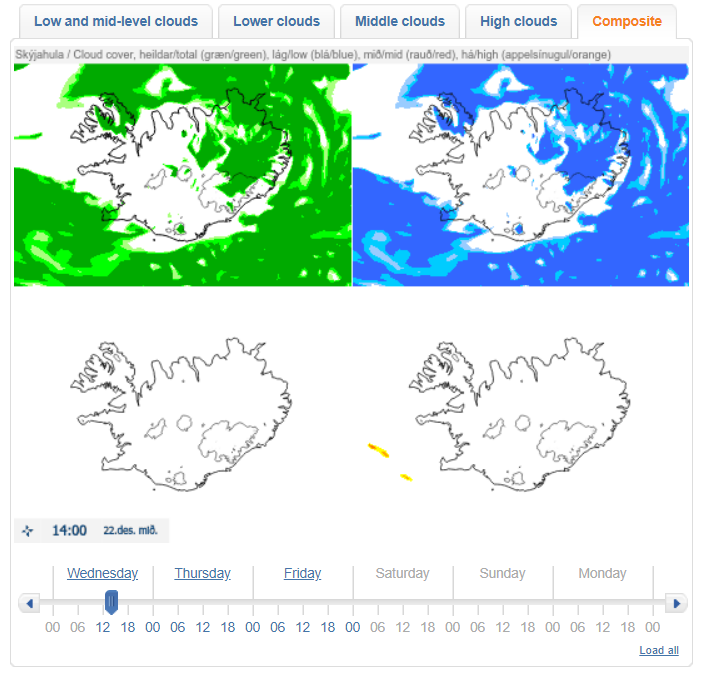
Tip #8: Get crystal clear
Since you’re hunting in Iceland, it’s safe to assume you’re using our favorite northern lights forecast. But at a glance, do you know what you’re looking for?
This forecast comes in two halves, the Earth half, and the space half on the right. The “space half” is just the 0-9 Kp number on the side, letting us know what the solar activity is up to. The “Earth half”, is the map.
At first glance it can look like the colored places on the map might indicate auroral activity or visible lights- but that is not the case. This map is only showing us the cloud cover. You can choose to view a layer of the sky or the entire sky altogether.
(Different types of clouds form in different layers of the sky, so sometimes you can find that the cloud cover might not be so serious after all, because of where it is.)
But no matter which layer of the map you’re using, don’t forget that the colored spaces on the map are the thing we’ve trying to avoid. We are looking for white or clear areas on the map because that is where the clouds are not.
Try using the sliding scale at the bottom of the map to see how the clouds plan to move over the course of the 3 day period. You can also view a wind forecast if you want to see a more detailed view over time of how the directionality might change.
If you’re lucky, those clouds will get blown away before you’re even out there! Or maybe, you ended up with some wispy cirrus clouds, high up above us in the topmost layer.
Either way, as long as you’ve got some clarity over top, you’re set. (And don’t forget that earlier tip, to take this with a grain of salt!
We’ve gotten pretty good over time at predicting Earth weather, but even the cloud map can be slow, or too vast to catch tiny windows of clarity in your immediate area.
Sometimes, that imperceptible window through the fog is all you need to catch the show. So look up, no matter what!)
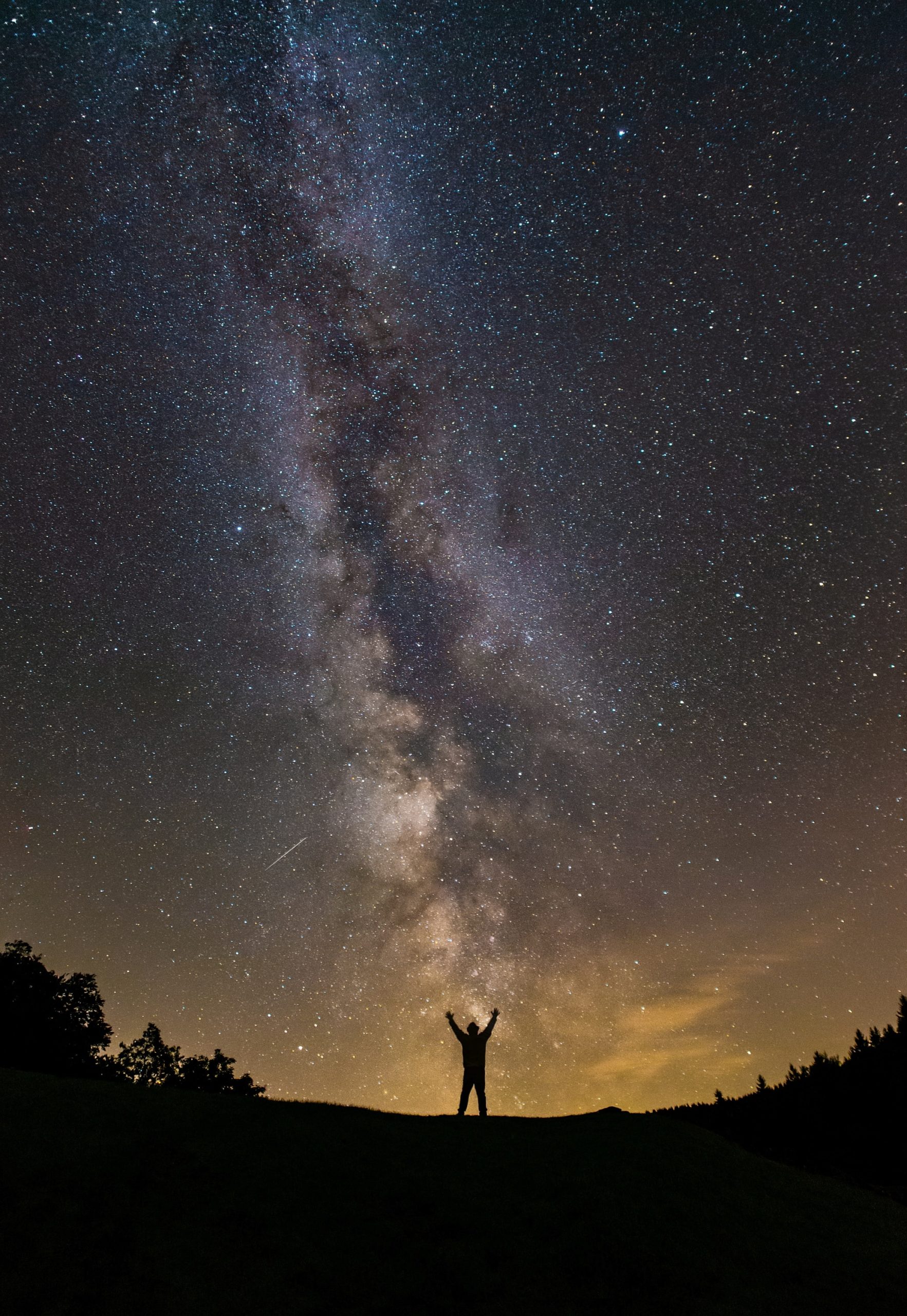
Tip #9: Know what’s behind the number: Mix it up!
You’ve seen our favorite northern lights forecast in Iceland, but where does that data come from? Some of it comes to us from the Leirvogur Magnetic Observatory in Mosfellsbær, Iceland.
At Leirvogur, scientists have been taking measurements of Earth’s magnetic field since 1957. This has given us the ability to note magnetic disturbances in real-time, as their data is updated every 10 minutes. They are another great tool to have in your kit if you want to see how the Kp number is decided.
But all forecasts are different kinds of tools, so why not look further? NOAA’s Space Weather Prediction Center is another great source for space weather updates. On this page dedicated to fellow sky enthusiasts, you can view a myriad of different forecasting tools.
From the conditions on the sun to the solar wind update, all the way down to a visual rendering of the auroral oval. This is a great example of how many pieces must fit together in order for auroras to be known about, and then found. Check them out, and tell us about your favorite!
Tip #10: Take it with you
Preparing for a night out hunting is a key step. This means charging up your camera batteries and headlamps, collecting all your gear, packing away your snacks, and making sure you’ve got all the layers and mittens and hand warmers you can carry.
But what about the forecast? Many of these services have mobile apps or can just load up in your phone or tablet browsers. On average, many of these forecasts will update between 3 and 10 minutes, so you never know what magnetic spikes or cloud movements may be on the way.
If possible, bring them with you! Being able to follow the cloud map live (while someone else drives, of course!) can sometimes make all the difference on a chase.
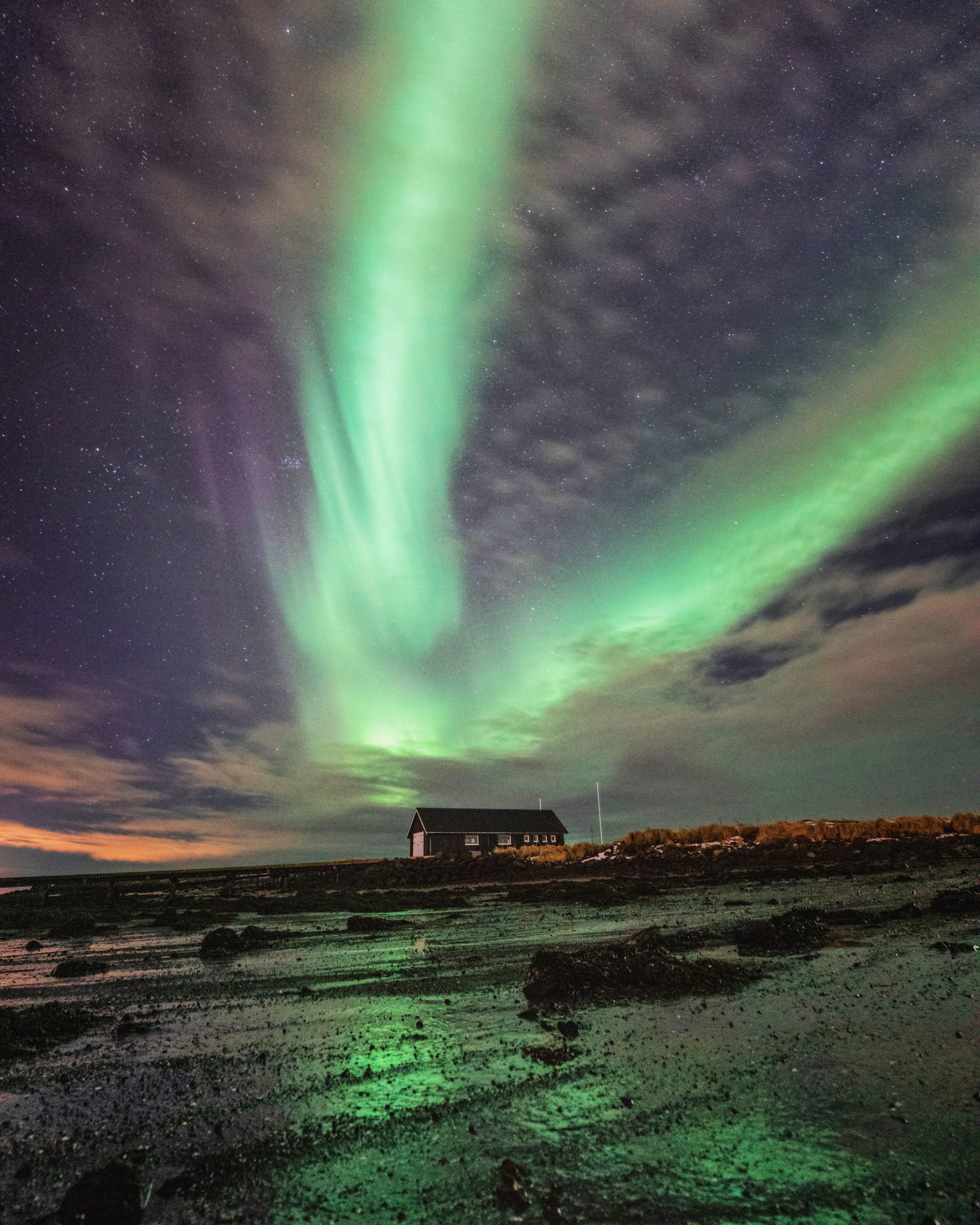
10 brilliant aurora spots in Reykjavik, Iceland: City of Northern Lights
Heading out into the country is the go-to for most aurora hunters, but how lucky can you get in the city?
Reykjavik, Iceland Northern Lights: Can it be done?
Destination Reykjavik, Iceland, Northern Lights: The world’s northernmost capital, is the first stop for most of the country’s aurora hunters. But is it possible to see the lights there, or does one truly have to head out into the wild?
The capital region around Reykjavik, Iceland houses nearly two thirds of the Icelandic population. This makes for a busy little city in the southern climes of Iceland, and also makes for some of the greatest light pollution in the North Atlantic, until continental Europe.
For many intrepid skywatchers, the first advice is to get out of town and into the country, if only ten minutes away, to access better darkness and get away from the buzz of electric light.
For our eyes to have a starting chance of processing auroral light, it does make a big difference to increase the darkness of your surroundings. This is a thing that happens in stages, depending on what you have the power to control.
For some, it means heading out into the night down a long, quiet country road. But for others it just means shutting off the porch lights, dimming the vehicle console, letting cell phones rest- or just turning away from the streetlights and hoping for the best. You can’t always change the light pollution in your location, and sometimes you don’t need to.
Nature has a way of surprising us sometimes. If given the chance, it is certainly easier to see Northern Lights in darker and less populated spots. The low-light photographs become easier to create without overexposure, and your eyes adjust better into this context that they were not entirely meant for.
It’s true, the city is not every aurora hunter’s first choice of location. But, as a denizen of downtown Reykjavik, I have found that while it’s not the easiest spot to watch from- it certainly can surprise you.
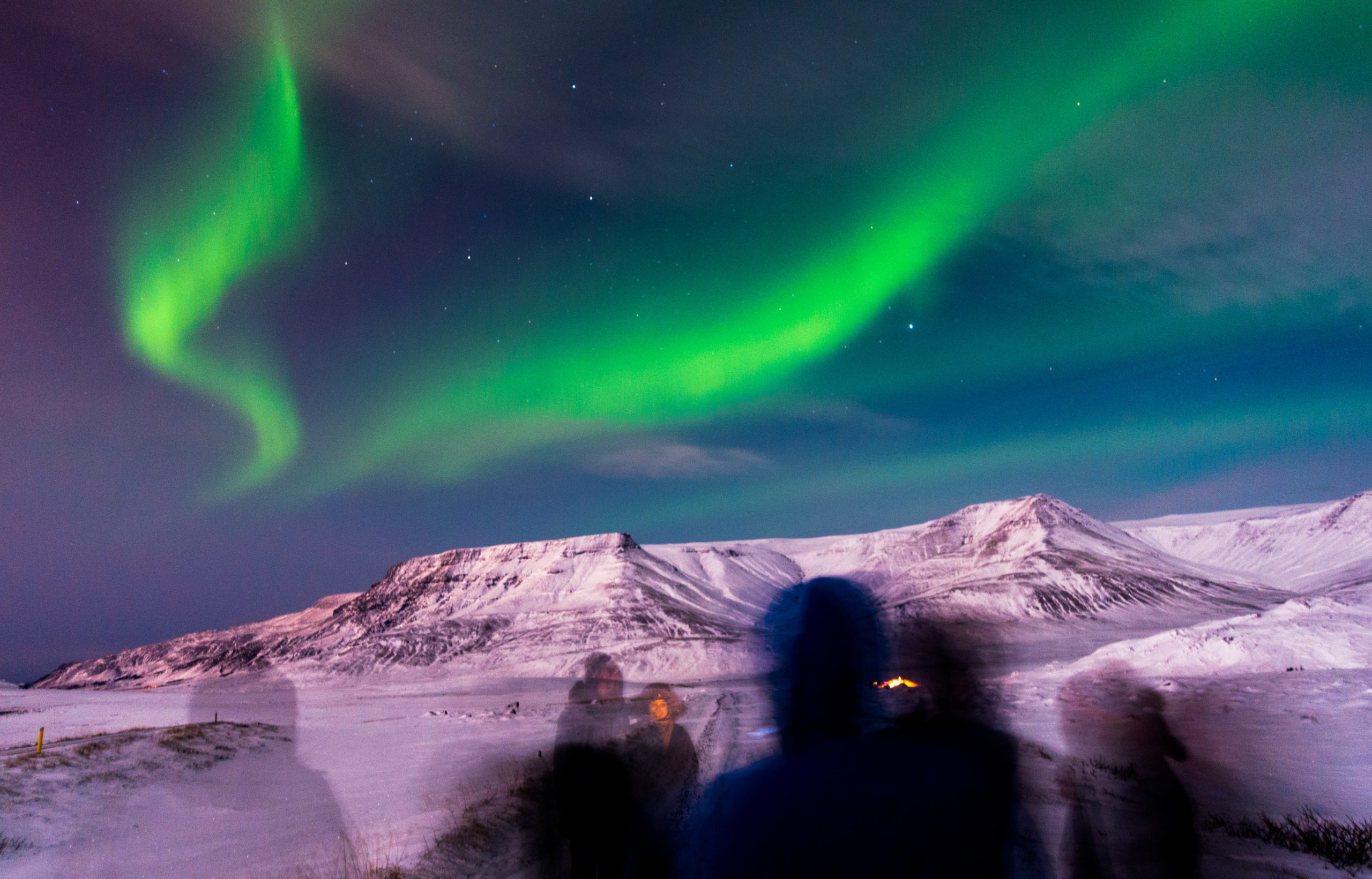
Nature’s light show
The aurora is an elusive character. Despite all of the careful planning and season mapping, the truth of it all is that this is an occurrence that happens above our weather system in space, and so it can start up at any moment.
This means that auroras can occur anywhere that they’re strong enough to reach, at any time of day or night, and in any season of the year. This is perhaps not the answer that they are most often associated with, but the reality is that the sun isn’t thinking too hard about what time it is at our place when it sends the activity.
In some ways, this natural defiance is good news for us, because it means that despite a common norm, there are always exceptions. One of these exceptions is aurora watching from the city. Though it would not be the recommended area to watch from, sometimes you just can’t get out.
Whether it be a short layover or a night without a vehicle, it isn’t always feasible to trek out into the wilds. Some think that this means their shot at catching the lights is over, but it just isn’t so.
Despite the light pollution of greater Reykjavik, sometimes we just can’t outshine nature. On a good night with low cloud cover, you most certainly can watch Iceland’s dancing lights, in front of some of her most notable landmarks!
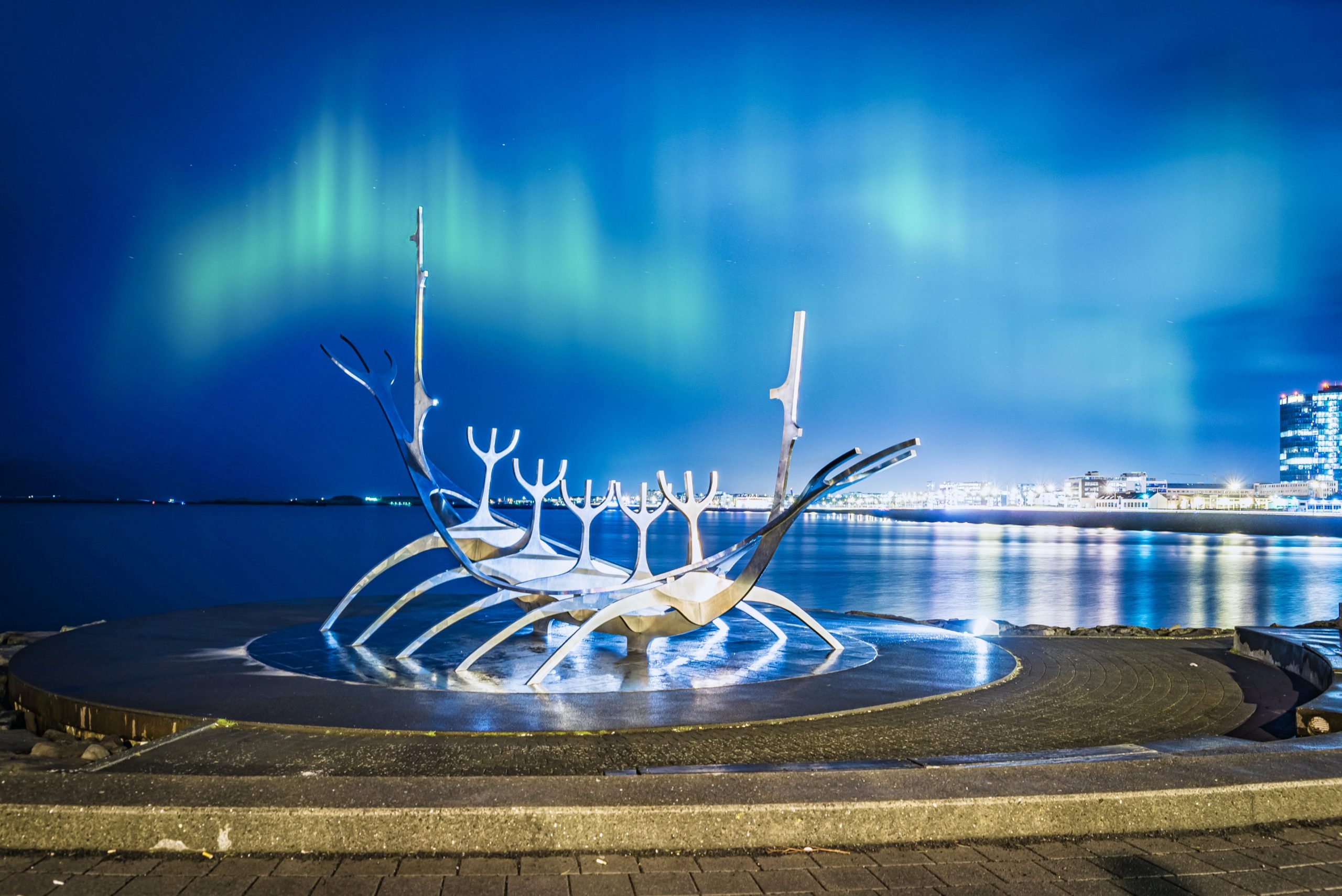
How to set yourself up for success on a downtown aurora hunt
In the best conditions, a low-level aurora can be hard to see. It is common that people watching from slightly different areas have extremely different experiences, and report different intensities, different colors, and sometimes even failures vs successes.
This can be frustrating when you find out that they were only a few kilometers away from you, and you missed the show! It’s important to remember that the northern lights are a planetary occurrence that happen to our entire globe, and they are constantly moving. Despite how huge the sky feels while you’re under it, you are only really seeing one section.
This is why consistent movement on aurora excursions can be a small help on difficult nights. Keeping your eye on the sky for an extended period of time while you constantly change it up can be a more forgiving strategy than only having a few quick looks or staying put.
Especially when you keep in mind that the aurora isn’t the only thing that’s moving, the cloud cover may be as well!
However, you can still get lucky in the city. And there are a lot of perks to staying local if you’ve got to. The obvious benefit is proximity to your lodging.
Reykjavik is a walkable city, and if you’re staying in the area, you’ll always be close to your home- should you run out of camera batteries, forget your mitts, or just flat out get tired. Need a snack? There are countless places to get one!
Looking for a place to sit that isn’t a frozen rock? Not to worry, public benches line the roads and walkways. But, it’s good to keep a strategy in mind. If you’ve seen luck in the forecast and have decided to set out into town, try to keep your back to the city lights, and your eyes fixed on a dark area.
Night vision takes some time to adjust, and if you can set yourself up in a spot that isn’t directly casting a streetlight blaze into your eyes, you’ll do yourself a big favor. And to help you out, here are a few of our favorite spots:
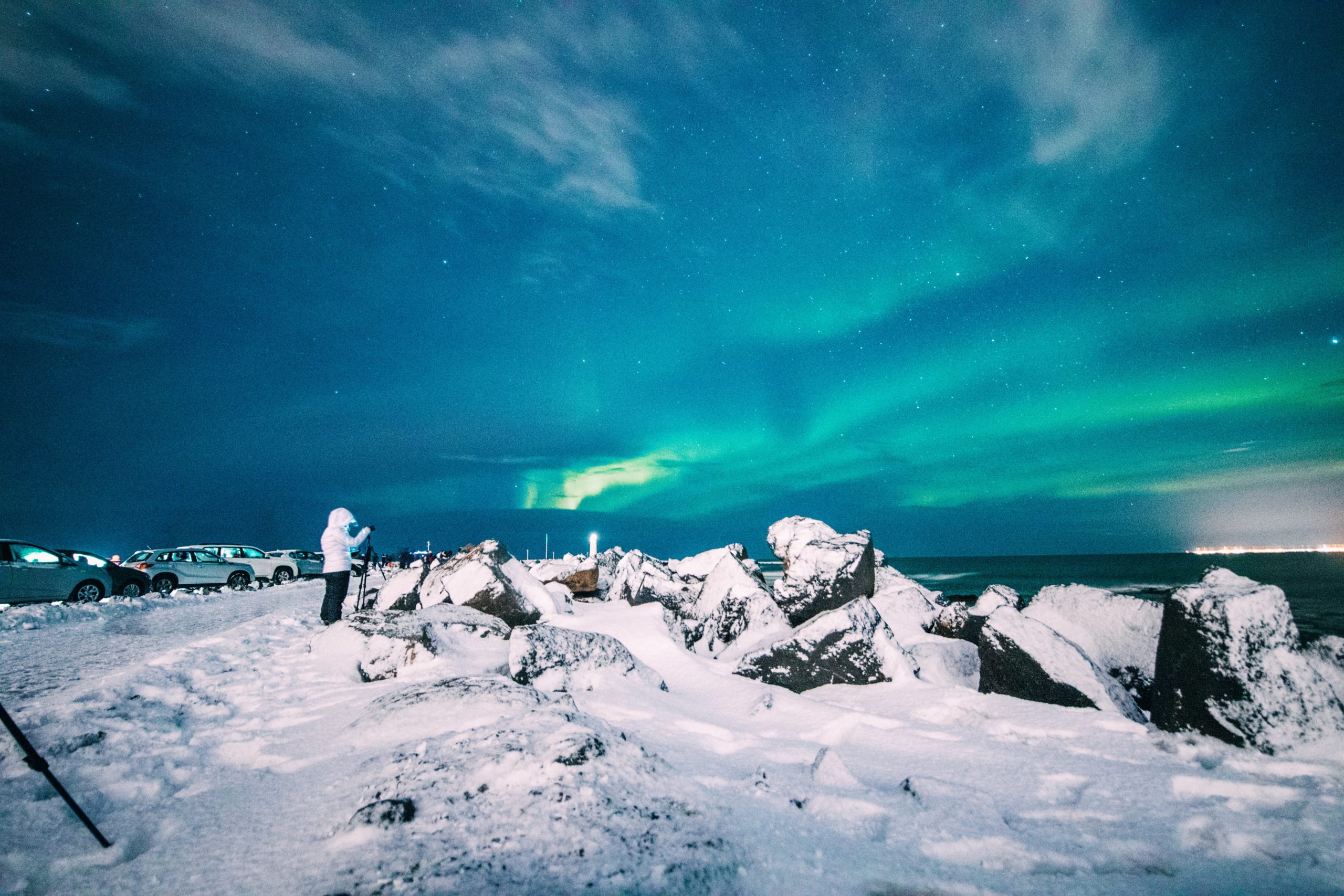
Best city hideaways for Reykjavik, Iceland Northern Lights watching
Grótta: The most popular spot for a good aurora hunt, Grótta is a hidden gem on the Seltjarnarnes Peninsula in Reykjavik. It takes about an hour to walk there from the city center, but there are pedestrian pathways, a lighthouse, and a small geothermal pool to dip your feet into once you get there.
Acting as a nature reserve for the area’s abundant bird and sea life, parts of Grótta are closed to us in the summer to serve as nesting grounds. In the winter, however, it becomes the city’s own aurora spot.
Already a bit out of the way as far as city locations go, Grótta suffers from far less light pollution and enjoys a dark view over the water. If you choose to head to this spot, make sure to check the tide tables.
The very end of Grótta is attached to us by a very thin strip of land, which can become submerged during high tide. If you’re looking for a little slice of quiet in Iceland’s bustling capital, this is one of the best.
The Sæbraut walking path: If you check out a map, you can see that there are copious walking paths in the capital area. You can walk all the way to Hafnarfjörður if you’re feeling adventurous!
The most popular of these paths, however, is along Sæbraut, or the Sea Road, at the northern coast of the city. Running along Faxaflói Bay, this wide path takes you past many notable landmarks like the Harpa Music Hall, the Sólfar or Sun Voyager dream ship, and many local works of art and sculpture.
It stretches from harbor to harbor and takes local wanderers on a flat, accessible trek with a full view of Esja, Reykjavik’s favorite mountain. Though a seemingly obvious spot, it truly is one of the best. Easy to get to, central to downtown, and sporting one of the best dark views over the water in a northerly direction that there is!
Not having to look at any lights over that expanse of water is easy on the eyes, and on a good aurora night, one can find many hopefuls lining the path and balancing their tripods on the barrier rocks.
Having this unobstructed view towards Esja is as good as a compass for finding north, and being able to keep the streetlights mostly behind you is a lucky mercy.
If you plan to try your luck on the Sea Road, it’s often best to set yourself up a bit of a way away from Harpa, and she is often busy conducting a light show in the evening. (Though, while you wait, it is spectacular to watch!)
Sky Bar: Looking for a slightly more luxe place to watch from? We’ve got you covered. For those who’d prefer to have a cocktail while they wait, we recommend the Sky Bar, resting on the 8th floor of Center Hotels Arnarhvoll.
Open until 23:00 (at the time of this writing), Sky Bar boasts some of the best views of Faxaflói Bay that you can get, without scoring a meeting in a waterfront board room or making a friend in one of those high rise apartments.
Öskjuhlíð: Resting pretty on a 61 m. high hill is the home of Perlan, and one of Reyjavik’s lushest forests. A veritable tangle of woodland hiking trails, Öskjuhlíð is a curious oasis with a great view.
It’s a bit of a hike to get to the top, but one can enjoy the glistening dome of Perlan, the memory of military bunkers from a century gone by, and even the new site of the Ásatrúarfélagið temple.
Depending on the side you watch from you may have to look over some city lights to view the sky, but on a good night, this can be a phenomenal spot to take a photo from.
Get the shot: Local landmarks to capture on film
If you’re in Reykjavik, Iceland northern lights hunting, you’ve got an excellent opportunity to grab a showstopping photo while you’re there. Many people leave Iceland with gorgeous sky shots of open country- but a Viking longship, or a cathedral built to look like basalt columns? These local treasures make for some dramatic foregrounds. Here are a few of our favorites:
Lighthouses: It’s hard to pick just one! There are over five active lighthouses in the greater Reykjavik area, and even more outside of town!
Icelanders are a coastal people, so you’ll find no shortage of these beacon towers on your journey. When in town, key an eye out for these bright yellow structures.
Esja: Reykjavik’s very own distinctive mountain and favorite hiking destination of locals and visitors alike, Esja lies in a northerly direction from the city center.
Looking across the dark bay to capture a stunning photo with Esja in focus is a great souvenir of your time in this seaside city.
(And for those with transportation, the parking lot at the base of Esja can be a great close by dark area for last minute viewing!)
Hallgrímskirkja: The tallest church in the country, Hallgrímskirkja is usually the star of most photos that it appears in- so it’s hard to imagine it taking a back seat to northern lights.
But, with its basalt column structure, and its prominent memorial to Leif Erikson out front, this hilltop spot has lots of seating and lots of space.
(Come back during the day to try out the observation tower for a great panoramic view!)
Sólfar/The Sun Voyager: Created to celebrate the 200th anniversary of the city of Reykjavik, The Sun Voyager is a sculpture crafted by Jón Gunnar Árnason.
A popular photo spot during the day, local photographers make a point to capture this stainless steel dreamboat in all seasons.
Resting right on the Sea Road path in front of Esja, you can hit three locations at once at this stop!
Harpa Music Hall: At the head of the Sea Road pedestrian path lies the Harpa Music Hall, a notable structure on the Reykjavik skyline. With its massive fish scale windows, Harpa lights up at night and creates animated patterns and shapes in an impromptu electric light show.
This feature is free to watch and is a great photo in and of itself.
Thufa and the Old Harbour: Thufa, also written as Þúfa, is an art installation in the Old Harbour/Grandi area. Created by Ólöf Nordal, Thufa is a reminder of Reykjavik’s maritime past.
Though it takes a bit of a walk to access, one can guarantee a modicum of serenity here at the near end of Reykjavik’s Old Harbour, jutting out into the bay.
If you head out early, check out some of the boutiques and cafes in the area.
Perlan: Perched on the top of Öskjuhlíð hill, Perlan, or, the Pearl- is a famous Reykjavik landmark that has lived many lives.
First built to house hot water, then becoming a revolving restaurant, and now hosting a vibrant museum, planetarium, and even a refrigerated ice cave- Perlan has seen it all.
This is a landmark that is popular to capture both up close and from a distance, but be sure to check their website for opening hours if you choose to visit.
Perlan is a vibrant space with many attractions, and some of these do require a ticket to enter.
Tjörnin: Tjörnin is technically a lagoon, but as you can see it has lovingly been named “The Pond”. Lying next to the city hall and many of Reykjavik’s oldest structures, a stroll around the pond is a historic pastime.
If you’re lucky and the wind is low, you can try for a great reflective photo in the shallow waters of this city treasure. Watch out for the residents though- Tjörnin’s birdlife are expert connoisseurs of bread!
A few parting tips:
Tours: Tried your luck strolling and still didn’t see any lights? Not to worry. Reykjavik is the bustling epicenter of a myriad of tour departures.
One can book all sorts of experiences that pick up in the city, from a northern lights boat ride, all the way to a chauffeured stay in a northern lights igloo. Don’t worry about the transport, you can be picked up and dropped off at your hotel, and the rest is up to the experts.
Snacks: Up late and hungry? So is half of Reykjavik! Lucky for us there are some tasty late-night options scattered through the heart of downtown. Try a stroll along Laugavegur, or stop in Ingólfstorg for some late-night eats.
If it’s close to the weekend, there may be food trucks about! The majority of them gather at Lækjartorg, but you’ll smell them before you see them. (And trust us, there is nothing like a hot cup of humarsúpa or a toasty homemade waffle in the middle of a hunt. Try finding that in the country!)
Special Surprises: Reykjavik is a bright spot on the map, but every now and then its residents want to see the lights too! In the past on high activity nights, the city has been known to dim the glow just a bit, to help out.
Don’t bet on this happening often, as it is a very special occurrence that takes quite a bit of permission to achieve- but know that you’re in good company when looking up!
(And cross your fingers that you get to experience one of these events! The excitement in town is palpable on a night when Reykjavik goes dark.)
Got wheels?: So you’ve found yourself a ride and you’re looking for a spot. Don’t forget to check the northern lights forecast for clear spots in the sky before you do it!
Once you’ve had a look, you’ve got a huge spectrum of choices in front of you. Just within an hour’s radius from town, you’ve got the entire Reykjanes peninsula, all the way out going south to just a bit past Selfoss, the national park Thingvellir, and even the route 1 going north all the way up to Borgarnes.
All of these spots are reasonably accessible and within an hour. Good luck, and happy hunting!
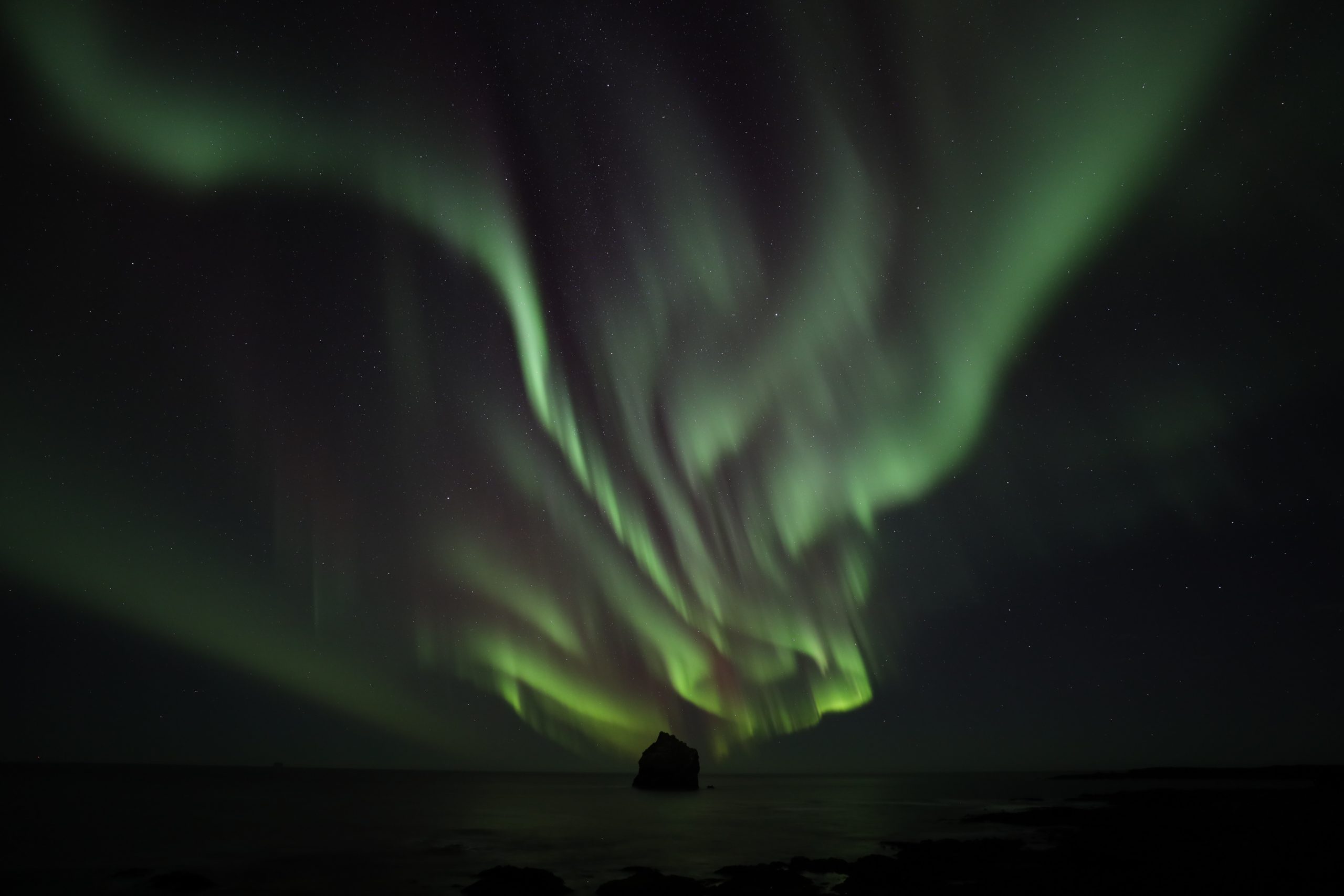
When can you see the Northern Lights in Iceland?: 5 useful tips for planning your adventure
"When can you see the Northern Lights in Iceland?" is the question on the tip of everyone's tongue. The minute you step off the plane in the land of fire and ice, it's time to start looking up. Or is it?
What are the Northern Lights?
Before we get to the “When can you see the Northern Lights in Iceland?” half of the show, let’s talk about what we’re actually looking for. In a country of natural wonders, the Northern Lights are one of Iceland’s greatest treasures. A phenomenon based on volatile space weather, the Aurora Borealis happens when solar activity from the sun travels over our planet and collides with our magnetosphere. This meeting of forces gives some of the super-charged gas in the solar storm an opportunity to travel down the magnetic field towards the poles, creating another collision with oxygen and nitrogen pockets in our atmosphere.
This clash creates the colorful visual byproduct of the aurora- an accidental gift of the cosmos. Because this is a polar occurrence, it takes incredible strength for the storm to grow large enough to travel closer to the equator from the pole, which is why we primarily see the aurora in very northern or southern lands.
Every so often we get lucky, and the sun sends a sizeable storm, giving us the rare chance to view the Northern Lights from places like North America and continental Europe.
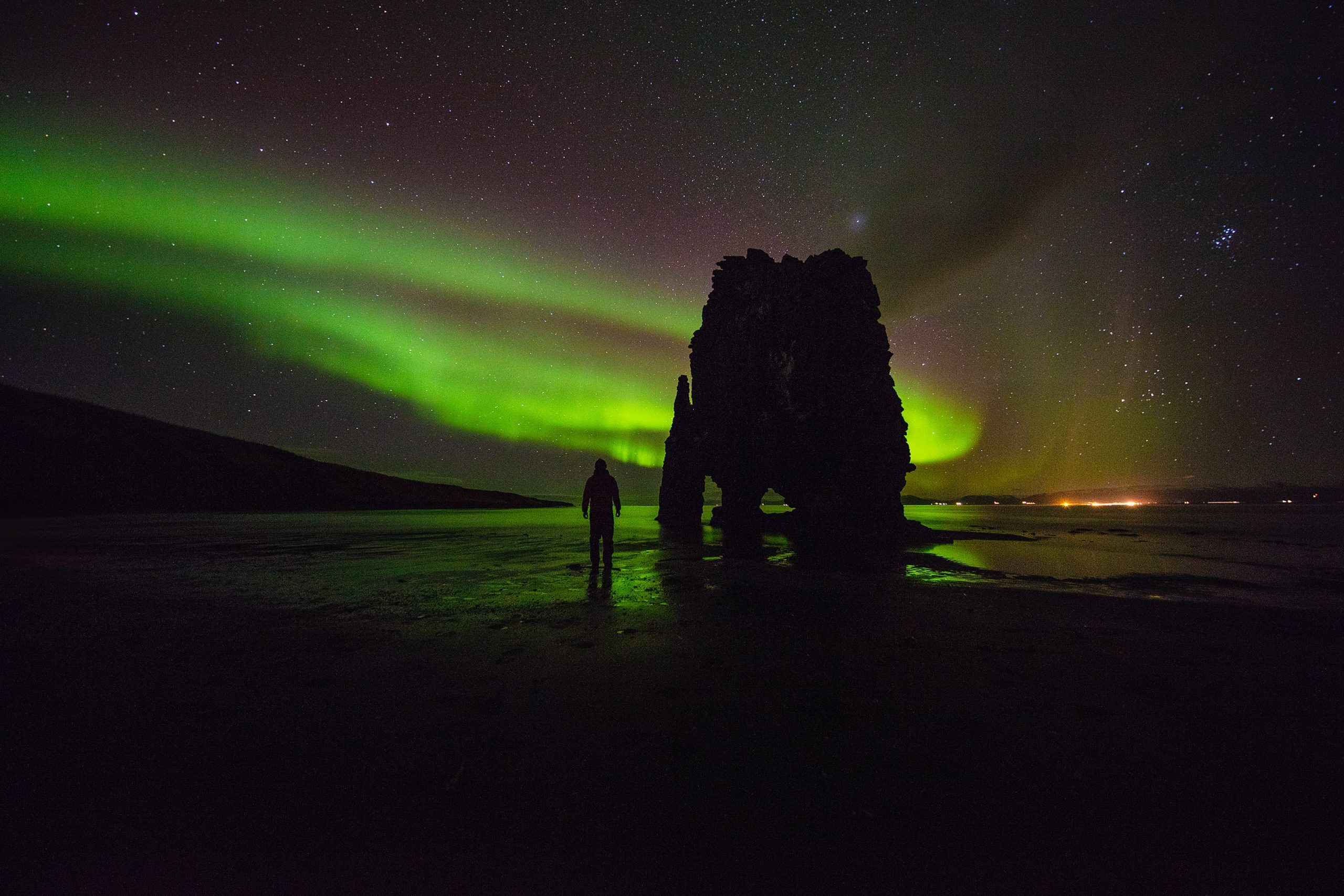
Life under the polar light cycle: Choosing the right half of the year
Planning a northern lights vacation can be challenging, as nature tends to run on its own schedule. A good place to start, is to know which half of the year is aurora season in Iceland.
Because polar lights happen far above us in space, it is possible for them to occur at any time of year. Many people mistakenly think that they are related to cold weather, but, luckily this is not the case. Because of how the Earth tilts in its orbital path, the winter season in countries around the northern pole coincides with shorter days. You may have a similar light cycle situation during winter in your home country.
In a country closer to the pole, this light cycle is a bit more exaggerated and can result in days where the sun does not rise for a period of time. Iceland’s winter light cycle is not quite as extreme, but due to this trade-off, we experience a surplus of daylight hours in the summer and a surplus of dark hours in the winter.
This means that in the summer, it is much too bright for us to pick out auroral activity in the skies. There may be solar activity and auroras happening, but we would be unable to see them. Despite their appearance, we require solid darkness to view an aurora from Earth. (If you’re riding along on the International Space Station, however, you might be one of the few people that could view a July aurora!)
But for those of us down here planetside, we must wait for optimal darkness to be able to pick out auroral activity with the naked human eye.
The Northern Lights occur at a low lumen, so sometimes even a weak occurrence can be hard to pick out in perfect conditions. (A good camera can help you out with this, as the camera’s vision capabilities are not quite so limited in darkness.)
Fortunately, this extreme light cycle buys you an entire half of the year to plan a Northern Lights holiday in Iceland- which gives you more time than you might think.
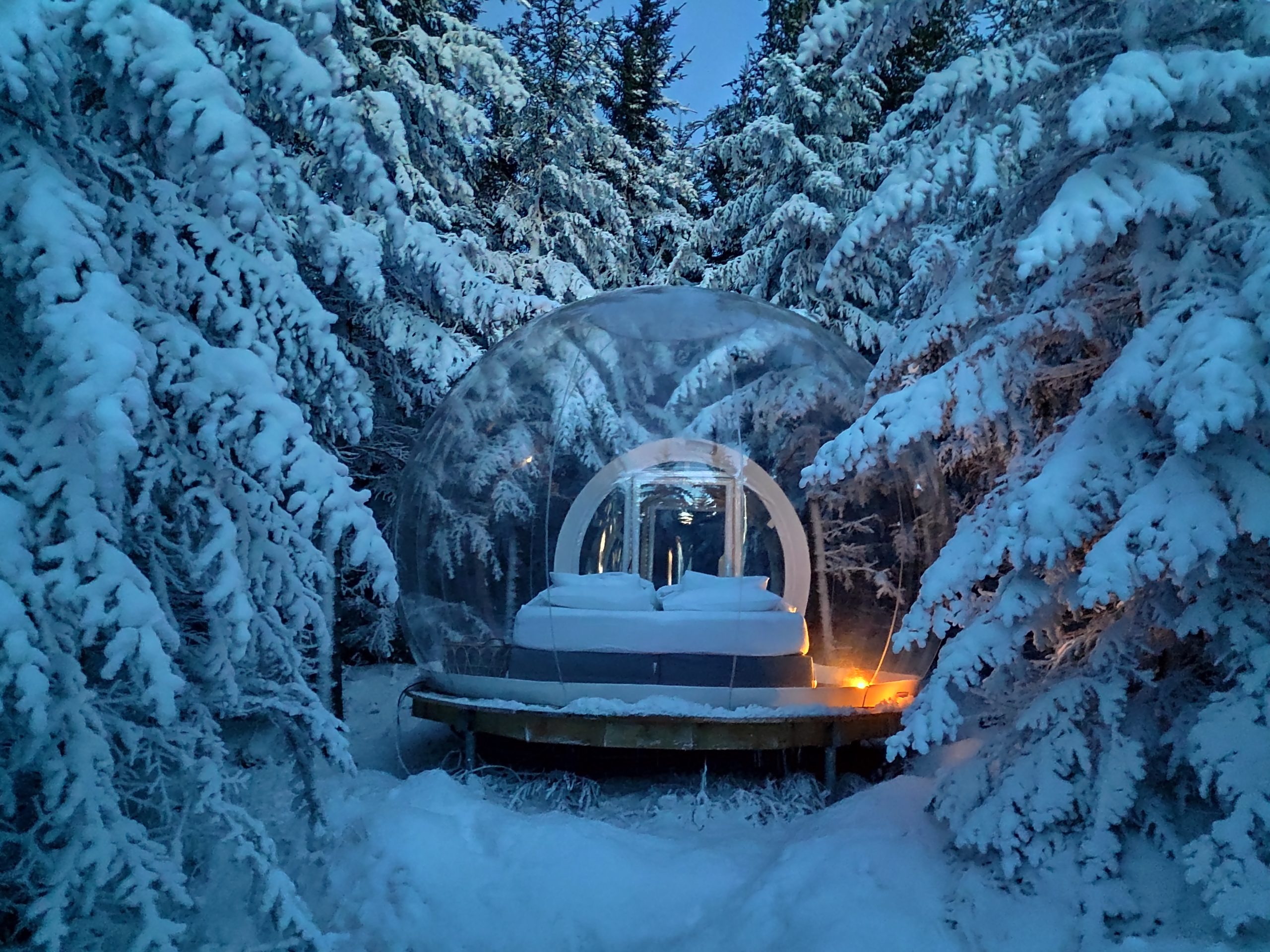
August to April: The Auroral Season
Because of this light cycle, the Northern Lights season in Iceland runs from August to April. August is very early in the season, and typically we access amenable darkness by the end of the first week. However, if you are planning a vacation, it is recommended to wait until the end of August for optimal conditions.
The end of the first week of August is the earliest we have seen an aurora, but it is not generally expected and would be a risky time to plan a trip. In recent years, tours have started mobilizing for their aurora seasons at the middle to end of August, with some starting as late as September.
This August to November time frame puts you in our autumn season. Not a time typically associated with auroral viewing, the transitional seasons like fall and spring are phenomenal times to hunt for Northern Lights. These are moments in the year where colorful changes are occurring in the countryside, and often, low traffic among visitors.
These are some of our favorite times to look for aurorae, particularly because there is milder weather, manageable light for other outdoor activities, and gorgeous scenery. As you can see, the auroral season runs all the way to April. In Iceland, April is traditionally considered the beginning of the summer season (if you can believe it), so the same rules that apply to August apply here.
If you are interested in a spring aurora hunt, you will want to be careful of booking too close to April, as mid-April is too bright for aurora viewing typically. In a lucky year, professional photographers have managed to grab some surprising shots throughout April, but this would not be advisable for someone that is planning an aurora trip.
The month of March is often quite good throughout, weather permitting, and people have been known to get lucky in the very beginning of April. Once we near the middle of April, the island moves over to summertime in earnest, and the midnight sun begins to return.
This gives you quite a spectrum of time to hunt for auroras, and this season spans autumn, winter, and even spring. This means that you can tie your aurora aspirations together with additional activities, like horseback riding, hiking, ice caving, or even skiing.
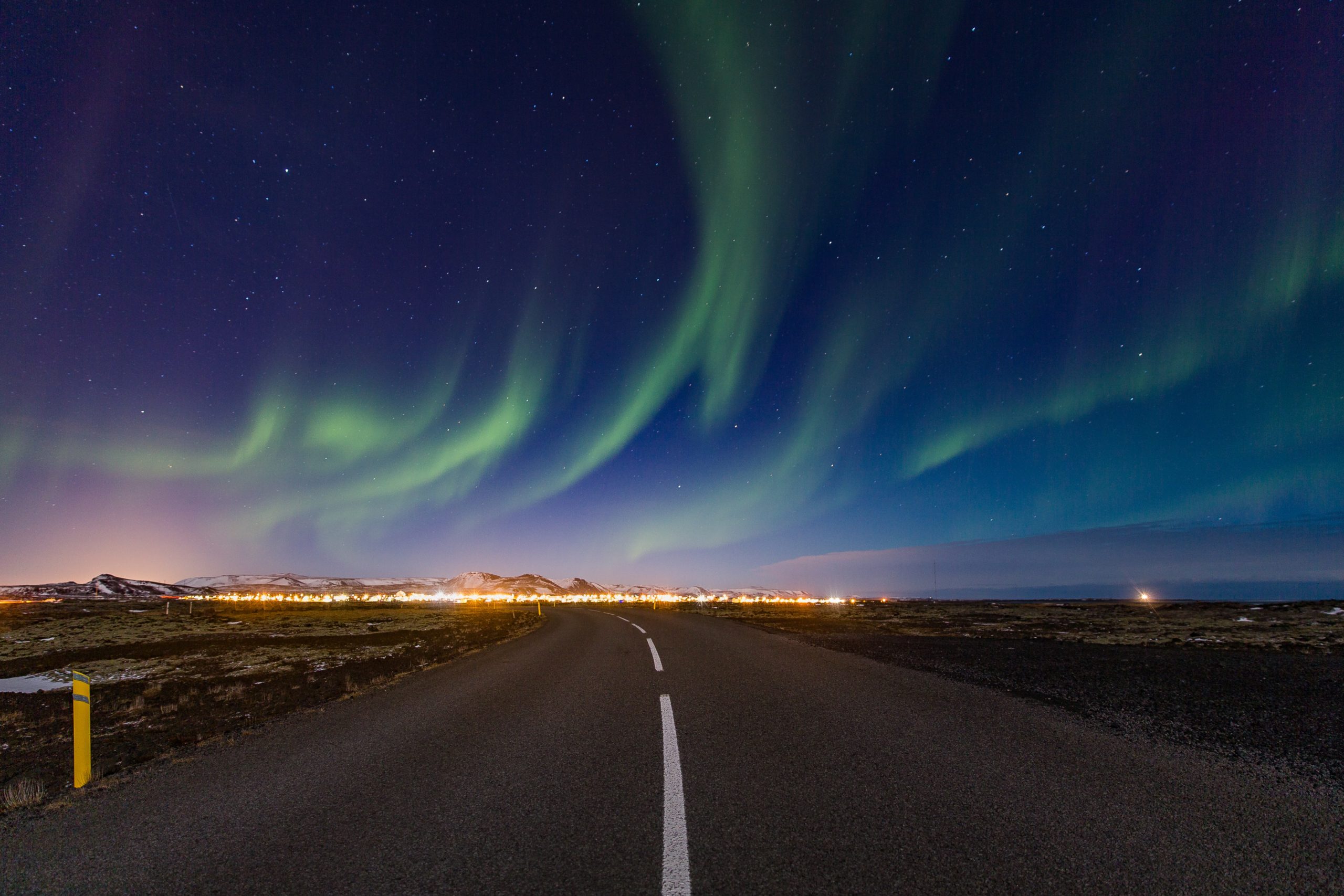
"Hello darkness my old friend": Aurora watching under the cover of night
You’ve got an entire half of the year to plan your trip in, but what time does the aurora show up? This is another popular question, and the answer does change a bit depending on the time of year that you visit. For folks visiting earlier or later in the season closer to autumn and spring, you’ll find that there are fewer dark hours available for hunting.
In Iceland, you are losing or gaining minutes of light every day, depending on if you are moving away or towards midsummer or midwinter. If you’re visiting us before December, you will be losing 3-4 minutes of daylight on average every day.
After midwinter, you start to gain those minutes of daylight back. If you stay with us for a week, you might even notice a difference by the end of it! Because of this, you will find that guided experiences start a bit earlier (closer to 8:00 PM) in the autumn and spring, and a bit later 9:00-10:00 PM) in the winter months.
Like all aurora figuring, this can vary on the occurrence itself. A powerful solar storm may cause a brighter visual manifestation, thus making it possible to view earlier in the evening. However, despite the fact that you’re watching in the correct half of the year, we still require this high-quality nighttime darkness for visibility.
This can be a confusing detail, especially if you’re visiting us in December when the sunrise is closer to 11:00 AM and the sunset is nearly 3:00 PM! One might think, “If the sun has set by 4:00 PM, why can’t I see the aurora already? Isn’t it night?” Despite the early setting of the sun, we do still cycle through steps of “twilight”, or “dusk”.
You may be familiar with this if you enjoy maritime sports or navigational pursuits like flying or sailing. So despite all this extra darkness in the high point of winter, we still wait for proper nighttime in the later evening. Averages for optimal visibility may vary per person, but typically we can expect that on a good night our window will be around 10:00 PM to 1:00 AM.
Can an aurora happen outside of this time frame? Absolutely! On a phenomenal night, you might catch one at 8:00 PM! And likewise at 3:00 AM! The excitement of this phenomenon is that no two aurorae are ever the same- and neither are the experiences that lead you to them.
Like many sciences, very few things are permanently definite- so if you feel that you have exceptional darkness, clear skies, and a forecast indicating solar activity, have a look! These things do tend to sneak up on you when you least expect them.
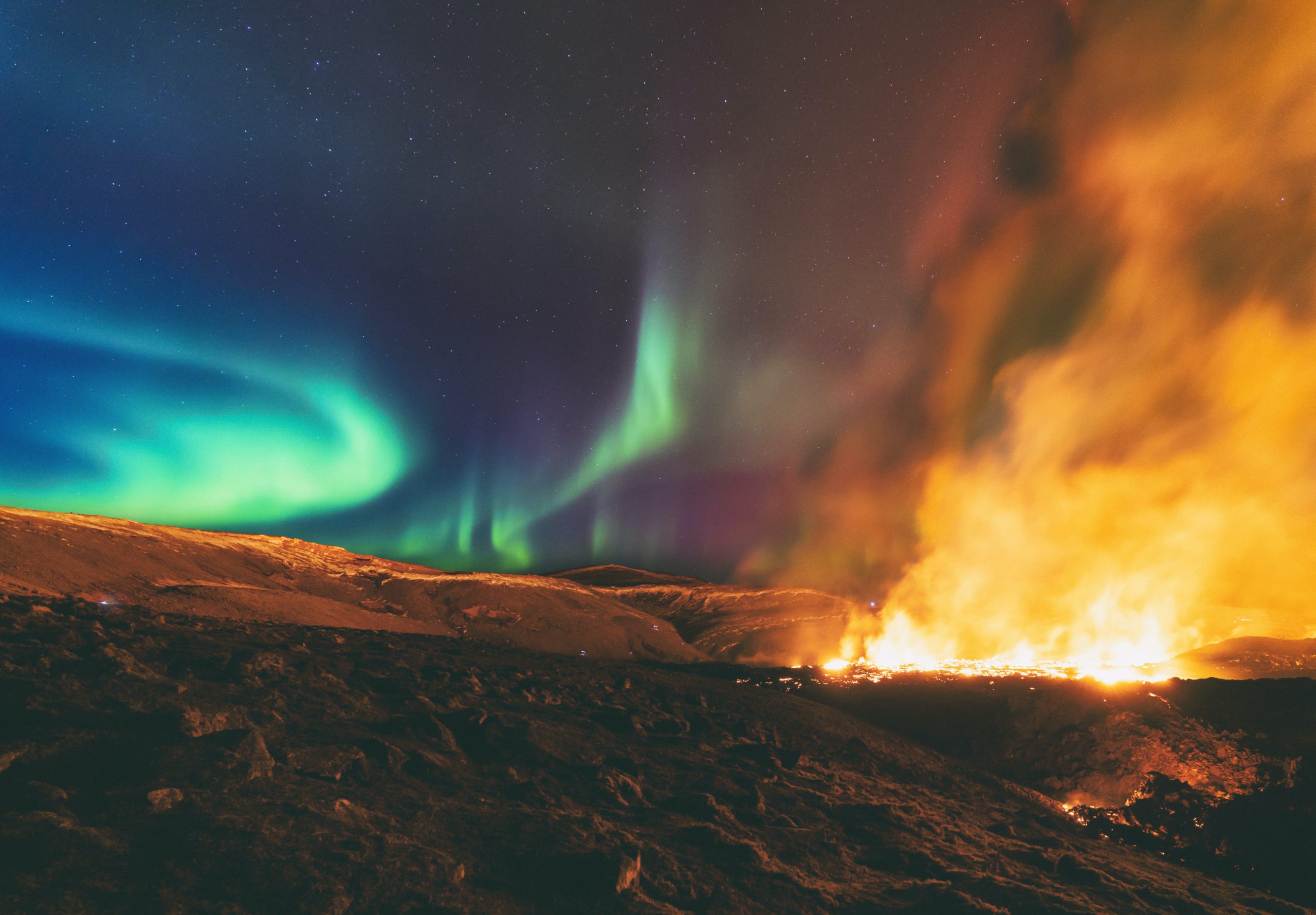
The right place at the right time
So you’ve got an idea of when the Northern Lights can be seen in Iceland, but where should you go? Where can you see Northern Lights in Iceland? The truth is, there is no singular good spot.
This is lucky for us in a way because it means we’ve all got a fair shot, no matter where in Iceland we’re watching from. As far as darkness goes, it is advisable to move away from light pollution if you can. The greatest centers of light pollution in Iceland are still manageable enough for auroral viewing, and won’t impede you to the level of a massive metropolis- but if you can find yourself a patch of true dark your vision will adjust better and your viewing experience will be improved.
Watching near a streetlight or a house can make low light photography a bit harder to balance, and it can also cause your eyes to struggle with adjusting to their own night vision. When viewing a similar auroral occurrence, people in a brighter area may report seeing less of the aurora, or a dimmer or less vibrant color.
In a truly dark place, your eyes will be able to pick up some of the finer pieces and “shards” of the occurrence, and typically be more successful at discerning the color.
If you’ve got a camera, don’t forget to snap a few low light shots- you’d be surprised how much better the camera’s “eye” sees compared to our own! When looking for a good spot to wait for the Northern Lights, you’ll want to consider cloud cover. On an auroral forecast, you can see that the cloud map is an integral part of finding out if you’ll be able to view activity or not.
Because the Northern Lights happen above our weather system, we miss out on any light shows that happen on cloudy evenings. The good news about this is that cloud systems can move quickly over us on a windy night, not all areas will have the same weather, and even forecasts miss tiny windows of clarity in the sky.
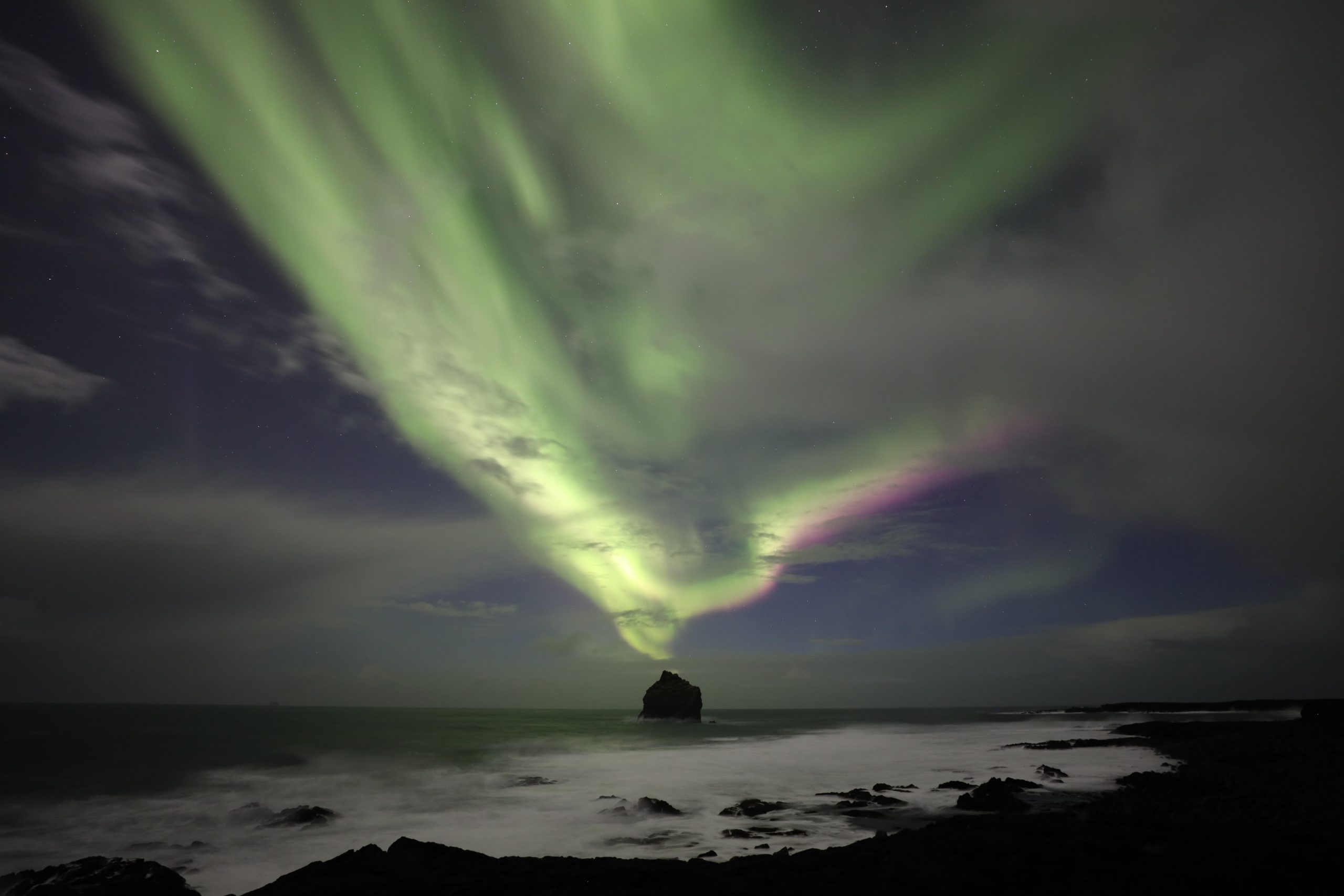
Sometimes these holes in the cloud layer are all we need to glimpse the glow- but many great activity nights have been canceled over a thick layer of cloud cover. If you’re in a vehicle and you’re able, it can be helpful to watch the forecast to see where areas of clarity may be located.
If there are clear skies around your location, you can head in the general direction of that clarity. In fact, many guided experiences will do a similar thing and will plot their course that night based on where the clarity is expected to be.
This is the best way to choose a spot, and the travel time that you spend on the way to the clear skies may also prove lucky. Covering ground and exposing yourself to different areas of the sky can be helpful since a large portion of aurora hunting is the waiting.
The longer you’re out in the dark under clear skies, the better your chances are. Because of the importance of clouds in this equation, it can sometimes mean just heading out on the road that leads in that direction. If you’re interested in finding a spot to wait in, we recommend looking for landmarks of natural importance along the way, or national parks.
Parks can be a great spot to watch from because they are designed for spectating and parking your car safely (unlike the side of the road), but be warned that many others may have the same idea. Be careful not to pull over to stop your vehicle in an unsafe location to watch! Country roads can be dark and narrow, and they do not always have a shoulder for pulling over.
It’s exciting when an aurora happens upon you in the car, but being safe and waiting for an approved pull-over location is the safest way to enjoy this gift of nature.
However, you don’t always have to be on the road to catch the Northern Lights! There are a few spectacular hideaways in Iceland just for this very purpose, where you can be cozy, alone in nature, and waiting in a perfect dark location.
For those that want to try the most comfortable hunt around, we recommend the Northern Lights igloo. Lay back on a down comforter in a heated bubble and have a drink? We can hardly think of a better way to spend the night. (Or a better photo op!)
Iceland northern lights season: the most wonderful time of the year
In Iceland northern lights season is a magical time. But when do they actually happen- and when’s the best time to come see them?
The two halves of the year
Most of us know about the four seasons and the special relationships that different places can have with them. There are dry seasons, seasons that bring great storms, and times when amazing blooms and colors transform the land. You’ve seen it in autumnal leaves, avenues of cherry blossoms, fields of fruit, and grasses that grow ten feet fall! Seasons were our clock before we had a better way to count the time- and here in Iceland that is truer than most.
If you’ve had the chance to visit Iceland, or any country in proximity to the poles, you may have already experienced the extreme patterns of light that I’m referencing. Tales of the ethereal “Midnight Sun”, or endless days of darkness that see no light. The closer to either pole you get, the more severe this pattern becomes.
Because of the tilt in the Earth’s axis, the polar regions of the Earth find themselves much closer to the sun in summer, and much further away during winter. As you move closer to the equator, many countries further down feel the echoes of these shifts in light as well. Some, even further north than Iceland, feel it even more.
You can see what the annual sun graph of Reykjavik looks like here. It’s a great way to get an idea of what the light will be like when you visit. Try it for your home, or a city far away from you. It’s amazing to see how differently we experience the world- even at the same time.
The Icelandic settlers of old had to balance their survival with this harsh cycle- and created a calendar to help them manage their livestock, their crops, and their morale. This old calendar still has bearing on society today, and its holidays are still beloved as reminders of the natural progression of this place, in a way that the modern global calendar sometimes is not.
This calendar was based heavily around solstices and equinoxes of the year, and with its 12 months it splits the year into two halves. These halves were the summer/nattleysi, or lack of night, and the winter/skammdegi days, or short days. All of these were checkpoints in the arc of time, and were visible and even ways to mark its passage in a place where it often felt as if there were only two seasons to measure.
It was a difficult life for the settlers, and surviving the winter was a cause for great celebration. You can tell when the local populace felt the breaking of winter at the end of April- because that is traditionally when Iceland marks the first day of summer, or sumardagurinn fyrsti. This is a national holiday, and it is celebrated on the first Thursday after April 18th. This is a day of festivals and merriment, even though it may not seem very summer-like in temperature or appearance. But for Icelanders, this day marks the end of the long dark, and the beginning of the lengthening of days.
At one time, it meant the increased likelihood of survival, and days where one could work, craft or read without the obstacle of losing the light.
So where do the northern lights come in?
We know a little bit now about Iceland’s age-old relationship with seasonal time, light cycles, and surviving the harsh winters. But where do the northern lights come into all of that?
To give you the short version- the northern lights themselves can happen at any time.
They happen so far above our planet in space, that temperature, season, and time don’t mean too much when it comes to their arrival and creation. The first thing to realize about the aurora, is that it is a function of space weather before all else- but seeing it does require a little bit of cooperation from our own Earth weather, as well.
When an aurora is born, it is due to the sun releasing a solar storm into outer space. You can read more about that process here. We can track these storms to an extent because of the orbital patterns of the sun and the reappearance of sunspots, which more regularly release these strong systems. However, our ability to measure and predict space weather is still very much a developing science, and can be imperfect at times.
Despite all of that, the sun is releasing this energy all the time. Depending on the solar cycle and factors facing the travel of solar storms, this activity can find its way to us at any time of year, in any season. This means that it’s entirely possible for solar activity to arrive in our atmosphere in the middle of summer, or during the brightest point of day.
The difficulty here is actually with us. Auroral light is a visually delicate natural phenomenon, despite its volatile origins. To see it with the naked eye, we require darkness in order to pick up the low lumen light that it creates.
(An additional difficulty here lies with us as a species, because of how we perceive color visually in dark places. Because we are not nocturnal, our eyes are not designed to process color as well at nighttime, and so it’s already challenging for us as creatures to look at this type of light.)
Which is where we circle all the way back around to our first point- and Iceland’s dramatic dark and light seasons.
If the aurora arrives in the high point of summer when we experience only civil twilight, we wouldn’t be able to see it. It would technically be there, dancing and possibly displaying incredible colors- but we would only be able to see that from space at best. (And sometimes, NASA sends us a video of it!)
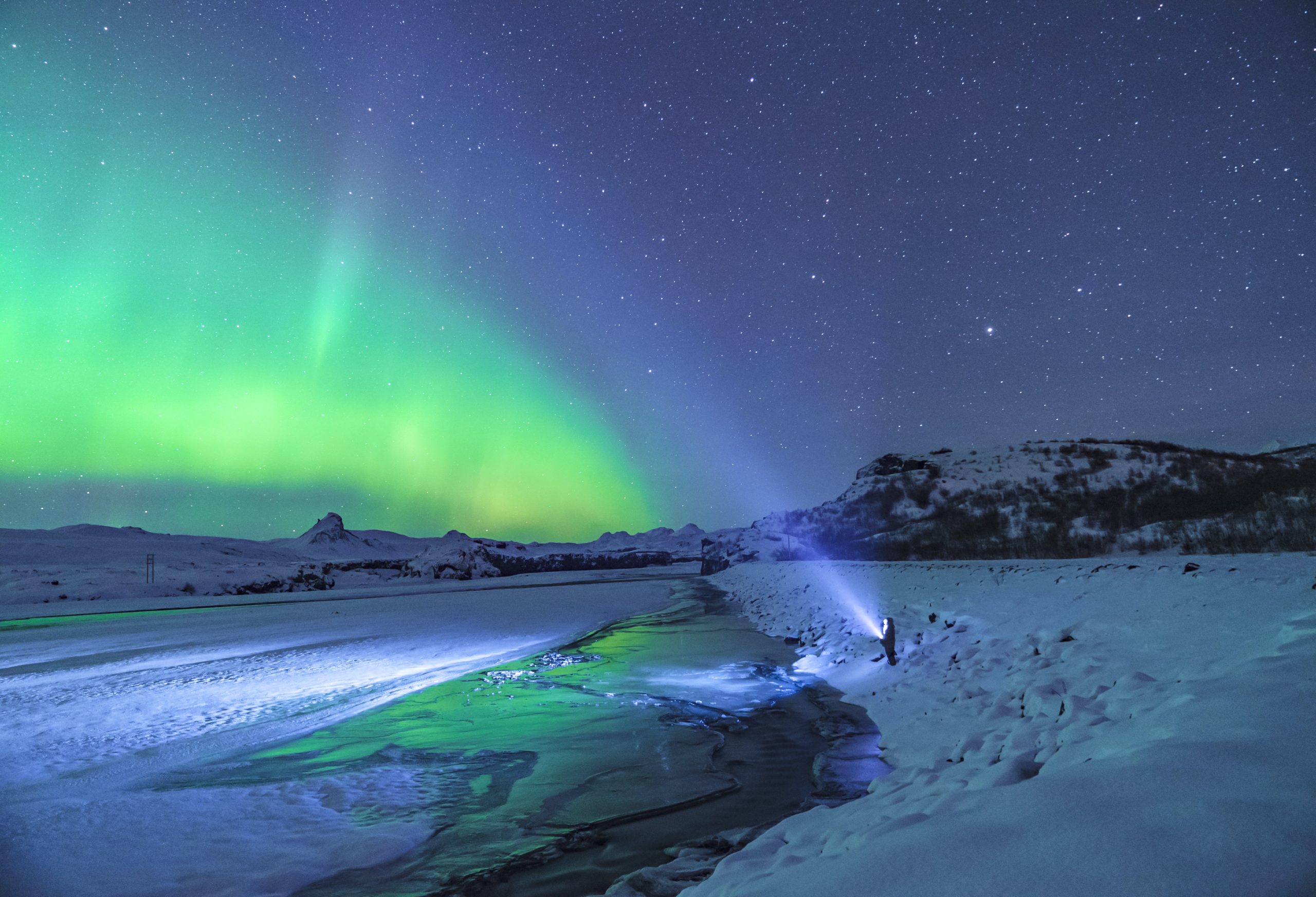
The same situation happens for us during the daytime, even in the winter months. Even though we only have a few actual hours of daylight, we still require the solid darkness of night to bring forth the best canvas for auroral glow.
Can we start our hunt earlier in the midwinter? Definitely! We can start heading out as early as 7 or 8pm on some nights, a thing that would be rather difficult to do in the earlier days of the auroral season. But we do still require that deep darkness of nighttime.
In Midsummer and Midwinter, we start to lose or gain minutes of sunlight. This means that once we hit Midsummer, we begin the ever-increasing trek to winter darkness. We don’t always notice this right away, but typically once we reach August, it becomes dark enough to witness the spectacle of northern lights.
For me, the earliest I have seen them was at the end of the first week of August. This is only the beginning though, and so I would likely wait until a bit later in the season (late September at the earliest), to plan a trip.
This darkness builds every day until mid-winter when we start to gain the sunlight back. This typically means that we can witness auroral light until the very beginning of April, though March is the popular cut-off. (Similar to August, April would be the very tail end of the possible season- and would be a risky time to book an aurora hunt.
Though, there are quite a few intrepid photographers that catch them that late in the year, with lots of practice, lots of experience, and a tiny bit of luck. It is, of course, Lady Aurora herself waving goodbye for the year- she loves a dramatic exit.)
Some materials do talk about the ‘daytime aurora’, and this is not an incorrect statement. There are many places further north than Iceland (like Svalbard for example), that have an even more extreme sun graph than we do. (Though you can visit Siglufjörður, where they celebrate the first day that they see direct sunlight again.)
Places like this may not actually see the sun at all for quite some time- and maintain the ability to see northern lights for a longer period of time because of that. In addition to the extended dark hours during the day- they are also closer to the pole. Proximity to the pole can mean that they catch more of those low-level auroras that don’t travel very far out.
So don’t fret! The truth of the matter is that you have a whole half of the year to hunt for auroras in Iceland, as our forebears might say. (And for the other half of the year, you have puffins, endless lupine fields, and all the sun you can handle!)
But what about the weather?
You know about the Midnight Sun, the space weather that makes auroras, and the half of the year when we finally get enough darkness to see them. But what about Earth weather?
Earth weather does not interact with the northern lights, because it exists in the troposphere layer of our lower atmosphere. This is where most of the clouds in our atmosphere are located. It is sometimes said that extreme weather (things like polar vortexes and massive storms) can occur as far up as the stratosphere, but this is not entirely accurate. The stratosphere is particularly dry, and lacks the moisture to regularly create clouds, like the more humid troposphere.
To give you an idea of scale, these layers of the atmosphere combined are nearly 50 kilometres above the Earth. And still, it’s not high enough for auroras.
Auroral activity occurs in the ionosphere, a section of the atmosphere that overlaps the mesosphere and the thermosphere. This is an area of the atmosphere where a great deal of electrons and ionized atoms and molecules occur, thus housing a key part of the collision recipe that makes the visible aurora.
This means that myths about temperature and storms don’t necessarily hold true, and they don’t inhibit aurora activity. They do however get in the way of our viewing path.
The view from Earth
Since we are watching from the Earth’s surface, anything that does happen in our weather system can get right in between us and the aurora. This means that sometimes the aurora forecast is great, and shows high solar activity and an incoming show- but if it’s cloudy, it’s as if someone pulled the curtains. The show goes on of course, but anyone under the cloud cover is missing it.
This is why the aurora forecast usually comes in two halves. The space weather or solar activity half (where we use the 0-8 Kp scale), and the Earth weather, or cloud map.
Much of what we are discerning before a night out hunting, is can we see the sky, where is it the clearest, is that clarity window moving due to wind- and if we can find a good spot to watch from, is there any solar activity?
Iceland is known for its rowdy winter weather, and depending on where you are in the country, you may find yourself exposed to some interesting micro climates and storms. The good news is, is that if you have the ability to travel and move around, sometimes it’s just as simple as driving over to the next cloudless spot. (And not forgetting the snacks, of course. It’s definitely a process some nights.)
Ready for the hunt: A Recap
You know it all, now! (Who am I kidding, nailing down space weather is a learning journey that never ends. At least not in our lifetime!)
Let’s do a onceover to make sure we’ve got our northern lights trip toolkit together.
First, we have to book a trip in the right half of the year. This means we’re headed to Iceland some time between September and March at best. (If you want to catch the tail end of August or the early start of April, you can try it, but it would not be a recommended time frame for northern lights.)
However, it is always good to remember that the northern lights are a natural phenomenon, so it is best to plan a trip first for the experience of visiting the place. Iceland is a wonder all on its own, and the northern lights are just one of its many gifts.
Assembling your Aurora Toolkit
Once you’ve booked your trip for the ‘aurora half’ of the year, you’ve got to remember all of the pieces that have to line up in order for a successful hunt.
These are things like making sure you’re out at night (not at 3:00 pm, even if you could swear it feels like midnight- which it kind of does in December-), making sure you’re in a clear area or an area that will become cloudless or ‘cloud light’ by nighttime, and of course, having a small check on if there’s any solar activity that evening.
It also helps to make sure you’re not in an area of extreme light pollution. Iceland is not populated by huge cities, so we do fairly well on this front, and it doesn’t typically take long to get out of the city and into some real nighttime. However, if you find yourself city-bound at any point, try looking for a spot that takes you out of the direct light and gives you a bit of a break on the eyes.
Remembering that the Aurora Forecast is not the last word!
It’s good to remember that many of these things are variable and imperfect, so it is not always necessary to plan by extremes- unless there is very inclement weather or a safety concern. (Those types of alerts always come first. Can’t enjoy the lights if you’re frozen.)
What I mean by this, is that forecasts are infallible. Not because they are in any way bad, but because weather is a volatile force that occasionally evades even the best of us.
This means that the cloud radar can be off or slow, and the Kp number may not be accurate. It is possible for forecasts to gauge the speed of a solar storm incorrectly, as there are many factors that can add to that figuring. It’ll probably be a few years before we nail down space weather, but I can guarantee that there are a lot of brilliant people working on it.
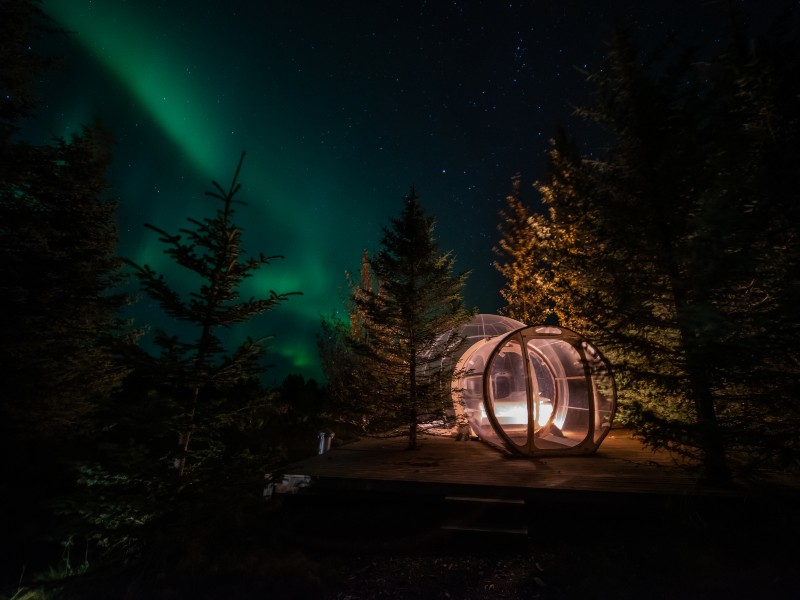
When the numbers don't add up, still look up!
This can mean that some nights, an aurora can occur on a Kp 0 evening. It can also mean that an exceptional evening (like a fabled Kp 8!), can disappoint us. This can happen for many reasons- which sometimes remain unknown to us. Sometimes powerful activity reaches so far that we end up in the middle of it instead, similar to being in the eye of a storm.
Sometimes it’s because we didn’t move very much on our hunt, and so we were only viewing one slice of the sky. It can happen that people see an aurora in one place, but a few kilometers over, nothing! Northern lights are like snowflakes in this way, and no two occurrences are alike. Forecasts are a great tool to have in your kit, and it can be good to cross reference a few good ones.
The TL;DR: Every aurora is a gift
Learning to decipher all of the different forecasting tools can be complex, but like many other information sources, being able to read a few different ones can sometimes give you a more comprehensive idea of what may be going on.
Sometimes, it can be that an aurora did happen, but it was a visually weak occurrence, and you did not realize you were seeing it. If you have only seen photographs of northern lights, it can be hard to recognize a low level manifestation- as they are not quite as neon and extreme as a photograph can be.
Nighttime photography uses processes like slow shutter speeds, aperture, and ISO to perceive light in darkness, in ways that our eyes cannot. This does not mean that auroras cannot be bright, or that all photos are photoshopped- but it does mean that the average occurrence will most likely not match the once-in-a-lifetime shot that you saw on a postcard.
Sometimes all of the factors are completely lined up, but there’s a weather warning, and it just isn’t a great night to chance it. The weather conditions can get very serious here very quickly, and are not worth risking.
All together, this sounds like a massive feat. The thing to take away is, that if you have a window of clarity in the sky, and you’re here in the magical half of the year that gives us this other kind of light, have a look. Once you know how much work it takes for the universe to produce one of these things, it feels miraculous that they happen at the frequency that they do.
Know that you may have to keep an eye out for longer than you’d expect sometimes, and you may not always be successful. But as every local knows, it is always worth looking up. They often happen when you least expect them. (..And it can also be nice to have a few drinks and a hot pot to soak in. You know. Or a transparent Bubble to wrap up in. Just saying.)
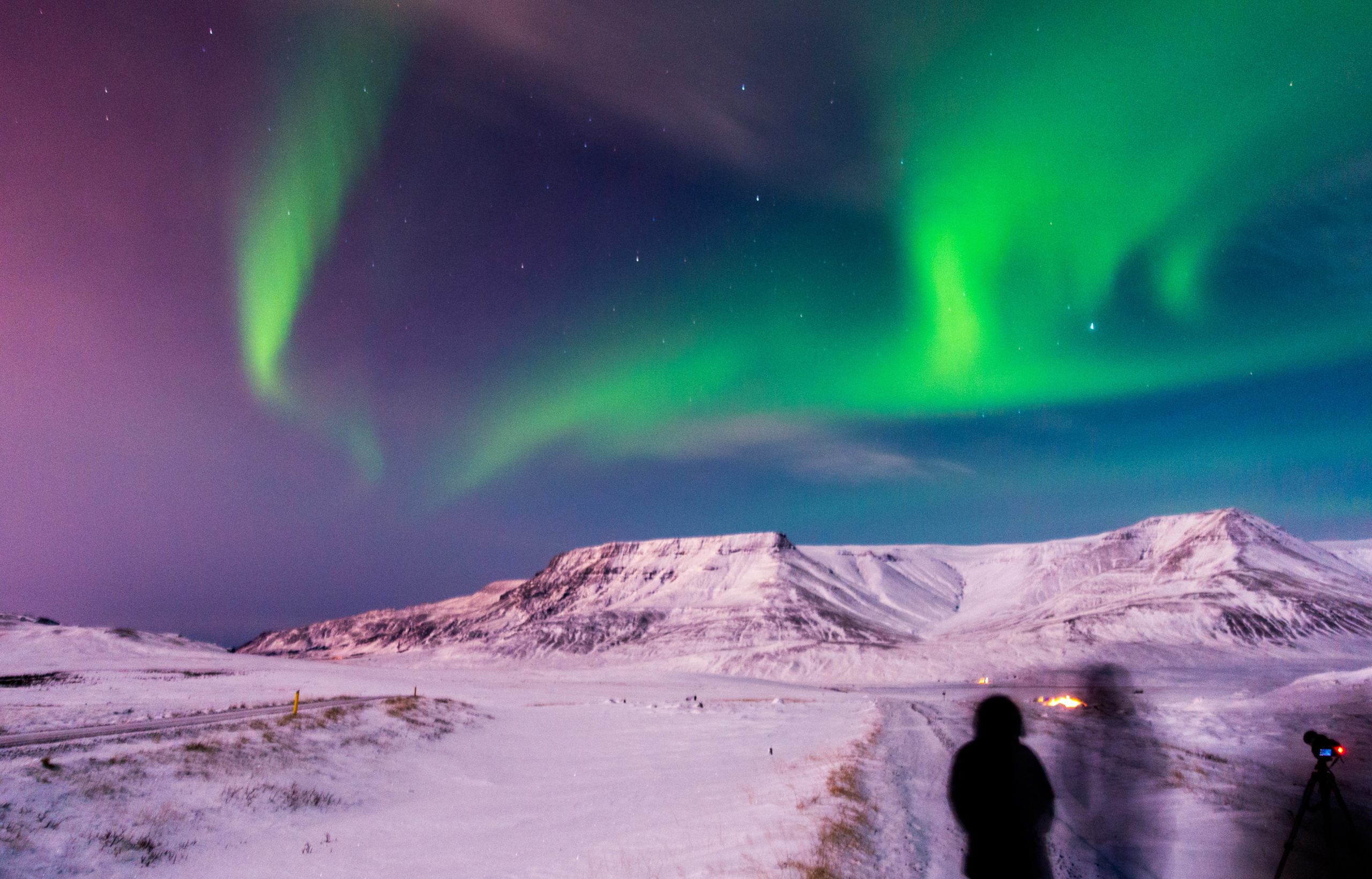
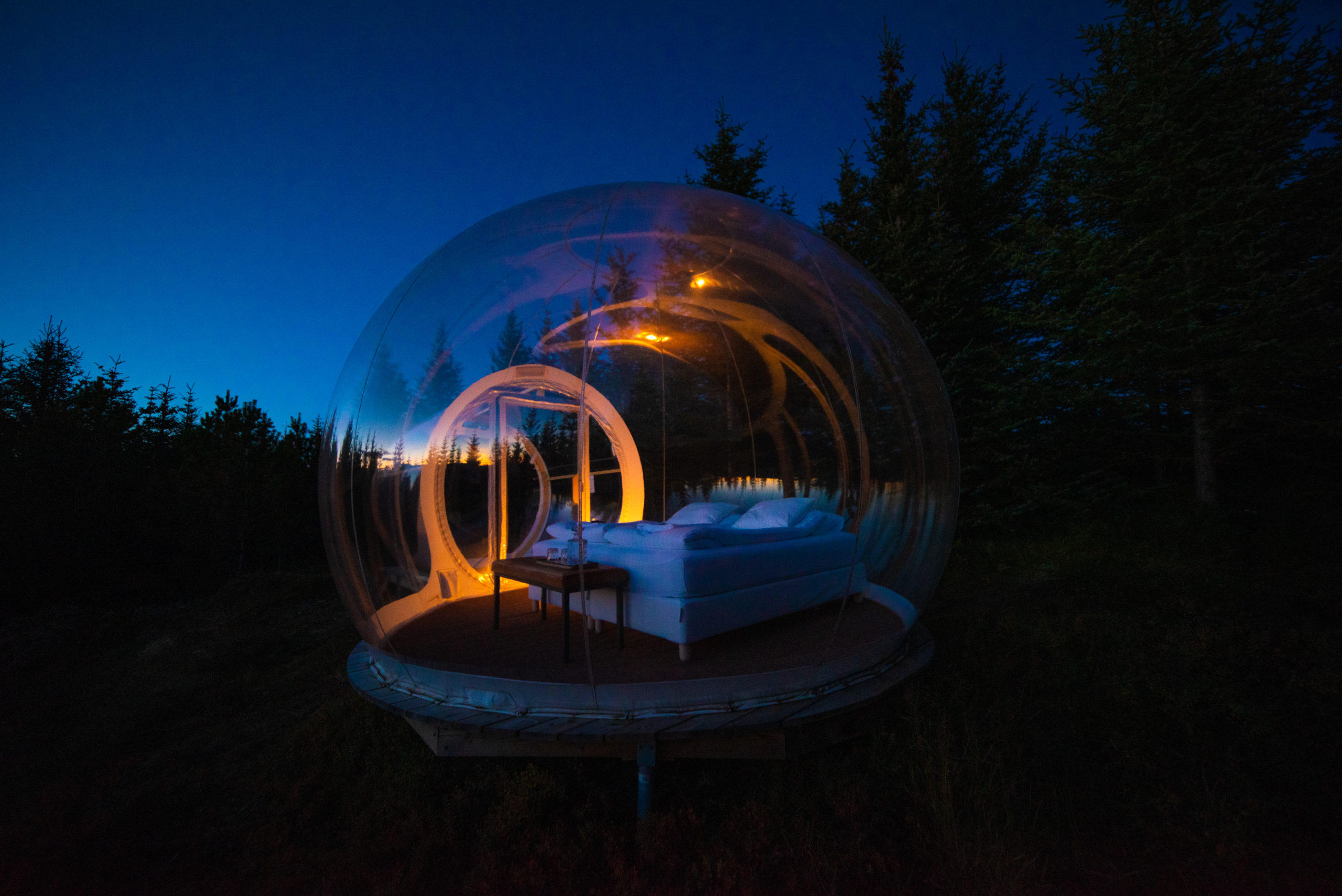
Dream destinations: The Northern Lights Iceland Igloo
Everyone’s got a bucket list of dream destinations. Here’s why northern lights in Iceland in an igloo should be on yours.
More than just a great room
Travel has been busy leveling up! You can check in to all kinds of places these days. There are bungalows on stilts in the ocean, plush rooms in forgotten castles, even little treehouse palaces that you climb into the forest canopy to hide away in.
Luckily, we get to claim one of these wonder destinations as our own here in Iceland. Popularly sought as ‘igloos’, we like to call them Bubbles. Most people search for Northern Lights Iceland igloo when trying to find them online. The Bubbles regularly find their way into the company of these great escapes, on these fabulous dream lists- and for good reason.
Not only are they gloriously strange little structures, being fully transparent and domed at the top, but they come with the grandest view that one can offer. There are no windows, curtains, or options to add to the price for a better scene out of your one window. The whole Bubble is your window. And the scene- well, it speaks for itself.
A land that needs no introduction
The Bubbles can be found in the country of Iceland, a small island nation tucked away in the vast North Atlantic. A micro paradise of color, texture, and breathtaking natural wonders, Iceland on its own is a dream destination.
Because of its size, one can easily travel the perimeter highway, or Ring Road, of the country in 5-7 days by car. On the way, you will pass through multiple otherworldly landscapes- and some would joke- multiple seasons as well. From the electric green moss covered lava fields, to the hulking blue and white glacier tongues of the south, all the way to the red and orange rocky underbellies of the protected geothermal areas throughout, Iceland is a treasure box of sights that charms in all seasons of the year.
People visit Iceland in all seasons, each of them on a different quest. Some come in the autumn for the changing colors of the Arctic flora, or the last well lit days of world class hiking. Some visit in the summer to experience the Midnight Sun, the festivals, and the multitude of leisure sports that the country indulges in during this mildest season of the year.
But others come in the depth of our magical winter, to journey into the glacial embrace of ice caves, ski our cozy slopes, and hunt for one of our most famous treasures- the dancing lights of our night skies.
Iceland is a feast for the eyes, no matter when you visit. But aside from its regular earthly headliners, it also happens to be a prime location for aurora viewing- one of the world’s most ethereal phenomena.
Because of Iceland’s northerly location to the pole, it is common for low level solar activity to form northern lights that are visible from the island. This is why they are more regularly expected in countries closer to the pole, instead of the more southerly lands that they can visit on the occasion of a great solar storm.
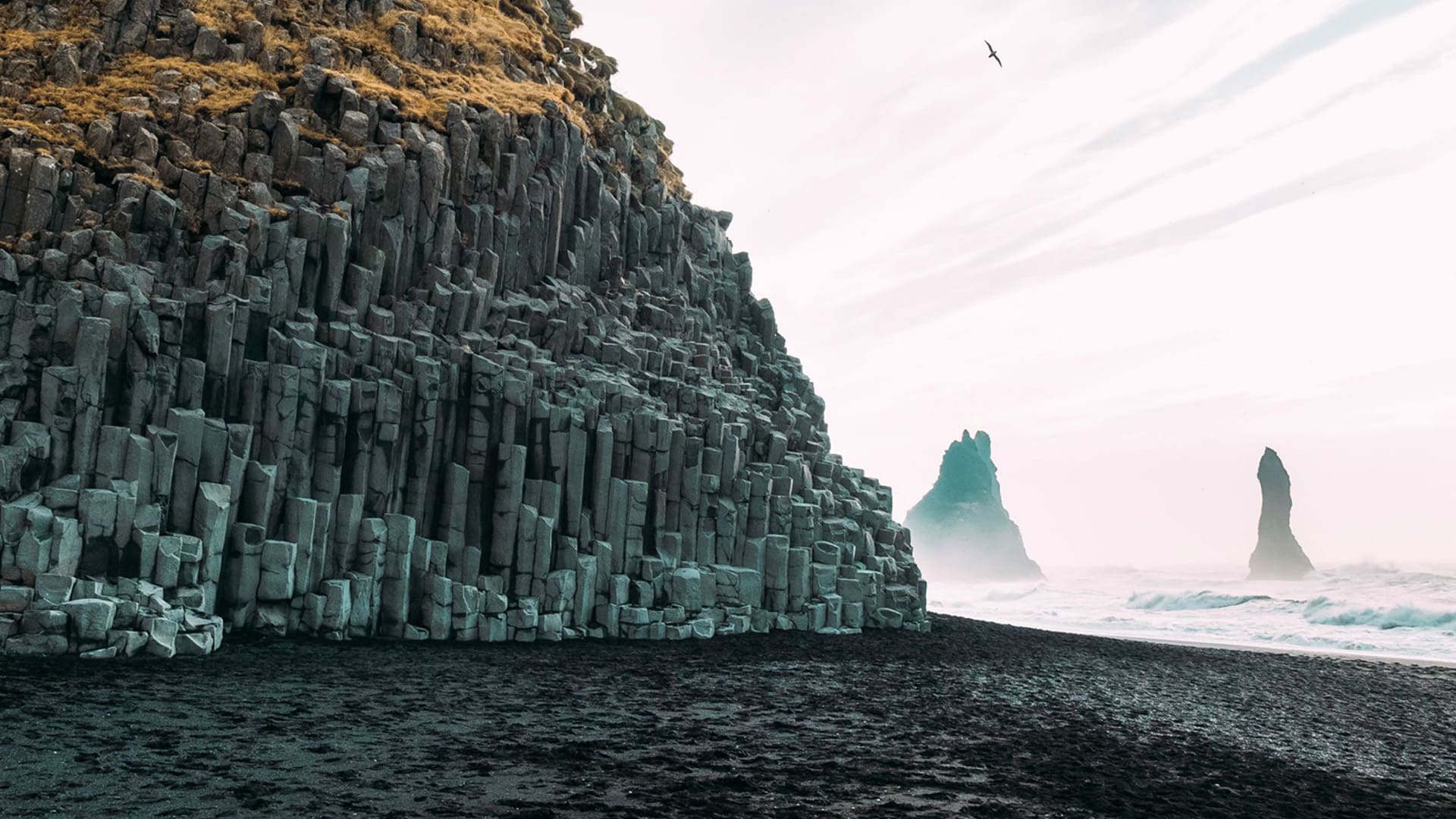
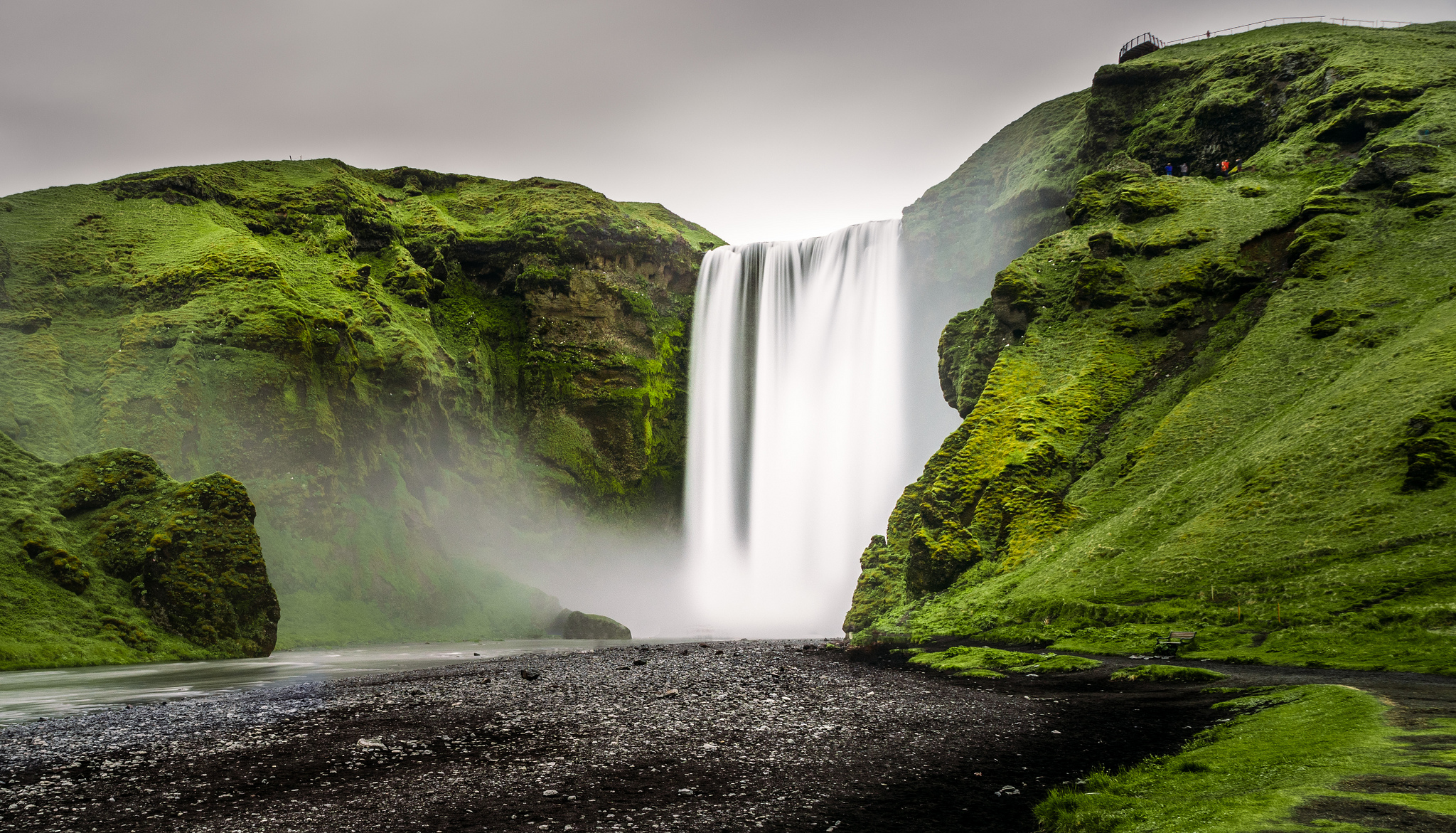
As you may know, auroras can happen at any time of year, and depending on strength, can reach quite far down from the poles- but our ability to see them with the naked eye depends on the cooperation of many outside factors. So the closer you are to the pole, the easier it will be to catch the more regular activity.
Being a bit more compact than many of our neighbors, Iceland’s size means that if the cloud cover is merciful, you will never be more than 30 minutes from a location in which you can aurora watch from.
It also means that you will often be within proximity to a populated town, paved roads, and a lack of debilitating light pollution that countries with larger cities struggle with. These factors make Iceland an ideal hunting ground for auroral viewing. (And being cozy. It’s important!)
The Northern Lights Iceland igloos
So you know about Iceland- but what about the Bubbles? Tucked away in the spruce and aspen forests of the Icelandic countryside, there are to date less than 20 Bubbles available to stay in. This is a unique experience that is kept small and limited to tiny amounts of people.
Maintained by a small team and inaccessible to any travel sites or outside agents, all of the Bubbles exist on farmer owned forested land. It is a dream of the Bubble team to support local farmers by creating another way to earn money, without risking their few trees to industrialized tree felling.
The Bubbles encourage small-scale gentle tourism to places of great beauty, the fragile Icelandic forests, in order to preserve these treasures of nature for all of us, and for the generations to come. So when you stay in a Bubble, your experience enriches not only your life- but the lives of many others.
In a time when we need to protect our trees and carbon sinks more than ever, the Bubbles serve an important role. Outfitted in two different forest locations in the Golden Circle region and the south coast area, the existence of these magical little igloos harnesses the power of travel for good- and they are only getting started.
With many dreams for the future, the team at Bubble regularly states that “nature is luxury”, and after a visit to the Bubbles, you can see why. Both Bubble locations are unique and carefully organized to create the lowest impact on the surrounding area. Each Bubble is enclosed in their own small grove, and is closed in tight with local flora that changes with the seasons.
They are heated, and are perched on their own handmade wooden platforms for balance. Inside each one lies a sumptuous, luxury hotel grade bed with downy comforters and luxe furnishings. They are watched over by a local team, who can squirrel away artisanal snacks and bubbly before you arrive, at your request.
Unlike many unusual accommodations, the Bubbles are not serviced by a large hotel or massive complex. They are truly a part of the forest, and are served only by the manicured mulch pathways between them, and the tiny service bath houses that they share.
The goal here is to blend in to nature as a guest, and to appreciate its gifts. Not to impose upon it, and interrupt its growth and health.
The experience
The Bubble structures are amazing to sleep in, and even more amazing to stargaze from. For those that have already had the chance to aurora hunt in a northern clime, you may recall that it’s… A bit chilly.
The trade off for witnessing nature’s paintbrush is often a long night out in the cold, windy and damp conditions, frozen hands and a lot of waiting. Like many natural phenomena, an aurora is never guaranteed, and the forecasting systems used to predict them are still very much developing tools.
This is of course space weather that we are tracking, and those speeds can be challenging to nail down.
The Bubbles are to date one of the coziest ways to hunt for the northern lights. Fully transparent and heated, the opportunity to lay in a luxe queen bed in your pajamas while sky gazing is definitely not the norm.
Because of their locations, Bubble guests enjoy the full darkness of an unpolluted sky. Light pollution remains one of the largest challenges to aurora hunting, and is often the primary obstacle for city and town dwellers. But out here in the country, you’ll quickly be able to see why they call the Bubbles “the 5 million star hotel.”
Despite the occasional branch, you’ll have a full open “ceiling” in your Bubble, and can laze away all night without ever having to pull on a coat. It would be an understatement to say that this is likely the most comfortable and luxurious way to aurora watch.
But wildly enough, the experience does not stop there. Aurora watching the night away and slumbering in the arms of nature are certainly experience enough, but the Bubble team didn’t stop there.
While a self drive experience is available, Bubble also offers a fully guided tour on the way to your Bubble hideaway. Both to the famous Golden Circle and then also to the South Coast. This means you can be picked up in Reykjavik that morning, and taken on a full tour of the area, expertly guided by one of their staff. This is of no extra cost to you, and is an amazing way to spend the day.
Upon picking you up at a Reykjavik location of your choosing, your local guide will take you on a whirlwind adventure of the region that you will be staying in. They do this in one of their luxury vehicles, and it includes all of the popular wonders of the area, and some of the secret favorite details of the guide.
After a full day of sightseeing, you break for dinner at a local eatery, before being seamlessly deposited at the Bubbles. (I recommend the local lobster pizza!)
With full bellies and tired legs, it’s time for a hot shower or a warm drink in the service house- and then cozy time in your own private Bubble paradise.
An early night of relaxing and listening to the sounds of nature, and maybe if you can keep your eyes peeled, even some northern lights.
When you awaken the next morning, your guide will be waiting to bring you back to town. No worries about directions, driving, or beating the clock. Only you, the soft Icelandic countryside in your window, and the soft calm of a slow morning after a once in a lifetime experience.
Iceland’s Pioneering Fish Skin Treatment For Human Wounds
Iceland’s Pioneering Fish Skin Treatment For Human Wounds
Text by Sonia Nicolson
These FDA-approved skin substitute reduces a patients inflammation and can transform chronic wounds into acute injuries using a simple solution; fish skins.
Amputations can be the result of trauma or an aggressive disease but a lot are caused by injuries that fail to heal; chronic wounds. This can be the result of the patient having diabetes. Diabetes is on the rise with 1 in 11 Americans suffering, and this is set to rise to 1:4 by 2050. Iceland has an exceedingly low rate of diabetes for a developed country. Genetic factors, and a higher percentage of A2 milk consumption (A2 beta-casein is the dominant form of casein protein found in a cows milk) are possible explanations for this low rate. Diabetes is when a person has high blood sugar levels and this can cause nerve damage and poor circulation meaning the body finds it harder to heal wounds. If wounds become infected, this can lead to amputation.
Current Treatment For Wounds
Wounds are currently treated with skin from animals; pigs (or human cadaver, corpuses) but both can risk infections or transfer of other diseases.
“I was interested in finding a source of material that is as similar to human skin as possible and the surprising thing is that cod fish skin is much more similar to human skin than for example pig skin” said Fertram Sigurjonsson, Chemist and CEO, Founder of Kerecis Ltd.
Gone Fishing
Iceland has worked with fish leather for a long time. “My grandfather’s first shoes were the skin of a catfish,” Sigurjonsson says, and instead of kilometers, Icelanders used old worn out fish shoes to mark distance.
“My first memories are of fish,” Sigurjonsson says, poking at a machine he designed to help dry out the skin. Like many men here in Iceland he spent his summers working in processing plants, cleaning the catch or driving forklifts. After graduating from the Technical University of Denmark with a Degree in Innovation and Product Management, he started working at prosthetics maker Ossur, where he saw many amputee patients with replacement limbs developing chronic wounds. An impromptu move to New Zealand where he was running business development for Keratech, who dressed wounds with sheep wool, got him thinking about substitute natural materials. When he returned to Iceland, he started researching the idea of using fish skins in wound dressing.
Fertram Sigurjonsson has spent his career treating chronic wounds and is turning cod skins into medical products. The Kerecis Ltd manufacturing facility, located in the fishing town of Isafjord which is 30 miles from the polar circle, mainly fishes for cod. Using a 583-ton trawler on a 3 day fishing trip as an example “If you take all the skins from that trawler…we would be able to treat one in five wounds in the world.” says Fertram Sigurjonsson
Today, trucks haul the fish to a commercial processing facility in Isafjordur. The fish land on a conveyor belt, where they get filleted and skinned. The meat is sold as food and, twice a week, Kerecis employees come to collect skins of the right size, age, and species.
Photo by Rebecca Scheinberg
Descaling And Cleansing
The cod is taken to a processing plant where Kerecis collect the skins and examine them for flaws such as holes, tears, traces of blood and parasites. When the best fish skins are collected, the team start the process of transforming them into medical grafts.
The first step is to remove the scales from the material. The skins are then put into a solution which gently removes cells. “You need to get the mucus away, but we didn’t want to use harsh chemicals or wash away the fats or elastin,” Sigurjonsson says, referring to the protein that makes skin flexible. The clean skins are then moved into a decontaminated room where a dehydrator begins the two day process of dehydrating them, whilst preserving the important 3D structural built up of the material. This structural build up is vital to the healing process. The skin is then cut into squares and sterilised for use in bandaging.
Testing The Skins
Dr John Lantis, the Chief of Vascular and Endovascular surgery, and a Kerecis adviser, has been using Kerecis products at the Mount Sinai Hospital in New York on his patients.
The cell structure of these Kerecis fish skins recruit the patents bodies own cells to form healthy tissue. The fish skin acts as a structure around which healthy cells can grow and gradually incorporate into the closing wound. It is not known why fish skin works so well but when comparing the use pig skin verses fish skin, the fish skin grafts close the patents wounds significantly faster.
The materials in fish skin yield natural anti-inflammatory effects, especially omega-3 fatty acids, that speed up healing. When placed on wounds, the fish grafts work as an extracellular matrix; a group of proteins and starches that plays a crucial role in a patients recovery. In a healthy person, a matrix surrounds cells and binds them to tissue which generated the growth of new epidermis. But this natural structure fails to form in chronic wounds. Much like a garden trellis, the fish skin grafts provide the body’s own cells with a structure to grow around so they can form healthy tissue, gradually becoming incorporated into the closing wound.
In the first three months of 2017, Kerecis sold as much product as they sold in 2016.

Photo by Rebecca Scheinberg
Use In The US Army
Kerecis are having huge growth, with Doctors working on diabetic patients and also the significant investment from the US Military. On the battle field, these fish skin grafts can be applied immediately to a burn wound to serve as a cover and protect the wound, reducing pain and is an antimicrobial.
Icelandic Fish
The fish in the waters surrounding Iceland have given a lot of sustenance and wealth to the Icelanders. Fish skins were once a byproduct, fed to farm animals, but they are now considered to be the most valuable part of the fish, with Kerecis products costing up to a thousand dollars. At that point, Sigurjonsson says, “one gram of fish skin is worth more than a gram of gold.”
CarbFix, Icelands Power Plants Are Turning CO2 into Stone
Icelands Power Plants are turning C02 into Stone
Read about how our scientist are developing this groundbreaking innovation
100% of Iceland’s electricity needs are generated from renewable sources, including geothermal energy. The landscape under Icelands crust is powering geothermal plants all over the country.
While other power stations, wether using Nuclear, coal or gas, would need fuel to heat up the water to produce steam, in Iceland they can take the steam directly from the ground. Geothermal activity underground here in Iceland is being used on a larger scale as it has the capacity to supply all of the countries domestic electricity. By adding geothermal to the already advanced hydro capacity, Iceland has become world leaders in renewable energy.
With the aim of cutting emissions even further, a unique carbon capture system called CarbFix is being pioneered at the Hellsheidi geothermal power plant in western Iceland.
How Does A Geothermal Plant Work?
In short, a geothermal plant drills a hole into the ground at a depth of around 2-3 kilometres, where the steam is over pressurised so it comes by its own pressure through the production wells. The power plant can then collect the steam at the surface and there they produce power.
The geothermal plants here in Icelands only use a very small amount of the heat generated in the earth everyday so amazingly, there is enough heat in the earths crust for millions of years to come.
How To Turning CO2 Into Stone?
Carbon dioxide emissions are captured, mixed with water and re-injected back into the ground. Through this process, the CO2 is transformed into a mineral called Calcite. The process takes just six months. This solid form of CO2 storage is seen as one of the most effective ways of preventing the gas from entering the atmosphere.
Iceland To Work With The UK
The potential of this heat and steam is so big that plans to help supply other countries, such as the UK, with geothermal energy from Iceland have been discussed.
Photo by MindsGrid
The Downsides Of The Process
It might be fully renewable but there is a downside. In the process of accessing the steam, naturally occurring gases like carbon dioxide and hydrogen sulphide are also brought to the surface. The emissions are absolutely minimal when compared to the more conventional coal or gas power station however there are still some emissions to deal with.
What Is CarbFix And How Does It Work?
CarbFix is a new aspect in the development of geothermal technology where any pollutants emitted from the power plant are captured and sealed underground in the form of rock.
“We want to do our part in trying to solve this problem of the increased concentration of CO2 in the atmosphere,” says Ingvi Gunnarsson, a geochemist at CarbFix.
Iceland is doing their part in trying to solve the increased concentration of CO2 in the atmosphere with CarbFix, a new project which aims to capture the CO2 from the power plant and re-inject it back into the ground.
The Re-injection Labs
The gas immersions are transported from the main energy plant via pipes to geometric pods where they are re-injected into the ground. Once they have produced electricity, the Engineers at the plant needed to find a solution to dispose of the left over water and gas, which would be released into the atmosphere and contribute to climate change.
“What comes from the power plant once we’ve produced electricity is hot water and gas. We need to dispose of that somehow. If we would not be capturing it, it would be released into the atmosphere.”
Photo by Teratornis
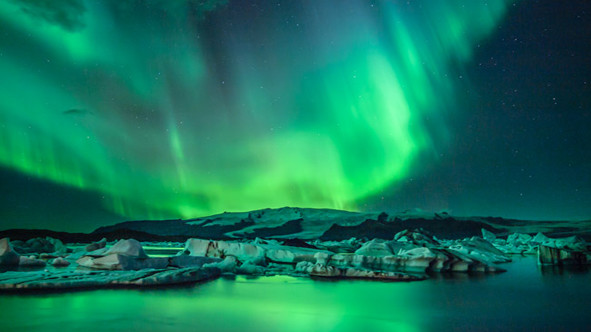
Turning Air Pollution Into Rock
Re-injecting this waste water and gas into the ground enables the carbon dioxide and hydrogen sulphite to permeate the volcanic basaltic rock and transforms it into stone. Water flows through the rock, fixing the CO2. The build up of this new rock is full of cavities, these pores are filled up with carbon minerals.
The CarbFix project replicates the natural process of weathering but instead of taking hundreds or thousands of years to turn into stone, CarbFix achieves it in just six months.
Testing The Theory, Proving It Works
To test this, Engineers sample the gases which they condense into liquid. It is a vital part in the project to demonstrate that the CO2 is being mineralised in the ground. The liquid can then be taken to a lab back in Reykjavik to be analysed for its CO2 and H2S levels. If the re-injected gases have successfully turned into stone then the sample should only contain the naturally occurring background levels of carbon dioxide and hydrogen sulphide.
What the Engineers hope to see when testing the liquid is that the CO2 levels in the steam do not raise above the background levels. When the levels are about the same as the natural occurring levels, the gases have turned to stone. This is a great approach to lower gas emissions.
Future Potential For The Project
This new process is not necessarily locked to just geothermal energy. Engineers report that if you have a relatively pure stream of CO2, which you can capture and dissolve in water, then you can in theory take that water and re-inject it back into the ground, as long as there is favourable rock composition in the area. Approximately 5% of the continents on earth are basalt, and the ocean, so more countries, companies and industries should be working this way. The potential is there to help our atmosphere and reduce climate change too.
Optical Illusion Crossing in Iceland
Optical Illusion Crossing in Iceland
Text by Sonia Nicolson
Traffic accidents in Iceland
According to the Icelandic Transport Authority (ICETRA), there were fewer fatal and serious traffic accidents across Iceland in the first ten months of 2017 than during the same period in recent years. There was a 21% decrease in serious injuries or fatalities caused by traffic accidents in Iceland between 2016 and 2017. 157 serious injuries or fatalities in the first ten months of 2017, and a significantly higher 204 within the same period of 2016.
Welcome Developments
ICETRA Public Relations Manager, Þórhildur Elínardóttir says the decrease is a welcome development and a result of changes that began in 2013. The main improvements have been in the education of young drivers with a more comprehensive training program and prevention efforts helping new drivers drive safely and be more aware of potential dangers.
Despite the rise in tourist numbers, accidents involving foreign drivers has reduced. However, accidents involving cyclists have increased and was estimated at 150 accident in 2017. With new efforts to improve driving education, awareness of potential hazards and other methods to prevent accidents, Iceland is taking to new projects to curb their fatal and serious traffic accident numbers.
Street Art Ísafjörður
Ísafjörður, the small fishing town in Icelands Westfjords, is the latest destination to introduce an ingenious way to slow drivers down when approaching a pedestrian crossing. This 3D artwork creates a clever floating zebra crossing which is painted on the road and gives the illusion that the white stripes are floating above the ground and obstructing the road.
Photo by MotoringSearch
Controlling Speed
The town of Ísafjörður has the standard speed limit of 30 kmh (18.6 mph) set but residents felt this was still simply too fast. The streets are narrow in this small village and residents wanted to find a way to slow motorists down further. The local council met to discuss ideas. Ralf Trylla, the Icelandic Environmental Commissioner was inspired when he came across a similar optical illusion drawn in New Delhi, India.
Painted Optical Illusion Crosswalk
This street painting project was led by Gautur Ívar Halldórsson, the manager of Vegmálun GÍH, a road painting company which created the crosswalk located in Ísafjörður in northwest Iceland.
Self taught, Gautur Ívar and Ralf Trylla practiced their 3D painting skills whilst waiting the few weeks it took for all necessary permits from the Transport Authority and Police to come through so work could start. From above, the white lines look like columns but as you approach them at street level you see the optical illusion come to life and they appear to be hovering.
Drivers and Pedestrians
This creative design gives the impression that the pedestrians crossing the road are walking on air. The idea is that drivers approaching the crossing will see the 3D artwork and think it looks like there is an obstacle in the road, and will therefore slow down. The aim is to make drivers lower their speed to reduce the risk of accidents in this pedestrian area.
The Inspiration
Crossing like this one are popping up across the globe in India, South Africa, Kyrgyzstan and China, but this form of street art is not the only unusual method being used to slow down traffic for pedestrian crossings. In Russia, road safety experts used a very unsubtle method of employing topless women to hold speed limit signs in an aim to get drivers to slow down – perhaps not the best method to try here in Iceland.
In the UK there is discussion of scrapping speed bumps as part of the government’s dramatic plans to curb pollution. It emerged that these publicly hated humps are not only stressful but bad for the environment as slowing down to cross them actually causes a higher level of nitrogen dioxide and so pollutes the atmosphere.

Photo by BoredPanda
Delhi’s First 3D Zebra Crossing
New Delhi Municipal Council’s (NDMC) newly installed crossing, painted at central Delhi’s Rajaji Marg, has helped reduce the average speed on this section of road down to 30 km per hour. “The new 3D zebra crossing has become a sight of amusement for commuters. Cars inevitably slow down and there is also excitement among pedestrians to use it,” said a senior traffic official.
This black and yellow crossing, painted as a trial project, had the aim to help make the city roads safer. New Delhi officials are now discussing more 3D pedestrian crossings to be created across the city to help make roads safer. “We did not know how people would respond to such 3D pedestrian ways, but the response is overwhelming. Our aim is to make the NDMC area a people-friendly space and such measures will ensure safety for pedestrians as well as drivers,” said Naresh Kumar, NDMC chairperson.
The average speed on this section of road is 50km/hr however the wide and well maintained roads make for the ideal place for drivers to speed through. Traffic officials have now monitored the crossing and an average speed of 30km/hr was recorded. “If you are driving, from a distance the crossing looks like the road has been dug up or is elevated, this automatically makes the driver slow down. During the day you will see pedestrians hopping through the painted blocks,” the official said.
It took Yogesh Saini, founder of Delhi Street Art, 3 days to paint the crossing in collaborated with NDMC. He said, “The entire crossing was painted in the morning during rush hour.”
A senior NDMC official said that five other locations have been identified where the crossing will come up in the coming months. “Instead of repainting the zebra crossings in black and white, we will replicate the 3D design,” the official.
Photo by Conor Lawless
Traffic on Ring Road One
Traffic on Icelands Ring Road is usually at its heaviest in July but it reached a record high last year, said the Icelandic Road and Coastal Administration (IRCA), with a record of 108,000 vehicles passing the 16 IRCA counters on the Ring Road daily. This number has increased over the past decade from 82,000 vehicles, meaning an increase of around 30% since 2007.
However, the increase in traffic between years is slowing down with an increased of only 7.3% in July 2017 compared to the pervious year. The greatest increase in traffic is in the north of Iceland with around 12% more visiters, and the South Coast is experiencing a growth of around 3.8%. Indications are that traffic between 2016 and 2017 increased 9% overall, which is a smaller increase than in the previous year.
The Future for Roads in Iceland
The local council has not decided if it will implement more 3D crosswalks like this one in Ísafjörður, but if the experiment proves successful more may follow.
Iceland Rye Bread Baked by the Bubbling Geysirs
Iceland Rye Bread Baked by the Bubbling Geysirs
Text by Sonia Nicolson
Working with the Land
Iceland offers an incredibly unique landscape of lava, moss, glaciers, volcanos and active land, with bubbling hot springs breaking through rifts in the earth. Its incredible to live alongside this magnificent natural force, fire and ice. The Icelanders relationship with the natural world goes beyond mere resilience but reaches into the realm of harmony. The Icelanders have made this island and its formidable elements work for them, you can see this in one rather unsuspecting source, the Icelandic Rye Bread.
Rye Bread, known in Icelandic as Rugbraud, is a delicious Icelandic bread traditionally baked in the ground. The ground is heated by bubbling Geysir bubbling in the pebbled sand of the Laugavautn shoreline.
Geyser, Geysir
The English word geyser, with refers to a periodically spouting hot spring, derives from Geysir. The name Geysir itself comes from the Icelandic Old Norse verb geysa, “to gush”. Eruptions at Geysir attracts visitors daily to watch the magnificent eruption of boiling water being hurled up to 70 metres in the air. However, the geysers used to bake this bread at Laugavautn are all underground and bubble away within the sand, no dramatic hurl of water but they’re very very hot.
Photo by On The Luce
How to Bake Rye Bread
The recipe Icelanders use is typically handed down from generation to generation. Each families recipe is basically the same but some have adapted it and added a secret ingredient.
The standard recipe is as follows:
4 cups Rye Flour
2 cups Wheat Flour
2 cups Sugar
A pinch of Salt
4 tsp Baking Powder
1.2 litres Milk
Once the mixture is mixed together, bake it for 24 hours in an unconventional oven, i.e the ground heated by hot springs.

Photo by Dvortygirl
The Traditional Baking Method
A hole is dug in the ground about a foot deep. The ground starts to boil, the temperature is around 97’c when the bread goes in to bake. The bread is baked in a pot, submerged into the hot sand and covered over. A stone is placed on top to mark to locals where the bread is being baked. The entire process takes around 24 hours, then the bread is ready to be dug back up. After cooling it with water from the lake, the vessel is then opened to reveal a fully cooked loaf of Rye Bread.

Photo by jeffreyw
How to Eat Rye Bread
When cooked in this particular way, Rye Bread is sometimes referred to as hverabraud, which translates as ‘hot spring bread’. Many locals bake Rye Bread this way and have been doing so for many generations. Unique to Iceland, Rye Bread is enjoyed with butter, topped with smoked salmon, smocked tout, herring and egg; delicious.
Fontana Geothermal Spa
Fontana geothermal Spa in Laugavautn, a small lakeside town on the Golden Circle, is run by Sigurður Rafn Hilmarsson who has become something of a national icon for his Icelandic Rye Bread. Hilmarsson has prepared bread for countless visitors, including the president. When asked what makes his bread so special, Hilmarsson modestly replied “it has a bit more sugar in it than most,” he said.

Photo by Katrine Thielke
Cake, not Bread
The sugar content in Rye Bread results in a taste and consistency more akin to that of cake but most would say that the most remarkable element of Rye Bread is in its traditional preparation. Unlike most breads, this Rye Bread is buried in a bubbling geothermal pit and baked underground.
Experience it For Yourself
Rye Bread is still a staple in todays Icelandic cuisine but many now use the simpler and more convenient baking method of an oven. Sigurður Rafn Hilmarsson remains true to his Icelandic families roots “this method was passed down from my grandmother to my mother to me,” he explained. “That’s the one we are using here.”
This is a daily practice for Hilmarsson at the Fontana geothermal Spa where you can experience a demonstration of this unique method first hand on the lakeshore.
Drilling into a Volcano to Find Clean Energy
Drilling into a volcano to find clean energy
Text by Sonia Nicolson
We live in a world fuelled by dirty fossil fuels but times are changing and we are on the edge of a world that gets its energy from renewable, clean sources. Although geothermal energy is generally considered to be a sustainable source, it is not entirely renewable. The potential renewable and clean energy source are:
Space Based Solar Power
Every hour, more energy reaches us on planet earth than we could use in an entire year. To save this energy, engineers are looking into giant solar farms in space that can collect the solar radiation, mirrors would reflect onto solar collectors and this energy would be beaten back to earth wirelessly. Obviously this project would require a huge budget but doesn’t it sound incredible.
Human Power
Human powered devices already exist, but scientists are working on harvested power generating from normal human movement. Tiny electronics on billions of people means big potential. The idea is that one day, for examples, your phone will be able to change as you are walking down the street or it moves in your hand or as your fingers move on the screen. You can also wear small systems that pass electricity as you move. Human power wont solve the issues of global warming but every bit counts.
Tidal Power
Harnessing the motion of the ocean could power the world a number of times over, which is why so many companies are trying to figure out how. There has been a lot of focus on wind and solar energy so the tidal potential has been a little less explore, until now. Tidal systems are becoming more efficient from hydroelectric turbines to the world first ever desalination plant off the coast of Australia which is producing clean drinking water.
Hydrogen
The element Hydrogen is very high in energy, an engine that burns pure hydrogen produced almost no pollution. Nasa powered its shuttles and part of the space station with Hydrogen for years. Hydrogen works in combination with other elements such as oxygen. In the 80’s, Russia tested a passenger jet to run on it and more recently, Boeing tried out some small planes fuelled by it. It is possible to put hydrogen into mobile fuel cells in vehicles and they can convert it into electricity. These cars are being manufactured already. Honda is working on a car that can be plugged in to power a house, instead of the current electric powered cars which take energy from the house. The main problems with development is of course cost and a lack of hydrogen stations to refuel.
Photo by peterhartree
Geothermal Heat from Lava
Geothermal, the method of converting the heat that rises from the depths of the molten core of the earth into energy. Geothermal energy currently powers millions of homes around the world. 25% of Icelands energy comes from geothermal technology. The current project looking for clean energy in the volcanos magma has only been tried once before, in Hawaii.
Iceland, where ice and fire meet, has drilled into a volcano in an effort to bolster geothermal clean energy. The energy company HS Orka is leading this project on a site is near the famous Blue Lagoon spa, in the Reykjanes region. Engineers are drilling into the superheated rock until they reach magma deposits in the hope to produce up to 10 times more power than conventional geothermal wells. The drills bore a hole, almost 5000m deep, into the Reykjanes volcano. This volcanic well, with its high temperature and extreme pressure produces ‘supercritical’ steam. The temperature at the bottom of the borehole is expected to be 427’c (800’f) but the team pumped water down into the hole, which the scorching magma instantly vaporised to a record of 500’c (932’f). The hotter the steam, the more energy it generates. The steam then pushes a turbine which creates energy. The steam is neither gas nor liquid but it produces much more energy than either.
This highly pressurised steam should lead to a giant leap in the energy generating capabilities of geothermal technology around the world.
Iceland is the only country in the world with 100% renewable electricity. Geothermal sources provide Iceland with 25% of its total energy needs, and this record breaking project means that Iceland can harness volcanic heat to produce clean energy in a pioneering new project. It could provide Iceland with 10 times more energy than gas or oil extraction. Iceland has been pioneering in geothermal energy, with 85% of its energy supply derived from renewable sources.
Albert Albertsson, an engineer on the project, named ‘Thor’ after the Viking god “to supply electricity and hot water to a city like Reykjavik with 212,000 inhabitants, we would need 30-35 conventional high temperature wells, compared to only three or five supercritical wells.”
Nuclear Waste
Nuclear fission power plants are the traditional reactors and have been in use around the world for decades and provide countries like the USA with 20% of its electricity. However, this method is highly inefficient and actually adds to the nuclear waste. The current system uses light water technology which surrounds the fuel rods with water to slow the neutrons and allows for a sustained nuclear reaction. This however only allows for 5% of the uranium atoms in the rod are used up when the rod has to be removed and adds to the ever growing stock pile of highly radioactive uranium nuclear waste. There appears to be a more efficient way called a fast reactor where the rods are no longer submerged in water but in liquid sodium. This means 95% of the uranium is used, a huge increase from the inefficient 5%. This change in liquid submersion reduces the 77,000 ton waste. The biggest obstacle is the high cost of building new nuclear power plants and political stigma surrounding nuclear energy.
Solar Windows
With production and installs getting cheaper, solar power is taking off. Photovoltaics are popular in Europe with Germany being the leader in this green energy. Researchers at the Los Alamos National Laboratory in New Mexico mad a significant breakthrough in quantum dot solar cell technology. They have been developing highly efficient solar panels that can double as transparent windows. This means that every exposed window can now be converted into a mini power station.
Biofuels
The production of crop-derived ethanol and biodiesel has become a mainstream substitute or supplement to gasoline in cars. The discovery of vast amounts of cheap oil worldwide made the idea of Henry Ford’s Model T running on ethanol just an idea however renewable biofuels are making a strong come back. The main issue is that the currently dominant first generation of biofuels use the same land and resources as farming and growing food therefore driving up the cost of food, causing problems in the developing world. Algae has all the right ingredients to replace oil because its natural oil content is greater than 50% which means it can be easily extracted and processed. The remaining parts of the plant can be converted into electricity, natural gas, fertiliser to help grow even more algae chemical free. Algae grows quickly without the use of farm land or freshwater.
Flying Wind Farms
You may have already seen wind farms and turbines on the horizon but with the Bionic Air Turbine (BAT) floating above the ground, where winds are stronger and more consistent, we could soon be getting energy more efficiently. These flying wind turbines will soon replace the less efficient tower systems and could allow for the construction of offshore wind farms which are costly to build.
Fusion
Nuclear fusion doesn’t create deadly nuclear waste, unlike fission, because it fuses atoms together instead of splitting them apart. This means there is no threat of a runaway reaction that could potentially lead to a meltdown event. Easier said than done. Nobel Prize winning physicist described fusion as trying to put “the sun into a box. The idea is pretty. The problem is, we don’t k ow how to make the box.” Fusion reactions will produce materials that are volatile and hot that it will damage the reactor that created it. However, private companies and governments are spending billions on research to try and solve these problems. If these challenges can be solved, fusion could provide virtually limitless energy to power the world.
What do you think the future of energy is?

Icelandic Decomposing Algae Water Bottles
Icelandic Decomposing Algae Water Bottles, by Ari Jonsson
Text by Sonia Nicolson
Plastic Waste
We all contribute in one way or anther to the growing problem of plastic pollution. Think of the packing in your weekly shop, think of your garbage, think of the items you work with and replace in time; it’s hard to avoid a plastic.
Plastic pollution is the build up of plastic products in the environment that adversely affects wildlife, wildlife habitat and/or humans. Plastics that act as pollutants are categorised based on sizes into micro, meso or macro debris.
The main issue that we in society face is that plastic is an inexpensive and durable material which means it is used to high levels but the plastic we use is very slow to degrade. Plastic pollution can unfavourably affect lands, waterways and oceans which in turn effects living organisms, particularly marine animals. Problems such as entanglement, ingestion, exposure to chemicals an all cause issues in natures biological functions.
More than 5 million tonnes of plastic are consumed annually in the UK alone. An estimated 24% of this makes it into recycling systems, that leaves a remaining 3.8 million tonnes of waste which is destined for landfills. Plastic reduction efforts have occurred in some areas in attempts to reduce plastic consumption and pollution, and promote plastic recycling.

Photo by Kevin Krejci
Creating a Biodegradable Bottle
After reading about the amount of plastic waste produced daily, Ari Jónsson started to explore the concept of a replacement material.
“I read that 50 per cent of plastic is used once and then thrown away so I feel there is an urgent need to find ways to replace some of the unreal amount of plastic we make, use and throw away each day,” Jónsson told Dezeen.com
“Why are we using materials that take hundreds of years to break down in nature to drink from once and then throw away?”
What is DesignMarch?
DesignMarch is Iceland’s most important design festival and is held annually, from 10-13 March, this year will be the festivals 10th gathering. DesignMarch is organised by Iceland Design Centre and works to promote Icelandic design and architecture. It’s the largest and most significant design gathering in Iceland and brings together designers and Architects from all over. Located across Reykjavik, the most northerly capital city in the world, there are around one hundred different events from discussions and lectures to exhibitions and networking events. It transforms the city into one big venue for design where fashion and furniture, architecture and food design come together. The festival opens with DesignTalks, a day of lectures by internationally acclaimed designers and the foremost local design thinkers.
The festival showcases the best of local design alongside exciting international names, it’s a great chance for newcomers to display their work and be seen. Product Design student studying at the Iceland Academy of the Arts, Ari Jónsson, created a biodegradable bottle from a combination of red algae powder with water, and his work was exhibited during DesignMarch 2016. Jónsson’s decomposing bottles were presented at the Drifting Cycles student exhibition which was held inside a remote lighthouse.
Testing Materials
Ari began by studying the strengths and weaknesses of different materials to determine which materials would be best suited for use in the development of his water bottle. Working with natural materials and materials inspired by nature, Ari discovering a powdered form of agar, a substance made from algae. He found that when agar powder is added to water it forms a jelly-like material which can be formed into functional objects. He experimented with different promotions of water and algae to create a pliable formula. Then, slowly heating the substance, he poured it into frozen bottle shaped moulds to help him achieve the perfect form.
Photo by Youth Express
Working with Algae
As the material was in a liquid form, he needed to cool it to set the bottles shape and solid form. He found that rotating the mould whilst submerged in a bucket of ice cold water set the liquid substance making it take its bottle shape. The agar form was then refrigerated for a few minutes before it could be extracted from the mould.
“If it fails, or if the bottom is too thin or it has a hole in it, I can just reheat it and pour it into the mould again,” said Jónsson. So as he develops the perfect thickness and material use, he can adapt and remould as he works.
How it Decomposes
The interesting finding of this new material was that the bottle kept shape as long as the bottle is full of water. As soon as it was empty, it began to decompose and loose both its form and function.
As the bottle is made from algae, a 100% natural material, the water the bottle stores is completely safe to drink. As the bottle is made from powdered agar and mixed with water to create the material, Jónsson did note that after a while it may extract a small amount of taste from the bottle. This is not being seen as a negative aspect and the designer even suggested that if the user likes the taste, they can start to eat the bottle itself when they have finished drinking.
Photo by morisius cosmonaut
Inspired by Nature
Designers are increasingly experimenting with other forms of algae and seaweed. Arup revealed their design for the worlds first ever algae powered building, a Dutch designer has created bioplastic for 3D printing from algae, and the IKEA lab Space10 created an algae producing pavilion in Copenhagen. Seaweed has also recently been used in the development of furniture combining paper and seaweed to create a new material.
This is being explored in architecture too; the Modern Seaweed House on the Danish Island of Laeso uses seaweed in its exterior cladding. This project revisits the tradition of constructing using locally found materials such as seaweed. At one stage on Laeso, there were many homes constructed using seaweed as trees were scares. Nowadays only twenty houses like this remains so this inspired Vandkensten studio and non-profit Realdania Byg’s preservation project.
Algae has even been implemented as an energy source to power buildings.
Top 10 Waterfalls of Iceland
Top 10 Waterfalls of Iceland
Text by Sonia Nicolson
When in Iceland, we say DO go chasing waterfalls. There are some incredibly beautiful waterfalls in very dramatic surroundings and a lot of them are easily accessible. From the Golden Circle to the South Coast and further up north, you don’t have to go far to experience one. The Icelandic waterfalls are very dramatic and you can see water drop from a great height, gush through lava rocks, over ledges meaning you can walk behind them and certainly see a rainbow or two.
So here are our top 10 waterfalls in Iceland here to help you plan out your trip.
Gullfoss
On the Golden Circle you will find Gullfoss, meaning Golden Falls, is located on the Hvítá River and is one of Iceland’s most iconic waterfalls. The glacier water from Langjökull cascades 32m down in two stages. It’s a dramatic display of power and is incredibly beautiful to watch. The waterfalls power does spray up a lot of moisture into the atmosphere so make sure to wear waterproofs. Access the viewing platforms from the lower car park for the most accessible view, the top car park also has a cafe and shop. Great tour to see Gullfoss is the Golden Circle, Secret Lagoon and Bubble tour.
Seljalandsfoss
On the South Coast of Iceland you will discover the picturesque Seljalandsfoss. One of the more famous waterfalls in the country, Seljalandsfoss is Iceland’s highest waterfalls, at 63m. Make your way up the steep staircase to get a unique chance to walk behind a waterfall, a very unique experience. Feel the power as the water drops from the famous glacier, Eyjafjallajokull. Slightly further along the mountainside is Gljúfrabúi, a hidden waterfall which is often overlooked by the large tour groups, and so you might get it to yourself.
Photo by Ævar Guðmundsson
Skogafoss
Further on along the South Coast and the next waterfall is Skógafoss. Measuring around 25m across, with a drop of 60m, Skogafoss is Iceland’s biggest and most beautiful waterfalls. You can walk right up to the falls and be hit by the spray. If you are lucky enough to be visiting on a sunny day then you might spot a rainbows in the spray from the powerful cascade. If you have the time, climb the 60m of stairs to the top of the falls.
Photo by Mitchel Jones
Dettifoss
Located in the Vatnajökull National Park in Northeast Iceland and said to be the most powerful waterfall in Europe, Dettifoss flows from the glacier Vatnajökull, with an average waterflow of 193m3 per second. Dettifoss measures 100m wide with a powerful drop of 45m down into Jökulsárgljúfur canyon. Dettifoss is Icelands largest waterfall in terms of volume discharge, having an average water flow of 193 m3/s.
Photo by carlabits
Godafoss
Located on the River Skjálfandafljót in the North of Iceland, Godafoss waterfall is the fourth largest river in Iceland. A spectacular waterfall with a width of 30m, falling from a height of 12m, it truly is dramatic. Godafoss means Waterfall of The Gods. It’s said that when Christianity was declared the official religion in Iceland, by lawspeaker Þorgeir Ljósvetningagoði, he threw the statues of the old Norse gods into the waterfall. The river, originating deep in the Icelandic highland, runs from the highlands through the Bárðardalur Valley from Sprengisandur in the Highlands.
Photo by Andrés Nieto Porras
Svartifoss
Svartifoss, as know as the Black Falls as it is surrounded by dark lava columns. Located in Skaftafell in Vatnajökull National Park on the South Coast of Iceland. Similar natural formations can be seen throughout Iceland and abroad, at the Giant’s Causeway in Northern Ireland and on the Scottish island of Staffa. These basalt columns give inspiration to many buildings in Iceland such as Hallgrímskirkja church. in Reykjavík.
Photo by Victor Montol
Hraunfossar
Located in the district of Borgarfjordur, Hraunfossar is a series of beautiful waterfalls formed by rivulets streaming from a short distance out of the Hallmundarhraun lava field. This lava field was formed from an eruption of one of the volcanoes lying under the glacier Langjokull. Some of the most magnificent falls found in Iceland, catch them in the summer or as the colours turn in autumn.
Photo by Jun
Haifoss
Háifoss is located near the volcano Hekla on the South Coast of Iceland. The third highest waterfall in Iceland, the water falls from a height of 122m streaming from the River Fossá. There is a car park above the waterfall. You can hike to the waterfall along the River Fossá from the historical farm Þjóðveldisbærinn Stöng. The farm was destroyed by a volcanic eruption of Hekla in the Middle Ages abut has since been reconstructed. The hike both directions will take you around 5-6hours.
Photo by James Petts
Barnafossar
Barnafoss, also known as Bjarnafoss, is located near Hraunfossar and burst out of Hallmundarhraun, a huge lava plain in the west of Iceland and about 100 kilometres (62 miles) from Reykjavík. Barnafoss is on the River Hvítá and flows out of a lava field, creating a dramatic and very picturesque scene.
Barnafoss has been associated with many Icelandic folk tales, most famously the one about two boys from the nearby farm of Hraunsás. One day, the boys’ parents went to church with their ploughmen, the boys were supposed to stay at home but as they decided to follow their parents as they had gotten bored. Making a shortcut across the stone bridge over the waterfall, they suddenly felt dizzy and fell. The boys sadly drowned and when the news reached their mother, she put a spell on the bridge saying that nobody would ever cross it without drowning again. The bridge was demolished in an earthquake sometime after this.
Photo by fr.zil
Faxi
Faxi, or the Vatnsleysufoss waterfall, is located on the Tungufljót River on the popular tourist route to the east of Reykjavik, the Golden Circle. Find Faxi around 12 kilometres from Geysir and Gullfoss, and 8 kilometres from Skalholt. Park up and walk away from the main road on a gravel track where there is a picnic area and small car park. The waterfall is a popular fishing spot as it is full of salmon. Please note that Kayaking in the waterfall is forbidden.
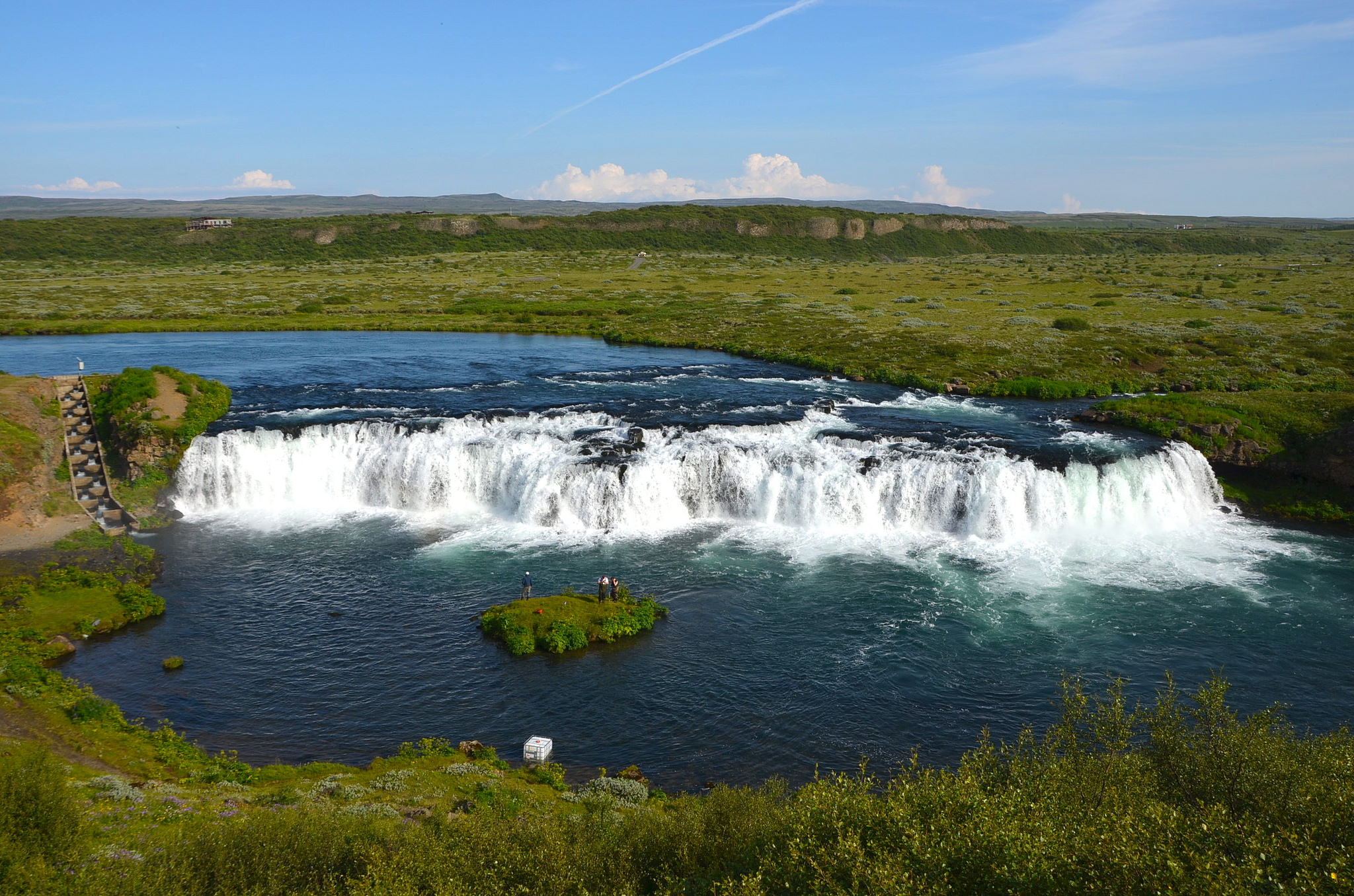
Photo by Adam Fagen
Which waterfalls are on your bucket list?
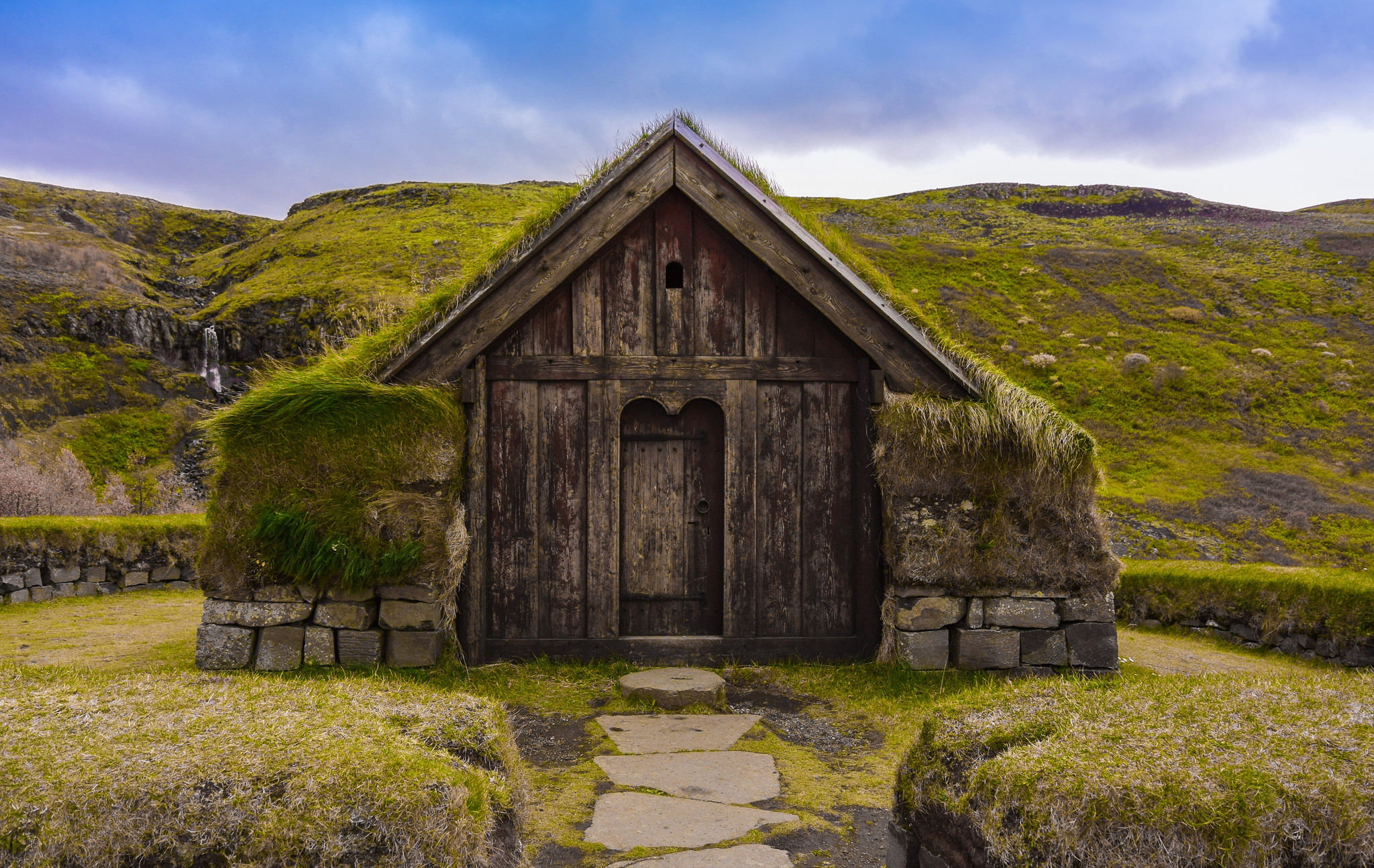
The Icelandic Turf House
The Icelandic Turf House
Text by Sonia Nicolson
Icelandic turf houses, “torfbaeir” and sometimes referred to as ‘hobbit homes’, were the built to withstand the brutal Icelandic climate, survive earthquakes and use zero energy. They offered superior insulation compared and good ventilation compared to the more modern wooden or stone constructions.
When the Vikings settled in Iceland they forested around 30% of the trees, clearing land and leaving a devastating mark on the natural landscape. Iceland had a large amount of turf suitable for construction and as many settlers were used to the idea of turf roofs from their time in Norway, this was an obvious building material. The turf house is now one of the more iconic buildings in Iceland.
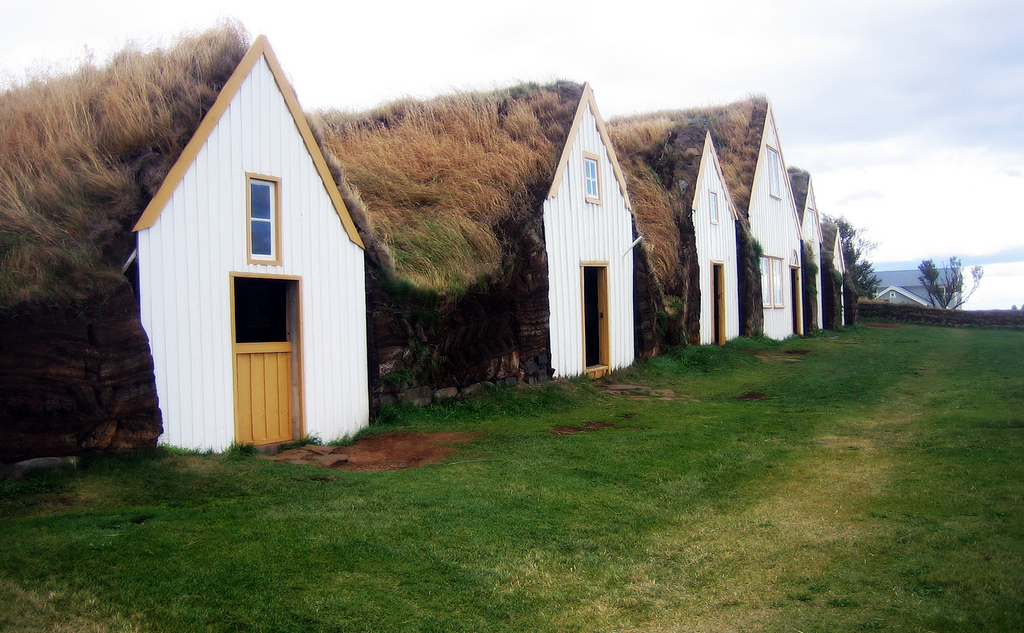
Photo by Matito
The oldest turf house in Iceland is the historical farm of Keldur on the South Coast of Iceland. A typical Icelandic turf farm was a cluster of buildings connected by earth corridors. Keldur is one of very few preserved turf houses in South Iceland, along with the f.ex. the turf house at Austur-Meðalholt, now a museum, and the reconstructed houses of Skógar museum.
Keldur farm is a historical place of important for Iceland Saga of Njáll, Ingjaldur Höskuldsson, who lived here from 974 until around 1000. In the 12th and 13th century, Keldur was one of the manors of the most powerful clans in Iceland; the Oddi clan. Jón Loftsson, one of the most powerful chieftains in Iceland in the 12th century, and lived at Keldur until his death in 1197. The turf houses here have been rebuilt many times, reconstructed after both earthquakes in 1896 and 1912. In addition, the ruins of around 18 farmsteads have also been found on this site. Close to Keldur is the well known volcano Hekla, erupting on average every 50 years. Lava rocks from eruptions were used as building materials for the farmstead and driftwood was also used.
Photo by PIVISO
In 1942, The National Museum of Iceland bought the old turf farm and farmhouse as part of the National Museums Historic Buildings Collection. The site is open to visitors from June – August.
The turf houses were all of the same proportions, regardless of class, social status or wealth. They were representative of a communal way of living in Iceland. All members of the family lived and spent their time together in the living room, the only room with a window, where they ate, slept, were born, and died.
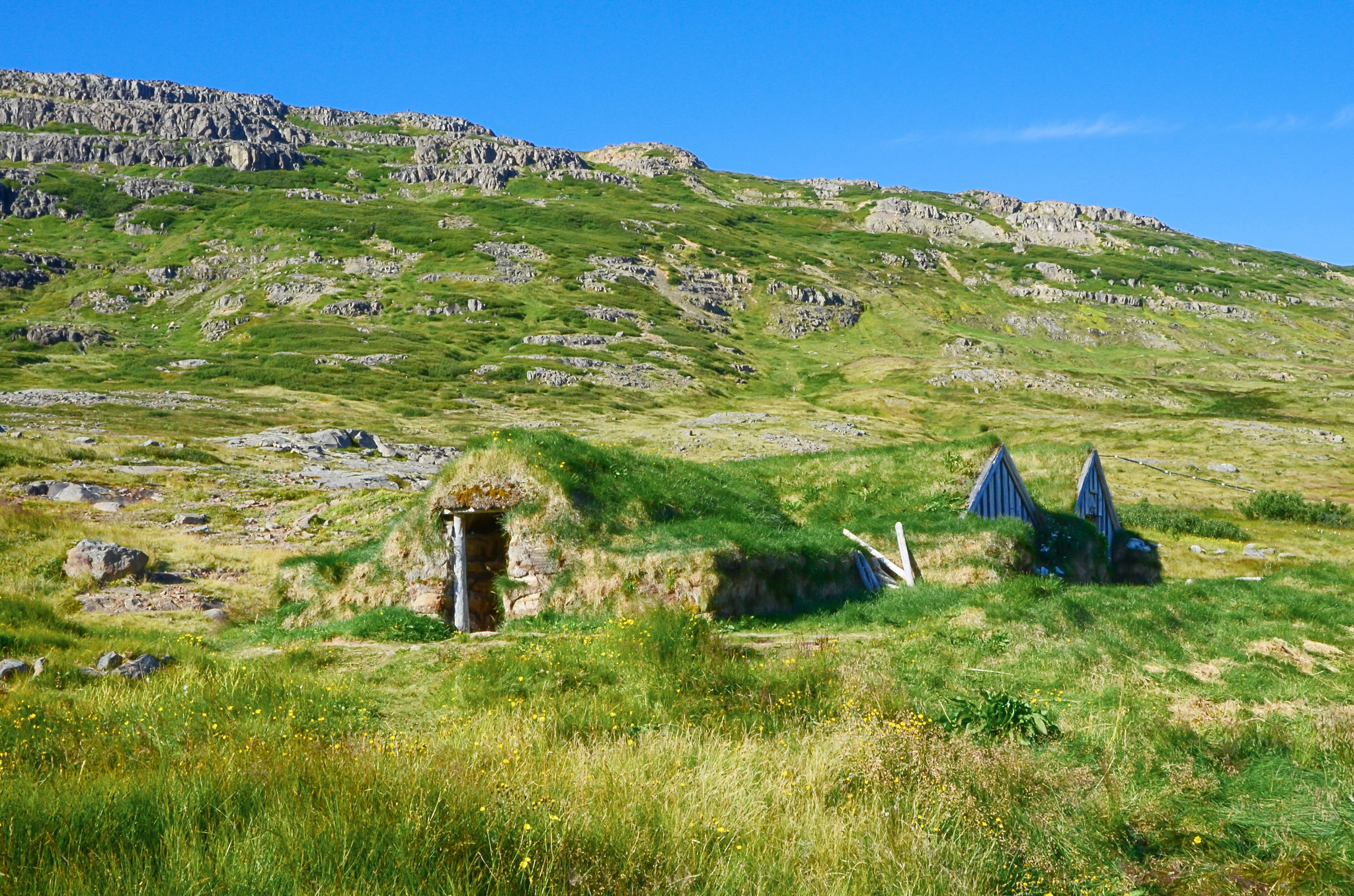
Photo by Theo Crazzolara
The typical construction of an Icelandic turf house starts with a large foundation made of flat stones. The back of the building was often dug into the hillside and the front stuck out with a pointed roof which was covered in grass. Then the wooden frame was constructed to hold the load of a turf roof. The frame is then clad with turf, often in two layers to help insulate. The sturdy walls were made of stone sandwiched between turf bricks, sometimes played out in a fashionable herringbone style. The entire structure was covered in turf and the growing grass helps to make the structure more sturdy. The only exposed wood was at the doorway where the frame was decorated. This door led you into a hall where you were usually met by a fire. The rooms were often below ground where the earth doesn’t freeze. All the warmth in the home was provided by the fire in the kitchen since heating from coal, oil, or wood stoves was not available until the 19th century. The flooring was typically wood, stone or just earth, depending on the buildings purpose.
Easy to maintain, the turf roofs and walls needed to be trimmed regularly but the structures do collapse eventually and need to either be rebuilt or repaired. When the houses do collapse, they only leave a mound of earth behind.
Photo by Theo Crazzolara
Turf houses had been continually constructed over a period of 1000 years but Icelandic architecture changed a lot in that time. In the 14th century the Viking style longhouses were gradually abandoned, replaced by many smaller and specialised buildings which interconnected. Later, in the 18th century, a new Burstabaer style started to gain momentum, the most common version of the Icelandic turf house. Many have survived well into the 20th century.
After World War I, a wave of modernisation swept the island and nearly eradicated the turf houses. Slowly, people moved into a more modern urban building style of wooden houses, clad in corrugated iron. These were later replaced with earthquake resistant reinforced concrete buildings.
In the late 20th and 21st century, the tourist boom brought a rise of interest in this traditional building type. The Icelandic turf house was given a help in its preservation in 2011 when turf housing was nominated for UNESCO World Heritage status.
Photo by Thomas Ormston
The practice of building turf houses is not widely known today and so new initiatives for heritage preservation have been set up to pass on these skills. Every year there is a seminar run by Fornverkaskólinn in collaboration with Hólar University and Skagafjörður Heritage Museum, where you can learn how to construct a traditional Icelandic house. Over the last years the participants of this seminar have helped in restoring Tyrfingsstaðir, a turf house deserted in 1969. This seminar not only helps maintain knowledge of this cultural construction method but it also works to preserve Icelandic heritage.
The typical life expectancy of a turf house was 20 years, serving one generation depending on frost, before it must undergo repairs. The more sturdy of houses could often last from 50 to 70 years.
Photo by Marco Bellucci
Turf houses took a lot of maintenance and so sadly not many are still standing. Around half of the Icelandic nation still lived in turf houses in 1910. As Reykjavik grew, people moved into more modern dwellings and by the 60’s there were 234 inhabited turf homes in Iceland. Moving into the 70’s, most of these turf houses were deserted with families opting for corrugated timber homes instead.
These buildings are biodegradable, eco-friendly and energy-efficient. Rooted strongly in the Icelandic culture, would you stay in a turf house?

Iceland, Healthiest Country in the World
Text by Sonia Nicolson
Iceland, Healthiest Country in the World
One of the key topics discussed at the World Economic Forum’s Annual Meeting 2017 was the future of healthcare, and Iceland topped a new ranking of the world’s healthiest countries. The study, published by The Lancet, assessed 33 health-related Sustainable Development Goal (SDG) indicators in 188 countries across 25 years. The results from the SDG present a global picture of the progress made, and the work still needed, to achieve the Millennium Developments global goals.
Using the Global Burden of Diseases, Injuries and Risk Factors Study 2015, the research examines health in countries around the world to create a global ranking. Iceland, Sweden, Singapore, Andorra and the UK were the top 5 ranking countries; Iceland took the top spot by one decimal place. The report singled out major factors such as tobacco control measures and Iceland’s publicly funded healthcare.
Improved Icelandic Healthcare
In the past 15 years, there has been significant progress with universal healthcare showing the greatest improvement followed by family planning and hygiene developments. It’s not all good news however with hepatitis B on the increase, alcohol consumption becoming more problematic and numbers of overweight children now worse than in 2000.
“Although considerable progress on the health-related MDG indicators has been made, these gains will need to be sustained and, in many cases, accelerated to achieve the ambitious SDG targets,” write the authors of The Lancet.
The authors examined the link between the health-related indicators and the socio-demographic Index; a measure based on income per person, average educational in the population over 15 years old, and total fertility rate.
Icelandic Diet and Lifestyle
There is a wealth of contributing factors to a good Icelandic diet and lifestyle; water, food and exercise. The diet often focuses on fish and healthy dairy products such as Skyr. A nation is famous for its rivers, waterfalls, glaciers and hot springs, the water in Iceland is some of the cleanest in the world. Icelandic homes are heated using volcanic water pumped from a variety of hot springs all around the country. These hot springs have been used for centuries by locals to bathe, wash clothes and cook in. Its also thought that the natural hot water and minerals it contains can do wonders for your health and skin.
People eat a lot of fresh and dried fish, and lamb. There are roughly a million sheep living in Iceland, 3 times the population. Sheep are left to roam the countryside freely throughout summer, grazing on thyme and adding to their flavour. Recently, Icelanders have become more concerned with eating healthily, with athletes promoting healthy options. Vegans and vegetarians have gained more healthy options in the city and restaurants such as Glo are doing well.
The average life expectancy in Iceland is just over 82 years old. Exercise plays a big part in this with many people going hiking, swimming, signing up for marathons and trying out yoga. The typical modern Icelandic lifestyle includes a selection of fitness options focusing on strength, protein intake and a clean diet. Icelandic women practice weight lifting in their gym routine, and teens compete in nationally televised CrossFit-style obstacle courses, gaining a lot of attention.

Photo by John Nakamura Remy
Icelands Strongest Man and Woman
Iceland is famous for its Sagas with tales of heroes with incredible strength. From Vikings and Norse Gods, to Strongman champions, the nations football team to the modern trend of CrossFit.
The glorification of raw strength is nothing new in Iceland. Þór was known as the God of Thunder, Wrestling and Fertility, and Týr, was the God of War and Tactics. Both were described as physically, fiercely fit and strong but while Þór tended to smash things with his hammer, Týr used his brain too.
A Land of Rough and Unforgiving Natural Conditions
Iceland has over the years required a certain physical strength to survive with an attitude that everyone had to pull their own weight. Moving into the 20th century, Icelandic women in Reykjavik carried washing loads from the city centre to the pools in Laugardalur, a 5 kilometres walk. They would work for around 10 hours before carrying their mountain of wet laundry back home again. Foreign travellers often likened the Icelandic washing woman’s strength to the power of a pack horse.
Throughout history, Icelanders tested their strength by lifting stones. On Djúpalónssandura black sand beach in the Snaefellsnes Peninsula you will notice four large stones of varying sizes weighing between 23kg (50lbs) and 155kg (342lbs). These were used to test the strength of fishermen. The stones are named Amlodi (useless), Halfdreattingur (weakling), Halfsterkur (half-strong) and Fullsterkur (full-strong). A person of ‘Full Strength’ gains the Fullsterkur status by lifting, carrying and placing a rock of 155kg or heavier on a platform waist height or higher. Icelander might not need fishermen who can lift the Fullsterkur stones anymore but many still value strength as a representation of an enduring spirit.
Strongman, Strongwoman
Originally, militant leaders who had keep command by their sheer force of will, rather than raw physical strength were referred to as a ‘strongman’. In the mid 19th century the word was linked to specific forms of athletic strengths common in circus acts. Todays strongman is a phenomenon seen in films and advertising, idols to look up to, not commonly seen on a battlefield.
Iceland has long been know for its strength and power, a nation of just 334,000 people with an outstanding number of ‘world’s-strongest’ men and women; Jón Páll Sigmarsson, Magnús Ver Magnússon and Hafþór Júlíus Björnsson (the Mountain from Game of Thrones).
The Icelandic strongman is the most famous of Iceland’s power icons but the country is home to plenty of superwomen too. Katrín Tanja, worlds fittest women in 2015, and Anníe Mist, two times fittest woman CrossFit Games and six times Games competitor. The world famous weightlifter, Ragnheiður Sara Sigmundardóttir, is known for her strength and physical prowess inspiring younger stars such as recent winner of the European powerlifting championships, Sóley Jónsdóttir. Sóley performed an astonishing 215kg squat at the tender age of 15.

Photo by sumoman.co.uk
Icelandic Wellbeing
With clean air and low pollution, wellbeing in Iceland is good. Though the population is small, the country is comparatively large meaning everyone has space. Equal rights are strongly fought for and the gender gap is the smallest in the world. Crime is rare and which helps the people of Iceland feel safe and therefore happier.
It’s easy to see that Iceland can be considered one of the healthiest places in the world.

Gender Pay Gap and Equal Pay in Iceland
Text by Sonia Nicolson
Gender Pay Gap and Equal Pay in Iceland
It’s now illegal to pay men more than women for similar work in Iceland or companies can face a gender pay gap fine.
Top of the World Economic Forum’s
Iceland has topped the World Economic Forum’s ranking for the 9th year as the nation with the smallest gender gap. However Iceland’s overall gender gap is now just 12%.
Closing the Gender Pay Gap
A new law was passed on International Woman’s Day 2017.
The aim is to close Iceland’s gender pay gap by 2022 and so a new law was introduced at the start of 2018 that asks public and private companies, with a staff of over 25 people, to pay employees equally. These companies are now are obliged to obtain government certification of their equal-pay policies or they could face financial penalties.
Employers must prove that they offer equal pay regardless of:
- Gender
- Ethnicity
- Sexuality
- Nationality
Iceland, the First Country to Legalise Equal Pay
Iceland is the first country in the world to legalise equal pay and is a world leader on gender equality. Though there has been legislation in place previously saying that pay should be equal for men and women but there is still a pay gap. Icelandic women earned, on average, 16% less than men (in 2016).
Global Gender Gap
Though other countries such as Switzerland and the US state of Minnesota have similar schemes in place with an “equal-salary certificate policies”, Iceland is the first to make equal pay compulsory for both private and public firms with a staff of 25 people. The bill was supported by Iceland’s centre-right administration, as well as its opposition. According the the Global Gender gap Index 2017, World Economic Forum, the global average annual earnings were $12K for females and $21K for males (in 2017), a huge gap.
“The legislation is basically a mechanism that companies and organisations… evaluate every job that’s being done, and then they get a certification after they confirm the process if they are paying men and women equally,” Dagny Osk Aradottir Pind, a board member of the Icelandic Women’s Rights Association, told Al Jazeera News.
Iceland is a relatively small country with a population of 323,000 people. It has a strong economy based on tourism and it’s fisheries.
Improving Equality for Women
Iceland has brought in measures to improve equality for women. One of these is a quotas on corporate boards and government committees. In 2016, female representation in the Icelandic parliament had reached a record of 48%, but this has since dropped. In December, a new Icelandic coalition government took office with left-green party leadership led by Katrín Jakobsdóttir. Known to be a feminist, she is the second woman to head a government in Iceland.
Despite an ongoing commitment to tackle this issue, Iceland’s gender pay gap has not shrunk fast enough.

Photo by Perzon Seo
The Icelandic Women’s Protest
In October 2016, thousands of women across Iceland walked out of their workplaces at 2.38pm in protest. The pay discrepancy means that Icelandic women effectively work without pay after this time, according to unions and women’s organisations. Two years later and Iceland is talking this seriously and making its statement to the world.
Men Are Still Being Paid More
At a time when it appears that other countries around the world are stalling on economic gender parity, Iceland is committed to working on closing its gender pay gap by 2022. For now however, men are still being paid much more than women and, in addition to this, mens wages are increasing rapidly meaning it will be more challenging to meet the 2022 aim (according to the World Economic Forums wide-reaching Global Gender Gap Report, 2017). In Switzerland, women earn just 72% of the average male salary for similar work.
“The time is right to do something radical about the issue Equal rights are human rights” says Thorsteinn Viglundsson, Iceland Equality and Social Affairs Minister

Photo by WOCinTech Chat
Global Gender Gap Report
The Global Gender Gap Report looks at the differences between men and women in four key areas:
- Health
- Economics
- Politics
- Education
Although much progress has been made over the past decade, this report found that the gender gap widened for the first time in 2017 since records began in 2006.
Iceland has been one of the fastest-improving countries in the world over a 10year period according to the Global Gender Gap Report which uses markers such as economic opportunity, political empowerment, and health to measure gender equality in the country.
What’s the gender gap like in your country?
When Is The Best Time To Visit Iceland?
Text by Sonia Nicolson
When’s The Best Time To Visit Iceland, Summer or Winter?
First off, of course you can travel to Iceland all year round as there really isn’t a high season anymore, but one of the main questions we get asked is wether to visit Iceland in the summer or winter. Weather is a big factor in planning a trip to Iceland. The weather here is incredibly unpredictable and it is commonly said that “if you don’t like the weather, wait 5 minutes”. You can often experience both summer and winter weather in one day, and in any season, so it’s advised to expect the worst and hope for the best.
Many travellers come to Iceland in summer as they feel winter will be too challenging but winter is slowly becoming as popular so which is better? It’s a hard question to answer as both seasons have a lot to offer, so instead of recommending one, here are a few highlights for each season to help can decide.
WINTER – A Winter Wonderland
Let’s start with winter (October – April), winter in Iceland is so different from the soft green mossy landscapes of summer (June – August). This otherworldly landscape is covered in a white blanket of snow with stark contrasting black lava pecking through. Both are beautiful and should be experienced if you are lucky enough to travel here more than once.
Snow, Sunsets and Frozen Waterfalls
In winter the days are short with sun rising at 10:45 and setting at 16:00. The sunsets are stunning with pink, yellow and orange glowing wisps across the afternoon sky. You will probably see some of the most incredible sites set with a wonderful wintery wonderland backdrop. Frozen waterfalls are just stunning but be careful as they can be very slippery and dangerous. If there is a ‘no access’ sign, please respect this as it’s there for your own protection.
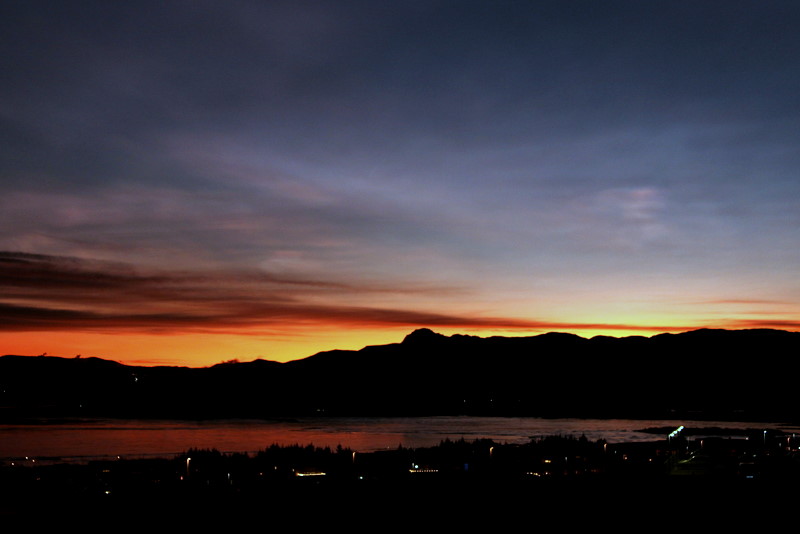
Northern Lights
The first and more obvious reason to visit in the winter months is for the Northern Lights. This breathtaking natural phenomenon can only be seen in winter, when it’s dark and the sky is clear. The rule is that if you can see the stars then you will have a good chance of seeing the Northern Lights. The best time to see the Aurora is from 1st September, through winter, until 15th April. Make sure to check the Aurora forecast for activity levels, there is a scale of 0-9 with the most common activity is 3-4.
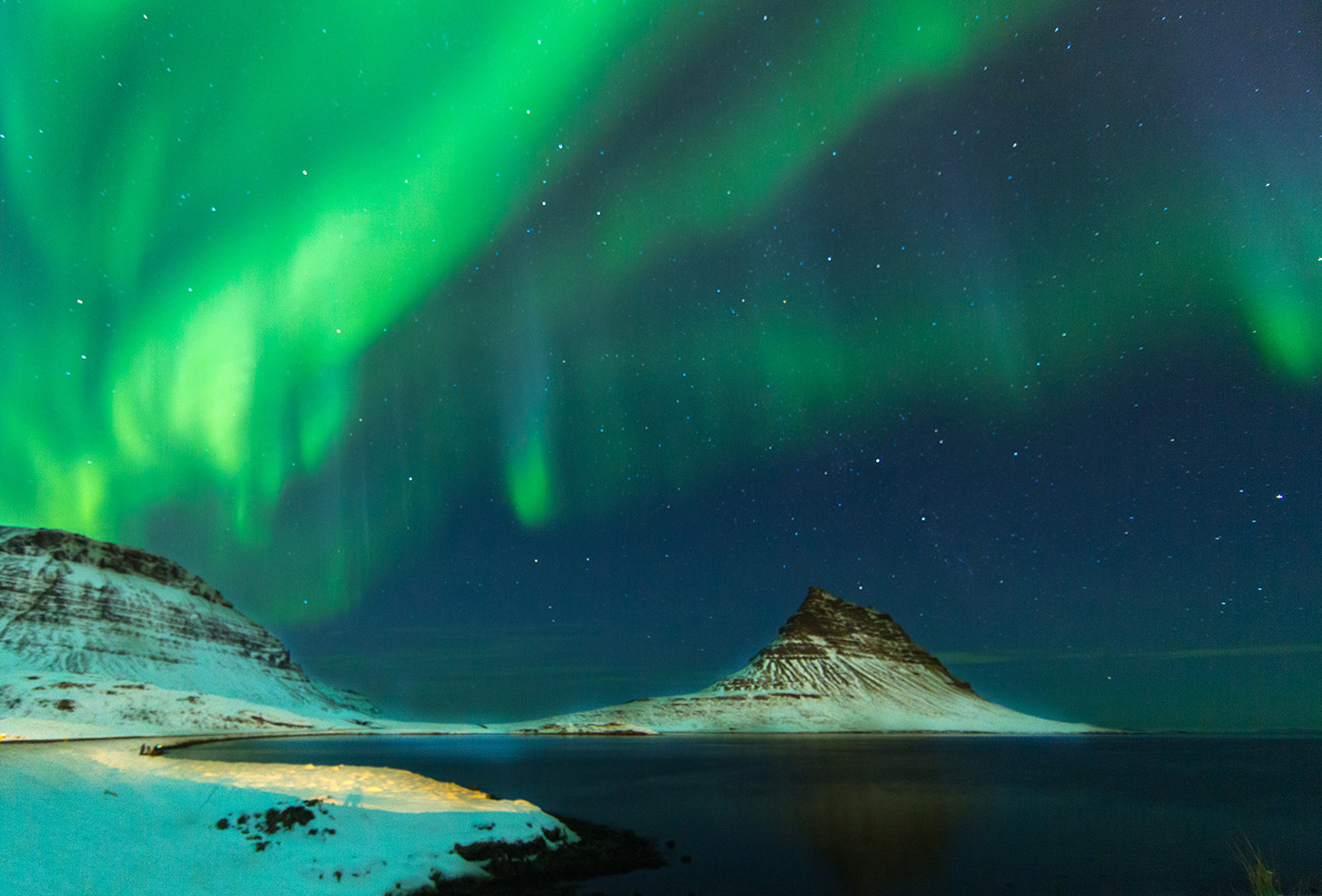
Things To Do
There is plenty to see and do in Iceland, popular winter activities include glaciers hikes, skiing, snow mobile trips, ice fishing and ice cave exploring and winter is when the caves are the most accessible. Many people visit Iceland in the run up to Christmas and to celebrate New Years. People decorate their houses with fairy lights and these are kept on throughout winter, bringing an extra light and magic to the city. There is a small festive market and ice skating rink in downtown Reykjavik too. New Year in Reykjavik is an extraordinary experience with fireworks exploring all around. There are no official firework displays but many locals purchase them and have their own displays. The proceeds from the sale of these fireworks goes towards supporting the Icelandic Search and Rescue teams.
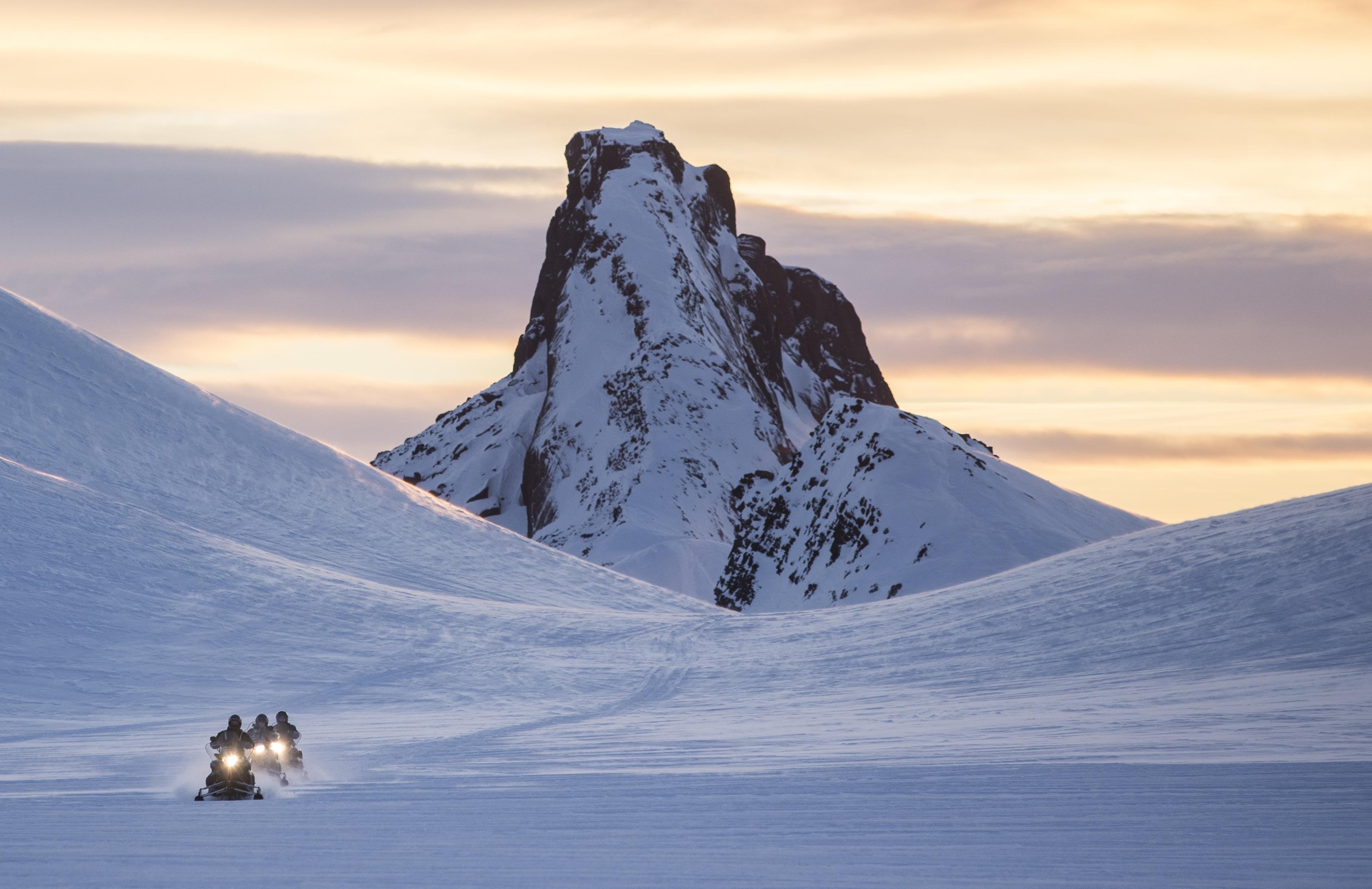
Driving in Winter
Driving in winter can be a little tricky, especially if you are not used to wintery conditions but all hire cars have winter tires to aid in driving on snow and ice. Snow storms are very common in winter and so your journey may be interrupted. The weather can effect airline travel with some flights being delays or cancelled so keep an eye on your flight prior to travel. Also sections of the ring road around Iceland can be effected with road closures throughout winter so it is best to check Vegagerdin for road updates. http://www.road.is/
The downside to visiting Iceland in the winter is that the days are shorter so your sightseeing time is a lot more limited. However the light, though sparse, is beautiful for photography as the sun is low on the horizon so it looks similar to a day-long sunset.

Wildlife
Though Iceland isn’t know as a wildlife destination, you can see birds, Icelandic horses and if you are very lucky you might also spot an arctic fox.
SUMMER – The Midnight Sun
Preferred by the locals, summer provides mild weather and the famous long summer nights. The days are long with sun rising at 03:20 and setting at 23:30 so you will have more light for longer adventures. This can be fun and the endless daylight can merge days into one but it can also be difficult to sleep. Come prepared with a good eye mask and be aware of the time, try to take rests when driving. Obviously the lack of darkness means you wont see the Northern Lights so make sure you plan for the right month to visit.
Waterfalls and Hiking Trails
Most sites are generally more accessible so you can walk right up to, and sometimes behind, the waterfalls. There are some hiking trails which can be accessed all year round but you will have more to choose from in the summer months.
Budget Considerations
If you are travelling on a budget then summer might be more for you. Camping is easier and certainly more pleasant, and hitch hiking is much more common.
Moss and Lava
The icy blanket of snow melts away to reveal a green and lush mossy blanket over the lava fields. Road become easier to drive and are generally more accessible, with some of the highland roads being opened though it’s never advised to drive off-road. The northern part of the island is much more accessible now.
Wildlife
Though Iceland isn’t know as a wildlife destination, you can take a whale watching tour in any season, see Icelandic horses and often spot geese. Puffins are most commonly seen in summer along with other bird.
Regrowing the Icelandic Forests, Reducing Emissions
Text by Sonia Nicolson
Regrowing the Icelandic Forests
There is a particular lure to visiting this otherworldly island. Some describe the landscape as a ‘moonscape’ and last year alone 1.8 Million tourists visited. This dramatic landscape is a huge draw for the film and tourism industry but for Iceland, its barren land is problematic.
Iceland is one of the most deforested countries in Europe, technically 40% of the country is a ‘wet desert’. Before the Viking settlers arrived in the 9th Century, Iceland was almost entirely covered in trees. There is archeological evidence that a quarter of Iceland was covered in forests until these settlers arrived. Vikings, living in the Iron Age, chopped down forests for timber, farmland and grazing, removing these vital pillars from the ecosystem. Now Iceland is almost tree-less.
Vegetation struggles to gain a foothold so farming and grazing are near impossible in many parts of the country. Strong winds and sandstorms also destroy the land and this has been a problem for decades now, particularly the east of Reykjavik. But Iceland is committed to bringing its trees back and returning natural life to a largely barren landscape. The main reasons for regrowing its forests are to improve and stabilise soil, help agriculture and fight climate change as trees can help offset emissions.
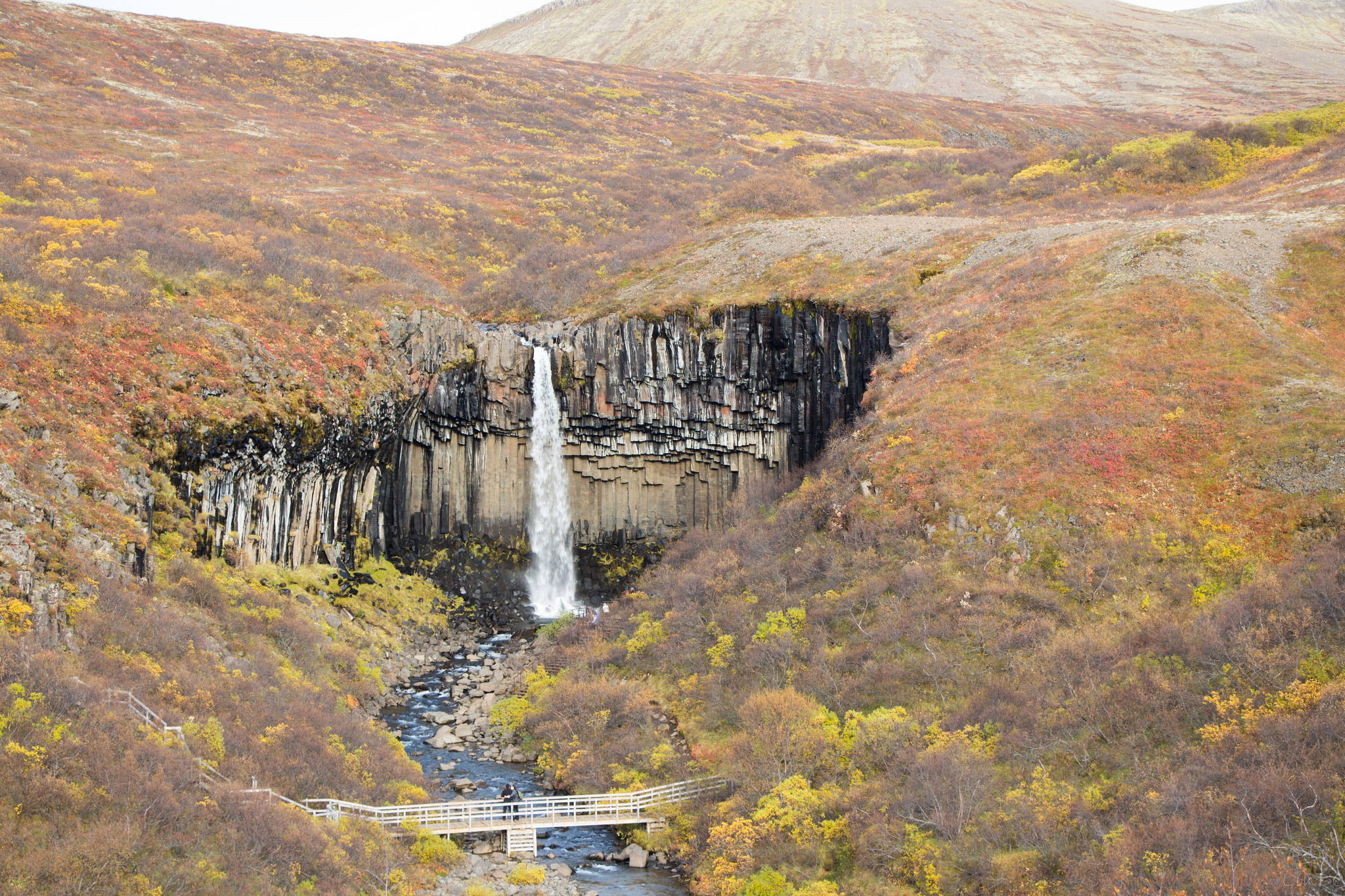
Taking Action
The government took medial actions and established a reforestation and soil conservation program at the turn of the century. First they started with conserving existing forests but in the 1950s and onwards, afforestation was seen as the only way. Reintroducing a small percentage of these trees could aid in Icelands aim to curb climate change emissions between 50% – 75% by 2050, the governments pledge in its Climate Change Statement, with less economic pain. Reinstating some of Icelands forests could help balance these emissions with the trees capturing carbon dioxide to help them grow.
Reforest sites are popping up across the countryside with native Birch and non-native Spruce being planted. These sites are overseen by the State backed Icelandic Forest Service who also manages the National Forests. Head of the Agency, Thröstur Eysteinsson, believes that even planting a small portion of Icelands long lost forests will do some good. “Over the past decades, the absence of vegetation to hold the soil caused farming and grazing to be nearly impossible in many parts of the country,”…“This was further compounded by the nation’s legendary strong winds, which contributed to severe soil erosion.”
Icelands Energy
85% of Icelands energy is supplied from domestically produced renewable energy sources such as hydropower and thermal energy. According to the Icelandic and Northern Energy Portal, this is the highest share of renewable energy is any national total energy budget. However, Iceland has a high per-capita emissions of greenhouse gasses from transport and industry such as the aluminium smelting plant. Iceland could look into reducing its production and consumption but this would effect the economy, and changing a nations behaviour is very challenging i.e car sharing, taking public transport, etc.
The best investment is to plant trees as this is a financial investment and will eventually pay for itself, or even yield profit. Though it is a huge amount of work. Icelands climate is highly unpredictable and it varies each year which means slow, unpredictable growth for trees.
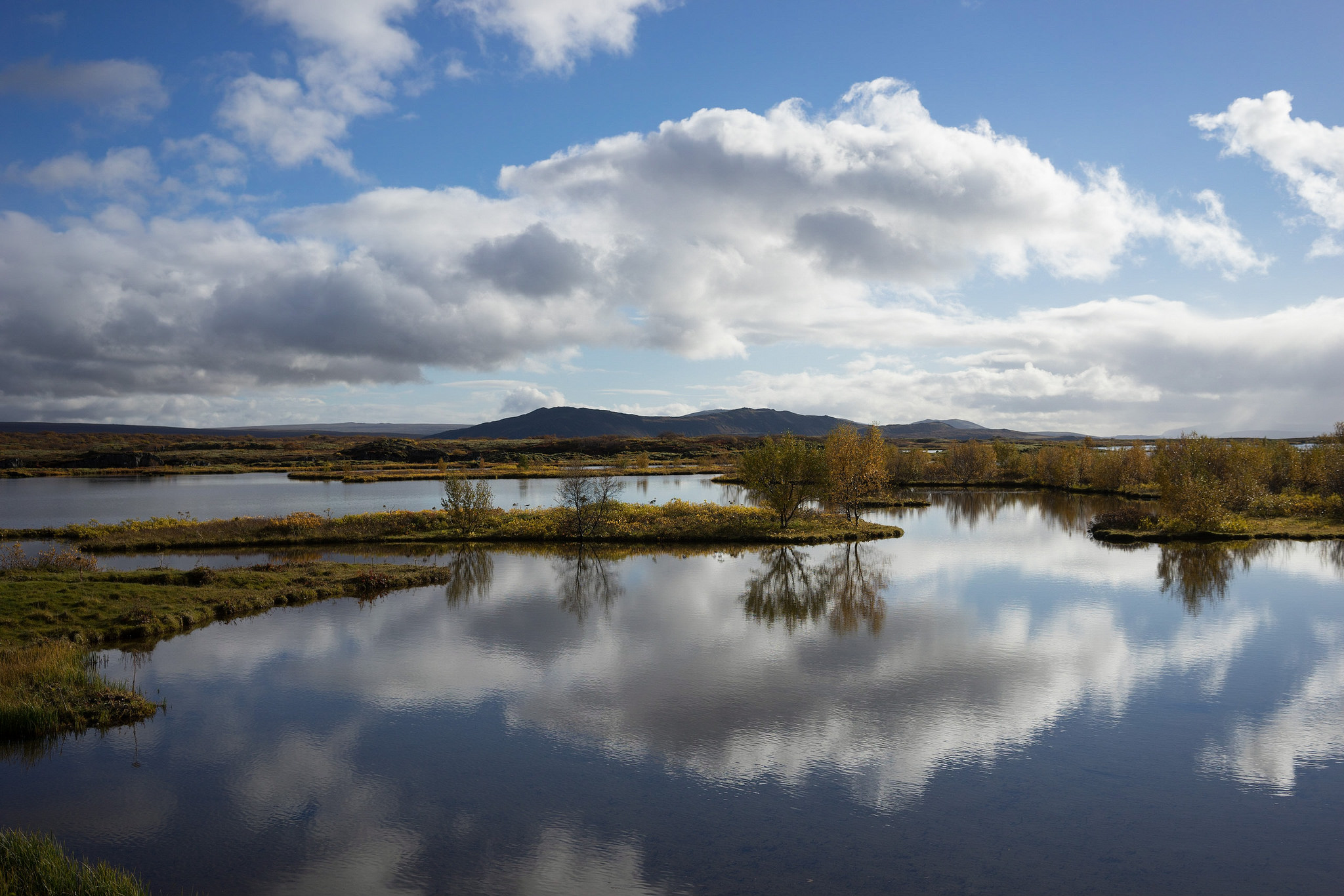
Regrowing the Forests
So Iceland is regrowing its forests but “it’s definitely a struggle,” said forester Mr. Jonsson who works for the private Icelandic Forestry Association and volunteers to plant saplings. They are growing around 3 Million new trees per year and restoring around 123,000 acres of long lost forests. It’s a slow and seemingly endless task. According to the Icelandic Forest Service, this is only around 2% of Iceland countryside.
Watch Our ‘Regrowing the Icelandic Forests’ Video
Preparing for the Trees
The process is to first evaluate the site and its existing vegetation to gain an understanding of the soils richness and help determine which trees to plant. Lyme grass is planted first which grows quickly and helps stabilise the soil. Lupine comes next, spreading across the landscape. Finally the trees are then planted, grown as saplings in local greenhouses first as importing live trees is prohibited in Iceland. Birch has been found to be best about 30% of the time, this links back to pre-settler times. It grows well in poor soil but slowly, everything grows slowly in Iceland and so meeting targets is challenging.
The sheep in Iceland roam freely and fencing is uncommon due to its cost. The sheep love saplings and so they need to be protected in order to grow and not have the natural spreading of trees interrupted. The goal is to replant 2.5% of Icelands forests but it has been said that this would take around 200 years at the rate they are going.
Funding has also been a challenge. The 2008 banking crash meant support was cut and, although the economy has since recovered, the pre-recession funding for 6 Million new trees did not.
Footing the Bill, Meeting the Target
Iceland is a small country with a small population of 350,000 people per acre. This means fewer tax payers per acre. Forestry is just another item that has to compete with all the other worthwhile items people want to use tax money for. Therefore, sadly reforestation will continue to represent a very small part of the national budget.
Working with the European Union and Norway, Iceland is looking to reduce the emissions by 40% from its 1990 levels by 2050. Iceland might not grow 2% of its forests back but it could be a strong enough sign to other countries, and the international community, to show its solidarity and commitment to the climate change goals of the Paris Agreement.